South Korea Self-Tanning Products Market Size & Outlook
South Korea Self-Tanning Products Market, 2018-2030 (US$M)

Global Market
Related Markets
South Korea self-tanning products market highlights
- The South Korea self-tanning products market generated a revenue of USD 26.6 million in 2021 and is expected to reach USD 44.5 million by 2030.
- The South Korea market is expected to grow at a CAGR of 5.9% from 2022 to 2030.
- In terms of segment, lotions was the largest revenue generating product in 2021.
- Gels is the most lucrative product segment registering the fastest growth during the forecast period.
Self-tanning products market data book summary
| Market revenue in 2021 | USD 26.6 million |
| Market revenue in 2030 | USD 44.5 million |
| Growth rate | 5.9% (CAGR from 2021 to 2030) |
| Largest segment | Lotions |
| Fastest growing segment | Gels |
| Historical data | 2018 - 2020 |
| Base year | 2021 |
| Forecast period | 2022 - 2030 |
| Quantitative units | Revenue in USD million |
| Market segmentation | Lotions, Gels |
| Key market players worldwide | The Estee Lauder Companies Inc Class A, L'Oreal SA, Shiseido Co Ltd, PZ Cussons PLC ADR, Unilever PLC, Kao Corp, Beiersdorf AG, Johnson & Johnson, Natura &Co Holding SA ADR, Clarins Group |
Other key industry trends
- In terms of revenue, South Korea accounted for 3.0% of the global self-tanning products market in 2021.
- Country-wise, U.S. is expected to lead the global market in terms of revenue in 2030.
- In Asia Pacific, China self-tanning products market is projected to lead the regional market in terms of revenue in 2030.
- South Korea is the fastest growing regional market in Asia Pacific and is projected to reach USD 44.5 million by 2030.
South Korea is one of the most evolving and innovating cosmetic and skincare markets in the world. South Korean brands, formerly under the umbrella term k-beauty, offer some of the most popular skincare products in the world owing to their high preference for natural and organic ingredients.
“Go Organic” and “Live Organic” trends have been catching up in the self-tanning products market in recent years. In South Korea, an increasing number of consumers have been opting for organic skincare products, including self-tanning products.
Rising awareness regarding beauty & wellness and the rapidly changing lifestyles of consumers are also contributing to the growth of this market.
Key Regions:U.S., UK, Brazil, South Korea, Germany
No credit card required*
Horizon in a snapshot
- 30K+ Global Market Reports
- 120K+ Country Reports
- 1.2M+ Market Statistics
- 200K+ Company Profiles
- Industry insights and more
Three ways to get this data
Subscribe to the databook, customize it, or ask a question.Horizon Databook
Unlock every chart on this page and get dashboard access
- Statistics1.2M+ across all markets
- Databooks30K+ global, 120K+ country
- Companies200K+ profiles
- ExportPDF, Dashboard, XLS & PNG, licensed to cite
Customize it
Customize data as per your requirement
- AddCountries, segments, years
- RecutTo your product definition
- ExtendCompany-level detail
- OrA bespoke databook
- Turnaround5–10 working days
Ask Prism AI
A cited answer in seconds
- Corpus30,000 studies, 1.2M points
- ScopeAll markets, not just this
- CitationTraced to report & table
- HonestySays "not covered" if so
- SpeedSeconds, not days
Self-Tanning Products Market Scope
Self-Tanning Products Market Companies
| Name | Profile | # Employees | HQ | Website |
|---|---|---|---|---|
| Johnson & Johnson | View profile | 134,400 | One Johnson and Johnson Plaza, New Brunswick, NJ, United States, 08933 | www.jnj.com |
| Unilever PLC | View profile | 128,377 | 100 Victoria Embankment, London, United Kingdom, EC4Y 0DY | www.unilever.com |
| Beiersdorf AG | View profile | 21,958 | Unnastrasse 48, Hamburg, Germany, 22529 | www.beiersdorf.com |
| Shiseido Co Ltd | View profile | 35,859 | 5-5 Ginza 7-chome, Chuo-ku, Tokyo, Japan, 104-0061 | www.shiseido.co.jp |
| L'Oreal SA | View profile | 94,605 | 41, Rue Martre, Clichy Cedex, Paris, France, 92117 | www.loreal.com |
| The Estee Lauder Companies Inc Class A | View profile | 62,000 | 767 Fifth Avenue, New York, NY, United States, 10153 | www.elcompanies.com |
| Clarins Group | View profile | 10001+ | Paris, Ile-de-France, France, Europe | www.groupeclarins.com/en |
| Kao Corp | View profile | 42,450 | 14-10, Nihonbashi Kayabacho 1-chome, Chuo-ku, Tokyo, Japan, 103-8210 | www.kao.com |
| PZ Cussons PLC ADR | View profile | 2,600 | Manchester Business Park, 3500 Aviator Way, Manchester, United Kingdom, M22 5TG | www.pzcussons.com |
| Natura &Co Holding SA ADR | View profile | 19,955 | Avenida Alexandre Colares, No. 1188, Sala A17-Bloco A, Parque Anhanguera, Sao Paulo, SP, Brazil, 05106-000 | ri.naturaeco.com |
South Korea Self-tanning Products Market Outlook
The databook is designed to serve as a comprehensive guide to navigating this sector. The databook focuses on market statistics denoted in the form of revenue and y-o-y growth and CAGR across the globe and regions. A detailed competitive and opportunity analyses related to Self-tanning Products Market Outlook will help companies and investors design strategic landscapes.
Lotions was the largest segment with a revenue share of 60.15% in 2021.
Horizon Databook has segmented the South Korea self-tanning products market based on lotions, gels covering the revenue growth of each sub-segment from 2018 to 2030.
South Korea is one of the most evolving and innovating cosmetic and skincare markets in the world. South Korean brands, formerly under the umbrella term k-beauty, offer some of the most popular skincare products in the world owing to their high preference for natural and organic ingredients.
“Go Organic” and “Live Organic” trends have been catching up in the self-tanning products market in recent years. In South Korea, an increasing number of consumers have been opting for organic skincare products, including self-tanning products.
Rising awareness regarding beauty & wellness and the rapidly changing lifestyles of consumers are also contributing to the growth of this market.
- South Korea Self-Tanning Products Market Product Outlook (Revenue, USD Million , 2018-2030)
- Lotions
- Gels
- Others
- South Korea Self-Tanning Products Market End Use Outlook (Revenue, USD Million , 2018-2030)
- Men
- Women
- South Korea Self-Tanning Products Market Distribution Channel Outlook (Revenue, USD Million , 2018-2030)
- Supermarkets & Hypermarkets
- Convenience Stores
- Online
Reasons to subscribe to Self-tanning Products Market Outlook databook
- Access to comprehensive data: Horizon Databook provides over 1 million market statistics and 20,000+ reports, offering extensive coverage across various industries and regions.
- Informed decision making: Subscribers gain insights into market trends, customer preferences, and competitor strategies, empowering informed business decisions.
- Cost-Effective solution: It's recognized as the world's most cost-effective market research database, offering high ROI through its vast repository of data and reports.
- Customizable reports: Tailored reports and analytics allow companies to drill down into specific markets, demographics, or product segments, adapting to unique business needs.
- Strategic advantage: By staying updated with the latest market intelligence, companies can stay ahead of competitors, anticipate industry shifts, and capitalize on emerging opportunities.
Target buyers of Self-tanning Products Market Outlook databook
- Our clientele includes a mix of Self-tanning Products Market Outlook companies, investment firms, advisory firms & academic institutions.
- 30% of our revenue is generated working with investment firms and helping them identify viable opportunity areas.
- Approximately 65% of our revenue is generated working with competitive intelligence & market intelligence teams of market participants (manufacturers, service providers, etc.).
- The rest of the revenue is generated working with academic and research not-for-profit institutes. We do our bit of pro-bono by working with these institutions at subsidized rates.
Horizon Databook provides a detailed overview of country-level data and insights on the South Korea Self-tanning Products Market Outlook, including forecasts for subscribers. This country databook contains high-level insights into South Korea Self-tanning Products Market Outlook from 2018 to 2030, including revenue numbers, major trends, and company profiles.
South Korea Self-Tanning Products Market, 2018-2030 (US$M)

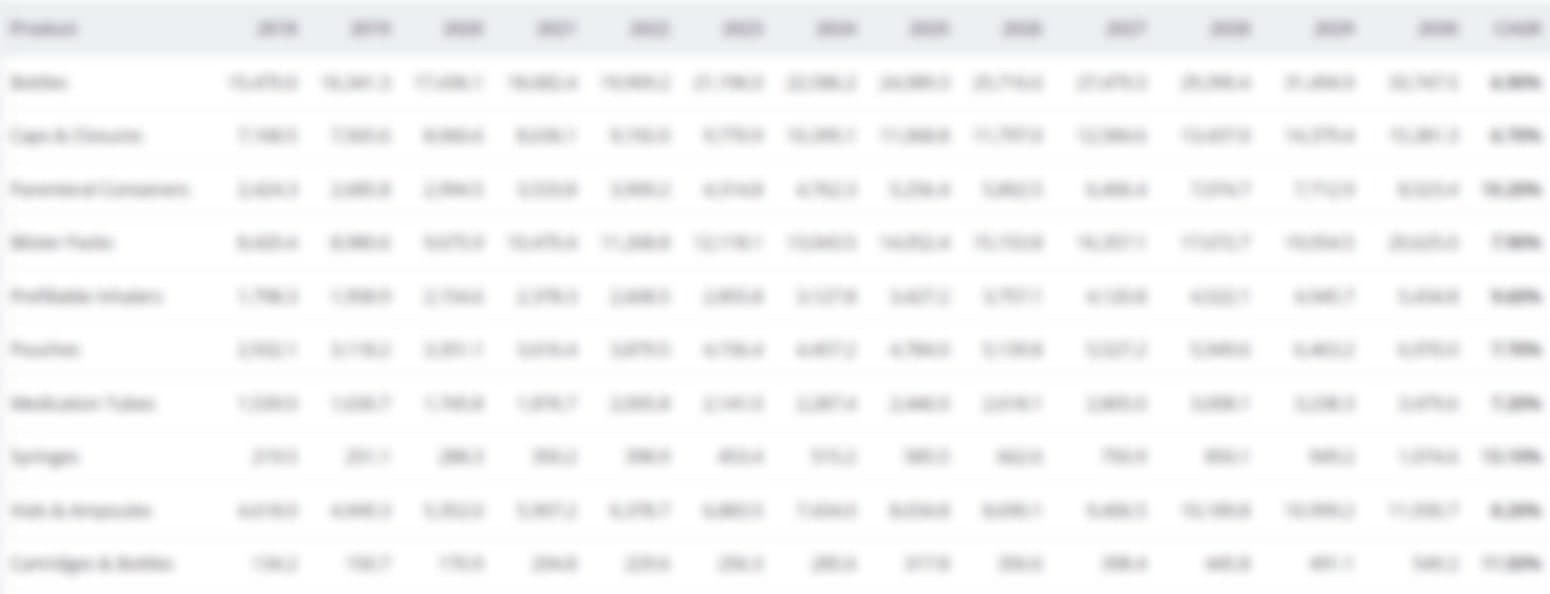
South Korea self-tanning products market statistics, by product, 2018-2030 (US$M)