Brazil Life Insurance Market, 2020-2027
- HC Outsourcing
- Clinical & Non-Clinical Outsourcing Services
- Life Insurance Market
- Clinical & Non-Clinical Outsourcing Services
Brazil Life Insurance Market, 2016-2027 (US$M)

Global Market
Related Markets
Ask a question about the life insurance market
Brazil life insurance market highlights
- The Brazil life insurance market generated a revenue of USD 31,965.0 million in 2020 and is expected to reach USD 46,039.4 million by 2027.
- The Brazil market is expected to grow at a CAGR of 5.4% from 2021 to 2027.
- In terms of segment, whole life insurance was the largest revenue generating product in 2020.
- Universal Life Insurance is the most lucrative product segment registering the fastest growth during the forecast period.
Life insurance market data book summary
| Market revenue in 2020 | USD 31,965.0 million |
| Market revenue in 2027 | USD 46,039.4 million |
| Growth rate | 5.4% (CAGR from 2020 to 2027) |
| Largest segment | Whole life insurance |
| Fastest growing segment | Universal Life Insurance |
| Historical data | 2016 - 2019 |
| Base year | 2020 |
| Forecast period | 2021 - 2027 |
| Quantitative units | Revenue in USD million |
| Market segmentation | Whole Life Insurance, Term Life Insurance, Universal Life Insurance, Variable Universal Life Insurance |
| Key market players worldwide | MetLife Inc, Prudential Financial Inc, American International Group Inc, Lincoln National Corp, John Hancock Asset-Based Lending I, China Life Insurance Co Ltd Class H |
Other key industry trends
- In terms of revenue, Brazil accounted for 3.0% of the global life insurance market in 2020.
- Country-wise, U.S. is expected to lead the global market in terms of revenue in 2027.
- In Latin America, Brazil life insurance market is projected to lead the regional market in terms of revenue in 2027.
- Brazil is the fastest growing regional market in Latin America and is projected to reach USD 46,039.4 million by 2027.
In Brazil, the foremost distribution channel for savings products is Bancassurance, as the banks have widespread networks of branches and are the first point of contact for people who are newly accessing financial services, while life risks is dominated by brokers.
However, distribution of life savings products through the digital channel is still emerging. Prominent insurers are moving toward digital channels for their distribution. Life insurance products are also purchased through traditional channels.
Consumer behavior in Brazil exhibits growth potential for alternative and digital channels. The reform in public pension is driving the market for universal life products.
No credit card required*
Customize the Report
20% free customization
- Include
- Countries, segments, points
- Tailor
- To your product definition
- Extend
- Deeper competitor detail
- Or
- A fully bespoke study
Horizon in a snapshot
- 30K+ Global Market Reports
- 120K+ Country Reports
- 1.2M+ Market Statistics
- 200K+ Company Profiles
- Industry insights and more
Life Insurance Market
Life Insurance Market Companies
| Name | Profile | # Employees | HQ | Website |
|---|---|---|---|---|
| American International Group Inc | View profile | 25,200 | 1271 Avenue of the Americas, New York, NY, United States, 10020 | www.aig.com |
| MetLife Inc | View profile | 45,000 | 200 Park Avenue, New York, NY, United States, 10166-0188 | www.metlife.com |
| Prudential Financial Inc | View profile | 40,658 | 751 Broad Street, Newark, NJ, United States, 07102 | www.investor.prudential.com |
| Lincoln National Corp | View profile | 11,024 | 150 North Radnor-Chester Road, Suite A305, Radnor, PA, United States, 19087 | www.lincolnfinancial.com |
| John Hancock Asset-Based Lending I | View profile | - | - | - |
| China Life Insurance Co Ltd Class H | View profile | 100,000 | No. 16, Financial Street, Xicheng District, Beijing, China, People's Republic of, 100033 | www.e-chinalife.com |
Brazil Life Insurance Market
The databook is designed to serve as a comprehensive guide to navigating this sector. The databook focuses on market statistics denoted in the form of revenue and y-o-y growth and CAGR across the globe and regions. A detailed competitive and opportunity analyses related to Life Insurance Market will help companies and investors design strategic landscapes.
Whole Life Insurance was the largest segment with a revenue share of 34.09% in 2020.
Horizon Databook has segmented the Brazil life insurance market based on whole life insurance, term life insurance, universal life insurance, variable universal life insurance covering the revenue growth of each sub-segment from 2016 to 2027.
In Brazil, the foremost distribution channel for savings products is Bancassurance, as the banks have widespread networks of branches and are the first point of contact for people who are newly accessing financial services, while life risks is dominated by brokers.
However, distribution of life savings products through the digital channel is still emerging. Prominent insurers are moving toward digital channels for their distribution. Life insurance products are also purchased through traditional channels.
Consumer behavior in Brazil exhibits growth potential for alternative and digital channels. The reform in public pension is driving the market for universal life products.
- Brazil Life Insurance Market Product Outlook (Revenue, USD Million , 2016-2027)
- Whole Life Insurance
- Term Life Insurance
- Universal Life Insurance
- Variable Universal Life Insurance
- Brazil Life Insurance Market Distribution Channel Outlook (Revenue, USD Million , 2016-2027)
- Agency
- Broker
- Bancassurance
- Digital & Direct Channels
- Brazil Life Insurance Market Type Outlook (Revenue, USD Million , 2016-2027)
- Individuals
- Corporate houses/Business Units
- Others (Govt. agencies and NGOs
Reasons to subscribe to Life Insurance Market databook
- Access to comprehensive data: Horizon Databook provides over 1 million market statistics and 20,000+ reports, offering extensive coverage across various industries and regions.
- Informed decision making: Subscribers gain insights into market trends, customer preferences, and competitor strategies, empowering informed business decisions.
- Cost-Effective solution: It's recognized as the world's most cost-effective market research database, offering high ROI through its vast repository of data and reports.
- Customizable reports: Tailored reports and analytics allow companies to drill down into specific markets, demographics, or product segments, adapting to unique business needs.
- Strategic advantage: By staying updated with the latest market intelligence, companies can stay ahead of competitors, anticipate industry shifts, and capitalize on emerging opportunities.
Target buyers of Life Insurance Market databook
- Our clientele includes a mix of Life Insurance Market companies, investment firms, advisory firms & academic institutions.
- 30% of our revenue is generated working with investment firms and helping them identify viable opportunity areas.
- Approximately 65% of our revenue is generated working with competitive intelligence & market intelligence teams of market participants (manufacturers, service providers, etc.).
- The rest of the revenue is generated working with academic and research not-for-profit institutes. We do our bit of pro-bono by working with these institutions at subsidized rates.
Horizon Databook provides a detailed overview of country-level data and insights on the Brazil Life Insurance Market, including forecasts for subscribers. This country databook contains high-level insights into Brazil Life Insurance Market from 2016 to 2027, including revenue numbers, major trends, and company profiles.
Brazil Life Insurance Market, 2016-2027 (US$M)

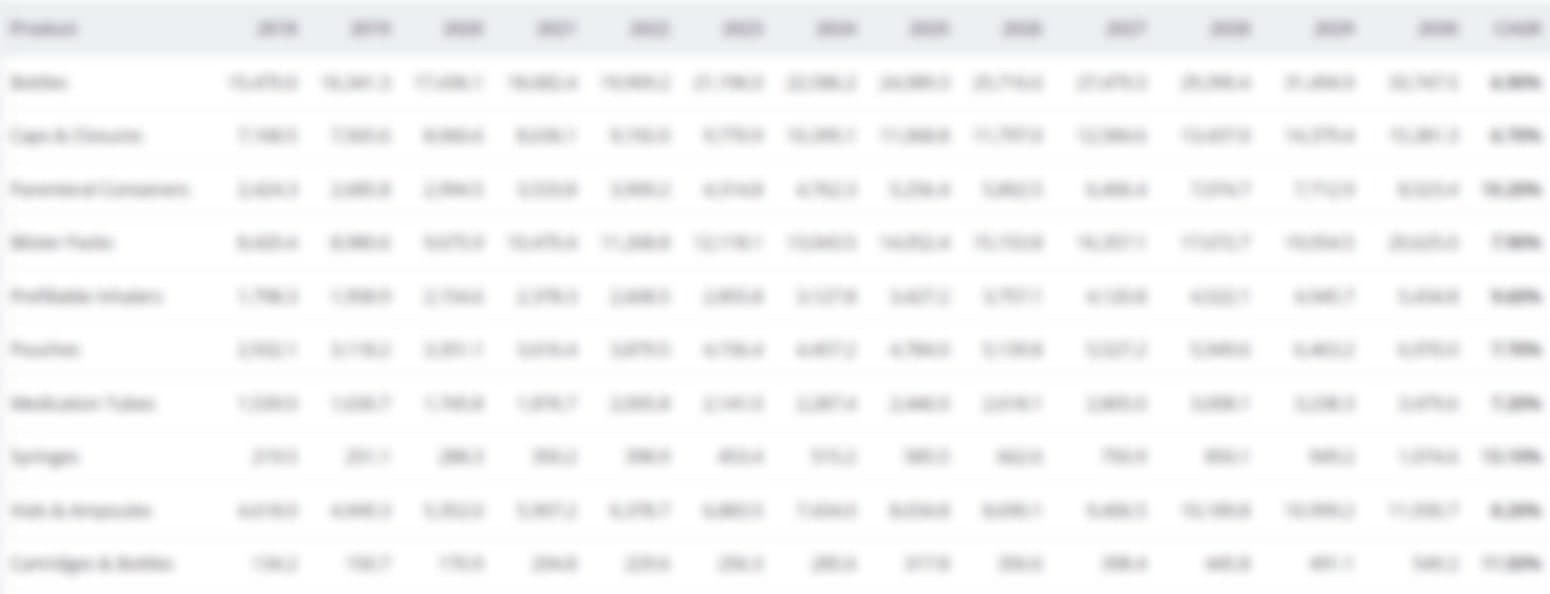
Brazil life insurance market statistics, by product, 2016-2027 (US$M)