
- Home
- »
- Pharmaceuticals
- »
-
Intravenous immunoglobulin Market Size Report, 2026-2033GVR Report cover

Intravenous Immunoglobulin Market (2026 - 2033)
Size, Share & Trends Analysis Report By Application (Immunodeficiency Diseases, CIDP, Hypogammaglobulinemia), By Distribution Channel (Hospital Pharmacies, Specialty Pharmacies), By Region, And Segment Forecasts
Market Size, 2025
$14.9BMarket Estimate, 2026
$16.0BMarket Forecast, 2033
$25.7BCAGR, 2026–2033
7.0%Intravenous Immunoglobulin Market Summary
The global intravenous immunoglobulin market size was valued at USD 14.9 billion in 2025 and is projected to grow from USD 16.0 billion in 2026 to USD 25.7 billion by 2033, at a CAGR of 7.0% from 2026 to 2033. North America dominated the market with the largest revenue share of 45.9% in 2025. The market is driven by the rising prevalence of autoimmune disorders, immunodeficiencies, and neurological diseases.
 Source: Grand View Research, IR Documents, Primary Interviews, Paid DatabasesTo learn more about this report,
 Download Free Sample Report
 Key Market Trends & Insights
- By application: Immunodeficiency diseases segment held the largest revenue share of 19.5% in 2025.
- By distribution channel: Hospital pharmacies segment held the largest revenue share of 57.1% in 2025.
Regional Highlights
- Largest regional market: North America (45.9% revenue share, 2025)
- Fastest growing regional market: Asia Pacific (highest CAGR, 2026–2033)
- By country: The U.S. held the largest market share in 2025.
Market Size & Forecast
- Market size in 2025: USD 14.9 Billion
- Estimated market size in 2026: USD 16.0 Billion
- Projected market size by 2033: USD 25.7 Billion
- CAGR (2026-2033): 7.0%
Three ways to get this report
Buy it, customize it, or ask a question.Ask an Analyst
Analyst response in 1 business day
- AccessReport author, directly
- Reply timeWithin 1 working day
- No sales callDirect answer only
- FormatEmail reply
- CostFree, no cost
Get the Full Report
What the study covers
- FormatsPDF · Excel · Dashboard
- Timeline2026–2033 annual, 2025 base
- Coverage20+ countries, 5 regions
- Companies10+ key players profiled
Customize the Report
20% free customization
- IncludeCountries, segments, points
- TailorTo your product definition
- ExtendDeeper competitor detail
- OrA fully bespoke study
- Turnaround5–10 working days
Increasing awareness and advancements in immunotherapy, coupled with an aging population more susceptible to immune-related conditions, further fuel market growth. The demand for Intravenous Immunoglobulin (IVIG) therapies is rising due to their effectiveness as the primary treatment for both acquired and primary immunodeficiency diseases. With no alternative treatment options available, IVIG remains a critical therapy for managing these conditions. In addition, sedentary lifestyles-characterized by high consumption of saturated fats, salt, sugar, excessive alcohol intake, and reduced physical activity-have contributed to a growing prevalence of lifestyle-related disorders such as antibody deficiency disorders, further driving demand for IVIG. To learn more about this report, Download Free Sample Report
 According to NCBI data, in 2020, around the world, over 6 million individuals were affected by primary immunodeficiencies (PIDs), with 70% to 90% remaining undiagnosed. More than 430 different types of PIDs have been identified, each caused by inherited defects in one or more components of the immune system. As a result, individuals with PIDs are not only more susceptible to infections but also face an increased risk of severe autoinflammation, autoimmunity, allergies, and malignancies. As awareness and diagnosis rates improve, along with advancements in plasma collection and manufacturing technologies, the IVIG market is poised for sustained growth.
Despite the growing demand for Intravenous Immunoglobulin (IVIG) therapies, the high cost of treatment remains a significant barrier to market expansion. IVIG infusions are typically administered every 3 to 4 weeks, requiring 12 to 16 sessions annually, making it a long-term and costly therapy. The estimated price of IVIG is USD 73.89 per gram, with total treatment costs reaching USD 10,000 or more, depending on the severity of the condition. Furthermore, immunoglobulin replacement therapy often extends for at least six months, further increasing the financial burden on patients and healthcare systems. According to the ABIM Foundation, the annual cost of IgG treatment therapy exceeds USD 30,000, posing affordability challenges that could hinder market growth.
Market Dynamics
The intravenous immunoglobulins market is driven by the increasing prevalence of primary immunodeficiency disorders, autoimmune diseases, and neurological conditions that require immunoglobulin-based therapies. Market demand is supported by growing disease awareness, improving diagnosis rates, and expanding use of immunoglobulin therapies across hospitals and specialty care centers. Supply dynamics remain dependent on plasma collection and plasma processing capacity because intravenous immunoglobulins products are derived from human plasma. Industry participants continue to invest in production facilities and plasma collection networks to support rising treatment demand. A notable industry development highlights this trend. For instance, in June 2025, Takeda received U.S. FDA approval for Gammagard Liquid ERC, a ready to use low IgA immunoglobulin therapy for the treatment of primary humoral immunodeficiency. The approval strengthened Takeda's immunoglobulin product portfolio and supported the availability of plasma derived therapies for eligible patients. In addition, reimbursement policies, regulatory requirements, and healthcare spending patterns continue to influence product adoption and patient access across healthcare facilities.
The increasing prevalence of primary immunodeficiency disorders is a key driver of the Intravenous immunoglobulin market. Intravenous immunoglobulins is widely used as a replacement therapy for patients with primary immunodeficiency disorders due to its ability to provide essential antibodies and support immune system function. Growing awareness among healthcare professionals and improvements in diagnostic capabilities have contributed to earlier disease identification and treatment initiation. In addition, expanding screening programs and better access to specialized healthcare services are increasing the number of diagnosed patients receiving immunoglobulin therapy. The continued reliance on long-term immune replacement treatment among patients with primary immunodeficiency disorders supports sustained demand for intravenous immunoglobulin products. A notable product launch reflects ongoing market activity. Players are focusing on expanding treatment options and supporting broader patient access to immunoglobulin therapy. Growing diagnosis rates, increasing treatment uptake, and continued product availability are expected to support the expansion of the Intravenous immunoglobulin market during the forecast period.
The Intravenous immunoglobulin market faces challenges due to its dependence on human plasma as the primary raw material. The collection, testing, processing, and manufacturing of plasma derived therapies require substantial operational resources and adherence to regulatory requirements. Any disruption in plasma donations can affect product availability and create supply constraints across healthcare systems. In addition, manufacturing timelines for immunoglobulin products are longer than those for many conventional pharmaceuticals because plasma undergoes multiple quality and safety assessments before final production. These factors contribute to higher production costs and can influence product pricing and accessibility in certain regions. Healthcare providers and payers also evaluate treatment utilization carefully due to the cost associated with long term immunoglobulin therapy. Furthermore, fluctuations in plasma supply can create challenges in meeting growing treatment demand, particularly in markets that rely heavily on imported plasma derived products. As demand for immunoglobulin therapies continues to increase, maintaining a stable plasma supply and managing production costs are expected to remain key challenges for market participants during the forecast period.
The expansion of healthcare infrastructure and improved access to specialty treatments in emerging markets presents an opportunity for the Intravenous immunoglobulin market. Many countries in Asia Pacific, Latin America, and parts of the Middle East are increasing investments in healthcare services, disease diagnosis, and patient access programs. As awareness of primary immunodeficiency disorders grows, healthcare providers are identifying more patients who may benefit from immunoglobulin therapy. Regulatory agencies in several developing regions are also working to improve access to biological therapies through updated approval pathways and healthcare initiatives. In addition, rising healthcare expenditure and broader insurance coverage are supporting the adoption of immunoglobulin therapies in these markets. A notable industry development highlights efforts to improve treatment availability. For instance, in April 2025, the National Health Service implemented a new immunoglobulin framework that expanded the availability of immunoglobulin products across immunology, neurology, haematology, and infectious disease specialties in the UK. The initiative supports broader patient access to immunoglobulin therapies. As healthcare systems continue to develop and diagnostic capabilities improve, emerging markets are expected to create growth opportunities for manufacturers operating in the intravenous immunoglobulin market.
Market Concentration & Characteristics
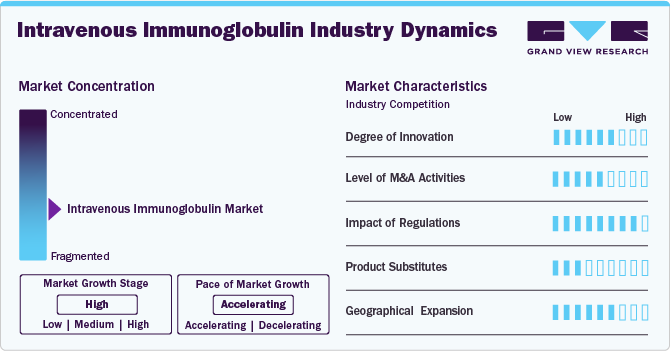
The IVIG market continues to evolve with advancements in purification techniques, improved formulations, and innovative treatment protocols. Research is focused on enhancing the safety, efficacy, and tolerability of IVIG, particularly for immunodeficiency diseases, autoimmune disorders, and neurological conditions such as CIDP, Myasthenia Gravis, and Guillain-Barré Syndrome.
Mergers and acquisitions are a key trend in the IVIG market, with major pharmaceutical players acquiring specialized biotech firms to expand their immunoglobulin portfolios. Companies seek to strengthen their positions in treating conditions like Hypogammaglobulinemia, Kawasaki disease, and Chronic Lymphocytic Leukemia. The growing demand for IVIG therapies drives consolidation efforts to enhance production capacity and market reach.
 To learn more about this report, Download Free Sample Report
 Regulatory agencies such as the FDA and EMA enforce strict quality and safety guidelines for IVIG therapies. These regulations ensure patient safety but also contribute to lengthy approval processes. In addition, reimbursement policies influence market dynamics, as IVIG is a high-cost therapy primarily covered by healthcare payers in developed markets. Ensuring affordability and access remains a critical challenge, especially in emerging regions.
While IVIG is a standard treatment for multiple immune and neurological conditions, alternative therapies exist. These include plasma exchange, corticosteroids, and emerging monoclonal antibodies. However, IVIG remains a preferred option due to its broad applicability in conditions like Congenital AIDS, Multifocal Motor Neuropathy, and ITP.
Companies are expanding their presence in regions with growing demand for IVIG, particularly in Asia Pacific, Latin America, and the Middle East. Increased awareness, rising diagnosis rates, and improved healthcare infrastructure drive market growth. Access to IVIG remains challenging in some areas, leading manufacturers to focus on distribution networks and local partnerships.
Analyst Perspective
The intravenous immunoglobulin market is characterized by the presence of established manufacturers with integrated plasma collection and production capabilities alongside emerging players focused on regional expansion and market accessibility. Market growth continues to be supported by increasing diagnosis of primary immunodeficiency disorders and rising utilization of IVIG across approved therapeutic indications. Established companies are strengthening their positions through capacity expansion, product approvals, and supply chain investments, while emerging participants are leveraging partnerships and targeted commercialization strategies to expand their presence. However, dependence on plasma availability and complex manufacturing requirements remain key challenges. Overall, continued investments in production capacity and patient access initiatives are expected to support market expansion during the forecast period.
Application Insights
Based on application, the immunodeficiency diseases segment led the market with the largest revenue share of 19.5% in 2025. Based on application, the Intravenous Immunoglobulin (IVIG) market has been categorized into immunodeficiency diseases, CIDP, hypogammaglobulinemia, congenital AIDS, chronic lymphocytic leukemia, myasthenia gravis, multifocal motor neuropathy, ITP, Kawasaki disease, Guillain-Barre syndrome, and others. The immunodeficiency diseases segment accounted for the largest revenue share of 19.78% in 2024. The growth of immunodeficiency diseases is driven by the rising incidence of primary and acquired immunodeficiency diseases (PID & AID); treatment with IV antibiotics is often necessary to manage infections. IVIG replacement therapy remains the most effective alternative for treating immunodeficiency diseases, driving steady market growth in the coming years.
The Kawasaki disease segment is expected to exhibit the fastest growth in the market over the forecast period. The rising incidence of Kawasaki disease in children and the growing demand for IVIG treatments are expected to drive market growth. While steroids serve as an alternative to IVIG therapy, they carry more side effects, making IVIG the preferred choice for treating Kawasaki disease. Furthermore, increasing patient awareness and the rising incidence of antibody deficiency diseases are expected to further boost the demand for IVIG therapies, fueling growth in this segment.
Distribution Channel Insights
Based on distribution channel, the hospital pharmacies segment led the market with the largest revenue share of 57.1% in 2025. Based on distribution channel, the Intravenous Immunoglobulin (IVIG) market has been categorized into hospital pharmacies, specialty pharmacies, and others. The hospital pharmacies segment held the largest revenue share of 57.33% in 2025. The extensive network of hospitals and the wide range of products available through hospital pharmacies have made them a convenient option for patients. Moreover, the increasing incidence of primary immune deficiencies, hepatitis C, and other diseases has led to a rise in hospitalizations globally, driving greater patient preference for hospital pharmacies. Hospitals also offer quick reimbursement processes, effective treatment, and comprehensive care, further contributing to the growing trend of patients opting for hospital pharmacies.
 To learn more about this report, Download Free Sample Report
 Specialty pharmacy is expected to grow considerably over the forecast period. They offer the convenience of at-home treatment, making them an attractive option for many patients. As specialty drugs play a vital and growing role in the pharmacy industry, the number of licensed specialty drugs is increasing rapidly. This expansion is expected to drive significant growth in the specialty pharmacy segment during the forecast period.
Regional Insights
North America dominated the intravenous immunoglobulin market with the largest revenue share of 45.9% in 2025. The North American Intravenous Immunoglobulin (IVIG) market is a leading region, capturing a global market share of 46.11% in 2025. This market is witnessing considerable growth, primarily driven by the increasing demand for IVIG therapies in treating a variety of immunodeficiency diseases and related conditions. The increasing usage of IVIG pharmacies also contributes to expanding access to medication across the region.
 To learn more about this report, Download Free Sample Report
 U.S. Intravenous Immunoglobulin Market Trends
The intravenous immunoglobulin market in the U.S. held the largest share in the North America region in 2025. The growth in the U.S. IVIG market is largely attributed to the increasing prevalence of immunodeficiency diseases and related health conditions. CIDP, Hypogammaglobulinemia, and autoimmune disorders such as Myasthenia Gravis and ITP are becoming more common, driving the demand for IVIG therapies. In addition, hospital and specialty pharmacies remain key distribution points for IVIG therapies in the U.S., where providers and patients benefit from advanced treatments offered by major suppliers such as Biotest AG, Baxter, and Octapharma AG.
Europe Intravenous Immunoglobulin Market Trends
The intravenous immunoglobulin market in Europe is also experiencing rapid growth, driven by increasing awareness of immunodeficiency diseases and the availability of effective IVIG therapies for conditions like CIDP, Guillain-Barre Syndrome, and Kawasaki disease. Countries like the UK, Germany, and France are witnessing a steady rise in the demand for IVIG products, particularly through hospital pharmacies and specialty pharmacies. The region’s growth is further supported by initiatives from key players like Grifols SA, CSL, and LFB, who are competing to expand their presence in the European market.
The UK intravenous immunoglobulin market is experiencing robust growth in the IVIG market, driven by the rising number of patients diagnosed with conditions such as Chronic Lymphocytic Leukemia, Hypogammaglobulinemia, and Myasthenia Gravis. The demand for IVIG is significantly increasing, with patients relying on hospital pharmacies and specialty pharmacies for treatment. Key players such as Biotest AG and Baxter are at the forefront of providing IVIG therapies, further accelerating market expansion in the UK.
The intravenous immunoglobulin market in Germany is witnessing steady growth in the IVIG market, primarily due to an increasing focus on treating immunodeficiency diseases and related conditions like ITP and Multifocal Motor Neuropathy. Hospital and specialty pharmacies are the primary points of distribution, with increasing partnerships between healthcare providers and major suppliers like Octapharma AG and Grifols SA. These companies are working to meet the growing demand for IVIG therapies and expand their reach in the German market.
France intravenous immunoglobulin market is growing rapidly, fueled by a rising awareness of the effectiveness of IVIG treatments for conditions like Guillain-Barre Syndrome and Kawasaki disease. The French market sees a high demand for IVIG therapies through hospital pharmacies, with significant competition between established international players and local suppliers such as LFB. This competitive landscape is helping to expand access to life-saving therapies for patients across France.
Asia Pacific Intravenous Immunoglobulin Market Trends
The IVIG market in Asia Pacific is expanding rapidly, driven by a significant increase in the incidence of immunodeficiency diseases, particularly in countries such as China, India, Japan, and Australia. The growing need for IVIG therapies to treat conditions such as CIDP, Myasthenia Gravis, and Guillain-Barre Syndrome is evident, with hospital pharmacies and specialty pharmacies being the main distributors. Companies like CSL, China Biologics Products Inc., and Kedrion are working to establish a stronger foothold in the region by increasing the availability of their therapies.
Japan intravenous immunoglobulin market is experiencing significant growth in the IVIG market, driven by an increasing number of patients suffering from Myasthenia Gravis, CIDP, and Multifocal Motor Neuropathy. Hospital pharmacies and specialty pharmacies are the leading distribution channels, ensuring that patients across the country have access to IVIG treatments. International and local companies, including BDI Pharma Inc. and Octapharma AG, are working to meet the growing demand for IVIG in Japan.
The IVIG market in China is witnessing rapid growth, primarily driven by the increasing incidence of immunodeficiency diseases such as Chronic Lymphocytic Leukemia, ITP, and Hypogammaglobulinemia. Urbanization and increased access to healthcare services contribute to the demand for advanced IVIG treatments, primarily distributed through hospitals and specialty pharmacies. Major players like China Biologics Products Inc. and Kedrion are expanding their market presence in China to capitalize on this growth opportunity.
Latin America Intravenous Immunoglobulin Market Trends
The intravenous immunoglobulin (IVIG) market in Latin America is experiencing notable growth, primarily due to rising demand for IVIG therapies to treat conditions such as Kawasaki disease and Myasthenia Gravis. Countries like Brazil are leading this trend, where an increasing number of hospitals and specialty pharmacies focus on delivering advanced treatments for immunodeficiency diseases. The presence of key players such as Grifols SA and Baxter is driving market expansion, helping to ensure wider access to IVIG therapies in the region.
Brazil IVIG market is growing rapidly, fueled by increasing public health concerns regarding diseases such as Chronic Lymphocytic Leukemia, ITP, and Guillain-Barre Syndrome. Hospitals and specialty pharmacies remain the country's key distribution channels for IVIG therapies. The proactive efforts of suppliers like LFB and Biotest AG, coupled with government initiatives, are driving the growth of the IVIG market in Brazil.
Middle East & Africa Intravenous Immunoglobulin Market Trends
The intravenous immunoglobulin market in MEA is experiencing growth, driven by increasing demand for treatments related to conditions such as CIDP, Myasthenia Gravis, and Kawasaki disease. Countries like Saudi Arabia, South Africa, UAE, and Kuwait are witnessing a rise in the prevalence of these conditions, leading to higher demand for IVIG therapies. Hospital pharmacies and specialty pharmacies play a pivotal role in ensuring that patients in the region have access to essential treatments. Major suppliers like BDI Pharma Inc. and Grifols SA are expanding their reach in the MEA region to address this growing demand.
Saudi Arabia intravenous immunoglobulin market is experiencing significant growth, driven by increasing awareness of immunodeficiency diseases and related conditions. With a focus on conditions such as Guillain-Barre Syndrome and Myasthenia Gravis, the demand for IVIG therapies through hospital and specialty pharmacies is on the rise. The Saudi government’s Vision 2030 Health Sector Transformation Program, which includes initiatives to address immunodeficiency diseases, is expected to further support the country's IVIG market growth.
Key Intravenous Immunoglobulin Company Insights
Leading companies in the IVIG market include Biotest AG, Baxter, Octapharma AG, LFB, Grifols SA, CSL, and BDI Pharma Inc. These players invest in research, manufacturing capacity, and global expansion to meet the increasing demand for IVIG therapies.
Product innovation and regulatory approvals are key strategies for leading companies in the IVIG market to maintain a competitive edge. Established players focus on developing advanced formulations and expanding therapeutic applications while securing regulatory approvals to enhance market reach. Meanwhile, emerging companies are exploring niche areas such as personalized IVIG therapies and novel delivery mechanisms to address unmet medical needs.
Key Intravenous Immunoglobulin Companies:
The following key companies have been profiled for this study on the IVIG market.
-
Biotest AG
-
Baxter
-
Octapharma AG
-
LFB
-
Grifols SA
-
CSL
-
China Biologics Products Inc.
-
Kedrion
-
BDI Pharma Inc.
Competitive Benchmarking
Category
Operating Strategies
Competitive Edge
Weakness
Established Players (CSL, Grifols S.A., Octapharma AG, Kedrion S.p.A., Baxter)
- Focus on expanding plasma collection infrastructure, increasing IVIG production capacity, obtaining regulatory approvals across multiple indications, and strengthening global distribution networks. Invest in manufacturing expansion, supply chain optimization, and geographic market expansion to support growing demand for immunoglobulin therapies.
- Strong plasma sourcing capabilities, established manufacturing facilities, broad product portfolios, global commercial presence, and extensive regulatory expertise. Their ability to secure raw material supply and maintain large scale production supports market leadership and product availability across major healthcare markets.
- High operational and manufacturing costs, dependence on plasma availability, stringent regulatory requirements, and exposure to supply chain disruptions. Capacity expansion initiatives also require substantial investment and long development timelines.
Emerging and Specialized Players (Biotest AG, LFB, China Biologic Products Inc., BDI Pharma Inc.)
- Focus on expanding regional market presence, strengthening distribution partnerships, improving access to immunoglobulin therapies, and enhancing production capabilities. Emphasize targeted commercialization strategies, product portfolio expansion, and penetration into underserved markets to increase market share.
- Strong regional market knowledge, focused business strategies, operational flexibility, and the ability to address local healthcare requirements. Their specialized approach enables quicker adaptation to changing market conditions and emerging growth opportunities.
- Limited global reach, smaller manufacturing scale, restricted plasma sourcing capabilities, and lower brand recognition compared to established competitors. Growth may also be constrained by dependence on strategic partnerships, regulatory approvals, and access to sufficient plasma supply.
Recent Developments
-
In October 2025, Biotest AG launched Yimmugo in the U.S. for the treatment of primary immunodeficiencies. The intravenous immunoglobulin therapy is intended to provide immune replacement treatment for patients with impaired antibody production.
-
In March 2024, Argenx SE announced that Japan's Ministry of Health, Labour, and Welfare (MHLW) approved VYVGART (efgartigimod alfa) for intravenous (IV) use in adults with primary immune thrombocytopenia (ITP).
-
In January 2024, the FDA approved GAMMAGARD LIQUID for treating neuromuscular disability in adults with chronic inflammatory demyelinating polyneuropathy (CIDP). It is used as induction therapy, followed by maintenance doses. However, it has not been studied in immunoglobulin-naive patients or for use as maintenance therapy beyond six months.
Intravenous Immunoglobulin Market Report Scope
Report Attribute
Details
Market size in 2025
USD 14.9 billion
Estimated market size in 2026
USD 16.0 billion
Projected market size by 2033
USD 25.7 billion
Growth rate
CAGR of 7.0% from 2026 to 2033
Historical data
2021 - 2025
Forecast period
2026 - 2033
Quantitative units
Revenue in USD million/billion and CAGR from 2026 to 2033
Report coverage
Revenue forecast, company ranking, competitive landscape, growth factors, and trends
Segments covered
Application, distribution channel, and region
Regional scope
North America; Europe; Asia Pacific; Latin America; MEA
Country scope
U.S.; Canada; Mexico; Germany; UK; France; Italy; Spain; Norway; Denmark; Sweden; China; Japan; India; South Korea; Australia; Thailand; Brazil; Argentina; Saudi Arabia; South Africa; UAE; Kuwait
Key companies profiled
Biotest AG, Baxter, Octapharma AG, LFB, Grifols SA, CSL, China Biologics Products Inc., Kedrion, BDI Pharma Inc.
Customization scope
Free report customization (equivalent up to 8 analysts' working days) with purchase. Addition or alteration to country, regional & segment scope.
Pricing and purchase options
Avail customized purchase options to meet your exact research needs. Explore purchase options
Global Intravenous Immunoglobulin Market Report Segmentation
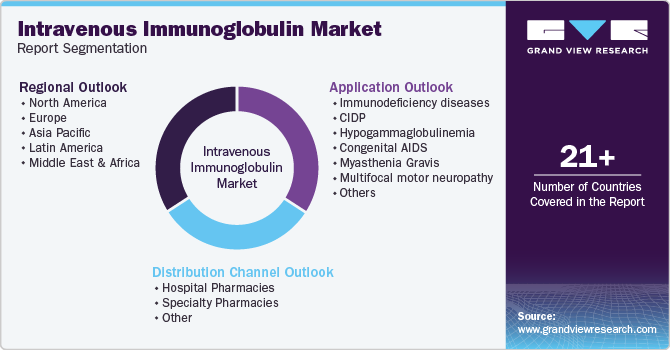
This report forecasts revenue growth at global, regional & country levels and provides an analysis of the industry trends in each of the sub-segments from 2021 to 2033. For this study, Grand View Research has segmented the global intravenous immunoglobulin market report based on application, distribution channel, and region:
 To learn more about this report, Download Free Sample Report
 -
Application Outlook (Revenue, USD Million, 2021 - 2033)
-
Immunodeficiency diseases
-
CIDP
-
Hypogammaglobulinemia
-
Congenital AIDS
-
Chronic Lymphocytic Leukemia
-
Myasthenia Gravis
-
Multifocal motor neuropathy
-
ITP
-
Kawasaki disease
-
Guillain-Barre syndrome
-
Others
-
-
Distribution Channel Outlook (Revenue, USD Million, 2021 - 2033)
-
Hospital Pharmacies
-
Specialty Pharmacies
-
Other
-
-
Regional Outlook (Revenue, USD Million, 2021 - 2033)
-
North America
-
U.S.
-
Canada
-
Mexico
-
-
Europe
-
UK
-
Germany
-
France
-
Italy
-
Spain
-
Denmark
-
Sweden
-
Norway
-
-
Asia Pacific
-
China
-
Japan
-
India
-
Australia
-
Thailand
-
South Korea
-
-
Latin America
-
Brazil
-
Argentina
-
-
Middle East & Africa
-
South Africa
-
Saudi Arabia
-
UAE
-
Kuwait
-
-
Research Methodology
Segment Definition
Segment - Treatment
Revenue capture definition
Immunodeficiency diseases
Includes IVIG therapies used as long term antibody replacement treatment for patients with inherited immune deficiencies. Revenue is generated from ongoing therapy aimed at maintaining adequate immunoglobulin levels and reducing susceptibility to recurrent infections and related complications.
CIDP
Includes IVIG therapies used for the management of chronic immune mediated nerve damage affecting peripheral nerves. Revenue is generated from repeated treatment cycles intended to maintain neurological function, improve mobility, and slow disease progression in affected patients.
Hypogammaglobulinemia
Includes IVIG therapies administered to patients with clinically low immunoglobulin concentrations. Revenue is generated from treatment intended to restore antibody levels, improve immune protection, and reduce the frequency of infections associated with immunoglobulin deficiency.
Congenital AIDS
Includes IVIG therapies used in pediatric patients with vertically transmitted HIV infection. Revenue is generated from treatment supporting immune function and reducing the occurrence of bacterial infections associated with compromised immune system development and function.
Chronic Lymphocytic Leukemia
Includes IVIG therapies administered as supportive care for leukemia patients experiencing secondary antibody deficiency. Revenue is generated from treatment aimed at reducing infection related complications resulting from disease associated with immune dysfunction.
Myasthenia Gravis
Includes IVIG therapies used for rapid immunomodulation during disease exacerbations and acute symptom worsening. Revenue is generated from treatment intended to improve muscle function and stabilize patients experiencing impaired neuromuscular signal transmission.
Multifocal Motor Neuropathy
Includes IVIG therapies used to preserve motor nerve function in patients with progressive muscle weakness. Revenue is generated from treatment intended to improve motor performance and support long term management of neurological impairment.
ITP
Includes IVIG therapies used to rapidly increase platelet counts in patients with immune mediated platelet destruction. Revenue is generated from treatment intended to reduce bleeding risk and support clinical management during acute episodes.
Kawasaki Disease
Includes IVIG therapies administered during acute inflammatory episodes in pediatric patients. Revenue is generated from treatment intended to reduce vascular inflammation and lower the risk of cardiovascular complications associated with the disease.
Guillain Barré Syndrome
Includes IVIG therapies used during acute neurological deterioration caused by immune mediated nerve injury. Revenue is generated from treatment intended to support recovery, improve functional outcomes, and reduce disease related complications.
Others
Includes IVIG therapies used across additional autoimmune, inflammatory, hematological, and neurological conditions not separately classified. Revenue is generated from approved and clinically supported applications that fall outside the specified therapeutic indication segments.
Segment - Distribution Channels
Revenue capture definition
Hospital Pharmacies
Includes intravenous immunoglobulin products distributed through hospital-based pharmacies for inpatient and outpatient treatment. Revenue is generated from IVIG therapies supplied within hospitals, medical centers, and healthcare institutions where administration is performed under clinical supervision.
Specialty Pharmacies
Includes intravenous immunoglobulin products distributed through specialty pharmacies that focus on managing complex and high-cost therapies. Revenue is generated from IVIG therapies supplied to patients requiring ongoing treatment, coordinated care services, and specialized product handling.
Others
Includes intravenous immunoglobulin products distributed through alternative channels such as retail pharmacies, home healthcare providers, infusion centers, and government healthcare programs. Revenue is generated from IVIG therapies supplied outside hospital and specialty pharmacy settings.
Estimation Model
The Intravenous Immunoglobulin (IVIG) Market is calculated using a combination of secondary research, primary research, and data triangulation techniques. Secondary research involves collecting information from annual reports, investor presentations, regulatory databases, industry journals, healthcare organizations, and company websites. Key manufacturers of plasma-derived immunoglobulin products are identified, and their IVIG-related revenues, product portfolios, production capacities, and regional presence are analyzed to establish the overall market landscape.
A bottom-up approach is used to estimate market size by aggregating revenues generated from IVIG products across major manufacturers. Demand-side analysis incorporates disease prevalence, patient treatment rates, average dosage requirements, utilization patterns, and average selling prices across indications such as primary immunodeficiency diseases, chronic inflammatory demyelinating polyneuropathy (CIDP), immune thrombocytopenia (ITP), Kawasaki disease, and other autoimmune and neurological disorders. Regional plasma collection volumes and immunoglobulin consumption trends are also assessed to refine estimates.
To validate the findings, a top-down approach is applied by evaluating healthcare expenditure, biologics market trends, reimbursement policies, and immunoglobulin adoption rates across key regions. Primary interviews with manufacturers, healthcare professionals, hospital pharmacists, distributors, and industry experts are conducted to verify market assumptions and pricing trends. The final market size is derived through data triangulation, ensuring accurate segmentation by product type, application, end user, and geography while maintaining consistency across supply-side and demand-side analyses.
Delivered Customizations
This report has been delivered with the following In-depth customizations
Client Request
Customization Delivered
Value Adds
IVIG Demand and Utilization Analysis
Assessment of IVIG utilization trends across primary immunodeficiency disorders, neurological disorders, hematological conditions, and autoimmune diseases, including treatment adoption patterns across hospitals, specialty clinics, and infusion centers.
Helps identify high-demand therapeutic segments, patient population trends, and growth opportunities across established and emerging IVIG applications.
Plasma Collection and Supply Chain Assessment
Analysis of plasma collection infrastructure, plasma availability trends, manufacturing capacity, and supply chain dynamics across key producing regions. Evaluation of factors influencing IVIG production and product availability.
Supports identification of supply-related risks, capacity expansion opportunities, and sourcing strategies critical for long-term market growth.
Clinical Application and Treatment Landscape Evaluation
Evaluation of IVIG adoption across primary immunodeficiency disorders, CIDP, Myasthenia Gravis, ITP, Guillain-Barré syndrome, Kawasaki Disease, and other approved indications. Assessment of treatment utilization and evolving clinical practices.
Tracks emerging treatment opportunities and supports strategic expansion into growing therapeutic application areas.
Competitive Benchmarking and Market Share Analysis
Comparative assessment of plasma collection capabilities, manufacturing scale, product portfolios, geographic presence, distribution networks, and strategic initiatives of leading IVIG market participants.
Supports competitive intelligence, partnership evaluation, investment planning, and market positioning decisions across the IVIG industry.
Product Development and Regulatory Landscape Analysis
Assessment of product approvals, indication expansions, pipeline developments, manufacturing investments, and commercialization strategies adopted by IVIG manufacturers across major markets.
Identifies future growth opportunities, competitive developments, and market expansion strategies influencing industry evolution.
Frequently Asked Questions About This Report
The global intravenous immunoglobulin market size was estimated at USD 14.9 billion in 2025 and is projected to grow from USD 16.0 billion in 2026
Some key players operating in the intravenous immunoglobulin market include Biotest AG, Baxter, Octapharma AG, LFB, Grifols SA, CSL, China Biologics Products Inc., Kedrion, and BDI Pharma Inc.
Based on distribution channel, the hospital pharmacies segment led the market with the largest revenue share of 57.1% in 2025.
Key factors driving the market's growth include the rising prevalence of immunodeficiency diseases, increasing adoption of immunoglobulin replacement therapy, and rising geriatric populations.
The global intravenous immunoglobulin market is expected to grow at a compound annual growth rate of 7.0% from 2026 to 2033 to reach USD 25.7 billion by 2033.
North America dominated the intravenous immunoglobulin market with the largest revenue share of 45.9% in 2025.
Asia Pacific is the fastest-growing region over the forecast period.
Based on application, the immunodeficiency diseases segment led the market with the largest revenue share of 19.5% in 2025.
About the Author(s)
Pharmaceuticals Research Team
Healthcare · PharmaceuticalsThis report was authored by the pharmaceuticals research team at Grand View Research - comprising two research analysts, one senior research analyst, and one industry expert - with specialized expertise in the pharmaceuticals segment of the healthcare industry. All findings are based on proprietary healthcare databases, executive interviews, and regulatory analysis, subject to internal peer review prior to publication.
Last Updated:
Speak to Analyst

Customize this report to your needs - add regions, segments, or data points, with 20% free customization.
Or view our licence options:


ISO 9001:2015 & 27001:2022 Certified
We are GDPR and CCPA compliant! Your transaction & personal information is safe and secure. For more details, please read our privacy policy.


