
- Home
- »
- Catalysts & Enzymes
- »
-
Enzymes Market Size And Share, Industry Report, 2033GVR Report cover
![Enzymes Market Size, Share & Trends Report]()
Enzymes Market (2025 - 2033) Size, Share & Trends Analysis Report By Type (Industrial, Specialty), By Product (Carbohydrase, Proteases), By Source (Plants, Animals), By Region, And Segment Forecasts
- Report ID: 978-1-68038-022-4
- Number of Report Pages: 80
- Format: PDF
- Historical Range: 2021 - 2023
- Forecast Period: 2025 - 2033
- Industry: Specialty & Chemicals
- Report Summary
- Table of Contents
- Interactive Charts
- Methodology
- Download FREE Sample
-
 Download Sample Report
Enzymes Market Summary
The global enzymes market size was estimated at USD 13,938.9 million in 2024 and is projected to reach USD 24,672.1 million by 2033, growing at a CAGR of 6.6% from 2025 to 2033. The market is driven by rising demand across food processing, pharmaceuticals, and biofuels; increased adoption of sustainable and eco-friendly industrial processes; advancements in enzyme engineering; and growing use in animal feed and diagnostics.
Key Market Trends & Insights
- North America dominated the market with the largest revenue share of 37.7% in 2024.
- The enzymes market in the U.S. is experiencing sustained momentum, due to increasing utilization in food and beverage processing.
- By type, the specialty enzymes segment is expected to grow at the fastest CAGR of 6.7% from 2025 to 2033 in terms of revenue.
- By product, the carbohydrase segment led the market with the largest revenue share of 47.8% in 2024.
- By source, the microorganisms segment is expected to grow at the fastest CAGR of 6.6% from 2025 to 2033.
Market Size & Forecast
- 2024 Market Size: USD 13,938.9 Million
- 2033 Projected Market Size: USD 24,672.1 Million
- CAGR (2025 - 2033): 6.6%
- North America: Largest market in 2024
- Asia Pacific: Fastest growing market
Consumer preference for clean-label products and regulatory support further fuel market expansion. The enzymes industry is experiencing sustained growth due to the expanding applications across food processing, animal nutrition, pharmaceuticals, and industrial biotechnology. Key drivers include the rising adoption of enzymes as biocatalysts in manufacturing processes, reducing energy consumption, and chemical waste. The shift toward natural and clean-label ingredients in food and beverage products is accelerating demand for enzyme-based formulations. In animal feed, enzymes are enhancing nutrient absorption, improving animal health, and reducing environmental impact. In addition, increased R&D investment in enzyme engineering and recombinant DNA technologies is supporting efficient and scalable production.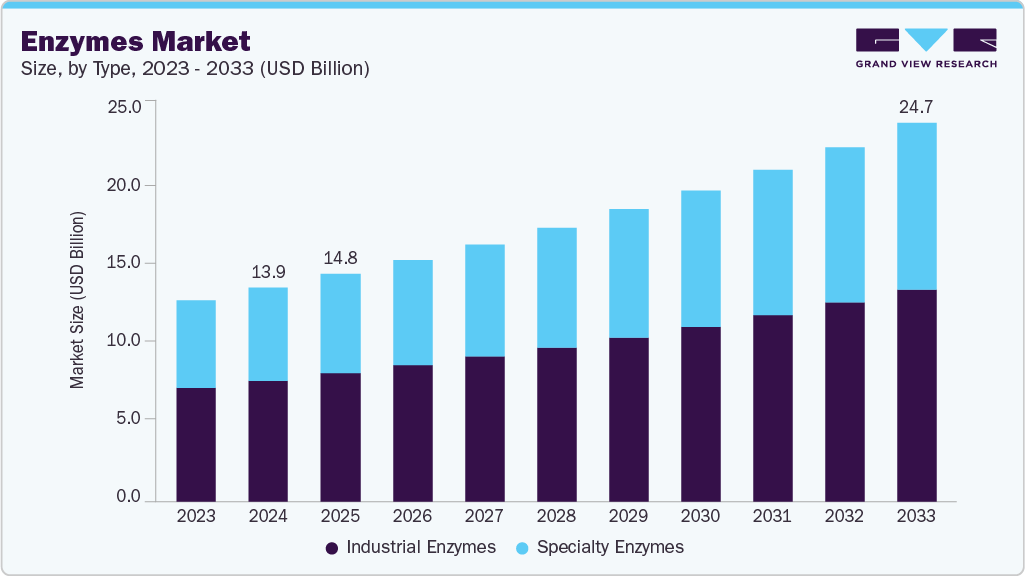
One of the major restraints in the enzymes industry is the volatility in raw material availability and pricing, especially for animal-derived enzymes sourced from organs like the pancreas or stomach. This affects the cost structure and profit margins of manufacturers. Moreover, the production of enzymes often requires complex fermentation systems, sensitive to contamination and process variation, leading to inconsistent yield or efficacy. Regulatory hurdles around genetically modified organisms (GMOs), especially in enzyme-producing microorganisms, create barriers in certain regions. Intellectual property rights and biosafety concerns also limit the free development and distribution of new enzyme products.
There is a significant opportunity in the development of enzyme-based solutions tailored for green chemistry and sustainability. The growing interest in plant-based and microbial enzymes opens doors for enzyme manufacturers to reduce reliance on animal sources and align with ethical, halal, and kosher requirements. Industrial sectors such as textiles, detergents, pulp and paper, and biofuels are adopting enzyme technologies to reduce chemical load and waste generation. In food and beverage, emerging markets are seeking advanced enzymatic solutions for yield improvement and shelf-life enhancement. Further, synthetic biology and precision fermentation offer untapped potential for high-specificity enzyme development at a commercial scale.
Market Concentration & Characteristics
The enzymes industry is currently in a medium growth stage, with the pace of expansion steadily accelerating. Dominated by key players such as Novozymes A/S AG, DuPont Danisco, and DSM, the market exhibits a moderately concentrated supply structure. These leading companies play a pivotal role in shaping industry trends, particularly in the industrial enzymes segment, which is known for its high investment requirements and long development cycles. Growing demand for high-performance specialty enzymes is creating substantial opportunities across the supply chain, particularly for raw material providers and manufacturers capable of delivering consistent, high-quality enzyme formulations.
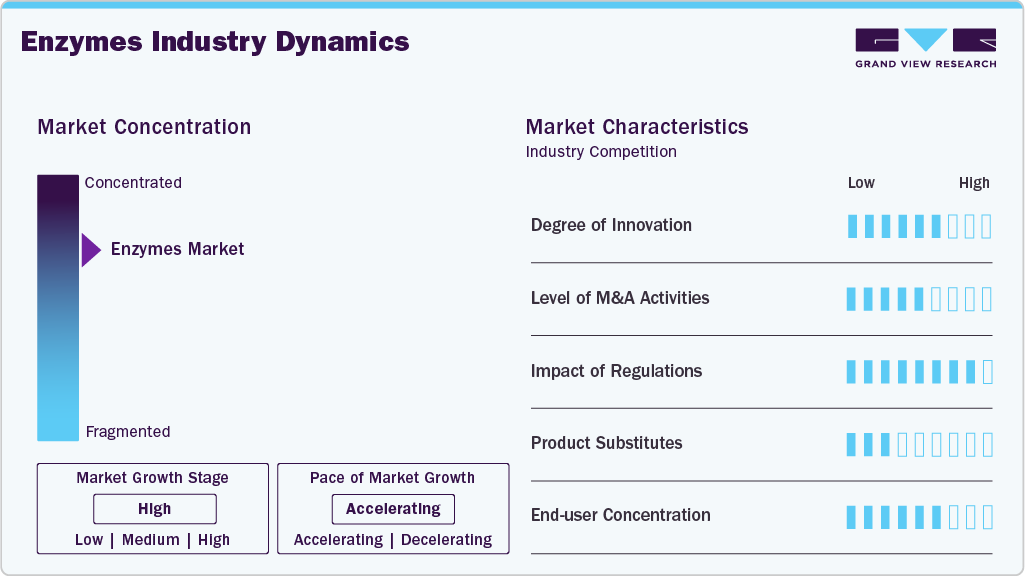
The enzymes industry is well-established, with diverse applications across sectors such as food and beverages, pharmaceuticals, animal feed, biotechnology, detergents, nutraceuticals, and personal care. Significant growth drivers include rising demand from the dairy and brewing industries, alongside evolving consumer preferences toward processed and packaged food products. However, regulatory compliance poses a considerable challenge for enzyme manufacturers. Due to the wide-ranging applications of enzymes, companies must navigate complex and varying approval processes across different regions. Non-compliance with local regulatory frameworks can result in trade restrictions, delaying product launches, and impacting market competitiveness.
Type Insights
The industrial enzymes segment led the market with the largest revenue share of 56.6% in 2024. This growth is driven by its extensive application across high-volume industries such as nutraceuticals, personal care and cosmetics, food and beverages, detergents, textiles, pulp and paper, animal feed, biofuels, and wastewater treatment. In food processing, enzymes improve yield, texture, and flavor, while in detergents, they enable low-temperature cleaning and stain removal. Enzymes enhance nutrient digestibility in animal feed and optimize ethanol yields in biofuel production. Their role in textile desizing, paper bleaching, and wastewater biodegradation highlights their industrial versatility. Demand is further fueled by sustainability efforts and energy-efficient processes, making industrial enzymes essential across environmentally conscious manufacturing sectors.
The specialty enzymes segment is expected to grow at the fastest CAGR of 6.7% during the forecast period. This segment is propelled due to advanced applications in pharmaceuticals, research and biotechnology, diagnostics, biocatalysis, and other high-precision sectors. In pharmaceuticals, these enzymes are used in drug formulation, delivery, and therapeutic enzyme replacement. The biotechnology and diagnostics sectors rely heavily on specialty enzymes for molecular diagnostics, PCR techniques, and DNA modification. Enzyme-based biocatalysts are replacing traditional chemical catalysts due to their specificity, sustainability, and efficiency. As personalized medicine, molecular research, and precision diagnostics expand globally, the demand for high-purity, targeted enzymes continues to accelerate innovation and commercial adoption.
Product Insights
The carbohydrase segment led the market with the largest revenue share of 47.8% in 2024. This growth is driven by its extensive utility in industries such as food and beverages, animal feed, biofuel production, and textiles. This group of enzymes, including amylases, cellulases, and xylanases, facilitates the breakdown of complex carbohydrates into simple sugars, enhancing efficiency in processes like starch conversion, juice clarification, and dough conditioning. In the biofuel industry, carbohydrases are critical for the saccharification of biomass to fermentable sugars, supporting sustainable fuel production. Their growing adoption in animal feed improves nutrient digestibility and feed efficiency. The demand is reinforced by the clean-label trend and a shift toward enzymatic processing for cost-effective, eco-friendly manufacturing across industrial sectors.
The proteases segment is predicted to grow at the fastest CAGR of 6.6% from 2025 to 2033 during the forecast period. This segment is increasing due to heightened demand owing to their indispensable role in protein hydrolysis across multiple industries. In the detergent industry, they are employed to break down protein-based stains under mild conditions, allowing energy-efficient, cold-water washing. In food processing, proteases contribute to meat tenderization, cheese ripening, and flavor development in fermented products. Pharmaceutical and diagnostic applications also utilize proteases in therapeutic formulations and disease marker detection. Their incorporation into animal feed enhances protein digestibility, improving animal health and productivity. Increased focus on sustainable processing and the replacement of harsh chemical agents further supports the broader integration of proteases in industrial and specialty applications.
Lipases are gaining increased commercial traction due to their ability to catalyze the hydrolysis of fats, oils, and triglycerides into fatty acids and glycerol. They are vital in sectors like food processing for flavor enhancement, in detergents for removing fatty stains, and in biodiesel production for the transesterification of oils. The growing adoption of phospholipases, a subtype of lipase, as biocatalysts in agriculture, nutraceuticals, and cosmetics is contributing to segment expansion. Lipases are also integral to bioremediation efforts due to their role in degrading lipid-based pollutants. The demand is further driven by green chemistry initiatives, biodegradable formulations, and the shift toward enzyme-based industrial processes.
Source Insights
The microorganisms segment led the market with the largest revenue share of 85.7% in 2024. This growth is driven due to their scalability, rapid growth, and genetic manipulability, enabling high-yield, cost-effective fermentation processes. Fungi, bacteria, and enzyme-producing yeasts are widely used for their ability to secrete extracellular enzymes, simplifying downstream purification. Advances in recombinant DNA technology and synthetic biology have enhanced strain engineering, allowing tailored enzyme profiles for industrial, pharmaceutical, and food applications. Their use ensures consistency, purity, and compliance with regulatory standards, making microbial enzymes the preferred choice for large-scale commercial production across sectors such as detergents, food processing, and bioenergy.
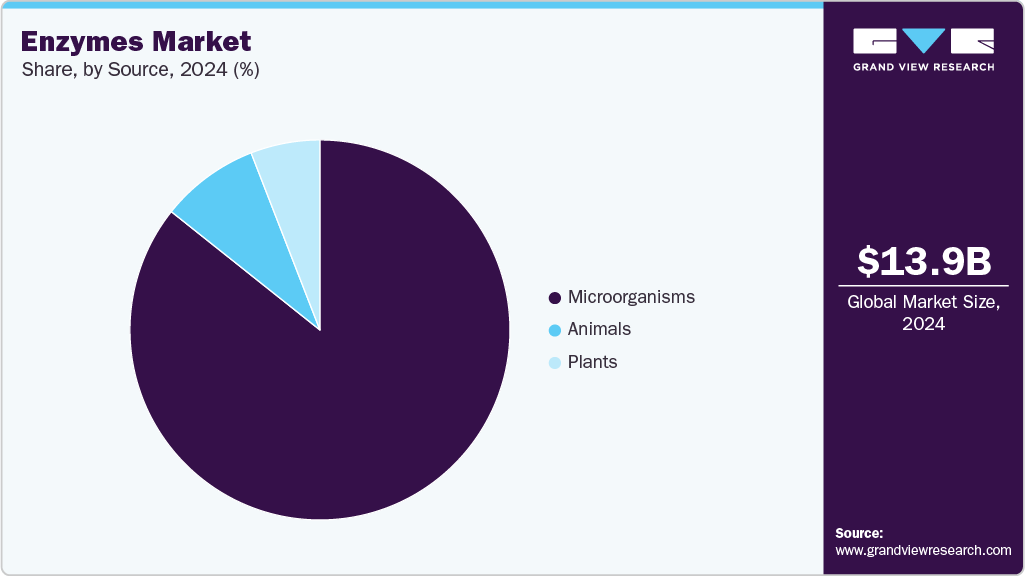
The plants segment is anticipated to grow at the fastest CAGR of 6.4% from 2025 to 2033 during the forecast period. This market momentum is due to their natural origin, safety profile, and alignment with consumer demand for clean-label, animal-free products. Their application spans the food, nutraceutical, and cosmetic industries, where plant-sourced proteases like bromelain and papain are favored for digestive aids and anti-inflammatory benefits. Technological advancements in plant tissue culture and transgenic expression systems are improving enzyme yields and stability. Plant-based systems also offer advantages in enzyme extraction for halal, kosher, and vegan-certified applications, driving their increasing use in formulations where ethical, dietary, or religious concerns influence product development.
Regional Insights
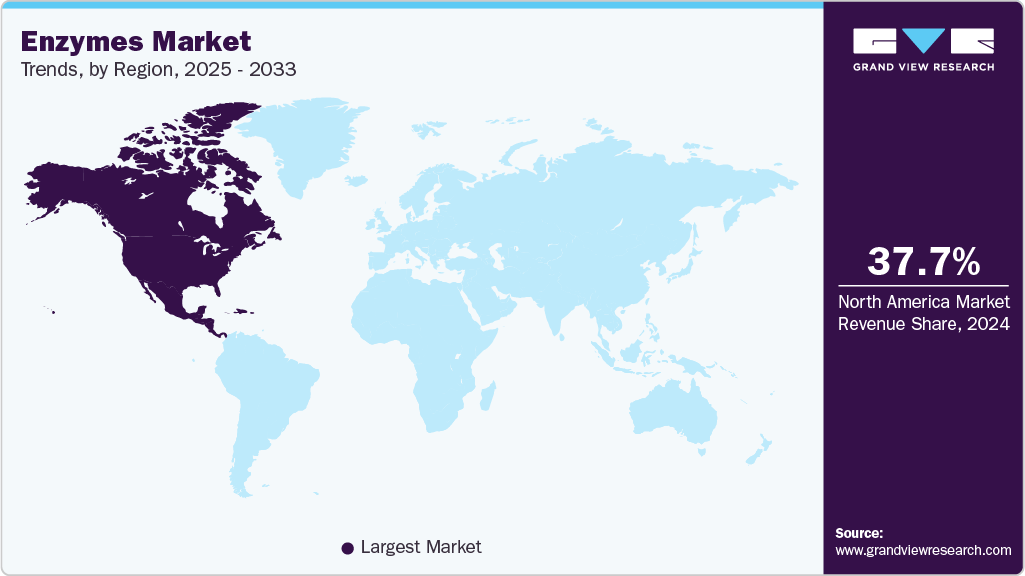
North America dominated the enzymes market with the largest revenue share of 37.7% in 2024. It is primarily attributed to the region's robust growth driven by a strong presence of established enzyme manufacturers, advanced biotechnological infrastructure, and significant research and development investment. The region benefits from diversified demand across sectors such as food processing, pharmaceuticals, animal feed, and industrial applications, including detergents and biofuels. Consumer preference for clean-label and functional foods, combined with regulatory support for green technologies and industrial enzyme use, continues to position North America as a key global driver.
U.S. Enzymes Market Trends
The enzymes market in the U.S. is experiencing sustained momentum, due to increasing utilization in food and beverage processing, high investment in healthcare biotechnology, and a mature market for industrial enzymes. The pharmaceutical and diagnostic sectors leverage specialty enzymes for targeted therapeutics and clinical applications. The expanding animal feed and dietary supplements industries also contribute significantly. Moreover, the U.S. remains a hub for innovation in enzyme engineering, supported by extensive academic-industry collaborations, access to advanced fermentation technologies, and regulatory clarity that facilitates the commercialization of novel enzyme products.
Asia Pacific Enzymes Market Trends
The enzymes market in Asia Pacific is expected to grow at the fastest CAGR of 7.7% from 2025 to 2033. The market is increasing steadily due to rapid industrialization, rising demand for processed food, and the expansion of healthcare infrastructure in emerging economies. Enzyme applications in textiles, detergents, and animal nutrition are growing as sustainability regulations tighten and manufacturers seek eco-efficient alternatives. The region also benefits from a large base of raw material supply and favorable production economics, prompting both domestic players and global enzyme companies to invest in localized manufacturing and research capabilities.
The China enzymes marketis experiencing consistent growth, driven by the country’s expanding food processing, pharmaceuticals, and detergent manufacturing sectors. As one of the world’s largest consumers of industrial and specialty enzymes, China is increasingly investing in biotech innovation to support domestic enzyme production and reduce reliance on imports. Government incentives for clean energy and bio-based industries are supporting growth in enzyme use for biofuels and environmental applications. In addition, consumer awareness of health and wellness is contributing to the rising demand for enzyme-based dietary supplements and functional food products.
Europe Enzymes Market Trends
The enzymes market in Europe is anticipated to grow at the fastest CAGR during the forecast period. It holds a strong share in the global enzymes industry owing to its long-standing biopharmaceutical base, strict environmental policies, and leadership in sustainable industrial practices. The European Union supports enzymes as part of green chemistry efforts, promoting their use in biodegradable detergents, food processing, and agricultural biotechnology. High demand from sectors such as bakery, dairy, brewing, and animal feed fuels enzyme innovation. Harmonized regulatory pathways and support for biotech startups further bolster Europe’s competitiveness in both industrial and specialty enzyme domains.
The Germany enzymes market growth is driven by robust industrial biotech infrastructure, leadership in pharmaceutical manufacturing, and strong demand for clean-label food solutions. The country is a key player in enzyme use for food processing, detergents, textiles, and clinical diagnostics. German manufacturers emphasize precision fermentation and sustainability in enzyme production, aligning with both domestic and European Union (EU)-wide environmental regulations. The country’s research institutions and industrial clusters foster partnerships that accelerate enzyme innovation, particularly in developing plant-based and microbial enzymes for diverse applications across healthcare and industrial sectors.
Latin America Enzymes Market Trends
The enzymes market in Latin America is growing rapidly, driven by increasing adoption in agriculture, food and beverage, and biofuel production. The growing population and evolving food industry in countries such as Brazil, Mexico, and Argentina are stimulating demand for enzyme-enhanced processing solutions that improve yield and shelf life. Enzymes are also gaining traction in the animal feed sector due to their role in improving feed conversion and livestock health. Government support for ethanol production and sustainable farming practices further contributes to the growing use of industrial and specialty enzymes across the region.
Middle East and Africa Enzymes Market Trends
The enzymes market in Middle East and Africa growth is driven by rising investments in healthcare, growing food processing sectors, and increasing awareness of enzyme-based environmental solutions. Countries across the Gulf Cooperation Council are expanding food and beverage industries, creating demand for food-grade enzymes. Meanwhile, African economies are witnessing the growing use of enzymes in agriculture and animal feed to improve productivity and sustainability. With a growing emphasis on diversifying economies and reducing environmental impact, enzyme technologies are being increasingly viewed as strategic tools for industrial development and resource efficiency across the region.
Key Enzymes Company Insights
Some of the key players operating in the market comprise Novozymes A/S, DuPont Danisco, DSM, and others.
-
Novozymes A/S specializes in the development and commercialization of industrial enzymes and microorganisms. The company focuses on identifying naturally occurring enzymes and enhancing their performance for diverse industrial applications. Its solutions are widely used across sectors such as laundry and dishwashing detergents, food and beverages, animal nutrition, and biofuel production. With a global footprint, Novozymes A/S operates in over 30 countries and supplies enzyme solutions to more than 40 end-use industries. It maintains production facilities in Denmark, Brazil, Argentina, China, Canada, the United States, and India.
-
DSM is a globally active, science-driven enterprise involved in nutrition, health, and sustainable living. Its extensive portfolio spans industries including animal health and nutrition, food and beverages, renewable energy, healthcare, paints and coatings, personal care, and performance materials. DSM operates through three core segments: Nutrition, Materials, and Innovation Center. Its Nutrition business unit leads the production and distribution of enzymes for varied applications. DSM’s reach extends to customers in more than 50 countries, supported by a robust innovation pipeline and commitment to sustainable product development.
Key Enzymes Companies:
The following are the leading companies in the enzymes market. These companies collectively hold the largest market share and dictate industry trends.
- BASF
- Novozymes A/S
- DuPont Danisco
- DSM
- Novus International, Inc.
- Associated British Foods plc
- Chr. Hansen A/S
- Advanced Enzyme Technologies
- Lesaffre
- Adisseo
Recent Development
-
In January 2024, Novozymes and Chr. Hansen officially merged to form Novonesis, marking the creation of a global leader in biosolutions. The news highlights the successful integration of two major biotechnology players with a combined focus on sustainability, innovation, and enzyme-driven applications. The aim is to deliver transformative biosolutions across industries. This development significantly strengthens the enzyme market by expanding capabilities, global reach, and product diversity in both industrial and specialty enzyme segments.
-
In March 2025, IFF and Kemira announced the formation of Alpha Bio, a joint venture to scale production of sustainable biobased materials using enzymatic technology. The news outlines their commitment to replacing fossil-based polymers with enzyme-enabled biopolymers derived from plant sugars. The aim is to meet growing demand for biodegradable, high-performance materials. This move reinforces the role of enzymes in advancing green chemistry and expands their industrial applications within the global enzymes industry.
Enzymes Market Report Scope
Report Attribute
Details
Market size value in 2025
USD 14,824.0 million
Revenue forecast in 2033
USD 24,672.1 million
Growth rate
CAGR of 6.6% from 2025 to 2033
Base year for estimation
2024
Historical data
2021 - 2023
Forecast period
2025 - 2033
Quantitative units
Volume in kilotons, Revenue in USD million/billion, and CAGR from 2025 to 2033
Report coverage
Revenue forecast, volume forecast, competitive landscape, growth factors, and trends
Segments covered
Type, product, source, region
Regional scope
North America; Europe; Asia Pacific; Latin America; Middle East & Africa
Country scope
U.S.; Canada; Mexico; Germany; UK; Italy; Spain; France; China; India; Japan; South Korea; Indonesia; Australia; Brazil; Argentina; Saudi Arabia; South Africa; Türkiye
Key companies profiled
BASF; Novozymes A/S; DuPont Danisco; DSM; Novus International, Inc.; Associated British Foods plc; Chr. Hansen A/S; Advanced Enzyme Technologies; Lesaffre, Adisseo
Customization scope
Free report customization (equivalent up to 8 analyst’s working days) with purchase. Addition or alteration to country, regional, and segment scope.
Pricing and purchase options
Avail customized purchase options to meet your exact research needs. Explore purchase options
Global Enzymes Market Report Segmentation
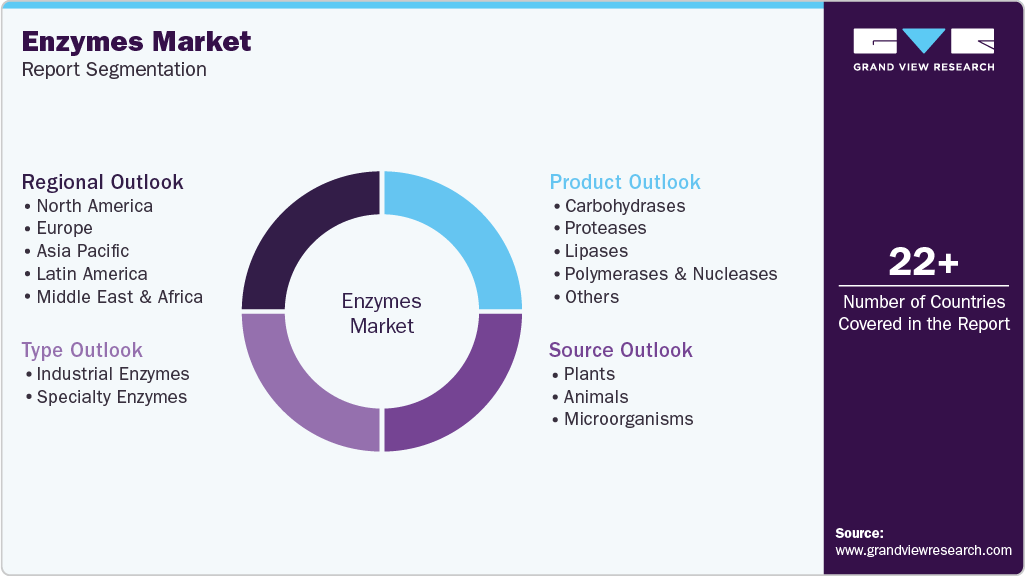
This report forecasts volume & revenue growth at a global level and provides an analysis of the latest industry trends in each of the sub-segments from 2021 to 2033. For this study, Grand View Research has segmented the global enzymes market report based on type, product, source, and region:
-
Type Outlook (Volume, Kilotons; Revenue, USD Million, 2021 - 2033)
-
Industrial Enzymes
-
Food & Beverages
-
Detergents
-
Animal Feed
-
Biofuels
-
Textiles
-
Pulp & Paper
-
Nutraceutical
-
Personal Care & Cosmetics
-
Wastewater
-
Others
-
-
Specialty Enzymes
-
Pharmaceutical
-
Research & Biotechnology
-
Diagnostics
-
Biocatalyst
-
-
-
Product Outlook (Volume, Kilotons; Revenue, USD Million, 2021 - 2033)
-
Carbohydrases
-
Proteases
-
Lipases
-
Polymerases & Nucleases
-
Others
-
-
Source Outlook (Volume, Kilotons; Revenue, USD Million, 2021 - 2033)
-
Plants
-
Animals
-
Microorganisms
-
-
Region Outlook (Volume, Kilotons; Revenue, USD Million, 2021 - 2033)
-
North America
-
U.S.
-
Canada
-
Mexico
-
-
Europe
-
Germany
-
UK
-
France
-
Italy
-
Spain
-
-
Asia Pacific
-
China
-
India
-
Japan
-
South Korea
-
Indonesia
-
Australia
-
-
Latin America
-
Brazil
-
Argentina
-
-
Middle East & Africa
-
Saudi Arabia
-
South Africa
-
Türkiye
-
-
Frequently Asked Questions About This Report
b. The global enzymes market size was estimated at USD 13,938.9 million in 2024 and is expected to reach USD 14,824.0 million in 2025.
b. The global enzymes market is expected to grow at a CAGR of 6.6% from 2025 to 2033 to reach USD 24,672.1 million in 2033
b. North America market dominated the global landscape with a revenue share of 37.7% in 2024. It is primarily attributed to strong biotech infrastructure, established enzyme producers, and high R&D investment. Diverse demand across food, pharma, feed, and industrial sectors—alongside rising preference for clean-label products and regulatory support for sustainable technologies—continues to reinforce the region’s leadership in enzyme innovation and commercial-scale application.
b. Some key players operating in the enzymes market include BASF, Novozymes A/S, DuPont Danisco, DSM, Novus International, Inc., Associated British Foods plc, Chr. Hansen A/S, Advanced Enzyme Technologies, Lesaffre, Adisseo.
b. The global enzymes market is driven by the rising demand for food & beverage products is attributable to the increasing consumer awareness related to one’s health and is expected to positively impact product demand over the forecast period.


Share this report with your colleague or friend.
Need a Tailored Report?
Customize this report to your needs — add regions, segments, or data points, with 20% free customization.


ISO 9001:2015 & 27001:2022 Certified
We are GDPR and CCPA compliant! Your transaction & personal information is safe and secure. For more details, please read our privacy policy.
Trusted market insights - try a free sample
See how our reports are structured and why industry leaders rely on Grand View Research. Get a free sample or ask us to tailor this report to your needs.













