
- Home
- »
- Catalysts & Enzymes
- »
-
Specialty Enzymes Market Size & Share Report, 2026-2033GVR Report cover
![Specialty Enzymes Market (2026 - 2033)Report]()
Specialty Enzymes Market (2026 - 2033)
Size, Share & Trends Analysis Report By Product (Carbohydrase, Proteases, Lipases), By Application (Pharmaceutical, Research & Biotechnology), By Source (Plants, Animals, Microorganisms), By Region, And Segment Forecasts
Market Size, 2025
$6.4BMarket Estimate, 2026
$6.9BMarket Forecast, 2033
$10.5BCAGR, 2026–2033
6.3%Specialty Enzymes Market Summary
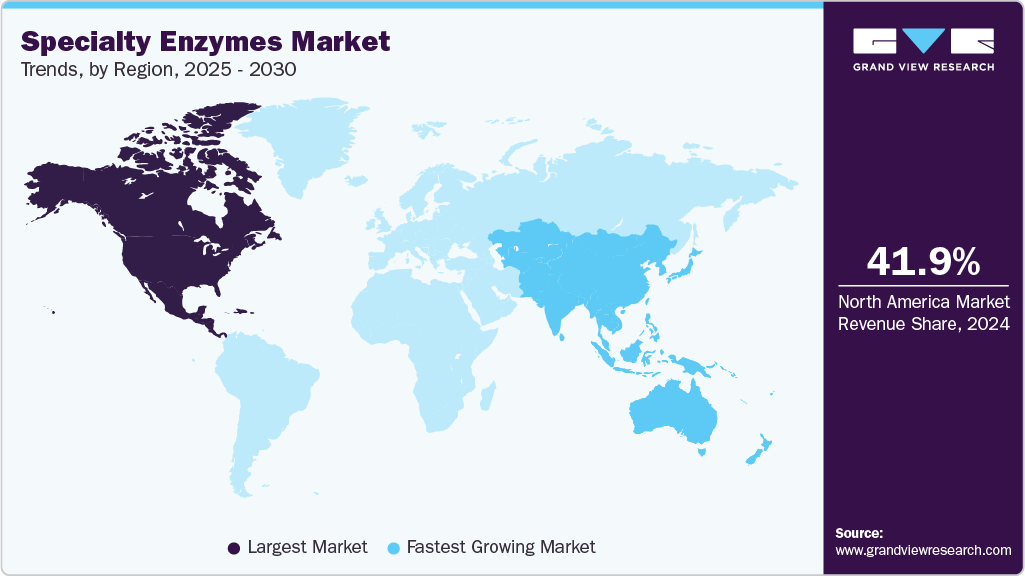
The global specialty enzymes market size was valued at USD 6.4 billion in 2025 and is projected to grow from USD 6.9 billion in 2026 to USD 10.5 billion by 2033, at a CAGR of 6.3% from 2026 to 2033. North America dominated the market, accounting for a revenue share of 42.0% in 2025. The growth of the product market is attributed to the growing prevalence of chronic diseases such as cancer and rheumatoid arthritis.

Key Market Trends & Insights
- By application: Pharmaceuticals segment dominated the market, with a revenue share of 40.5% in 2025.
- By product: Carbohydrase segment held the largest market share of 37.7% in 2025.
- By source: Microorganisms segment held the largest revenue share 74.6% in 2025.
Regional Highlights
- Largest regional market: North America (42.0% revenue share, 2025)
- Fastest-growing regional market: Asia Pacific (highest CAGR, 2026-2033)
- By country: The U.S. held the largest market share in 2025.
Market Size & Forecast
- Market size in 2025: USD 6.4 Billion
- Estimated market size in 2026: USD 6.9 Billion
- Projected market size by 2033: USD 10.5 Billion
- CAGR (2026-2033): 6.3%
Furthermore, the expansion of food industries drives the demand for specialty enzymes. The enzymes such as lipases, amylases, proteases, rennet, pectinases, invertases, cellulases, and glucose oxidase play a vital role in the food processing industry. However, the complexities in biosimilar development may hinder the market's growth. Utilizing specialty enzymes provides swift and effective solutions to various challenges, contributing to market expansion. These enzymes are widely used in diagnostic methods, including DNA modification and sequencing. The anticipated decline in the costs of DNA modification and sequencing is expected to drive enzyme demand in research, biotechnology, and medical applications. Moreover, the aging population in affluent countries is likely to increase the need for specialty enzymes in healthcare.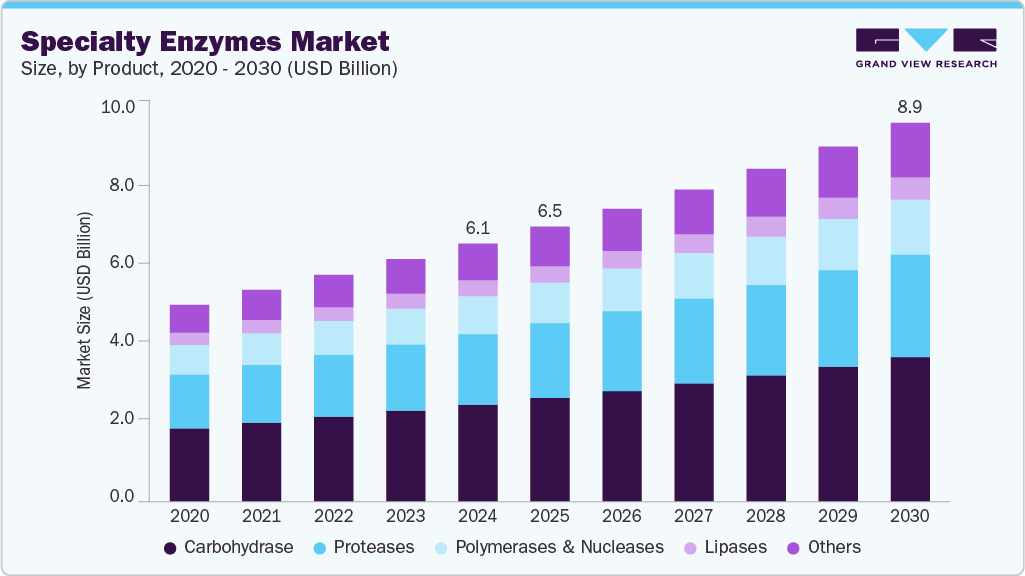
The development of innovative diagnostic methods, increasing adoption of enzymes in healthcare, and ongoing technological advancements are key drivers of global market growth. However, a major challenge is the limited consumer awareness of the benefits of specialty enzymes.
Legal and ethical concerns and low consumer awareness, particularly in emerging economies, also threaten market growth. Nevertheless, the rising rate of industrialization and adoption of advanced technologies in the pharmaceutical sector across emerging markets are expected to create future opportunities for market participants.
Increasing demand in pharmaceuticals and biotechnology fuels the specialty enzymes industry, driven by the need for efficient drug development, diagnostics, and therapeutic solutions. Breakthroughs in biotechnology and enzyme engineering improve enzyme performance, specificity, and stability, enabling customized applications across various industries. These advancements reduce production costs and enhance process efficiency, making specialty enzymes more attractive to manufacturers.
The combination of growing industry needs and technological innovation is projected to accelerate market growth, expanding the use of specialty enzymes in healthcare, research, and industrial processes worldwide. In February 2024, New England Biolabs (NEB) introduced the NEBNext Enzymatic 5hmC-seq Kit (E5hmC-seq), a new enzyme-based method for detecting 5-hydroxymethylcytosine (5hmC) sites.
Market Dynamics
The specialty enzymes market is being driven by increasing demand for high-performance biocatalysts across pharmaceuticals, diagnostics, food processing, and industrial biotechnology, where enzymes improve process efficiency, product quality, and sustainability. Growth is further supported by advancements in enzyme engineering, rising adoption of precision manufacturing, and expanding applications in healthcare and specialty chemicals. However, market expansion is moderated by high development costs, stringent regulatory requirements, and the need for application-specific validation. Overall, the market is expected to benefit from continued innovation, growing investment in biotechnology, and the shift toward environmentally responsible production processes.
The increasing adoption of specialty enzymes as highly efficient biocatalysts in pharmaceutical and biotechnology manufacturing is a key factor driving market growth. Specialty enzymes enable highly selective biochemical reactions, improve production efficiency, and reduce processing time while minimizing waste generation. As pharmaceutical manufacturers focus on developing complex biologics, vaccines, and advanced therapeutics, the demand for enzymes that enhance reaction specificity and product consistency continues to rise. In addition, the growing preference for sustainable manufacturing processes has encouraged companies to replace conventional chemical catalysts with enzyme-based alternatives that operate under milder conditions and support regulatory compliance.
Advancements in protein engineering, recombinant DNA technology, and enzyme optimization are further expanding the commercial applications of specialty enzymes across drug manufacturing, molecular diagnostics, gene therapy, and life science research. Biotechnology companies are investing in the development of customized enzyme solutions that deliver higher stability, improved catalytic performance, and compatibility with next-generation production platforms. These innovations, coupled with increasing investments in biopharmaceutical research and the expansion of precision medicine, are expected to strengthen the long-term demand for specialty enzymes across global healthcare and industrial biotechnology sectors.
The growth of the specialty enzymes market is constrained by the high costs associated with enzyme discovery, research, production, and commercialization, along with stringent regulatory requirements governing their use in pharmaceutical, diagnostic, and food applications. Developing specialty enzymes with the desired stability, specificity, and performance requires significant investment in biotechnology research, advanced fermentation technologies, and quality control systems. Additionally, manufacturers must comply with rigorous regulatory standards and validation procedures, which can extend product development timelines and increase operational expenses.
The challenge is particularly significant for small and medium-sized biotechnology companies that often face limited financial resources and lengthy approval processes before commercializing new enzyme products. Variations in regulatory frameworks across different countries further increase compliance complexity, requiring additional testing, documentation, and certification. These factors can delay product launches, restrict market entry, and reduce the pace of innovation, thereby limiting the overall growth potential of the Specialty Enzymes Market.
The expanding use of precision medicine, molecular diagnostics, and personalized healthcare presents a significant growth opportunity for the specialty enzymes market. Specialty enzymes play a critical role in technologies such as PCR, next-generation sequencing (NGS), gene editing, and companion diagnostics by enabling accurate DNA and RNA analysis with high sensitivity and reliability. As healthcare systems increasingly focus on early disease detection, targeted therapies, and personalized treatment strategies, demand for high-performance enzymes with enhanced specificity and stability is expected to accelerate. This trend is encouraging biotechnology companies to develop innovative enzyme formulations tailored for advanced diagnostic and therapeutic applications.
Continuous investment in genomics research, cell and gene therapy, and molecular testing infrastructure is creating new commercial opportunities for enzyme manufacturers. The expansion of biotechnology research facilities, increasing collaborations between pharmaceutical and life sciences companies, and growing adoption of automated laboratory workflows are driving demand for specialized enzyme solutions across clinical and research settings. These developments are expected to broaden the application scope of specialty enzymes and support sustained market growth over the coming years.
Analyst Perspective
The specialty enzymes market is witnessing sustained momentum, driven by increasing adoption across pharmaceuticals, biotechnology, diagnostics, and biocatalytic manufacturing. Advances in enzyme engineering, recombinant DNA technology, and precision fermentation are enhancing enzyme specificity, stability, and production efficiency, enabling broader use in high-value applications. As healthcare innovation and biologics production continue to expand, manufacturers are prioritizing product innovation, strategic collaborations, and scalable manufacturing capabilities to strengthen their competitive position and address the growing demand for specialized enzyme solutions.
Product Insights
Carbohydrase segment accounted for the largest revenue of 37.7% in 2025, fueled by rising consumer demand for dietary supplements and digestive health products that rely heavily on carbohydrase enzymes. In addition, extensive research and development efforts focused on improving enzyme yield, specificity, and stability through advanced fermentation techniques have further boosted the segment’s growth. The versatile applications of carbohydrases in biotechnology and food processing continue to reinforce their leading position within the specialty enzymes market.
Polymerase and nuclease products are also anticipated to witness lucrative growth due to their significant use in molecular biology applications, such as recombinant DNA and polymerase chain reactions. Gene therapy holds promise for treating many diseases, such as cancer, cystic fibrosis, heart disease, diabetes, hemophilia, and AIDS. Thus, an upsurge in cancer prevalence propels this segment's growth.
Lipases, phospholipases, and cellulases are prominent enzymes in the biofuel sector. For instance, enzymes such as phospholipase and lipase play a vital role in biodiesel production. Numerous biodiesel manufacturers have commercialized their biodiesel production by adding enzymatic processes. From a processing standpoint, lipase converts free fatty acids (FFAs) to fatty acid methyl esters (FAME), while phospholipase converts diacylglycerol, which acts as a substrate for lipase. Such factors are responsible for increasing yield and reducing chemical waste.
The proteases segment is anticipated to grow at a significant CAGR of 6.5% over the forecast period. Advances in enzyme engineering have improved their efficiency and stability, making them suitable for specialized uses. Growing consumer preference for sustainable and eco-friendly products increases the demand for proteases. Expansion in biopharmaceutical research and personalized medicine also supports broader use of proteases.
Application Insights
By application, pharmaceuticals held a dominant position, contributing 40.5% of total revenue in 2025, propelled by rising population, growing consumer demand, and increasing disease awareness. This growth is attributed to the growing population, high consumer demand, and rising disease awareness. Cysteine proteinases, streptokinase, asparaginase, deoxyribonuclease, glucocerebrosidase, urokinase, pegademase, and hyaluronidase are the prominently used enzymes in the pharmaceutical sector. The critical applications of specialty enzymes in the pharmaceutical industry include diagnosing diseases, promoting wound healing, and killing disease-causing microorganisms. Further, increasing research & development has made it possible for specialty enzymes to be used in drug formulation and delivery.
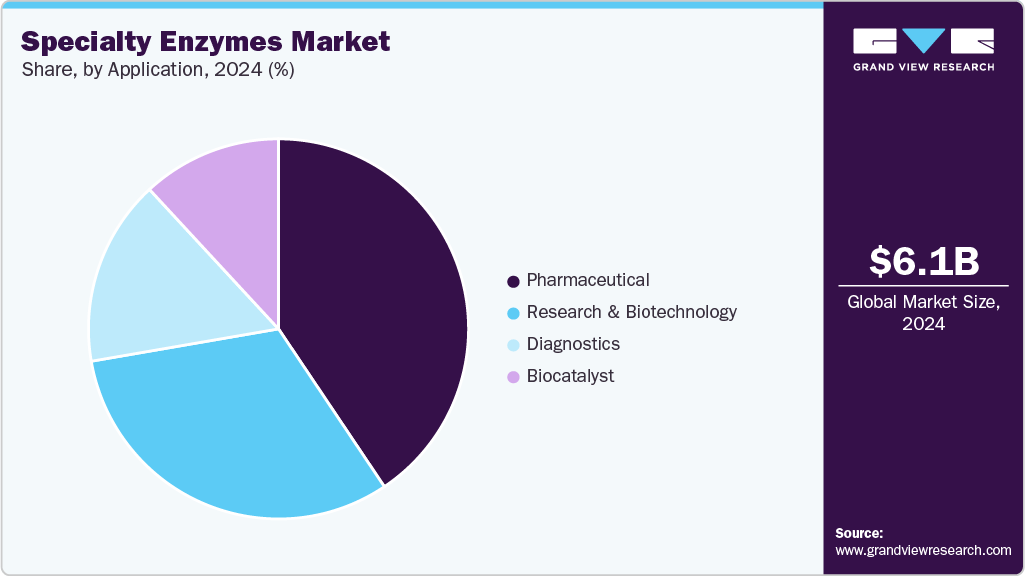
The research & biotechnology sector is responsible for developing new medicines and diagnostic solutions. Ascending demand for medicinal drugs, extensive research activities, and substantial funding initiatives are expected to drive this sector, which, in turn, is likely to fuel the demand for enzymes in the coming years.
The R&D centers of several companies focus on the evaluation, validation, development, and upscaling of technologies and innovative enzyme formulation for commercial processing and human welfare. Furthermore, they are used to diagnose bone diseases, autoimmune & inflammatory diseases, cancer, diabetes, liver diseases, myocardial infarction, kidney disorder, pancreatitis, and skin disorders. Moreover, rising government spending in developed countries for medical and diagnostic purposes is anticipated to create growth opportunities for the market over the forecast period.
The biocatalyst segment is projected to be the fastest-growing segment in the specialty enzymes industry from 2025 to 2033, owing to its essential role in accelerating metabolic reactions across various sectors. Its applications in waste degradation, fermentation, and stain removal highlight its environmental and economic benefits. Biocatalysts provide sustainable solutions that meet industry demands for greener processes by increasing energy efficiency, minimizing solvent consumption, and boosting productivity.
Source Insights
In 2025, the microorganisms segment captured the largest revenue share of 74.6% in the market due to the widespread use of amylases in the biotechnology and pharmaceutical industries. Microbial enzymes offer high efficiency, stability, and cost-effectiveness, making them ideal for diverse applications across the chemical, fermentation, agriculture, pharmaceutical, and food production sectors. Microorganisms' ability to produce a wide variety of enzymes supports continuous innovation and scalability. Growing industrial demand for sustainable and efficient enzyme solutions further strengthens the dominance of the microorganism-derived specialty enzymes segment in the market.
Microbial enzymes are vital for medical treatments as they are inexpensive, consistent, and simple to isolate. The main advantage of microbial enzyme production is that it quickly yields high yields on low-cost media. These factors are expected to boost the segment's growth potential over the forecast period. Some commercial enzymes such as amylase, invertase, papain, bromelain (bromelin) ficin, and malt diastase are derived from plant sources. These enzymes have played an essential part in food production, including syrups, bakery products, alcoholic beverages, dairy products, etc.
The animal segment is projected to grow at the fastest CAGR over the forecast period, propelled by the increasing prevalence of digestive disorders and the rising demand for health supplements. These enzymes, naturally found in animals consumed by humans, offer safe and effective solutions for digestive health. Growing awareness about the benefits of animal-derived enzymes in improving nutrient absorption and overall wellness supports market expansion. Innovations in extraction and formulation methods further enhance their appeal, positioning the animal segment as one of the fastest-growing areas within the specialty enzymes industry.
Regional Insights
North America dominated the specialty enzymes market with the highest revenue share of 42.0% in 2025, driven by the increasing number of specialty enzyme product approvals and launches for disease treatment. Enhanced regulatory support and advancements in biotechnology have accelerated the development of enzyme-based therapies, making them more accessible for drug formulation, diagnostics, and personalized medicine. Key enzymes like proteases and polymerases are gaining prominence in these applications. The U.S.'s well-developed pharmaceutical infrastructure and considerable R&D investments continue to drive market growth, making North America a major contributor to specialty enzyme innovation and adoption.
U.S. Specialty Enzymes Market Trends
The U.S. dominated the North America specialty enzymes market in 2025, owing to increased demand for specialty enzymes in pharmaceuticals and diagnostics. Enzymes are essential for drug development, improving the precision of diagnostic tests, and supporting advancements in healthcare. In addition, growing consumer preference for natural and clean-label ingredients encourages food and personal care manufacturers to incorporate specialty enzymes into their products.
Europe Specialty Enzymes Market Trends
Europe specialty enzymes market is anticipated to experience significant expansion during the forecast period. Europe is one of the major producers of pharmaceutical, medicinal, and cosmetic products. The presence of leading pharmaceutical and cosmetics companies in the region is expected to propel demand for specialty enzymes. Moreover, the rapidly expanding pharmaceutical sector, driven by significant biotech companies, is expected to increase demand for specialty enzymes in pharmaceutical, biocatalyst, and research & biotechnology applications over the forecast period.
Asia Pacific Specialty Enzymes Market Trends
Asia Pacific specialty enzymes market is set to witness the fastest CAGR from 2026 to 2033, attributed to the increased incidence of cardiovascular diseases, high prevalence of various cancers, and a rise in product launches in the region. The increase in foreign investments in the region’s pharmaceutical sector is expected to provide further opportunities for specialty enzyme consumption. Furthermore, growing consumption of processed food products, coupled with consumer preference for high-quality items and natural raw materials, is driving market growth.
China Specialty Enzymes Market Trends
China's specialty enzymesmarket accounted for the largest share in the regional market in 2024, fueled bythe rising utilization of specialty enzymes in baking applications. Bakers increasingly rely on enzymes to improve dough quality, enhance shelf life, and optimize texture, meeting consumer demand for better baked goods.
Key Specialty Enzymes Company Insights
Some of the key companies in the specialty enzymes industry include Advanced Enzyme Technologies, Codexis, Inc., F. Hoffmann-La Roche Ltd. BASF, and Sanofi.
-
BASF is a global chemical company offering a diverse range of products and services across various industries. Their portfolio includes chemicals, materials, industrial solutions, surface technologies, nutrition & care, and agricultural solutions.
-
Sanofi specialized in the research, development, and manufacturing of prescription medicines, vaccines, and consumer health products. Its portfolio spans therapeutic areas such as immunology, oncology, neurology, diabetes, and rare diseases.
Key Specialty Enzymes Companies
The following key companies have been profiled for this study on the specialty enzymes market.
-
Advanced Enzyme Technologies
-
Affymetrix Inc. (Thermo Fisher Scientific Inc.)
-
Amano Enzyme Inc.
-
BBI Solutions
-
BASF
-
Codexis, Inc.
-
Nagase & Co., Ltd.
-
Life Technologies (Thermo Fisher Scientific Inc.)
-
F. Hoffmann-La Roche Ltd
-
Sanofi
Competitive Benchmarking
Category
Operating Strategies
Competitive Edge
Weakness
Established Players (Thermo Fisher Scientific Inc. (Affymetrix Inc., Life Technologies), BASF, F. Hoffmann-La Roche Ltd., Sanofi, Nagase & Co., Ltd., Amano Enzyme Inc., Advanced Enzyme Technologies)
- Invest heavily in enzyme engineering and recombinant enzyme technologies.
- Expand product portfolios through strategic acquisitions, collaborations, and licensing agreements.
- Strengthen global distribution networks to serve pharmaceutical, biotechnology, diagnostics, and research customers.
- Focus on regulatory compliance, quality certifications, and GMP manufacturing capabilities.
- Strong global brand recognition and extensive customer relationships.
- Broad portfolio covering pharmaceutical, diagnostics, biotechnology, and industrial enzyme applications.
- Significant R&D capabilities supported by advanced biotechnology platforms.
- Well-established manufacturing infrastructure with global supply chain presence.
- Higher operating and manufacturing costs due to stringent quality and regulatory requirements.
- Longer commercialization timelines for novel enzyme products.
- Complex organizational structures may slow decision-making.
- Greater exposure to regulatory changes across multiple geographies.
Emerging Players (Codexis, Inc., BBI Solutions)
- Focus on niche, high-value specialty enzyme applications and customized enzyme solutions.
- Develop proprietary enzyme engineering platforms to improve product performance.
- Establish strategic partnerships with pharmaceutical, diagnostics, and biotechnology companies.
- Expand contract research and custom enzyme development services.
- High flexibility in developing customer-specific enzyme solutions.
- Faster innovation cycles compared to larger competitors.
- Strong expertise in directed evolution and enzyme optimization technologies.
- Ability to address emerging applications in molecular diagnostics and precision medicine
- Limited global manufacturing and distribution capabilities.
- Smaller financial resources for large-scale expansion and R&D investments.
- Greater dependence on strategic partnerships and contract-based revenues.
- Lower brand visibility in highly competitive global markets.
Recent Developments
-
In October 2024, Novo Nordisk Pharmatech introduced TrypsiNNex, a new recombinant enzyme added to their portfolio. This launch is a strategic move to strengthen their position and drive growth in the specialty enzymes market for pharmaceutical manufacturing.
-
In May 2024,Biocatalysts Ltd launched two novel protease enzymes tailored for efficient hydrolysis of extracted collagen, to produce neutral-tasting and low molecular weight collagen peptides.
Specialty Enzymes Market Report Scope
Report Attribute
Details
Market size in 2025
USD 6.4 billion
Estimated market size in 2026
USD 6.9 billion
Projected market size by 2033
USD 10.5 billion
Growth rate
CAGR of 6.3% from 2026 to 2033
Base year for estimation
2025
Historical data
2021 - 2024
Forecast period
2026 - 2033
Quantitative units
Revenue in USD billion and CAGR from 2026 to 2033
Report coverage
Revenue forecast, company ranking, competitive landscape, growth factors, and trends
Segments covered
Application, product, source, region
Regional scope
North America; Europe; Asia Pacific; Latin America; MEA
Country scope
U.S., Canada, Mexico, Germany, UK, France, Italy, Spain, China, Japan, India, South Korea, Indonesia, Australia, Brazil, Argentina, Saudi Arabia, Turkey
Key companies profiled
Advanced Enzyme Technologies; Affymetrix Inc. (Thermo Fisher Scientific Inc.); Amano Enzyme Inc.; BBI Solutions; BASF; Codexis, Inc.; Nagase & Co., Ltd.; Life Technologies (Thermo Fisher Scientific Inc.); F. Hoffmann-La Roche Ltd; and Sanofi.
Customization scope
Free report customization (equivalent up to 8 analysts' working days) with purchase. Addition or alteration to country, regional & segment scope.
Pricing and purchase options
Avail customized purchase options to meet your exact research needs. Explore purchase options
Global Specialty Enzymes Market Report Segmentation
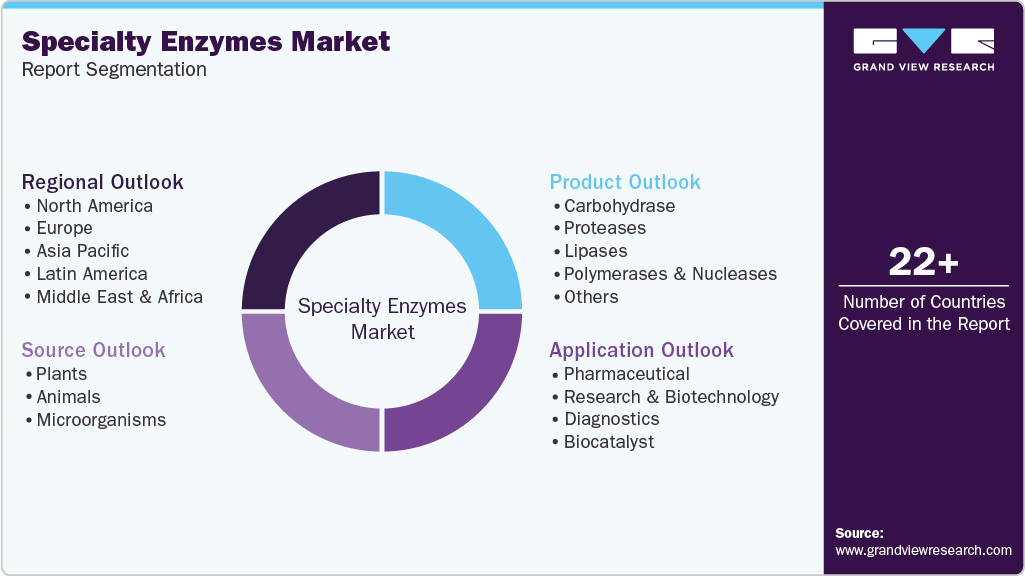
This report forecasts revenue growth at global, regional, and country levels and provides an analysis of the latest industry trends in each of the sub-segments from 2021 to 2033. For the purpose of this study, Grand View Research has segmented the global specialty enzymes market report based on product, application, source, and region:
-
Product Outlook (Revenue, USD Billion, 2021 - 2033)
-
Carbohydrase
-
Proteases
-
Lipases
-
Polymerases & Nucleases
-
Others
-
-
Application Outlook (Revenue, USD Billion, 2021 - 2033)
-
Pharmaceutical
-
Research & Biotechnology
-
Diagnostics
-
Biocatalyst
-
-
Source Outlook (Revenue, USD Billion, 2021 - 2033)
-
Plants
-
Animals
-
Microorganisms
-
-
Regional Outlook (Revenue, USD Billion, 2021 - 2033)
-
North America
-
U.S.
-
Canada
-
Mexico
-
-
Europe
-
U.K.
-
Germany
-
France
-
Spain
-
Italy
-
-
Asia Pacific
-
China
-
Japan
-
India
-
South Korea
-
Indonesia
-
Australia
-
-
Latin America
-
Brazil
-
Argentina
-
-
Middle East & Africa
-
Saudi Arabia
-
Türkiye
-
-
Research Methodology
The specialty enzymes market figures in this report are based on a proven research process that combines executive interviews with secondary research from proprietary databases, company filings, and recognized regulatory and institutional sources. Market size is built through value-chain sizing-reconciling supply-side and demand-side estimates-and triangulated with bottom-up and top-down approaches. Every estimate passes multiple levels of expert validation before publication, with each specialty enzymes segment quantified using the revenue-capture definitions in the table below.
Segment Definition
Product
Revenue capture definition
Carbohydrase
Revenue is generated from the sale of specialty carbohydrase enzymes used to catalyze the breakdown or modification of carbohydrates in pharmaceutical manufacturing, diagnostics, biotechnology research, and industrial bioprocessing applications.
Proteases
Revenue includes income from specialty protease enzymes utilized for protein hydrolysis, peptide synthesis, cell culture processing, therapeutic manufacturing, and molecular biology applications across healthcare and biotechnology industries.
Lipases
Revenue comprises sales of specialty lipase enzymes employed in lipid modification, pharmaceutical synthesis, biocatalysis, diagnostic assays, and specialty industrial processes requiring selective fat and ester conversion.
Polymerases & Nucleases
Revenue covers specialty DNA/RNA polymerases, nucleases, reverse transcriptases, and related enzymes used in PCR, gene sequencing, molecular diagnostics, genomics research, and cell and gene therapy workflows.
Other Products
Revenue includes specialty enzymes such as oxidoreductases, transferases, ligases, phosphatases, and other niche enzyme products serving pharmaceutical, research, diagnostic, and industrial biotechnology applications.
Application
Revenue capture definition
Pharmaceutical
Revenue is derived from specialty enzymes supplied for drug discovery, biopharmaceutical manufacturing, active pharmaceutical ingredient (API) production, vaccine development, and therapeutic processing.
Research & Biotechnology
Revenue includes specialty enzymes sold for genomics, proteomics, synthetic biology, molecular biology research, recombinant DNA technology, and other biotechnology research activities.
Diagnostics
Revenue comprises specialty enzymes used in clinical diagnostics, molecular diagnostic kits, PCR testing, immunoassays, next-generation sequencing, and laboratory testing applications.
Biocatalyst
Revenue covers specialty enzymes utilized as biocatalysts in industrial manufacturing processes, enabling selective, efficient, and environmentally sustainable chemical and biochemical reactions.
Source
Revenue capture definition
Plants
Revenue includes specialty enzymes extracted or produced from plant sources for use in pharmaceutical, research, diagnostic, and industrial biotechnology applications.
Animals
Revenue comprises specialty enzymes derived from animal tissues or biological sources for applications in therapeutics, diagnostics, research, and specialized bioprocesses.
Microorganisms
Revenue covers specialty enzymes produced from bacteria, fungi, yeast, and other microbial sources through fermentation for pharmaceutical, biotechnology, diagnostics, and industrial biocatalytic applications.
Estimation Model
Layer No.
Layer Name
Key Question
Description
01
Specialty Enzymes Production & Supply Layer
What forms the supply base?
Identify the global production capacity of specialty enzymes supported by the availability of plant, animal, and microbial raw materials, fermentation infrastructure, bioprocessing technologies, enzyme purification capabilities, recombinant DNA technologies, quality certifications, and regional manufacturing facilities. This establishes the foundational supply base for carbohydrases, proteases, lipases, polymerases & nucleases, and other specialty enzymes supplied to pharmaceutical, biotechnology, diagnostics, and industrial applications worldwide.
02
Application Adoption Layer
Where are specialty enzymes utilized?
Estimate the proportion of specialty enzymes consumed across pharmaceutical manufacturing, research & biotechnology, diagnostics, biocatalysis, and other life science applications based on therapeutic development, molecular research activities, diagnostic testing volumes, industrial biocatalytic processes, technological advancements, and regional adoption trends.
03
Consumption Intensity Layer
How much specialty enzyme is used?
Analyze application-specific enzyme consumption based on biopharmaceutical production volumes, laboratory research intensity, diagnostic test utilization, enzyme dosage requirements, biocatalytic process efficiency, manufacturing scale, and regional biotechnology expansion to determine annual specialty enzyme demand across major end-use applications.
04
Revenue Layer
How is market revenue generated?
Market revenue is quantified through the sale of carbohydrases, proteases, lipases, polymerases & nucleases, and other specialty enzymes produced from plant, animal, and microbial sources and supplied to pharmaceutical manufacturers, biotechnology companies, diagnostic laboratories, research institutions, biocatalyst developers, and other life science organizations worldwide.
Delivered Customizations
This report has been delivered with the following In-depth customizations
Client Request
Customization Delivered
Value Adds
Regional Segmentation
A comprehensive regional assessment of the specialty enzymes market was conducted across North America, Europe, Asia Pacific, Latin America, and Middle East & Africa. The study evaluated country-level demand for carbohydrases, proteases, lipases, polymerases & nucleases, and other specialty enzymes while examining consumption across pharmaceutical, research & biotechnology, diagnostics, and biocatalyst applications. The analysis also reviewed regional manufacturing capabilities and enzyme production ecosystems.
Provides enhanced visibility into regional demand trends, manufacturing concentration, and country-level growth opportunities. Supports market expansion, capacity planning, and regional commercialization strategies.
Cross-Segmentation Analysis
The relationship between enzyme type, source, and application was assessed to determine demand patterns across plant-, animal-, and microorganism-derived specialty enzymes. The study examined the adoption of individual enzyme classes within pharmaceutical manufacturing, molecular diagnostics, biotechnology research, and biocatalytic processes to identify high-value market combinations.
Enables identification of the most attractive product-source-application combinations. Supports portfolio optimization, targeted product development, and commercialization strategies aligned with evolving end-user requirements.
Opportunity Assessment
Emerging growth opportunities were assessed across precision biocatalysis, molecular diagnostics, biologics manufacturing, enzyme-based pharmaceutical production, and advanced biotechnology research. The analysis also examined opportunities created by increasing adoption of sustainable bioprocessing technologies and enzyme-enabled innovation in life sciences.
Enables identification of high-growth application areas and future investment opportunities. Supports innovation planning, portfolio expansion, and long-term strategic growth across pharmaceutical and biotechnology markets.
Frequently Asked Questions About This Report
The Pharmaceutical segment dominated the specialty enzymes market with a revenue share of 40.5% in 2025, driven by the increasing use of specialty enzymes in drug development, biologics manufacturing, enzyme replacement therapies, and biopharmaceutical production, supported by rising investments in precision medicine and advanced therapeutic research.
The Carbohydrase segment dominated the specialty enzymes market with a revenue share of 37.7% in 2025.
The microorganisms segment dominated the specialty enzymes market with a revenue share of 74.6% in 2025 while animal segment is second fastest growing market.
The global specialty enzymes market size was estimated at USD 6.4 billion in 2025 and is estimated at USD 6.9 billion in 2026.
The global specialty enzymes market is expected to grow at a compound annual growth rate of 6.3% from 2026 to 2033,reaching USD 10.5 billion by 2033.
North America dominated the specialty enzymes market with the highest revenue share of 42.0% in 2025.
Some key players operating in the specialty enzymes market include Advanced Enzyme Technology Ltd., Amano Enzyme Inc., Bbi Enzymes Ltd., BASF SE, Codexis Inc., Nagase & Co. Ltd., Life Technologies, Roche Holding Ag., Sanofi S.A.
Key factors that are driving the market growth include the growth of the product market is attributed to the growing prevalence of chronic diseases such as cancer and rheumatoid arthritis
Asia Pacific is the fastest-growing region over the forecast period.
About the Author(s)
Catalysts & Enzymes Research Team
Specialty & Chemicals · Catalysts & EnzymesThis report was authored by the catalysts & enzymes research team at Grand View Research - comprising two research analysts, one senior research analyst, and one industry expert - with specialized expertise in the catalysts & enzymes segment of the specialty & chemicals industry. All findings are based on proprietary specialty & chemicals databases, executive interviews, and regulatory analysis, subject to internal peer review prior to publication.
Last Updated:
Speak to Analyst


Customize this report to your needs — add regions, segments, or data points, with 20% free customization.
Or view our licence options:


ISO 9001:2015 & 27001:2022 Certified
We are GDPR and CCPA compliant! Your transaction & personal information is safe and secure. For more details, please read our privacy policy.


