
- Home
- »
- Medical Devices
- »
-
Peripheral Vascular Devices Market Size, Share Report, 2033GVR Report cover
![Peripheral Vascular Devices Market Size, Share & Trends Report]()
Peripheral Vascular Devices Market (2025 - 2033) Size, Share & Trends Analysis Report By Type, By Application (Peripheral Arterial Disease (PAD), Aneurysms, Venous Diseases), By End Use (Hospitals, Ambulatory Surgical Centers), By Region, And Segment Forecasts
- Report ID: 978-1-68038-237-2
- Number of Report Pages: 150
- Format: PDF
- Historical Range: 2021 - 2024
- Forecast Period: 2025 - 2033
- Industry: Healthcare
- Report Summary
- Table of Contents
- Segmentation
- Methodology
- Download FREE Sample
-
 Download Sample Report
Peripheral Vascular Devices Market Summary
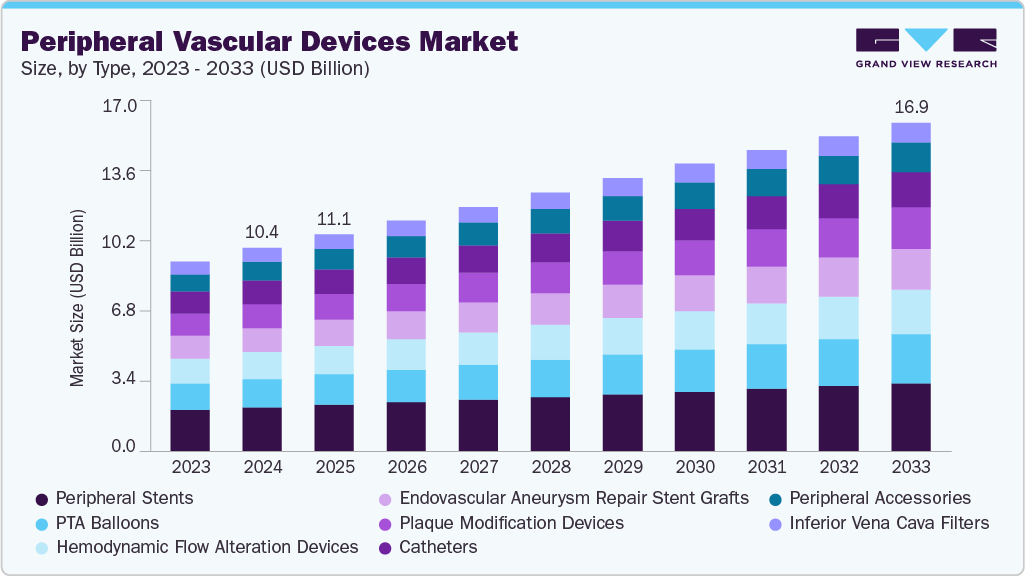
The global peripheral vascular devices market size was estimated at USD 10.44 billion in 2024 and is projected to reach USD 16.90 billion by 2033, growing at a CAGR of 5.3% from 2025 to 2033. The rising prevalence of peripheral arterial disease (PAD) is significantly driving the growth of the peripheral vascular devices market.
Key Market Trends & Insights
- North America peripheral vascular devices market dominated global market in 2024 and accounted for the largest revenue share of 38.92%.
- U.S. peripheral vascular devices market is anticipated to register the fastest growth rate during the forecast period.
- By type, the peripheral stents segment held the largest revenue share in 2024.
- By application, the peripheral arterial disease (PAD) segment held the largest revenue share in 2024.
- By end use, the hospitals segment held the largest revenue share in 2024.
Market Size & Forecast
- 2024 Market Size: USD 10.44 Billion
- 2033 Projected Market Size: USD 16.90 Billion
- CAGR (2025-2033): 5.3%
- North America: Largest market in 2024
- Asia Pacific: Fastest growing market
PAD has a significantly high prevalence in both developed and emerging economies globally. For instance, according to a study published in the American Heart Association Journals in June 2023, more than 12 million Americans had PAD, with global prevalence reaching around 200 million people. Similarly, according to the Australian Institute of Health and Welfare data article published in June 2024, PAD was recorded in around 59,100 hospitalizations in 2020-21.The growth of the peripheral vascular devices market is significantly influenced by the increasing number of clinical trials and studies focusing on vascular health. Clinical trials allow researchers to evaluate the safety and efficacy of new devices and techniques in treating peripheral vascular diseases (PVD). For instance, in March 2024, BD started the AGILITY study by enrolling its first patient to assess the safety and efficacy of the BD Vascular Covered Stent for the treatment of PAD. Three hundred fifteen patients likely to participate in this international, multi-center clinical trial at 40 locations in the U.S., Europe, Australia, and New Zealand. The study aims to address critical unmet needs in the treatment of PAD. These trials validate current technologies and give way to new treatments that meet unmet medical needs as they grow.
Introducing novel products that address the evolving needs of patients and healthcare providers significantly contributes to market growth. The launch of these products includes cutting-edge technologies such as drug-eluting capabilities, bioresorbable materials, and others. For instance, in December 2023, Terumo India launched Ultimaster Nagomi, an advanced drug-eluting coronary stent system designed for complex percutaneous coronary interventions (PCI). The stent features an optimized delivery system, expanded size range, and increased overexpansion capability, allowing it to adapt to challenging anatomies. Ultimate Nagomi aims to improve patient outcomes by enabling customized stent selection for small to large coronary arteries.

Moreover, in May 2024, Abbott introduced the XIENCE Sierra Everolimus Eluting Coronary Stent System in India, designed to enhance treatment for patients with blocked coronary arteries. This next-generation stent features an improved design, a new delivery system, and specialized sizes to address complex cases effectively. XIENCE Sierra aims to provide greater flexibility and precision for interventional cardiologists, making it easier to navigate challenging blockages. This focus on innovation addresses clinical challenges and enhances procedural efficiency, leading to increased adoption of these devices among healthcare professionals.
Technology Trend Analysis
-
Smart Grafts with Integrated Sensors: New grafts and stents incorporate biosensors to continuously monitor peripheral blood flow and detect complications such as occlusions or thrombosis in real-time, enabling prompt intervention.
-
Antimicrobial and Antithrombotic Coatings: Advanced coatings on devices reduce the risk of infection and stop clots from forming, improving durability and safety.
-
Biocompatible Polymers: Novel polymers improve compatibility with peripheral arteries and veins, reducing adverse reactions and promoting better integration.
-
Advanced Manufacturing Techniques: Techniques such as 3D printing and electrospinning create patient-specific peripheral grafts and stents that closely replicate natural vessel anatomy, improving functionality and outcomes.

-
In July 2025, University Hospitals Plymouth NHS Trust in the UK performed the first procedure using the Auryon laser catheter for peripheral vascular disease, allowing plaque removal in resistant lesions and improving blood flow in affected limbs.
“This new machine will allow us to be more effective, utilising peripheral atherectomy techniques to remove the plaque build-up inside arteries in the limbs, particularly for patients who have lesions that have been resistant to other treatments, or who have symptoms that suggest recent blood clots.”
-Consultant in Interventional Radiology
Industry Trend Analysis
-
Portfolio Consolidation and Strategic Acquisitions: To increase their offerings, obtain access to innovative technologies, and accelerate their market penetration, leading vascular device companies are purchasing niche innovators.
-
Hospital-Manufacturer Partnerships: Collaborations focus on improving clinical outcomes in peripheral vascular interventions, optimizing device selection, and enhancing physician training for complex procedures.
-
Shift to Outpatient and Home-Based Peripheral Care: The move from hospital to outpatient or home settings is driving demand for devices that are easy to use, durable, and safe outside traditional clinical environments.
Impact of Artificial Intelligence (AI) and Generative AI (Gen AI) on peripheral vascular devices market
-
AI-Enhanced Vein Visualization and Device Placement: Artificial intelligence guides accurate graft and stent deployment in peripheral vessels, reducing procedure time and complications.
-
Predictive Analytics for Device Failures and Infection Risks: Machine learning evaluates patient and device data to anticipate complications in interventions, enabling proactive management.
-
Workflow Automation and Documentation: AI streamlines procedural workflows and documentation for procedures, lowering clinician burden and errors.
-
Virtual Training and Simulation: GenAI platforms let clinicians rehearse complex peripheral vascular procedures in virtual settings, improving skill and patient safety.
-
Acceleration of Device Design and Trials: Generative AI aids rapid prototyping, optimizes trial design, and predicts maintenance needs for devices, speeding up time-to-market and reliability.
Case Study Analysis
A study published in 2023 analyzed the development and clinical application of tissue-engineered grafts (TEVGs) in pediatric patients with congenital heart defects. Conducted over 25+ years, the study focused on:
-
Graft Development: TEVGs were created by seeding biodegradable polymeric scaffolds with autologous bone marrow–derived mononuclear cells, producing living peripheral vascular devices and accessories capable of growth.
-
Clinical Application: The first-in-human trial implanted TEVGs to augment hypoplastic pulmonary arteries, demonstrating feasibility and long-term patency (>20 years).
-
Challenges and Solutions: Initial graft designs using vascular biopsies required time-intensive cell expansion and were unreliable in diseased patients. Switching to bone marrow–derived cells allowed for faster, more consistent graft preparation.
-
Scaffold Optimization: Modifications included a 50:50 polycaprolactone-polylactic acid sealant over a polyglycolic acid core, enhancing surgical handling, neotissue formation, and growth potential.
-
Outcomes: TEVGs allowed for native tissue growth, avoided aneurysmal dilatation, and provided long-term durability while reducing the risk of somatic overgrowth and thromboembolic complications.
With possible uses in adult vascular reconstruction, this case study highlights how TEVGs offer a viable substitute for conventional prosthetic grafts in pediatric congenital heart surgery.
Key Customers
Key Customers
Role
Vascular Physicians
Vascular physicians diagnose and treat vascular diseases and choose the best treatment plans for patients who might benefit from these products. They play an important role as prescribers and decision-makers in this market. Their collaboration with medical device companies ensures familiarity with the latest technologies, enabling informed selection of grafts and devices tailored to patient-specific needs.
Cardiovascular Surgeons
Upgrade report license to gain access to the complete analysis
Cardiothoracic Surgeons
Nephrologists
Market Concentration & Characteristics
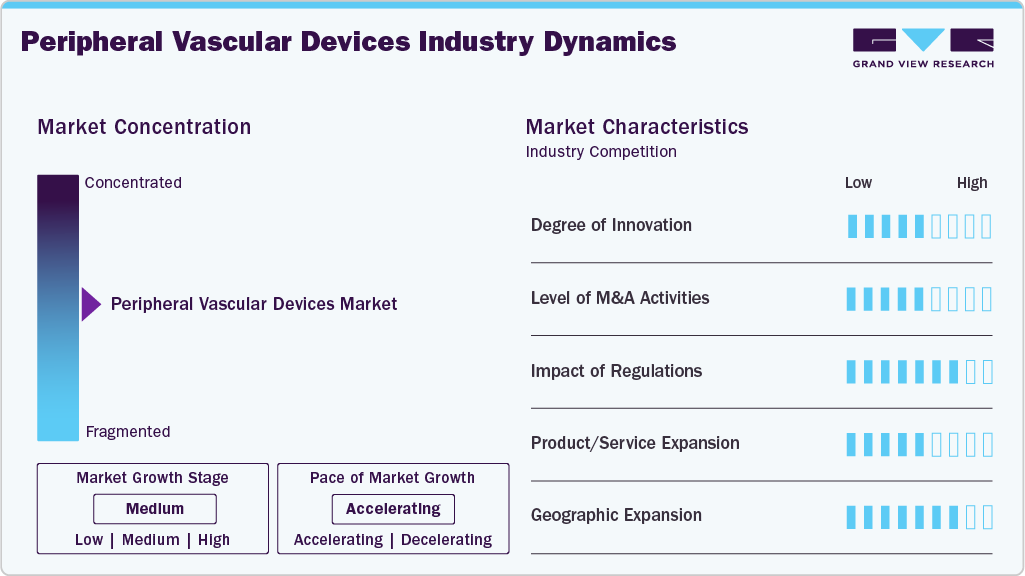
The global peripheral vascular devices market is characterized by a high degree of innovation, owing to an increase in the use of bio-absorbable stents to reduce thrombogenic risk factors and improve clinical applicability. Bio-absorbable stents, which are constructed of naturally soluble substances that dissolve after implantation, eliminate the risk of late stent thrombosis. They aid in defending the body against swelling or decreased blood flow brought on by late-stent thrombosis. Thrombosis occurs when the stent used for treatment stays inside the body for a prolonged period.
Several vital players are undertaking various initiatives such as mergers & acquisitions and new product launches to expand their business portfolio. For instance, in February 2025, Stryker completed its USD 4.9 billion acquisition of Inari Medical, entering the high-growth market. The agreement, which is set at USD 80 per share, enhances Stryker's current neurovascular capabilities and expands its portfolio by adding Inari's mechanical thrombectomy devices for venous thromboembolism.
Governments, healthcare entities, and patients are inclined to integrate novel technologies that demonstrate enhanced clinical outcomes and expedited recovery periods. This trend is expected to boost the market. PAD exhibits a higher incidence among the elderly demographic. As the worldwide population continues to age, the prevalence of PAD is anticipated to surge. The rising aging population amplifies the pool of patients necessitating vascular interventions, fostering the demand for this market.
The presence of highly effective alternative treatment options and their growing use is expected to restrain market growth over the forecast period. Anticoagulant drug is considered a first-line treatment option for patients with PVDs. The high efficacy and tolerability associated with anticoagulants, such as Dabigatran, is resulting in their wide use and creating a significant hurdle for the growing use of peripheral vascular devices. Medications such as vasodilators, cholesterol-lowering drugs, and antiplatelet medicines are also used as an alternative to PADs.
To reach unmet clinical needs and tap into emerging markets, companies in the peripheral vascular devices market are focusing increasingly on growing their geographic footprint. Initiatives to improve product accessibility include partnerships with local healthcare providers, the establishment of regional offices, and distribution networks. In areas such as Asia-Pacific, Latin America, and the Middle East, where peripheral arterial disease is prevalent and healthcare infrastructure is changing, this expansion enables manufacturers to serve expanding patient populations.
Type Insights
The peripheral stents segment held a significant share of 21.72% in 2024. The rising government support in the form of funding and approvals is encouraging manufacturers to develop technologically advanced peripheral stents. Peripheral stents are small wire mesh tubes that open a peripheral artery blocked by plaque. For instance,in August 2025, Abbott gained CE Mark for its Esprit BTK resorbable stent in Europe, a first-of-its-kind device for treating severe below-the-knee PAD, enhancing vessel healing and lowering repeat procedures versus balloon angioplasty. The growing prevalence of peripheral arterial disease is anticipated to fuel the market growth over the forecast period.
The plaque modification devices segment is anticipated to grow at the fastest CAGR over the forecast period. This growth is driven by the increasing adoption of atherectomy and lithotripsy devices, which help effectively remove or modify calcified plaques in peripheral arteries, improving vessel patency and reducing the risk of restenosis. The rising prevalence of complex peripheral arterial disease cases, coupled with technological advancements in plaque modification systems, is further fueling demand in this segment.In September 2024, Shockwave Medical, under Johnson & Johnson MedTech, launched the Shockwave E8 Peripheral IVL Catheter in the U.S., a plaque-modifying device using intravascular lithotripsy to treat calcified peripheral artery disease above and below the knee, including chronic limb-threatening ischemia.
Application Insights
By application, the peripheral arterial disease (PAD) segment held the largest share of 45.29% in 2024 and is expected to grow at the fastest rate during the forecast period. The rising prevalence of peripheral artery disease and government initiatives drive segment growth. There has been a significant increase in research focused on PAD, driven by the growing prevalence of cardiovascular diseases and advancements in diagnostic technologies. In March 2024, BD, a medical technology firm, initiated the "AGILITY" study by enrolling its first participant. This study is part of an investigational device exemption (IDE) trial designed to evaluate the BD Vascular Covered Stent's safety and efficacy in treating PAD. The tested device is a self-expanding, low-profile stent made of nitinol and encapsulated in polytetrafluoroethylene, introduced through a delivery system that ensures controlled release.
The aneurysms segment is expected to grow at a significant rate during the forecast period. The increasing prevalence of cardiovascular diseases worldwide and technological advancements. Peripheral arterial aneurysms are abnormal dilations of peripheral arteries, most commonly occurring in the popliteal artery. They often result from atherosclerosis and can lead to complications such as thromboembolism, although rupture is relatively rare. A July 2023 Merck Manual article reported that around 70% of peripheral arterial aneurysms are found in the popliteal region and 20% in the iliofemoral area. These aneurysms occur alongside abdominal aortic aneurysms and are bilateral in more than half of the cases. While rare, ruptures cause thromboembolism, leading to sudden blockage of arteries farther down the limb.
End Use Insights
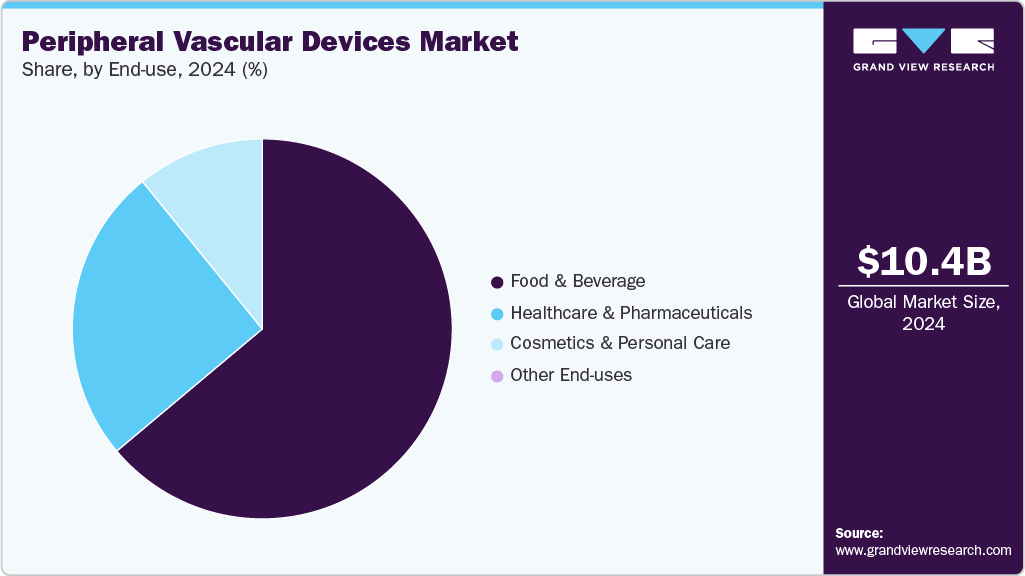
The hospitals segment held the largest share of 64.37% in 2024 and is expected to grow at the fastest rate during the forecast period. Hospitals are crucial in administering advanced medical procedures, including percutaneous transmural arterial bypass (PTAB). These facilities have specialized surgical units, advanced imaging technologies, and highly trained medical personnel for minimally invasive surgeries. In the context of PTAB, hospitals provide an environment where interventional cardiologists or vascular surgeons can utilize catheters and other specialized tools to navigate the vascular system. In July 2024, Trumbull Regional Medical Center broadened its range of treatments for complex PAD by introducing the Percutaneous Transmural Arterial Bypass (PTAB) procedure, utilizing the DETOUR System. This treatment, designed to tackle long lesions in the superficial femoral artery (SFA), positioned Trumbull Regional as the pioneering facility in the region and the second in the state to offer this specific therapy option.
The ambulatory surgical centers segment is expected to grow at a significant rate during the forecast period. The growth of ambulatory surgery centers (ASCs) is influenced by increased government support and reimbursements. Enhanced reimbursement policies make it financially viable for ASCs to adopt advanced devices, leading to a rise in outpatient procedures. In a June 2023 CDI Strategies article, a ProPublica analysis based on CMS and Medicare data revealed that from 2017 to 2021, approximately 90 physicians (the top 5% of atherectomy specialists) conducted over a third of all such procedures and received a significant portion of the government payments. The data showed that the number of atherectomies and related physician payments nearly tripled from 2013 to 2021, totaling around USD 503 million in 2021. Among these, one doctor was paid more than USD 30 million by CMS for vascular procedures over the past decade.
Regional Insights
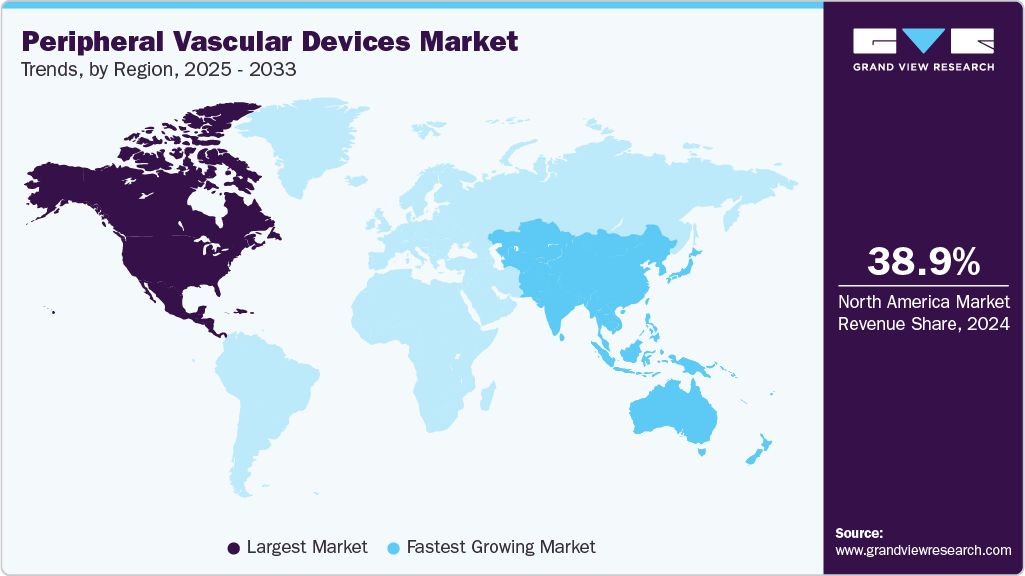
North America peripheral vascular devices market dominated the respective global market with a revenue share of 38.92% in 2024. The market exhibits consistent growth owing to several factors, including the growing incidence of PAD, rising geriatric population, and rapid advancements in medical technology. According to a CDC article published in May 2024, In the U.S., around 6.5 million individuals aged 40 and older are affected by PAD. The substantial number of PAD cases highlights the increasing demand for advanced stenting solutions to address the challenges associated with this condition, driving market growth.
U.S. Peripheral Vascular Devices Market Trends
The U.S. dominated the peripheral vascular devices market in North America region in 2024, due to innovative software development, and advanced healthcare management. The U.S. has a pivotal role in the market, characterized by a dynamic regional landscape featuring substantial growth and notable technological progress. The demand for these devices is growing due to several factors, such as the rising incidence of cardiovascular diseases and an increasing number of clinical trials exploring stent applications in PAD. Advanced healthcare facilities, rising healthcare expenditures, and product launches boost market growth. For instance, in June 2024, MicroVention, a division of Terumo, officially launched its LVIS EVO intraluminal support device in the U.S. This new stent is designed to provide advanced intraluminal support, marking a significant addition to the company’s product lineup. The introduction of LVIS EVO is expected to enhance treatment options for patients requiring support for complex vascular conditions.
Europe Peripheral Vascular Devices Market Trends
The peripheral vascular devices market in Europe is expected to grow significantly over the forecast period, driven by an increasing prevalence of vascular diseases. This rise in vascular conditions is primarily linked to demographic changes and lifestyle factors, particularly among the aging population. As the geriatric demographic expands, so does the demand for devices used in diagnosis and treatment. In September 2025, Johnson & Johnson launched its Shockwave Javelin Peripheral IVL Catheter in Europe, offering a forward IVL platform to treat severely calcified peripheral artery lesions and expand therapy options for patients with PAD.
The peripheral vascular devices industry in the UK is expected to grow significantly during the forecast period due to the increasing cases of PAD in this region. According to the British Heart Foundation article published in August 2024, about one in five individuals over the age of 60 in the UK experience some form of PAD. The key risk factors contributing to PAD, such as smoking, diabetes, obesity, and high blood pressure, mirror those associated with heart disease and stroke. Notably, the rising prevalence of diabetes is driving an increase in PAD cases.
The France peripheral vascular devices market is anticipated to witness significant growth during the forecast period. The rising prevalence of peripheral artery disease fuels market growth. According to the Elsevier B.V. article published in June 2024, In France, PAD affects up to 20% of the population. Previous estimates revealed that 12.2% of individuals with one or more cardiovascular risk factors were found to have asymptomatic PAD, as identified through ankle-brachial index assessments.
Germany peripheral vascular devices market has grown over the forecast period. The rising number of vascular diseases and technological advancements fuel the growth of the market. Effective monitoring is essential for ensuring patient safety, optimizing surgical outcomes, and managing postoperative recovery. As the volume of surgeries increases, healthcare systems in Germany face challenges related to enhancing surveillance, integrating advanced technologies, and managing extensive data. According to a Hogrefe article published in October 2023, PAD affects approximately 15–20% of the population in Germany, and this prevalence has been rising over time. With the growing number of individuals diagnosed with PAD, there is an increasing demand for advanced treatment options, including stents.
Asia Pacific Peripheral Vascular Devices Market Trends
The Asia Pacific peripheral vascular devices industry is expected to register the fastest growth rate over the forecast period owing to the rising incidence of diabetes, which leads to the increasing incidence of vascular disorders. Moreover, the growing demand for minimally invasive treatments, technologically advanced treatments, and improving healthcare infrastructure are some of the factors projected to lead the market in the upcoming years.In December 2024, Inari Medical teamed up with 6 Capital, 120 Capital, and VFLO Medical to bring its venous disease devices to the Greater China market, using VFLO’s local network for distribution and production. The US-based firm, recognized for FlowTriever and other technologies, seeks to broaden patient access across China.
China peripheral vascular devices market is anticipated to register considerable growth during the forecast period. China's growing peripheral artery disease burden fuels the demand for covered stent solutions. According to the NCBI article published in August 2023, the nation's cardiovascular technologies are among the most advanced globally, and substantial progress has been made in addressing the "treatment difficulty" associated with cardiovascular diseases (CVD). In China, about 45.3 million individuals are affected by PAD, highlighting an ongoing need for effective treatment solutions, including covered stents.
Japan peripheral vascular devices market is expected to witness intense competition. This market is characterized by the active participation of multinational enterprises and specialized entities striving for market dominance. For instance, in November 2023, Penumbra Inc. and Asahi Intecc Group entered a definitive distribution agreement. This follows the initial basic agreement granting exclusive sales rights for a device for thrombus aspiration, namely Indigo and Lightning system, in the market by Asahi Intecc J-sales, Inc. It is noteworthy that Penumbra’s Peripheral Vascular Thrombus Aspiration system, specifically the Indigo system, received approval under the Japanese Pharmaceutical & Medical Device Act in April 2023.
Latin America Peripheral Vascular Devices Market Trends
The Latin America peripheral vascular devices industry is anticipated to witness considerable growth over the forecast period. The region benefits from a strong base of healthcare professionals and an emerging community of medical technology innovators, which is helping accelerate the adoption of advanced treatment solutions. In May 2025, MicroPort Endovastec received marketing approval in Brazil and Argentina for its Talos Thoracic Stent Graft System, the first stent graft specifically designed for Stanford type B aortic dissection.
Brazil peripheral vascular devices industry is anticipated to register considerable growth during the forecast period. As the largest healthcare market in the region, Brazil faces a growing prevalence of diseases, particularly within its aging population. Strategic investments in both public and private healthcare systems, along with government programs aimed at broadening access to advanced interventions, are fueling market momentum.In August 2023, Zylox-Tonbridge secured ANVISA approval to market the ZENFlow Tiger LD PTA catheter in South America; the device’s tapered tip and short shoulder aid navigation of difficult lesions and management of Budd–Chiari syndrome, iliac vein compression, and related occlusions.
Middle East and Africa Peripheral Vascular Devices Market Trends
The Middle East and Africa peripheral vascular devices market is anticipated to witness considerable growth over the forecast period. The growth can be attributed to the high rate of cardiovascular disease mortality. According to an NCBI article published in October 2023, In Kuwait, cardiovascular diseases (CVDs) account for 46% of mortality rates, highlighting a significant public health concern. This high mortality rate underscores the urgent need for effective management and treatment options for CVD, including PAD.
Saudi Arabia peripheral vascular devices industry is anticipated to register considerable growth during the forecast period due to increasing PAD prevalence. According to a BioMed Central Ltd article published in March 2024, a recent study conducted in Saudi Arabia reported a prevalence of PAD at 11.7% among a cohort of 471 patients aged 45 years and older. The higher prevalence observed in this study may be attributed to the limited sample size and the specific age demographic, which tends to be more vulnerable to vascular conditions.
Key Peripheral Vascular Devices Company Insights
Key participants in the peripheral vascular devices industry are focusing on devising innovative business growth strategies, such as expanding their product portfolios, partnerships and collaborations, mergers and acquisitions, and expanding their business footprints.
Key Peripheral Vascular Devices Companies:
The following are the leading companies in the peripheral vascular devices market. These companies collectively hold the largest market share and dictate industry trends.
- Abbott
- Koninklijke Philips N.V.,
- Edward Lifesciences Corporation
- Medtronic
- Teleflex Incorporated
- Cook
- Cordis (Hellman & Friedman (H&F))
- Boston Scientific Corporation
- W. L. Gore & Associates, Inc.
- Biotronik
- BD
- Terumo Corporation
Recent Developments
-
In July 2025, MicroPort Endovastec announced the first commercial use of its Talos Thoracic Stent Graft System in Argentina, treating a Stanford type B aortic dissection with a single personalized stent graft that restored blood flow and minimized spinal cord injury risk.
-
In June 2024, In the U.S., Philips has unveiled its Duo Venous Stent System, aimed at individuals with venous obstructions. Securing approval in December, this innovative device seeks to remedy the underlying problems of chronic deep venous disease, offering two distinct models to cater to different venous challenges.
-
In April 2024, the U.S. FDA officially sanctioned Abbott's innovative Esprit BTK System, which utilizes an Enviroximes Eluting Resorbable Scaffold. This cutting-edge approach is intended to manage chronic limb-threatening ischemia (CLTI) affecting the area beneath the knee (BTK).
-
In January 2024, Cook Group introduced its Slip-Cath Beacon Tip Hydrophilic Selective Catheter in both the U.S. and Canada. This catheter is designed for use in both vascular and nonvascular procedures, offering versatility for healthcare providers across various medical applications.
-
In June 2023, Cook Medical expanded its Advance Serenity hydrophilic PTA balloon catheter products with new size options and locations. The device is typically used for above- & below-the-knee procedures to treat patients with Peripheral Artery Disease (PAD). The device is available in the U.S. and Canada and has recently expanded. Furthermore, it is expected to be available in Europe in the coming months.
Peripheral Vascular Devices Market Report Scope
Report Attribute
Details
Market size value in 2025
USD 11.14 billion
Revenue forecast in 2033
USD 16.90 billion
Growth rate
CAGR of 5.3% from 2025 to 2033
Actual data
2021 - 2024
Forecast data
2025 - 2033
Quantitative units
Revenue in USD million/billion and CAGR from 2025 to 2033
Report coverage
Revenue forecast, company ranking, competitive landscape, growth factors, and trends
Segments covered
Type, application, end use, region
Regional scope
North America; Europe; Asia Pacific; Latin America; MEA
Country scope
U.S.; Canada; Mexico; UK; Germany; Spain; France; Italy; Denmark; Sweden; Norway; China; Japan; India; Australia; South Korea; Thailand; Brazil; Argentina; South Africa; Saudi Arabia; UAE; Kuwait
Key companies profiled
Abbott; Koninklijke Philips N.V.; Edward Lifesciences Corporation; Medtronic; Teleflex Incorporated; Cook; Cordis (Hellman & Friedman (H&F); Boston Scientific Corporation; W. L. Gore & Associates, Inc.; Biotronik; BD; Terumo Corporation
Customization scope
Free report customization (equivalent up to 8 analysts working days) with purchase. Addition or alteration to country, regional & segment scope.
Pricing and purchase options
Avail customized purchase options to meet your exact research needs. Explore purchase options
Global Peripheral Vascular Devices Market Report Segmentation
This report forecasts revenue growth and provides at global, regional, and country levels an analysis of the latest trends in each of the sub-segments from 2021 to 2033. For this report, Grand View Research has segmented the global peripheral vascular devices market report based on type, application, end use, and region:

-
Type Outlook (Revenue USD Million, 2021 - 2033)
-
Peripheral Stents
-
Iliac Artery Stents
-
Femoral Artery Stents
-
Carotid Artery Stents
-
Renal Artery Stents
-
Other Peripheral Stents
-
-
PTA Balloons
-
Catheters
-
Angiography Catheters
-
Guiding Catheters
-
IVUS/OCT Catheters
-
-
Endovascular Aneurysm Repair Stent Grafts
-
Thoracic Endovascular Aneurysm Stent Grafts
-
Abdominal Endovascular Aneurysm Stent Grafts
-
-
Plaque Modification Devices
-
Atherectomy Devices
-
Thrombectomy Devices
-
-
Peripheral Accessories
-
Guidewires
-
Workhorse Guidewires
-
Specialty Guidewires
-
Extra Support Guidewires
-
Frontline Finesse Guidewires
-
-
Peripheral Vascular Closure Devices
-
Balloon Inflation Devices
-
Introducer Sheaths
-
-
Inferior Vena Cava Filters
-
Permanent Filters
-
Retrievable Filters
-
-
Hemodynamic Flow Alteration Devices
-
Chronic Total Occlusion Devices
-
Embolic Protection Devices
-
-
-
Application Outlook (Revenue USD Million, 2021 - 2033)
-
Peripheral Arterial Disease (PAD)
-
Aneurysms
-
Venous Diseases
-
Others
-
-
End Use Outlook (Revenue USD Million, 2021 - 2033)
-
Hospitals
-
Ambulatory Surgical Centers
-
Others
-
-
Regional Outlook (Revenue, USD Million, 2021 - 2033)
-
North America
-
U.S.
-
Canada
-
Mexico
-
-
Europe
-
UK
-
Germany
-
France
-
Italy
-
Spain
-
Denmark
-
Sweden
-
Norway
-
-
Asia Pacific
-
Japan
-
China
-
India
-
Australia
-
South Korea
-
Thailand
-
-
Latin America
-
Brazil
-
Argentina
-
-
Middle East & Africa
-
South Africa
-
Saudi Arabia
-
UAE
-
Kuwait
-
-


Share this report with your colleague or friend.
Need a Tailored Report?
Customize this report to your needs — add regions, segments, or data points, with 20% free customization.


ISO 9001:2015 & 27001:2022 Certified
We are GDPR and CCPA compliant! Your transaction & personal information is safe and secure. For more details, please read our privacy policy.
Trusted market insights - try a free sample
See how our reports are structured and why industry leaders rely on Grand View Research. Get a free sample or ask us to tailor this report to your needs.













