
- Home
- »
- Clinical Diagnostics
- »
-
Preimplantation Genetic Testing Market Report, 2026-2033GVR Report cover

Preimplantation Genetic Testing Market (2026 - 2033)
Size, Share & Trends Analysis Report By Procedure, By Product (Reagents & Consumables, Instruments, Software), By Technology, By Application (X-linked Diseases, Embryo Testing), By End Use, By Region, And Segment Forecasts
Market Size, 2025
$927.0MMarket Estimate, 2026
$1,007.8MMarket Forecast, 2033
$2,368.4MCAGR, 2026–2033
13.0%Preimplantation Genetic Testing Market Summary
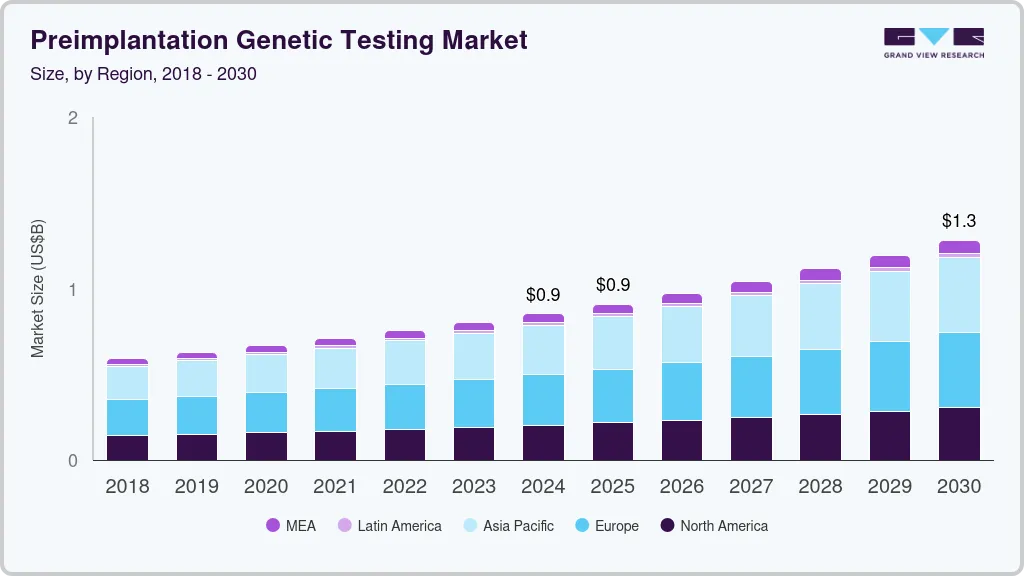
The global preimplantation genetic testing market size was valued at USD 927.0 million in 2025 and is projected to grow from USD 1,007.8 million in 2026 to USD 2,368.4 million by 2033, at a CAGR of 13.0% from 2026 to 2033. The market in Europe dominated with a revenue share of 40.7% in 2025. The growing prevalence of single-gene, mitochondrial, and other genetic disorders is expected to drive the demand for preimplantation diagnosis and screening processes.
 Source: Grand View Research, IR Documents, Primary Interviews, Paid DatabasesTo learn more about this report,
 Download Free Sample Report
 Key Market Trends & Insights
- By procedure: Preimplantation genetic diagnosis segment held the largest market share of 76.9% in 2025.
- By product: Reagents and consumables segment held the largest market share of 48.8% in 2025.
- By technology: Polymerase chain reaction (PCR) segment held the largest market share of 39.8% in 2025.
- By application: Aneuploidy screening segment held the largest market share of 26.2% in 2025.
- By end use: Hospitals segment held the largest market share of 38.9% in 2025.
Regional Highlights
- Largest regional market: Europe (40.7% revenue share, 2025)
- Fastest-growing regional market: Asia Pacific (highest CAGR, 2026-2033)
- By country: Germany held the largest market share in 2025
Market Size & Forecast
- Market size in 2025: USD 927.0 Million
- Estimated market size in 2026: USD 1,007.8 Million
- Projected market size by 2033: USD 2,368.4 Million
- CAGR (2026-2033): 13.0%
Three ways to get this report
Buy it, customize it, or ask a question.Ask an Analyst
Analyst response in 1 business day
- AccessReport author, directly
- Reply timeWithin 1 working day
- No sales callDirect answer only
- FormatEmail reply
- CostFree, no cost
Get the Full Report
What the study covers
- FormatsPDF · Excel · Dashboard
- Timeline2026–2033 annual, 2025 base
- Coverage20+ countries, 5 regions
- Companies10+ key players profiled
Customize the Report
20% free customization
- IncludeCountries, segments, points
- TailorTo your product definition
- ExtendDeeper competitor detail
- OrA fully bespoke study
- Turnaround5–10 working days
The Florida Department of Health reports that approximately one in every 33 babies in the U.S. is born with a congenital disability, impacting nearly 120,000 babies each year. With new tests being launched, the demand is expected to grow in the coming years. For instance, in July 2023, Thermo Fisher Scientific Inc. launched two tests based on NGS for preimplantation genetic testing-aneuploidy (PGT-A). Preimplantation Genetic Testing for Aneuploidy (PGT-A) is a widely used method in assisted reproductive technology (ART) to identify embryos with chromosomal abnormalities before transfer. Traditionally, PGT-A involves a biopsy of the developing embryo, typically on day five or six, by creating a small opening in the outer layer and removing a few cells. While effective, this invasive approach poses potential risks to embryo viability and implantation potential.
 To learn more about this report, Download Free Sample Report
 In recent years, the field has made a pivotal leap forward with the introduction of non-invasive PGT-A (niPGT-A). This breakthrough allows for the analysis of cell-free DNA (cfDNA) that embryos naturally release into the surrounding culture media during growth, eliminating the need for cell biopsy. This approach aims to maintain embryo integrity while still providing valuable genetic insights.
PerkinElmer PG-Seq Rapid Non-Invasive PGT-A Kit, designed specifically for cfDNA collected from embryo culture media. This kit builds upon the company’s earlier PG-Seq biopsy-based solution, offering a significantly faster three-hour sample preparation workflow, less than half the time compared to PG-Seq Kit 2.0. It can detect a range of chromosomal abnormalities, including aneuploidies, unbalanced translocations, and segmental changes. Data from a global collaboration of 15 IVF laboratories show a >90% concordance rate between niPGT-A and traditional PGT-A results, making it a powerful and less invasive option for embryo screening.
Also in July 2023, Thermo Fisher Scientific launched two new NGS-based research tools for preimplantation testing: the Ion ReproSeq PGT-A Kit and the Ion AmpliSeq Polyploidy Kit. Both kits are compatible with the Ion Torrent Genexus Integrated Sequencer, a fully automated platform that streamlines the IVF testing process by integrating templating, sequencing, and data analysis. When used together, these kits enhance diagnostic confidence by adding critical quality control features, including the ability to detect contamination and triploidy in embryos, further strengthening the reliability of PGT-A results.
Earlier, in September 2022, Eurofins Genoma, a leading European diagnostics laboratory, launched its own niPGT-A solution. Eurofins' approach uses cfDNA from the spent culture media and offers a complete genetic profile by capturing signals from both the inner cell mass and the trophectoderm. This ensures more representative data than limited biopsy samples. Eurofins, already recognized for its role in pioneering non-invasive prenatal testing (NIPT) in Italy, sees this launch as a major step in expanding its reproductive genetics portfolio.
Supporting these advancements is Esco Medical’s MIRI Time-Lapse Incubator, a key enabler of niPGT. This advanced incubator offers continuous time-lapse monitoring and controls environmental factors like temperature and pH using its specialized CultureCoin® dish. It allows embryologists to closely track morphokinetic development, enhancing embryo selection while maintaining ideal conditions for cfDNA analysis.
As infertility affects an estimated 17.5% of the global adult population (WHO, 2023), demand for safer, more accessible IVF solutions continues to rise. Non-invasive PGT-A offers a promising alternative to traditional methods, prioritizing both embryo viability and patient comfort, while opening new doors for broader clinical adoption in reproductive health.
Market Dynamics
The Preimplantation Genetic Testing (PGT) market is driven by increasing adoption of in vitro fertilization (IVF), rising prevalence of genetic disorders, delayed parenthood, and advances in next-generation sequencing (NGS) technologies. Growing awareness of embryo screening and improving reproductive success rates further support market growth. However, high procedure costs, ethical concerns, and varying regulatory frameworks restrain adoption. Emerging opportunities lie in AI-assisted embryo assessment, expanded clinical applications of PGT, and advancements in genomic technologies that enhance diagnostic accuracy and personalized reproductive care.
The increasing utilization of assisted reproductive technologies (ART) and the growing clinical acceptance of preimplantation genetic testing (PGT) are major drivers of the market. Fertility clinics are increasingly incorporating PGT into IVF cycles to improve embryo selection, reduce the risk of inherited genetic disorders, and enhance implantation success, particularly among women of advanced maternal age and couples with recurrent pregnancy loss. Continuous advances in next-generation sequencing (NGS)-based PGT and embryo biopsy techniques have further strengthened clinical confidence in the technology.
Recent clinical evidence published in 2025 demonstrated the potential benefits of PGT in selected patient populations. A 2025 review published by NIH, reported that women aged 35–40 years with two or more embryos available for biopsy experienced significantly improved ongoing pregnancy rates per embryo transfer when PGT was incorporated into IVF treatment. Additionally, a 2025 meta-analysis summarized in UnitedHealthcare's clinical policy found that pregnancies following PGT had a 15% lower risk of low birth weight and a 45% lower risk of very preterm birth compared with non-PGT pregnancies, reinforcing the growing clinical value of the technology.
Despite technological advances, uncertainty regarding the routine clinical benefit of PGT remains a significant restraint to market growth. Clinical studies continue to report that the effectiveness of PGT varies depending on patient characteristics, embryo quality, maternal age, and testing indication. In addition, ethical concerns surrounding embryo selection, false-positive or false-negative findings, embryo mosaicism, and equitable access continue to influence physician adoption and reimbursement decisions. The lack of universal clinical guidelines for several PGT applications also limits widespread implementation.
A multicenter randomized controlled trial summarized in a 2025 peer-reviewed review reported live birth rates of 77.2% in the PGT-A group compared with 81.8% in the conventional IVF group, indicating that routine PGT-A did not significantly improve live birth outcomes in all patient populations. Furthermore, the 2026 Ethics Committee Opinion from the American Society for Reproductive Medicine (ASRM) emphasized that evidence supporting polygenic preimplantation genetic testing (PGT-P) remains limited and recommended cautious clinical implementation until additional validation studies become available.
The continued evolution of genomic technologies presents a significant opportunity for the preimplantation genetic testing market. Advances in next-generation sequencing, artificial intelligence-assisted embryo assessment, expanded carrier screening integration, and polygenic risk assessment are enabling fertility clinics to evaluate embryos with greater precision. These innovations are expected to support more personalized reproductive medicine and expand the use of PGT beyond traditional monogenic disorders and chromosomal aneuploidy testing.
A major milestone occurred in 2026, when the American Society for Reproductive Medicine (ASRM) published its first dedicated Ethics Committee Opinion on the use of PGT for polygenic disorders (PGT-P). Although the guidance recommended cautious clinical adoption due to current evidence limitations, it formally recognized PGT-P as an emerging area of reproductive medicine requiring continued clinical research and technological development. Simultaneously, multiple 2025 scientific reviews highlighted ongoing advances in AI-supported embryo selection and high-resolution genomic testing, creating opportunities for broader clinical adoption as evidence continues to mature.
Market Concentration & Characteristics
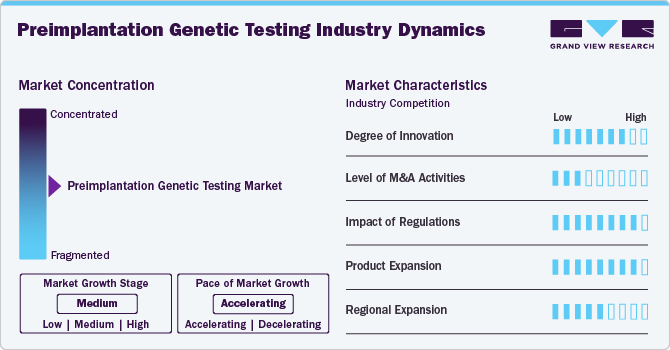
The preimplantation genetic testing market has seen significant innovation, including advancements like PGT-A and PGT-M. These innovations improve accuracy, reduce risks, and enhance pregnancy success rates, driving market growth and offering better outcomes for individuals facing genetic and fertility challenges.
The market is characterized by the leading players with moderate levels of product launches and merger and acquisition (M&A) activity. Companies are consolidating to leverage advanced technologies, expand their market reach, and enhance their service offerings, driving growth and innovation within the industry and improving outcomes for patients seeking genetic and fertility solutions.
 To learn more about this report, Download Free Sample Report
 Regulation significantly impacts the preimplantation genetic testing industry, ensuring safety, efficacy, and ethical standards. Stringent regulatory frameworks guide the development and implementation of testing procedures, fostering trust among patients and practitioners. However, navigating complex regulations can also pose challenges for market entry and innovation, influencing the pace of technological advancements.
In the market for preimplantation genetic testing, product substitutes include traditional prenatal diagnostic methods such as amniocentesis and chorionic villus sampling (CVS). Unlike PGT, these methods test for genetic disorders after pregnancy has been established, potentially leading to difficult decisions if abnormalities are found. These substitutes offer alternative diagnostic options but do not provide the early intervention benefits of PGT.
The end user concentration factor is crucial for any manufacturer in the market space. The end user concentration is primarily high among fertility clinics, specialized reproductive health centers, and hospitals with advanced IVF facilities. These institutions adopt PGT to enhance pregnancy success rates and reduce genetic risks. Additionally, couples with a history of genetic disorders or infertility issues represent a significant portion of the end user demographic, driving the demand for these advanced diagnostic services.
Analyst Perspective
The Preimplantation Genetic Testing market is expected to witness sustained growth, driven by increasing adoption of in vitro fertilization (IVF), delayed parenthood, and rising awareness of inherited genetic disorders. Advances in next-generation sequencing (NGS), artificial intelligence-enabled embryo assessment, and improved bioinformatics are enhancing the accuracy and efficiency of embryo screening, supporting broader clinical adoption. Fertility centers are increasingly incorporating PGT into routine IVF workflows to improve implantation success rates and reduce the risk of genetic abnormalities. However, high testing costs, ethical concerns, and varying regulatory frameworks across countries continue to limit widespread utilization. Looking ahead, expanding access to reproductive healthcare, technological innovations, and increasing collaborations between fertility clinics and genomic diagnostics companies are expected to create significant opportunities, positioning PGT as an integral component of precision reproductive medicine.
Drivers, Opportunities & Restraints
The rising incidence of genetic diseases has fueled the demand for preimplantation genetic testing (PGT). With the increasing prevalence of genetic disorders, PGT has become crucial in IVF procedures. This testing helps identify and prevent the transfer of genetic abnormalities, enhancing the likelihood of successful pregnancies. Innovations like PGT-A and monogenic diseases (PGT-M) have further improved outcomes, reducing miscarriage rates and the risk of hereditary conditions. Consequently, the adoption of PGT is expected to grow, driven by its benefits in detecting and managing disorders effectively.
The increasing rate of infertility has significantly contributed to the rising demand for PGT in assisted reproductive technologies (ART). Infertility affects millions worldwide, with factors such as delayed childbearing, lifestyle changes, environmental influences, and underlying health conditions playing pivotal roles. As more couples seek solutions for infertility, in vitro fertilization (IVF) has emerged as a prominent method to achieve pregnancy. Within IVF, PGT plays a crucial role by ensuring the selection of genetically healthy embryos for implantation, thereby enhancing the chances of a successful pregnancy.
Preimplantation genetic testing, including PGT-A and PGT-M, helps identify chromosomal abnormalities and specific genetic disorders in embryos before implantation. This not only increases the likelihood of a successful pregnancy but also reduces the risk of miscarriage and genetic disorders in offspring. The ability of PGT to screen for genomic issues before pregnancy offers reassurance to couples facing infertility, providing them with better outcomes and fewer cycles needed to achieve pregnancy. Moreover, advancements in testing technologies have improved the accuracy and reliability of PGT, further driving its adoption. As infertility rates continue to rise, the utilization of PGT in ART is expected to grow, offering hope and solutions to those struggling with infertility.
Procedure Insights
Based on procedure, the preimplantation genetic diagnosis segment led the market with the largest revenue share of 76.9% in 2025. Growing awareness among healthcare professionals and consumers about genetic testing for specific gene mutations is a key driver of the segment's growth. The increasing incidence of single-gene diseases and translocation cases, coupled with the effective implementation of NGS technology for genetic testing by market players, further propels this growth. PGD services enable the examination of embryos to identify specific gene mutations, helping to reduce the incidence of these diseases in newborns.
Conversely, PGS services focus on detecting chromosomal abnormalities in embryos. These services are recommended for couples of advanced reproductive age, those undergoing multiple IVF cycles, and those with a history of recurrent pregnancy loss. The PGS services segment is expected to experience significant growth during the forecast period due to rising demand and continuous advancements in IVF procedures. Additionally, the high number of IVF procedures conducted in well-equipped laboratories enhances the quality of PGS services, thereby driving further growth.
Product Insights
Based on product, the reagents and consumables segment led the market with the largest revenue share of 48.8% in 2025. The rising adoption of PGT in the IVF process is boosting the demand for reagents and consumables. Annually, more than 3.0 million IVF cycles are performed worldwide, resulting in over 700,000 deliveries using IVF. Additionally, the growing use of advanced testing technologies such as next-generation sequencing, polymerase chain reaction, and fluorescent in situ hybridization is expected to drive segment growth.
In 2024, the instruments segment held the second-largest share of the preimplantation genetic testing industry. Market players are actively developing novel testing instruments that provide high-accuracy results. Furthermore, the increasing number of hospitals and clinics offering IVF services is anticipated to increase the demand for advanced instruments to perform PGT on-site.
Technology Insights
Based on technology, the polymerase chain reaction (PCR) segment led the market with the largest revenue share of 39.8% in 2025. High market penetration, cost-effectiveness, and the high accuracy of PCR tests are key factors supporting the segment's significant market share. PCR increases the likelihood of producing a large number of copies of a specific genome segment, enhancing the detection of chromosomal abnormalities. This technology is both specific and sensitive, making it suitable for various types of genetic diagnoses.
Next-generation sequencing (NGS) is projected to grow at the fastest CAGR during the forecast period. NGS tests offer superior accuracy compared to other methods and can sequence large amounts of DNA in a shorter time. Additionally, technological advancements have broadened the capabilities of NGS, enabling the detection of many more chromosomal abnormalities.
Application Insights
Based on application, the aneuploidy screening segment led the market with the largest revenue share of 26.2% in 2025. Aneuploidy screening plays a crucial role in assessing embryo quality during IVF procedures. The growing adoption of aneuploidy screening and the introduction of new products are expected to propel segment growth. For instance, in June 2024, NxGen MDx launched the Fetal RhD test. The test works on their existing Non-Invasive Prenatal Screen platform. NxGen MDx's Non-Invasive Prenatal Screening (NIPS) assesses for common chromosomal abnormalities like Down syndrome (trisomy 21), trisomy 18, and trisomy 13, offering expanded options for aneuploidy and microdeletions detection as well.
In 2024, the HLA typing segment accounted for the second-largest market share. The use of PGT for embryo HLA typing, particularly for applications in stem cell therapy and related fields, significantly contributed to the segment's growth. This approach enhances the success of hematopoietic stem cell transplantation by utilizing genetically matched donors, which has been shown to improve survival rates compared to using unrelated donors.
End-use Insights
Based on end use, the hospitals segment led the market with the largest revenue share of 38.9% in 2025. Factors driving this growth include high patient volume, enhanced healthcare infrastructure, and the availability of IVF services in both public and private hospitals. Couples seeking fertility treatments often choose hospitals due to their advanced technological capabilities. Additionally, increased research activities in hospitals are anticipated to boost testing rates within these settings. Looking ahead, the hospital segment is projected to exhibit the fastest growth in the coming years.
 To learn more about this report, Download Free Sample Report
 Fertility centers are expected to emerge as the most lucrative of all over the forecast period. Fertility centers are lucrative end users of PGT due to several key reasons. These centers specialize in assisted reproductive technologies, offering PGT to enhance the success rates of IVF procedures by selecting genetically healthy embryos. PGT helps mitigate the risk of genetic disorders in newborns, thereby increasing the confidence and satisfaction of patients. Additionally, fertility centers attract patients seeking advanced reproductive care, driving demand for PGT services. Their focus on cutting-edge technology and specialized expertise in reproductive health positions them as pivotal players in the market, contributing to the profitability and growth of PGT services.
Regional Insights
Europe preimplantation genetic testing market accounted for the largest revenue share of 40.7% in 2025, capturing the largest revenue share at 34.65%. The rising number of IVF procedures fuels this leadership due to increasing late pregnancies. Liberal regulations in several European countries regarding aneuploidy screening, coupled with the presence of robust market players and service providers, are expected to open up new avenues for growth in the European PGT market. Europe's strong position in the PGT market is further bolstered by favorable regulatory environments for aneuploidy screening and the presence of established market players and service providers. The region's healthcare infrastructure supports advanced reproductive technologies, including PGT, attracting patients seeking reliable fertility treatments. The increasing trend towards IVF procedures among older demographics underscores Europe's pivotal role, driven by demographic shifts and technological advancements. These factors collectively contribute to Europe's dominant revenue share and its potential for continued growth.
 To learn more about this report, Download Free Sample Report
 UK Preimplantation Genetic Testing Market Trends
The UK preimplantation genetic testing market is expected to witness significant growth over the forecast period. Supportive government policies and funding, along with a growing preference for personalized medicine and improved IVF success rates, also contribute to the market's growth.
Germany Preimplantation Genetic Testing Market Trends
The preimplantation genetic testing market in the Germany held the largest share in the Europe region in 2025. Germany’s preimplantation genetic testing market is witnessing steady expansion, supported by greater awareness of inherited genetic disorders, continued demand for assisted reproductive technologies, and improvements in sequencing-based embryo screening. Testing for monogenic and structural chromosomal disorders continues to support clinically indicated procedures. The market is also benefiting from Germany’s advanced fertility-care infrastructure, specialized fertility clinics, and integration of genetic laboratories with reproductive medicine services. Adoption remains shaped by stringent ethical and regulatory requirements, which favor clinically justified applications and comprehensive genetic counseling. Technological advances in NGS and embryo-testing workflows are expected to further improve testing accuracy and support market development through 2033.
North America Preimplantation Genetic Testing Market Trends
North America preimplantation genetic testing industry is expected to witness growth over the forecast period, due to the rising prevalence of various disorders. The increasing number of labs offering PGT, rising awareness, and high incidence of hereditary disorders and other diseases, such as PCOS and chlamydia, are other factors contributing to the regional growth.
U.S. Preimplantation Genetic Testing Market Trends
The preimplantation genetic testing (PGT) industry in the U.S. is growing due to increased awareness of hereditary disorders, advancements in reproductive technology, rising infertility rates, and a growing preference for personalized medicine. Additionally, supportive regulations and higher demand for in-vitro fertilization (IVF) procedures contribute to market expansion.
Asia Pacific Preimplantation Genetic Testing Market Trends
Asia Pacific preimplantation genetic testing industry is anticipated to witness the fastest CAGR of 14.1% over the forecast period. Advancements in reproductive technology and the growing accessibility to healthcare also contribute to the rising popularity of PGT in the region. China and Japan are major countries in the region that continue to create advancements in reproductive health, along with other healthcare disciplines. The high adoption rate of IVF translates into increased usage of PGT in this region, and increasing awareness levels among people are expected to boost revenue generation in the regional market. Moreover, emerging economies such as China & India, and the presence of regulatory bodies to monitor challenges associated with reproductive health, are expected to encourage the adoption of these services in this region in the near future.
The preimplantation genetic testing market in China is expected to grow over the forecast period due to the high burden of genetic diseases in China. With a large population and significant incidence of hereditary disorders, there is heightened demand for PGT to screen embryos and select those free of genetic mutations, thereby increasing chances of healthy births and reducing disease transmission.
The Japan preimplantation genetic testing market is expected to grow over the forecast period due the technological advancements and increased awareness. Innovations in genetic testing technologies enhance accuracy and reliability, while heightened public awareness encourages more couples to opt for PGT as part of assisted reproductive treatments, thus fostering market expansion.
Latin America Preimplantation Genetic Testing Market Trends
The Latin America preimplantation genetic testing industry is expected to grow substantially over the forecast period. Awareness is playing a pivotal role in driving the growth of the PGT market. As awareness of genetic disorders increases across the region, more individuals and couples are seeking proactive measures to mitigate risks during family planning.
The preimplantation genetic testing market in Brazil is expected to grow substantially over the forecast period. The entry of new providers and technologies into the Brazilian market for Preimplantation Genetic Testing (PGT) is instrumental in driving its growth. These new entrants bring advanced genomic technologies and methodologies that enhance accuracy and expand the range of conditions screened.
MEA Preimplantation Genetic Testing Market Trends
The MEA preimplantation genetic testing industry is estimated to grow significantly over the forecast period, due to the rising awareness of PGT, the importance of screening & diagnosis of genetic disorders, and a positive change in the perception and attitude regarding hereditary diseases.
The UAE preimplantation genetic testing market is growing. Social acceptance plays a pivotal role in the UAE. As attitudes towards advanced medical technologies and hereditary health evolve positively, there is increasing acceptance of PGT as a viable option for family planning among Emiratis and expatriates alike. This cultural shift is supported by a progressive healthcare infrastructure that promotes innovation and patient empowerment.
The preimplantation genetic testing market in Kuwait is expected to witness growth over the forecast period, driven by technological advancements. Advancements in hereditary testing technologies enhance the accuracy, reliability, and efficiency of PGT procedures, thereby improving outcomes for couples undergoing assisted reproductive treatments.
Key Preimplantation Genetic Testing Company Insights
Some of the key players operating in the market include Quest Diagnostics Incorporated; Natera, Inc.; and Illumina. Inc.
-
Illumina, Inc. primarily operates within the life sciences and biotechnology vertical. The company specializes in sequencing and genomics, providing advanced tools and technologies that enable researchers & professionals to analyze and decode DNA with exceptional accuracy & efficiency. Illumina’s innovations have broad applications in various industries, including healthcare, agriculture, and scientific research. It is a leading player in genomics and driving advancements in personalized medicine, genetic discovery, and more.
-
Quest Diagnostics Incorporated is a publicly owned medical diagnostics company that provides clinical testing services, such as gene-based & esoteric testing, routine testing, and drug-of-abuse testing. Its service portfolio includes anatomic pathology services & related services to healthcare providers, risk assessment services for life insurers, and others, as well as central laboratory testing for clinical trials. It has geographical presence in Mexico, India, Ireland, and the UK. Several international diagnostic laboratories, hospitals, and clinics are partners with the company.
GenEmbryomics, Color Health, Inc., and EasyDNA are some of the emerging companies in the preimplantation genetic testing (PGT) market.
-
Color Health, Inc. operates in healthcare technology and genomics verticals. The company delivers healthcare solutions that focus on genetics and genomics. Color Health also offers genetic testing and counseling services, leveraging the power of genetic information to provide insights into individuals’ health risks, including hereditary conditions and cancer predispositions.
-
EasyDNA primarily operates in genetic testing and diagnostics. The company offers various DNA testing services to individuals and organizations. Its services cover diverse areas, including paternity testing, ancestry & genealogy analysis, health & wellness insights, and forensic DNA testing. EasyDNA provides accessible and user-friendly testing solutions, enabling individuals to gain access to their genetic heritage, family relationships, and potential health-related factors.
Key Preimplantation Genetic Testing Companies
The following key companies have been profiled for this study on the preimplantation genetic testing market.
-
Quest Diagnostics Incorporated
-
Natera, Inc.
-
COOPER SURGICAL, INC.
-
Genea Pty Limited.
-
Invitae Corporation
-
Laboratory Corporation of America Holdings
-
Thermo Fisher Scientific Inc.
-
Bioarray S.L.
-
Illumina, Inc.
-
Igenomix
-
RGI
-
F. Hoffmann-La Roche Ltd
Competitive Benchmarking
Category
Operating Strategies
Competitive Edge
Weakness
Well-Established Players (CooperSurgical, Illumina, Thermo Fisher Scientific, Natera, Vitrolife, Genea Biomedx, Agilent Technologies)
Focus on expanding comprehensive PGT portfolios through advancements in next-generation sequencing (NGS), PCR-based testing, embryo biopsy technologies, and bioinformatics software. Emphasize collaborations with IVF clinics, fertility centers, and reproductive genetics laboratories, while investing in automation, AI-enabled embryo assessment, and global geographic expansion through strategic acquisitions and partnerships.
Strong global presence, established relationships with fertility clinics and IVF networks, broad product portfolios, advanced genomic technologies, extensive regulatory expertise, and significant R&D capabilities. Integrated solutions spanning sample preparation, sequencing, genetic analysis, and interpretation provide a competitive advantage and support high clinical adoption.
High development and regulatory compliance costs, dependence on IVF procedure volumes, pricing pressures in emerging markets, and increasing ethical and regulatory scrutiny surrounding embryo genetic testing. Complex reimbursement environments and the need for continuous technological innovation also increase operational costs.
Emerging & Regional Players (Igenomix, Genomic Prediction, Orchid Health, Juno Genetics, Base Genomics, regional reproductive genetics laboratories)
Focus on specialized PGT services, AI-assisted embryo analysis, expanded carrier screening integration, polygenic risk assessment, and personalized reproductive medicine. Emphasize collaborations with fertility clinics, academic research centers, and biotechnology companies to develop innovative genomic testing solutions and improve clinical outcomes.
High innovation capability, specialized expertise in reproductive genetics, faster adoption of emerging genomic technologies, personalized service offerings, and strong focus on niche clinical applications. Ability to rapidly commercialize advanced bioinformatics and AI-based reproductive health solutions provides differentiation.
Limited global commercial presence, smaller laboratory infrastructure, lower brand recognition, dependence on strategic partnerships and external investment, and challenges in obtaining reimbursement and regulatory approvals across multiple countries. Smaller companies may also face scalability constraints compared with established multinational diagnostics providers.
Recent Developments
-
In January 2024, Orchid Health announced the launch of the first commercially available whole genome sequencing service for specific diseases in preimplantation embryos.
-
In July 2023, Thermo Fisher Scientific Inc. introduced two new NGS-based research tools designed for PGT-A. These tools are specifically intended for use in in vitro fertilization (IVF) and intracytoplasmic sperm injection (ICSI) procedures. The Ion ReproSeq PGT-A Kit and Ion AmpliSeq Polyploidy Kit mark the debut of research-use reproductive health assays on the Ion Torrent Genexus Integrated Sequencer.
-
In December 2023, Progenesis inaugurated its Genetic Laboratory in New Delhi and an AI & Bioinformatics Data Centre in Chennai. The event drew health experts, highlighting Progenesis's commitment to genetic solutions, particularly in the field of in vitro fertilization (IVF).
Preimplantation Genetic Testing Market Report Scope
Report Attribute
Details
Market size in 2025
USD 927.0 million
Estimated market size in 2026
USD 1,007.8 million
Projected market size by 2033
USD 2,368.4 million
Growth rate
CAGR of 13.0% from 2026 to 2033
Historical data
2021 - 2024
Forecast period
2026 - 2033
Quantitative units
Revenue in USD million/billion and CAGR from 2026 to 2033
Report coverage
Revenue forecast, company ranking, competitive landscape, growth factors, and trends
Segments covered
Procedure, Product, Application, Technology, End Use, Region
Regional scope
North America; Europe; Asia Pacific; Latin America; MEA
Country scope
U.S.; Canada; Mexico; Germany; UK; France; Italy; Spain; Denmark; Sweden; Norway; Japan; China; India; South Korea; Australia; Thailand; Brazil; Argentina; South Africa; Saudi Arabia; UAE; and Kuwait
Key companies profiled
Quest Diagnostics Incorporated; Natera, Inc.; COOPER SURGICAL, INC.; Genea Pty Limited.; Invitae Corporation; Laboratory Corporation of America Holdings; Thermo Fisher Scientific Inc.; Bioarray S.L., Illumina, Inc.; Igenomix, RGI; F. Hoffmann-La Roche Ltd
Customization scope
Free report customization (equivalent up to 8 analysts' working days) with purchase. Addition or alteration to country, regional & segment scope.
Pricing and purchase options
Avail customized purchase options to meet your exact research needs. Explore purchase options
Global Preimplantation Genetic Testing Market Report SegmentationThis report forecasts revenue growth at the global, regional, and country levels and provides an analysis of the latest industry trends in each of the sub-segments from 2021 to 2033. For this study, Grand View Research has segmented the global preimplantation genetic testing market report based on procedure, product, technology, application, end-use, and region:
-
Procedure Outlook (Revenue, USD Million, 2021 - 2033)
-
Preimplantation Genetic Screening
-
Preimplantation Genetic Diagnosis
-
-
Product Outlook (Revenue, USD Million, 2021 - 2033)
-
Reagents and Consumables
-
Instruments
-
Software
-
-
Technology Outlook (Revenue, USD Million, 2021 - 2033)
-
Next Generation Sequencing (NGS)
-
Polymerase Chain Reaction (PCR)
-
Fluorescent In-Situ Hybridization (FISH)
-
Others
-
-
Application Outlook (Revenue, USD Million, 2021 - 2033)
-
Chromosomal Abnormalities
-
X-linked Diseases
-
Embryo Testing
-
Aneuploidy Screening
- HLA Typing
-
Other Applications
-
-
End-use Outlook (Revenue, USD Million, 2021 - 2033)
-
Fertility Centers
-
Hospitals
-
Diagnostic Centers
-
Research Centers and Academic Labs
-
-
Regional Outlook (Revenue in USD Million, 2021 - 2033)
-
North America
-
U.S.
-
Canada
-
Mexico
-
-
Europe
-
UK
-
Germany
-
France
-
Italy
-
Spain
-
Sweden
-
Denmark
-
Norway
-
-
Asia Pacific
-
Japan
-
China
-
India
-
Australia
-
South Korea
-
Thailand
-
-
Latin America
-
Brazil
-
Argentina
-
-
Middle East and Africa
-
Saudi Arabia
-
South Africa
-
UAE
-
Kuwait
-
-
Research Methodology
The preimplantation genetic testing market figures in this report are based on a proven research process that combines executive interviews with secondary research from proprietary databases, company filings, and recognized regulatory and institutional sources. Market size is built through value-chain sizing-reconciling supply-side and demand-side estimates-and triangulated with bottom-up and top-down approaches. Every estimate passes multiple levels of expert validation before publication, with each preimplantation genetic testing segment quantified using the revenue-capture definitions in the table below.
Segment Definition
Procedure
Revenue capture definition
Preimplantation Genetic Screening (PGS)
Revenue generated from genetic screening procedures performed to detect chromosomal aneuploidies or structural chromosomal abnormalities in embryos before implantation, irrespective of a known inherited disorder. (Often referred to as PGT-A in current clinical practice.)
Preimplantation Genetic Diagnosis (PGD)
Revenue generated from diagnostic testing of embryos to identify specific inherited monogenic disorders or chromosomal rearrangements in couples with known genetic risks.
Product
Revenue capture definition
Reagents and Consumables
Revenue generated from kits, reagents, enzymes, amplification reagents, sequencing consumables, embryo biopsy consumables, laboratory plastics, probes, and other disposable materials used during PGT procedures.
Instruments
Revenue generated from capital equipment used for embryo biopsy, DNA amplification, sequencing, PCR, imaging, sample preparation, and laboratory automation supporting PGT workflows.
Software
Revenue generated from bioinformatics software, embryo analysis software, sequencing data analysis platforms, laboratory information management systems (LIMS), and reporting software used for PGT interpretation and workflow management.
Reagents and Consumables
Revenue generated from kits, reagents, enzymes, amplification reagents, sequencing consumables, embryo biopsy consumables, laboratory plastics, probes, and other disposable materials used during PGT procedures.
Technology
Revenue capture definition
Next Generation Sequencing (NGS)
Revenue generated from PGT procedures utilizing next-generation sequencing platforms for comprehensive chromosomal analysis, monogenic disease detection, structural rearrangement analysis, and embryo genetic profiling.
Polymerase Chain Reaction (PCR)
Revenue generated from PGT procedures utilizing PCR-based technologies for amplification and detection of specific genetic mutations or inherited disorders.
Fluorescent In-Situ Hybridization (FISH)
Revenue generated from PGT procedures utilizing fluorescent probes to detect selected chromosomal abnormalities or rearrangements in embryos.
Others
Revenue generated from alternative PGT technologies not classified under NGS, PCR, or FISH, including array comparative genomic hybridization (aCGH), SNP arrays, karyomapping, digital PCR, and emerging genomic technologies.
Application
Revenue capture definition
Chromosomal Abnormalities
Revenue generated from testing embryos for structural chromosomal abnormalities such as translocations, inversions, deletions, duplications, and other chromosomal rearrangements.
X-linked Diseases
Revenue generated from PGT procedures performed to identify embryos affected by X-linked inherited genetic disorders.
Embryo Testing
Revenue generated from comprehensive genetic evaluation of embryos to determine genetic health, viability, and suitability for transfer during IVF treatment.
Aneuploidy Screening
Revenue generated from testing embryos for abnormal chromosome numbers to improve implantation success and reduce miscarriage risk.
HLA Typing
Revenue generated from PGT procedures performed for human leukocyte antigen (HLA) matching to support sibling donor selection for stem cell transplantation or treatment of inherited diseases.
Other Applications
Revenue generated from PGT performed for other clinical indications, including mitochondrial disorders, rare inherited diseases, and emerging genetic testing applications.
End Use
Revenue capture definition
Fertility Centers
Revenue generated from PGT procedures and associated products performed in IVF clinics and fertility centers specializing in assisted reproductive technologies.
Hospitals
Revenue generated from hospital-based reproductive medicine departments and laboratories performing or facilitating PGT services.
Diagnostic Centers
Revenue generated from independent genetic testing laboratories and diagnostic service providers offering PGT analysis for fertility clinics and hospitals.
Research Centers and Academic Labs
Revenue generated from research institutions, universities, and academic laboratories utilizing PGT technologies for clinical research, translational medicine, and reproductive genetics studies.
Estimation Model
The Preimplantation Genetic Testing (PGT) market was estimated using a combination of bottom-up and top-down approaches. Revenue was assessed by analyzing procedure volumes across fertility clinics, hospitals, and diagnostic laboratories, alongside the adoption of PGT technologies, products, and applications. Company revenues, regulatory approvals, product portfolios, pricing trends, and utilization rates were evaluated through publicly available sources. The estimates were validated through triangulation of supply-side data (manufacturers and service providers), demand-side analysis (IVF centers and diagnostic laboratories), and secondary research from government agencies, professional societies, company reports, and peer-reviewed scientific publications to ensure market accuracy.
Delivered Customizations
This report has been delivered with the following In-depth customizations
Client Request
Customization Delivered
Value Adds
PGT Competitive Landscape & Technology Assessment – IVF, Genomics & Reproductive Diagnostics
Assessed the global PGT ecosystem across fertility centers, IVF clinics, reproductive genetics laboratories, and genomic diagnostics providers. Evaluated leading manufacturers of PGT reagents, sequencing platforms, embryo biopsy solutions, bioinformatics software, and emerging AI-enabled embryo assessment technologies. Analyzed competitive positioning across PGT-A, PGT-M, and PGT-SR testing workflows.
Enabled benchmarking of leading PGT technology providers and fertility diagnostics companies, identified innovation opportunities in AI-assisted embryo selection and next-generation sequencing (NGS), and evaluated competitive differentiation across integrated reproductive genetics solutions.
PGT Regulatory, Clinical Guidelines & Reimbursement Assessment
Analyzed evolving regulatory frameworks governing PGT across key markets, including oversight of reproductive genetic testing, IVF laboratory accreditation standards, clinical practice guidelines, and reimbursement policies. Assessed the impact of regulatory changes, ethical considerations, and clinical evidence on commercialization and adoption of PGT technologies.
Supported regulatory risk assessment, identified reimbursement and commercialization challenges, evaluated compliance readiness among diagnostic providers, and highlighted the impact of evolving clinical guidelines and ethical frameworks on market growth and technology adoption.
PGT Innovation & Technology Assessment – NGS, AI, Embryo Analysis & Bioinformatics
Evaluated advancements in next-generation sequencing (NGS), PCR-based testing, AI-assisted embryo evaluation, non-invasive PGT approaches, bioinformatics platforms, and laboratory automation supporting reproductive genetics. Assessed emerging trends in polygenic risk assessment, digital workflow integration, and precision reproductive medicine.
Highlighted high-growth innovation areas, identified emerging technologies improving embryo selection accuracy and laboratory efficiency, assessed competitive positioning in advanced reproductive genomics, and provided strategic insights into future opportunities in precision fertility diagnostics.
Frequently Asked Questions About This Report
The global preimplantation genetic testing market size was valued at USD 927.0 million in 2025 and is estimated at USD 1,007.8 million for 2026.
The global preimplantation genetic testing market is expected to grow at a CAGR of 13.0% from 2026 to 2033, reaching USD 2,368.4 million by 2033.
Aneuploidy screening dominated the preimplantation genetic testing market with a revenue share of over 26.0% in 2025 and is projected to grow at the fastest rate over the forecast period. Aneuploidy screening is mostly used to determine embryo quality in IVF.
Key players in the preimplantation genetic testing market include Quest Diagnostics Incorporated; Natera, Inc.; COOPER SURGICAL, INC.; Genea Pty Limited.; Invitae Corporation; Laboratory Corporation of America Holdings; Thermo Fisher Scientific Inc.; Bioarray S.L., Illumina, Inc.; Igenomix, RGI; F. Hoffmann-La Roche Ltd
Key factors that are driving the market growth include worldwide increase in number of IVF cycles and integration of preimplantation genetic testing in IVF procedures.
The Europe preimplantation genetic testing market dominated the global market in 2025, capturing the largest revenue share at 40.7%. The rising number of IVF procedures fuels this leadership due to increasing late pregnancies.
Asia Pacific preimplantation genetic testing industry is anticipated to witness the fastest CAGR of 14.1% over the forecast period. Advancements in reproductive technology and the growing accessibility to healthcare also contribute to the rising popularity of PGT in the region.
The reagents and consumables segment dominated the preimplantation genetic testing market and contributed 48.8% of the market share in 2025. The rising adoption of PGT in the IVF process is boosting the demand for reagents and consumables.
The polymerase chain reaction (PCR) segment dominated the preimplantation genetic testing industry and contributed 39.8% to the market share in 2025. High market penetration, cost-effectiveness, and the high accuracy of PCR tests are key factors supporting the segment's significant market share.
The hospitals segment led with a 38.9% revenue share in 2025.
About the Author(s)
Clinical Diagnostics Research Team
Healthcare · Clinical DiagnosticsThis report was authored by the clinical diagnostics research team at Grand View Research - comprising two research analysts, one senior research analyst, and one industry expert - with specialized expertise in the clinical diagnostics segment of the healthcare industry. All findings are based on proprietary healthcare databases, executive interviews, and regulatory analysis, subject to internal peer review prior to publication.
Last Updated:
Speak to Analyst

Customize this report to your needs - add regions, segments, or data points, with 20% free customization.
Or view our licence options:


ISO 9001:2015 & 27001:2022 Certified
We are GDPR and CCPA compliant! Your transaction & personal information is safe and secure. For more details, please read our privacy policy.


