
- Home
- »
- Specialty Glass, Ceramic & Fiber
- »
-
Insulated Packaging Market Size And Share Report, 2033GVR Report cover

Insulated Packaging Market (2026 - 2033)
Size, Share & Trends Analysis Report By Material (Corrugated Cardboards, Metal, Glass, Plastic), By Packaging Type (Rigid, Flexible, Semi-Rigid), By Application, By Region, And Segment Forecasts
Market Size, 2025
$18.3BMarket Estimate, 2026
$19.2BMarket Forecast, 2033
$27.0BCAGR, 2026–2033
5.0%Insulated Packaging Market Summary
The global insulated packaging market size was valued at USD 18.3 billion in 2025 and is projected to grow from USD 19.2 billion in 2026 to USD 27.0 billion by 2033, at a CAGR of 5.0% from 2026 to 2033. Asia Pacific dominated the market, accounting for a revenue share of 36.8% in 2025. The global insulated packaging market is driven by the rising demand for temperature-sensitive products, including pharmaceuticals and food, requiring safe transportation.
 Source: Grand View Research, IR Documents, Primary Interviews, Paid DatabasesTo learn more about this report,
 Download Free Sample Report
 Key Market Trends & Insights
- By material: Corrugated cardboards segment led the market with the largest revenue share of 30.6% in 2025.
- By packaging type: Rigid segment led the market with the largest revenue share of 43.1% in 2025.
- By application: Food & beverages segment led the market with the largest revenue share of 31.5% in 2025.
Regional Highlights
- Largest regional market: Asia Pacific (36.8% revenue share, 2025)
- By country: China held the largest market share in 2025.
Market Size & Forecast
- Market size in 2025: USD 18.3 Billion
- Estimated market size in 2026: USD 19.2 Billion
- Projected market size by 2033: USD 27.0 Billion
- CAGR (2026-2033): 5.0%
Three ways to get this report
Buy it, customize it, or ask a question.Ask an Analyst
Analyst response in 1 business day
- AccessReport author, directly
- Reply timeWithin 1 working day
- No sales callDirect answer only
- FormatEmail reply
- CostFree, no cost
Get the Full Report
What the study covers
- FormatsPDF · Excel · Dashboard
- Timeline2026–2033 annual, 2025 base
- Coverage20+ countries, 5 regions
- Companies10+ key players profiled
Customize the Report
20% free customization
- IncludeCountries, segments, points
- TailorTo your product definition
- ExtendDeeper competitor detail
- OrA fully bespoke study
- Turnaround5–10 working days
In addition, growing e-commerce and cold chain logistics are boosting the need for efficient thermal protection solutions. The growth of the global cold chain logistics sector is a major driver for the insulated packaging market. With the rising consumption of temperature-sensitive products such as pharmaceuticals, vaccines, frozen foods, and perishable beverages, there is a critical need to maintain product integrity during storage and transportation. For instance, the distribution of COVID-19 vaccines required specialized insulated containers to maintain ultra-low temperatures, highlighting the essential role of insulated packaging in preserving efficacy. Companies such as Sonoco ThermoSafe and Cold Chain Technologies have expanded their product lines to cater to this surge, demonstrating the direct link between cold chain logistics growth and insulated packaging demand.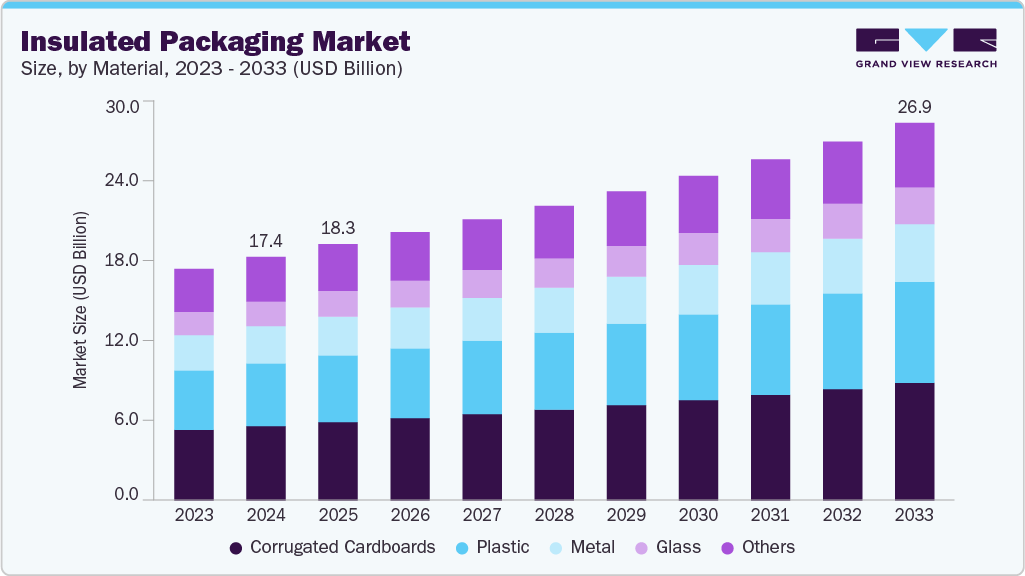 To learn more about this report, Download Free Sample Report
 The surge in e-commerce, especially in the food and grocery sectors, has accelerated the adoption of insulated packaging. Consumers increasingly expect fresh and high-quality food delivered to their doorsteps, which has driven retailers and delivery platforms to invest in temperature-controlled packaging solutions. For example, companies like Amazon Fresh and Instacart use insulated liners, thermal bags, and gel packs to maintain food quality during transit. This trend is particularly strong in regions like North America and Europe, where online grocery sales have seen double-digit growth, directly boosting the insulated packaging market.
The pharmaceutical and biotechnology sectors are key contributors to the growth of insulated packaging. With the increasing production and distribution of biologics, vaccines, and other temperature-sensitive drugs, regulatory compliance and product safety have become paramount. Insulated packaging solutions, including reusable foam containers, vacuum-insulated panels, and phase-change materials, ensure temperature stability during storage and transport. For example, the shipment of mRNA vaccines during the pandemic relied heavily on advanced insulated packaging technologies, which has led to long-term investments in this sector.
Market Dynamics
The insulated packaging market is experiencing steady growth, driven by rising demand for temperature-sensitive transportation of food, beverages, pharmaceuticals, and healthcare products. Expansion of cold chain logistics, increasing consumption of frozen and fresh foods, and growing distribution of biologics and vaccines are supporting market demand. Advances in sustainable and high-performance insulation materials are further enhancing adoption. However, fluctuating raw material prices and the higher cost of advanced insulated packaging solutions may pose challenges to market growth.
The expansion of cold chain logistics is one of the most significant drivers of the insulated packaging market. Growing global trade in perishable food products, frozen foods, dairy items, seafood, and fresh produce has increased the need for packaging solutions that can maintain stable temperatures throughout storage and transportation. As consumers increasingly demand high-quality, fresh, and safe products, manufacturers and distributors are investing in insulated packaging to minimize temperature fluctuations, reduce spoilage, and preserve product integrity across complex supply chains.
The rapid growth of temperature-sensitive pharmaceutical and healthcare products, including biologics, vaccines, specialty drugs, and diagnostic samples, has further strengthened demand for insulated packaging. These products require strict temperature control during transit to ensure efficacy and regulatory compliance. The continued development of cold chain infrastructure, coupled with rising investments in healthcare logistics and e-commerce-based delivery networks, is accelerating the adoption of advanced insulated packaging solutions across both developed and emerging markets.
A significant restraint for the insulated packaging market is the relatively high cost of advanced insulated packaging materials and temperature-control solutions. Products incorporating high-performance insulation, phase change materials, vacuum insulated panels, and reusable thermal packaging systems often involve higher manufacturing and procurement costs compared to conventional packaging alternatives. These added expenses can be a challenge for small and medium-sized businesses operating with limited budgets, particularly in price-sensitive markets. Moreover, the costs associated with testing, regulatory compliance, and reverse logistics for reusable packaging solutions may further limit widespread adoption, especially in developing regions.
A major opportunity for the insulated packaging market lies in the increasing demand for sustainable and reusable packaging solutions. As environmental regulations become more stringent and companies prioritize sustainability goals, manufacturers are developing insulated packaging made from recyclable, biodegradable, and renewable materials. The growing adoption of reusable thermal containers and eco-friendly insulation materials across food, pharmaceutical, and e-commerce sectors is creating new growth avenues. In addition, rising consumer preference for environmentally responsible packaging is encouraging businesses to invest in innovative insulated packaging solutions that reduce waste while maintaining temperature performance and product protection.
Market Concentration & Characteristics
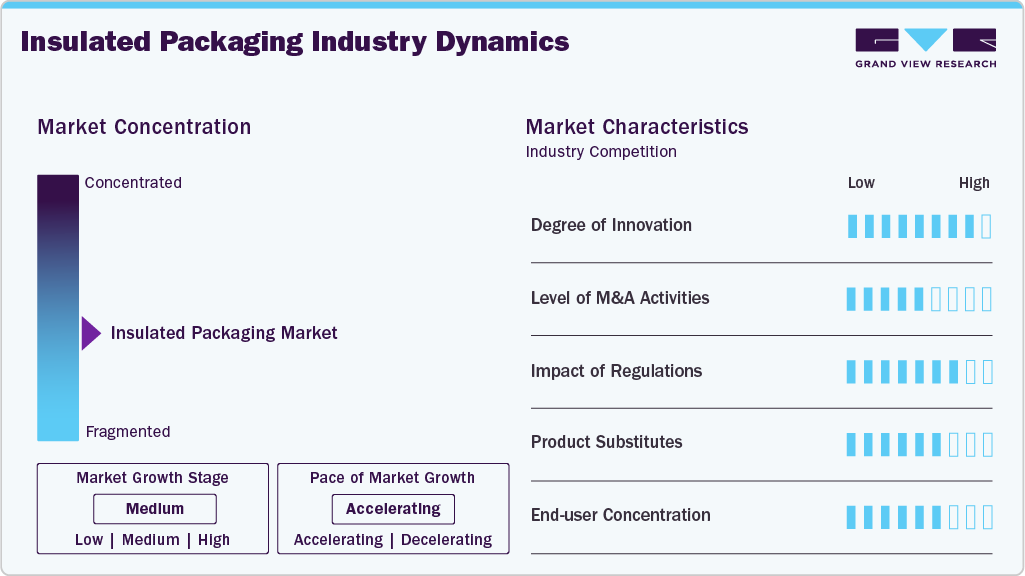
The insulated packaging industry is characterized by a large number of global, regional, and local players competing across multiple sectors such as food, pharmaceuticals, and e-commerce. While major multinational companies such as Sonoco ThermoSafe, Cold Chain Technologies, Cryopak, and Sealed Air dominate certain high-value segments, a large number of small and medium-sized manufacturers cater to niche markets, especially regional food delivery and last-mile logistics. This fragmentation results in intense price competition and drives companies to innovate in materials, design, and technology to differentiate their products.
 To learn more about this report, Download Free Sample Report
 Innovation is a core characteristic of the insulated packaging industry. Companies are continuously investing in advanced thermal insulation materials, reusable and eco-friendly packaging, and smart packaging solutions equipped with IoT sensors for temperature monitoring. For example, vacuum-insulated panels, phase-change materials (PCMs), and biodegradable foams are becoming increasingly common. This innovation focus is critical, as the market’s end-users-particularly pharmaceuticals and perishable food sectors-require high-performance solutions to ensure product integrity and compliance with strict regulatory standards.
Analyst Perspective
The insulated packaging market is expected to grow steadily, driven by increasing demand for temperature-controlled transportation of food, beverages, pharmaceuticals, and healthcare products. Expansion of cold chain logistics, rising consumption of perishable goods, and growing distribution of biologics and vaccines are supporting market growth. Furthermore, advancements in sustainable insulation materials and reusable packaging solutions are enhancing adoption, while companies focused on innovation and thermal efficiency are expected to strengthen their market position.
Material Insights
Based on material, the corrugated cardboards segment led the market with the largest revenue share of 30.6% in 2025. Corrugated cardboard is one of the most widely used materials in insulated packaging due to its lightweight nature, cost-effectiveness, and recyclability. It is commonly used for shipping perishable goods such as frozen foods, pharmaceuticals, and temperature-sensitive beverages. The material can be combined with inner liners or insulating inserts, such as foam or polyethylene, to enhance thermal protection. Its versatility allows it to be customized in different shapes, thicknesses, and insulation levels depending on the product requirements. The e-commerce boom has led to a surge in demand for protective and insulated shipping cartons, further boosting the adoption of corrugated cardboard.
The plastic segment is expected to grow at the fastest CAGR of 5.4% during the forecast period. Plastic is extensively used in insulated packaging due to its high durability, moisture resistance, and ability to maintain temperature over extended periods. Types of plastic used include expanded polystyrene (EPS), polypropylene (PP), and polyethylene (PE), often in the form of rigid containers, trays, or flexible films. Plastic insulated packaging is particularly popular in the food and pharmaceutical industries for transporting frozen and refrigerated products. The increasing need for lightweight, durable, and long-lasting packaging solutions drives the adoption of plastics.
Packaging Type Insights
Based on packaging type, the rigid segment led the market with the largest revenue share of 43.1% in 2025. Rigid insulated packaging includes containers made from solid, durable materials such as expanded polystyrene (EPS), polyurethane (PU) panels, and hard plastics. These containers are designed to maintain the temperature of perishable goods, pharmaceuticals, or temperature-sensitive chemicals during transport. They are widely used for shipping vaccines, biological samples, frozen foods, and high-value electronics that require robust thermal protection. The rigid nature of these containers ensures structural stability, stackability, and long-term reusability, making them suitable for both domestic and international logistics.
The flexible packaging segment is expected to grow at the fastest CAGR of 5.3% during the forecast period. Flexible insulated packaging comprises materials such as aluminum foils, bubble wraps, thermal blankets, and insulated liners that are lightweight and adaptable. These are typically used for packaging food delivery items, ready-to-eat meals, perishable groceries, and consumer healthcare products. Flexible insulation offers convenience in storage, reduces transportation weight, and can conform to irregularly shaped items, making it ideal for last-mile delivery and urban logistics.
Application Insights
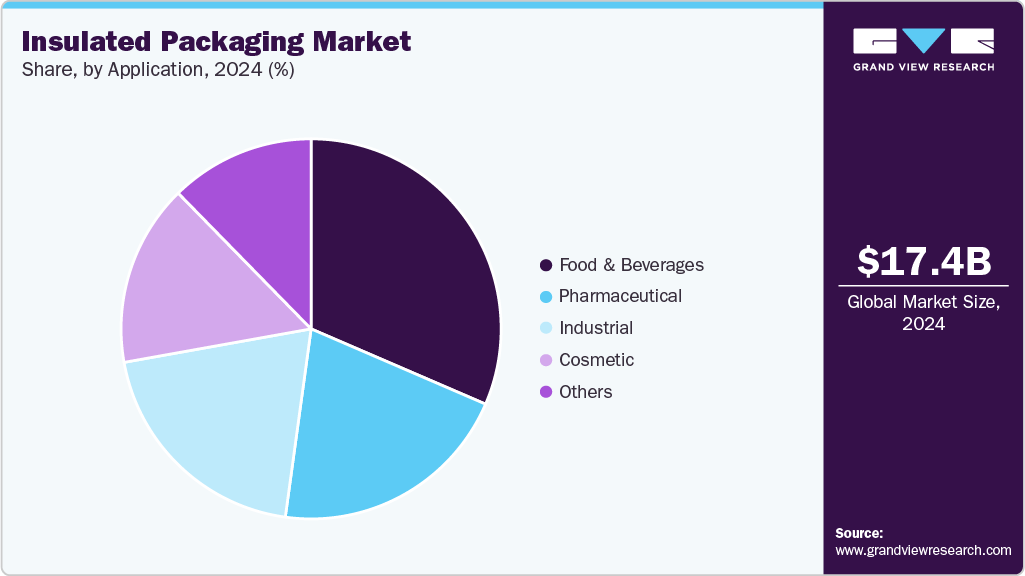
Based on application, the food & beverages segment led the market with the largest revenue share of 31.5% in 2025. Insulated packaging in the food & beverage sector is widely used to maintain the temperature of perishable items such as dairy products, frozen foods, fresh produce, and beverages during storage and transportation. The rise of e-commerce, online grocery delivery, and meal kit services has further amplified the need for reliable temperature-controlled packaging. The primary drivers for this segment include the increasing consumer demand for fresh and frozen food delivered at the right temperature, rising awareness of food safety standards, and the expansion of cold chain logistics.
 To learn more about this report, Download Free Sample Report
 The pharmaceutical segment is projected to grow at the fastest CAGR of 5.4% during the forecast period. In the pharmaceutical sector, insulated packaging is critical for the safe transportation of temperature-sensitive products such as vaccines, biologics, insulin, and other drugs that require cold chain storage. Packaging solutions include refrigerated shippers, thermal blankets, phase-change materials, and temperature-monitoring devices. The industry relies on strict regulatory standards to ensure drug efficacy and patient safety. The key drivers are the increasing production and distribution of biologics and vaccines.
Region Insights
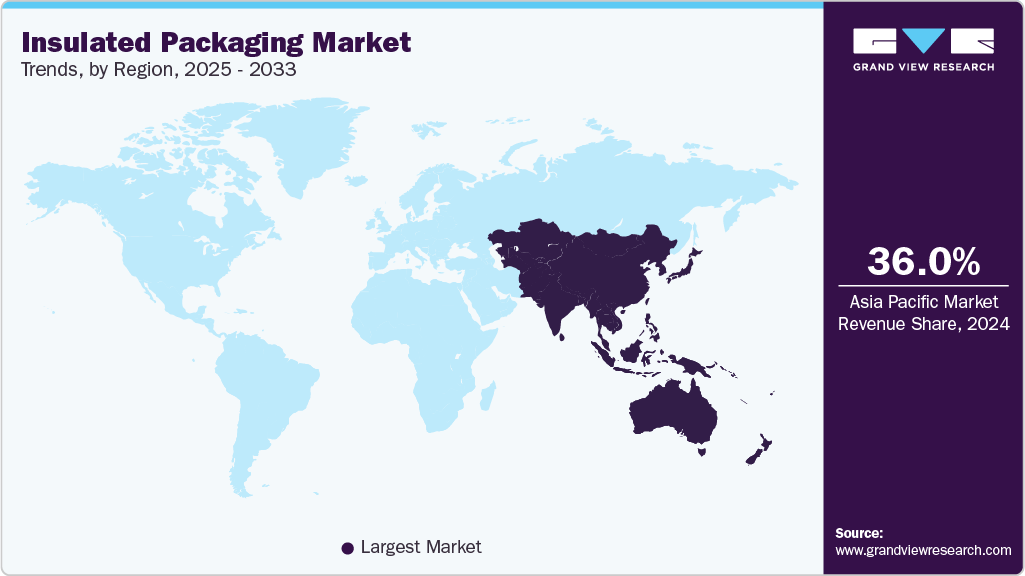
Asia Pacific dominated the insulated packaging market with the largest revenue share of 36.8% in 2025 and is expected to grow at the fastest CAGR of 5.6% over the forecast period. This positive outlook is due to its massive population, rapid urbanization, and the explosive expansion of its middle class. This economic transformation has created an unprecedented demand for perishable goods, including fresh food, pharmaceuticals, and vaccines, which require reliable temperature-controlled logistics. Furthermore, the region is the world's manufacturing hub, producing a significant portion of the globe's pharmaceuticals and temperature-sensitive electronics, necessitating robust export packaging solutions. The e-commerce sector, particularly in China and India, is also a monumental growth driver, as online grocery delivery and meal kit services become mainstream, all requiring insulated shippers to maintain product integrity from warehouse to doorstep.
 To learn more about this report, Download Free Sample Report
 North America Insulated Packaging Market Trends
North America is a mature yet consistently high-growth market, driven by its advanced, highly regulated pharmaceutical and biotechnology sectors and the world's most dominant e-commerce ecosystem. The region has strict regulations from the FDA (Food and Drug Administration) governing the transport of pharmaceuticals and food products, mandating the use of validated insulated packaging solutions to ensure compliance and patient safety. This has led to the high adoption of advanced active packaging systems and sophisticated temperature-monitoring technologies. In addition, the consumer culture, with an expectation for next-day delivery of everything from gourmet meal kits to premium pet food, creates massive, consistent demand for reliable cold chain packaging from companies such as Amazon and major grocery chains.
The U.S. drives the market through its unparalleled spending power, a massive and innovative life sciences industry, and a culture that deeply values convenience. It is home to the world's largest pharmaceutical and biotech companies (e.g., Pfizer, Johnson & Johnson), which spend heavily on premium packaging for high-value drugs, clinical trial materials, and cell & gene therapies that often require deep-cold (-80°C) shipping. The "Amazon Effect" has conditioned consumers to expect everything at their doorsteps instantly, making the U.S. the epicenter of innovation for insulated packaging that is both highly protective and designed for easy, out-of-the-box consumer experience. The insulated packaging market in China held the largest share in the Asia Pacific region in 2025.
Europe Insulated Packaging Market Trends
Europe's insulated packaging market is propelled by its strong and integrated cross-border trade, the world's most stringent environmental regulations, and a highly conscious consumer base demanding fresh, high-quality, and sustainably delivered products. The EU's GDP (Good Distribution Practice) guidelines for pharmaceuticals create a non-negotiable requirement for reliable temperature-controlled logistics across its 27 member states, fostering an advanced market for compliant packaging solutions. Furthermore, European consumers have a strong preference for fresh, locally sourced, and organic food, which often requires temperature assurance during transport from farm to specialized retailers. The region's leadership in the circular economy also drives innovation in bio-based, compostable, and reusable insulating materials.
Key Insulated Packaging Company Insights
The competitive environment of the insulated packaging industry is moderately fragmented, with a mix of global players, regional manufacturers, and niche solution providers competing across food & beverages, pharmaceuticals, and industrial applications. Key players such as Sonoco ThermoSafe, Smurfit Westrock, and Cold Chain Technologies, focus on innovation in sustainable and high-performance insulation materials, while smaller regional players often compete on cost-effectiveness and local distribution networks. Strategic collaborations, mergers & acquisitions, and technological advancements in biodegradable foams, vacuum-insulated panels, and phase change materials are intensifying competition.
-
In November 2024, Nature-Pack showcased a significant advancement in insulated packaging at Pack Expo 2024 by introducing Fibrease cellulose wood foam, a sustainable alternative designed to replace conventional plastic-based foam solutions. Fibrease, crafted from renewable cellulose fibers, offers high thermal insulation and cushioning performance while being compostable and recyclable, aligning with growing demands for environmentally friendly packaging.
-
In June 2024, ProAmpac launched FiberCool, a patent-pending, kerbside-recyclable insulated bag for food and grocery delivery. It offers up to 30% better temperature retention than standard paper bags, is easy to recycle, saves storage space, reduces food waste, and features a one-piece, brandable design available in multiple sizes for diverse retailer needs.
Key Insulated Packaging Companies
The following key companies have been profiled for this study on the insulated packaging market.
-
Sonoco ThermoSafe
-
Smurfit Westrock
-
Lifoam
-
Cold Chain Technologies
-
Ranpak
-
Exeltainer
-
TEMPACK
-
Huhtamaki
-
Thermal Packaging Solutions Ltd.
-
Insulated Products Corporation
-
IPG
-
Cold Ice Inc.
-
MARKO FOAM PRODUCTS
Competitive Benchmarking
Operating Strategies
Competitive Edge
Weaknesses
Established Players (Sonoco ThermoSafe, Smurfit Westrock, Lifoam, Cold Chain Technologies, Ranpak, TEMPACK, Huhtamaki, and IPG)
- Focus on global cold-chain and temperature-controlled logistics networks by leveraging extensive manufacturing footprints, distribution partnerships, and integrated supply chain capabilities to serve pharmaceutical, food, and industrial customers across multiple regions.
- Invest heavily in product innovation and sustainability initiatives, including reusable insulated packaging, recyclable materials, advanced thermal insulation technologies, and digital monitoring solutions to meet evolving regulatory and customer requirements.
- Strong brand recognition and established customer relationships enable long-term contracts with major pharmaceutical, healthcare, food, and logistics companies, ensuring recurring revenue streams and market stability.
- Large-scale production capabilities and diversified product portfolios allow them to offer comprehensive insulated packaging solutions while benefiting from economies of scale, operational efficiency, and global market reach.
- High operational and infrastructure costs associated with maintaining global manufacturing facilities, research activities, and distribution networks can impact profitability during periods of market volatility.
- Limited organizational agility due to complex corporate structures, making it more challenging to respond quickly to niche customer demands or rapidly changing market trends.
Emerging Players (Exeltainer, Thermal Packaging Solutions Ltd., Insulated Products Corporation, Cold Ice Inc., and MARKO FOAM PRODUCTS)
- Target specialized market segments and customized insulated packaging applications, focusing on specific customer requirements in regional healthcare, food delivery, and cold-chain transportation markets.
- Emphasize flexible operations and customer-centric product development, enabling quicker adaptation to emerging industry needs and evolving thermal packaging requirements.
- Greater flexibility and faster decision-making processes allow these companies to develop tailored solutions, respond rapidly to customer requests, and address niche market opportunities effectively.
- Strong focus on innovation within specialized product categories helps differentiate their offerings and build expertise in selected insulated packaging applications.
- Limited financial resources and manufacturing scale can restrict investment in advanced technologies, geographic expansion, and large-volume production capabilities.
- Lower brand visibility and narrower distribution networks compared to established competitors may reduce market penetration and the ability to secure large multinational contracts.
Insulated Packaging Market Report Scope
Report Attribute
Details
Market size in 2025
USD 18.3 billion
Estimated market size in 2026
USD 19.2 billion
Projected market size by 2033
USD 27.0 billion
Growth rate
CAGR of 5.0% from 2026 to 2033
Base year for estimation
2025
Historical data
2021 - 2024
Forecast period
2026 - 2033
Quantitative units
Revenue in USD million/billion and CAGR from 2026 to 2033
Report coverage
Revenue forecast, company ranking, competitive landscape, growth factors, and trends
Segments covered
Material, packaging type, application, region
Regional scope
North America; Europe; Asia Pacific; Latin America; MEA
Country scope
U.S.; Canada; Mexico; Germany; UK; France; Italy; Spain; China; Japan; India; South Korea; Australia; Brazil; Argentina; Saudi Arabia; South Africa; UAE
Key companies profiled
Sonoco ThermoSafe; Smurfit Westrock; Lifoam; Cold Chain Technologies; Ranpak; Exeltainer; TEMPACK; Huhtamaki; Thermal Packaging Solutions Ltd.; Insulated Products Corporation; IPG; Cold Ice Inc.; MARKO FOAM PRODUCTS
Customization scope
Free report customization (equivalent up to 8 analysts' working days) with purchase. Addition or alteration to country, regional & segment scope.
Pricing and purchase options
Avail customized purchase options to meet your exact research needs. Explore purchase options
Global Insulated Packaging Market Report Segmentation
This report forecasts revenue growth at a global level and provides an analysis of the latest industry trends in each of the sub-segments from 2021 to 2033. For this study, Grand View Research has segmented the global insulated packaging market report based on material, packaging type, application, and region:
 To learn more about this report, Download Free Sample Report
 -
Material Outlook (Volume, Kilotons; Revenue, USD Million, 2021 - 2033)
-
Corrugated Cardboards
-
Metal
-
Glass
-
Plastic
-
Others
-
-
Packaging Type Outlook (Volume, Kilotons; Revenue, USD Million, 2021 - 2033)
-
Rigid
-
Flexible
-
Semi-Rigid
-
-
Application Outlook (Volume, Kilotons; Revenue, USD Million, 2021 - 2033)
-
Food & Beverages
-
Pharmaceutical
-
Industrial
-
Cosmetic
-
Others
-
-
Regional Outlook (Volume, Kilotons; Revenue, USD Million, 2021 - 2033)
-
North America
-
U.S.
-
Canada
-
Mexico
-
-
Europe
-
Germany
-
France
-
UK
-
Italy
-
Spain
-
-
Asia Pacific
-
China
-
India
-
Japan
-
Australia
-
South Korea
-
-
Latin America
-
Brazil
-
Argentina
-
-
Middle East & Africa
-
South Africa
-
Saudi Arabia
-
UAE
-
-
Research Methodology
The insulated packaging market figures in this report are based on a proven research process that combines executive interviews with secondary research from proprietary databases, company filings, and recognized regulatory and institutional sources. Market size is built through value-chain sizing-reconciling supply-side and demand-side estimates-and triangulated with bottom-up and top-down approaches. Every estimate passes multiple levels of expert validation before publication, with each insulated packaging segment quantified using the revenue-capture definitions in the table below.
Segment Definition
Segment - Material
Revenue capture definition
Corrugated Cardboards
Revenue generated from the sale of insulated packaging solutions manufactured using corrugated cardboard materials designed to provide thermal protection, cushioning, and product integrity during storage and transportation. This segment includes insulated boxes, liners, and temperature-controlled shipping containers used across food, pharmaceutical, industrial, and e-commerce applications.
Metal
Revenue generated from the sale of insulated packaging products utilizing metal components or structures to enhance thermal performance, durability, and protection. This segment includes insulated metal containers, thermal canisters, and specialized packaging solutions used for transporting temperature-sensitive pharmaceutical, industrial, and specialty products.
Glass
Revenue generated from the sale of insulated packaging systems incorporating glass containers and thermal protective materials to maintain product temperature and integrity. This segment includes insulated packaging for beverages, pharmaceuticals, laboratory samples, and specialty chemicals requiring temperature-controlled handling.
Plastic
Revenue generated from the sale of insulated packaging solutions manufactured from plastic materials such as expanded polystyrene (EPS), polyurethane (PU), polyethylene (PE), polypropylene (PP), and other thermal insulation polymers. This segment includes insulated containers, coolers, thermal boxes, and protective packaging widely used in food, healthcare, and logistics applications.
Others
Revenue generated from the sale of insulated packaging solutions manufactured from alternative materials such as paper-based insulation, natural fibers, vacuum insulation panels, phase change materials, and composite structures. This segment includes innovative and sustainable insulated packaging products developed for specialized temperature-control requirements.
Segment - Packaging Type
Revenue capture definition
Rigid
Revenue generated from the sale of rigid insulated packaging solutions designed to provide superior structural strength, thermal protection, and product safety. This segment includes insulated boxes, coolers, containers, and hard-shell shipping cases used for temperature-sensitive products across pharmaceutical, food, and industrial sectors.
Flexible
Revenue generated from the sale of flexible insulated packaging products designed to offer lightweight, space-efficient, and cost-effective temperature control. This segment includes insulated mailers, thermal wraps, pouches, liners, and flexible shipping bags used for food delivery, e-commerce, and healthcare logistics.
Semi-Rigid
Revenue generated from the sale of semi-rigid insulated packaging solutions that combine flexibility with moderate structural support and thermal performance. This segment includes foldable insulated containers, hybrid packaging systems, and reinforced thermal liners used for transporting temperature-sensitive products while optimizing storage and shipping efficiency.
Segment - End Use
Revenue capture definition
Cosmetic
Revenue generated from the sale of insulated packaging solutions used for transporting and storing temperature-sensitive cosmetic and personal care products. This segment includes packaging for skincare products, fragrances, beauty formulations, and premium cosmetics requiring protection from heat and environmental fluctuations.
Pharmaceutical
Revenue generated from the sale of insulated packaging solutions used for temperature-controlled transportation and storage of pharmaceutical and healthcare products. This segment includes packaging for vaccines, biologics, injectable drugs, blood products, diagnostic samples, and other temperature-sensitive medical products.
Industrial
Revenue generated from the sale of insulated packaging products used for industrial applications requiring thermal protection during storage and transportation. This segment includes packaging for specialty chemicals, laboratory materials, electronic components, and temperature-sensitive industrial goods.
Food & Beverages
Revenue generated from the sale of insulated packaging solutions used for preserving freshness, quality, and temperature of food and beverage products throughout the supply chain. This segment includes packaging for frozen foods, dairy products, seafood, fresh produce, meal kits, beverages, and online food delivery services.
Others
Revenue generated from the sale of insulated packaging solutions used across other end-use sectors, including agriculture, research laboratories, veterinary healthcare, and specialty consumer goods requiring temperature-controlled packaging and transportation.
Estimation Model
Layer Name
Key Question
Description
Temperature-Sensitive Product Demand Layer
What forms the demand base?
Identify global consumption and shipment volumes of temperature-sensitive products across key end-use industries, including food & beverages, pharmaceuticals, cosmetics, industrial chemicals, biotechnology products, and healthcare supplies. This layer establishes the total addressable demand for insulated packaging by evaluating products that require temperature control, freshness preservation, or thermal protection during storage and transportation.
Cold Chain & Logistics Penetration Layer
Where is insulated packaging utilized?
Estimate the adoption of insulated packaging across cold chain logistics, e-commerce fulfillment, pharmaceutical distribution, food delivery services, and industrial supply chains. Assess penetration levels of insulated packaging solutions in developed and emerging markets, considering transportation infrastructure, cold storage capacity, regulatory requirements, and product sensitivity to temperature fluctuations.
Packaging Utilization Intensity Layer
How much insulated packaging is consumed?
Analyze average insulated packaging consumption per shipment, shipment frequency, packaging replacement cycles, thermal performance requirements, and transportation distances across industries. Utilization intensity is influenced by product type, storage duration, distribution complexity, regulatory compliance standards, and seasonal demand patterns requiring temperature-controlled packaging solutions.
Revenue Layer
How is market revenue generated?
Market revenue is quantified through the sale of insulated packaging products, including insulated containers, boxes, liners, thermal mailers, coolers, and temperature-controlled shipping systems. Revenue is generated from recurring demand across food & beverage manufacturers, pharmaceutical companies, healthcare providers, e-commerce retailers, logistics providers, and industrial users requiring reliable thermal protection throughout the supply chain.
Delivered Customizations
This report has been delivered with the following In-depth customizations
Client Request
Customization Delivered
Value Adds
Regional Segmentation Analysis
Delivered a detailed regional assessment of the insulated packaging market across North America, Europe, Asia Pacific, Central & South America, and Middle East & Africa, covering market size, adoption trends, regulatory landscape, technological advancements, and key end-use industry demand.
Enables identification of region-specific demand maturity, especially strong cold chain-driven growth in Asia Pacific and North America.
Cross-Segmentation Analysis
Provided comprehensive cross-segmentation analysis across Material (Corrugated Cardboards, Metal, Glass, Plastic, Others), Packaging Type (Rigid, Flexible, Semi-Rigid) and End Use (Cosmetic, Pharmaceutical, Industrial, Food & Beverages, Others) across major regions.
Assisted in identifying high-growth segment combinations, demand hotspots, customer adoption patterns, and untapped revenue opportunities across the value chain.
Competitive Benchmarking
Comparative assessment of key market participants based on material specialization, packaging format capabilities, product innovation intensity, and end-use industry penetration.
Offered insights into competitive positioning, material leadership, differentiation strategies, and opportunities for strategic alliances or market entry.
Frequently Asked Questions About This Report
The global insulated packaging market is expected to grow at a CAGR of 5.0% from 2026 to 2033, reaching USD 27.0 billion by 2033.
Asia Pacific dominated the insulated packaging market with a 36.8% revenue share in 2025.
The rigid segment led the insulated packaging market with a 43.1% revenue share in 2025.
The global insulated packaging market size was valued at USD 18.3 billion in 2025 and is estimated at USD 19.2 billion for 2026.
Key players in the insulated packaging market include Sonoco ThermoSafe; Smurfit Westrock; Lifoam; Cold Chain Technologies; Ranpak; Exeltainer; TEMPACK; Huhtamaki; Thermal Packaging Solutions Ltd.; Insulated Products Corporation; IPG; Cold Ice Inc.; MARKO FOAM PRODUCTS.
Key factors driving the insulated packaging market include expanding cold chain logistics, rising demand for temperature-sensitive food and pharmaceutical transportation, increasing consumption of perishable products, growing biologics and vaccine distribution, and advancements in sustainable and high-performance insulation materials.
The food & beverages segment led the insulated packaging market with a 31.5% revenue share in 2025.
The corrugated cardboards segment led the insulated packaging market with a 30.6% revenue share in 2025.
About the Author(s)
Specialty Glass, Ceramic & Fiber Research Team
Advanced Materials · Specialty Glass, Ceramic & FiberThis report was authored by the specialty glass, ceramic & fiber research team at Grand View Research - comprising two research analysts, one senior research analyst, and one industry expert - with specialized expertise in the specialty glass, ceramic & fiber segment of the advanced materials industry. All findings are based on proprietary advanced materials databases, executive interviews, and regulatory analysis, subject to internal peer review prior to publication.
Last Updated:
Speak to Analyst

Customize this report to your needs - add regions, segments, or data points, with 20% free customization.
Or view our licence options:


ISO 9001:2015 & 27001:2022 Certified
We are GDPR and CCPA compliant! Your transaction & personal information is safe and secure. For more details, please read our privacy policy.


