
- Home
- »
- Medical Devices
- »
-
Stretch Marks Treatment Market Size, Share Report, 2033GVR Report cover

Stretch Marks Treatment Market (2026 - 2033)
Size, Share & Trends Analysis Report By Treatment (Topical Products, Laser, Microdermabrasion), By Region (North America, Europe, Asia Pacific, Latin America, Middle East & Africa), And Segment Forecasts
Market Size, 2025
$342.7MMarket Estimate, 2026
$373.3MMarket Forecast, 2033
$532.1MCAGR, 2026–2033
5.2%Stretch Marks Treatment Market Trends
The stretch marks treatment market size was valued at USD 342.7 million in 2025 and is projected to grow from USD 373.3 million in 2026 to USD 532.1 million by 2033, at a CAGR of 5.2% from 2026 to 2033. Asia Pacific dominated the market, accounting for a revenue share of 36.9% in 2025. Increasing incidence of obesity globally, rising number of pregnancies and concerns about stretch marks, and advancements in treatment technologies, are factors boosting market growth.
 Source: Grand View Research, IR Documents, Primary Interviews, Paid DatabasesTo learn more about this report,
 Download Free Sample Report
 Key Market Trends & Insights
- By treatment: Topical products segment led the market with the largest revenue share of 60.2% in 2025.
Regional Highlights
- Largest regional market: Asia Pacific (36.9% revenue share, 2025)
- By country: China held the largest market share in 2025.
Market Size & Forecast
- Market size in 2025: USD 342.7 Million
- Estimated market size in 2026: USD 373.3 Million
- Projected market size by 2033: USD 532.1 Million
- CAGR (2026-2033): 5.2%
Three ways to get this report
Buy it, customize it, or ask a question.Ask an Analyst
Analyst response in 1 business day
- AccessReport author, directly
- Reply timeWithin 1 working day
- No sales callDirect answer only
- FormatEmail reply
- CostFree, no cost
Get the Full Report
What the study covers
- FormatsPDF · Excel · Dashboard
- Timeline2026–2033 annual, 2025 base
- Coverage20+ countries, 5 regions
- Companies10+ key players profiled
Customize the Report
20% free customization
- IncludeCountries, segments, points
- TailorTo your product definition
- ExtendDeeper competitor detail
- OrA fully bespoke study
- Turnaround5–10 working days
The rising global incidence of obesity and related health concerns have significantly influenced market growth. According to the World Health Organization, one in eight individuals worldwide were affected by obesity in 2022. Approximately 2.5 billion adults aged 18 and older were classified as overweight, with around 890 million living with obesity. The increasing number of pregnancies contributes to the demand for stretch mark treatments. According to the CDC, the number of births in the U.S. reached approximately 3,591,328 in 2023. Despite a teenage birth rate of 13.2 births per 1,000 females, indicating a commitment to family planning and education, concerns regarding pregnancy-related skin issues, particularly stretch marks, continue to grow. As awareness of stretch marks during pregnancy rises, so does the demand for effective solutions tailored for expectant mothers.A 2023 study in the European journal Pflügers Archiv reported an innovative treatment utilizing topical formulations containing beta-glucan alongside nano-fractional radiofrequency. This approach demonstrated significant improvements in skin elasticity, thickness, and collagen density, offering a means to minimize the appearance of stretch marks without adverse effects. Such innovations appeal to consumers seeking aesthetic enhancements and bolster confidence in modern treatment efficacy, thus aiding market growth worldwide.
 To learn more about this report, Download Free Sample Report
 Moreover, rapid weight fluctuations remain a major risk factor for developing stretch marks. According to Health Line, dramatic weight loss can stress the skin, leading to dermal tears that manifest as stretch marks. While gradual weight loss is advised to allow the skin to adapt, genetic predispositions, hormonal changes, and other factors exacerbate the issue. This widespread prevalence of contributing factors highlights a critical market opportunity for effective stretch mark treatments as individuals increasingly seek solutions to manage their skin health during periods of significant body changes.
Regulations significantly impact the market by ensuring safety, efficacy, and quality standards. Stringent regulatory requirements can delay product approvals, affecting market entry and innovation. However, they also enhance patient confidence and device reliability, ultimately supporting the market's growth by ensuring that only safe and effective devices are available for clinical use.
There are currently no direct substitutes. However, various complementary approaches can support primary treatments. Nutritional supplements such as vitamins A, C, and E, along with zinc and silica, aid in skin health from within. Adequate hydration and a balanced diet rich in antioxidants and essential fatty acids help maintain skin elasticity and repair. Regular exercise improves circulation and overall skin health, contributing to the prevention and reduction of stretch marks.
Market players in the stretch marks treatment sector are expanding their presence by entering new geographical markets, forming strategic partnerships with local distributors, and tailoring their product offerings to align with specific regional skincare requirements.
Market Dynamics
The stretch marks treatment market is experiencing significant growth as consumers increasingly seek effective, minimally invasive, and non-surgical solutions to improve the appearance of striae resulting from pregnancy, rapid weight fluctuations, puberty, hormonal changes, bodybuilding, and obesity. Stretch mark treatments encompass a broad range of therapeutic options, including topical creams and gels, retinoid-based formulations, laser therapies, radiofrequency treatments, microneedling, platelet-rich plasma (PRP), mesotherapy, chemical peels, microdermabrasion, and emerging regenerative medicine approaches designed to stimulate collagen production, improve skin elasticity, and reduce the visibility of stretch marks.
These treatments are widely utilized across dermatology clinics, aesthetic medicine centers, cosmetic surgery practices, medical spas, and specialty skincare facilities. Growing consumer awareness regarding aesthetic skin health, increasing demand for cosmetic dermatology procedures, rising disposable incomes, and expanding access to advanced skincare technologies are supporting market growth. Furthermore, continuous advancements in laser technologies, collagen-stimulating therapies, growth factor-based products, and combination treatment protocols are improving clinical outcomes and expanding treatment options. The increasing influence of social media, beauty trends, and personalized skincare solutions, coupled with growing medical tourism and expanding availability of aesthetic services, continues to drive demand for stretch mark treatment products and procedures across developed and emerging markets.
The increasing demand for minimally invasive aesthetic procedures is a major factor driving growth in the global stretch marks treatment market. Consumers are increasingly seeking safe and effective treatments that improve skin texture and reduce the appearance of stretch marks without the risks, prolonged recovery periods, or high costs associated with surgical procedures. Advanced technologies such as fractional CO₂ lasers, radiofrequency microneedling, platelet-rich plasma (PRP), mesotherapy, chemical peels, and collagen-stimulating topical formulations have demonstrated promising clinical outcomes by enhancing collagen remodeling and improving skin elasticity. In addition, increasing awareness regarding post-pregnancy body care, rising obesity rates, growing demand for cosmetic dermatology services, and expanding availability of professional aesthetic clinics are accelerating treatment adoption. Continuous innovation in regenerative medicine, bioactive ingredients, and combination treatment approaches is further improving therapeutic efficacy, supporting greater patient satisfaction and driving long-term market growth across both developed and emerging healthcare markets.
One of the primary restraints affecting the stretch marks treatment market is the variability in clinical outcomes and the frequent requirement for multiple treatment sessions to achieve noticeable improvements. Treatment effectiveness depends on several factors, including the age, severity, depth, and color of stretch marks, individual skin type, patient age, and the selected treatment modality. Although procedures such as laser therapy, microneedling, PRP, radiofrequency, and topical retinoids can significantly improve skin appearance, complete removal of stretch marks remains difficult, and results often vary among patients. Additionally, many advanced procedures require repeated sessions over several months, increasing overall treatment costs and reducing patient compliance. Limited reimbursement for cosmetic procedures, the high cost of advanced aesthetic treatments, and the lack of universally standardized treatment protocols further restrict market adoption, particularly in cost-sensitive regions and developing healthcare markets.
Analyst Perspective
The stretch marks treatment market is positioned for steady growth as consumers increasingly prioritize non-invasive procedures and minimally invasive therapies that improve skin appearance and deliver lasting outcomes. Rising awareness of body aesthetics, higher disposable incomes, and demand for post-pregnancy skincare are fueling adoption. Expanding access to dermatology and aesthetic medicine services is creating significant demand for advanced treatment solutions. The prevalence of stretch marks linked to pregnancy, obesity, weight fluctuations, hormonal changes, and adolescence further supports market expansion. Adoption of laser therapies, topical formulations, microneedling, PRP, and combination approaches enables personalized treatment options. Innovation in regenerative medicine, collagen-stimulating therapies, bioactive skincare, and advanced laser technologies is enhancing clinical effectiveness. Manufacturers and providers are focusing on improving efficacy, reducing recovery time, and enhancing patient comfort. They are also developing combination therapies that deliver superior cosmetic outcomes. Challenges include variable treatment responses, multiple sessions, and high procedural costs. Despite these hurdles, growing consumer acceptance and continuous technological progress are expected to sustain long-term growth across developed and emerging markets.
Treatment Insights
Based on treatment, the topical products segment led the market with the largest revenue share of 60.2% in 2025 due to the increasing prevalence of stretch marks due to factors such as pale skin, pregnancy, twin deliveries, rapid weight fluctuations, and obesity. The demand for treatment options is further fueled by the use of corticosteroid medications. Topical products, including creams, oils, serums, and lotions, are particularly favored for stretch mark management. According to a ResearchGate article from December 2023, formulations containing Centella Asiatica have been clinically shown to significantly enhance the appearance of stretch marks, offering effective skin healing and texture improvement.
 To learn more about this report, Download Free Sample Report
 The laser segment is expected to grow at the fastest CAGR of 9.3% over the forecast period. Increasing demand for non-invasive and effective solutions to improve skin appearance, advances in laser technology, and enhanced stretch mark reduction through combined treatments. According to the Medical News article published in May 2023, using a combination of treatments, such as radiofrequency and pulsed dye laser therapy, has shown superior results in reducing stretch marks. According to a study, nearly 90% of participants reported good to very good improvement in their stretch marks after undergoing a series of these combined treatments.
Regional Insights
North America stretch marks treatment market is expected to register significant growth over the forecast period. Significant market drivers include growing R&D investments, an increasing obesity population, and advanced stretch mark treatment technologies. According to a CDC article from September 2023, population data from 2022 revealed a concerning rise in adult obesity rates in the U.S. Over 22 states reported an obesity prevalence of 35% or higher, up from 19 states in 2021. This surge in obesity heightens the demand for stretch mark treatments, as obesity is a known risk factor for developing stretch marks. The rising number of affected individuals emphasizes the urgent need for effective solutions to manage and reduce the appearance of stretch marks.
U.S. Stretch Marks Treatment Market Trends
The stretch marks treatment market in U.S. held the largest market share in the North America region in 2024. The rising geriatric population, which is more susceptible to CVD cases, increasing cardiac surgery patients, and technological advancements. According to the Food Research & Action Center article published in July 2024, the data reveal that 39.6% of U.S. adults are classified as obese, with an additional 31.6% being overweight and 7.7% categorized as severely obese. This high prevalence of obesity significantly contributes to the development of stretch marks, highlighting an increasing demand for effective treatments.
Asia Pacific Stretch Marks Treatment Market Trends
Asia Pacific dominated the stretch marks treatment market with the largest revenue share of 36.9% in 2025. Market growth is attributable to the increasing obesity rates and rising pregnancies, alongside changing consumer preferences for these procedures. In June 2024, the Asia Pacific Society of Cardiology reported that the prevalence of stretch marks in West Asian countries, including Qatar, Saudi Arabia, and the United Arab Emirates, ranges from 20.0% to 40.0%. In Southeast Asia, Malaysia has the highest obesity rate at approximately 20.0%. Moreover, nations such as China, Indonesia, and India have seen alarming increases in obesity rates among children and adolescents over the past decade.
 To learn more about this report, Download Free Sample Report
 The stretch marks treatment market in the China held the largest share in the Asia Pacific region in 2025. Key factors driving market growth include the rising prevalence of obesity and stretch mark conditions, along with supportive government initiatives. An article from the World Obesity Federation published in March 2023 emphasized the urgent need for a “Healthy China,” a program aimed at integrating health into policymaking. Over 50.0% of Chinese adults and approximately 20.0% of school-aged children were reported to be overweight, making obesity prevention a primary focus for the Chinese National Health Commission. This initiative has attracted significant attention from governmental bodies, academic institutions, and international organizations committed to addressing obesity.
Stretch marks treatment market in Japan accounted for the second largest share of the market in the Asia Pacific region in 2024 due to the launch of new types and collaborations between industry players, increased adoption of advanced stretch mark treatments, rising obesity cases, and pregnancy incidence. For instance, in August 2023, Japan reported an obesity rate of just 4.5%. This rate of obesity can influence the demand for stretch marks treatments in Japan. With fewer individuals experiencing obesity-related skin issues, the market for stretch marks treatments in Japan may be less pronounced compared to regions with higher obesity rates.
The India stretch marks treatment market is experiencing significant growth, driven by several key factors, growing incidence of obesity, increasing pregnancy cases, and expanding healthcare infrastructure. According to an article in “The Indian Express” published in March 2024, over the past thirty years, obesity rates among women have surged dramatically, climbing from 1.2% in 1990 to 9.8% in 2022. In 2022, there were approximately 44 million women affected by obesity. During the same period, obesity among men also increased, though by a smaller margin of 4.9 percentage points, resulting in around 26 million men living with obesity. This sharp rise in obesity rates is likely to drive demand for stretch marks treatments, as the condition is closely linked with significant weight fluctuations and obesity.
Europe Stretch Marks Treatment Market Trends
The European stretch marks treatment market held a substantial market share in 2024. This trend can be attributed to the rising number of individuals experiencing obesity and rapid weight fluctuations. For example, in January 2024, one in six EU citizens was classified as obese, with over half of adults in the EU considered overweight. These statistics highlight the growing urgency to address obesity-related health issues across the region.
The stretch marks treatment market in Germany is expected to grow lucratively over the forecast period. Market growth in the country is driven by the presence of key players, increasing obesity rates, and advanced healthcare infrastructure. For instance, in September 2022, approximately 19.0% of adults in Germany were classified as obese, defined as having a BMI of 30 kg/m² or higher. This figure marked a continuous rise in obesity rates, particularly among older adults aged 45-64, highlighting the pressing need for effective interventions.
The stretch marks treatment market in the UK held the second-largest market share in the Europe region in 2024. The rise in pregnancies and the increasing obesity incidence highlight the need for continued innovation and advancements in stretch mark treatment to reduce this trend effectively. According to the Office for National Statistics article published in March 2023, the UK and Wales experienced an increase in pregnancies, rising from 817,515 in 2020 to 824,983 in 2021. This uptick, the first in six years, highlights a growing demand for effective stretch marks treatments. As the number of pregnancies rises, so does the prevalence of stretch marks, prompting increased interest in both preventive and corrective skincare solutions. Expectant mothers and others affected by stretch marks are seeking more effective treatment, driving growth in the market for products and therapies to manage and reduce stretch marks' appearance.
The France stretch marks treatment market is anticipated to witness a significant CAGR of 9.4% during the forecast period. The rising number of obesity cases and increased demand for stretch marks treatment are boosting the market's growth. For instance, in October 2023, nearly 21% of the adult population in France was classified as obese, a figure that has doubled over the past 20 years, highlighting the severity of the issue. Additionally, approximately 8% of children in France are also affected by obesity, emphasizing the need for early intervention and preventative measures to address this growing problem.
Latin America Stretch Marks Treatment Market Trends
The Latin American stretch marks treatment market is growing due to several factors. The growing number of obesity cases, increasing pregnancy incidence, and rising government initiatives fuel the market's growth.
Brazil's stretch marks treatment market is expanding due to several distinct growth drivers. Rising healthcare expenditure and government initiatives aimed at improving cardiac care infrastructure. For instance, in December 2023, the World Obesity Atlas forecasts that by 2030, Brazil will experience a prevalence of obesity, affecting 33% of women and 26% of men. This projection positions Brazil among the top 11 countries with the highest obesity rates for women and the top 9 for men. The anticipated rise in obesity is expected to significantly impact the stretch marks treatment market, as the condition frequently results from substantial weight changes.
MEA Stretch Marks Treatment Market Trends
The MEA stretch mark treatment market is expected to grow at a lucrative CAGR in the coming years, driven by the rising incidence of obesity and the increasing adoption of advanced stretch mark treatment technologies in the region.
The South African stretch marks treatment market held a 39.3% share in 2024. Increasing obesity cases and rising healthcare expenditure. For instance, in March 2024, In South Africa, the obesity rate stood at 31% for men and a striking 68% for women. In addition, the National Health and Nutrition Survey reveals that 13% of children aged one to five are obese, significantly higher than the global average of 6.1%. This high prevalence of obesity across different age groups is likely to drive demand for stretch marks treatments, as rapid weight fluctuations often contribute to the development of stretch marks.
Key Stretch Marks Treatment Company Insights
Some of the key players operating in the industry include Alliance Pharma PLC; basq NYC; Clarins; Candela Corporation; and Dermaclara. The company’s key strategies include understanding the strengths and weaknesses of major market participants, anticipating future market trends, opportunities, and challenges, and making proactive decisions based on insights into emerging technologies and changing consumer preferences. For instance, Weleda AG Source and Union Swiss (Pty) Ltd are some of the emerging players in stretch marks treatment.
-
Basq NYC provides pregnancy-safe skincare designed to prevent stretch marks and enhance skin elasticity, utilizing plant extracts and moisturizing ingredients such as shea butter. They offer both spa treatments and retail products, including stretch mark butter and body oils.
-
Dermaclara focuses on stretch mark treatments through Silicone Fusion Technology, offering reusable patches made from 100% medical-grade silicone. These patches create a microclimate to enhance moisture, regulate collagen, and diminish the appearance of stretch marks and scars, with dermatologist approval.
Key Stretch Marks Treatment Companies
The following key companies have been profiled for this study on the stretch marks treatment market.
-
Alliance Pharma PLC
-
basq NYC
-
Clarins
-
Candela Corporation
-
Dermaclara
-
E.T. Browne Drug Co., Inc. (Palmers)
-
Helix BioMedix, Inc.
-
Perrigo Company plc (HRA Pharma)
-
Laboratoires Expanscience
-
Union Swiss Private Limited
-
Weleda
Competitive Benchmarking
Category
Operating Strategies
Competitive Edge
Weakness
Established Players (Alliance Pharma PLC; basq NYC; Clarins; Candela Corporation; Dermaclara; E.T. Browne Drug Co., Inc. (Palmers); Helix BioMedix, Inc.)
- Established companies focus on expanding comprehensive stretch marks treatment portfolios comprising topical creams, lotions, oils, serums, laser treatment systems, and skin regeneration solutions.
- They emphasize clinical validation, dermatologist education programs, strategic collaborations with aesthetic clinics and dermatology centers, international distribution expansion, and continuous formulation innovation involving peptides, retinoids, hyaluronic acid, botanical extracts, collagen stimulators, and regenerative ingredients.
- Companies also invest in advanced laser technologies and combination treatment protocols to improve clinical outcomes and patient satisfaction.
- Strong brand recognition, extensive distribution networks, and long-standing relationships with dermatologists, aesthetic physicians, hospitals, medical spas, and skincare retailers support sustained market leadership.
- Broad product portfolios, proven safety profiles, substantial R&D investments, and established manufacturing capabilities enable continuous innovation and successful commercialization across both professional treatment and consumer skincare segments.
- Dependence on premium product positioning may create pricing challenges in cost-sensitive markets. Regulatory compliance for cosmetic and medical aesthetic products, high marketing expenditures, and clinical validation requirements can increase operational costs and commercialization timelines.
- Large organizational structures may also reduce agility in responding quickly to evolving consumer preferences and emerging skincare technologies.
Emerging Players (Perrigo Company plc (HRA Pharma); Laboratoires Expanscience; Union Swiss Private Limited; Weleda)
- Emerging companies prioritize innovative topical formulations, natural and plant-based ingredients, regenerative skincare technologies, and cost-effective stretch marks treatment solutions.
- Many focus on specialty skincare products, personalized treatment approaches, regional market expansion, strategic collaborations with dermatologists and aesthetic clinics, and development of multifunctional formulations that improve skin elasticity, hydration, and collagen synthesis.
- Agile product development enables rapid introduction of innovative formulations and faster adaptation to changing consumer preferences.
- Competitive pricing strategies, niche product specialization, strong focus on clean-label and natural ingredients, and the ability to quickly incorporate emerging regenerative technologies provide opportunities to gain market share in both developed and emerging markets.
- Limited global brand recognition and comparatively smaller distribution infrastructures may restrict international expansion. Lower financial resources can constrain large-scale clinical studies, marketing investments, and product commercialization.
- Dependence on third-party distributors and intense competition from established skincare and aesthetic companies may challenge long-term market penetration and sustained revenue growth.
Recent Developments
-
In August 2024, Candela Corporation announced FDA clearance for its Matrix system in the U.S., expanding the Matrix Pro RF microneedling applicator's indication for facial wrinkle reduction in Fitzpatrick Skin Types I-IV.
-
In November 2023, BEAUTYLAB introduced its new Microneedling Pen System, a professional-grade treatment designed to boost cellular renewal by leveraging the skin’s natural healing process. The system uses fine needles to create temporary microscopic traumas on the skin's surface, triggering a natural wound-healing response.
-
In May 2022, Givaudan Active Beauty launched Centella CAST, a natural extract derived from Centella Asiatica using green fractionation. This innovative ingredient targets the mechanisms behind stretch marks by enhancing skin elasticity, density, and firmness, thereby improving the appearance of stretch marks for a wide range of users.
-
In April 2022, Skin Science Solutions introduced Icoone Roboderm, an advanced device that leverages innovative cellular technologies for painless, non-invasive facial and body rejuvenation. This technology provides versatile, customizable treatments for both facial and body concerns, including the reduction of stretch marks and wrinkles.
Stretch Marks Treatment Market Report Scope
Report Attribute
Details
Market size in 2025
USD 342.7 million
Estimated market size in 2026
USD 373.3 million
Projected market size by 2033
USD 532.1 million
Growth rate
CAGR of 5.2% from 2026 to 2033
Historical data
2021 - 2024
Forecast period
2026 - 2033
Quantitative units
Revenue in USD million/billion and CAGR from 2026 to 2033
Report coverage
Revenue forecast, company ranking, competitive landscape, growth factors, and trends
Segments covered
Treatment, region
Regional scope
North America; Europe; Asia Pacific; Latin America; MEA
Country scope
U.S.; Canada; Mexico; Germany; UK; France; Italy; Spain; China; Japan; India; South Korea; Thailand; Brazil; Argentina; Colombia; Saudi Arabia; South Africa; UAE
Key companies profiled
Alliance Pharma PLC; basq NYC; Clarins; Candela Corporation; Dermaclara; E.T. Browne Drug Co., Inc. (Palmers); Helix BioMedix, Inc.; Perrigo Company plc (HRA Pharma); Laboratoires Expanscience; Union Swiss Private Limited; Weleda
Customization scope
Free report customization (equivalent up to 8 analysts' working days) with purchase. Addition or alteration to country, regional & segment scope.
Pricing and purchase options
Avail customized purchase options to meet your exact research needs. Explore purchase options
Global Stretch Marks Treatment Market Report Segmentation
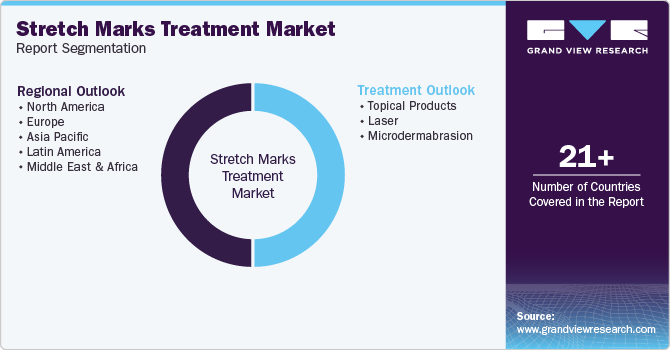
This report forecasts revenue growth at global, regional, and country levels and provides an analysis of the latest industry trends in each of the sub-segments from 2021 to 2033. For this study, Grand View Research has segmented the global stretch marks treatment market report based on treatment, and region:
 To learn more about this report, Download Free Sample Report
 -
Treatment Outlook (Revenue, USD Million, 2021 - 2033)
-
Topical Products
-
Creams
-
Oils & Serums
-
Lotions
-
-
Laser
-
Fractional Laser
-
Pulse-Dye Laser
-
Others
-
-
Microdermabrasion
-
-
Regional Outlook (Revenue, USD Million, 2021 - 2033)
-
North America
-
U.S.
-
Canada
-
Mexico
-
-
Europe
-
UK
-
Germany
-
France
-
Italy
-
Spain
-
Denmark
-
Sweden
-
Norway
-
-
Asia Pacific
-
Japan
-
China
-
India
-
Australia
-
South Korea
-
Thailand
-
-
Latin America
-
Brazil
-
Argentina
-
-
Middle East & Africa
-
South Africa
-
Saudi Arabia
-
UAE
-
Kuwait
-
-
Research Methodology
The stretch marks market figures in this report are based on a proven research process that combines executive interviews with secondary research from proprietary databases, company filings, and recognized regulatory and institutional sources. Market size is built through value-chain sizing - reconciling supply-side and demand-side estimates - and triangulated with bottom-up and top-down approaches. Every estimate passes multiple levels of expert validation before publication, with each stretch marks segment quantified using the revenue-capture definitions in the table below.
Segment Definition
Segment - Treatment
Revenue capture definition
Topical Products
Revenue captured from non-invasive stretch mark treatment products applied directly to the skin to improve elasticity, stimulate collagen production, and reduce the visibility of striae. This segment includes creams, lotions, oils, serums, gels, and formulations containing retinoids, hyaluronic acid, centella asiatica, peptides, cocoa butter, and vitamins.
Laser
Revenue generated from laser-based stretch mark treatments performed in dermatology clinics, aesthetic centers, and medical spas. These procedures promote collagen remodeling, skin resurfacing, and dermal regeneration to improve the appearance, texture, and color of both new and mature stretch marks.
Microdermabrasion
Revenue derived from microdermabrasion procedures used to exfoliate the outer skin layer and stimulate new skin cell growth. The treatment is commonly performed as a standalone procedure or in combination with other therapies to improve skin texture and reduce the appearance of mild stretch marks.
Estimation Model
Step
Guiding Question
Process Steps
Data Sources
Scope Definition
What is being sized?
Define the market scope covering topical products, laser therapies.
Identify end users including dermatology clinics, cosmetic surgery centers, aesthetic medicine clinics, hospitals, and home end‑use segments.
Establish geographic coverage across North America, Europe, Asia Pacific, Latin America, and Middle East & Africa.
Align to base year & forecast horizon (2022-2033).
Research papers, dermatology associations, aesthetic medicine organizations
Build the Product Base
How large is the total addressable patient and consumer base?
Estimate the target population affected by stretch marks.
Analyze treatment‑seeking behavior based on age, gender, income levels.
Incorporate demographic trends, pregnancy rates, obesity prevalence.
Forecast treatment demand by increasing aesthetic awareness, financial accessibility, and availability of minimally invasive procedures.
Obesity and pregnancy statistics, demographic surveys, hospital and clinic records
Estimate Penetration
What proportion adopts stretch marks treatment products and procedures?
Assess adoption rates across topical treatments, laser procedures, minimally invasive therapies, and combination treatments.
Evaluate procedure frequency, repeat treatment sessions, product uptake rates, and consumer preference for professional or home‑based treatments.
Validate penetration assumptions through physician and consumer surveys, clinic feedback, and secondary literature.
Cross‑verify adoption estimates with regional industry volume, product sales, and consumption statistics.
Physician reports, dermatologist surveys, aesthetic clinic interviews
Revenue Conversion
How are treatment volumes converted into market revenue?
Determine average selling prices (ASP) for topical products and average procedure costs for professional aesthetic treatments.
Calculate revenues by product type, treatment modality, distribution channel, and region.
Validate market estimates with company financial reports, distributor sales, and hospital procurement data.
Cross‑check final revenue estimates using bottom‑up and top‑down methodologies.
Company annual statements, distributor reports, retail databases, healthcare expenditure reports
Delivered Customizations
This report has been delivered with the following In-depth customizations
Client Request
Customization Delivered
Value Adds
Treatment Technology and Product Innovation Assessment
Conducted a comprehensive assessment of treatment technologies and product innovations in the stretch marks treatment market, including topical formulations, fractional laser systems, pulsed-dye lasers, microneedling, radiofrequency, platelet-rich plasma (PRP), mesotherapy, microdermabrasion, and regenerative skincare solutions. The analysis also evaluated active ingredients such as retinoids, hyaluronic acid, peptides, botanical extracts, centella asiatica, collagen stimulators, and growth factor-based formulations, alongside recent product launches and technological advancements.
Enables stakeholders to identify emerging treatment trends, innovation opportunities, and technological advancements that improve treatment efficacy and patient outcomes. The study supports strategic product development, investment decisions, and competitive differentiation while highlighting future growth opportunities in minimally invasive aesthetic therapies.
Competitive Landscape and Strategic Benchmarking
Performed an in-depth competitive analysis of leading manufacturers, skincare brands, aesthetic device companies, and dermatology solution providers based on product portfolios, technology platforms, pricing strategies, clinical validation, geographic presence, partnerships, mergers and acquisitions, distribution channels, and recent product launches. The study benchmarked both topical treatment providers and aesthetic device manufacturers across professional and consumer segments.
Provides valuable competitive intelligence by identifying market leaders, benchmarking product differentiation, evaluating commercialization strategies, and highlighting opportunities for partnerships, acquisitions, and portfolio expansion. The analysis enables informed strategic planning and competitive positioning.
Regional Market and Consumer Trend Analysis
Conducted a comprehensive regional assessment across North America, Europe, Asia Pacific, Latin America, and the Middle East & Africa, evaluating treatment adoption, aesthetic procedure volumes, consumer awareness, dermatology infrastructure, disposable income, medical tourism, regulatory landscape, and regional demand for professional and home-based stretch marks treatment solutions.
Supports strategic market expansion by identifying high-growth regions, consumer purchasing trends, regulatory environments, and evolving aesthetic preferences. The analysis enables companies to optimize regional commercialization strategies, investment priorities, and distribution networks.
Frequently Asked Questions About This Report
Key factors that are driving the market growth include increasing obesity issues due to the prevalence of unhealthy lifestyles and growing cosmetic concerns among pregnant women.
Asia Pacific dominated the stretch marks treatment market with a share of 36.9% in 2025. This is attributable to rising healthcare awareness coupled with cloud-based technology acceptance and research and development initiatives.
The global stretch marks treatment market size was estimated at USD 342.7 million in 2025 and is expected to reach USD 373.3 million in 2026.
The global stretch marks treatment market is expected to grow at a compound annual growth rate of 5.2% from 2026 to 2033 to reach USD 532.1 million by 2033.
Topical products segment led the market with the largest revenue share of 60.2% in 2025.
Some key players operating in the stretch marks treatment market include Laboratoires Expanscience, Clarins Group, Merz North America, Inc., Syneron Medical Ltd., E.T. Browne Drug Co., Inc., Cynosure, Inc., Centre Light Solutions, LLC, Basq Skincare, Union-Swiss (Pty) Ltd., Ellipse A/S, The Boppy Company LLC, Helix BioMedix, Inc., Dermaclara, Inc., Mama Mio US, Inc., and Weleda AG
About the Author(s)
Medical Devices Research Team
Healthcare · Medical DevicesThis report was authored by the medical devices research team at Grand View Research - comprising two research analysts, one senior research analyst, and one industry expert - with specialized expertise in the medical devices segment of the healthcare industry. All findings are based on proprietary healthcare databases, executive interviews, and regulatory analysis, subject to internal peer review prior to publication.
Last Updated:
Speak to Analyst

Customize this report to your needs - add regions, segments, or data points, with 20% free customization.
Or view our licence options:


ISO 9001:2015 & 27001:2022 Certified
We are GDPR and CCPA compliant! Your transaction & personal information is safe and secure. For more details, please read our privacy policy.


