TOP 5 ONCOLOGY TRENDS RESHAPING THE MARKET IN 2026
From next-generation therapies to global innovation sourcing, five forces that are reshaping oncology strategy
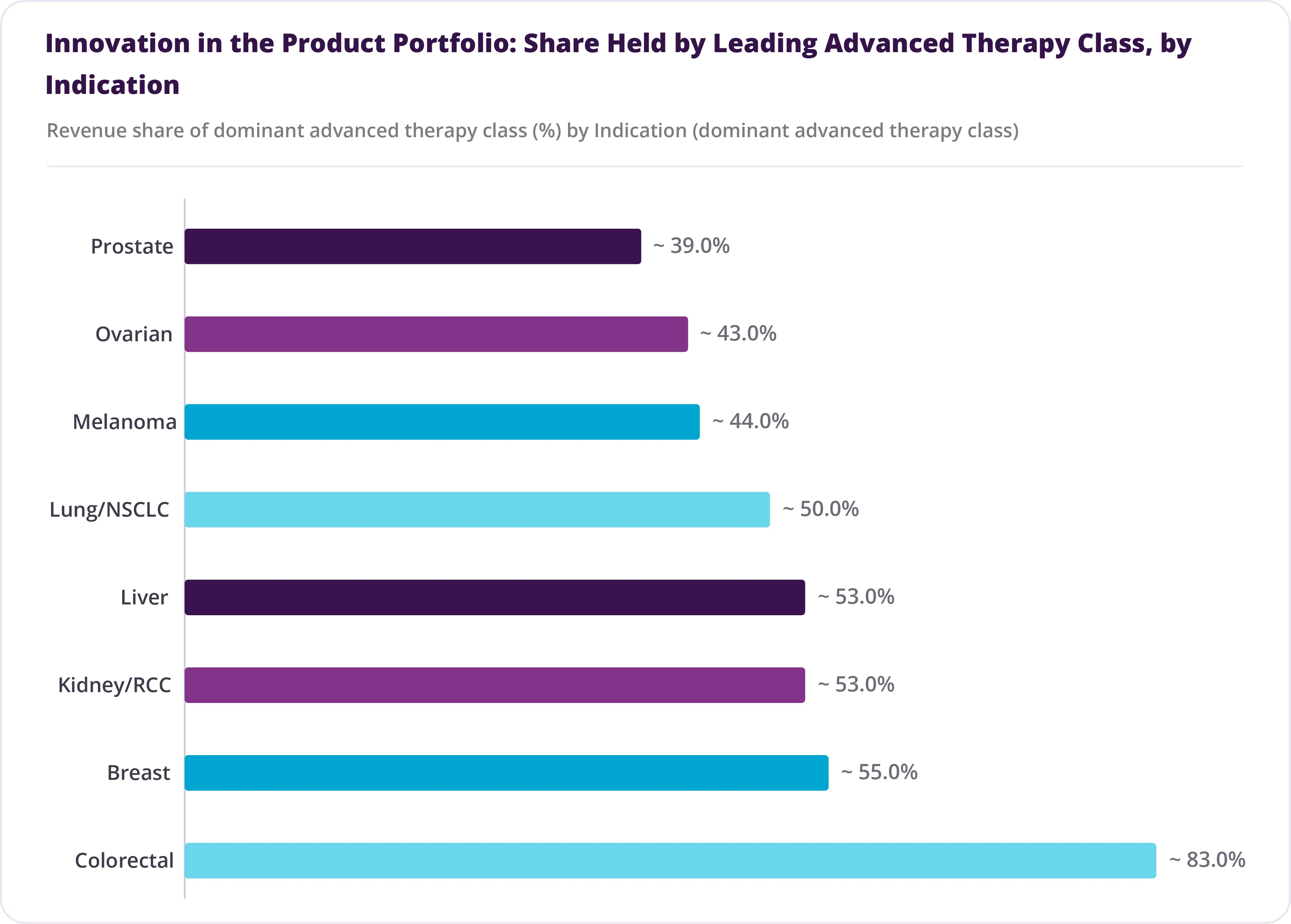
Cancer care is being rebuilt in real time. Discussions across major industry and scientific forums in 2026, including the American Society of Clinical Oncology (ASCO) Annual Meeting, ASCO Breakthrough, the American Association for Cancer Research (AACR) Annual Meeting, the European Society for Medical Oncology Targeted Anticancer Therapies (ESMO TAT) Congress, and the J.P. Morgan Healthcare Conference, point to a common theme: the pace of innovation is increasing faster than many healthcare systems, payers, and pharmaceutical companies can fully absorb.
Five forces stand out as the ones most likely to define oncology strategy through the rest of 2026 and into 2027: the rise of novel treatment modalities, the coming loss of exclusivity on foundational immunotherapies, an intensifying wave of M&A and licensing, the mainstreaming of artificial intelligence across trial design and diagnostics, and a structural shift toward China as a sourcing hub for innovation. None of these trends sit in isolation, together they describe an industry redrawing its own map.
Section A: The New Treatment Frontier
The center of gravity in cancer treatment is shifting away from conventional chemotherapy and even first-generation targeted therapy, toward three modalities that were niche just a few years ago: antibody-drug conjugates (ADCs), multispecific and bispecific antibodies, and alpha-emitting radiopharmaceuticals. All three are now being tested and increasingly used in earlier lines of therapy rather than as last-resort options.
ADCs have moved at the fastest pace. At the 2026 ASCO Annual Meeting, an education session titled “Advancing Antibody-Drug Conjugates: From Bispecific Innovation to First-Line Therapy” drew heavy attendance, reflecting how quickly the conversation has moved from late-line rescue therapy to frontline and even curative-intent use.
Session chair Giuseppe Curigliano, MD, PhD, of the University of Milan and chief of early drug development at the European Institute of Oncology, explained the session's goal:
We are going to present all the most relevant clinical questions that should be addressed in order to implement and optimize the treatment with an ADC in both the early and the metastatic setting.
Bispecific and multispecific antibodies follow a similar trajectory. Their appeal lies in a mechanism unavailable to older antibody classes: the ability to simultaneously engage two targets, most commonly a tumor antigen and a T-cell receptor, physically directing the immune system at the tumor. As one Genentech development leader has described the category, its distinct mechanism which is separate from chemotherapy or single-target agents lets it expand the treatment options available by harnessing a patient's own immune system. At ESMO TAT this year, multispecific compounds were described as one of the meeting's hottest topics, with molecules engineered to orchestrate several mechanisms of action at once rather than simply blocking one pathway.
Radiopharmaceuticals, particularly alpha emitters represent the newest leg of this shift. Where beta-emitting radioligand therapies such as Novartis's Pluvicto and Lutathera established the modality commercially, the field is now moving toward actinium-225 and other alpha-emitting isotopes that deliver a shorter-range, more potent radiation payload directly to tumor cells.
Speaking around the company's 2026 ASCO and EHA data presentations, Mark Rutstein, MD, Global Head of Oncology Development at Novartis, said:
We are excited about sharing our latest advancements in radioligand therapy with new Pluvicto data and early insights from our actinium-based RLT. With a legacy of bold science, our Kisqali and Scemblix data offer continued evidence of how we meaningfully move cancer treatment forward for patients.
The combination of a commercially established beta platform paired with an emerging alpha pipeline is becoming the template other radiopharma developers are racing to replicate.
Each of these modalities forces a rethink of how oncology practices are staffed and structured. ADCs and bispecifics demand tighter management of on-target, off-tumor toxicities as they move into earlier, healthier patient populations. Radiopharmaceuticals require nuclear-capable infrastructure that most community cancer centers do not have. As these modalities move up the treatment sequence, the bottleneck shifts from drug approval to health-system readiness, precisely the gap Aitken flagged.
SECTION B: PATENT CLIFFS AND PORTFOLIO DEFENSE
Behind the excitement over novel modalities sits a more sobering reality: the immunotherapies that built modern oncology are approaching the end of their patent life. Core patents covering foundational PD-1/PD-L1 inhibitors begin to expire around 2028, opening the door to biosimilar competition against drugs that have anchored oncology treatment regimens and company revenues for close to a decade.
The response from originator companies has been to build layered defenses rather than rely on a single patent. That means method-of-use patents tied to dozens of approved indications, new formulation patents covering subcutaneous delivery, and dosing-regimen patents that can extend exclusivity on specific clinical uses well past the core molecule's expiry. At the same time, biosimilar developers in Korea, China, and elsewhere are already racing to be first to file, aiming to enter the moment composition-of-matter protection lapses.
The more consequential response, though, is pipeline safeguarding through next-generation combination strategies. Companies exposed to the coming cliff are pairing their checkpoint inhibitors with newer modalities such as ADCs, bispecifics, subcutaneous reformulations so that even as the original molecule faces biosimilar entry, the combination regimen built around it remains differentiated and harder to substitute.
Loss of exclusivity on the PD-1/PD-L1 class will not be a single cliff event so much as a staggered, multi-year erosion, indication by indication, region by region. Companies that spent the last several years combination-testing their checkpoint inhibitors with newer assets are positioned to defend share even as the base molecule commoditizes. Those relying on a single blockbuster with a thin combination pipeline face a much harder transition.
SECTION C: THE DEALMAKING ENGINE
Facing patent cliffs on one side and an explosion of novel science on the other, large pharma has responded the way it usually does: by buying. Licensing and acquisition activity have been central themes at every major industry gathering this year, and the tone at the J.P. Morgan Healthcare Conference in January 2026 was notably different from the caution of the prior year. Attendees described a shift from tentative hope to active execution, with the emphasis squarely on partnerships, deal-making, and capital deployment.
Merck & Co. CEO Robert Davis captured the scale of ambition when he addressed the conference directly:
Open to deals of multi tens of billions of dollars.
That openness has translated into action across the industry: large-cap players have combined sizable acquisitions with an even larger volume of earlier-stage licensing agreements, spanning next-generation antibody platforms, cell therapies, and radiopharmaceutical assets, as companies work to diversify beyond any single modality or franchise.
What distinguishes this cycle is the mix. Rather than one or two mega-mergers dominating headlines, deal activity is spreading across a high volume of mid-sized licensing agreements, many of them early-stage, de-risked just enough to justify a premium, and increasingly sourced from outside the traditional US and European biotech hubs.
M&A and licensing are no longer opportunistic; they are the primary mechanism by which large pharma manages its portfolio risk. Oncology, more than any other therapeutic area, sits at the center of this activity because it combines the industry's biggest current revenue exposure (checkpoint inhibitors) with its fastest-moving science (ADCs, bispecifics, radiopharmaceuticals, cell therapy). Expect continued high deal velocity, a preference for de-risked, clinically validated assets over pure discovery bets, and growing competition for the same pool of attractive targets.
SECTION D: THE DATA AND DIAGNOSTICS SHIFT
Artificial intelligence has moved past the demonstration phase in oncology and is being built directly into the infrastructure of drug development and cancer detection. At the AACR Annual Meeting this year, AI was given its own dedicated plenary session for the first time, a programming decision that signaled the conference committee now treats it with the same weight as clinical trial data and discovery science. Presentations showed AI tools embedded at decision-critical points: digital twin frameworks used to guide trial design, and fully automated imaging analysis providing earlier efficacy readouts than traditional response criteria in simulated trials.
Digital pathology has become one of the clearest proof points. Foundation models and AI copilots are now being applied directly to histopathology slides to support diagnosis and biomarker discovery, a theme that recurred across dedicated AI-in-oncology conferences this year in Paris, Milan, and Columbus, Ohio. The shift is from AI as a research add-on to AI as a standard part of the pathology workflow.
The other major front is early detection. Multi-cancer early detection (MCED) tests built on circulating tumor DNA (ctDNA) reached a milestone moment this year when large-scale randomized data including the NHS-Galleri trial and the PATHFINDER 2 study, together enrolling more than 170,000 participants were presented at ASCO. In a statement tied to that presentation, GRAIL said:
We look forward to sharing these findings, which strengthen the body of evidence supporting the clinical utility, performance, and safety of Galleri in intended-use populations and reflect GRAIL's extensive experience building a robust evidence base for multi-cancer early detection.
Beyond screening, ctDNA-based minimal residual disease testing is increasingly being woven into post-treatment monitoring and trial endpoints. Reflecting on how these tools are reshaping care delivery, Deirdre Saulet, PhD, Chief Strategy Officer at Jasper Health, told the Clinical Pathways Congress:
The difference isn't the technology itself. It's whether we design it around the needs of clinicians and patients. That's why I believe the future of clinical pathways isn't simply about adopting artificial intelligence. It's about using AI, data, and real-world evidence to make care more connected, more actionable, and ultimately more human.
AI's shift from pilot to infrastructure changes who oncology's technology partners are. Imaging and diagnostics companies, digital pathology platforms, and data science vendors are becoming as central to oncology strategy as therapeutic developers. For drug developers, AI-driven trial design and faster imaging readouts compress development timelines; for health systems, AI-enabled diagnostics and MCED tests raise the practical question of what to do with the earlier-stage cancers they will inevitably start finding.
SECTION E: THE GLOBAL SOURCING RESET
Perhaps the most structural of the five trends is the extent to which Chinese biotech has become a primary source of oncology innovation for Western pharma, rather than a manufacturing base or a secondary market. Cross-border licensing and co-development deals originating from Chinese biotech have surged, and the pattern was unmistakable at the 2026 ASCO Annual Meeting, where Chinese companies moved beyond their traditional reliance on PD-1 antibodies to showcase a broader base of innovation across antibody-drug conjugates, bispecific antibodies, and cell therapy.
Aitken flagged this shift directly in his review of this year's oncology research trends, pointing to the rising share of clinical trials in oncology now initiated by China-headquartered companies, both domestic firms and a growing number of non-Chinese companies choosing to run early-phase studies in China. That research infrastructure is now feeding directly into global licensing: large pharma companies have struck a run of high-value agreements for Chinese-originated bispecific and ADC assets, often securing rights outside China while the originator retains its home market.
This is not a one-way trade in molecules alone. It also resets expectations on speed, pricing, and execution across the industry. Western companies accustomed to a certain pace of early development are now benchmarking against Chinese programs that move from IND filing to proof-of-concept data markedly faster.
China-to-global sourcing is changing where large pharma looks first for its next pipeline asset, and it is doing so at a moment when patent cliffs and dealmaking pressure make external innovation more valuable than ever. It also introduces new considerations such as regulatory harmonization, geopolitical risk, and intellectual property diligence, that were less prominent when licensing activity was concentrated among US and European biotechs. Companies that build durable sourcing and partnership capabilities in China are positioning themselves with an advantage that is difficult for late movers to replicate quickly.
THE BOTTOM LINE
Oncology in 2026 is not one story but five interlocking ones. Novel modalities are pushing into earlier lines of treatment just as the immunotherapies that defined the last decade approach the edge of their patent life. Pharma is responding to both forces the same way through an unrelenting pace of dealmaking while artificial intelligence quietly becomes the infrastructure underneath trial design, diagnosis, and early detection. And running through all of it is a geographic reordering, as China moves from peripheral supplier to central source of oncology innovation.
The through-line across every conference stage and press statement referenced here is the same one Murray Aitken raised: the science is accelerating, and the open question is whether the surrounding system — clinical, regulatory, commercial, can keep pace.
Companies that treat these five trends as separate workstreams risk missing how tightly they are now bound together. Those that manage novel-modality development, exclusivity defense, dealmaking, AI adoption, and China-sourced partnerships as a single, coordinated strategy will be the ones setting the pace for the rest of the decade.


