
- Home
- »
- Pharmaceuticals
- »
-
Estrogen Receptor Positive Breast Cancer Treatment Market Report, 2026--2033GVR Report cover

Estrogen Receptor Positive Breast Cancer Treatment Market (2026 - 2033)
Size, Share & Trends Analysis Report By Treatment (Chemotherapy, Targeted Therapy), By End Use (Hospitals, Specialty Clinics), By Region, And Segment Forecasts
Market Size, 2025
$23.1BMarket Estimate, 2026
$24.9BMarket Forecast, 2033
$42.4BCAGR, 2026–2033
7.9%Estrogen Receptor Positive Breast Cancer Treatment Market Summary
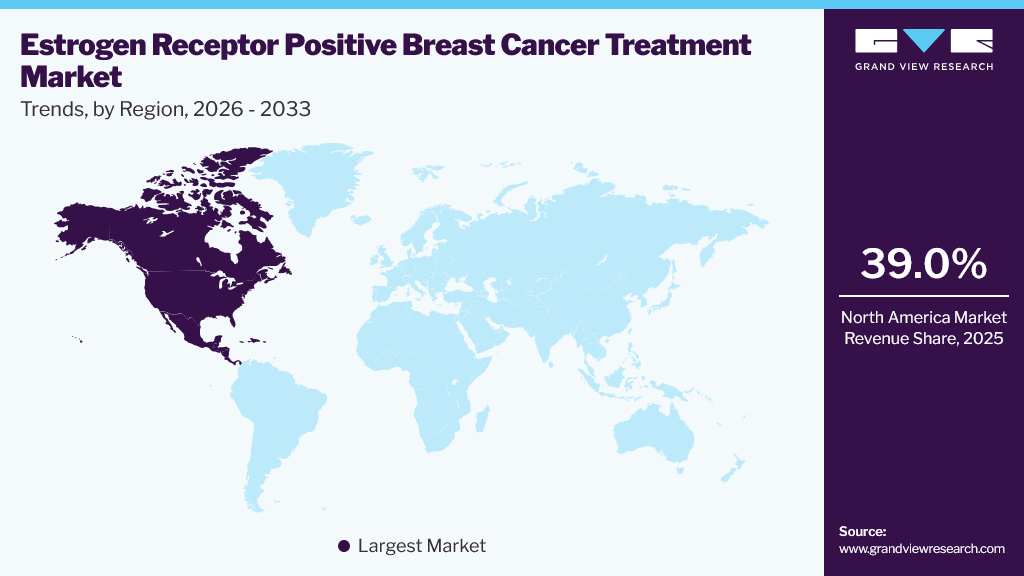
The global estrogen receptor positive breast cancer treatment market size was estimated at USD 23.1 billion in 2025 and is projected to grow from USD 24.9 billion in 2026 to USD 42.4 billion by 2033, growing at a CAGR of 7.9% from 2026 to 2033. North America dominated with a revenue share of 39.0% in 2025. Several key factors drive market growth, including advancements in drug development, increasing cancer awareness and screening, rising incidence rates, and strategic collaborations.
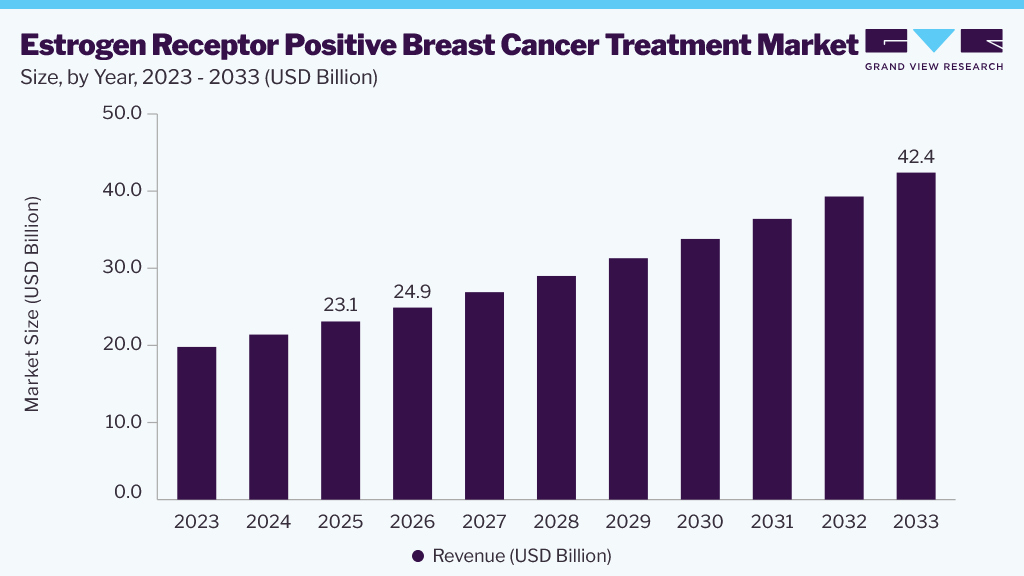 Source: Grand View Research, IR Documents, Primary Interviews, Paid DatabasesTo learn more about this report,
 Download Free Sample Report
Key Market Trends & Insights
- By treatment: The hormonal therapy segment dominated the market, with a revenue share of about 38.0% in 2025.
- By end use: The hospital segment held the largest revenue share of over 62.0% in 2025.
Regional Highlights
- Largest regional market: North America (39.0% revenue share, 2025)
Market Size & Forecast
- Market size in 2025: USD 23.1 Billion
- Estimated market size in 2026: USD 24.9 Billion
- Projected market size by 2033: USD 42.4 Billion
- CAGR (2026-2033): 7.9%
Three ways to get this report
Buy it, customize it, or ask a question.Ask an Analyst
Analyst response in 1 business day
- AccessReport author, directly
- Reply timeWithin 1 working day
- No sales callDirect answer only
- FormatEmail reply
- CostFree, no cost
Get the Full Report
What the study covers
- FormatsPDF · Excel · Dashboard
- Timeline2026–2033 annual, 2025 base
- Coverage20+ countries, 5 regions
- Companies10+ key players profiled
Customize the Report
20% free customization
- IncludeCountries, segments, points
- TailorTo your product definition
- ExtendDeeper competitor detail
- OrA fully bespoke study
- Turnaround5–10 working days
These drivers are significantly shaping the landscape of ER+ breast cancer treatments, facilitating the introduction of innovative therapies, improving patient outcomes, and expanding access to cutting-edge treatments. According to the World Health Organization (WHO), Breast cancer, with over 2.3 million cases annually, is the most common cancer in adults and a leading cause of female cancer-related deaths, particularly in low- and middle-income countries. This growing global disease burden continues to increase the demand for effective treatment options, including targeted therapies for estrogen receptor positive (ER+) breast cancer. According to the data from the American Cancer Society, breast cancer is the most common cancer among women, with an estimated 310,720 new cases expected in the US alone in 2024. The increasing number of diagnoses is driving demand for advanced treatment options and encouraging pharmaceutical companies to invest in the development of more effective and personalized ER+ breast cancer therapies.
Recent innovations in drug development are a significant driver for the market growth. New therapies, including novel aromatase inhibitors, selective estrogen receptor degraders (SERDs), and targeted therapies, are being introduced. For instance, in January 2023, the FDA approved Orserdu, a new oral medication intended for the treatment of metastatic estrogen receptor positive, HER2-negative breast cancer with an ESR1 mutation. These advancements reflect the sector's focus on developing more effective, personalized treatment strategies.
Increased awareness regarding breast cancer symptoms and the importance of early detection has led to more women participating in regular screening programs. For instance, Susan G. Komen and the American Cancer Society have launched campaigns to educate women about self-examinations and mammography screenings. As awareness grows, so does the demand for effective treatments tailored specifically for those diagnosed with ER+ subtypes.
Analyst Perspective
The market is experiencing significant growth, driven by the increasing prevalence of hormone receptor positive breast cancer, which accounts for the majority of breast cancer cases worldwide, alongside continuous advancements in precision oncology. The treatment landscape is rapidly evolving beyond conventional endocrine therapy toward more advanced, personalized targeted treatment approaches, including CDK4/6 inhibitors, PI3K/AKT inhibitors, and next-generation oral selective estrogen receptor degraders (SERDs), which are helping to address endocrine resistance and improve long-term patient outcomes. The growing integration of biomarker-guided treatment strategies, coupled with expanding clinical indications for targeted therapies and a strong pipeline of novel therapeutics, is reshaping the standard of care for ER+ breast cancer. In addition, rising awareness of early breast cancer screening and diagnosis, favorable regulatory approvals, and increased investments in oncology research are further supporting market expansion. As pharmaceutical companies continue to develop personalized combination therapies and broaden their use in both early- and advanced-stage disease settings, the ER+ breast cancer treatment market is expected to experience sustained growth over the forecast period.
Treatment Insights
The hormonal therapy segment represented the largest revenue share of approximately 38.0% in 2025, primarily driven by the increasing prevalence of this subtype of breast cancer and the effectiveness of hormonal therapies in managing it. Hormonal treatments, including selective estrogen receptor modulators (SERMs) such as tamoxifen and aromatase inhibitors (AIs) such as anastrozole and letrozole, work by blocking estrogen’s effects on breast tissue, thereby slowing or stopping the growth of hormone-sensitive tumors. Continuous advancements in endocrine therapies, particularly the development of next-generation oral selective estrogen receptor degraders (SERDs), are further strengthening segment growth. For instance, in December 2024, Eli Lilly reported that the Phase III EMBER-3 trial met a primary endpoint, with imlunestrant significantly improving progression-free survival versus standard endocrine therapy in patients with ER-positive, HER2-negative advanced breast cancer and ESR1 mutations after endocrine therapy. Such advancements are expected to accelerate the adoption of more effective hormonal treatment options and further support segment growth over the forecast period.
The targeted therapy segment is anticipated to experience the fastest-growing CAGR over the forecast period. The increasing understanding of the molecular and genetic underpinnings of ER+ breast cancer led to the development of therapies that specifically target these pathways. These targeted therapies inhibit specific molecules involved in tumor growth and progression, offering a more personalized approach than traditional chemotherapy. Furthermore, increased investment in biotechnology and pharmaceutical companies focusing on innovative drug development propels this segment’s growth. As a result, targeted therapy not only represents a promising frontier in treating ER+ breast cancer but also reflects a broader shift toward precision medicine in oncology. The increasing clinical adoption and regulatory approvals of targeted therapies, such as CDK4/6, PI3K, and AKT inhibitors, for ER+/HER2− breast cancer treatment are also driving the segment growth. These therapies have demonstrated significant improvements in progression-free survival and overall treatment outcomes, particularly in patients with advanced or metastatic disease, thereby accelerating their adoption in clinical practice.
End Use Insights
The hospital segment accounted for the largest revenue share in the market in 2025, at approximately 62.0%. Hospitals have advanced medical technologies and specialized healthcare professionals who can provide comprehensive treatment plans, including surgery, chemotherapy, hormone therapy, and radiation therapy. This multifaceted approach is crucial for managing ER+ breast cancer effectively, as it often requires a combination of treatments personalized to individual patient needs. Furthermore, hospitals typically establish relationships with pharmaceutical companies to procure and distribute drugs, ensuring a steady supply of essential medications used in ER+ breast cancer therapies. Another key factor driving the growth of this segment is the increasing adoption of multidisciplinary oncology care in hospitals, supported by advanced diagnostic imaging and biomarker testing capabilities. Hospitals play a critical role in identifying hormone receptor status, ESR1 mutations, and other biomarkers that guide treatment selection, enabling more personalized and effective ER+ breast cancer management.
The specialty clinics segment is anticipated to witness the fastest CAGR over the forecast period. This is driven by a combination of factors, including increased patient demand for personalized care, advancements in treatment modalities, and the growing prevalence of breast cancer. Specialty clinics offer targeted therapies and comprehensive treatment plans that cater to the needs of ER+ breast cancer patients, enhancing patient outcomes and satisfaction. The increasing preference for specialized outpatient oncology care is supported by shorter waiting times and improved access to personalized treatment strategies, which are also driving the segment growth. Specialty clinics often provide focused cancer care services, including targeted therapies, hormonal treatment management, and continuous patient monitoring, enabling efficient and patient-centric ER+ breast cancer treatment.
Regional Insights
The North America estrogen receptor positive breast cancer treatment market accounted for approximately 39.0% of the market share in 2025. The market in North America is witnessing a significant shift towards personalized medicine, driven by advancements in genomic profiling and targeted therapies. Collaborations between pharmaceutical companies and academic institutions are fostering the development of novel agents that target specific pathways involved in ER+ breast cancer progression. This trend is further supported by robust regulatory approvals and substantial investment in oncology research across the region. For instance, in May 2025, Arvinas and Pfizer announced that VERITAC-2 met its primary endpoint in the ESR1-Mutant subgroup, with vepdegestrant significantly improving PFS versus fulvestrant in ER-positive, HER2-negative, ESR1-Mutant advanced or metastatic breast cancer. The positive Phase III results support the advancement of next-generation precision therapies for ER+ breast cancer in North America. The growing emphasis on patient-centric approaches is also reflected in the rising demand for supportive care services that address the psychosocial aspects of living with cancer.
 To learn more about this report, Download Free Sample Report
U.S. Estrogen Receptor Positive Breast Cancer Treatment Market Trends
The estrogen receptor positive breast cancer treatment market in the U.S. is experiencing rapid growth driven by the increasing adoption of precision medicine and targeted therapies. The focus on personalized treatment approaches is leading to the development of innovative therapies that specifically target the molecular characteristics of ER+ tumors. Furthermore, the U.S. regulatory environment supports rapid approvals for new therapies, as evidenced by the recent FDA approvals of drugs such as Trodelvy, which expand treatment options for breast cancer patients. This emphasis on innovation and personalized care is expected to significantly enhance patient outcomes and drive market growth in the U.S.
Europe Estrogen Receptor Positive Breast Cancer Treatment Market Trends
The estrogen receptor positive breast cancer treatment market in Europe is seeing dynamic changes driven by significant innovations and enhanced access to advanced therapies. New treatments, including novel hormones and targeted therapies, are being introduced globally. For instance, in June 2024, AstraZeneca’s Truqap (capivasertib) received EU approval for treating adult patients with ER-positive, HER2-negative advanced breast cancer with specific genetic alterations after endocrine therapy failure.
The UK estrogen receptor positive breast cancer treatment market is characterized by a strong emphasis on integrating innovative therapies and advancing precision medicine. Robust research and development initiatives support the launch of new-generation hormone therapies and targeted treatments. The UK’s National Health Service (NHS) and regulatory bodies are actively involved in facilitating the approval and availability of these therapies.
The estrogen receptor positive breast cancer treatment market in France is marked by a strong focus on integrating new technologies into patient care pathways. The French healthcare system emphasizes multidisciplinary approaches involving oncologists, radiologists, and genetic counselors to optimize treatment strategies for patients with ER+ breast cancer. Innovative practices such as genomic profiling are becoming increasingly common in clinical settings, allowing for more precise targeting of therapies based on individual tumor characteristics.
Asia Pacific Estrogen Receptor Positive Breast Cancer Treatment Market Trends
The estrogen receptor positive breast cancer treatment market in the Asia Pacific is expanding due to advancements in treatment options and increased healthcare investments. Innovative therapies, including new hormone therapies and targeted treatments, are being introduced as a result of growing collaborations between regional and international pharmaceutical companies. Enhanced cancer awareness and improved diagnostic capabilities are driving earlier detection and treatment. According to the World Economic Forum, Asia accounts for approximately 45% of global breast cancer cases, highlighting the region’s substantial disease burden and growing need for effective treatment solutions. The increasing burden of breast cancer, improving access to precision oncology, and expanding regulatory approvals for novel endocrine and targeted therapies are expected to drive the growth of the Asia Pacific ER+ breast cancer treatment market. For instance, Menarini Group announced that Orserdu (elacestrant) received approval from Japan's Ministry of Health, Labor and Welfare (MHLW) for the treatment of postmenopausal women and men with ER-positive, HER2-negative, ESR1-mutated, unresectable or recurrent breast cancer that has progressed following endocrine therapy. The approval expanded access to the first oral selective estrogen receptor degrader (SERD) in one of Asia-Pacific's largest oncology markets, reflecting the region's growing adoption of innovative targeted therapies.
Japan estrogen receptor positive breast cancer treatment market is characterized by a strong emphasis on precision medicine and a high level of innovation. The introduction of cutting-edge therapies, including next-generation hormone treatments and targeted therapies, is supported by ongoing research and development efforts. Collaborations between Japanese pharmaceutical companies and global research institutions are accelerating the development of advanced treatment options for ER+ breast cancer. Breast cancer remains the most common cancer among women in Japan, and the growing demand for personalized treatment strategies, coupled with increasing regulatory support for novel therapies, is expected to drive market growth.
The estrogen receptor positive breast cancer treatment market in China is rapidly evolving with a strong focus on integrating advanced treatments and expanding clinical research. The development and launch of new therapies, including novel endocrine treatments and targeted therapies, are supported by significant investments in healthcare infrastructure and a growing number of local clinical trials. Breast cancer remains the most prevalent cancer among women in China, with rising incidence rates continuing to drive demand for innovative treatment options. In addition, improving access to precision oncology and increased investment by domestic pharmaceutical companies are further supporting market expansion.
Latin America Estrogen Receptor Positive Breast Cancer Treatment Market Trends
The estrogen receptor positive breast cancer treatment market in Latin America is witnessing a surge in innovation and treatment accessibility, driven by enhanced healthcare infrastructure and collaborative efforts. The introduction of advanced therapies, such as new-generation aromatase inhibitors and targeted treatments, is becoming more common due to increased investment from local and international pharmaceutical companies. In addition, partnerships between regional healthcare providers and global firms facilitate the launch of innovative therapies and expand clinical trial opportunities.
Brazil estrogen receptor positive breast cancer treatment market is experiencing dynamic changes with a focus on integrating new therapies and expanding patient access. The Brazilian healthcare system also benefits from increased collaborations between domestic and international pharmaceutical companies, enhancing research and development efforts. Brazil's participation in global clinical trials and partnerships with leading oncology research organizations reflect a solid commitment to advancing cancer care. Notably, breast cancer is the leading cancer among women in Brazil, highlighting the critical need for innovative treatment solutions and effective healthcare strategies.
Middle East & Africa Estrogen Receptor Positive Breast Cancer Treatment Market
The estrogen receptor positive breast cancer treatment market in MEA is growing due to the rising awareness of breast cancer and growing emphasis on early diagnosis. The adoption of advanced hormone therapies and targeted treatments is gradually increasing, supported by improving access to specialized cancer care services. In addition, strategic partnerships between regional healthcare providers and multinational pharmaceutical companies are enhancing the availability of innovative therapies. These developments are expected to support the broader adoption of advanced ER+ breast cancer treatment solutions across the Middle East and Africa.
Saudi Arabia estrogen receptor positive breast cancer treatment market is seeing significant developments with the introduction of cutting-edge treatments and an emphasis on local clinical trials. The adoption of new-generation hormone therapies and targeted treatments, including combination therapies, is improving treatment outcomes for patients with ER+ breast cancer. Saudi Arabia’s healthcare transformation initiatives, supported by Vision 2030, are accelerating investments in cancer research, diagnostic capabilities, and specialized treatment centers. In addition, strategic partnerships with global pharmaceutical companies are improving access to innovative therapies and strengthening the country’s oncology treatment landscape. These developments reflect Saudi Arabia’s growing commitment to enhancing cancer care standards and expanding access to advanced breast cancer treatment solutions.
Key Estrogen Receptor Positive Breast Cancer Treatment Company Insights
Key players dominate the market through innovative therapies and extensive portfolios. Major companies leverage their strengths in developing and marketing targeted hormone therapies, such as aromatase inhibitors and selective estrogen receptor modulators, to capture significant market share. These leading firms drive market growth by continually advancing their drug pipelines and pursuing strategic collaborations and acquisitions to expand their therapeutic offerings.
Key Estrogen Receptor Positive Breast Cancer Treatment Companies:
The following are the leading companies in the estrogen receptor positive breast cancer treatment market:
-
AstraZeneca
-
Eli Lilly and Company
-
Pfizer Inc.
-
Novartis AG
-
F. Hoffmann-La Roche Ltd.
-
Sanofi
-
Gilead Sciences, Inc.
-
The Menarini Group
-
Sermonix Pharmaceuticals
-
Arvinas
Recent Developments
- In March 2025, Pfizer and Arvinas announced positive topline Phase III VERITAC-2 results, with vepdegestrant significantly improving progression-free survival versus fulvestrant in the ESR1-mutated subgroup of patients with ER-positive, HER2-negative advanced or metastatic breast cancer after prior CDK4/6 inhibitor and endocrine therapy.
- In February 2024, Arvinas and Pfizer's Vepdegestrant (ARV-471) was granted FDA Fast Track Designation for the treatment of patients with estrogen receptor positive (ER+)/HER2-negative metastatic breast cancer.
- In January 2024, Menarini Group, through its Stemline subsidiary, and Insilico Medicine signed an exclusive licensing deal. Stemline gains global rights to develop and commercialize a new small-molecule KAT6A inhibitor, developed with Insilico's AI, for hormone-sensitive and other cancers.
Estrogen Receptor Positive Breast Cancer Treatment Market Report Scope
Report Attribute
Details
Market size in 2025
USD 23.1 billion
Estimated market size in 2026
USD 24.9 billion
Projected market size by 2033
USD 42.4 billion
Growth rate
CAGR of 7.9% from 2026 to 2033
Base years for estimation
2025
Historical data
2021 – 2024
Forecast period
2026 – 2033
Quantitative units
Revenue in USD billion, and CAGR from 2026 to 2033
Report coverage
Revenue forecast, company ranking, competitive landscape, growth factors, trends
Segments covered
Treatment, end use, region
Regional scope
North America; Europe; Asia Pacific; Latin America; MEA
Country scope
U.S.; Canada; Mexico; UK; Germany; France; Italy; Spain; Sweden; Denmark; Norway; China; Japan; India; Australia; South Korea; Thailand; Brazil; Argentina; Saudi Arabia; South Africa; UAE; Kuwait
Key companies profiled
AstraZeneca; Eli Lilly and Company; Pfizer Inc.; Novartis AG; F. Hoffmann-La Roche Ltd.; Sanofi; Gilead Sciences, Inc.; The Menarini Group; Sermonix Pharmaceuticals; Arvinas
Customization scope
Free report customization (equivalent to up to 8 analysts working days) with purchase. Addition or alteration to country, regional & segment scope.
Pricing and purchase options
Avail of customized purchase options to meet your exact research needs. Explore purchase options
Global Estrogen Receptor Positive Breast Cancer Treatment Market Segmentation
This report forecasts revenue growth at global, regional, and country levels and provides an analysis of the latest industry trends in each of the sub-segments from 2021 to 2033. For this study, Grand View Research has segmented the global estrogen receptor positive breast cancer treatment market report based on treatment, end use, and region:
-
Treatment Outlook (Revenue, USD Million, 2021 - 2033)
-
Chemotherapy
-
Targeted Therapy
-
Hormonal Therapy
-
Radiation Therapy
-
Other
-
-
End Use Outlook (Revenue, USD Million, 2021 - 2033)
-
Hospitals
-
Specialty Clinics
-
Other
-
-
Regional Outlook (Revenue, USD Million, 2021 - 2033)
-
North America
-
U.S.
-
Canada
-
Mexico
-
-
Europe
-
Germany
-
UK
-
France
-
Italy
-
Spain
-
Denmark
-
Sweden
-
Norway
-
-
Asia Pacific
-
China
-
Japan
-
India
-
South Korea
-
Australia
-
Thailand
-
-
Latin America
-
Brazil
-
Argentina
-
-
Middle East and Africa (MEA)
-
South Africa
-
Saudi Arabia
-
UAE
-
Kuwait
-
-
Frequently Asked Questions About This Report
The global estrogen receptor positive breast cancer treatment market size was valued at USD 23.1 billion in 2025 and is estimated at USD 24.9 billion for 2026
The global estrogen receptor positive breast cancer treatment market is expected to grow at a CAGR of 7.9% from 2026 to 2033, reaching USD 42.4 billion
North America dominated with an approximately 39.0% revenue share in 2025.
The hormonal therapy segment accounted for the largest revenue share of approximately 38.0% in 2025
Key players in the market include AstraZeneca, Eli Lilly and Company, Pfizer Inc., Novartis AG, F. Hoffmann-La Roche Ltd., Sanofi, Gilead Sciences, Inc., The Menarini Group, Sermonix Pharmaceuticals, Arvinas, and others.
About the Author(s)
Pharmaceuticals Research Team
Healthcare · PharmaceuticalsThis report was authored by the pharmaceuticals research team at Grand View Research - comprising two research analysts, one senior research analyst, and one industry expert - with specialized expertise in the pharmaceuticals segment of the healthcare industry. All findings are based on proprietary healthcare databases, executive interviews, and regulatory analysis, subject to internal peer review prior to publication.
Last Updated:
Speak to Analyst

Customize this report to your needs - add regions, segments, or data points, with 20% free customization.
Or view our licence options:


ISO 9001:2015 & 27001:2022 Certified
We are GDPR and CCPA compliant! Your transaction & personal information is safe and secure. For more details, please read our privacy policy.


