
- Home
- »
- Pharmaceuticals
- »
-
Neuroblastoma Drugs Market Size, Share Report, 2026-2035GVR Report cover

Neuroblastoma Drugs Market (2026 - 2035)
Size, Share & Trends Analysis Report By Type (Chemotherapy, Immunotherapy, Bone Marrow Transplantation, Retinoid Therapy, Surgery, Others), By Route Of Administration, By End Use, By Region, And Segment Forecasts
Market Size, 2025
$1.2BMarket Estimate, 2026
$1.3BMarket Forecast, 2035
$2.5BCAGR, 2026–2035
7.2%Neuroblastoma Drugs Market Summary
The global neuroblastoma drugs market size was valued at USD 1.2 billion in 2025 and is projected to grow from USD 1.3 billion in 2026 to USD 2.5 billion in 2035, at a CAGR of 7.2% from 2026 to 2035. North America dominated the market, accounting for a revenue share of 36.0% in 2025. The growth is driven by the availability of advanced pediatric oncology infrastructure, increasing adoption of targeted therapies and immunotherapies, and substantial investments in research & development aimed at developing novel neuroblastoma treatments.
Key Market Trends & Insights
- By type: The chemotherapy segment held the largest market share in 2025.
- By route of administration: The injectable segment accounted for the largest market share in 2025.
- By end use: The hospitals segment held the largest market share in 2025.
Regional Highlights
- Largest regional market: North America (36.0% revenue share, 2025)
- Fastest-growing regional market: Asia Pacific (highest CAGR, 2026-2035)
Market Size & Forecast
- Market size in 2025: USD 1.2 Billion
- Estimated market size in 2026: USD 1.3 Billion
- Projected market size by 2035: USD 2.5 Billion
- CAGR (2026-2035): 7.2%
Prism AI by Grand View Research Free to tryAsk a question about the neuroblastoma drugs marketTry asking✓Every figure cited from GVR research Prefer the report? Download free sample →
The industry is driven by the established use of multimodal treatment approaches, including chemotherapy, surgery, stem cell transplantation, radiotherapy, and maintenance therapy. However, the treatment landscape is increasingly shifting toward more targeted and immune-based approaches, with GD2-directed therapies emerging as a key therapeutic strategy in neuroblastoma. Dinutuximab has been approved for use in children with high-risk disease following first-line therapy, while naxitamab has been approved for the treatment of relapsed or refractory high-risk disease, underscoring the demand for specialized therapies in neuroblastoma.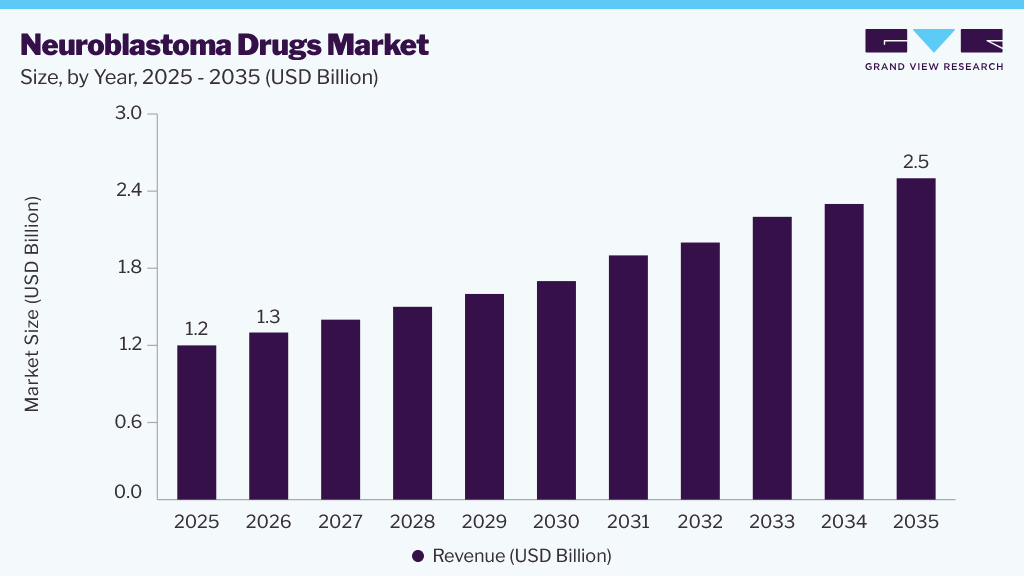 Source: Grand View Research, IR Documents, Primary Interviews, Paid DatabasesTo learn more about this report,
 Download Free Sample Report
Ongoing clinical investigation of novel targeted therapies, antibody-based treatments, and combination regimens is expected to support further market growth. Additionally, the limited number of approved therapies, coupled with the substantial unmet medical need among children and adolescents with high-risk neuroblastoma, provides strong incentives for pharmaceutical companies and research institutions to invest in the development of next-generation therapies.
Analyst Perspective
The industry is supported by the evolution of treatment from traditional multimodal care toward more monoclonal antibody-based and immune-focused approaches, particularly in advanced, relapsed/refractory, and high-risk settings. The launch and broader adoption of GD2-directed immunotherapies, particularly for high-risk and relapsed/refractory neuroblastoma in the U.S. and Europe, are expected to further establish targeted treatment approaches. Industry-sponsored and investigator-initiated clinical trials evaluating novel monoclonal antibody-based, targeted, and combination therapies are expanding the pipeline and creating opportunities for therapeutic advances. Growing interest in pediatric oncology research, improvements in disease risk stratification, and continued advances in precision medicine are also contributing to the development of new treatment strategies for neuroblastoma.
Type Insights
The chemotherapy segment accounted for the largest share in 2025. Chemotherapy remains an integral component of neuroblastoma treatment and is widely used in induction and salvage regimens, particularly for high-risk disease. Commonly used cytotoxic agents include cyclophosphamide, doxorubicin, etoposide, cisplatin, topotecan, and vincristine. The long-standing use of established chemotherapy protocols, together with their integration into multimodal treatment regimens involving surgery, stem cell transplantation, radiotherapy, and immunotherapy, has enabled chemotherapy to maintain its leading market position. The U.S. Food and Drug Administration has noted that many of the drugs currently used to treat neuroblastoma are older cytotoxic agents that form part of frontline treatment regimens.
The immunotherapy segment is anticipated to register a notable CAGR during the forecast period. Increasing use of anti-GD2 therapies for high-risk and relapsed/refractory neuroblastoma is expected to support segment growth. Dinutuximab is approved for pediatric patients with high-risk neuroblastoma following prior first-line multimodal therapy, while naxitamab is approved for patients with relapsed or refractory high-risk neuroblastoma involving bone or bone marrow. Continued development of novel immune-based therapies and combination treatment strategies is expected to further expand the role of immunotherapy and support segment growth over the forecast period.
Route of Administration Insights
The injectable segment dominated the market in 2025, supported by the widespread use of intravenously or parenterally administered chemotherapy and immunotherapy in hospital-based neuroblastoma treatment. Many established treatment regimens require administration under clinical supervision because of the intensive nature of therapy and the need for monitoring during treatment. FDA-approved neuroblastoma therapies such as dinutuximab and naxitamab are administered through intravenous infusion, further supporting the prominent role of injectable therapies in the market.
The oral segment is anticipated to witness significant growth during the forecast period. The availability of oral treatment options provides greater flexibility for patients receiving longer-term maintenance or relapse-prevention therapy. In June 2024, the U.S. Food and Drug Administration approved eflornithine (IWILFIN), documenting its use as an oral therapy to reduce the risk of relapse in adult and pediatric patients with high-risk neuroblastoma following prior multimodal therapy, including anti-GD2 immunotherapy. This development highlights the expanding role of orally administered therapies within the neuroblastoma treatment landscape.
End Use Insights
The hospitals segment dominated the market in 2025. Neuroblastoma treatment frequently requires multidisciplinary and highly specialized care involving pediatric oncologists, surgeons, radiation specialists, transplant teams, and other healthcare professionals. Hospitals are therefore the primary setting for intensive chemotherapy, immunotherapy, stem cell transplantation, surgery, and radiation therapy. The complexity of high-risk neuroblastoma treatment and the requirement for close monitoring during administration of therapies such as dinutuximab and naxitamab further support the leading position of this segment.
The specialty clinics segment is expected to witness notable growth during the forecast period as pediatric oncology services increasingly emphasize specialized and coordinated treatment for rare cancers. Specialty clinics can offer disease-specific experience, follow-up, monitoring of therapy, access to novel treatments, clinical trials, and an evolving treatment landscape. The growing development of targeted and immune-based therapy for neuroblastoma is likely to further elevate the role of specialized oncology centers in the treatment continuum.
Regional Insights
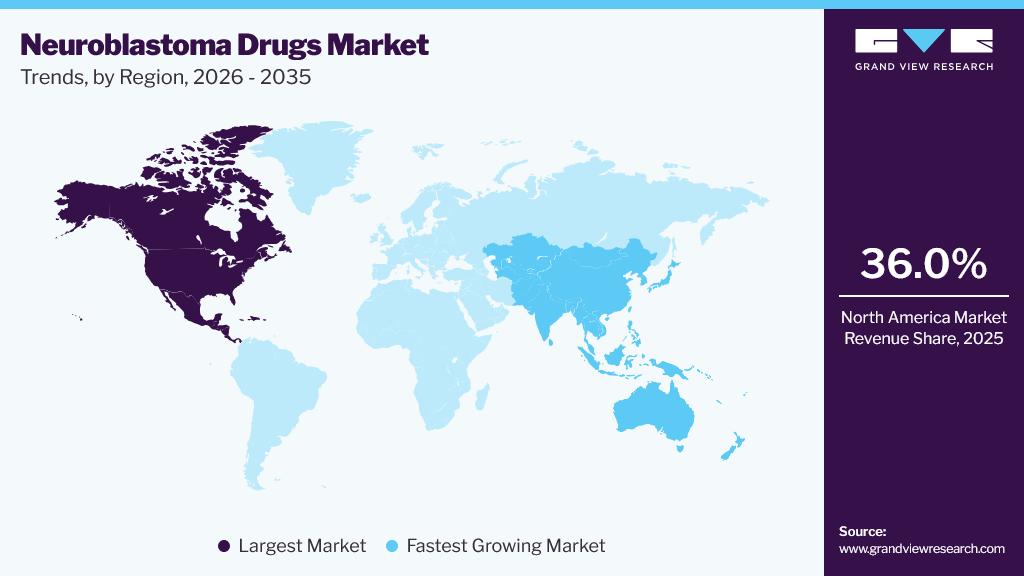
The North America neuroblastoma drugs market held the largest revenue share of 36.0% in 2025, due to the availability of advanced pediatric oncology networks, clinical research networks, and the relatively high availability of targeted therapies for high risk neuroblastoma. The market also benefits from high levels of pediatric oncology investment by pharmaceutical and biotech companies, high levels of clinical-trial activity, and access to specialized cancer centers. In 2025, a global and regional analysis of pediatric neuroblastoma incidence and mortality published in the Journal of Pediatrics and Child Health highlighted substantial geographic differences in disease burden and persistent disparities in neuroblastoma outcomes, underscoring the need for improvements in specialized diagnosis and treatment infrastructure.
 To learn more about this report, Download Free Sample Report
U.S. Neuroblastoma Drugs Market Trends
The neuroblastoma drugs market in the U.S. remains the key contributor within this region due to the availability of FDA-approved immunotherapies and increasing research into targeted and immune-based therapeutics, facilitating further development of the market.
Asia Pacific Neuroblastoma Drugs Market Trends
The neuroblastoma drugs market in Asia Pacific is anticipated to witness the fastest CAGR during the forecast period, driven by an increasing pediatric population, rising diagnosis of childhood cancers, growing pediatric oncology infrastructure, and increasing access to specialized cancer treatment. China, Japan, India, South Korea, and other countries are increasing their pediatric cancer research and treatment capacities, while increasing clinical-trial activity has created opportunities for new neuroblastoma treatments. A 2025 epidemiological study of childhood neuroblastoma in Asia found that the disease burden increased significantly across the region, with East Asia experiencing the fastest growth and South Asia recording the highest absolute burden, highlighting the substantial unmet need for diagnosis and treatment across Asian countries.
In February 2025, Japan's National Cancer Center Hospital and Nobelpharma registered a Phase I clinical trial evaluating NPC-33 and NPC-26sc in patients with high-risk neuroblastoma with primary refractory disease or an incomplete response to salvage treatment. The trial began enrolling patients in April 2025 and represented continued clinical research into novel neuroblastoma treatment approaches in Japan, which highlighted the growing development activity in the Asia Pacific region.
Key Neuroblastoma Drugs Companies Insights
Major players in the neuroblastoma drugs market are targeting the development of a broader portfolio of immunotherapies or targeted therapies along with a robust clinical pipeline of combination therapies, bolstering the pediatric oncology research expertise, and seeking licensure and strategic partnerships to meet the substantial unmet need in high risk as well as relapsed or refractory neuroblastoma.
Key Neuroblastoma Drugs Companies
The following key companies have been profiled for this study on the neuroblastoma drugs market:
-
United Therapeutics Corporation
-
Y-mAbs Therapeutics, Inc.
-
Recordati S.p.A.
-
Ligand Pharmaceuticals Incorporated
-
Pfizer Inc.
-
Bayer AG
-
Amgen Inc.
-
Baxter International Inc.
-
ANI Pharmaceuticals, Inc.
-
Hikma Pharmaceuticals PLC
-
Teva Pharmaceutical Industries Ltd.
-
Ingenus Pharmaceuticals, LLC
Recent Developments
-
In November 2024, Y-mAbs Therapeutics, Inc. entered into an exclusive license and distribution agreement with Nobelpharma Co., Ltd. for the development and commercialization of DANYELZA (naxitamab-gqgk) in Japan for patients with relapsed/refractory high-risk neuroblastoma. Under the agreement, Nobelpharma is responsible for regulatory development and commercialization activities in Japan, subject to approval.
-
In July 2024, Ligand Pharmaceuticals Incorporated entered into an agreement to acquire APEIRON Biologics AG for USD 100 million, obtaining APEIRON’s royalty rights to QARZIBA (dinutuximab beta), an immunotherapy for high-risk neuroblastoma marketed by Recordati. The transaction expanded Ligand’s commercial royalty portfolio in rare oncology and strengthened its exposure to neuroblastoma therapeutics.
Neuroblastoma Drugs Market Report Scope
Report Attribute
Details
Market size value in 2025
USD 1.2 billion
Estimated market size in 2026
USD 1.3 billion
Projected market size by 2035
USD 2.5 billion
Growth rate
CAGR of 7.2% from 2026 to 2035
Base year for estimation
2025
Actual data
2021 – 2024
Forecast period
2026 – 2035
Quantitative units
Revenue in USD billion, and CAGR from 2026 to 2035
Report coverage
Revenue forecast, company ranking, competitive landscape, growth factors, and trends
Segments covered
Type, route of administration, end user, region
Regional scope
North America; Europe; Asia Pacific; Latin America; Middle East & Africa
Country scope
U.S.; Canada; Mexico; UK; Germany; France; China; Japan; India; Australia; South Korea; Brazil; Argentina; South Africa; Saudi Arabia; UAE
Key companies profiled
United Therapeutics Corporation; Y-mAbs Therapeutics, Inc.; Recordati S.p.A.; Ligand Pharmaceuticals Incorporated; Pfizer Inc.; Bayer AG; Amgen Inc.; Baxter International Inc.; ANI Pharmaceuticals, Inc.; Hikma Pharmaceuticals PLC; Teva Pharmaceutical Industries Ltd.; Ingenus Pharmaceuticals, LLC
Customization scope
Free report customization (equivalent to 8 analyst working days) with purchase. Addition or alteration to country, regional & segment scope.
Pricing and purchase options
Avail of customized purchase options to meet your exact research needs. Explore purchase options
Neuroblastoma Drugs Market Report Segmentation
This report forecasts revenue growth at the global, regional, and country levels and provides an analysis of the latest industry trends and opportunities across each sub-segment from 2021 to 2035. For this study, Grand View Research has segmented the global neuroblastoma drugs market report based on type, route of administration, end use, and region:
-
Type Outlook (Revenue, USD Billion, 2021 - 2035)
-
Chemotherapy
-
Immunotherapy
-
Bone Marrow Transplantation
-
Retinoid Therapy
-
Surgery
-
Others
-
-
Route Of Administration Outlook (Revenue, USD Billion, 2021 - 2035)
-
Oral
-
Injectable
-
-
End Use Outlook (Revenue, USD Billion, 2021 - 2035)
-
Hospitals
-
Homecare
-
Specialty Clinics
-
Others
-
-
Regional Outlook (Revenue, USD Billion, 2021 - 2035)
-
North America
-
U.S.
-
Canada
-
Mexico
-
-
Europe
-
UK
-
Germany
-
France
-
-
Asia Pacific
-
China
-
Japan
-
India
-
Australia
-
South Korea
-
-
Latin America
-
Brazil
-
Argentina
-
-
Middle East and Africa (MEA)
-
South Africa
-
Saudi Arabia
-
UAE
-
-
Frequently Asked Questions About This Report
The global neuroblastoma drugs market size was valued at USD 1.2 billion in 2025 and is estimated at USD 1.3 billion for 2026
The global neuroblastoma drugs market is expected to grow at a CAGR of 2.5% from 2026 to 2035, reaching USD 7.2% billion.
Which product type segment accounted for the largest share of the global neuroblastoma drugs market?The chemotherapy segment accounted for the largest revenue share in 2025.
North America dominated with the largest revenue share in 2025.
Key players in the market include United Therapeutics Corporation, Y-mAbs Therapeutics, Inc., Recordati S.p.A., Ligand Pharmaceuticals Incorporated, Pfizer Inc., Bayer AG, Amgen Inc., Baxter International Inc., ANI Pharmaceuticals, Inc., Hikma Pharmaceuticals PLC, Teva Pharmaceutical Industries Ltd., and Ingenus Pharmaceuticals, LLC.
About the Author(s)
Pharmaceuticals Research Team
· PharmaceuticalsThis report was authored by the pharmaceuticals research team at Grand View Research - comprising two research analysts, one senior research analyst, and one industry expert - with specialized expertise in the pharmaceuticals segment of the industry. All findings are based on proprietary databases, executive interviews, and regulatory analysis, subject to internal peer review prior to publication.
Last Updated:
Speak to Analyst

Customize this report to your needs - add regions, segments, or data points, with 20% free customization.
Or view our licence options:


ISO 9001:2015 & 27001:2022 Certified
We are GDPR and CCPA compliant! Your transaction & personal information is safe and secure. For more details, please read our privacy policy.


