- Home
- »
- Market Trend Reports
- »
-
Liraglutide (Victoza) Market Outlook, 2033
![Liraglutide (Victoza) Market Outlook 2025 - 2033: Growth Trajectory, Competitive Shifts, Patent Cliff Impact, And Generic Entry DynamicsReport]()
Liraglutide (Victoza) Market Outlook 2025 - 2033: Growth Trajectory, Competitive Shifts, Patent Cliff Impact, And Generic Entry Dynamics
- Published: Nov, 2025
- Report ID: GVR-MT-100507
- Format: PDF/Excel databook
- No. of Pages/Datapoints: 120
- Report Coverage: 2024 - 2030
Report Overview
Liraglutide (Victoza), developed by Novo Nordisk, is a pioneering GLP-1 receptor agonist that has reshaped the management of type 2 diabetes and obesity through its proven efficacy in glycemic control, weight reduction, and cardiovascular risk reduction. Victoza and Saxenda both contain liraglutide, but they are distinct formulations and brands. Victoza is indicated for type 2 diabetes (with cardiovascular outcome data), while Saxenda at a higher dose is approved for chronic weight management. Market growth is driven by the rising global prevalence of diabetes and obesity, increasing awareness of metabolic health, and preference for multifunctional therapies, though challenges persist in pricing, reimbursement, and competition from longer-acting injectables. Novo Nordisk’s strategic focus on lifecycle management, fixed-dose combinations, and geographic expansion continues to reinforce liraglutide’s position as a trusted and enduring solution in the evolving global GLP-1 therapeutics landscape.
Key Report Deliverables
-
Comprehensive market landscape analysis: A deep-dive into the global Liraglutide (Victoza) market covering historic and current revenue performance, adoption trends across type 2 diabetes and obesity (including high-risk cardiometabolic subgroups), real-world evidence impact, and how evolving GLP-1 prescribing patterns and care pathways are reshaping demand.
-
Forward-looking forecasts and scenario modelling: Multi-year forecasts that evaluate post-patent and post-launch market dynamics (including dose/formulation mixes and potential Saxenda cross-impacts), projected label or indication expansion timelines, and scenario analyses showing revenue, market share, and patient-penetration outcomes under competing pressures from weekly GLP-1s (e.g., semaglutide, dulaglutide) and emerging combination therapies.
-
Regulatory & market-access assessment: Identification of approval, reimbursement, and HTA considerations affecting liraglutide uptake across priority geographies (U.S., EU5, Japan, China, LATAM), including formulary placement, prior-authorization trends, value-based contracting opportunities, and payer strategies that could accelerate or constrain broader obesity and cardiometabolic indications.
-
Competitive landscape & pipeline mapping: An in-depth competitor map comparing dosing frequency, demonstrated weight-loss and CV outcome evidence, manufacturing/supply capacity, and commercialization tactics; profiling current and emerging GLP-1 and combination therapy entrants, biosimilar/authorized-generic risks, and strategic alliances likely to influence Victoza’s positioning.
-
Strategic recommendations for Novo Nordisk: Actionable guidance on lifecycle management (new formulations, fixed-dose combinations, co-prescribing pathways), pricing and access levers, real-world evidence generation, targeted channel expansion (cardiology, obesity clinics), and geographic prioritization to defend and optimize Victoza’s commercial value in a rapidly evolving GLP-1 ecosystem.
liraglutide Patent Cliff Analysis
-
A detailed assessment of expected sales erosion following the expiry of key patents.
-
Evaluation of price declines triggered by the first generic launch and subsequent competitor entries.
-
Quantification of brand revenue loss due to rapid payer-driven substitution toward lower-cost generics.
-
Analysis of market share displacement, highlighting how quickly branded volume shifts to multi-entrant generic competitors.
-
A two-phase erosion model showing initial impact from early entry and steeper decline as more generics launch.
-
Insights into purchasing behavior, formulary changes, and contracting pressure post-generic entry.
-
Forecast of the brand’s transition into a value-driven, mature market environment.
Liraglutide (Victoza) Patent Expiry key Details
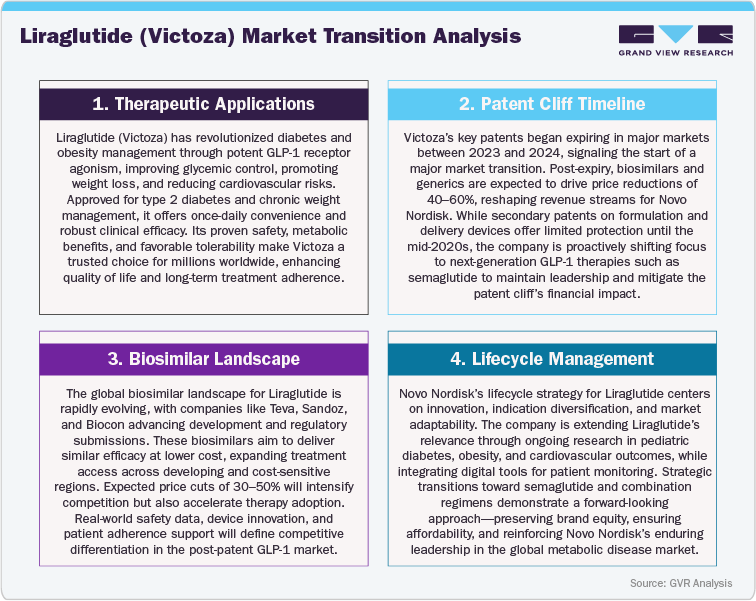
Liraglutide (Victoza) faces a clearly defined, staged patent-cliff based on FDA Orange Book listings for NDA 022341. The core listed patent US8114833 (drug substance + drug product) expires on August 13, 2025, followed by its pediatric extension ending February 13, 2026. These dates represent the primary loss of protection for the approved formulation. A later patent, US9968659, extends to 2037, but it is a method-of-use patent (U-2313), meaning it may not block generic entry for all indications. With multiple generic-capable firms-Sun Pharma, Torrent, Lupin, Glenmark, Dr. Reddy’s, Medipol, Zydus, Aristo, and Quest Pharma-competition is expected to accelerate immediately after February 2026, driving price erosion and substantial market fragmentation.
Table: Liraglutide (Victoza) Patent Snapshot (NDA 022341)
Patent No.
Expiry (OB)
Type (from OB)
Relevance to Cliff
Notes
US8114833
13-Aug-25
Drug Substance + Drug Product
Primary protection
Main barrier to generic entry
US8114833 - PED
13-Feb-26
Pediatric Extension
Final blocking date
Cliff begins after this date
US9968659
9-Jan-37
Method-of-Use (U-2313)
Limited blocking power
May not prevent all generics
US9968659 - PED
9-Jul-37
Pediatric Extension
Same
Applies only to its use code
Source: U.S. FDA, GVR Analysis
Table: Market Access Status of Liraglutide Generics / Authorized Generics (Key Markets)
Geography
Generic/Authorized Generic Manufacturer
Brand Reference
Approval / Launch Date
Notes
U.S.
Hikma Pharmaceuticals
Victoza (type 2 diabetes)
23 Dec 2024 (approval) (U.S. Food and Drug Administration)
First generic of Victoza in U.S.
U.S.
Teva Pharmaceuticals
Saxenda (obesity indication)
28 Aug 2025 (approval/launch) (Teva Investors)
First generic GLP-1 approved for weight-loss indication
Source: FDA press releases and official manufacturer announcements (Hikma, Teva).
Current Market Scenarios
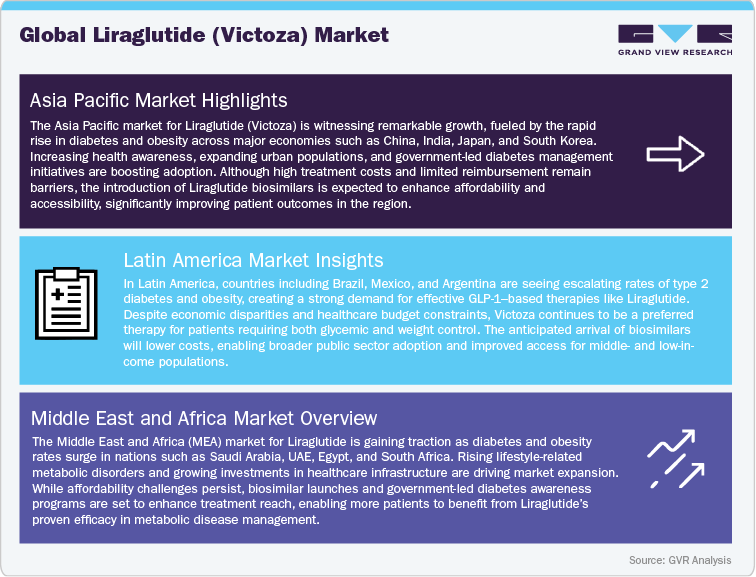
Liraglutide (Victoza), developed by Novo Nordisk, continues to play a pivotal role in shaping the global type 2 diabetes and obesity therapeutics landscape, standing as one of the most clinically validated GLP-1 receptor agonists. Since its introduction, Victoza has set a benchmark in glycemic control, weight management, and cardiovascular risk reduction, paving the way for next-generation incretin therapies. Supported by its extensive safety data and proven real-world outcomes, liraglutide maintains a strong presence in clinical practice and remains a preferred therapy among healthcare professionals, especially for patients requiring daily dose flexibility and cardiovascular protection.
In major markets such as the U.S. and Europe, Victoza’s demand remains stable, driven by a large base of loyal prescribers, established reimbursement frameworks, and continued use in patient segments where newer GLP-1 analogs may not yet be accessible or affordable. The brand also benefits from spillover recognition from its higher-dose obesity counterpart, Saxenda, which has helped strengthen Novo Nordisk’s overall GLP-1 portfolio positioning. However, the market is experiencing rising competitive intensity as weekly and dual-agonist therapies such as semaglutide (Ozempic, Wegovy) and tirzepatide (Mounjaro, Zepbound) gain traction due to their superior weight-loss outcomes and convenient dosing.
Across the Asia-Pacific region, particularly in China, Japan, India, and South Korea, increasing diabetes prevalence, improved healthcare infrastructure, and growing physician awareness of GLP-1 therapies are driving new adoption. Novo Nordisk’s localization strategies, including regional manufacturing, patient affordability programs, and physician education initiatives, are further enhancing liraglutide’s accessibility and brand longevity. In Latin America and the Middle East & Africa, expanding public health initiatives for diabetes control and the inclusion of GLP-1s in national formularies are creating steady momentum, though disparities in reimbursement and drug affordability continue to pose challenges.
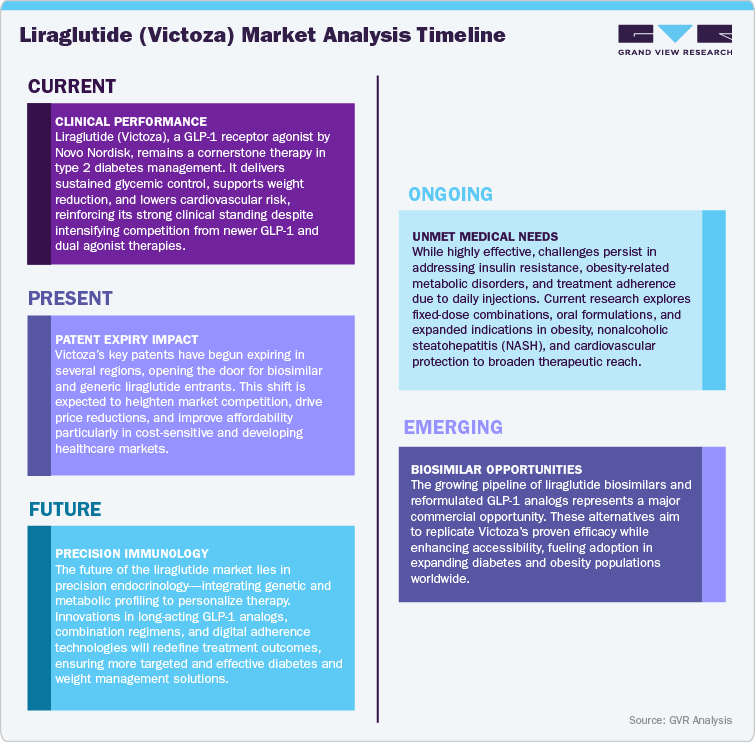
Market Dynamics
Growing Demand for Diabetes and Obesity Therapies
The global surge in type 2 diabetes and obesity prevalence is driving significant demand for effective and safe GLP-1 receptor agonists such as Liraglutide (Victoza). As one of the first GLP-1 analogs to demonstrate robust benefits in glycemic control, weight reduction, and cardiovascular risk reduction, Victoza has established itself as a cornerstone therapy in metabolic disease management. Its dual impact on both glucose regulation and weight management, supported by extensive clinical data and physician familiarity, continues to sustain strong adoption across primary and specialty care settings. Growing patient awareness, combined with rising emphasis on holistic metabolic health, further enhances Victoza’s role in bridging the gap between diabetes management and obesity treatment. With escalating global health burdens and continued expansion of obesity and diabetes screening programs, liraglutide is well-positioned to capture consistent long-term demand.
Pricing Dynamics and Competitive Landscape
The evolving GLP-1 therapy landscape has intensified competition as newer agents like semaglutide (Ozempic, Wegovy) and tirzepatide (Mounjaro, Zepbound) enter the market, offering longer dosing intervals and superior efficacy outcomes. In value-driven regions such as Europe, India, and parts of Asia Pacific, payers increasingly emphasize cost-effectiveness and real-world outcomes, prompting Novo Nordisk to adopt competitive pricing and patient-support programs to sustain market access. In contrast, the U.S. and Japan markets continue to reward strong clinical differentiation, brand recognition, and established safety profiles, allowing Victoza to retain a premium positioning among prescribers. While price competition and payer scrutiny are expected to increase as newer GLP-1s and biosimilars emerge, Victoza’s proven efficacy, cardiovascular benefit, and trusted clinical legacy will continue to uphold its competitive standing within the metabolic care continuum.
Opportunities in Lifecycle Management and Regional Expansion
Novo Nordisk is strategically extending liraglutide’s lifecycle through indication expansion, fixed-dose combinations, and cross-portfolio synergies with Saxenda and other GLP-1 formulations. Real-world data initiatives, ongoing physician education, and digital adherence programs further strengthen patient engagement and long-term therapy continuity. Regionally, developed markets are expected to maintain steady performance supported by entrenched clinical confidence and reimbursement stability, while emerging markets-particularly in Asia Pacific, Latin America, and the Middle East-are anticipated to deliver faster growth due to increasing diabetes awareness, infrastructure development, and broader biologic accessibility. Moving forward, innovation-led differentiation, market diversification, and strategic pricing optimization will define Victoza’s sustained success and continued relevance in the rapidly evolving global diabetes and obesity therapeutics market.
The Pressure of Pricing and Market Erosion Post-Patent
As Liraglutide (Victoza) continues to serve as a foundational therapy in the management of type 2 diabetes and obesity, the global GLP-1 market is entering a phase of heightened competition and emerging pricing pressure. With patent expiry approaching near the end of the decade, biosimilar development and the rapid expansion of next-generation GLP-1 analogs-such as semaglutide (Ozempic, Wegovy) and tirzepatide (Mounjaro, Zepbound)-are reshaping market dynamics. These newer agents, boasting superior weight-loss efficacy and more convenient dosing schedules, are driving payer preference toward value-based frameworks and outcome-linked reimbursement models. In cost-sensitive regions including India, China, and Latin America, government-led price negotiations and local manufacturing initiatives are expected to favor affordable peptide biosimilars, gradually intensifying competition for Victoza. Meanwhile, in mature markets such as the U.S., Europe, and Japan, brand trust, extensive clinical evidence, and physician familiarity are likely to sustain Victoza’s relevance and maintain its premium segment presence in the near term. Over time, as pricing erosion accelerates, Novo Nordisk’s strategic focus on market access optimization, patient assistance programs, and portfolio harmonization with Saxenda and other GLP-1 products will be critical to preserving profitability and market share amid increasing therapeutic fragmentation.
Innovating Beyond the Patent - Unlocking Future Growth Paths
In response to the evolving competitive landscape, Novo Nordisk is pursuing a forward-looking innovation strategy aimed at extending Liraglutide’s lifecycle and reinforcing its value proposition across diverse patient populations. The company is actively exploring next-generation formulations, fixed-dose combinations, and digital adherence platforms designed to enhance treatment convenience and real-world effectiveness. Additionally, expanding research into new metabolic and cardioprotective indications underscores liraglutide’s enduring scientific relevance and its potential role in broader metabolic disease management. Growth opportunities remain strong in emerging markets such as Asia Pacific, Latin America, and the Middle East, where expanding diabetes prevalence, healthcare investments, and increasing acceptance of GLP-1 therapies are creating fertile ground for sustained adoption. As the global metabolic care landscape evolves, Novo Nordisk’s emphasis on clinical innovation, equitable pricing strategies, and regional access expansion will be essential to ensure that Victoza remains a trusted and enduring therapy-transitioning from a category pioneer to a cornerstone of accessible, patient-centric metabolic care in the post-patent era.
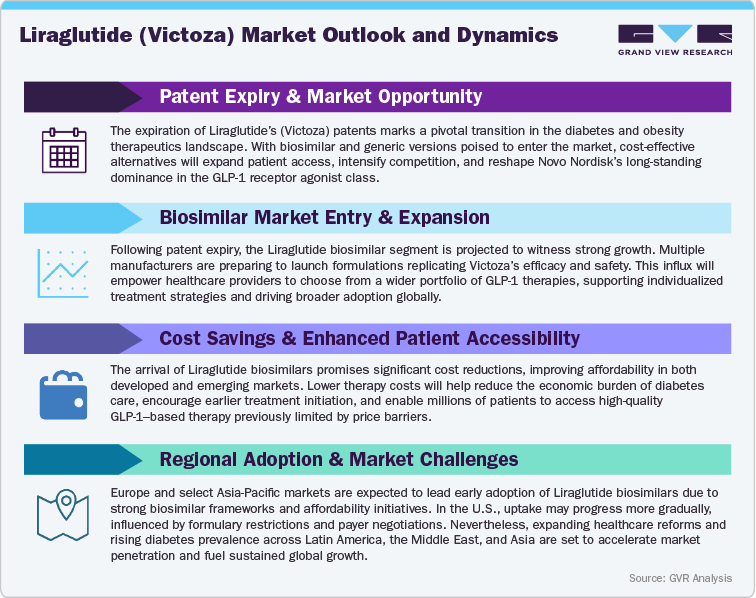
Shaping the Future - Innovation, Accessibility, and Regional Dynamics
The global diabetes and obesity therapeutics market is undergoing a transformative shift, with Liraglutide (Victoza) continuing to play a pivotal role in advancing personalized, outcome-driven metabolic care. As one of the first GLP-1 receptor agonists to demonstrate substantial benefits in glycemic control, weight management, and cardiovascular risk reduction, Victoza has redefined treatment standards for type 2 diabetes while paving the way for broader adoption of incretin-based therapies. Its proven efficacy, safety, and real-world versatility have made it a trusted option for clinicians and patients seeking consistent, sustainable results in managing complex metabolic conditions. As patient and physician priorities increasingly align toward comprehensive metabolic improvement and long-term health outcomes, Victoza’s established clinical foundation positions it as a benchmark therapy in this evolving therapeutic class.
The accelerating transition toward value-based care models, enhanced reimbursement frameworks, and integrated digital health solutions is expected to strengthen Victoza’s adoption across major markets such as North America and Europe, where healthcare systems emphasize evidence-based decision-making and patient adherence. In emerging regions across Asia Pacific, Latin America, and the Middle East, rapid increases in diabetes prevalence, improving diagnostic infrastructure, and expanding public health initiatives are driving demand for accessible GLP-1 therapies. Strategic efforts by Novo Nordisk, including localized production, affordability programs, and educational partnerships, are helping to bridge access gaps and expand the therapy’s global reach.
Looking ahead, Novo Nordisk’s strategy to sustain leadership in the post-patent era will focus on lifecycle innovation, including fixed-dose combinations, next-generation delivery systems, and enhanced digital support tools that foster adherence and optimize outcomes. These initiatives-combined with continued investment in real-world evidence and global market expansion-are expected to reinforce Victoza’s role as a cornerstone therapy in modern metabolic care, balancing scientific innovation, equitable access, and long-term health impact across diverse patient populations worldwide.
Overview of Alternative Therapeutics
The competitive environment surrounding Liraglutide (Victoza) is becoming increasingly dynamic as newer GLP-1 receptor agonists and multi-receptor incretin therapies gain traction across global diabetes and obesity markets. Emerging contenders such as semaglutide (Ozempic/Wegovy), tirzepatide (Mounjaro/Zepbound), and dulaglutide (Trulicity) are redefining treatment paradigms through enhanced glycemic control, greater weight reduction efficacy, and improved dosing convenience. These next-generation agents, offering once-weekly or dual-acting formulations, are reshaping patient and physician preferences while driving heightened competition in metabolic care.
As competitors secure broader indications in type 2 diabetes, cardiovascular risk reduction, and chronic weight management, the market continues to evolve toward more integrated, outcome-based treatment approaches. Uptake of newer GLP-1 and GIP/GLP-1 therapies is particularly strong in North America, Europe, and Asia Pacific, where supportive reimbursement frameworks, growing awareness of metabolic health, and strong prescriber confidence accelerate adoption. In contrast, price-sensitive regions such as Latin America, the Middle East, and parts of Asia may continue to favor established agents like Victoza, supported by their proven safety, accessibility, and extensive clinical evidence.
To sustain its competitive position, Novo Nordisk is expected to capitalize on Victoza’s robust cardiovascular data, real-world performance, and broad formulary inclusion while advancing lifecycle strategies such as fixed-dose combinations and digital adherence tools. Continued investment in market access programs and patient support initiatives will help preserve Victoza’s relevance amid the wave of novel incretin innovations. As the global metabolic therapy landscape shifts toward next-generation agents, Liraglutide’s enduring clinical credibility, widespread availability, and patient-trusted efficacy will ensure its continued presence as a foundational therapy in the evolving diabetes and obesity management ecosystem.
Competitive Landscape
The competitive landscape for Liraglutide (Victoza) is intensifying as the GLP-1 receptor agonist class continues to redefine standards in diabetes and obesity management. Developed by Novo Nordisk, Victoza established itself as a benchmark therapy for type 2 diabetes and cardiovascular risk reduction, combining strong efficacy with a proven safety record. However, the market is now witnessing the rapid rise of next-generation incretin therapies such as semaglutide (Ozempic/Wegovy) and tirzepatide (Mounjaro/Zepbound), which offer superior glycemic control, enhanced weight-loss benefits, and more convenient once-weekly dosing options-reshaping competitive dynamics within the metabolic disease segment.
Leading players including Eli Lilly, AstraZeneca, and Sanofi are aggressively expanding their portfolios with dual-acting GLP-1/GIP and GLP-1/glucagon receptor agonists, seeking to capture broader patient segments across diabetes, obesity, and cardiometabolic disorders. Market adoption trends vary regionally-North America and Europe continue to drive the majority of growth due to advanced healthcare infrastructure and strong reimbursement systems, while Asia Pacific and Latin America represent high-growth opportunities driven by increasing diabetes prevalence, improved awareness, and expanding access to GLP-1 therapies.
To sustain its relevance amid rising competition, Novo Nordisk is emphasizing Victoza’s established clinical legacy, broad formulary access, and real-world cardiovascular outcome data while advancing lifecycle strategies including fixed-dose combinations and digital support programs to enhance adherence. Competitors are leveraging pricing flexibility, innovative delivery technologies, and outcome-based reimbursement models to gain traction. As the global incretin market evolves, long-term success will hinge on innovation, accessibility, and evidence-backed differentiation. Ultimately, Victoza’s trusted performance and continued physician confidence will help it maintain a meaningful role in the fast-evolving GLP-1-driven metabolic therapy landscape.
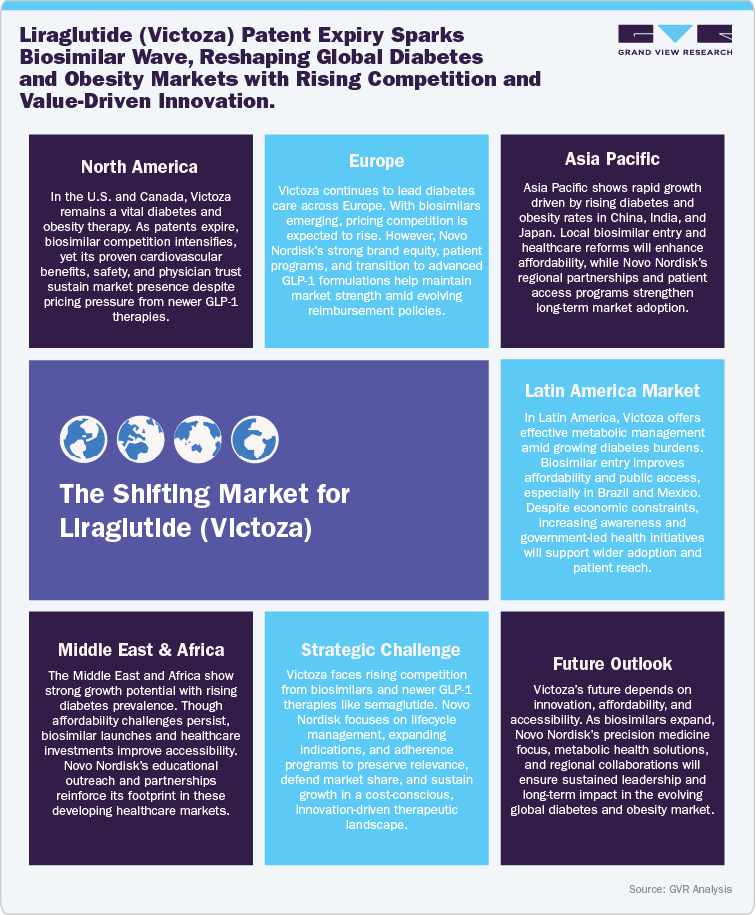
North America Liraglutide (Victoza) Market
North America dominates the Liraglutide (Victoza) market, driven primarily by the U.S., which serves as Novo Nordisk’s strongest commercial base for GLP-1 receptor agonists. High obesity and type 2 diabetes prevalence, widespread clinician familiarity with incretin-based therapies, and robust reimbursement structures underpin regional leadership. Early regulatory approval and inclusion in major diabetes management guidelines have reinforced Victoza’s position as a standard of care. In Canada, adoption trends mirror those in the U.S., though formulary restrictions and budget optimization strategies influence prescribing patterns. With rising demand for cardiometabolic therapies and increasing emphasis on early diabetes intervention, North America remains the largest revenue-generating hub for Victoza.
Europe Liraglutide (Victoza) Market
Europe represents a mature yet steadily expanding market for Liraglutide, led by Germany, the U.K., and France. Strong integration of GLP-1 therapies within public healthcare systems and an aging diabetic population support sustained growth. European clinicians continue to favor Victoza for its robust cardiovascular outcome data and once-daily dosing profile, though competition from once-weekly GLP-1 analogs such as semaglutide is intensifying. Cost-effectiveness evaluations and national reimbursement negotiations play a decisive role in access and pricing. As obesity and prediabetes programs gain traction across Europe, Victoza’s established safety and efficacy make it a cornerstone in both primary and secondary diabetes management.
Asia Pacific Liraglutide (Victoza) Market
The Asia Pacific market is poised for rapid expansion as diabetes prevalence surges across China, India, and Japan. Japan continues to lead in adoption due to high physician confidence in GLP-1 therapies and strong healthcare infrastructure. In China and India, growing awareness of lifestyle-related diseases, increasing healthcare expenditure, and expanding insurance coverage are boosting Victoza’s market potential. While pricing and access challenges persist, partnerships with local distributors and digital health initiatives are improving patient reach. The region’s evolving obesity management landscape further supports long-term growth, positioning Asia Pacific as a critical frontier for Victoza’s continued market penetration.
Latin America Liraglutide (Victoza) Market
Latin America presents a promising yet cost-sensitive market for Liraglutide, led by Brazil, Mexico, and Argentina. Rising rates of type 2 diabetes and obesity are increasing demand for effective, proven GLP-1 therapies. However, limited reimbursement frameworks and income disparities constrain widespread access. Novo Nordisk is focusing on early-entry strategies, such as tiered pricing, patient assistance programs, and local manufacturing partnerships, to enhance affordability. As governments prioritize non-communicable disease management, Victoza’s clinical reliability and brand recognition position it as a key therapeutic option in the region’s expanding diabetes care ecosystem.
Middle East and Africa Liraglutide (Victoza) Market
The Middle East and Africa (MEA) region is emerging as an attractive growth opportunity for Liraglutide, fueled by a rising diabetes burden and increasing healthcare investments in Saudi Arabia, UAE, and South Africa. Improved diagnostic infrastructure, physician training, and patient education programs are strengthening GLP-1 therapy adoption. While high therapy costs and uneven access across African markets remain challenges, government-led initiatives and collaborations with regional healthcare providers are expanding availability. With obesity and metabolic disorders on the rise, MEA is expected to see consistent growth in Victoza adoption, supported by expanding reimbursement coverage and evolving national diabetes management strategies.
Analyst Perspective
The Liraglutide (Victoza) market is entering a transformative phase as Novo Nordisk continues to reinforce its dominance in the GLP-1 receptor agonist space, addressing the escalating global burden of type 2 diabetes and obesity. Since its introduction, Victoza has become a foundational therapy due to its proven ability to deliver durable glycemic control, significant cardiovascular risk reduction, and a well-established safety profile. The therapy’s widespread clinical adoption and inclusion in major international diabetes management guidelines have positioned it as a cornerstone treatment across diverse patient populations. However, rising competition from once-weekly GLP-1 analogs-such as semaglutide (Ozempic) and dulaglutide (Trulicity) is intensifying market dynamics, prompting shifts in patient and physician preferences toward longer-acting, more convenient formulations.
Despite this competitive shift, Victoza’s strong brand equity, long-term outcome data, and extensive real-world evidence continue to support its market relevance, particularly among patients requiring daily dosing flexibility or established cardiovascular benefit. In addition, growing adoption in emerging markets-driven by rising diabetes prevalence, expanding healthcare infrastructure, and broader insurance coverage-is expected to sustain demand and reinforce Victoza’s commercial longevity.
To maintain its competitive edge, Novo Nordisk is focusing on lifecycle optimization, therapeutic diversification, and patient-centric initiatives aimed at improving accessibility and adherence. Efforts such as digital health integration, educational collaborations with endocrinology networks, and strategic pricing strategies are expanding Victoza’s global reach. As the GLP-1 therapy class continues to evolve, Novo Nordisk’s strong clinical legacy, innovation-driven pipeline, and commitment to expanding metabolic care access position Liraglutide (Victoza) as a resilient and trusted therapy in the next chapter of diabetes and obesity management.
Case Study (Recent Engagement): Keytruda Patent-Cliff & Price- Erosion Impact Model
PROJECT OBJECTIVE
To evaluate the potential revenue, price, and patient access implications of Keytruda’s 2028 patent cliff, incorporating biosimilar entry dynamics, country-specific adoption curves, and Merck’s lifecycle defense strategies (remarkably the subcutaneous formulation). The goal was to provide the client with a transparent, scenario-based model to anticipate outcomes and inform strategy
GVR SOLUTION
-
Built a bottom-up commodity-flow and analogue-based model, anchored on Merck’s $29.5B Keytruda sales in 2024.
-
Integrated jurisdictional LOE timelines (EU mid-2028, U.S. 2028-2029 pending litigation outcomes).
-
Modeled biosimilar adoption S-curves calibrated to oncology antibody analogues (EU faster via tenders, U.S. slower via contracting).
-
Applied price-erosion benchmarks (EU -15-30% Yr-1, deepening to -45-60% by Yr-3; U.S. -10-25% net decline over same horizon).
-
Layered lifecycle defenses (SC uptake assumptions of 25-40% of innovator units, combo refresh, contracting) to quantify buffers.
-
Delivered outputs as a dynamic Excel scenario tool and a management-ready PPT deck with revenue bridges, sensitivity tornadoes, and SC migration visuals.
IMPACT FOR CLIENT
-
Enabled the client to quantify downside vs. defense-optimized revenue trajectories:
-
Base case: 30-40% global revenue decline by Year-3 post-LOE.
-
Downside: 45-55% decline in tender-heavy markets.
-
Defense-optimized: Contained erosion to ~-20-25% with strong SC adoption.
-
-
Gave the client a clear view of which markets drive early erosion (EU) and where strategic contracting or SC migration can preserve share (U.S.).
-
Equipped decision-makers with a playbook of watch-points (tender concentration, litigation outcomes, SC IP coverage, combo pipeline) to guide commercial strategy.
-
Provided a transparent methodology that could be presented to boards/investors with evidence-backed assumptions
WHY THIS MATTERS
-
Keytruda is the world’s best-selling cancer drug, representing nearly one-third of Merck’s revenue.
-
Patent expiry will reshape both Merck’s earnings profile and global oncology access dynamics.
-
Payers and governments stand to benefit from biosimilar entry through lower costs, but manufacturers need to manage cliff risk while capturing upside from lifecycle innovations.
-
Understanding how quickly revenues erode and how patient access expands post-biosimilar is critical for:
-
Biopharma companies (strategic planning, pipeline prioritization).
-
Investors (valuing Merck’s cash flows beyond 2028).
-
Payers and policymakers (budgeting for oncology drug spend).
-
A robust patent cliff model helps clients navigate the dual challenge of price erosion and patient expansion, ensuring strategies are grounded in real-world benchmarks.
![gvr icn]()
GET A FREE SAMPLE
![gvr icn]()
This FREE sample includes market data points, ranging from trend analyses to market estimates & forecasts. See for yourself.
![gvr icn]()
NEED A CUSTOM REPORT?
We can customize every report - free of charge - including purchasing stand-alone sections or country-level reports, as well as offer affordable discounts for start-ups & universities.
Contact us now to get our best pricing.
![esomar icon]()
ESOMAR certified & member
![ISO]()
ISO Certified
We are GDPR and CCPA compliant! Your transaction & personal information is safe and secure. For more details, please read our privacy policy.





We are committed towards customer satisfaction, and quality service.
Client Testimonials

"The quality of research they have done for us has been excellent..."
ISO Certified