Lithium Price Crash 2026: Oversupply, Jianxiawo Mine, and What Comes Next
The global battery materials sector has experienced a dramatic turn of events, with lithium markets facing significant volatility. If you have been keeping an eye on the clean energy sector lately, you know that tracking battery metals can often feel like riding a roller coaster.
When looking closely at market movements, SaaS-based commodity price intelligence platforms like Grand View Signal prove invaluable. By leveraging real-time supply dynamics and predictive modeling, the non-ferrous metals monthly pricing intelligence helps forecast shifts in battery and energy metal prices, shedding light on how mine restarts and inventory cycles impact global market trends.
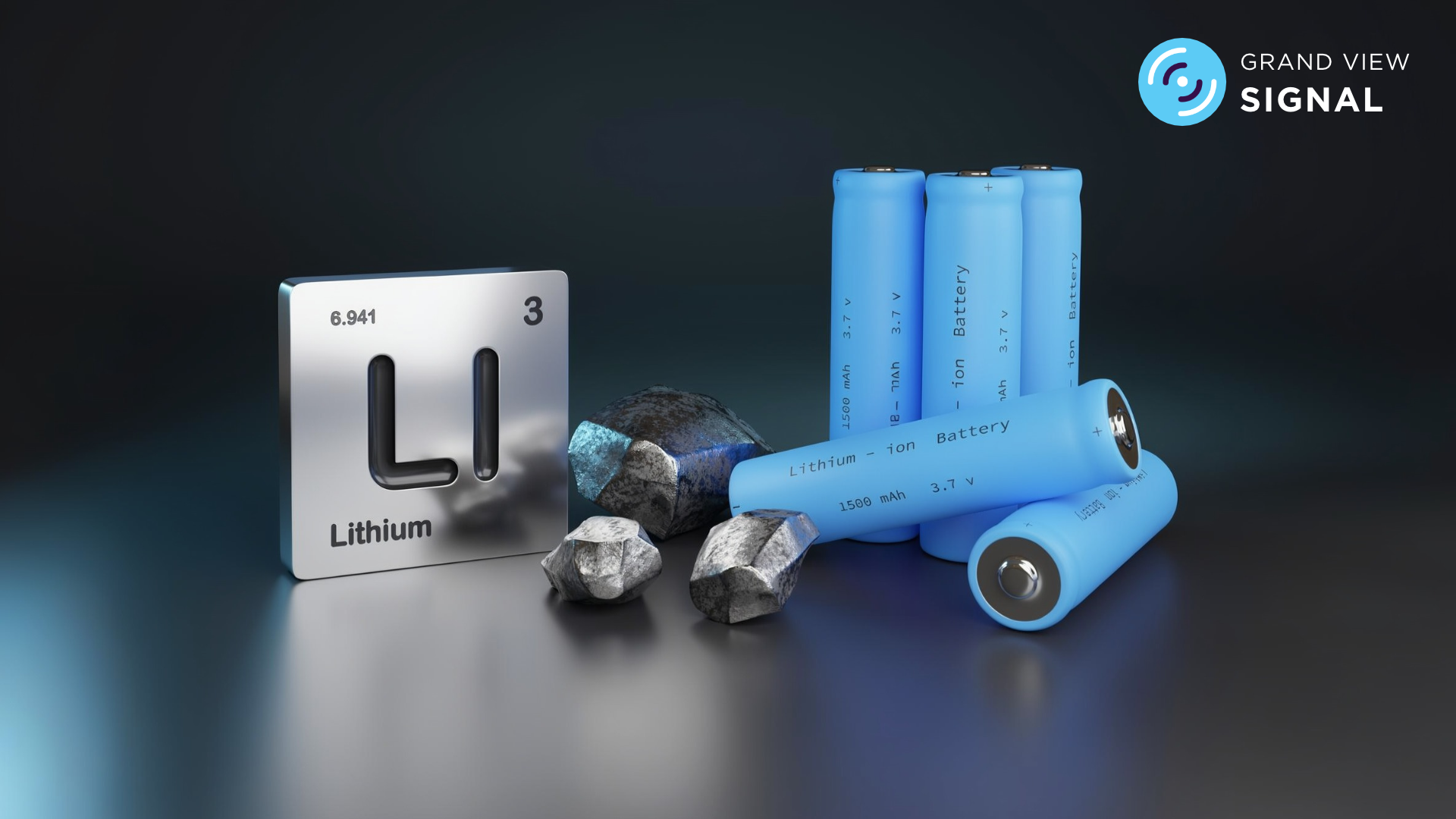
The central conversation dominating the market revolves around a potential lithium and related metals price crash in 2026. The global lithium carbonate market observed a M-o-M decline of 21.1% in August 2026.
What was once seen as a structural deficit threatening EV expansion, has turned into a discussion on massive supply gluts, regulatory hurdles, and shifting demand centers.
The Catalyst: Panic Around the Jianxiawo Mine
To understand why everyone is talking about lithium price crash in 2026, one must examine Yichun in China's Jiangxi province. This region hosts the Jianxiawo lepidolite mine, operated by battery pioneer CATL.
Jianxiawo is massive; it accounts for roughly 8% to 10% of China's domestic lithium carbonate equivalent (LCE) production. When its operations were suspended due to expired permits and regulatory reviews, the broader battery supply chain breathed a temporary sigh of relief, expecting prices to stabilize. However, as news broke regarding safety permit approvals and operational steps toward a restart, shockwaves rippled through commodity trading desks.
The prospective re-entry of Jianxiawo into the global supply equation immediately reignited fears of severe market saturation. Analysts quickly realized that tens of thousands of tons of LCE capacity could flood back into the spot market within a matter of months. Even when rumors emerged about delayed full-capacity ramps or reduced annual output targets, the mere prospect of Jianxiawo coming back online triggered a psychological shift among buyers. Upstream refiners and downstream cathode manufacturers pulled back on speculative buying, opting to wait out the market rather than lock in long-term supply agreements at premium rates.
Understanding the CATL Oversupply Narrative
The Jianxiawo situation is part of a larger structural shift. For years, the overarching narrative pushed by mining houses and battery giants was that electric vehicle adoption would outpace raw material extraction. Consequently, capital poured into greenfield lithium projects across Latin America, Australia, and China.
That heavy investment cycle has matured, creating a massive imbalance. As CATL integrated vertically into raw material mining, they secured vast reserves of low-grade lepidolite, hard-rock spodumene, and brine assets. It has successively participated in multiple projects, including the Yichun lepidolite mine in Jiangxi, and the Lijiagou lithium mine in Sichuan. The strategy was simple: secure supply to lower input costs. But as global EV sales growth shifted from aggressive exponential spikes to a steady, mature pace in key markets like Europe and North America, those raw material pipelines kept delivering at full capacity.
This situation has left the industry facing a massive lithium oversupply. Refiners found themselves holding excess inventories of battery-grade lithium carbonate and hydroxide, while battery cell producers accumulated surplus stocks. The market transitioned overnight from panic buying to inventory liquidation, causing the spot Li₂CO₃ price to face continuous downward pressure whenever supply disruptions appeared to resolve.
According to pricing data by Signal, whenever Li₂CO₃ prices attempt a minor recovery, rising expectations of mine restarts quickly snuff out the rally. Downstream buyers are maintaining short inventory cycles and purchasing on a hand-to-mouth basis, knowing that ample refined material sits waiting in domestic Chinese warehouses.
Access real-time impact analysis on commodity prices
Explore Grand View Signal
Where is the Demand Shifting? The Rise of Energy Storage and Data Centers
While electric vehicles still account for the lion's share of total lithium consumption, they are no longer the sole engine driving long-term demand growth. The narrative around a prolonged lithium price crash in 2026 often overlooks a fundamental demand transition occurring beneath the surface: the explosive rise of stationary energy storage systems (ESS) and dedicated power infrastructure for data centers.
-
Stationary Battery Energy Storage Systems (BESS)
As power grids worldwide incorporate record amounts of solar and wind energy, grid stability has become a top priority. Utility-scale battery storage is no longer just a luxury, it is critical infrastructure. The demand for stationary lithium battery storage is expanding rapidly. Utility companies, commercial enterprises, and microgrid operators are taking advantage of lower battery chemistry costs to lock in massive multi-gigawatt-hour storage projects. Lithium iron phosphate (LFP) chemistries, in particular, have seen surging adoption in this sector due to their thermal stability, long cycle life, and lower production costs.
-
Data Center Power and AI Infrastructure
The global boom in artificial intelligence and cloud computing has created an unprecedented demand for electricity. Modern AI data centers consume vast amounts of energy and require ultra-reliable power backup systems to ensure uninterrupted uptime. Traditional lead-acid uninterrupted power supply (UPS) systems are rapidly being phased out in favor of high-density lithium-ion battery banks. Furthermore, tech hyperscalers are increasingly co-locating battery storage systems alongside on-site renewable energy generation to power their computing facilities around the clock.
This pivot means that while EV demand growth may be stabilizing, stationary storage and digital infrastructure power requirements are picking up the slack, laying the groundwork for eventual market rebalancing.
What Comes Next for the Market?
Where does the market go from here? While short-term sentiment remains cautious due to mine restarts and capacity overhangs, the broader market dynamics are setting up an intriguing scenario for the coming years.
First, lower prices naturally act as a self-correcting mechanism. High-cost, low-grade lepidolite operations, including some projects in China, face squeezed margins when the lithium carbonate price stays low for extended periods. If prices remain depressed, uncompetitive mines may be forced to curtail output or defer expansion plans, gradually trimming the structural surplus.
Second, the cost reduction in battery packs driven by cheaper raw materials, is making clean energy technologies far more accessible in emerging markets. Low-cost batteries are accelerating grid decarbonization in regions across Southeast Asia, Latin America, and Africa, while simultaneously making mass-market electric vehicles more affordable.
In short, the lithium market is undergoing a necessary recalibration. The initial panic surrounding events like the Jianxiawo mine restart highlights a market transitioning from frantic growth to maturity. As stationary energy storage and data center applications continue their rapid expansion, the foundations are being built for a more diversified, resilient demand landscape.
How Signal Empowers Market Intelligence
Navigating volatile commodity cycles requires clear, timely data and objective insight. This is where Signal by Grand View Signal delivers high-value commodity price intelligence.
Signal provides real-time pricing tracking, monthly intelligence reports, and detailed forecasts across non-ferrous, precious, and battery metals. By combining granular supply-chain monitoring, such as tracking mine restarts, permit developments, and refinery capacity shifts with downstream demand analytics, Signal equips procurement executives, strategy teams, and commodity traders with actionable insights.
Whether you are seeking to optimize raw material procurement, evaluate margin exposure, or benchmark regional price differentials, Signal delivers the data needed to make confident decisions in an unpredictable market.
Explore Grand View Signal
A SaaS based commodity pricing intelligence platform
Talk to an analyst
Tell us what you need. We reply within one working day.
Service Guarantee
-
Insured Buying
This report has a service guarantee. We stand by our report quality.
-
Confidentiality
Your transaction & personal information is safe and secure.
-
Custom research service
Design an exclusive study to serve your research needs.
-
24/5 Research support
Get your queries resolved from an industry expert.