The Halal Beauty Revolution: Why Middle Eastern Consumers Are Redefining Global Cosmetics Standards
Redefining Beauty Through Values And Vision
The beauty industry has always been a dynamic reflection of culture, identity, and shifting consumer values. In the twenty-first century, few narratives are as transformative as the rise of the Halal beauty sector, especially within the Middle Eastern market, one of the most compelling engines of growth in global cosmetics. Far from being a niche segment, Halal beauty is reshaping product development, regulatory frameworks, and consumer expectations worldwide.
Middle Eastern consumers, driven by deep cultural values, burgeoning youth demographics, and digital empowerment, are redefining standards for inclusivity, ethics, and innovation in cosmetics.
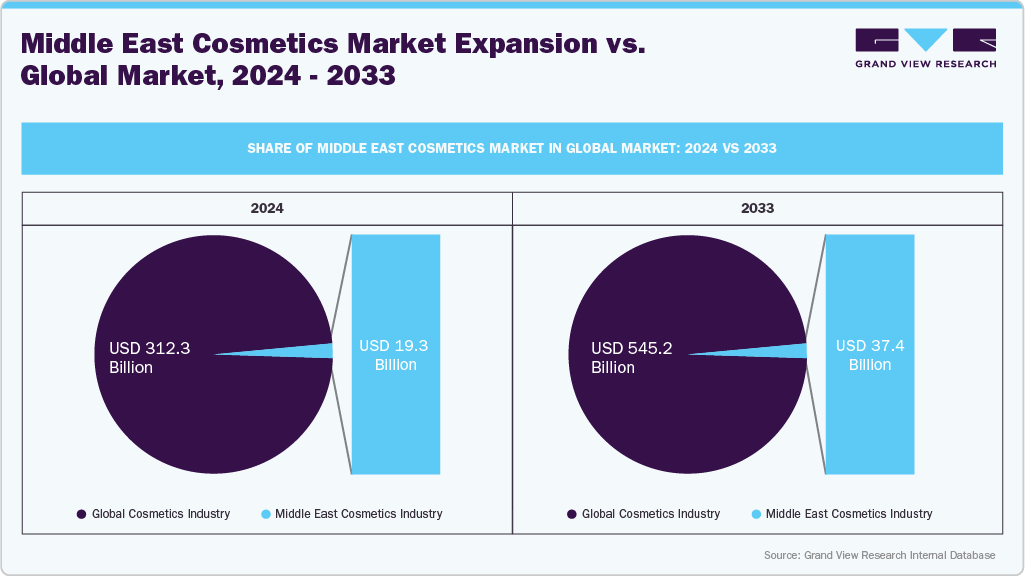
According to Grand View Research, the Middle East cosmetics market is expected to reach USD 37.39 billion by 2033. Historically, personal care and grooming have been deeply embedded in cultural, social, and religious practices across the region. Long before the rise of modern cosmetics conglomerates, Middle Eastern societies relied on natural oils, botanical extracts, mineral-rich clays, and fragrant waters to enhance appearance and well-being. Ingredients such as argan oil, olive oil, rose water, oud, musk, and kohl have been integral to beauty rituals for centuries, forming a legacy that continues to inform contemporary preferences.
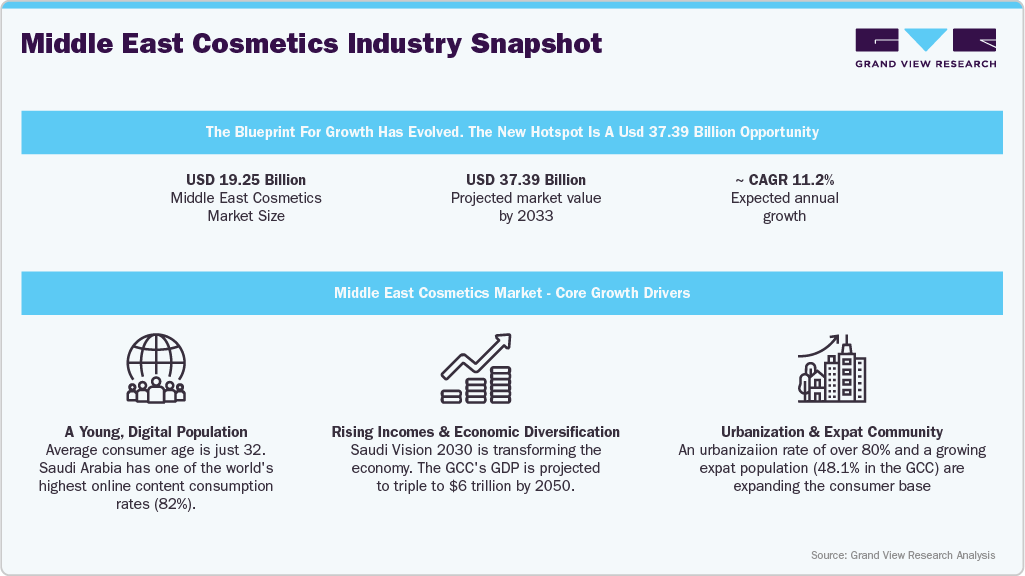
This cultural continuity has cultivated a consumer base that places high value on ingredient authenticity and functional efficacy. Beauty is not merely decorative; it is associated with self-respect, cleanliness, and spiritual mindfulness. As a result, Middle Eastern consumers have historically demonstrated a strong inclination toward products perceived as pure, natural, and aligned with moral principles. This cultural predisposition has significantly lowered barriers to the adoption of Halal beauty products, which align naturally with these long-established values.
Understanding Halal Beauty: Beyond Religious Compliance
At its core, Halal beauty refers to cosmetic and personal care products that comply with Islamic law. This compliance extends beyond the exclusion of prohibited ingredients such as certain alcohols or animal derivatives, encompassing the entire value chain, including sourcing, processing, manufacturing, and storage. Products must be free from contamination with non-Halal substances, and manufacturing practices must adhere to strict hygiene and ethical standards.
However, the contemporary relevance of Halal beauty extends far beyond religious observance. For a growing segment of consumers, Halal certification has become synonymous with safety, transparency, and ethical responsibility. The rigorous scrutiny required for certification often results in cleaner formulations, greater traceability, and more disciplined quality control processes. Consequently, Halal beauty increasingly overlaps with global clean beauty, vegan, cruelty-free, and sustainable beauty movements.
Exhibit 2: Key regulatory requirements for halal-certified beauty and personal care products
|
Regulatory Area |
Explanation/Industry Implication |
|
Ingredient Permissibility |
Ingredients must not include prohibited (haram) substances such as pork or pork derivatives, blood, human-derived materials, or animals not slaughtered according to Islamic law. |
|
Alcohol Usage |
Ethanol derived from fermentation and used as an intoxicant is generally prohibited, while synthetic or non-intoxicating alcohols may be allowed depending on certifying authority interpretation. |
|
Animal-Derived Ingredients |
Any animal-based ingredient (e.g., collagen, glycerin, keratin) must come from animals slaughtered according to Halal principles or be replaced with plant/synthetic alternatives. |
|
Manufacturing Process |
Production facilities must ensure segregation from non-Halal products or conduct thorough cleansing (sertu/samak) procedures where applicable. |
|
Supply Chain Integrity |
Raw materials, processing aids, packaging, storage, and transportation must be Halal-compliant and documented for audit purposes. |
|
Hygiene and Sanitation |
Manufacturing environments must meet high hygiene standards aligned with both cosmetic GMPs and Islamic principles of cleanliness (taharah). |
|
Testing and Quality Control |
Products must not be tested using prohibited materials or methodologies involving non-Halal substances. |
Source: Grand View Research Analysis
This convergence has allowed Halal beauty to transcend cultural and religious boundaries. Non-Muslim consumers, particularly in Europe, Asia, and North America, are increasingly drawn to Halal-certified products as markers of trust and integrity. What was once a faith-driven requirement has evolved into a globally relevant quality benchmark.
Demographics, Digitalization, And The New Middle Eastern Beauty Consumer
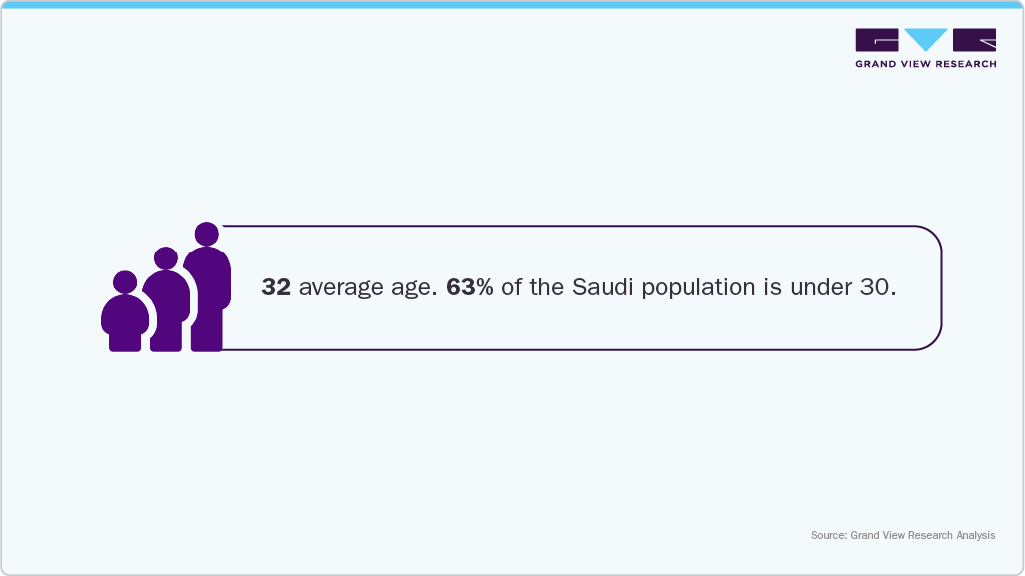
With an average age of approximately 32 years and nearly two-thirds of Saudi Arabia’s population under the age of 30, the region benefits from a pronounced demographic tailwind. This youthful population not only expands the addressable beauty consumer base but also supports sustained long-term demand, higher experimentation rates, and faster adoption of new beauty formats and routines. For cosmetics manufacturers, this demographic composition underpins both volume growth and innovation intensity across skincare, color cosmetics, and grooming categories.
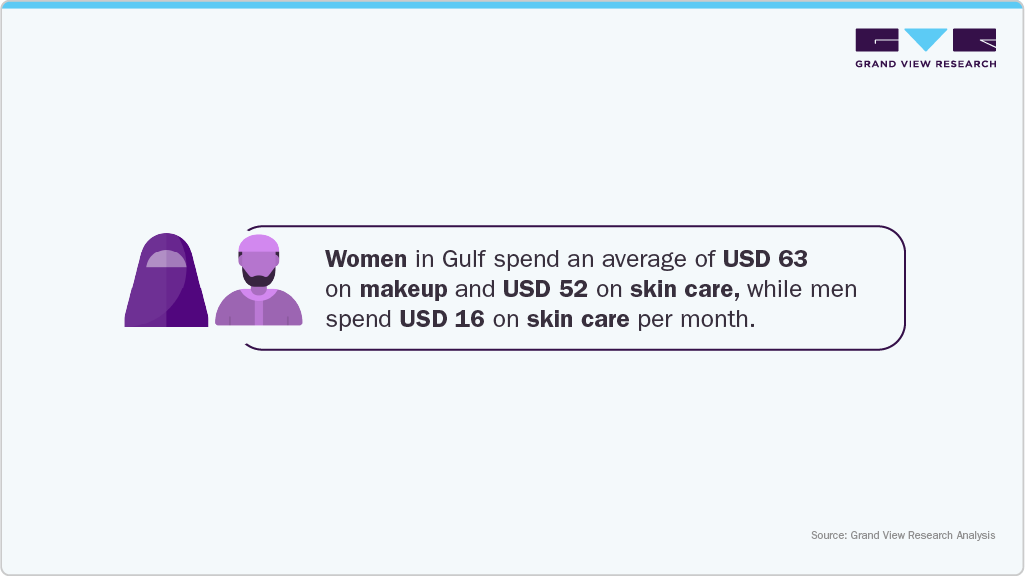
Spending patterns further reinforce the region’s strategic importance. Monthly expenditure levels among women in Gulf markets, USD 63 on makeup and USD 52 on skincare, reflecting a deeply ingrained cultural emphasis on personal grooming and appearance, as well as a growing willingness to invest in premium and performance-driven beauty solutions. The near parity between makeup and skincare spend is particularly telling, indicating a structural shift toward skin health, prevention, and treatment rather than purely decorative cosmetics. This evolution aligns with climate-specific needs and long-standing regional skincare traditions, creating strong momentum for advanced formulations and Halal-aligned, ingredient-conscious products.
While men’s monthly skincare spend remains lower at USD 16, it signals an important normalization of self-care and grooming among male consumers. This trend is expanding the industry’s addressable market and encouraging brands to develop targeted men’s skincare and grooming ranges that balance efficacy, cultural relevance, and ethical positioning. Over time, this segment is expected to contribute meaningfully to category diversification and incremental growth.
Digital engagement metrics underscore the transformation of how beauty demand is shaped in the region. With 82% online content consumption in Saudi Arabia and 71% of women actively participating in social networking, beauty discovery, and brand engagement are decisively digital-first. Social platforms, influencer ecosystems, and digital content now play a central role in shaping purchasing decisions, accelerating trend adoption, and elevating consumer expectations around transparency, authenticity, and values. This environment intensifies competition while simultaneously rewarding brands that invest in localized storytelling and credible claims.
The Middle East’s Omnichannel Retail Paradigm: Redefining How Beauty And Consumer Brands Engage
The continued dominance of the “mega mall” experience underscores the region’s emphasis on retail as a social and lifestyle destination, rather than a purely transactional channel. Large-format malls across the Gulf function as integrated ecosystems combining luxury retail, beauty services, dining, and entertainment. For cosmetics and personal care brands, this environment enables immersive brand storytelling, in-store education, and experiential touchpoints—elements that are particularly critical for premium, halal, and culturally nuanced beauty propositions. Retailers such as Sephora exemplify this role by acting as curated gateways for global brands seeking regional relevance, blending international brand equity with localized assortments and services.
Parallel to this, the surge in e-commerce reflects the rapid normalization of digital-first consumption behaviors across the region. Near-universal smartphone penetration and a young, urban population have accelerated the shift toward online discovery and purchasing, particularly in beauty and personal care. Crucially, however, digital growth in the Middle East is not occurring in isolation; it is deeply intertwined with physical retail. Omnichannel strategies—such as click-and-collect, online-to-offline product trials, and app-enabled loyalty ecosystems—allow brands to maintain consistency across touchpoints while leveraging data to personalize engagement. The expansion strategies of regional and international beauty platforms signal that digital retail is increasingly viewed as a scale and access engine rather than a substitute for physical presence.
The travel retail opportunity adds a third, strategically significant dimension to this omnichannel landscape. As the Middle East consolidates its position as a global aviation and tourism hub, airports and duty-free environments have become high-impact retail nodes. These spaces capture a uniquely diverse and high-spending consumer base, enabling beauty brands to reach both regional consumers and international travelers within a single ecosystem. For halal and Middle East–origin beauty brands in particular, travel retail serves as a powerful platform for global visibility and cross-border brand legitimization, often functioning as a bridge between regional authenticity and international aspiration.
Conclusion
The Middle Eastern beauty and personal care landscape is undergoing a decisive transformation, evolving from a niche, regionally driven market into a globally influential force shaping product standards, ethical benchmarks, and consumer expectations. What distinguishes this transition is not scale alone, but intent: consumers across the region are actively prioritizing halal integrity, ingredient transparency, performance efficacy, and cultural authenticity. This convergence of faith-aligned values with modern beauty aspirations has elevated halal cosmetics from a compliance requirement into a mark of quality, trust, and innovation, redefining how brands compete both regionally and internationally.
As digital fluency accelerates, omnichannel retail ecosystems mature, and travel retail expands the region’s global reach, Middle Eastern consumers are exerting unprecedented influence over formulation practices, certification norms, and brand narratives. The growing preference for clean, ethically sourced, and scientifically credible products signals a long-term structural shift rather than a transient trend. For global and regional players alike, success in this market increasingly depends on deep cultural understanding, regulatory alignment, and the ability to deliver premium experiences without compromising on halal principles.
“The Middle East is no longer a peripheral player in global beauty innovation; it is redefining the industry’s ethical, performance, and cultural benchmarks for the future.”