Inside The Middle Eastern Home Care Market: A Category Where Performance Outweighs Brand Power
Executive Summary
The Middle Eastern home care market presents a structural paradox that continues to confound global consumer goods players. While the region is often associated with premium retail environments, high per-capita income in select GCC countries, and strong multinational brand presence, home care remains fundamentally a high-frequency, low-involvement, and intensely value-driven category.
Across detergents, surface cleaners, dishwashing liquids, disinfectants, and specialty cleaners, purchasing decisions are governed far less by brand storytelling and far more by functional performance, cost efficiency per use, and local relevance.
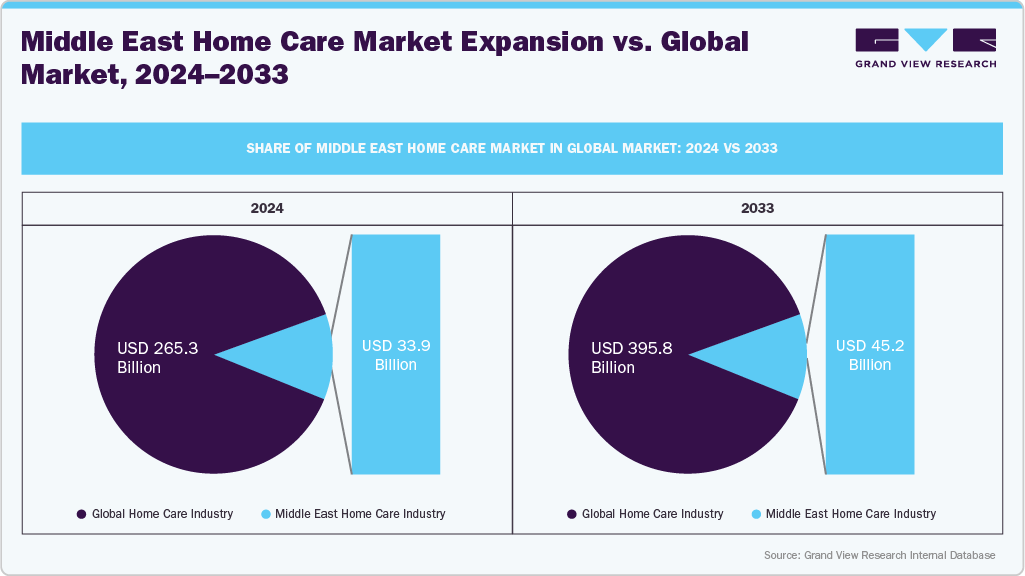
According to Grand View Research, the Middle East home cleaning market is expected to reach USD 45.20 billion by 2033. Inflationary pressures, heightened price sensitivity among expatriate populations, increasing private label sophistication, and a growing acceptance of non-branded or locally produced alternatives have structurally shifted the role of branding in the category. In today’s Middle Eastern home care market, branding without demonstrable efficacy is not only insufficient, it is often a liability.
Structural Role Shift: Home Care As A Non-Negotiable Essential
Home care in the Middle East sits firmly in the realm of non-discretionary spending. Regardless of income level, consumers cannot defer purchases of laundry detergents, dishwashing liquids, disinfectants, or surface cleaners. However, what they can and do adjust are brand choice, pack size, concentration level, and shopping channel.
With rising inflation rates in the Middle Eastern countries and sustained price pressures across the GCC, consumers have become acutely price-conscious even in traditionally premium segments. Home care products, purchased weekly or bi-weekly by most households, face intense scrutiny at the shelf.
The region's demographic composition amplifies this sensitivity. Expatriates constitute upward of 88% of the UAE's population and similar proportions across Qatar and Kuwait. These consumers, particularly those in blue-collar and mid-income segments, maintain strong price discipline and demonstrate limited loyalty to international brands that fail to deliver tangible performance advantages. Remittance-conscious households prioritize functional value over brand prestige in utilitarian categories.
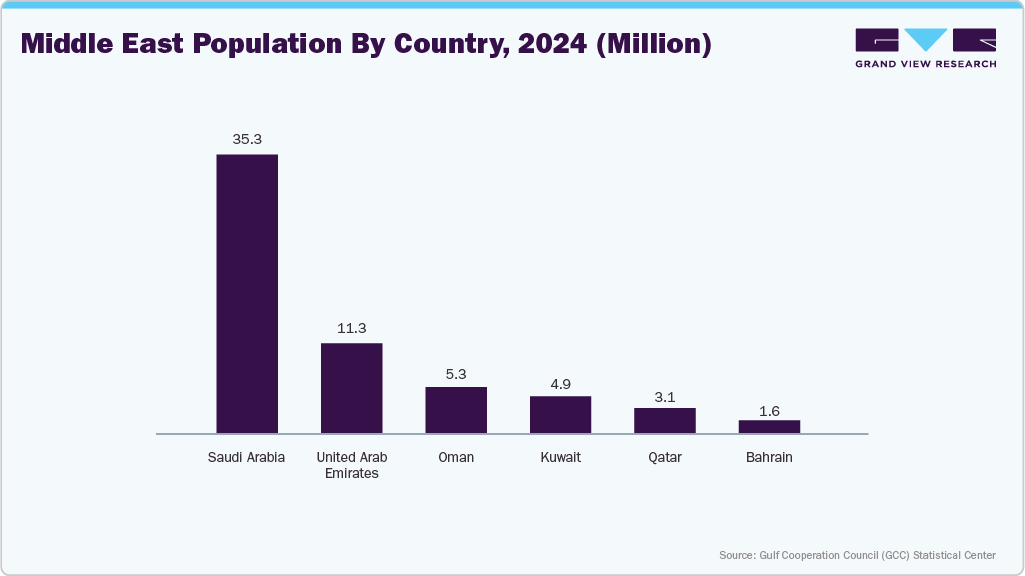
The population distribution across GCC countries provides a critical structural lens through which the Middle Eastern home care and cleaning industry must be understood. As of 2024, Saudi Arabia stands apart with an estimated population of ~35.3 million, dwarfing other GCC markets such as the United Arab Emirates (~11.3 million), Oman (~5.3 million), Kuwait (~4.9 million), Qatar (~3.1 million), and Bahrain (~1.6 million). This uneven demographic concentration has profound implications for category scale, consumption intensity, portfolio strategy, and competitive dynamics across the region.
More importantly, the population distribution is skewed toward a small number of high-density markets, creating a region that is simultaneously large enough to support industrial-scale production, yet concentrated enough to reward cost-efficient, standardized portfolios. This structural characteristic underpins the region’s persistent orientation toward value, functional efficacy, and repeat purchase reliability.
Unlike lifestyle-driven FMCG categories, home care consumption scales almost linearly with population size. Each incremental household adds predictable, recurring demand for laundry detergents, surface cleaners, dishwashing liquids, and disinfectants. As a result, population growth and stability act as demand anchors, limiting volatility but also constraining the scope for margin expansion through brand-led premiumization.
High Household Density, High Cleaning Intensity
High household density across much of the Middle East directly translates into elevated cleaning intensity, creating a structural demand profile that is both predictable and unforgiving. Urban living dominates the region, with a large share of the population residing in apartments, high-rise buildings, and tightly clustered residential communities. In such environments, dust ingress, shared ventilation systems, and limited outdoor buffer spaces increase the frequency with which floors, surfaces, kitchens, and bathrooms must be cleaned. Unlike suburban Western housing models, where cleaning cycles can be spread out, Middle Eastern households often require daily or near-daily surface maintenance to maintain acceptable living standards.
Environmental conditions further amplify this intensity. The region’s arid climate, frequent dust storms, and high particulate matter levels mean that visible dust accumulation occurs rapidly, particularly on floors, countertops, and furniture. In cities such as Riyadh, Dubai, and Kuwait City, it is common for households to sweep or mop floors daily, regardless of household income level. This creates unusually high consumption of floor cleaners, disinfectants, and multipurpose surface products. Importantly, consumers quickly notice underperforming products in such conditions; a cleaner that leaves residue, fails to lift fine dust, or requires repeated application is rapidly abandoned, reinforcing the market’s intolerance for weak efficacy.
Cultural norms around cleanliness and hospitality play an equally critical role. In Middle Eastern societies, the home is a primary social space, and maintaining a visibly clean environment is closely tied to social expectations and personal credibility. Guests are often received at short notice, increasing the need for products that deliver immediate, visible results. This dynamic favors fast-acting surface cleaners and strongly scented formulations that signal cleanliness instantly. For example, disinfectants and floor cleaners with pronounced fragrance profiles, often citrus, pine, or antiseptic notes, continue to outperform fragrance-light or neutral formulations, not because of brand storytelling, but because scent acts as an immediate proxy for hygiene.
High cleaning intensity is also reinforced by the continued prevalence of manual cleaning, particularly in middle-income and expatriate households. While automatic dishwashers and robotic cleaning devices are present, they have not displaced traditional mopping, wiping, and hand-washing routines at scale. As a result, products are judged by tactile and visual cues: foam richness in dishwashing liquids, thickness in surface cleaners, and visible soil removal in laundry. In Saudi Arabia, for instance, detergents that fail to perform effectively in a single wash cycle, especially under hard water conditions, are quickly replaced, even if they are well-known global brands.
Efficacy As The Primary Brand Differentiator
In the Middle Eastern home care market, brand credibility is established almost exclusively through demonstrated results rather than accumulated equity. Consumers assess products in real time, through visible outcomes, and under conditions that leave little room for ambiguity. Cleaning results are immediately observable: either a surface is clean, a stain is removed, or it is not. This immediacy creates a market where performance failures are disproportionately punitive, and brand forgiveness is minimal. A single negative experience can permanently disqualify a product from repeat consideration.
This dynamic has elevated functional proof over symbolic branding. Claims related to stain removal speed, grease-cutting ability, or disinfecting strength are scrutinized closely in everyday use, not passively accepted through advertising. For example, disinfectants that clearly demonstrate fast action or laundry detergents that consistently perform in a single wash cycle are rapidly adopted into household routines. Over time, repeat purchase becomes habitual, not because of emotional loyalty, but because the product has earned operational trust.
The Strategic Limits Of Sustainability In Home Care
Sustainability occupies a constrained and highly conditional role in Middle Eastern home care purchasing decisions. While awareness of environmental themes has increased, particularly in urban and younger demographics, sustainability does not operate as an independent value driver in a category defined by necessity and repetition. Instead, it is filtered through a strict utility lens: whether it enhances efficiency, reduces friction, or lowers long-term cost.
Initiatives such as lightweight packaging, refill systems, or compact concentrates gain acceptance when they tangibly improve storage, handling, or affordability. For instance, refill pouches succeed when they are positioned as practical extensions of the core product rather than ideological alternatives. The environmental benefit is implicitly acknowledged, but it is rarely the decisive factor. What matters is that the product remains familiar, effective, and economical.
Where sustainability introduces complexity, perceived compromise, or price inflation, adoption stalls quickly, and consumers show little tolerance for formulations that appear less powerful or slower in the name of being “greener.” In a category governed by routine and urgency, sustainability must operate invisibly in the background, embedded within operational efficiency rather than foregrounded as a primary proposition. Its strategic ceiling is therefore defined not by intent, but by alignment with functional expectations.
Private Label: The Most Material Competitive Threat
Private labels’ growing influence in Middle Eastern home care is not driven by branding ambition, but by structural alignment with category economics. Home care products are standardized, repeat-purchase items with well-defined performance thresholds, making them ideally suited for retailer-led substitution. Consumers do not seek differentiation for its own sake; they seek reassurance that a product will perform adequately at the lowest acceptable cost.
Retailers have leveraged this dynamic by offering private label ranges that mirror national brand functionality while stripping away marketing overheads. These products are not expected to lead innovation or redefine standards; they need to avoid failure. In high-frequency categories, that baseline competence is often sufficient to drive trial, particularly when reinforced by price gaps that are immediately visible on the shelf.
Localization As A Structural Advantage
Localization in Middle Eastern home care functions as an operational advantage rather than a marketing adaptation. Products encounter a unique set of physical and behavioral conditions that directly influence their in-use performance. Formulations must remain stable under high temperatures, dissolve effectively in mineral-heavy water, and deliver results aligned with local cleaning routines that prioritize speed and visible impact.
Brands that invest in region-specific formulation design gain an inherent reliability advantage. This is particularly evident in products engineered to maintain consistency during prolonged exposure to heat in transport and storage, or those designed to perform predictably despite variability in water quality. These adaptations are rarely visible to consumers, yet they materially reduce friction, complaints, and product abandonment.
Regulatory Landscape For Home Cleaning Products In The Middle East: Key Areas And Industry Implications
The regulatory landscape for home cleaning products in the Middle East has evolved steadily over the past decade, moving toward greater alignment with international chemical safety, labeling, and conformity standards. While enforcement intensity varies by market, the overall direction is clear: regulators are tightening controls on chemical composition, hazard communication, and product traceability to protect consumer safety and environmental outcomes. For manufacturers and importers, regulatory compliance is no longer a back-office function but a core determinant of speed to market and operational scalability.
Home cleaning products occupy a regulatory middle ground—classified neither as cosmetics nor pharmaceuticals, yet subject to significantly more scrutiny than general packaged goods. This has resulted in a multi-layered compliance environment covering formulation approval, mandatory documentation, bilingual labeling, import clearance, and post-market surveillance.
From an industry perspective, these regulatory dynamics structurally favor players with localized manufacturing, in-region regulatory expertise, and standardized compliance frameworks. Conversely, brands reliant on imported, globally standardized products face higher adaptation costs, longer approval timelines, and greater execution risk. In a value-driven category such as home care, these regulatory frictions can materially influence competitiveness, pricing flexibility, and margin sustainability.
Exhibit 2: Key regulatory requirements for cleaning products in the Middle East
|
Regulatory Area |
Explanation/Industry Implication |
|
Chemical Classification & Hazard Labeling |
Alignment with global chemical classification systems requires standardized hazard symbols, warnings, and safety instructions, increasing label complexity and compliance oversight. |
|
Product Registration & Pre-Market Approval |
Many markets require cleaning products to be registered or notified before sale, extending launch timelines and favoring companies with regulatory scale. |
|
Safety Data Sheet (SDS) Requirements |
Mandatory SDS documentation limits rapid formulation changes and increases documentation and governance requirements across the supply chain. |
|
Bilingual Labeling Obligations |
Arabic language requirements necessitate localized packaging or over-labeling, adding cost and SKU complexity. |
|
Ingredient Restrictions & Usage Limits |
Controls on certain chemicals constrain formulation flexibility and drive region-specific reformulation efforts. |
|
Import & Customs Compliance |
Regulatory checks at borders increase working capital risk for import-dependent brands and advantage local production. |
|
Conformity Assessment & Certification |
Mandatory conformity marks raise barriers to entry and act as a quality filter in the market. |
|
Packaging, Storage & Transport Standards |
Regulations governing chemical stability and safety elevate packaging and logistics requirements, particularly in high-temperature environments. |
|
Environmental & Waste Management Rules |
Growing regulatory focus on packaging waste and chemical disposal influences long-term packaging and format strategy. |
|
Post-Market Surveillance & Enforcement |
Ongoing product monitoring and recall mechanisms increase reputational and financial risk for non-compliant players. |
Source: Grand View Research Analysis
Middle East Home Care Market - Opportunity Outlook:
Across the Middle East, home care exhibits high usage maturity but uneven commercial maturity, resulting in a region that is structurally resilient yet strategically fragmented. Core categories are well entrenched across all markets, driven by climate, culture, and daily cleaning requirements. However, the path to growth diverges sharply between large population markets and smaller, high-income ones. This creates a regional landscape where scale economics and value optimization matter more than brand-led premium narratives.
Saudi Arabia and Egypt together anchor the region’s volume-driven growth engine. In these markets, growth is fueled less by innovation and more by affordability, penetration, and substitution toward cost-efficient, locally optimized products. Price sensitivity is high, but so is consumption intensity, creating sustained demand for large packs, concentrated formats, and private label alternatives. Brand leadership in these markets is earned through performance consistency and pricing discipline rather than marketing investment.
Exhibit 3: Middle Eastern Home Care Market: Maturity, Growth Potential, and Opportunity Drivers
|
Country/Market |
Market Maturity |
Growth Potential |
Primary Opportunity Driver |
|
Saudi Arabia |
High |
Moderate–High |
Value-led scale expansion, localized efficacy, private label defense |
|
United Arab Emirates |
High |
Moderate |
Format innovation, convenience-led value, rapid brand switching |
|
Egypt |
Medium |
High |
Volume expansion, affordability, category formalization |
|
Morocco |
Medium |
High |
Urban penetration growth, regional brand substitution |
|
Kuwait |
Moderate–High |
Medium |
Performance-led replacement, concentrated formats |
|
Qatar |
Moderate–High |
Medium |
Premium-efficient formats, institutional-grade positioning |
|
Oman |
Medium |
Moderate–High |
Distribution expansion, price-accessible performance |
|
Bahrain |
High |
Low–Moderate |
Private label coexistence, portfolio rationalization |
In contrast, smaller Gulf markets such as the UAE, Kuwait, Qatar, and Bahrain are structurally mature but growth-constrained. Here, consumption levels are already high, and population growth is limited. Growth opportunities exist primarily through portfolio churn, format upgrades, convenience innovation, and trade-up within value boundaries. Consumers in these markets switch brands readily, limiting the lifetime value of brand equity and reinforcing the importance of rapid trial conversion and clear functional differentiation.
Conclusion
The Middle Eastern home care and cleaning market is undergoing a quiet but decisive recalibration—one defined not by brand-led aspiration, but by functional accountability, value discipline, and localized relevance. Long regarded as a low-involvement, operational category, home care in the region has emerged as a strategic battleground where performance credibility, cost efficiency, and cultural fit increasingly determine competitive outcomes. What distinguishes this evolution is not consumer willingness to pay more, but consumer insistence on getting more for what they pay.
High-frequency usage, climate-driven cleaning intensity, and diverse household compositions have entrenched home care as a daily essential rather than a discretionary purchase. In this environment, efficacy has become the primary currency of trust. Brands that demonstrably solve local cleaning challenges, whether related to water hardness, dust intensity, fabric care, or surface durability, are rewarded with loyalty, while those relying on branding alone face rapid substitution. The market’s structural exposure to inflation and large expatriate populations further reinforces its value-driven orientation, compressing the headroom for emotional premiumization.
As modern retail expands, private labels strengthen, and contract manufacturing capabilities deepen across the region, traditional brand moats continue to erode. This has shifted the competitive equation from visibility to verifiability. Products positioned around professional-grade performance, concentrated formats, and cost-per-use superiority are increasingly outperforming heavily branded alternatives. Sustainability, while relevant, is being evaluated through a pragmatic lens—adopted only where it enhances convenience, reduces cost, or improves functional outcomes.
“In the Middle East, home care brands do not win by saying more—they win by cleaning better, lasting longer, and costing less per use.”