Unlocking the Potential of Personalized Medicine in the Middle East
Across the Gulf, precision medicine is no longer a futuristic concept; it's rapidly becoming the foundation of modern healthcare. From monumental national genome programs to the strategic build-out of mRNA therapeutic infrastructure, the Middle East is on track to become one of the world’s most dynamic personalized medicine (PM) markets. This comprehensive pivot is fundamentally reshaping how diseases are detected, prevented, and treated, promising a new era of data-driven, individualized patient care.
A New Era of Precision: Market Momentum and Vision
Personalized medicine represents a profound paradigm shift from the conventional "one-size-fits-all" approach to healthcare. It champions a model tailored to an individual’s unique genetic, environmental, and lifestyle profile. This revolution is powered by the symbiotic advancements in genomics, artificial intelligence (AI), and sophisticated data analytics. The momentum is undeniable. The Middle East personalized medicine market was around 25 billion in 2024 and projected to reach over USD 40 billion by 2033, reflecting a CAGR of nearly 10% from 2025 to 3033. This robust growth is driven by several regional imperatives such as High Prevalence of Chronic and Genetic Diseases, governmental Vision and Economic Diversification and massive Investment in Infrastructure.
Leading regional hospitals and specialist centers, such as Cleveland Clinic Abu Dhabi and King Faisal Specialist Hospital & Research Centre (KFSHRC), are already embedding genetic insights into standard clinical workflows. For instance, major centers in the UAE and Saudi Arabia are aggressively integrating pharmacogenomics and genomic diagnostics into oncology and general medicine, a critical step that demonstrates the individualized healthcare revolution is well underway.
The Foundation: National Genomic Sovereignty
At the heart of this transformation are National Genomics Programs, strategic sovereign assets designed to fill the vast knowledge gap in global genomics, where over 90% of data is Eurocentric. These initiatives not only enhance disease prevention but also enable the design of population-specific therapeutics, addressing the high prevalence of hereditaryconditions, such as certain cancers, diabetes, and cardiovascular diseases, which are often exacerbated by regional demographic patterns.
|
Program |
Country |
Primary Goal & Scale (Approx.) |
Impact |
|
UAE National Genome Strategy |
UAE |
Sequence the DNA of all Emirati citizens. Collected over 500,000 samples. |
Developing a population-wide health intelligence framework for personalized clinical decisions and public health strategies. |
|
Saudi Human Genome Program (SHGP) |
KSA |
Sequence thousands of genomes to build a national genetic database. Sequenced over 60,000 samples. |
Guiding therapeutic design, managing rare diseases, and informing the Premarital Screening Program (PSP). |
|
Qatar Genome Programme (QGP) |
Qatar |
Sequence citizens' whole genomes. Sequenced over 35,000 full genomes. |
Identifying genetic markers specific to Arab populations and driving clinical pilots in pharmacogenomics and predictive genomics. |
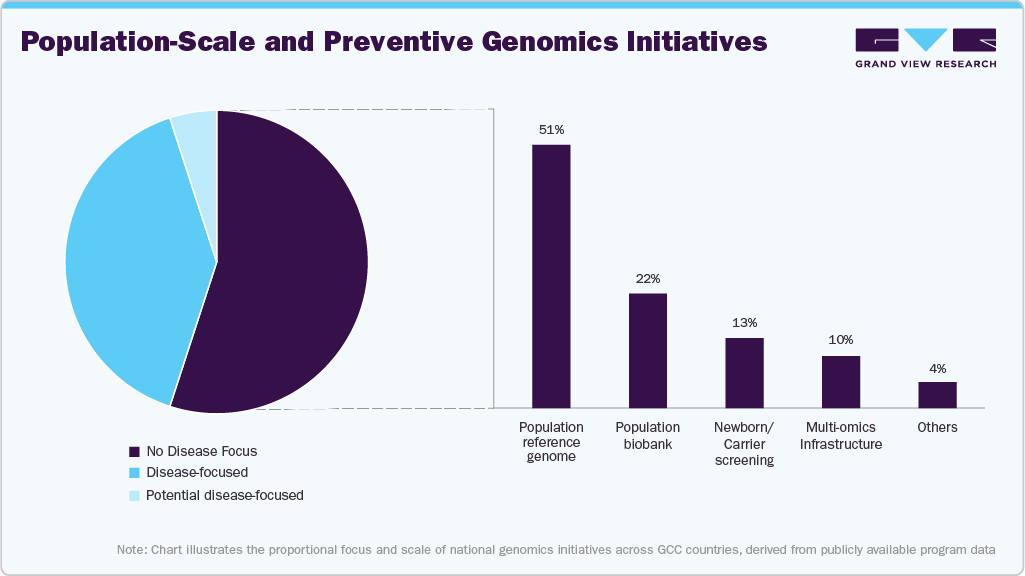
These initiatives represent more than scientific milestones; they embody a new social contract between governments and citizens, one where data security, patient consent, and equitable access are paramount. Collectively, the genomic landscape in the Middle East illustrates a balanced interplay between disease-specific and population-wide initiatives, reflecting a forward-looking vision centered on predictive and preventive healthcare. Population-wide genome programs dominate regional focus, reflecting a preventive health vision, while disease-specific projects translate these insights into actionable clinical impact. Together, they illustrate a balanced and data-driven genomic ecosystem shaping the future of precision medicine in the Middle East.
Integrating Genomics and AI: The Convergence Ecosystem
The true value of sequencing is realized when genomic data moves from the research lab to the patient's bedside. The convergence of advanced technologies powers this integration.
Bioinformatics and AI-Driven Diagnostics
AI and machine learning are the engines of precision healthcare. They are essential for interpreting the massive, complex datasets generated by national genome initiatives.
-
Real-Time Data Integration: Hospitals like Cleveland Clinic Abu Dhabi and King Faisal Specialist Hospital & Research Centre (KFSHRC) are embedding AI-based genomic analysis into their electronic medical records (EMR/EHR). Platforms like the UAE’s National Unified Medical Record (NUMR) and Saudi’s Seha Virtual Hospital are pioneering models that merge genomic, clinical, and lifestyle data.
-
Clinical Application: AI algorithms trained on regional genetic datasets accelerate the diagnostic journey, identify at-risk populations, and optimize drug response. For example, KFSHRC utilizes genomic profiling to inform targeted cancer therapies, resulting in significant improvements in overall survival and remission rates for select cancers compared to conventional protocols.
-
Democratization of Care: AI-driven platforms make personalized care scalable and cost-effective, democratizing access across the region.
Infrastructure for Next-Generation Biologics
The personalized medicine boom has triggered a significant shift in the region's biomanufacturing strategy, prioritizing self-sufficiency and innovation in advanced therapeutics.
-
mRNA and Cell & Gene Therapies: Building on the momentum of the COVID-19 pandemic, countries are investing heavily in local manufacturing hubs for biologics, cell and gene therapies, and mRNA therapeutics.
-
Strategic Hubs: The Abu Dhabi Bioventure Hub and the Saudi Bioindustrial City (under the National Biotech Strategy of Vision 2030) exemplify this push. These clusters are designed to support end-to-end R&D and production, enabling the region to transition from being a consumer of innovation to a creator of next-generation therapies.
-
Global Partnerships: Collaborations with global players like Roche, Illumina, Thermo Fisher, G42 Healthcare, AstraZeneca, and Moderna/BioNTech are facilitating technology transfer and ensuring precision medicine infrastructure is deployed as part of everyday clinical pathways.
Policy, Investment, and the Path Forward
The sustainability of the personalized medicine ecosystem rests on robust policy frameworks, continuous investment, and proactive talent development. Sovereign wealth funds and targeted venture capital are the primary drivers of this growth.
-
Regulatory Reform: Regional regulatory agencies are aligning to introduce frameworks for biosimilar approval, gene therapy trials, and clinical-grade mRNA production. Furthermore, government insurance reforms are starting to cover breakthrough diagnostics (e.g., genetic testing for certain cancers), improving accessibility.
-
Strategic Funding: Sovereign wealth funds and venture capital are driving this growth. The Public Investment Fund (PIF) in Saudi Arabia has launched funds deploying billions to develop manufacturing capacity. The UAE and KSA have attracted over USD 500 million in funding for biotech and precision health startups in recent years.
-
Innovative Business Models: New models, such as subscription-based genomic testing, outcome-based insurance reimbursement, and data-as-a-service, are bridging global expertise with local capability.
Regulatory and Ethical Governance
Policy reforms are essential to govern this new data-intensive field:
-
Harmonized Regulatory Alignment: Regional regulatory agencies are working to align their frameworks for the rapid, yet safe, approval of biosimilars, gene therapy clinical trials, and clinical-grade mRNA production.
-
Access and Reimbursement: Crucial government insurance reforms are progressively beginning to cover breakthrough diagnostics, for example, covering complex genetic testing for specific cancers and hereditary conditions, which significantly improve accessibility and adoption rates among the general population.
-
Ethical and Privacy Standards: The ethical use of sensitive genomic data is paramount. The UAE’s National Genome Strategy, for instance, explicitly focuses on an "agile framework of legislation and governance" and a "harmonized and secure data infrastructure." This focus on transparency, accountability, and secure data sharing is critical to maintaining public trust and fostering international research collaboration while respecting individual privacy.
Conclusion: A Future Written in Code
The Middle East's ambitious journey into personalized medicine is defined by a strategic decision to make health a national wealth and a strategic sovereign asset. By aligning genomics with AI governance, biosecurity, and economic diversification goals, the region is developing a unique, indigenous framework for precision medicine. From large-scale genome initiatives to local mRNA production and AI-driven diagnostics, nations are building a resilient, data-powered healthcare ecosystem. This transformation is already underway, anchored in innovation, driven by data, and centered on the individual patient.