Beyond Dispensing: Why Pharmacies Are Emerging as Strategic Healthcare Assets in the Middle East
For the last two decades, healthcare transformation in the Middle East has largely centered on hospital investments, specialty care expansion, and modernization of tertiary systems. These efforts positioned GCC countries among the most advanced healthcare markets globally, with strong infrastructure and international clinical benchmarks.
However, the next phase of healthcare transformation is not hospital centric. It is distribution-centric, prevention-centric, and continuity-centric — and pharmacies are becoming the most strategically located assets to deliver these goals.
In a region where chronic diseases are accelerating, population growth remains high, and digital adoption is rapid, the pharmacy is emerging as the new “front door” of healthcare — a decentralized, digitally connected, and clinically capable node within a broader integrated care ecosystem.
This shift reflects a global transition but takes on unique urgency in the Middle East, where hospital-centric delivery models are no longer sufficient to manage long-term patient needs or rising system costs.
Why This Shift Is Inevitable: Structural Realities Driving the Pharmacy Evolution
From Dispensaries to Integrated Health Nodes
The pharmacy is evolving from a transaction point into an orchestration point.
This transition centers on three capabilities:
-
Clinical Enablement
Pharmacies adopting standard clinical workflows (POCTs, MTM, immunization, deprescribing) move from supporting health systems to changing patient outcomes.
This repositions the pharmacist from a dispenser to a micro–care manager.
-
Technology Enablement
When integrated with national health records, AI-driven analytics, and remote monitoring tools, pharmacies become data-powered intervention platforms — enabling proactive care rather than reactive dispensing.
-
Experience Enablement
Personalized reminders, app-based engagement, subscription treatment models, and omnichannel delivery shift pharmacies into consumer-first healthcare hubs.
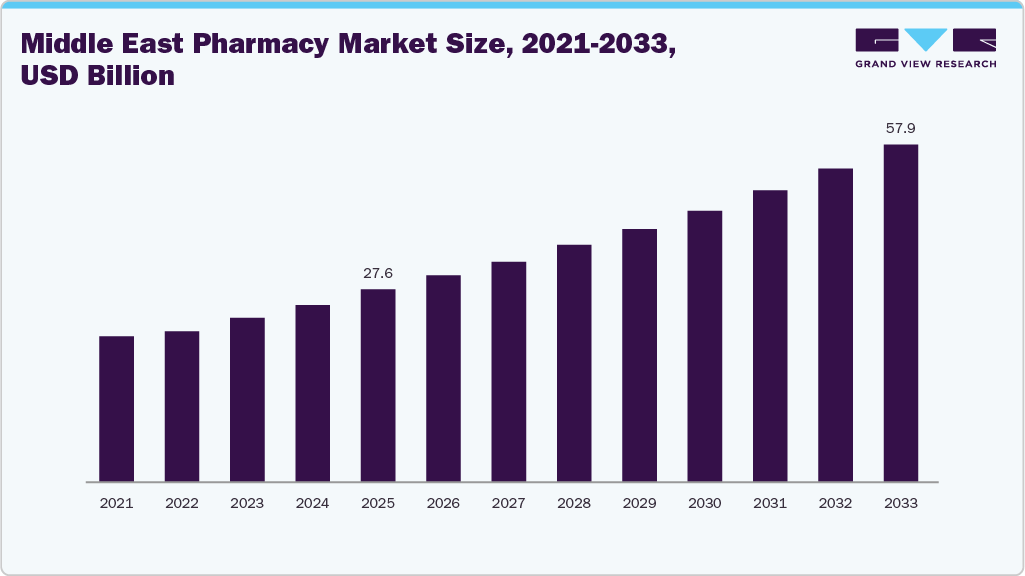
This multi-layer evolution explains why the Middle East pharmacy market, valued at USD 27.61 billion in 2025, is expanding at 14.54% CAGR, outpacing many other healthcare segments.
Country-Level Momentum: Where the Shift Is Most Visible
Saudi Arabia: Integrating Pharmacies into Vision 2030’s Care Continuum
Saudi Arabia’s healthcare transformation under Vision 2030 is changing how and where care is delivered. National initiatives — such as the expansion of Wasfaty e-prescription services, growth in home-care coordination, and a push to decentralize chronic disease management — are positioning pharmacies as essential connectors within the care system.
Pharmacies across the Kingdom are increasingly involved in:
-
vaccinations
-
medication reconciliation
-
patient education
-
monitoring programs for diabetes and hypertension
This aligns with the country’s broader ambition to reduce strain on hospitals and elevate primary and preventive health services.
UAE: A Digital Blueprint for Modern Pharmacy Services
The UAE — especially Dubai and Abu Dhabi — has rapidly developed a regulatory and technological environment that encourages pharmacy innovation. Integration with digital health exchanges, digitization of prescriptions, and the rise of telemedicine platforms have created strong demand for pharmacies capable of supporting virtual and hybrid care models.
Pharmacies in the UAE are increasingly delivering services such as:
-
tele-pharmacy consultations
-
remote renewal of chronic medications
-
partnerships with digital wellness platforms
-
expanded point-of-care testing in community settings
The UAE’s policy direction demonstrates how digital foundations can elevate pharmacies into full-fledged health service providers.
Technology as the Core Enabler of the Next-Generation Pharmacy
The transformation of pharmacy services is being accelerated by digital technologies that allow for continuous, coordinated care.
- Digital Prescriptions
- National e-prescription networks in Saudi Arabia, the UAE, and Qatar offer a unified view of patient medication histories, enhance safety, and simplify renewals.
- Remote Monitoring and Connected Devices
- Pharmacies are increasingly linking chronic patients to glucose monitors, cardiac patches, blood pressure trackers, and wellness devices that transmit real-time data to care teams.
- Tele-Pharmacy Models
- Video consultations and remote pharmacist support expand access to clinical guidance, particularly for patients managing long-term conditions.
- AI and Analytics
- Predictive analytics help pharmacies identify high-risk patients, manage drug interactions, automate refill reminders, and generate actionable insights for payers and providers.
- Temperature-Controlled Home Delivery
- Especially for biologics and specialty medicines, modern delivery networks ensure quality and reliability outside the pharmacy environment.
Collectively, these innovations shift the pharmacy’s role from medication provider to data-enabled care coordinator.
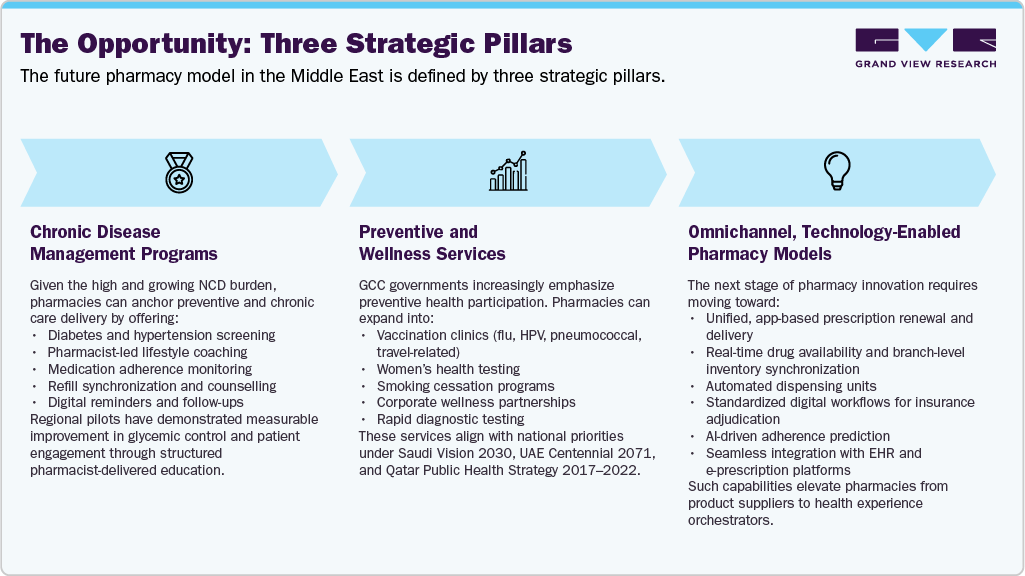
The Opportunity: Pharmacy as a Core Healthcare Actor in the GCC
A Strategic Roadmap for Pharmacy Leaders in the Middle East
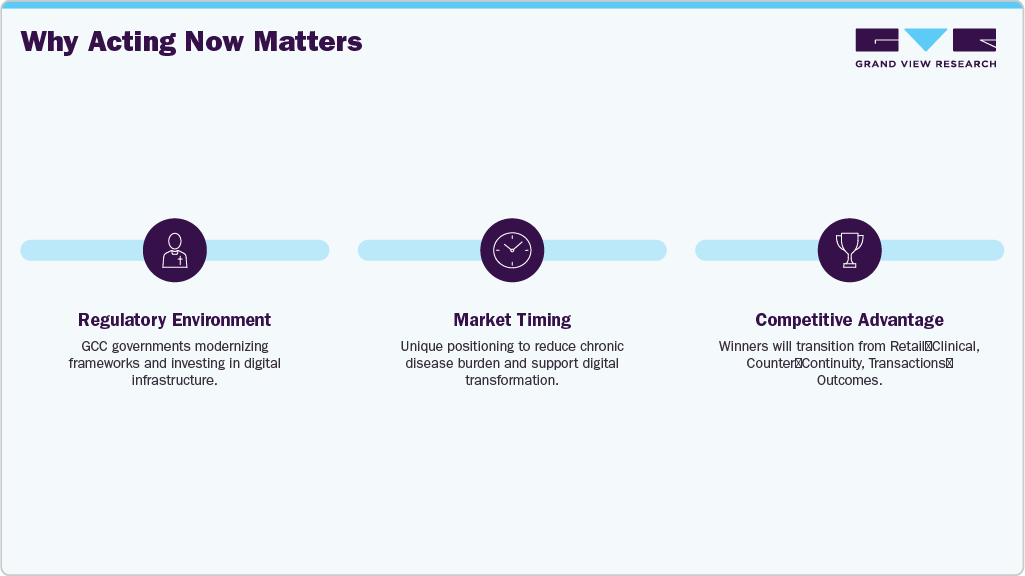
The Middle East is entering a new era where pharmacies are not peripheral retail establishments but core assets in national healthcare ecosystems. With rising chronic disease burdens, expanding digital infrastructure, and a strong policy shift toward preventive care, pharmacies are uniquely positioned to deliver impact at scale.
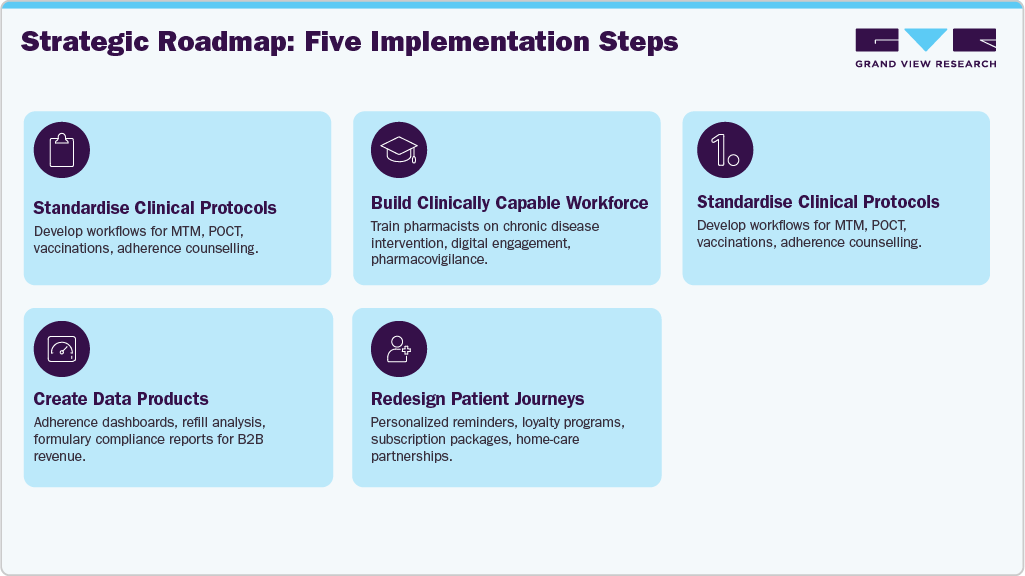
Pharmacies that move early, standardize clinical services, digitizing operations, upskilling pharmacists, and integrating with broader care networks, will not only unlock new revenue streams but also define the region’s healthcare experience for the next decade.
The opportunity is both strategic and time sensitive. The pharmacy networks that seize this opportunity is expected to become indispensable healthcare hubs in the Middle East.