Ramadan Economics: Understanding Seasonal Consumption Patterns In Mena Markets
Ramadan is one of the most significant periods of cultural, social, and economic activity across the Middle East and North Africa (MENA). It is a month that shapes daily routines, meal patterns, and, importantly, consumption and spending behavior across societies where Islam is widely practiced. While the primary focus of Ramadan is spiritual, involving fasting from dawn to sunset, the economic implications of the holy month are substantial for households, businesses, governments, and supply chains. Understanding these shifts in consumption patterns is essential for policymakers, retailers, food producers, and social support organizations operating in the region.
Ramadan As A Socio-Economic Phenomenon
Ramadan’s influence goes beyond religious observance. For over a billion Muslims worldwide, it alters everyday life across work, media consumption, and social behaviour. In the MENA region, Ramadan generates distinct economic cycles that occur annually, marked by increased demand for food and essentials despite fasting during daylight hours.
The United Nations and humanitarian organizations highlight another side of Ramadan’s economic context. Before the holy month begins, concerns about food security and affordability intensify, especially for vulnerable populations. According to Islamic Relief Worldwide, in 2024, more than 600 million people in Muslim-majority countries face food shortages as Ramadan begins, with approximately 200 million confronting severe hunger and undernutrition, and nearly 60 million children under five affected by stunting due to chronic food insecurity. These figures underscore the juxtaposition of festive consumption patterns with persistent regional food access challenges.
Macro-Economic Impact: A Surge In Household Expenditure
Analyzing top-level household expenditure provides the clearest indicator of Ramadan's broad economic influence across the diverse markets of the MENA region. The data confirms that the holy month consistently triggers a significant, region-wide increase in consumer spending, cementing its status as a critical period for economic activity.
This trend is observable across multiple countries, demonstrating a deeply embedded regional pattern. Key statistics from 2025 illustrate the breadth of this surge:
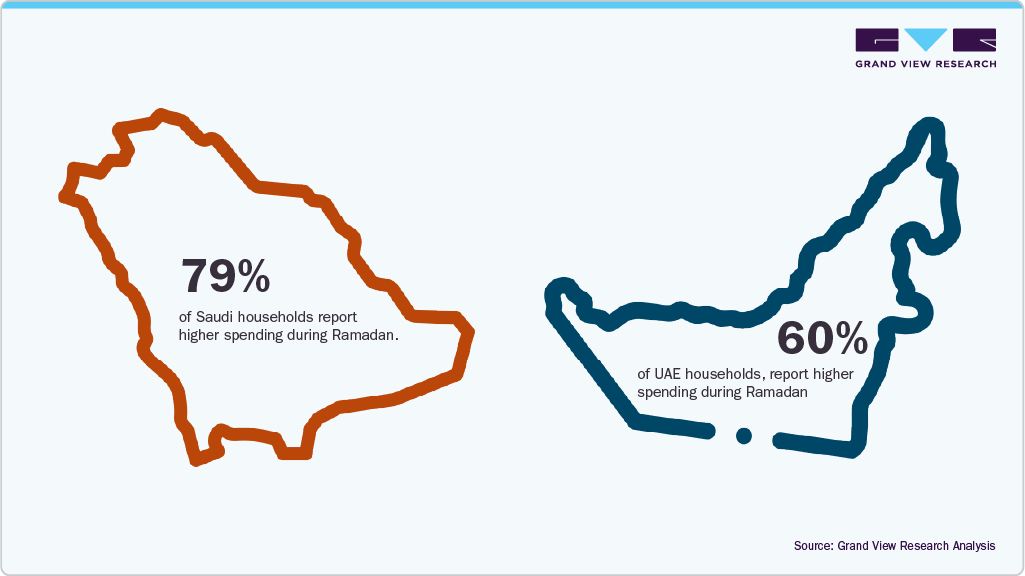
Similar upward spending trends were observed in Egypt, Jordan, Kuwait, and Morocco, reinforcing the regional nature of this phenomenon. Despite prevailing inflationary pressures on household budgets, the data clearly show that Ramadan remains a definitive high-spend period, prompting a closer look at precisely where consumers are allocating their funds.
Sector-Specific Spending Deep Dive: Where Consumers Allocate Capital
To develop effective market strategies, it is crucial to move beyond aggregate spending figures and analyze the specific sectors that capture the majority of consumer capital during Ramadan. The data reveals a clear hierarchy of spending priorities, dominated by essential goods but increasingly influenced by digital and convenience-driven behaviors.
The Dominance of Food and Grocery
The food and grocery sector consistently serves as the primary driver of Ramadan-related expenditure. Social traditions, including family gatherings for Iftar and Suhoor, drive a substantial increase in demand for food and beverages, making it the dominant category for household expenditure.
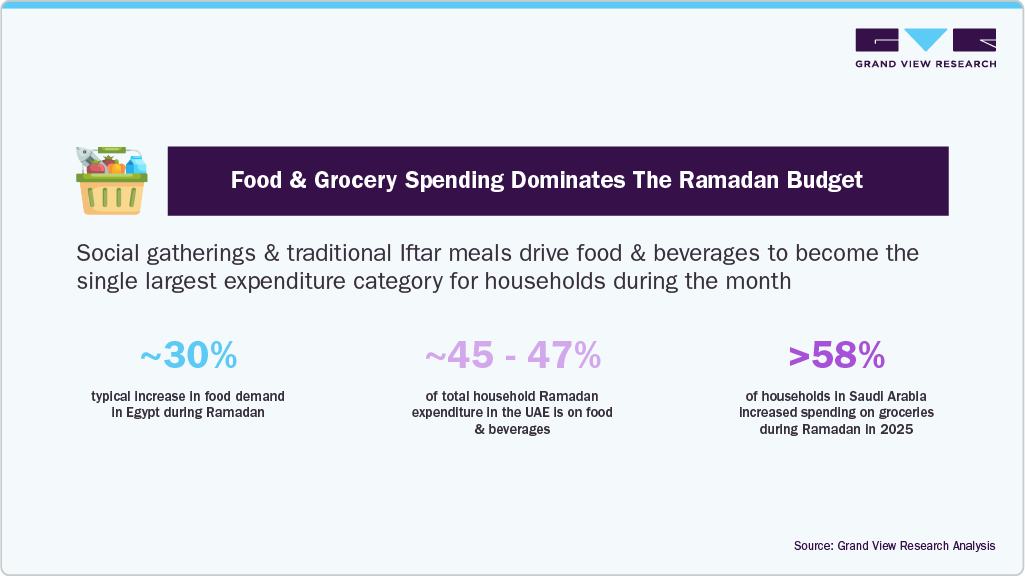
The scale of this spending is quantified by official data from across the region:
The Rise of the Night-Time and Digital Economy
A defining feature of Ramadan is the significant shift in daily life and economic activity towards the evening and night hours. This behavioral change has fueled the dramatic growth of a digital marketplace that operates around the clock, with peak activity occurring well after sunset.
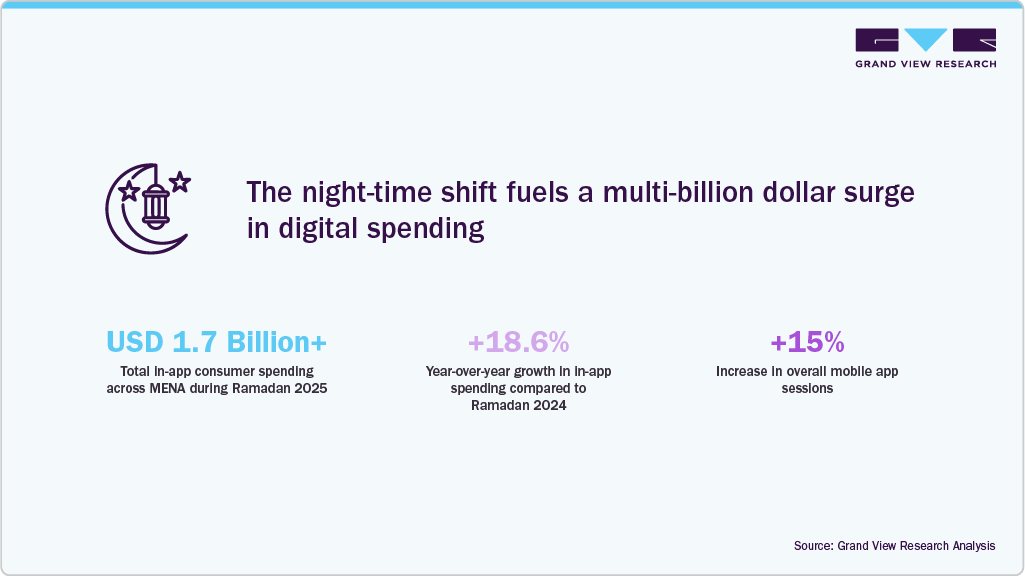
Shopping and food delivery applications experience their highest levels of activity between midnight and 3 a.m., making this late-night window one of the most important high-conversion periods during Ramadan. To fully capitalize on this behavior, businesses must strategically increase digital marketing investments, strengthen customer support coverage, and ensure sufficient server and platform capacity during these peak hours to optimize returns.
The Hybrid Reality: Resilience of Physical Retail
While the digital economy expands, physical retail channels demonstrate remarkable resilience, creating a hybrid shopping environment. The data provides a necessary counterpoint to the narrative of pure e-commerce growth, showing that consumers continue to rely heavily on brick-and-mortar stores, particularly for certain categories.
This hybrid behavior is evident in specific markets:
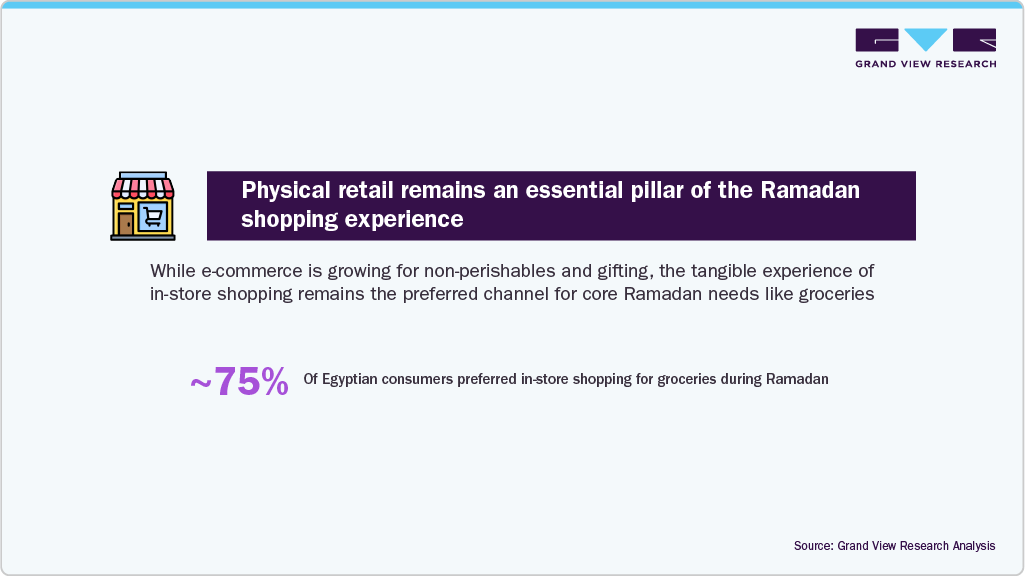
In Gulf markets, supermarkets and hypermarkets experience the highest footfall growth, while local convenience stores successfully capitalize on late-night demand within residential communities.
Online shopping is therefore best understood as a powerful complement to, rather than a complete replacement for, physical retail. Its growth is strongest for non-perishable goods, gifts, and convenience-driven purchases. This analysis now shifts from where consumers spend to how they make their purchasing decisions.
Analysis Of Consumer Behavior And Strategy
An understanding of these underlying behaviors is essential for calibrating pricing, promotion, and supply chain strategies to meet consumer expectations. The data reveals a consumer who is both opportunistic and cautious, planning purchases to maximize value while navigating budgetary constraints.
The Influence of Promotions and Pre-Planned Purchasing
Ramadan is fundamentally a promotion-driven retail season. Consumers are highly attuned to discounts and special offers, and they actively plan their purchasing cycles to take advantage of them. This behavior is a defining characteristic of the Ramadan shopper.
Ramadan is fundamentally a promotion-driven retail season. Consumers are highly attuned to discounts and special offers, and they actively plan their purchasing cycles to take advantage of them. This behavior is a defining characteristic of the Ramadan shopper. According to GVR analysis, in Saudi Arabia, nearly 76% of respondents reported that they deliberately delayed planned purchases specifically to wait for Ramadan promotions to become available. This behavior necessitates that brands front-load their most compelling value propositions and launch promotional campaigns well in advance of Ramadan to capture pre-planned budget allocation.
In response to this promotional environment and the need to cater to larger family gatherings, households commonly adopt specific purchasing strategies, with bulk buying and a clear preference for family-sized packs being the most prevalent.
The Impact of Inflation on Household Budgets
While spending increases overall, inflation acts as a significant moderating force on consumer habits. According to the latest report from the Central Agency for Public Mobilization and Statistics (CAPMAS), in early 2025, Egypt provides a clear case study, where annual inflation stood at approximately 23.2%. This economic pressure compelled households to prioritize essential goods, such as food staples, while reducing discretionary purchases.
Recognizing this challenge, regional governments have taken proactive measures. Authorities in the UAE and Saudi Arabia implemented price stability programs on essential food items ahead of Ramadan 2025. These initiatives were designed to protect consumer purchasing power and ensure affordability during the holy month. While governments work to stabilize the cost of essentials, the hospitality sector capitalizes on the demand for discretionary, experience-based spending, revealing a different facet of the Ramadan economy.
Tourism and Hospitality Sector Analysis
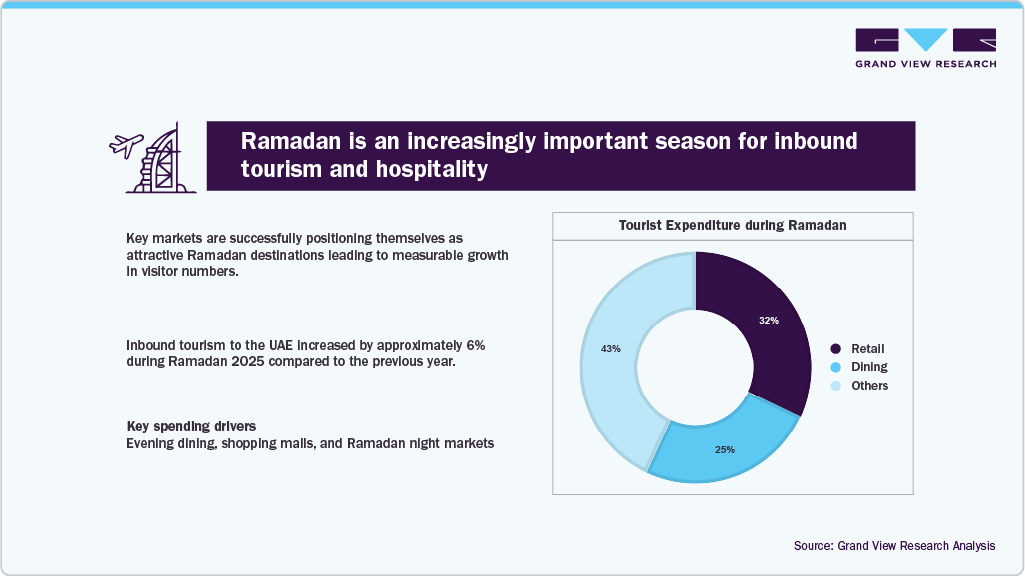
Ramadan creates a unique operating environment for the regional tourism and hospitality industry, presenting a period of distinct opportunity and shifting consumer demand. An influx of regional tourists and unique local demand for evening dining and entertainment experiences characterizes the month.
Conclusion: Strategic Implications For Market Stakeholders
The evidence from 2024-2025 confirms that Ramadan functions as a predictable and powerful economic season across the MENA region. It is defined by elevated, strategically planned consumption that, while moderated by economic pressures, consistently reshapes market dynamics. A clear understanding of these patterns is essential for any stakeholder operating in the region.
The most critical trends identified in this analysis include:
-
Elevated Foundational Spending: A consistent, region-wide increase in household expenditure is the primary economic indicator of Ramadan, led overwhelmingly by the food and grocery sectors.
-
A Structurally Altered Economy: The month triggers a fundamental shift toward a night-time economy that is heavily reliant on digital and mobile platforms for commerce, food delivery, and entertainment.
-
The Strategic, Value-Conscious Consumer: The modern Ramadan consumer is savvy and promotion-driven, actively planning major purchases to maximize value while simultaneously navigating the constraints imposed by inflation on household budgets.
Ultimately, a deep, data-driven understanding of these patterns is non-negotiable for success. It enables businesses, policymakers, and retailers to optimize inventory management, pricing strategies, staffing schedules, and digital engagement for this critical commercial period, ensuring alignment with a consumer base whose behaviors are both deeply traditional and rapidly evolving.