UK Casual And Vacation Wear Consumer Insights - Usage, Attitudes, And Brand Performance Report
Introduction:
The UK casual wear industry in 2025 is focusing on sustainability, with brands adopting circular fashion models and transparent supply chains to meet ethical demand. Digital transformation is transforming retail experiences, while the athleisure and loungewear sectors maintain their dynamic momentum. Economic pressures have driven growth in secondhand markets and rental services, with local manufacturing gaining traction to reduce carbon footprints. Inclusivity in sizing, design, and marketing has evolved from trend to business necessity, with diverse representation becoming standard practice.
The UK vacation wear market has seen significant changes, with sustainability becoming a core expectation. Post-pandemic recovery has strengthened sales, with package holiday bookings increasing steadily. Inflation has driven interest in versatile pieces like Marks & Spencer's 3-way beach cover-ups. Digital discovery, particularly TikTok, dominates the purchasing journey. Size inclusivity is now standard practice, with ASOS expanding vacation lines to UK sizes 4-30. Weather-adaptable clothing has gained prominence, and performance fabrics continue to influence beach and resort wear. Interestingly, due to increased consumer backlash over product range & diversity, retailers are taking note of the feedback and incorporating upgrades.
The UK apparel market has seen a convergence of vacation and casual wear into a unified "lifestyle wear" category, with brands like White Stuff, FatFace, and Boden creating season-fluid collections that function seamlessly across domestic settings and travel destinations. This evolution is driven by economic pragmatism amid inflation and post-pandemic prioritization of comfort. Vacation wear typically features vibrant prints and UV protection, while casual wear emphasizes durability. The boundaries between the two segments are blurring as sustainability and inclusivity reshape both. Digital shopping experiences and adaptable designs address unpredictable weather, promoting a "holiday-ready" wardrobe for both everyday wear and vacation.
Here are some key trends:
-
Sustainable Versatility: Brands are focusing on creating eco-friendly, versatile clothing made from recycled or biodegradable materials. This approach reduces environmental impact and excessive consumption, appealing to environmentally conscious consumers. The focus on timeless, adaptable pieces extends product lifespan, enhancing sustainability credentials and delivering better value for money in an inflation-impacted economy.
-
Inclusive Comfort Technology: The trend of comfort-first design, inclusive sizing, and high-performance fabrics has transformed the casual and vacation markets. Brands now prioritize stretchy, breathable materials for diverse body types and climate conditions, offering adaptive features like moisture-wicking, temperature regulation, and UV protection. This new category of clothing challenges conventional body ideals.
-
Digital-Native Circular Commerce: Digital-first shopping experiences and rental and second-hand models are transforming the retail ecosystem. Mobile-optimized platforms offer new, temporary, or pre-loved items, with virtual try-on technology and influencer content. This approach addresses environmental concerns and price sensitivity, particularly for vacation wear items, facilitating easy participation in the sharing economy.
-
Personalized Local Production: UK-based small-batch manufacturers are combining personalization with local manufacturing to create a unique, community-supporting fashion segment. They offer custom elements, made-to-order options, and adaptable designs, reducing waste and fostering emotional connections with consumers. This approach addresses global supply chain concerns and ethical issues in offshore manufacturing.
Methodology:
The insights covered in this report are drawn from GVR’s ‘Voice of Consumer Survey’ and its periodic updates. The latest survey represents 75,000+ consumer interviews conducted across 20 countries for 100+ product categories. These insights are specifically catered to the brands operating in the casual wear and vacation wear industry to guide them in their strategic decision-making process. This report provides insights covering category usage & attitude, buying behavior, brand performance metrics, and brand health indicators of leading players in the UK casual wear and vacation wear market.
Chapter 1: Usage and Attitude
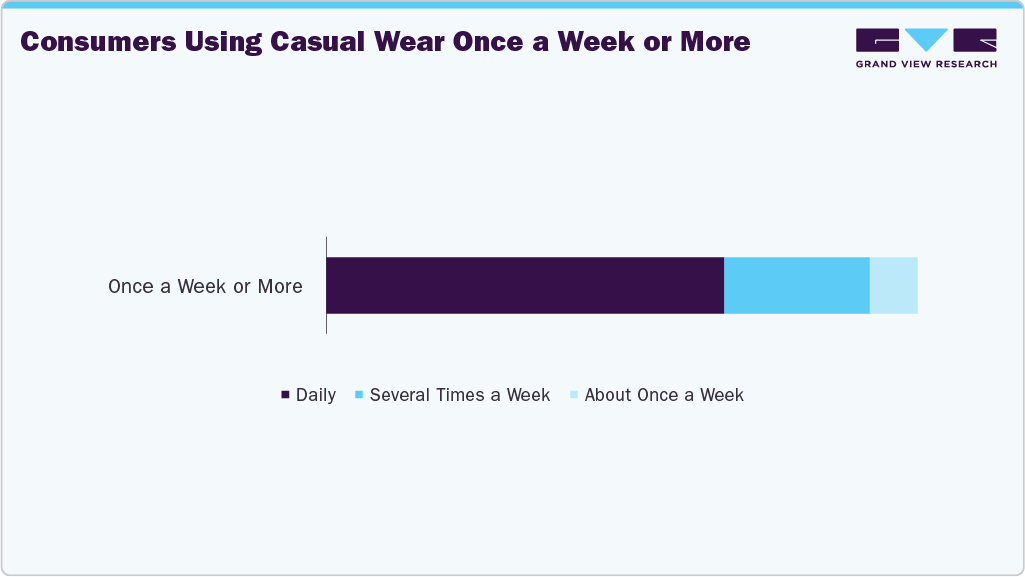
UK consumers place a high value on comfort, inclusivity, and versatility in their clothing choices. Convenience is a top priority: 94% of consumers wear casual clothes at least once a week, and 63% wear them daily. Casual wear has become a staple in personal wardrobe rotation, driven by its ease of use, adaptability across settings, and alignment with evolving lifestyle preferences.
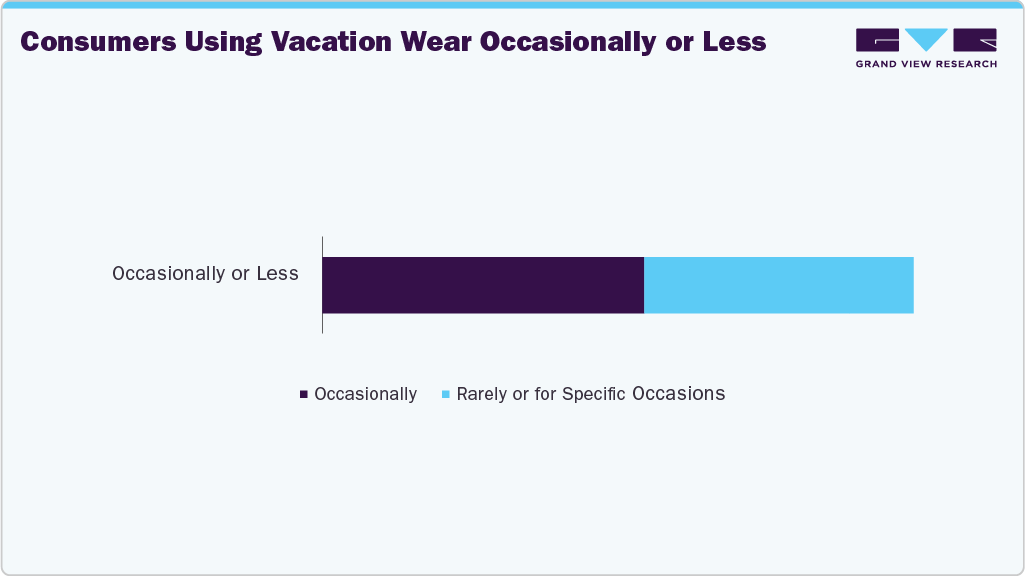
Vacation wear in the UK remains largely occasion-driven, with 72% of users reporting that they wear it only occasionally or rarely. This highlights its status as a situational category, especially when contrasted with casual wear, which is widely embraced for daily comfort and practicality. Vacation wear is typically viewed as seasonal or destination-specific, with usage patterns influenced by factors such as climate, travel habits, and lifestyle preferences.
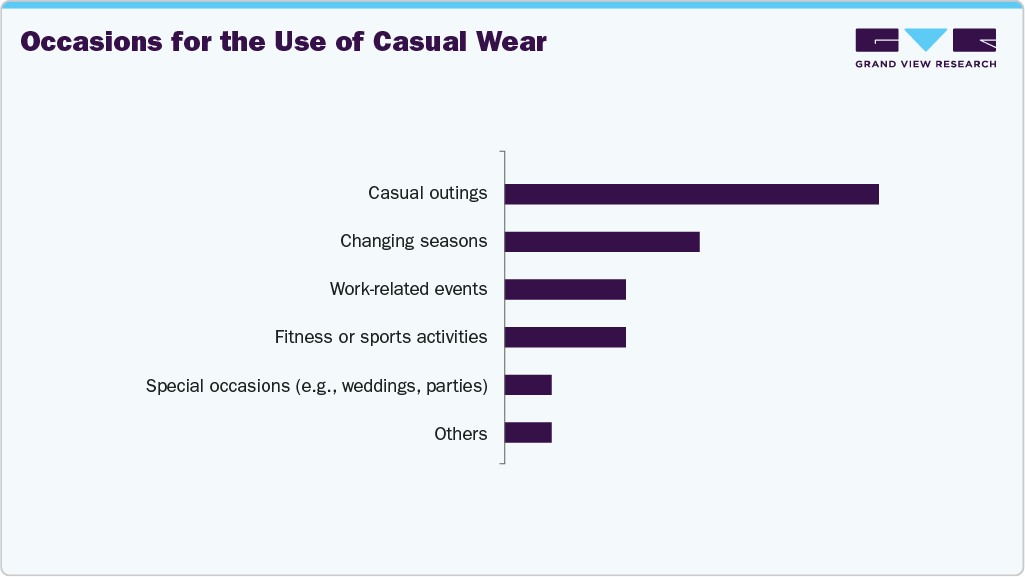
Casual wear is primarily chosen for casual outings, with approximately 7 out of 10 consumers indicating this use. However, its appeal extends well beyond leisure. Its versatility and layerable design, often crafted in adaptable fabrics, make casual wear ideal for navigating the UK’s unpredictable weather and seasonal transitions. With the growing trend for casuals in various workspaces, casuals are being worn for work-related activities. The comfort and moisture-wicking properties of casual wear also make it suitable for fitness or sports activities. Consumers widely associate casual wear with comfort and confidence, appreciating the fit, feel, and self-expression enabled by its trendy, accessible designs. That said, barriers such as the high cost of quality pieces, environmental concerns surrounding fast fashion, misalignment with personal style preferences, and limited size inclusivity may constrain category growth if left unaddressed.
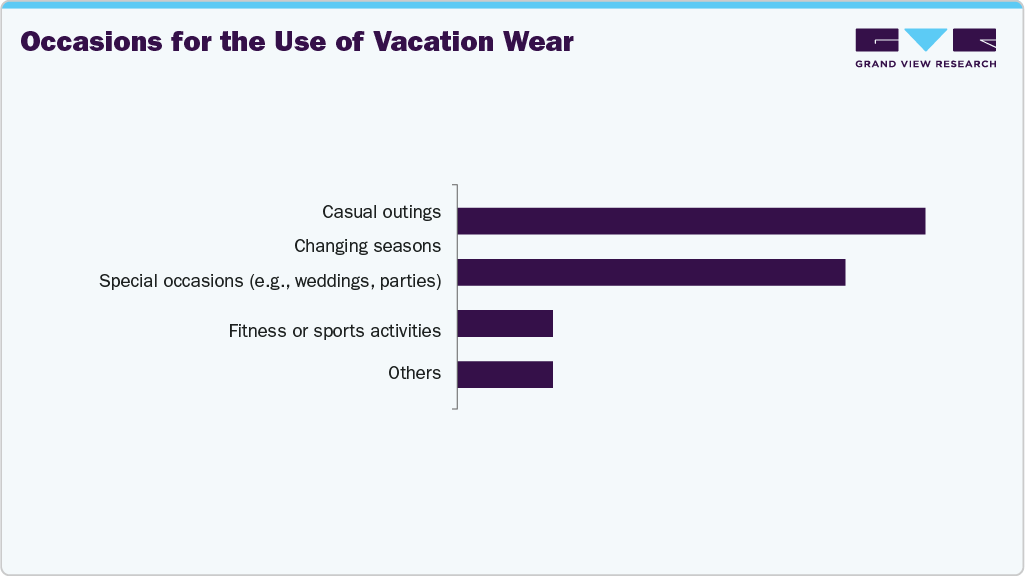
Vacation wear is primarily worn for lifestyle-driven occasions: 66% of consumers use it for casual outings, and 34% for seasonal changes. Special occasions like destination weddings, garden parties, and summer festivals account for 28% of usage, featuring items like flowy maxi dresses, linen shirts, and printed co-ord sets. A small percentage wear vacation-style clothing for light fitness activities, while none wear it for work-related events. Vacation wear, just like casual wear, allows consumers to express their personal style and fashion preferences while feeling comfortable and confident. It is considered a rewarding purchase for its good value for money and the use of soft, breathable materials such as cotton, rayon, and linen.
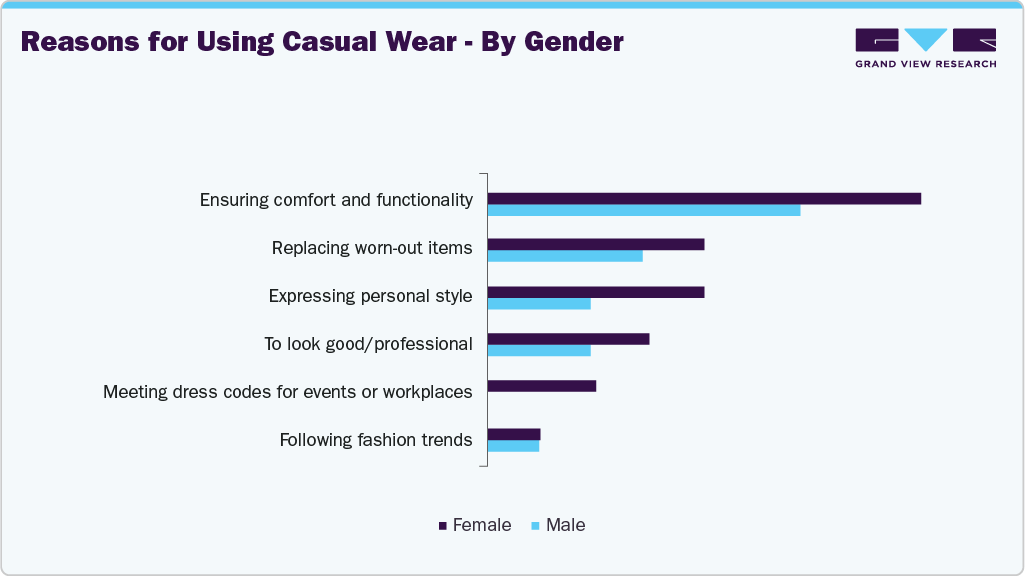
When it comes to reasons for using casuals, ensuring comfort or functionality is the most important reason for both females and males, followed by replacing worn-out items. Females also purchase casual clothes to express their style. Similar to the U.S., the comfortable fit and material of the product, good value for money, and its durability or long-lasting construction make this a delightful purchase. Brands have a gap to fill when it comes to the uncomfortable fit or materials that might cause irritation, or hinder movement, and limited size or style options, which leads to dissatisfaction among consumers.
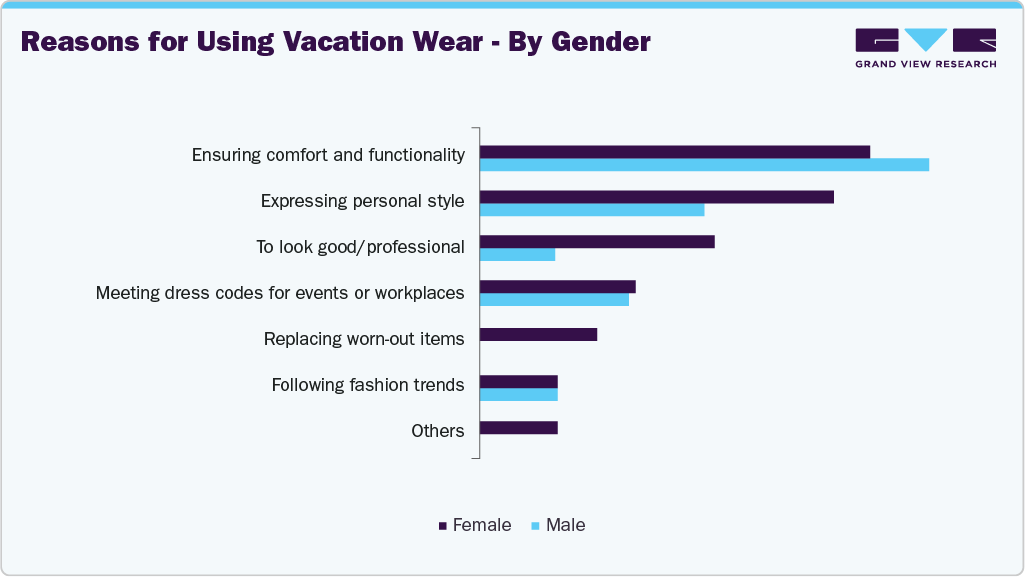
Vacation wear is primarily chosen for its comfort, functionality, and ability to express personal style. 53% of women and 60% of men cite comfort as a key reason for wearing such apparel. Women are more likely to use vacation wear to express their style, while a notable portion choose it to look good or professional in social settings. Comfort and self-expression dominate consumer motivation, but uncomfortable or ill-fitting vacation wear can create a strong negative association, leading to dissatisfaction. Well-fitted, breathable fabrics are crucial in this category.
Buying Behavior
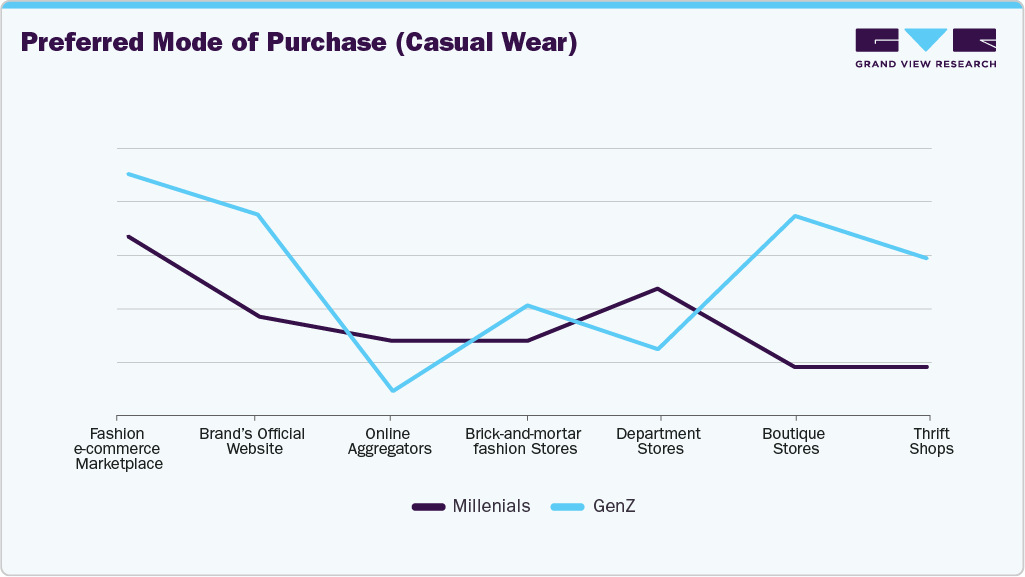
Before purchasing casual wear, consumers prioritize key information such as product quality, features, and price. The most important points are price and value for money, given that consumers are increasingly demanding economical products, followed by comfort and fit, given the rise in comfort-seeking consumers. Since the fashion trends, lifestyle, and income changes very frequently, consumers prefer to buy them once a month during discounts or offers. Online e-commerce marketplaces like Amazon are the most preferred mode of purchasing for both Millennials and Gen Z when it comes to the preference for mode of purchase for casual wear. Brand’s official website and boutique stores are the second-most preferred modes of purchase for Gen Z, and Departmental Stores are the second-most preferred mode of purchase for Millennials.
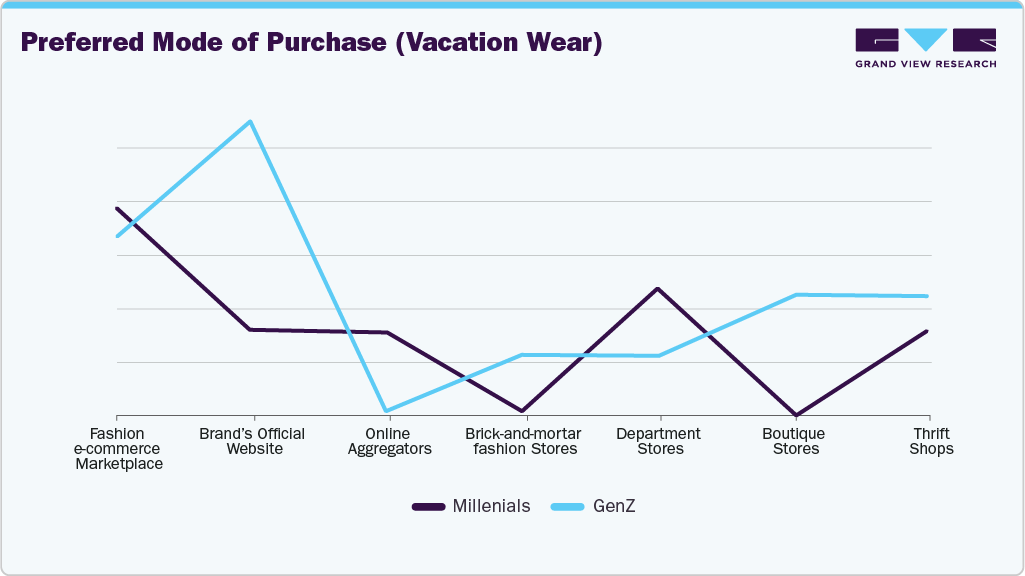
Before purchasing vacation wear, UK consumers prioritize price and value for money, comfort and fit, and material quality and durability, as these factors ensure a satisfying and practical purchase for occasional use. While fewer consumers focus on trends or brand reputation, the key driver remains reliable, comfortable clothing that performs well in warm-weather or travel settings. Most people purchase vacation wear only once a year, underscoring its role as a seasonal or event-specific category. When it comes to shopping preferences, Millennials lean toward fashion e-commerce marketplaces and department stores. In contrast, Gen Z prefers brand websites and boutique and thrift shops, highlighting a generational shift toward more direct, curated shopping experiences.
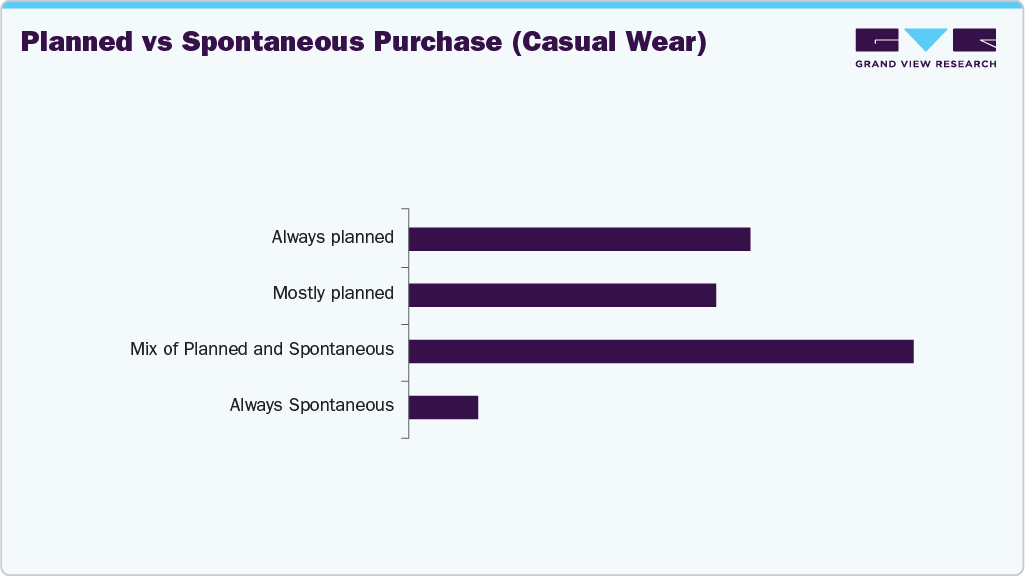
We can confidently state that Casuals belong to a more planned purchase category, as almost 6 out of 10 people say their purchases are planned, with 29% saying it is always planned. 43% of shoppers say their clothing purchases are a mix of planned and spontaneous, meaning they might set out for a new pair of jeans but end up grabbing a cool graphic tee that caught their eye. This balance shows how fashion is often both a need and an expression of mood or personality.
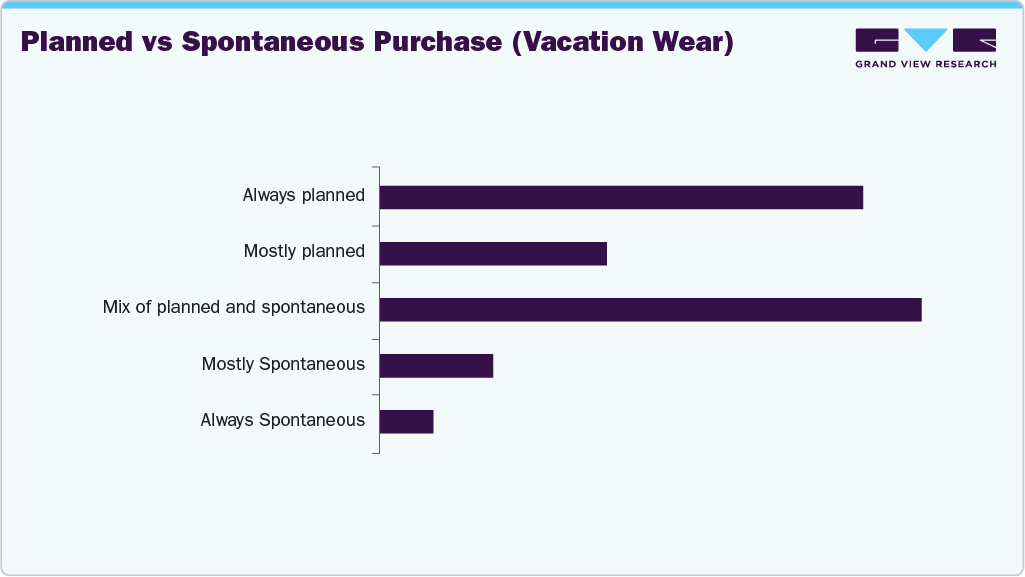
In the UK, vacation wear purchases are a mix of planning and impulse, with 38% of consumers reporting a blend of planned and spontaneous buying and 34% always planning. Unplanned purchases, which account for 10% of purchases, are triggered by seasonal sales, comfort and fit, unique designs, brand reputation, social media influence, and special events. Practicality and visual appeal drive immediate decisions, while brand reputation and visual appeal influence last-minute decisions. However, compelling deals or designs can still influence buying behavior on the spot.
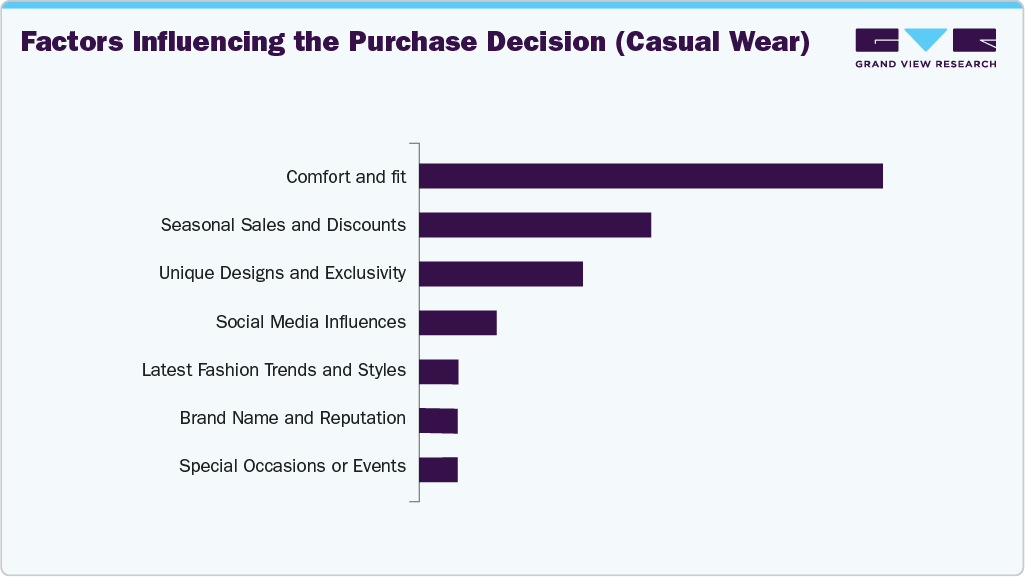
Budget-conscious consumers strategically time their clothing purchases around annual promotional events like Christmas and New Year sales, balancing their primary concern for comfort with the financial advantage of significant seasonal discounts, creating a calculated approach to wardrobe enhancement that accommodates both physical preferences and economic constraints. Also, online reviews & ratings and promotions & discounts act as the major factors that influence a purchase decision. Having said that, with the growing demand, some barriers to purchasing a product exist, such as high prices for quality items and inconsistent sizing across brands. Also, 8 in 10 consumers are moderately to highly conscious about the brand of casual wear they use, as the awareness levels around comfort and inclusivity increase, which can hinder consumers from choosing a brand without comfortable and versatile clothing options.
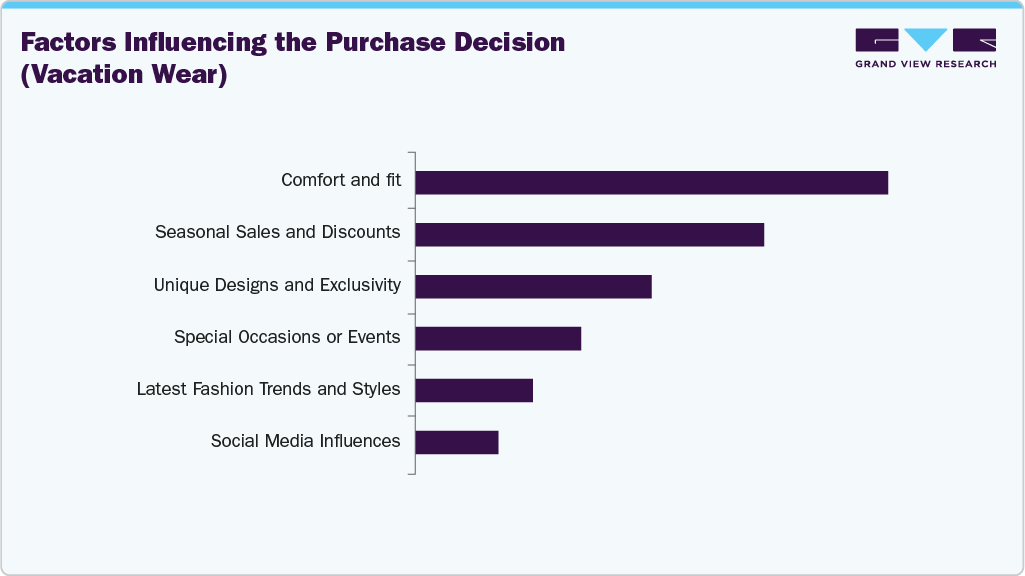
In the UK, the most common immediate triggers for purchasing vacation wear are comfort and fit, seasonal sales and discounts, and unique designs and exclusivity. Shoppers often seek vacation wear that feels light and breathable, such as cotton sundresses or relaxed-fit shirts, making comfort a key factor. Discounts during seasonal sales frequently prompt purchases ahead of planned holidays. Exclusive prints, co-ord sets, or limited-edition styles attract attention from those wanting a standout look. However, high prices for quality items and the lack of sustainable or ethically made products are major challenges consumers face when shopping for vacation wear. Online reviews and ratings play a crucial role in influencing purchase decisions, providing insights into fit and fabric. Moreover, 86% of consumers are brand-conscious, with many preferring to shop via the brand’s official website for reliability and product assurance.
Brand Power Play (Brand Health and Performance)
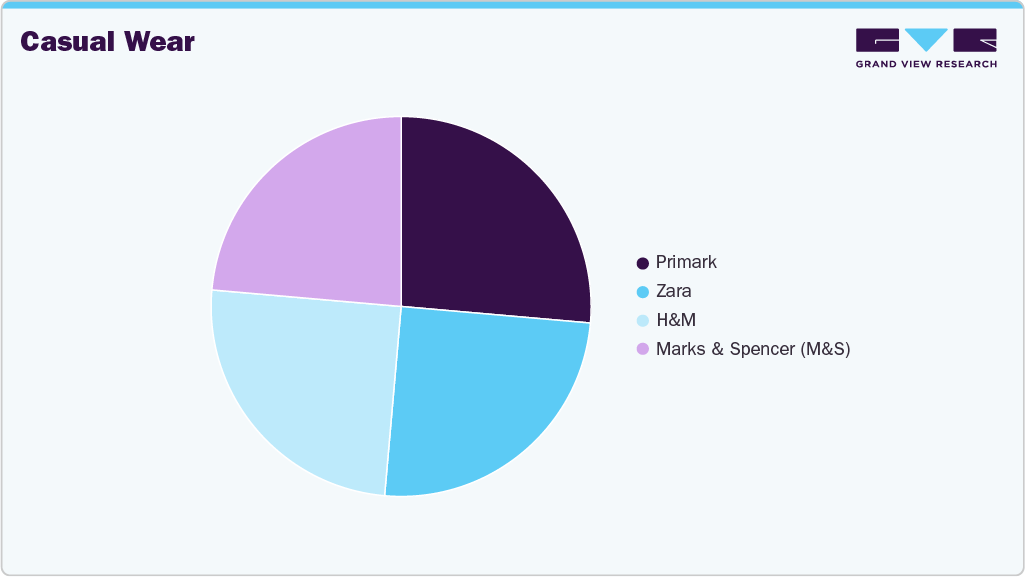
Some of the popular brands of casual wear in the UK include Primark, Zara, H&M, and Marks & Spencer. Although the casual wear market is highly competitive and large, Primark dominates the market with a 57% share (by awareness). Some of the other emerging brands are Next and Topshop, which are slowly making their way into the casual wear market.
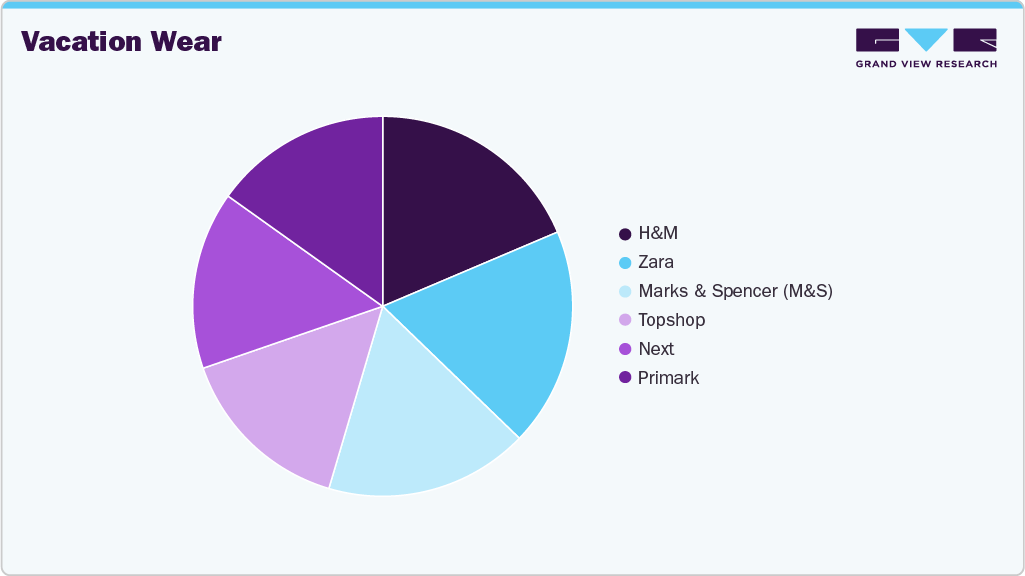
Some of the popular brands of vacation wear in the UK include Primark, Zara, H&M, Topshop, Next, and Marks & Spencer. Although the vacation wear market is competitive and growing, Zara and H&M dominate the market equally, with a 59% share (by awareness). Some of the other emerging brands are River Island, which is slowly making its way into the vacation wear market.
Purchase Funnel
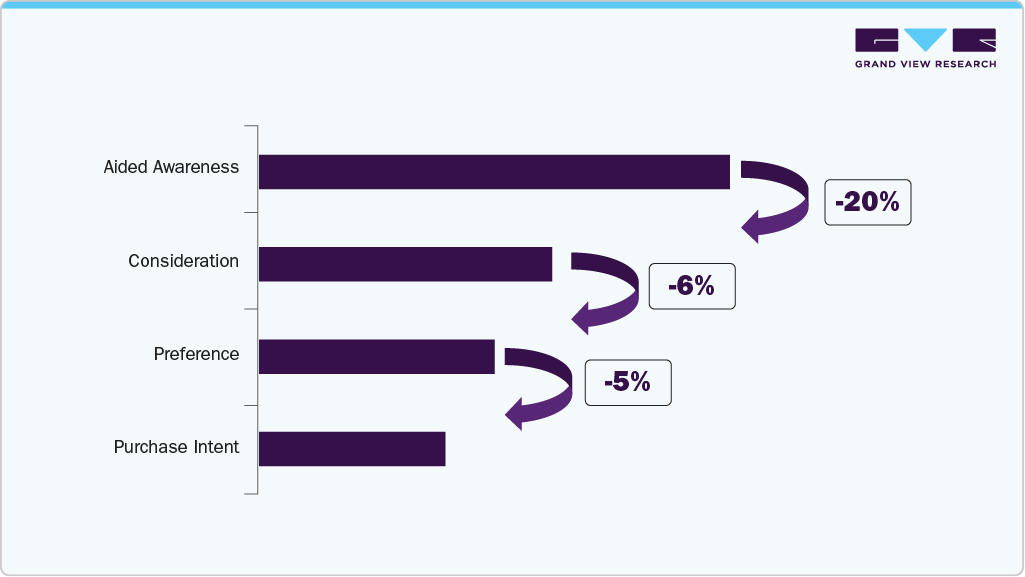
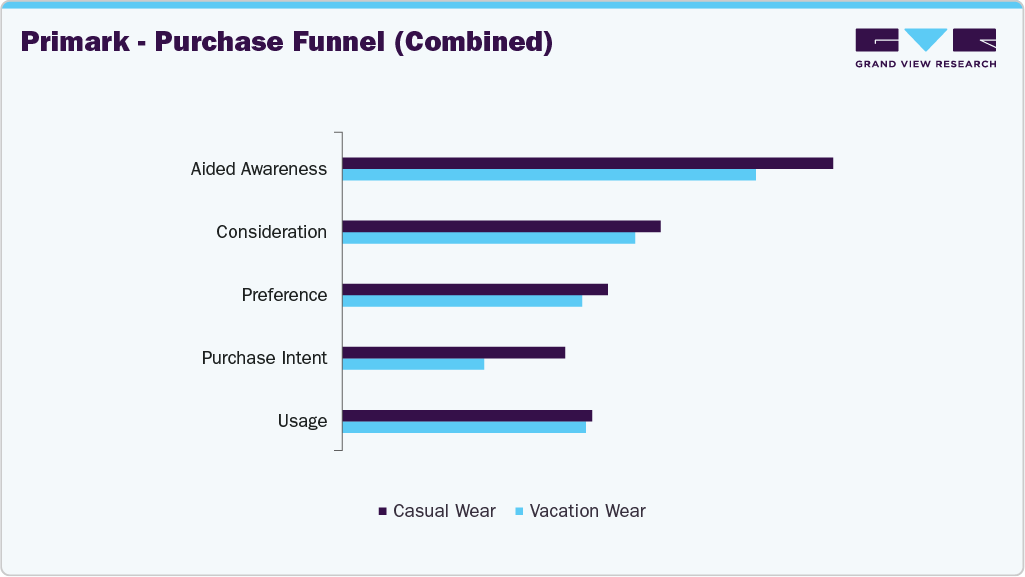
While many casual-wear brands enjoy high awareness in the UK, very few reach the consideration and preference stage. The market leader, Primark, exhibits a strong purchase funnel despite having a significant drop from awareness to consideration. Primark has the highest share, followed by M&S, in all the stages of the purchase funnel. Primark is considered, preferred, and intended for purchase by UK consumers primarily due to its affordability, trend-led fashion offerings, and strong value proposition. H&M and Zara have a considerable share of consideration and preference because they offer affordable, trendy clothing that caters to a wide range of styles. Consumers are using casual wear from Primark for a similar reason. In contrast, M&S clothes are not widely used because they are seen as less trendy and more geared towards older demographics, and they also face challenges in maintaining quality and appealing to younger, fashion-conscious consumers. Consumers like to purchase casual wear from Primark repeatedly because of its higher satisfaction level after use.
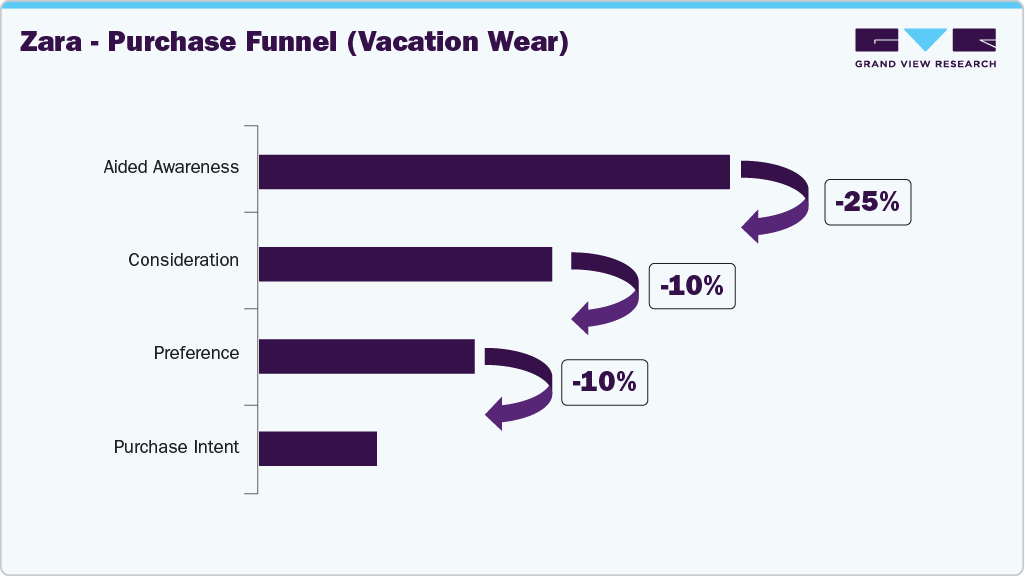
While many brands manufacturing vacation wear enjoy high awareness in the UK, very few reach the consideration and preference stage. The market leader, Zara, exhibits a strong purchase funnel despite having a significant drop from awareness to consideration. Zara and Primark lead the purchase funnel in all stages. Zara faces tough competition from Primark in the consideration stage, as both are considered equally for vacation wear. This is primarily due to their combination of affordability, fashion-forward designs, and wide availability. Zara is known for its fast fashion approach, offering trendy items at relatively reasonable prices, while Primark is renowned for its extremely budget-friendly options and vast selection. However, Primark beats Zara in preference, purchase intent, and current usage, especially among budget-conscious shoppers, due to its lower prices, wider selection of trendy items, and overall value proposition. Consumers like to repurchase their vacation wear from top brands like Primark and Zara due to similar reasons, and the satisfaction it gives post usage.
Most of the brands for casual wear are a direct match for vacation wear, thus showing that these brands have different sections catering to these categories. Since casual wear can be used at the time of vacations, consumers prefer to purchase vacation wear from those brands that manufacture casual wear. Primark, being one of the top brands in both categories, has a strong purchase funnel since it is highly considered, preferred, and used in the UK. Primark shows a stronger purchase funnel for casual wear than for vacation wear because its focus is on affordable, trend-driven fashion for everyday needs rather than high-end or specialized pieces for specific occasions like vacations.
In the casual wear segment, NPS scores among leading brands vary significantly, ranging from -66 to 25. The market Leader (Primark) has an NPS score of -25, indicating that it is not highly recommended by consumers to their family or friends. This is mainly due to concerns about the ethical and environmental impacts of its fast-fashion model. These concerns include low wages and poor working conditions in the supply chain, the use of unsustainable materials, and the overall contribution to fast fashion's negative impacts on the planet.
In the vacation category, the overall NPS score of the leading brands varies from 0 to 100, and brands like Next have the highest NPS score (100) compared to other vacation wear brands in the market. The market Leaders (Zara and H&M) have NPS scores of 29 and 0, respectively, indicating they are not highly recommended to consumers' family or friends. This is mainly due to ethical and environmental concerns, particularly regarding their fast-fashion business model and the potential for human rights violations and environmental damage in their supply chains. Although highly considered, Primark is not highly recommended by consumers due to concerns about quality and durability.

Talk to an analyst
Tell us what you need. We reply within one working day.
Service Guarantee
-
Insured Buying
This report has a service guarantee. We stand by our report quality.
-
Confidentiality
Your transaction & personal information is safe and secure.
-
Custom research service
Design an exclusive study to serve your research needs.
-
24/5 Research support
Get your queries resolved from an industry expert.