UK Footwear Consumer Insights - Usage, Attitudes, And Brand Performance Report
Introduction:
The UK footwear market in 2025 has shown significant recovery following the pandemic, with a stronger emphasis on sustainability and ethical production reflected in consumer purchasing patterns. The market has seen a notable acceleration in e-commerce adoption, with online sales now seeing an all-time high number of total footwear purchases. Sustainability has emerged as a critical differentiator, with brands prominently featuring recycled materials and transparent supply chains. Athleisure footwear continues to dominate, driven by ongoing fitness trends and work-from-home flexibility, though there has been a gradual return to formal footwear as office attendance increases. British-made products have gained traction due to concerns about supply chain resilience. At the same time, customization and personalization technologies have become key competitive advantages for brands seeking to attract younger consumers who value unique self-expression in their footwear choices. The vast footwear market can be further segmented into three types: sports, formals, and casuals.
The UK sports footwear sector has shown resilience, with technology-integrated and sustainable items gaining popularity. As athleisure continues to dominate, traditional retail methods are being challenged by direct-to-consumer sales channels. Major businesses are emphasizing personalization through limited editions and customization options. The market's shift towards performance-specific footwear has shown strength in running, training, and outdoor footwear categories. Environmental consciousness has accelerated sustainable production methods, with carbon-neutral production and recycled materials becoming key factors for consumer loyalty and brand positioning.
The UK formal footwear market has evolved steadily due to changing consumer expectations. Traditional shoes are slowly starting to receive competition from "smart-casual hybrids" that combine comfort and professional aesthetics. Sustainability has become a central concern, with eco-friendly materials and transparent supply chains introduced. The luxury segment has shown resilience, driven by the "investment piece" mentality. Digital commerce dominates, while in-store experiences focus on personalization and fitting technology. British heritage brands have seen renewed interest through modernization and collaborations with contemporary designers.
The mix of comfort and style has led to a large growth in the UK casual footwear market, with eco-friendly and sustainable solutions gaining market dominance. Demand for adaptable footwear that works in both formal and informal situations has increased as a result of the post-pandemic shift towards hybrid work structures. Personalization and digital tactics have increased the visibility of direct-to-consumer brands. Tech-integrated elements like smart insoles and sustainability tracking are common in athletic-inspired casual footwear with bulky shapes and nostalgic patterns. Premium sustainable brands continue to be well-liked by consumers who care about the environment, even in the face of rising price sensitivity brought on by inflation.
Given below are some of the market trends prevailing in the UK footwear industry as a whole:
-
Sustainable Tech Fusion: Sustainability and technology have combined to create footwear with environmental credentials and digital integration. Blockchain-tracked supply chains enable consumers to verify eco-friendly materials and ethical manufacturing practices. Smart shoes made from recycled materials use energy-harvesting tech for fitness tracking and battery waste reduction. QR codes in sustainable footwear provide detailed environmental impact information and recycling instructions, appealing to tech-savvy millennials and Gen Z consumers.
-
Comfort-Health Ecosystem: Comfort-focused design and health benefits have created a market segment for biomechanically engineered casual shoes. These shoes offer orthopaedic benefits without compromising clinical appearance. Mental health marketing emphasizes the connection between physical comfort and reduced stress, especially in post-pandemic contexts. Customization options include personalized support features and recovery-focused materials, promoting active lifestyles and reducing stress.
-
Versatile Expression: The combination of function and personalization in footwear has led to adaptable designs that showcase individual identity. Modular design systems enable consumers to customize their footwear for various occasions, with custom color and material options. Direct-to-consumer platforms offer personalized options based on lifestyle data, while augmented reality visualization tools allow consumers to preview versatile styles before purchasing.
-
Heritage Circularity: Traditional craftsmanship is reshaping the narrative of sustainability and quality in footwear. Heritage brands are offering repair programs and lifetime guarantees, positioning footwear as an investment rather than a disposable product. Rental services provide access to craftsmanship that would be financially inaccessible to younger consumers. Transparent pricing explains labour-intensive techniques and environmental benefits. Archival designs are reinterpreted with modern sustainable materials, bridging generational preferences while maintaining authentic construction methods.
Methodology:
The insights covered in this report are drawn from GVR’s 'Voice of Consumer Survey’ and its periodic updates. The latest survey represents 75,000+ consumer interviews conducted across 20 countries for 100+ product categories. These insights are specifically catered to the brands operating in the footwear industry to guide them in their strategic decision-making process. This report provides insights covering category usage & attitude, buying behavior, brand performance metrics, and brand health indicators of leading players in the UK footwear market.
Chapter 1: Usage and Attitude
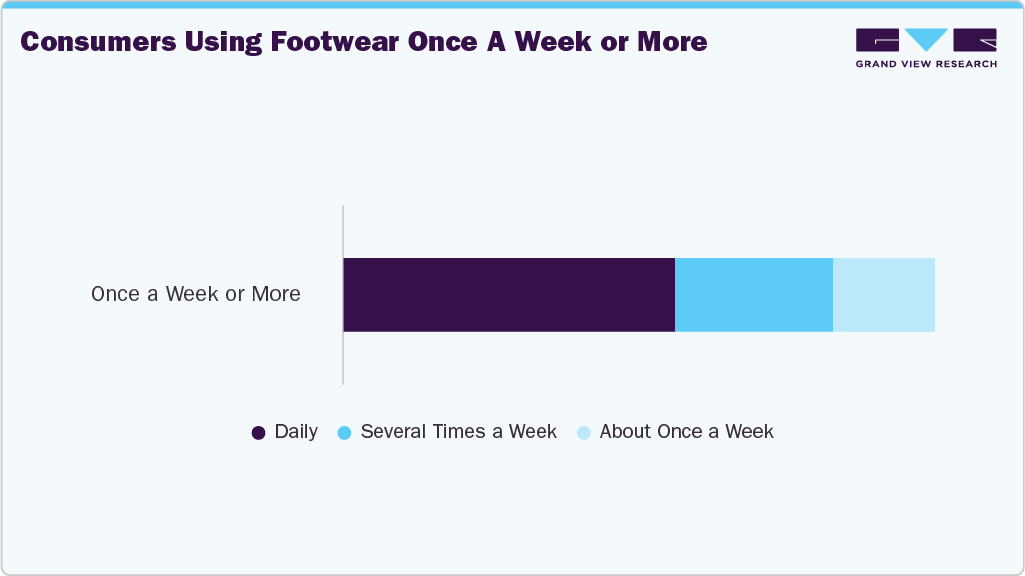
Footwear is an essential part of daily life, often driven by the need for comfort, protection, and suitability for various activities. People commonly wear shoes every day for work, errands, and outdoor travel, while others may wear them less frequently due to remote work or a more casual lifestyle. Rotating footwear is a common habit, as it allows individuals to match different styles with outfits, maintain proper foot hygiene, and extend the durability of their shoes. This blend of function and fashion makes footwear a key component of personal wardrobe management.
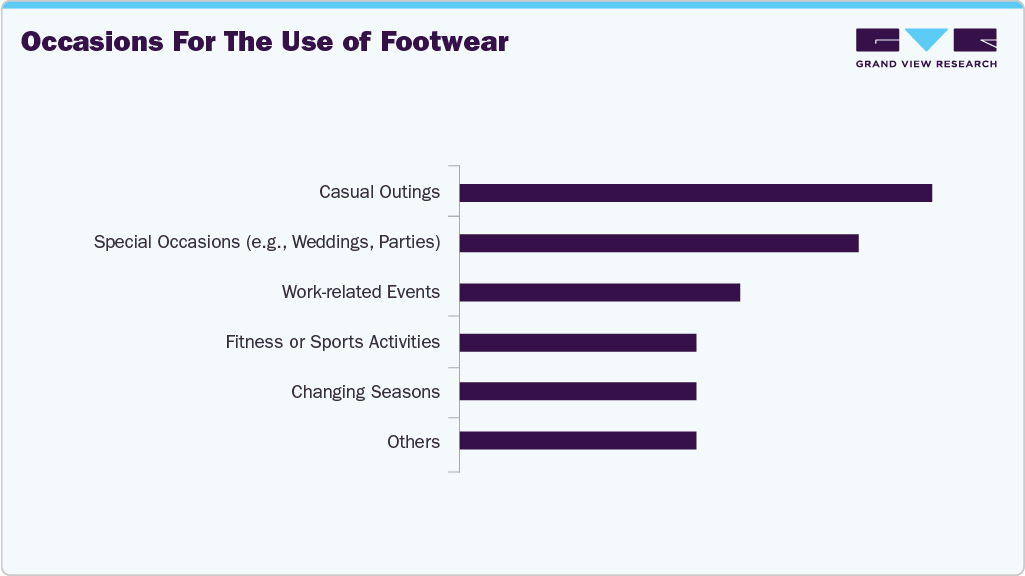
Footwear is used on various occasions, such as casual outings, work events, and special celebrations like weddings or parties. Additionally, people select particular shoes for exercise or seasonal change, such as sandals in the summer or boots in the winter. These selections help people keep organized and presentable by combining style with practicality. For instance, while trainers are perfect for sports and exercise, formal shoes are necessary in professional settings. People feel more at ease and self-assured when they wear the appropriate footwear, which also frequently adds the ideal finishing touch to an outfit. It improves one's sense of style and has a good impact on one's mood and self-perception. However, some negative associations include limited size options in certain brands, making it hard to find the right fit. High costs for quality or designer shoes and discomfort from ill-fitting footwear can also lead to frustration and dissatisfaction.
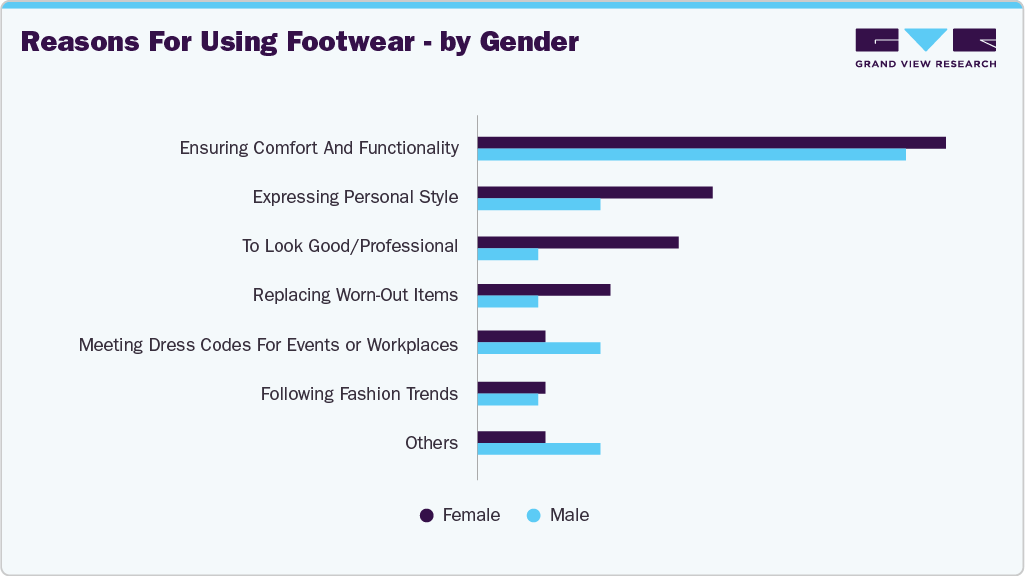
Footwear use among genders in the UK is driven primarily by comfort and functionality, with both men and women valuing shoes that support daily activities and provide ease. Women are more likely to use footwear to express personal style or look professional, while men more often consider practicality or event dress codes. Replacing worn-out shoes is another key reason, especially among women who also follow fashion trends more closely. For example, a woman might choose heels to match a formal outfit, while a man may prioritize sturdy shoes for work. A comfortable fit, quality materials, and good value for money make footwear purchases satisfying and enjoyable. These factors enhance the overall wearing experience and encourage brand loyalty. On the other hand, uncomfortable designs, poor materials, or flawed workmanship can lead to disappointment, reducing trust in the brand and making the purchase feel wasteful.
Buying Behavior
Before purchasing footwear in the UK, consumers prioritize comfort, fit, and price, as these directly impact daily use and satisfaction. Material quality and durability are also key considerations, as buyers seek long-lasting value. While brand reputation and unique design appeal to some, especially style-conscious shoppers, they are secondary to practical factors. For instance, someone buying running shoes will focus more on cushioning and support than on current fashion trends. Knowing these essential details helps buyers make informed, cost-effective choices. Most people buy footwear either once every six months or quarterly, depending on lifestyle needs, changing seasons, or wear and tear.
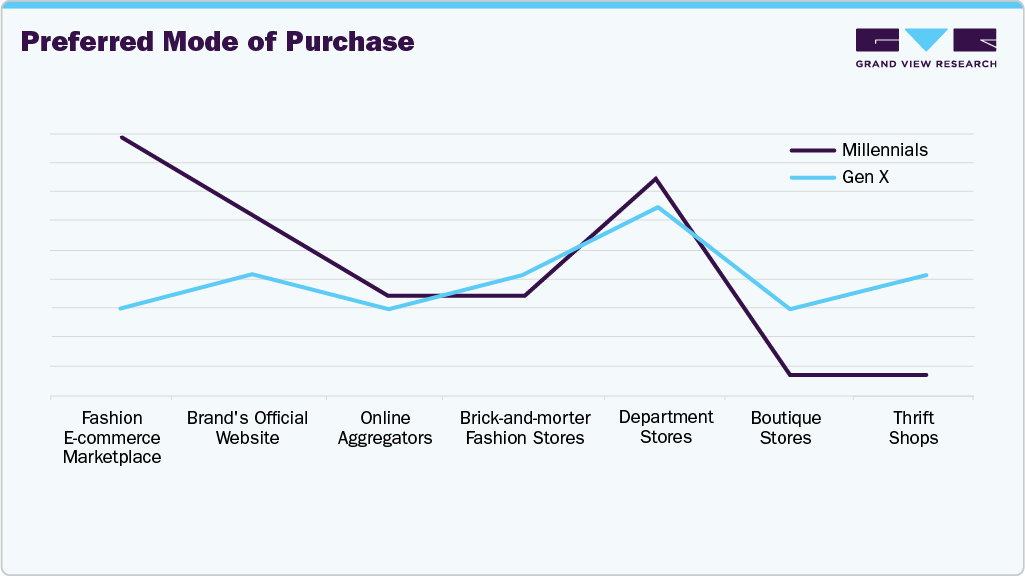
Millennials tend to prefer fashion e-commerce marketplaces and brand websites, valuing convenience, variety, and tech-savvy shopping. Generation X, however, leans more toward department stores, brick-and-mortar shops, and even second-hand stores, appreciating the ability to see, touch, and try items. While online trends and faster fashion cycles influence millennials, Generation X often values trusted sources and in-person customer service. For example, a millennial might buy trendy sneakers online, while a Gen X shopper may visit a store for quality leather shoes. These preferences reflect generational habits shaped by technology, experience, and shopping values.
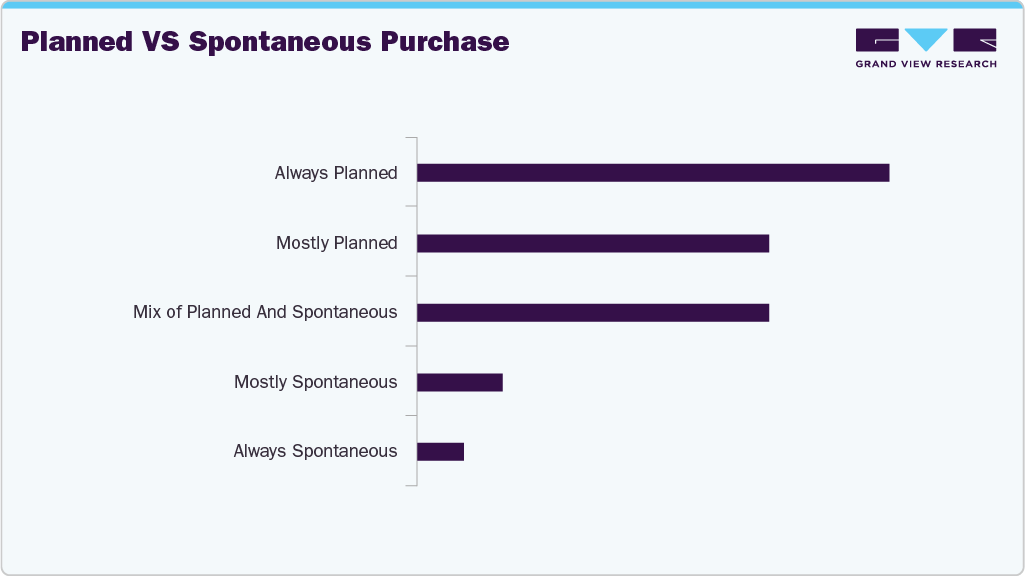
Footwear purchases in the UK are mostly planned, as buyers often assess needs based on comfort, budget, and occasion, such as replacing worn-out shoes or preparing for a seasonal change. However, many also show a mix of planned and spontaneous behavior, balancing practicality with style. Eye-catching designs, exclusivity, or unexpected discounts typically trigger spontaneous purchases. For example, someone might suddenly buy a bold pair of boots spotted during a seasonal sale. Such triggers create urgency and appeal to the desire for uniqueness or value, making even unplanned buys feel justified.
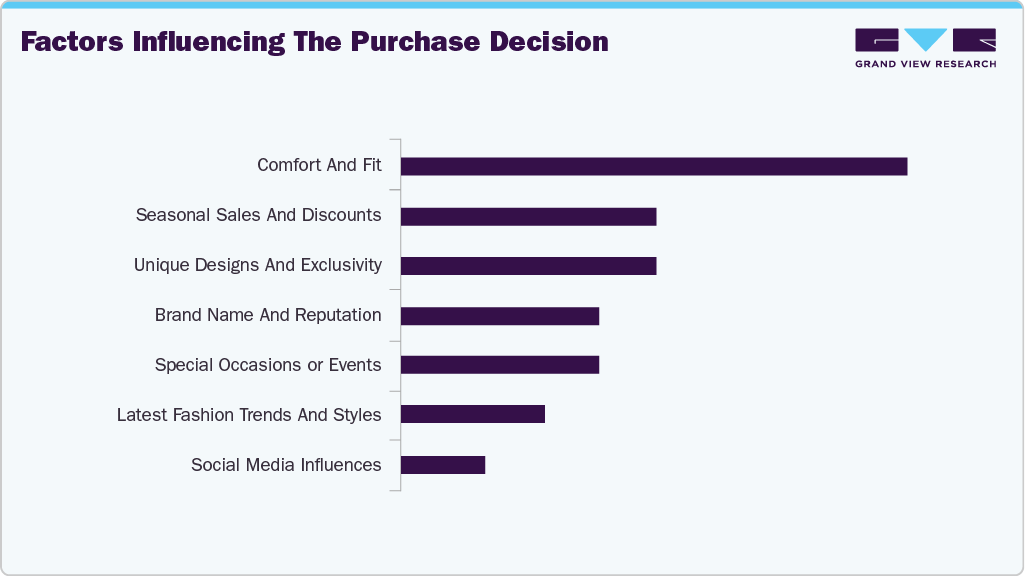
One of the most important immediate triggers for purchasing footwear in the UK is the need for comfort and a good fit. Shoppers are often driven by how shoes feel on their feet, especially if they plan to wear them for extended periods. Seasonal sales and discounts also play a major role, as consumers look for opportunities to buy stylish or high-quality shoes at reduced prices. Unique designs can catch the eye and prompt an unplanned purchase, particularly when a style stands out or feels exclusive. Additionally, trusted brands with strong reputations can influence decisions, as many buyers associate well-known names with reliability and quality. Despite these motivations, shoppers frequently encounter challenges such as high prices for quality items, which can make premium footwear feel out of reach. Many also struggle to find the right size and fit, particularly when options are limited or inconsistent between brands. Online reviews and ratings have become powerful tools in the decision-making process, giving shoppers real-world insights into comfort, durability, and style before they buy. These shared experiences reduce uncertainty and make online shopping more dependable. Brand consciousness is another major factor, with many consumers gravitating toward labels that reflect their identity and values. A positive brand image and consistent product experience often translate into long-term loyalty.
Brand Power Play (Brand Health and Performance)
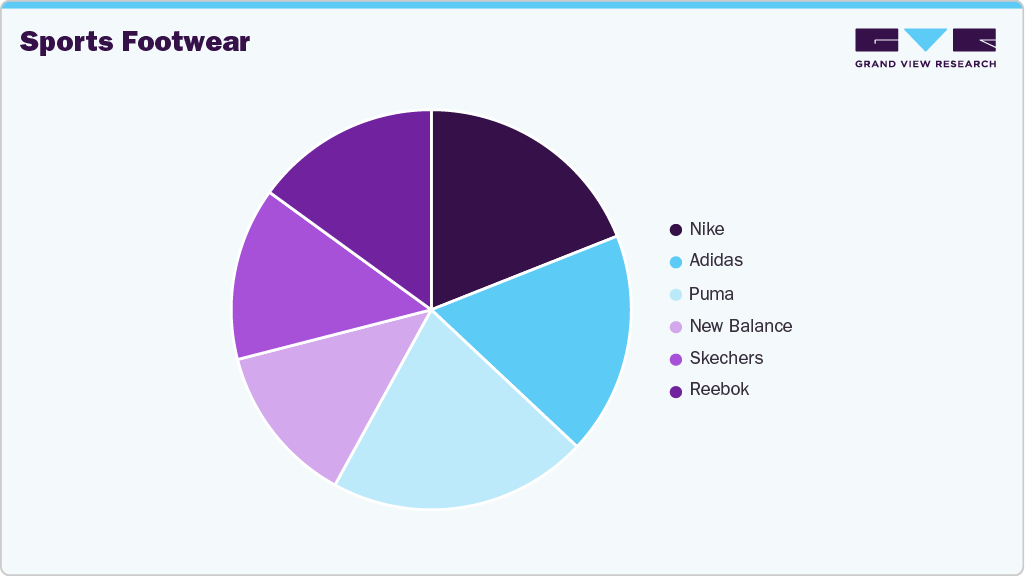
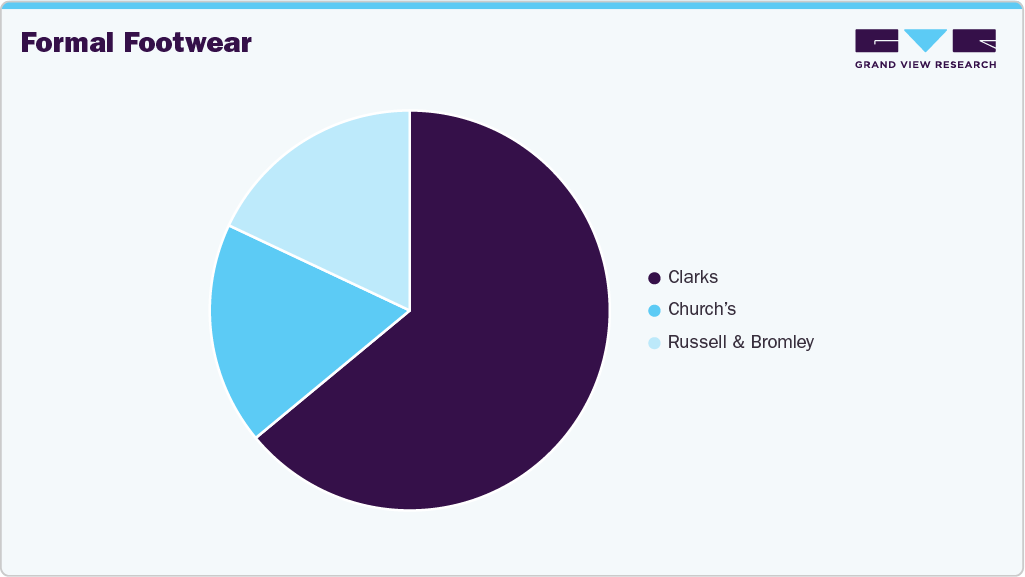
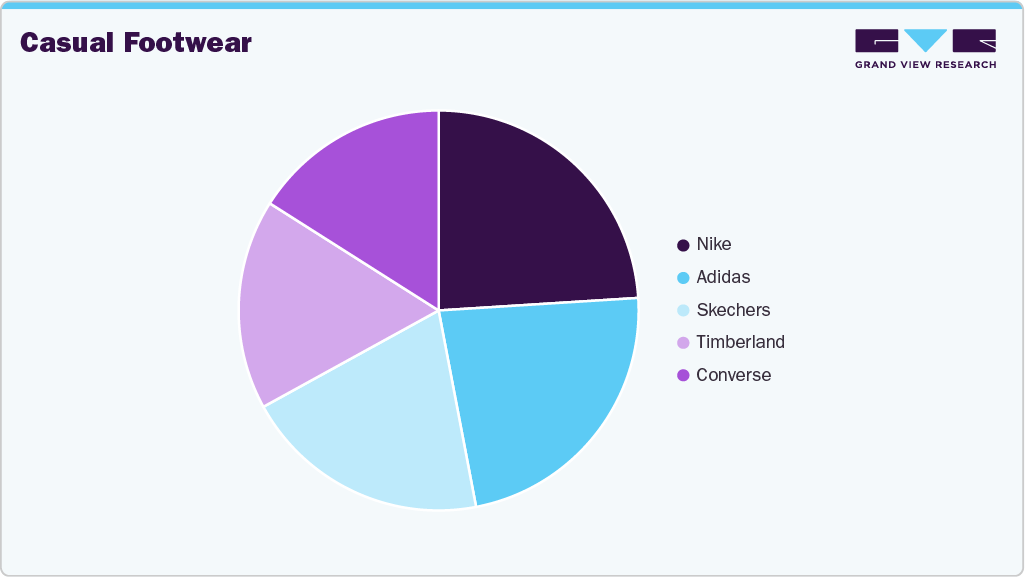
The UK footwear market is very competitive and caters to different kinds of footwear. These are for sports, casuals, and formals. There are many brands in the UK footwear industry, with Puma leading the sports segment with 68% market share (by awareness). Looking deep into formal footwear, Clarks (65% awareness) solely leads the market, showing its ruling power in this industry. In the casual footwear market, Nike (68% awareness) is the market leader along with Adidas.
Purchase Funnel
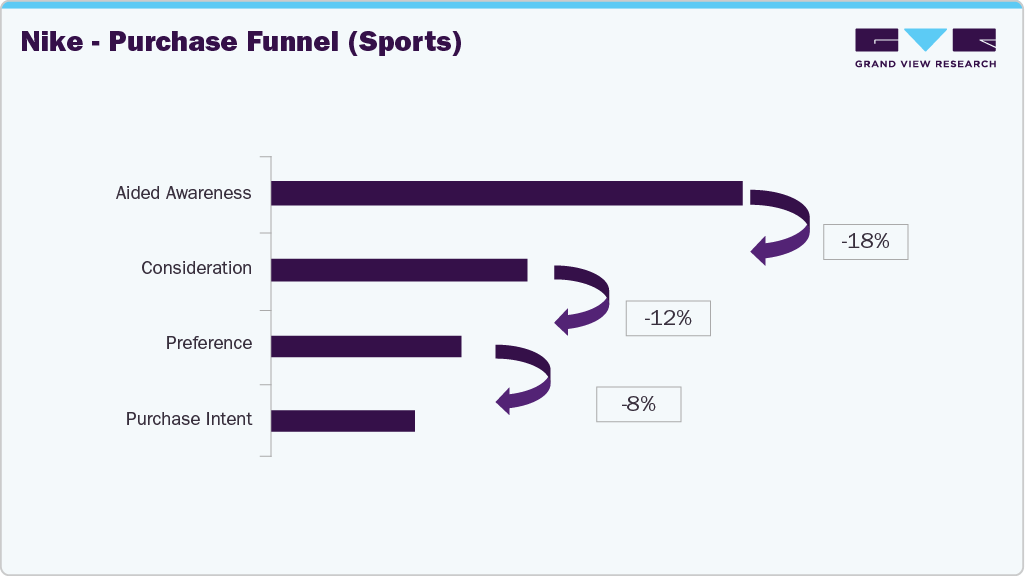
While many brands manufacturing sporty footwear enjoy high awareness in the UK, very few make it to the consideration and preference stage. Despite Puma being the market leader, Nike is considered over it, thus exhibiting a strong purchase funnel despite having significant drops at each stage. It is mainly due to its advanced performance technology, athlete endorsements, and strong brand reputation. Its focus on innovation and visibility in major sports makes it the go-to choice for serious athletes and fitness enthusiasts. Puma closely follows Nike in terms of consideration, preference, and purchase intent, but is being used equally at present. It is worth noting that Nike has a high repeat purchase trend vs any other prominent brand, driven by high satisfaction levels and its consistent product quality, comfort, and performance-driven designs that meet consumer expectations.
The overall NPS score of the leading sports footwear brands varies from -66 to 100, with Skechers having the highest NPS score (100) compared to other brands in the UK market. Skechers is highly recommended in the UK sporty footwear market due to its reputation for exceptional comfort, supportive cushioning, and affordability. The brand appeals to a wide demographic, including walkers, casual athletes, and those seeking everyday activewear, with styles that blend function and lifestyle-friendly design.
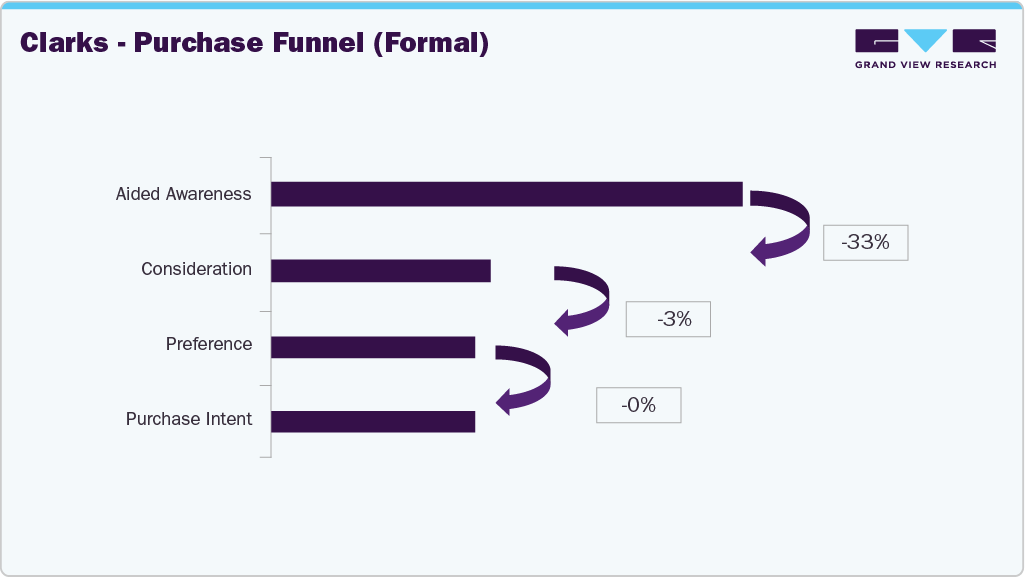
Though the UK formal footwear market is competitive and brands like Clarks, Church’s, and Russel & Bromley enjoy high awareness, not everyone makes a great purchase funnel. Clarks leads the market with not only a higher awareness but also a great purchase funnel, despite having a significant drop from awareness to consideration. Thanks to its local heritage, strong reputation for quality, and blend of style and comfort. Its long history and focus on craftsmanship make it a trusted and widely recognized British brand. It is not only highly regarded but also has a high repeat purchase trend due to its long-standing brand reputation and consumer satisfaction post usage.
Though the overall NPS score of the leading formal footwear brands varies from 0 to 36, other brands like Crockett & Jones and Herring Shoes have the highest NPS score (100) compared to the prominent brands in the UK market. Nonetheless, Clarks is also recognized and recommended for formal footwear.
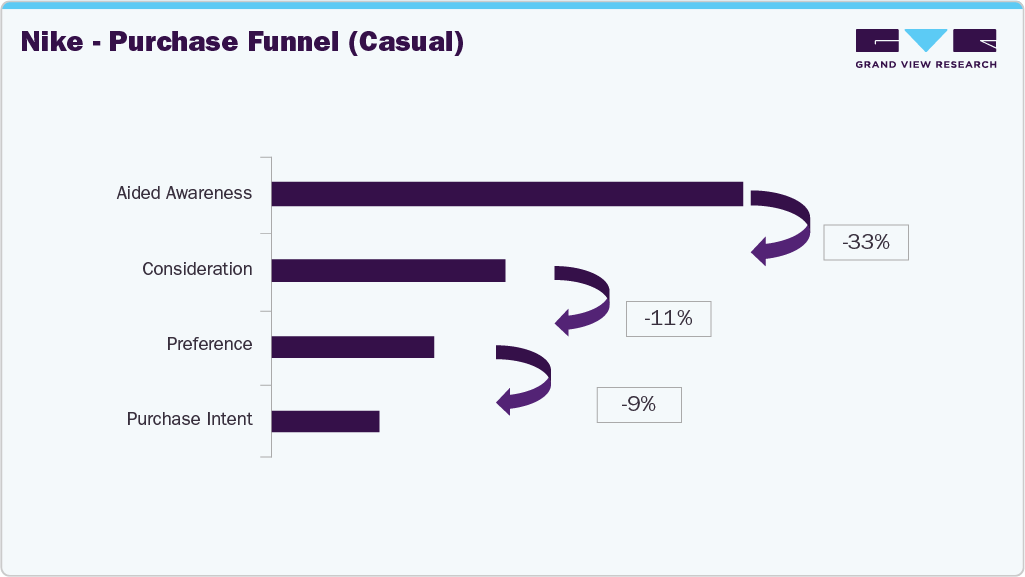
While many brands manufacturing casual footwear are highly competitive and enjoy high awareness in the UK, very few make it to the consideration and preference stage. Nike, being the market leader, exhibits a strong purchase funnel despite having a significant drop from awareness to consideration. Nike remains a tough competitor in this market despite having drops at each stage, with Adidas closely following in the consideration stage. Adidas and Skechers give a tough competition to each other in the preference stage, but Nike leads in that stage. This is because of Nike’s strong brand image, trend-setting designs, and wide appeal across age groups. While Adidas and Skechers offer comfort and value, Nike's marketing and lifestyle positioning give it a competitive edge. Adidas surpasses Skechers and follows Nike in the purchase intent stage. Nike is highly used by consumers as casual footwear, with Skechers following. This is mainly due to their higher repeat purchase trend and satisfaction level post usage.
Though the overall NPS score of the prominent casual footwear brands varies from 0 to 66, other brands like Vans and New Balance have the highest NPS score (100).
