UK Innerwear And Shapewear Consumer Insights - Usage, Attitudes, And Brand Performance Report
Introduction:
The UK innerwear industry has experienced significant growth in recent years, with digital channels dominating the market. The industry is influenced by environmental consciousness, with sustainable collections and ethically sourced products. With sizing guidelines and gender-inclusive strategies becoming more widely accepted, diversity and representation have become a business requirement. The comfort revolution is being sustained by technological advancements and designs informed by body structure. Innovations focused on health have accelerated, and digitally native startups are gaining market share.
The UK shapewear industry is expected to undergo a significant transformation by 2025, reflecting consumer attitudes towards body positivity and maintaining a strong market presence. Traditional compression garments have evolved with innovative fabric technologies, expanding beyond special-occasion wear to everyday use. Sustainability has become a key differentiator, with brands introducing recycled materials and biodegradable packaging. The inclusivity movement has reshaped product development, with expanded size ranges and diverse color options. Digital-native brands have disrupted traditional retail channels, while traditional retailers have enhanced in-store experiences. Price points have diversified, creating distinct market segments.
By 2025, the UK innerwear and shapewear industries will continue to converge, with products increasingly designed to balance comfort and functional support. Both sectors have embraced more inclusive sizing and expanded use of sustainable materials like recycled nylon and bamboo, alongside seamless knitting technologies that create hybrid garments offering targeted support with improved comfort compared to earlier generations. The wellness movement has influenced product positioning toward benefits, including posture support and moisture-wicking properties, though these remain emerging features rather than universal market standards. Direct-to-consumer models have grown in prominence, particularly through established brands like Skims and newer players, reshaping traditional retail channels, though department stores and specialty retailers remain significant. Post-pandemic consumer preferences have sustained demand for multifunctional pieces that blend loungewear and activewear elements. However, most shapewear continues to serve as specialized occasion wear rather than seamlessly transitioning across all daily contexts. The market is projected to expand steadily, driven by ongoing innovation in comfort technologies, broader size inclusivity from brands offering sizes from 3XS to 6X, and growing consumer interest in sustainable production methods such as closed-loop manufacturing systems and ethical labor standards. Here are some of the market trends prevailing in the innerwear and shapewear industry in the UK:
-
Comfort-First Design: Brands are prioritizing comfort with seamless construction, moisture-wicking fabrics, and ergonomic designs. Shapewear is evolving from restrictive to wearable, everyday essentials. This shift caters to consumers who want support without compromising ease of movement. Comfort is now viewed as essential, not optional. As a result, even traditional innerwear is getting a functional upgrade.
-
Inclusivity & Body Positivity: The industry is embracing size diversity and gender inclusivity like never before. Expanded size ranges, adaptive fits, and shapewear for men are becoming mainstream. Brands now cater to all body types and gender identities, reflecting wider cultural values. Campaigns are focusing on confidence over concealment. This inclusive approach is redefining the purpose of shapewear.
-
Sustainable Shift: Consumers are actively seeking eco-conscious products with transparent sourcing and low-impact materials. From recycled lace to biodegradable packaging, sustainability is influencing buying behavior. Ethical production and long-lasting design are now key brand differentiators. This green movement is reshaping product lifecycles in both innerwear and shapewear. Eco-labels are gaining credibility and market share.
-
Fashion-Driven Appeal: Shapewear and lingerie are no longer hidden layers-they’re part of the outfit. From bodysuits worn as outerwear to luxury collaborations, the line between innerwear and fashion is blurring. Influencer culture and designer endorsements are driving this visibility. Consumers want style as much as function. Shapewear has become a confident, fashion-forward statement.
Methodology:
The insights covered in this report are drawn from GVR’s ‘Voice of Consumer Survey’ and its periodic updates. The latest survey represents 75,000+ consumer interviews conducted across 20 countries for 100+ product categories. These insights are specifically catered to the brands operating in the innerwear and shapewear industry to guide them in their strategic decision-making process. This report provides insights covering category usage & attitude, buying behavior, brand performance metrics, and brand health indicators of leading players in the UK innerwear and shapewear market.
Chapter 1: Usage and Attitude
UK consumers are increasingly opting for comfort and lifestyle-driven choices, with 53% wearing innerwear daily. Brands like Calvin Klein and Marks & Spencer are responding with minimalist, athleisure-inspired underwear and wireless bras. Body positivity is also driving this shift, with both heritage and modern brands adapting to meet this comfort-first mindset.
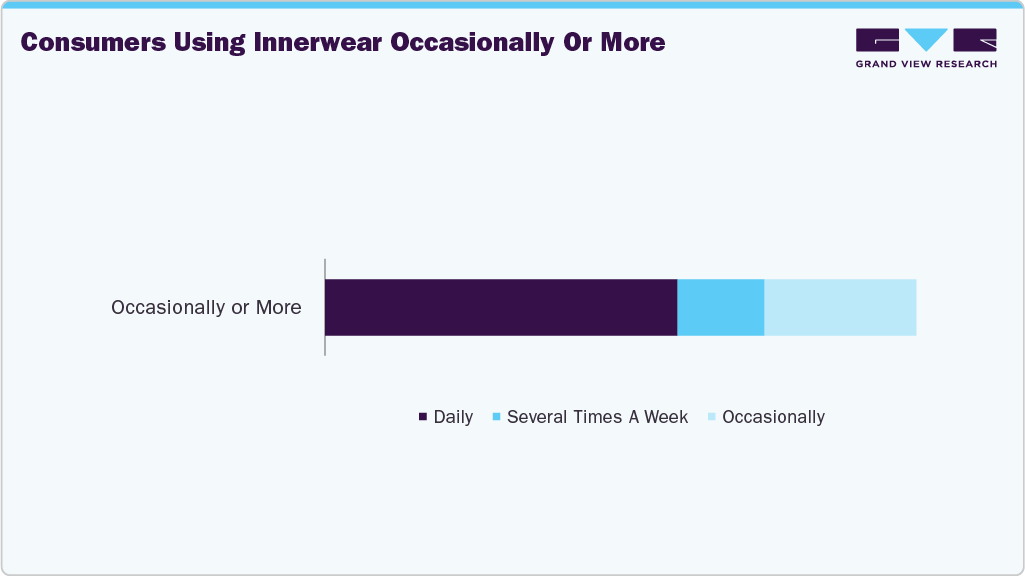
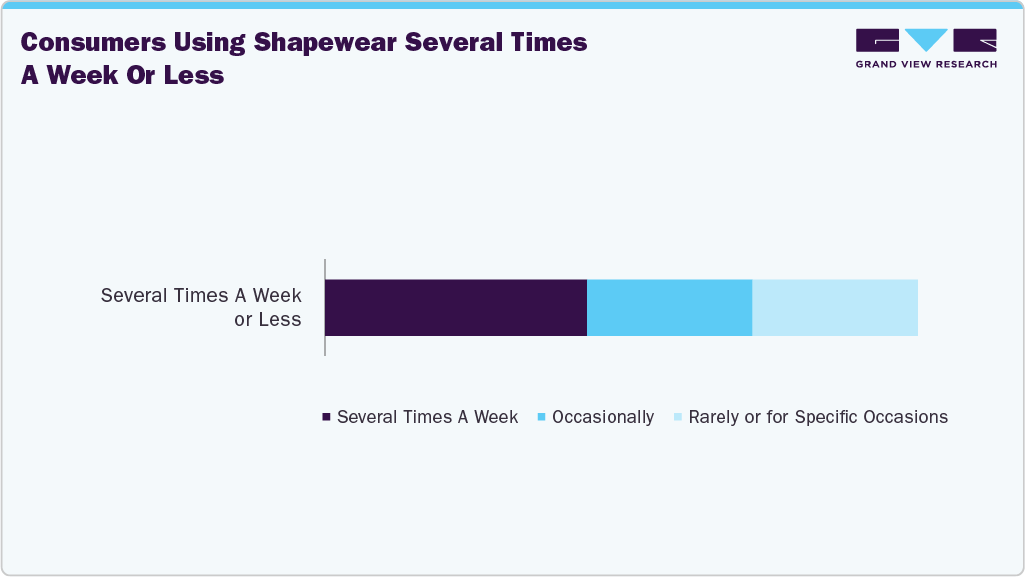
UK shapewear usage is modest, with only 8% wearing it daily, 22% using it multiple times a week, and 28% occasionally or rarely. 36% don't use shapewear, indicating a niche market. Brands like Skims and Marks & Spencer are promoting more frequent wear through stylish, comfortable options, while the category's growth lies in combining comfort, fashion, and practicality for wider adoption.
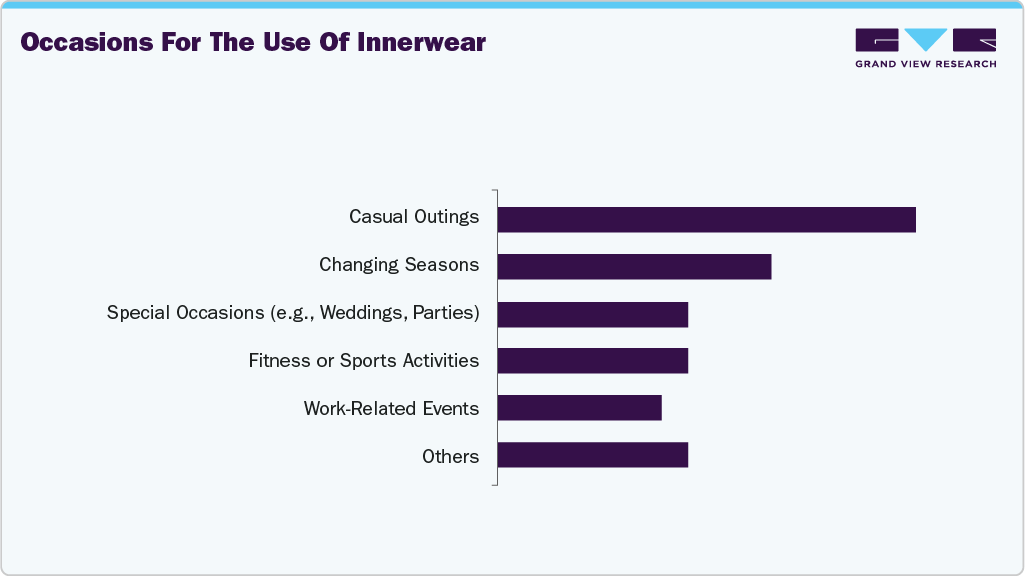
Innerwear use in the UK is influenced by various occasions, with 50% of people using it for casual outings, 30% switching to innerwear during changing seasons, 23% for special occasions like weddings and parties, and 23% for fitness or sports activities. Innerwear is associated with comfort, confidence, and overall well-being, with seamless designs and breathable fabrics providing a delightful shopping experience.
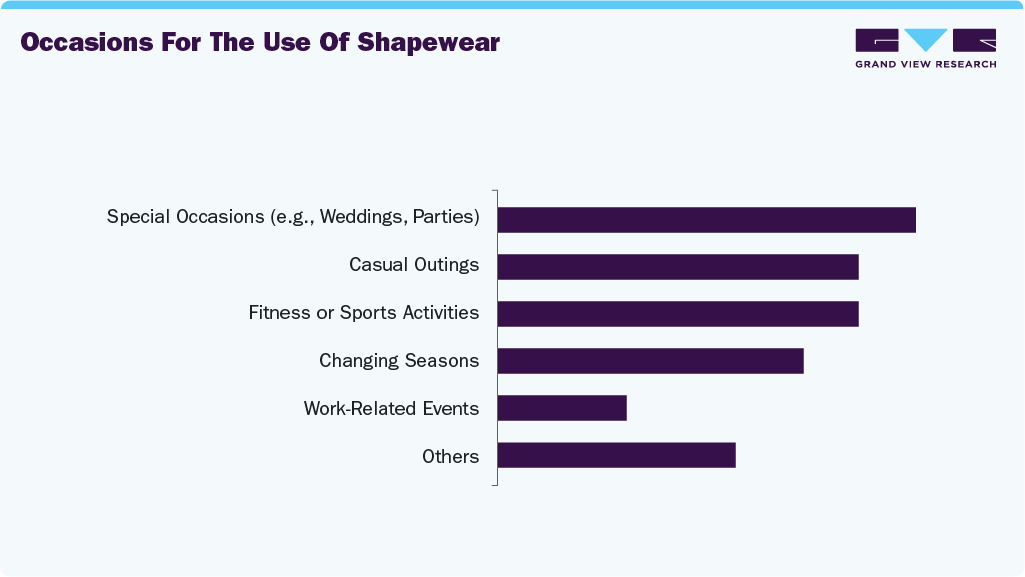
Shapewear is a popular choice in the UK for special occasions, casual outings, fitness or sports activities, changing seasons, and work-related events. It is associated with comfort and confidence, as it enhances posture and appearance. The soft, breathable materials and comfortable fit make shapewear a versatile wardrobe essential, making it a popular choice for a smooth silhouette at events like weddings, parties, and formal gatherings.
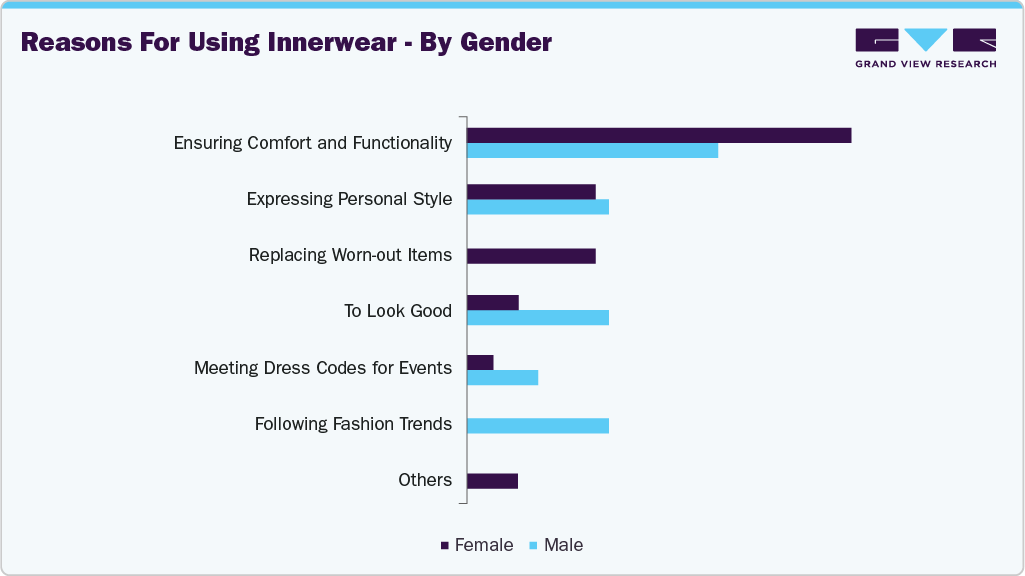
For both women and men in the UK, ensuring comfort and functionality stands out as the primary reason for choosing innerwear-68% of women and 38% of men prioritize this aspect. This highlights a shared desire for supportive, breathable, and easy-to-wear pieces that suit daily needs; for instance, seamless bras and soft cotton underwear from brands like Marks & Spencer are popular for their reliable comfort. Women also frequently purchase innerwear to replace worn-out items, while men tend to focus on expressing personal style or enhancing their appearance. Negative associations with innerwear include concerns over fast fashion’s environmental impact, limited size availability, and poor fit, which can all lead to frustration. Additionally, high prices that don’t match quality, along with uncomfortable materials, often leave consumers dissatisfied with their purchases.
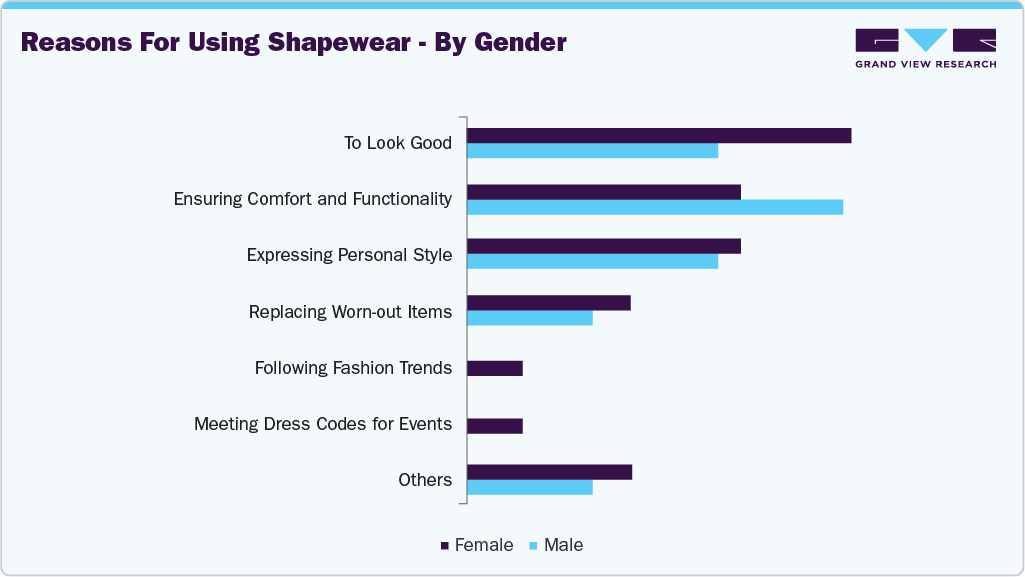
In the UK, the top reason women use shapewear is to look good, while men cite comfort and functionality. This shows that while many women turn to shapewear for aesthetic enhancement, such as smoothing curves under occasion wear, men often seek practical benefits like support during physical activity or improved posture. For both genders, expressing personal style is a shared motivator, reflecting a shift in shapewear from a hidden garment to a fashion-forward layer, seen in popular brands like Skims or Calvin Klein. A smaller but notable percentage also use shapewear to replace worn-out items, suggesting growing long-term adoption. On the downside, many associate shapewear with uncomfortable or ill-fitting clothing and trendy designs that may not suit all body types. Dissatisfaction often arises from high prices that don't reflect the product’s quality, or from materials that fail to deliver on comfort and fit, leaving users reluctant to repurchase.
Buying Behavior
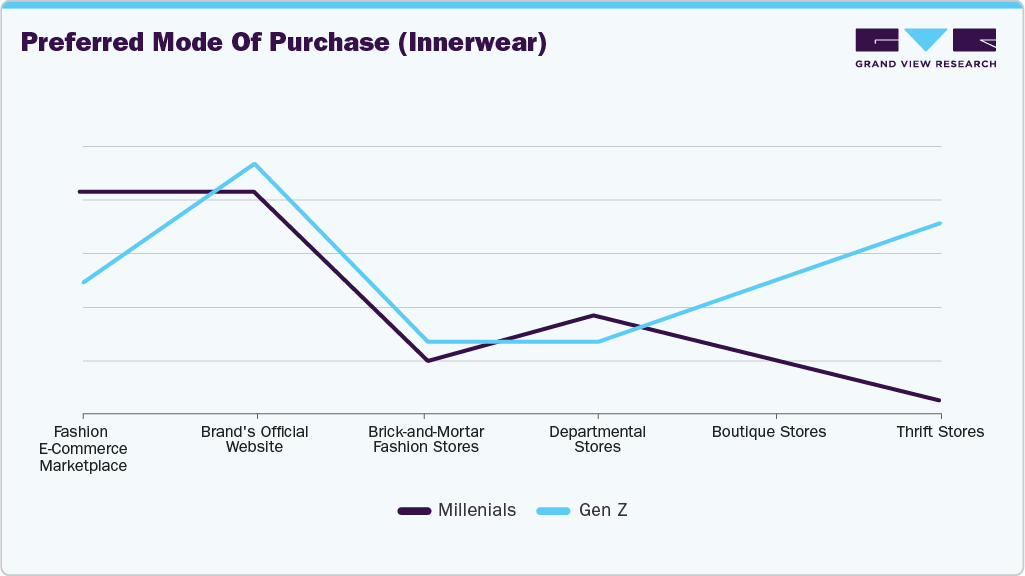
A piece of information about the product- its quality and features is required before making the purchase. Price and value for money are the primary information any economic consumer requires before purchasing innerwear. Comfort and fit are also important when purchasing innerwear should be comfortable. Consumers like to purchase innerwear very frequently because of the hygiene factor, as most the consumers purchase it within six months, with them majorly purchasing it once in a quarter. Consumers majorly prefer to purchase innerwear from brands’ official websites and fashion e-commerce marketplaces. Deep diving into Gen Z and Millennials, they show a similar response. Millennials prefer both modes equally, while Gen Z primarily buys from a brand’s official website and secondarily from thrift stores.
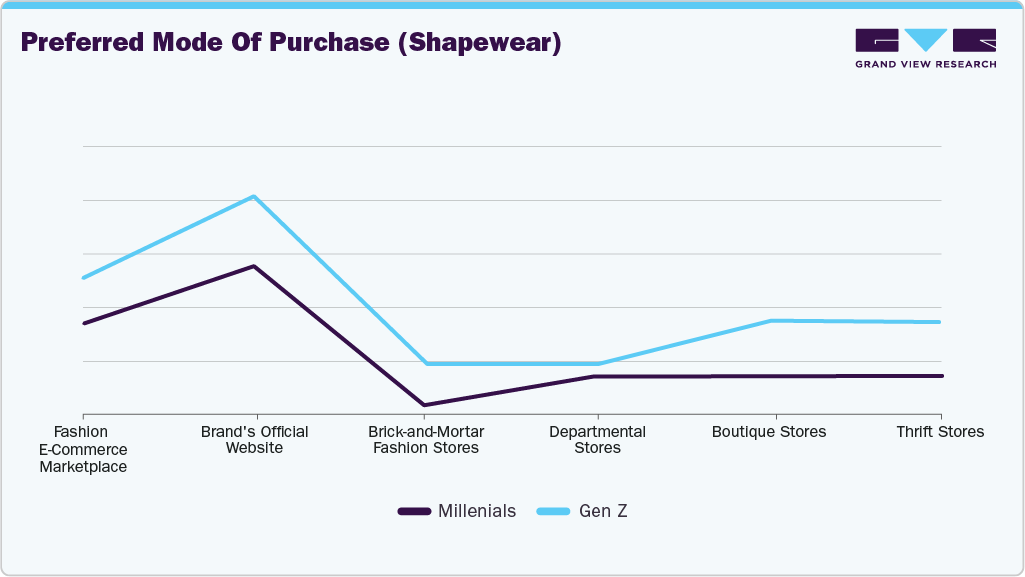
Since shapewear is part of innerwear, the information required to purchase it is also similar to that for innerwear. Price, value for money, comfort, and fit are again the most important factors, along with material quality and durability. For similar reasons as innerwear, shapewear is also purchased once a quarter. Millennials and Gen Z again prefer brands’ official websites primarily, followed by fashion e-commerce marketplaces.
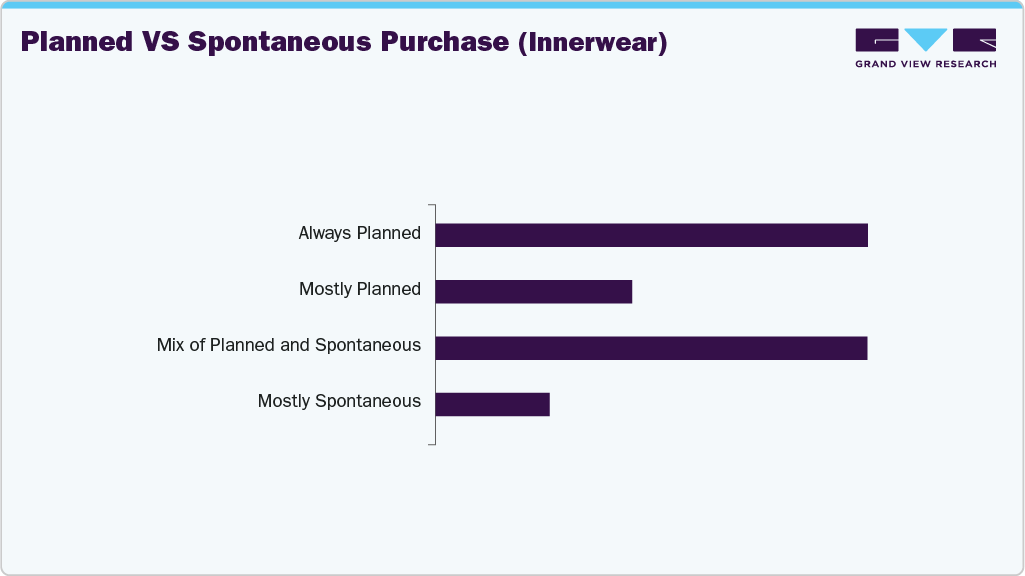
UK consumers like to balance planning and spontaneity when buying innerwear. They also like to plan their innerwear purchases. 10% of consumers like to make mostly spontaneous purchases because of the seasonal sales like Christmas, New Year, and Halloween.
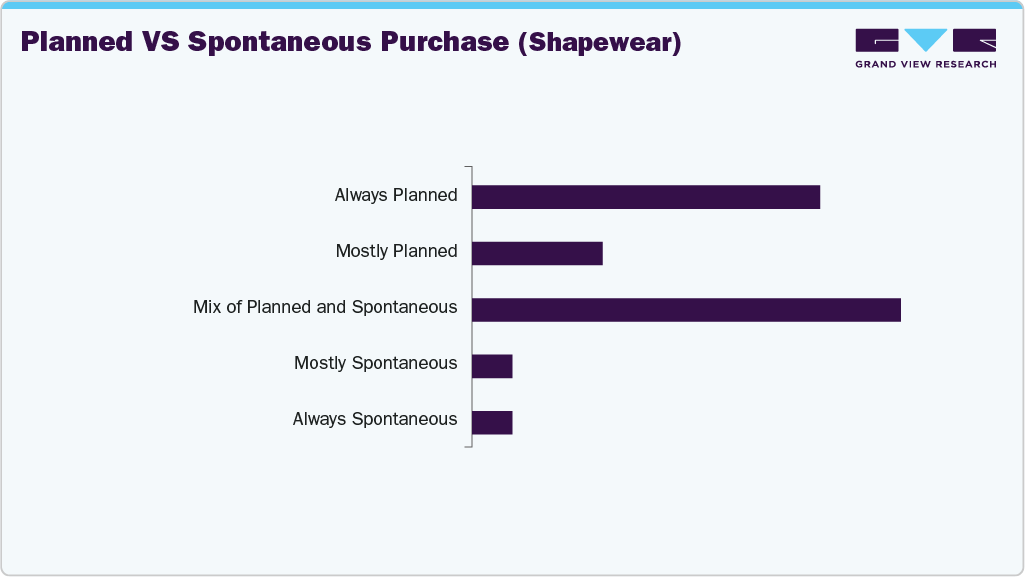
Shapewear also falls into a mixed purchase category, as 43% of consumers state that the make a mix purchase depending on different situations. Consumers also prefer planned purchases, while 8% make spontaneous purchases for a special occasion or event.
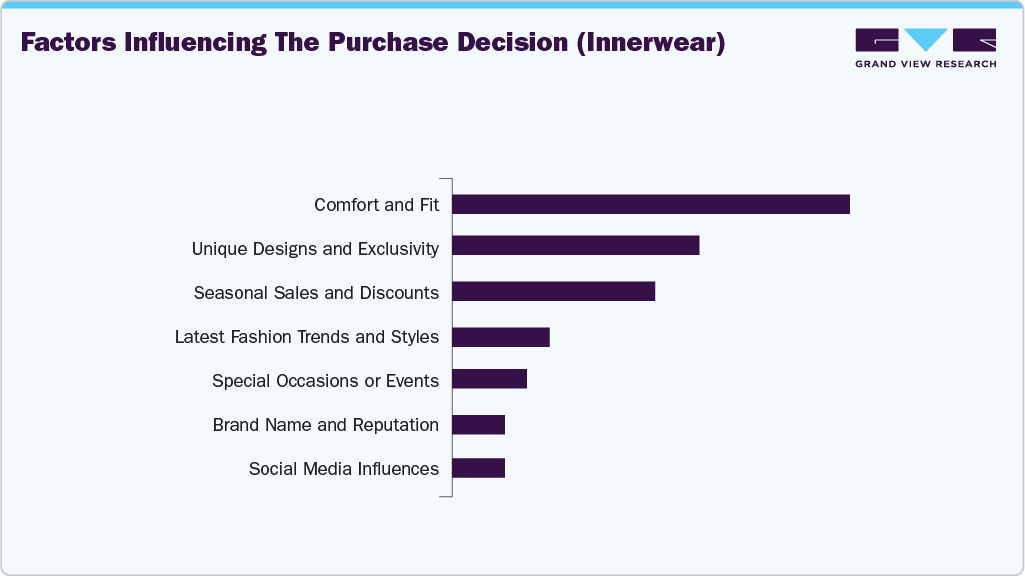
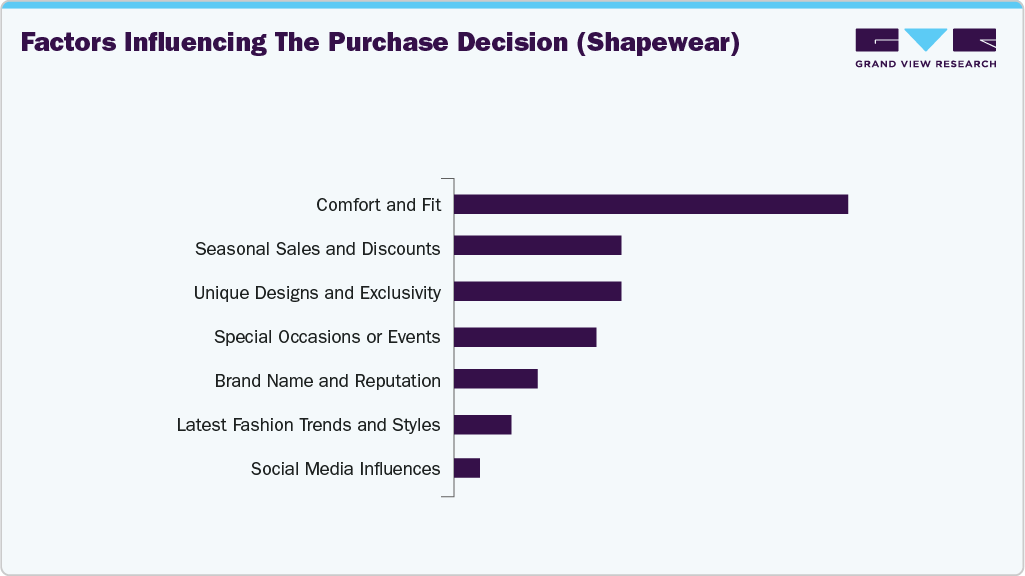
Similar to innerwear, comfort, discounts, and unique designs are the main drivers as the immediate trigger for purchasing shapewear, as a significant proportion of people selected these. High prices for quality items, inconsistent sizing across brands, and limited availability of inclusive or diverse designs are the main challenges consumers face when purchasing shapewear, as they want affordable, multi-sized, and unique options. 9 in 10 consumers are moderately to highly aware of the brand of shapewear they wear.
Brand Power Play (Brand Health and Performance)
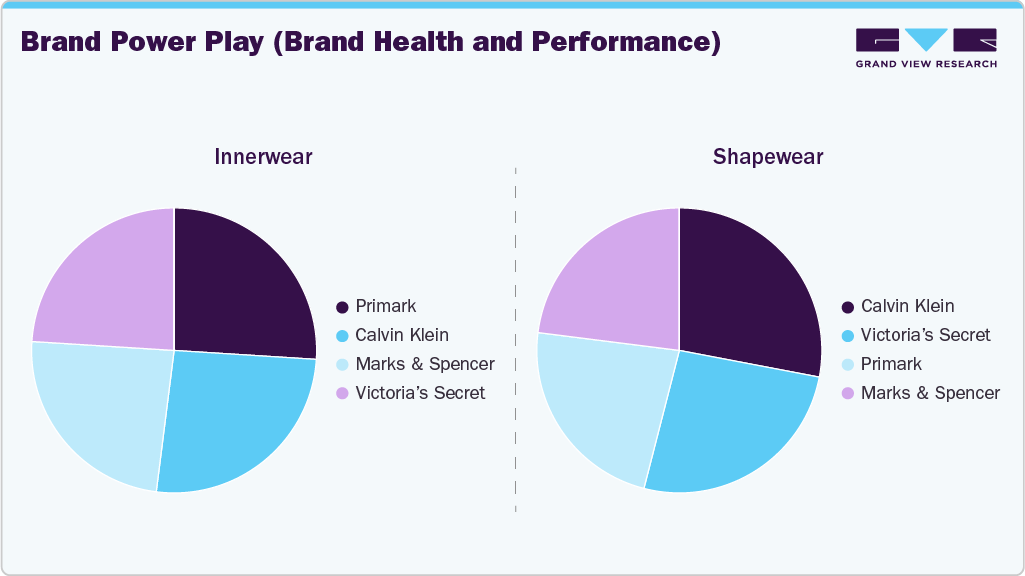
Some of the prominent brands of innerwear in the UK include Marks & Spencer, Victoria’s Secret, Calvin Klein, and Primark. Although the innerwear market is competitive, Calvin Klein and Primark equally dominate the market with a 53% share (by awareness).
For shapewear, the prominent brands are similar to those for innerwear. Although the shapewear market is moderately competitive, Calvin Klein again dominates the market with a 65% share (by awareness).
Purchase Funnel
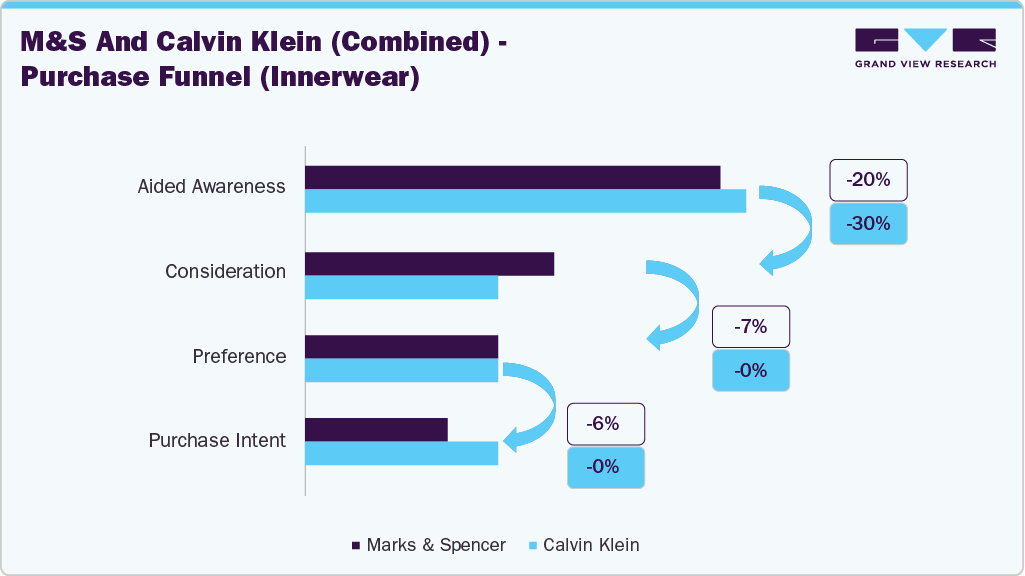
Although the prominent brands compete fiercely, Marks & Spencer and Calvin Klein effectively maintain their positions as leading brands, demonstrating robust purchase funnels. Though M&S has a lower awareness than Calvin Klein, it outperforms in the consideration stage due to its long-standing market leadership, extensive size range, and reputation for quality and value. M&S and Calvin Klein show similar responses in terms of preference, followed by Primark, due to M&S's long-standing reputation for quality, trust, and value, and Calvin Klein's global appeal and association with contemporary, high-quality design. Calvin Klein is the brand consumers intend to purchase innerwear from. Despite its lower consideration, preference, and purchase intent, Primark stands as the most used brand in the UK market. In addition to being worn by customers, Primark has a higher rate of returning consumers than other brands, which implies that higher customer satisfaction levels after use increase brand loyalty.
The overall NPS scores of the leading brands range from 0 to 75, with Triumph having the highest (100) compared to other innerwear brands in the UK market. All the leading brands have high NPS scores, indicating they are highly recommended by consumers to friends and family for their quality, durability, and value.
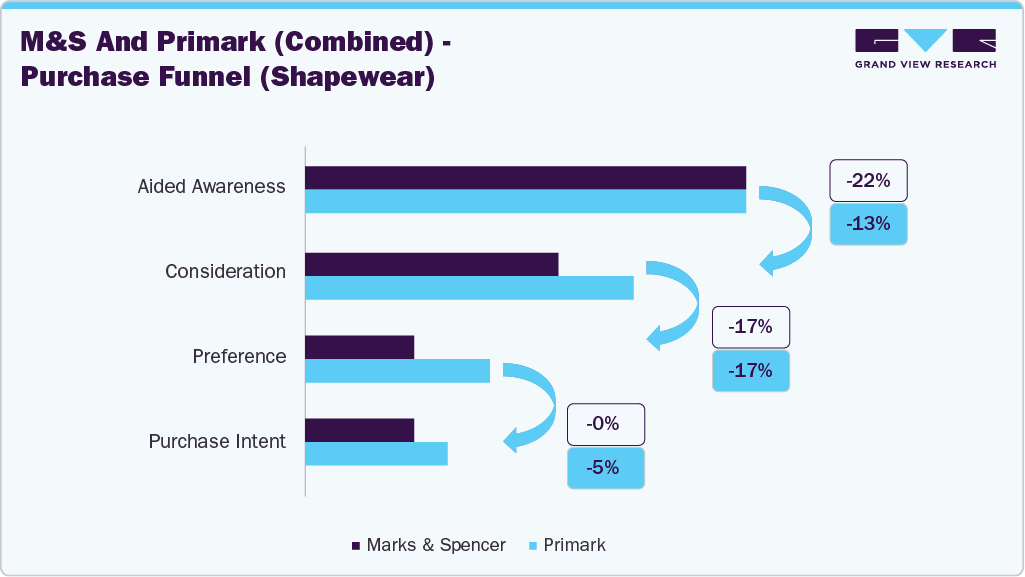
While many shapewear brands enjoy high awareness in the U.S., very few reach the consideration and preference stages. M&S and Primark exhibit a strong purchase funnel despite having a drop from awareness to the consideration stage of the funnel. The market leader, Calvin Klein, has relatively low consideration in the UK shapewear industry due to its limited product range, focus on minimalist innerwear, and lack of functional shaping options compared to dedicated shapewear brands. Primark leads the purchase funnel, as it is highly considered, preferred, and in use, followed by M&S, Calvin Klein, and Victoria’s Secret. This is mainly due to its affordable pricing, inclusive sizing, trendy yet functional designs, and wide availability, making it accessible for everyday and occasional use without compromising comfort. Additionally, Primark is also highly considered for repurchase given its high satisfaction level post-usage.
The overall NPS score of the leading brands varies from 29 to 100, with M&S again having the highest NPS score (100) compared to other shapewear brands in the UK market, which indicates that it is highly recommended by consumers to their friends or family, considering its trusted quality, wide size range, comfort-focused designs, and reliable fit. Calvin Klein has an NPS score of 66, indicating strong recommendations despite low consideration, driven by premium fabric quality, a sleek minimalist design, and brand credibility, appealing to those who prioritize style, subtle shaping, and comfort over heavy compression or function-focused garments. Primark is not much recommended (NPS Score of 29) due to limited shaping strength, basic design options, and shorter product lifespan, making it more suitable for casual or occasional use rather than long-term support or premium performance.
We can see some similarities in the purchase funnel for innerwear and shapewear brands. M&S appears as a strong competitor for both the markets and shows similar results in the purchase funnel. Primark remains the top brand across both categories, indicating that it caters to both and enjoys high customer satisfaction.
