UK Occasions Wear Consumer Insights - Usage, Attitudes, And Brand Performance Report
Introduction:
The UK occasion wear market has experienced notable growth in 2025, driven by renewed enthusiasm for celebrations and formal events following the post-pandemic recovery. Economic pressures have shifted consumer focus toward versatile pieces that offer value and multiple wearability options, rather than single-use garments. Digital innovation has enhanced shopping experiences through emerging technologies, including virtual try-ons and AI-powered style recommendations, though adoption rates remain varied across retailers. The concept of "smart casual" has gained prominence as a dress code that balances formality with comfort. However, traditional formal occasions still require dedicated occasion wear rather than representing a wholesale shift in formality standards. Festive wear has embraced a broader spectrum of colours alongside bolder statement designs, reflecting consumers' desire to express themselves through fashion choices. Personalization and customization options have expanded across the market to meet growing demand for unique, individualized occasion wear experiences, with brands increasingly offering bespoke services and made-to-order collections to differentiate themselves in a competitive landscape.
Here are some of the market trends dominating the UK occasion/festive wear market:
-
Inclusive Expression: The occasion wear market has seen a shift towards inclusivity, with retailers introducing larger sizes and gender-neutral lines. Cultural fusion designs incorporating traditional elements from diverse communities have gained popularity, especially in festive collections. Brands that promote authentic representation have seen stronger consumer loyalty and engagement than those that maintain conventional narratives.
-
Digital Revolution: UK consumers are increasingly shopping for occasion wear using technology, with AI-powered visualization tools and virtual fitting rooms eliminating traditional barriers. Retailers are using personalization algorithms to suggest complementary accessories and styling options, creating seamless digital journeys. Social media platforms, particularly TikTok and Instagram, are serving as trend incubators, democratizing occasion wear aesthetics beyond traditional fashion authorities.
-
Versatile Investment: Economic pressures have shifted consumer priorities, making versatility a crucial factor in occasion-wear decisions. Multi-functional designs command price premiums, especially for separates that can be styled differently across multiple events. This has blurred traditional formal wear categories, making "smart casual" and elevated everyday wear more acceptable. Consumers now evaluate occasion pieces based on cost-per-wear value.
-
Bold Comfort: UK occasion wear has shifted towards vibrant hues and statement pieces, reshaping the aesthetic landscape. This boldness is paired with technical innovation that focuses on wearer comfort. Advanced fabrics offer movement and breathability without sacrificing elegance. Construction techniques borrowed from active wear have been incorporated into formal designs, catering to younger consumers who prioritize experience over formality.
Methodology:
The insights covered in this report are drawn from GVR’s ‘Voice of Consumer Survey’ and its periodic updates. The latest survey represents 75,000+ consumer interviews conducted across 20 countries for 100+ product categories. These insights are specifically catered to the brands operating in the occasion/festive wear industry to guide them in their strategic decision-making process. This report provides insights covering category usage & attitude, buying behavior, brand performance metrics, and brand health indicators of leading players in the UK occasion/festive wear market.
Chapter 1: Usage and Attitude
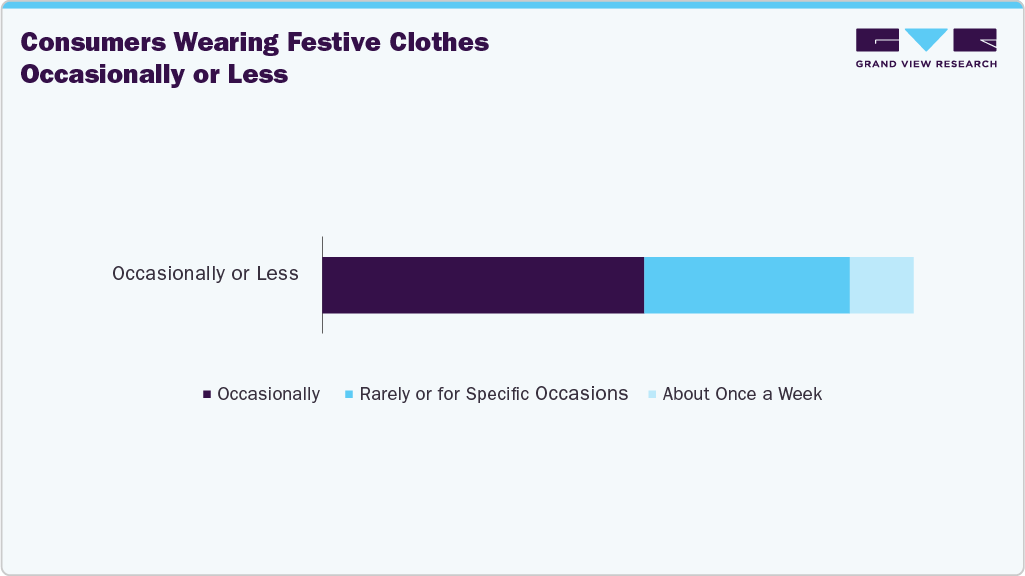
As occasion and festive wear, these garments are valued for their trendiness and variety, leading to selective, yet intentional, use. A significant 70% of consumers report wearing occasion wear occasionally or more, with 47% indicating they use it specifically for occasional events. While many prefer to use such clothing exclusively in their wardrobe rotation, they are also open to sharing it with friends or family for special events, reflecting a growing interest in flexible, experience-driven fashion consumption.
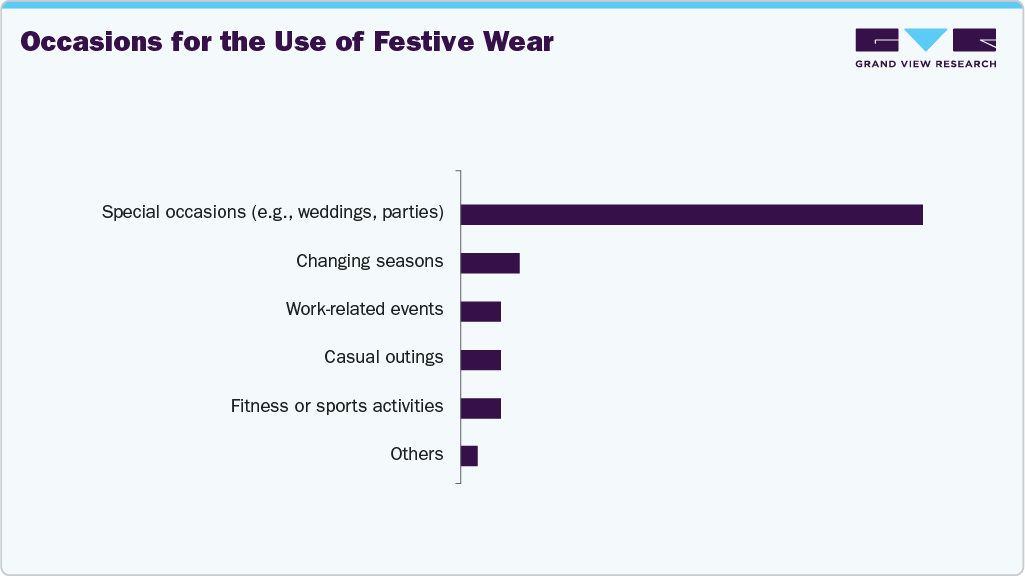
Festive wear, as the name suggests, is mostly used at the time of special occasions, as mentioned by about 8 out of 10 consumers. Since occasions and festivals occur at different times of the year and different seasons, festive wear is also worn at the time of the changing seasons. These types of clothes include blazers, cardigans, floral-patterned dresses, and so on. Having said that, consumers associate using these clothes with expressing their style and visualize these clothes for special events due to the eye-catching nature and design of the clothes. However, what might hold them back is the high costs of quality clothing and designer brands, and the limited size options for certain brands.
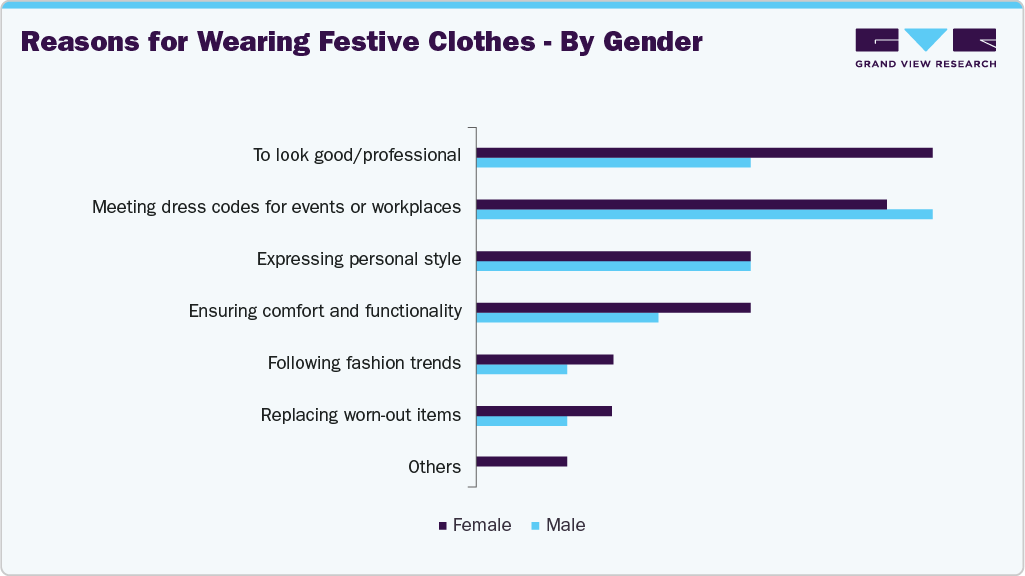
In the UK, when choosing occasion wear, women primarily focus on looking good or professional, with 50% prioritizing this aspect, followed by meeting dress codes. For example, a woman attending a corporate event might carefully select a sharp suit to project professionalism. Secondary preferences include expressing personal style and ensuring comfort, like choosing a stylish dress that’s both fashionable and easy to move in. Men, on the other hand, place greater importance on meeting dress codes for events like weddings or business meetings. However, looking good or professional is also important, such as opting for a tailored suit to make a good impression. While comfort and functionality are less of a focus, men still value a fit that doesn’t hinder movement, like wearing a well-fitted shirt for a night out.
Customers value products that offer good value for money, trendy designs, durability and versatility, and comfortable fits. Exclusive pieces also appeal for their uniqueness. However, disappointment often arises from high prices for poor quality, uncomfortable fits, and limited options. Poor workmanship and unresponsive customer service further contribute to dissatisfaction. These factors highlight the balance between satisfaction and potential frustration in product purchases.
Buying Behavior
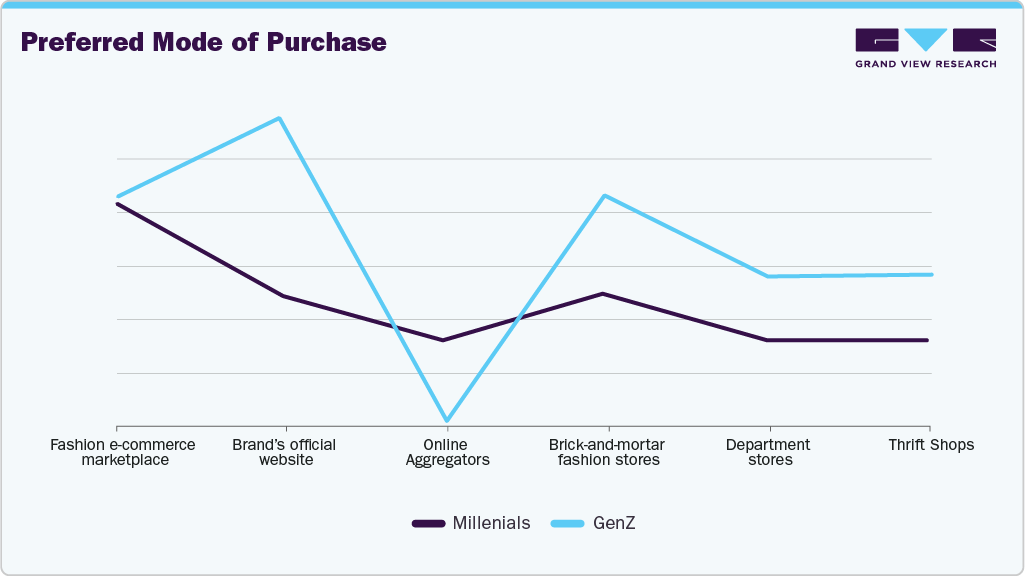
Consumers must have some prior information about the product before making a purchase. The most sought-after points are price and value for money, given that consumers are more focused on saving money wherever possible in light of post-pandemic effects, thus wanting to purchase clothes mostly from thrift stores, followed by comfort and fit, which is due to the rise in comfort-seeking consumers. Since festive clothes are worn only during special occasions, consumers prefer to buy them during discounts or offers once a year. Online e-commerce marketplaces like Amazon are the preferred mode of purchase for festive clothes among Millennials. At the same time, Gen Z prefer buying festive wear from brands’ official websites because of the quality and trust it builds. Online e-commerce marketplaces and Brick-and-mortar fashion stores are the second-most-preferred modes of purchase for Gen Z. In contrast, brands’ official websites and brick-and-mortar fashion stores are the second-most-preferred modes of purchase for Millennials.
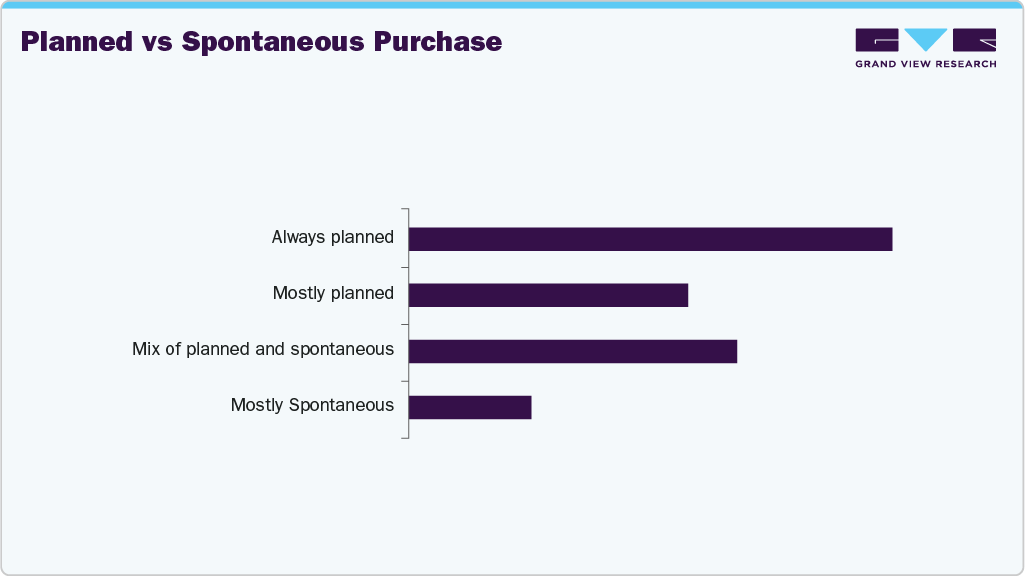
Since festive wear is for planned special events, the purchase of the same also falls into a planned purchase category. Similarly, more than 6 out of 10 people say their purchase is planned, with 40% saying it is always planned. 27% of consumers purchase either on a planned basis or spontaneously, depending on the situation. One in ten also reports making spontaneous purchases, mainly due to seasonal discounts that are offered during special occasions like Christmas, Halloween, Thanksgiving, and Easter.
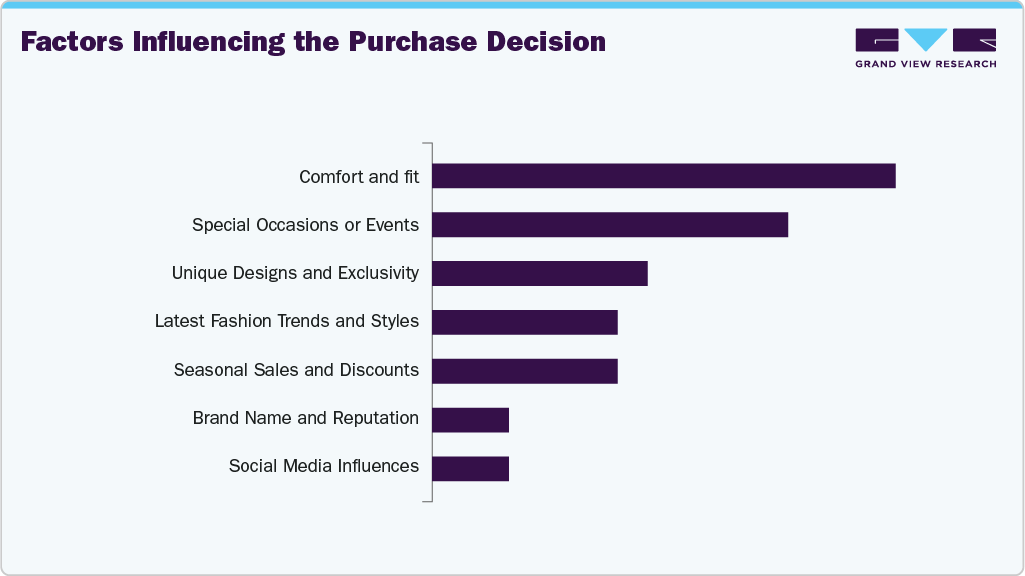
When purchasing occasion wear, the top two immediate triggers are comfort and fit, and special occasions or events. Consumers often seek attire that not only looks stylish but also feels comfortable, ensuring they can wear it for hours without discomfort. Special events, like weddings, parties, or formal gatherings, create a sense of urgency to find the perfect outfit, making it a driving force behind the purchase. The need to feel confident and stylish for these specific occasions leads many to prioritize comfort and practicality.
Having said that, with the growing demand, some barriers to purchasing products exist, such as high prices for high-quality items and limited options for specific body types. Also, 8 in 10 consumers are moderately to highly conscious about the brand of festive wear they use, as the awareness levels around comfort increase, which can hinder consumers from choosing a product without a perfect fit. Consumers prefer to purchase festive wear clothes from online fashion retailers, as consumers are highly influenced by the online reviews and ratings.
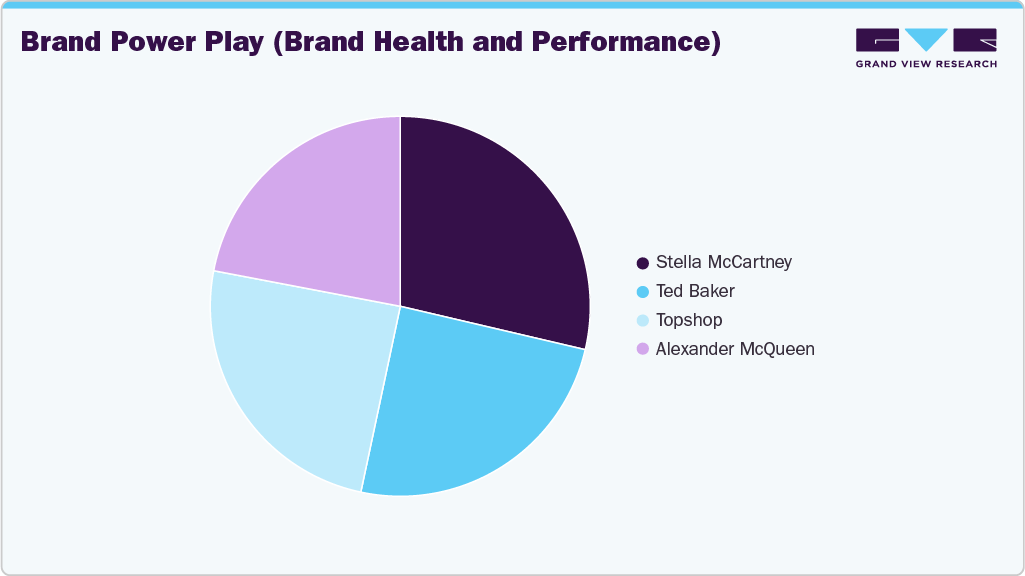
Brand Power Play (Brand Health and Performance)
Some of the popular brands with festive wear in the UK include Alexander McQueen, Stella McCartney, Ted Baker, and Topshop. Although the festive wear market is undeniably large and competitive, Stella McCartney dominates it with a 43% market share (by awareness). One of the other emerging brands is Coast, which is slowly making its way into the festive wear market.
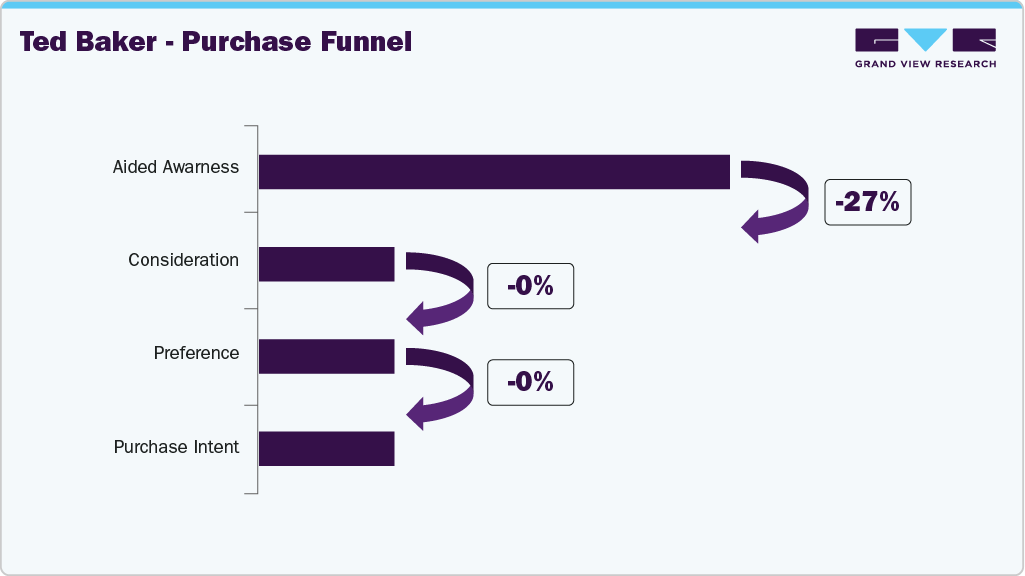
Purchase Funnel
While many festive wear brands enjoy strong brand awareness in the UK, only a few successfully progress through the full purchase funnel, from consideration to preference and usage. Stella McCartney, despite its high awareness, sees limited conversion in the occasion wear category. This is largely due to its core positioning in sustainable casual luxury rather than formal event fashion. The brand’s minimalist aesthetic, vegan materials, and limited focus on traditional occasion collections do not align with UK consumer expectations for ornate, structured attire typically worn to special events. Ted Baker, by contrast, demonstrates a relatively strong purchase funnel, though it experiences a notable drop between awareness and consideration. Still, it remains competitive through brand familiarity and accessible design. Alexander McQueen, with 33% awareness, leads across all stages of the funnel. Its innovative craftsmanship, distinctive British identity, and associations with cultural icons, including the royal family, resonate deeply with UK consumers. Ted Baker follows closely behind, supported by consistent consumer interest across stages. Alexander McQueen's high satisfaction ratings and strong post-purchase engagement suggest high customer loyalty, positioning it as a key competitor moving forward. Meanwhile, Stella McCartney also enjoys high satisfaction among its niche audience, driving repeat purchases even if overall conversion remains limited.
The overall NPS score of the leading brands varies from 0 to 100, with Stella McCartney having the highest NPS score of 100, which tells us that it is highly recommended in the UK due to her sustainable luxury approach, innovative designs, and commitment to ethical fashion.

Talk to an analyst
Tell us what you need. We reply within one working day.
Service Guarantee
-
Insured Buying
This report has a service guarantee. We stand by our report quality.
-
Confidentiality
Your transaction & personal information is safe and secure.
-
Custom research service
Design an exclusive study to serve your research needs.
-
24/5 Research support
Get your queries resolved from an industry expert.