UK Party Wear Consumer Insights - Usage, Attitudes, And Brand Performance Report
Introduction:
The UK party wear industry in 2025 has evolved into a market that balances celebration with practicality, with traditional retailers like Ted Baker and Marks & Spencer competing with digital-native brands and rental platforms like By Rotation and Hurr Collective. Sustainability is becoming a core business model, with brands like Reformation expanding their presence and mainstream retailers introducing eco-conscious collections. The "cost-per-wear" calculation drives purchasing decisions toward versatile investment pieces, while technological innovations such as virtual fitting rooms and social commerce are transforming the shopping experience. Size inclusivity is also a major emerging trend that is slowly becoming an important industry standard, with brands extending sizing options and considering adaptive needs. Economic constraints have encouraged creative consumption, with rental services reporting strong growth and pre-loved formal-wear platforms seeing increased engagement. These market trends prevail in the UK party wear market:
-
Circular Economy: Rental platforms like By Rotation and Hurr Collective reported high growth levels as consumers embraced access over ownership for occasion wear. This shift coincided with surging interest in pre-loved formal attire, as "vintage cocktail dress" searches increased year over year. Economic pressures and environmental consciousness drove consumers toward circular consumption models that offered financial flexibility while reducing the environmental impact of fashion.
-
Conscious Consumption: Sustainability transitioned from a marketing buzzword to a business imperative, with eco-conscious materials like recycled sequins and deadstock fabrics becoming mainstream. Consumers increasingly invested in versatile, transformable pieces that worked across multiple occasions, extending replacement cycles. This "high-low" approach paired premium statement pieces with affordable basics, balancing budget constraints with celebration needs while reducing overall consumption.
-
Inclusive Experience: Size inclusivity has evolved from a niche offering to a standard practice, with major retailers expanding size ranges and improving fit for diverse body types. Physical retail spaces transformed into experiential "celebration destinations" combining styling services, alterations, and accessories. These developments democratized access to formal wear, creating more welcoming, inclusive shopping experiences for previously underserved consumer segments.
-
Digital Innovation: Social media platforms in the UK significantly influenced the way consumers discover and purchase party wear. Video-based platforms, machine-learning-based recommendations, and augmented reality previews improved the online shopping experience, reducing returns and increasing purchase confidence. These technological advancements addressed the traditional hesitation about buying party attire without physical interaction, creating a seamless journey from digital browsing to final purchase decisions.
Methodology:
The insights covered in this report are drawn from GVR’s ‘Voice of Consumer Survey’ and its periodic updates. The latest survey represents 75,000+ consumer interviews conducted across 20 countries for 100+ product categories. These insights are specifically catered to the brands operating in the Party Wear industry to guide them in their strategic decision-making process. This report provides insights covering category usage & attitude, buying behavior, brand performance metrics, and brand health indicators of leading players in the UK party wear market.
Chapter 1: Usage and Attitude
In the UK, party wear remains largely occasion-specific, with limited integration into everyday wardrobes. A significant 41% of consumers report wearing it occasionally, while 44% reserve it strictly for special events such as weddings, parties, or festive celebrations like New Year’s Eve. This underscores that party wear is not part of most individuals' daily wardrobe rotation. Only 7% wear it several times a week, and another 7% use it daily, indicating that for the vast majority, party wear remains a purposeful, occasion-driven choice, often tied to formal or glamorous events.
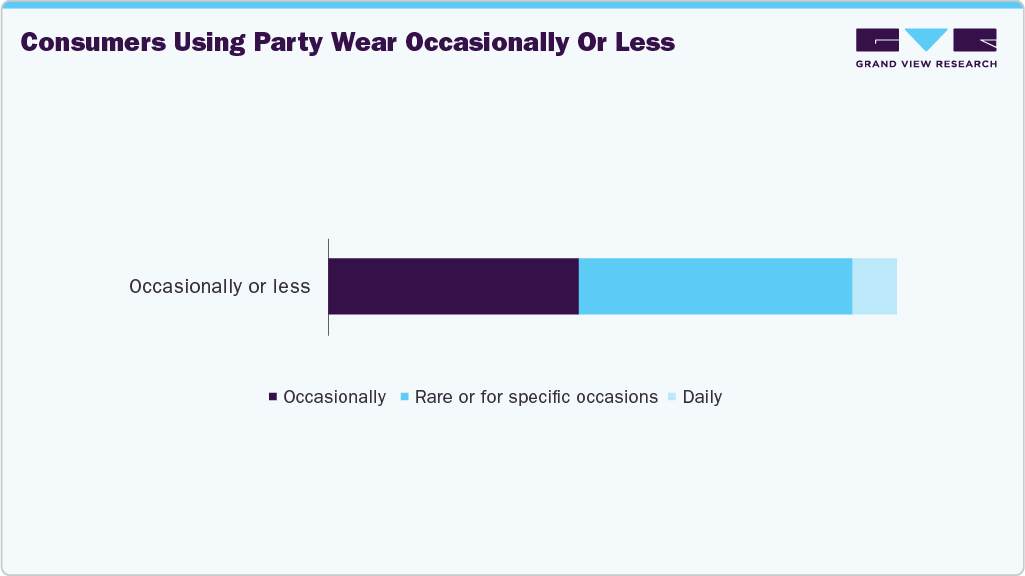
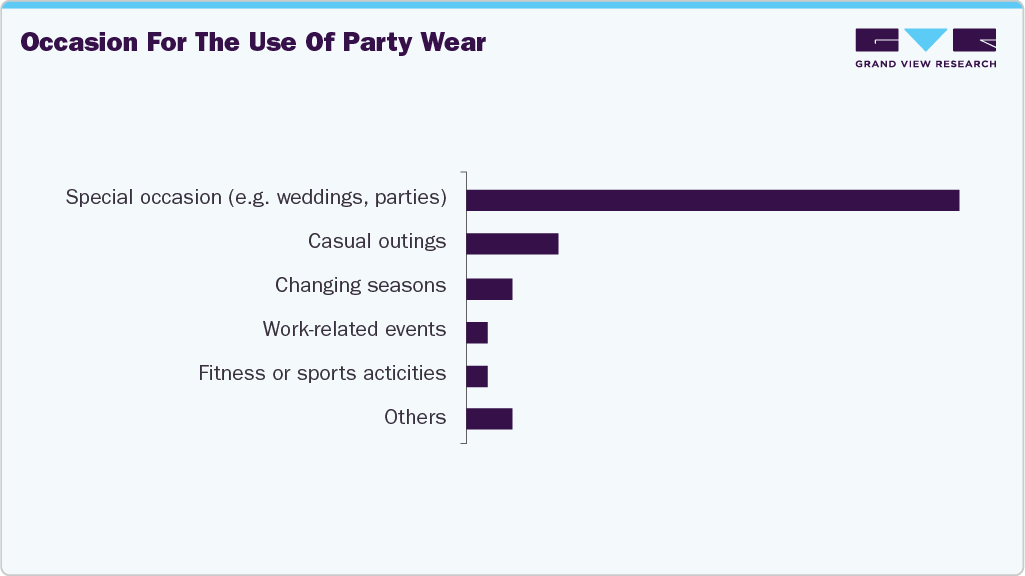
The majority of people in the UK wear party wear for special occasions, such as weddings, birthday parties, or festive celebrations like New Year's Eve, with 76% using these products for such events. For instance, someone might choose a sleek evening gown or a sharp tuxedo for a glamorous wedding or a family gathering. In contrast, 14% of people wear partywear for casual outings, such as a night out with friends or a dinner date, and might opt for a stylish cocktail dress or a fashionable blazer. While these garments are often associated with formal occasions, they can also add a touch of elegance to more relaxed social settings. However, many consumers negatively associate party wear with high costs for quality clothing, particularly designer brands, feeling that the price doesn’t always reflect the quality. Issues like uncomfortable fits or poor materials also lead to dissatisfaction, as consumers expect both style and comfort in their purchases. Work-related events and fitness activities, however, account for only a small percentage of party wear use, reinforcing its role in more celebratory or stylish moments.
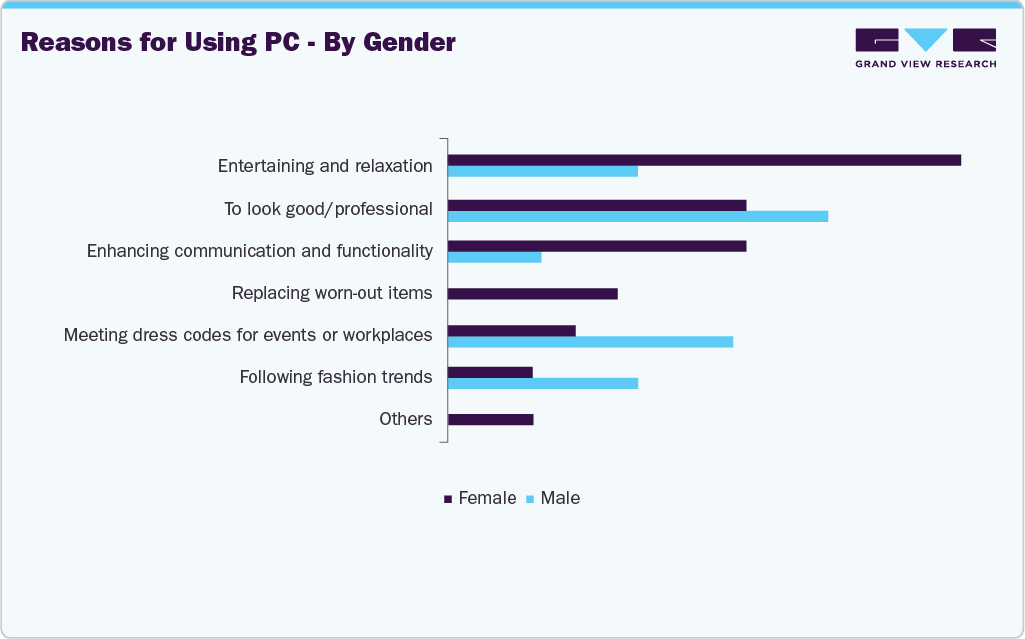
For females, the top reasons for using party wear are expressing personal style, looking good or professional, and ensuring comfort and functionality. Women often choose outfits that reflect their individuality, like a stylish dress for a wedding or a chic ensemble for a night out. For males, the primary reasons include looking good or professional, meeting dress codes, and expressing personal style, with many opting for suits or smart attire for formal or business events. People also associate party wear with comfort and confidence, recognizing that the right outfit can make them feel at ease while looking stylish. A well-fitted garment crafted from high-quality materials adds good value for money and ensures a comfortable fit, making the purchase both practical and delightful. Whether for a gala or a business meeting, the right outfit not only meets expectations but also boosts self-esteem.
Buying Behavior
Consumers prioritize price, value for money, comfort, and fit when purchasing party wear. They seek quality and affordability, aiming for a good deal. A stylish dress with a flattering cut and a reasonable price attracts buyers. Comfort and fit are crucial, as no one wants to feel restricted during an event. A well-fitting dress or suit made from stretchy fabric can significantly improve satisfaction. Many consumers only purchase party wear once every six months, as these garments are reserved for special occasions, making it a less frequent but more deliberate purchase.
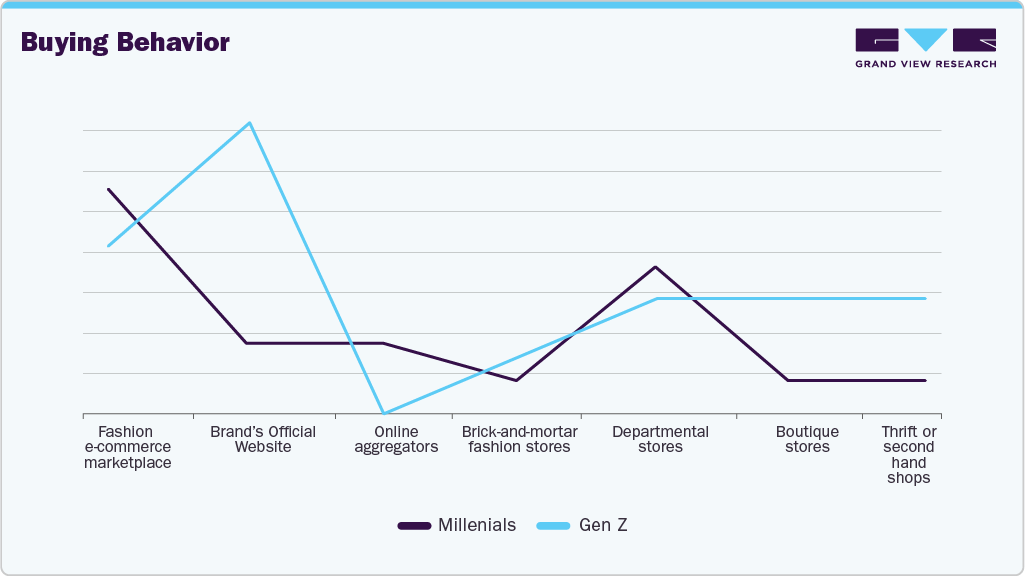
For Millennials, the top preferred modes of purchase are fashion e-commerce marketplaces and department stores, with platforms like ASOS offering convenience and variety, while department stores like John Lewis provide a broad selection in-store. Gen Z, on the other hand, favors brands’ official websites and department stores, enjoying direct access to the latest collections on brands like Nike and Zara, as well as the curated shopping experience at places like Selfridges. Both generations balance the convenience of online shopping with the experience of shopping in physical stores for specific needs.
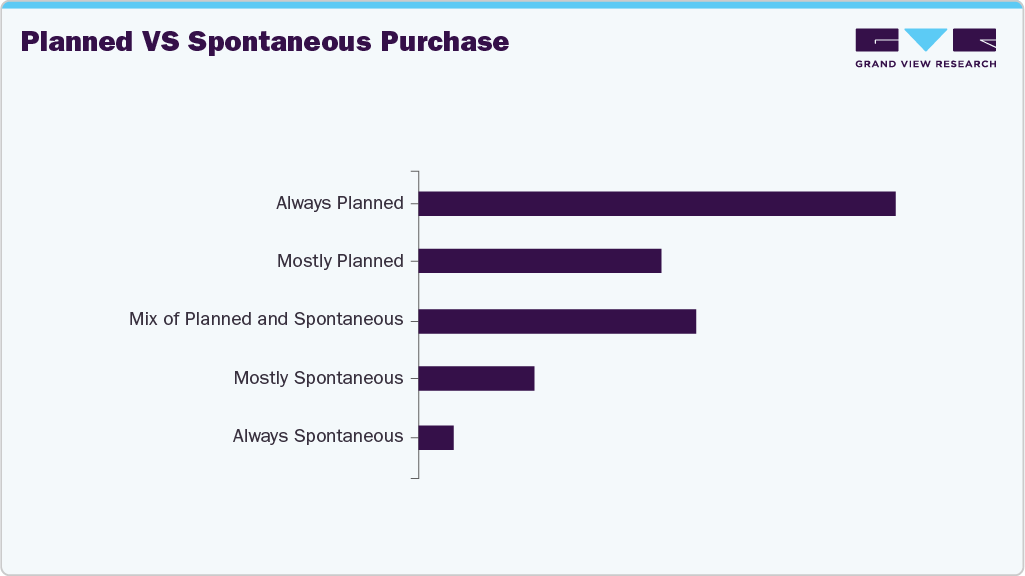
Most consumers plan party wear purchases, with 41% planning ahead for specific events like weddings or holidays. Another 21% spend time browsing online or in stores to find the perfect outfit. A smaller 24% make a mix of planned and spontaneous purchases, sometimes picking up a party outfit while browsing or taking advantage of limited-time sales. Only 13% make the most spontaneous or always spontaneous purchases, often grabbing something unexpectedly during a shopping trip. Overall, most consumers make these decisions carefully.
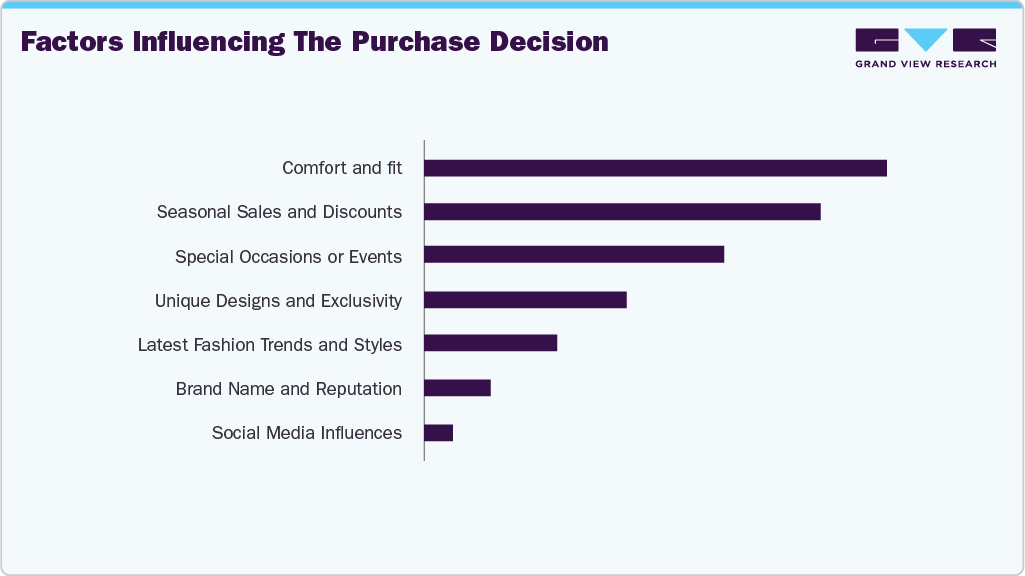
The immediate triggers for purchasing party wear include comfort and fit, and seasonal sales and discounts, with shoppers often drawn to well-fitting outfits that offer both style and comfort, like a perfectly tailored evening dress, or to discounts during events like Black Friday. Special occasions or events also play a significant role, with people buying outfits for weddings, parties, or holiday gatherings. However, high prices for quality items and limited options for specific body types or preferences can be barriers, as many consumers struggle to find affordable, well-fitting options that meet their style needs. Also, 8 in 10 consumers are moderately to highly conscious about the brand of party wear they use, as the awareness levels around comfort increase, which can hinder consumers from choosing a product without a perfect fit. Consumers prefer to purchase partywear clothes from online fashion retailers, as 38% of consumers have chosen that option.
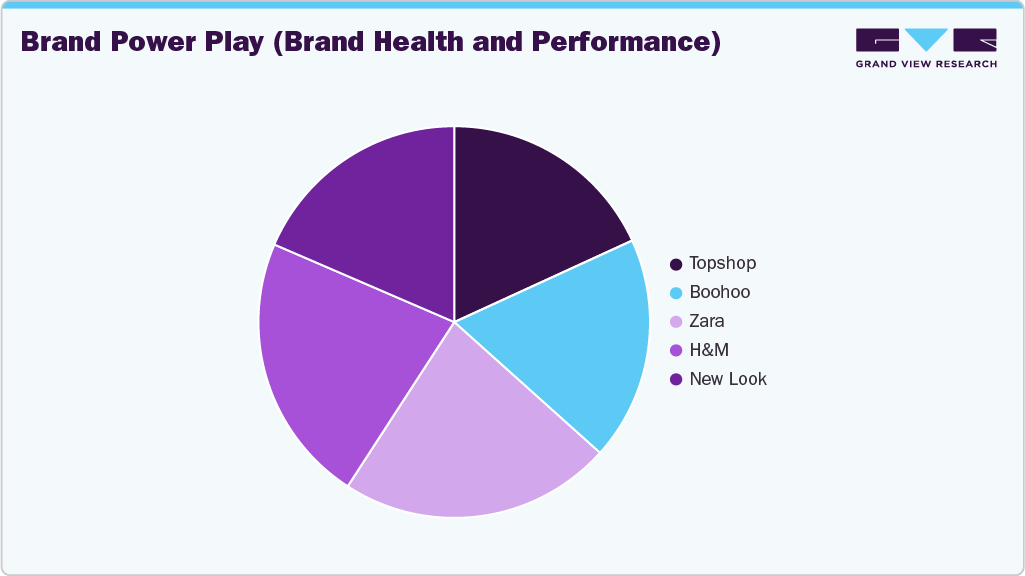
Brand Power Play (Brand Health and Performance)
Some of the popular brands with party wear in the UK include Topshop, Boohoo, Zara, H&M, and New Look. Although the party wear market is undeniably competitive and large, Zara and H&M dominate the market with 55% share each (by awareness). One of the other emerging brands is PrettyLittleThing, which is slowly making its way into the party wear market.
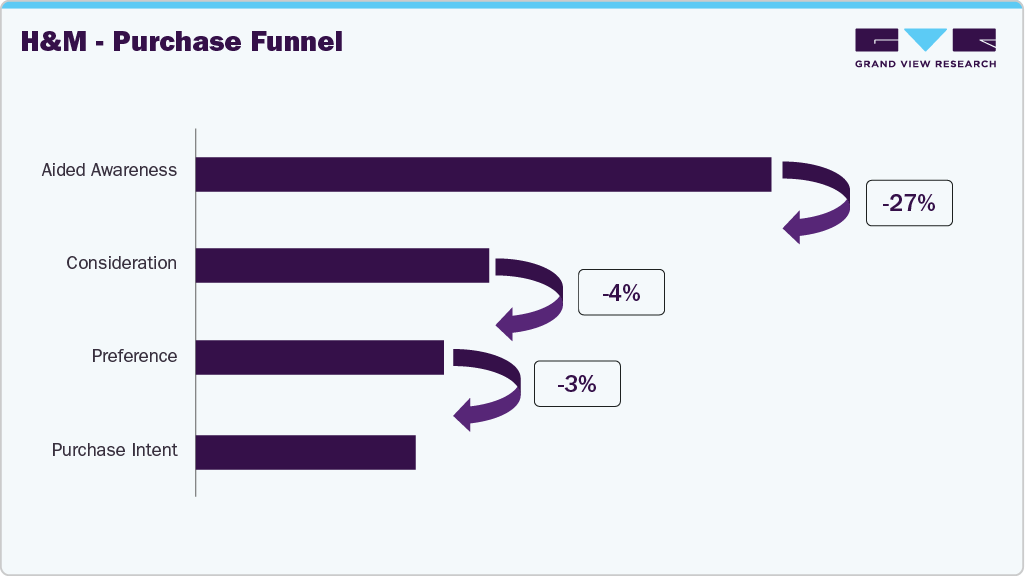
Purchase Funnel
While many brands manufacturing party wear enjoy high awareness in the UK, very few reach the consideration and preference stage. Even though Zara enjoys a higher level of awareness, it is not as much considered by the consumers, whereas H&M, having the same level of awareness, exhibits a strong purchase funnel despite having a drop from awareness to consideration. H&M has a higher level of consideration, preference, and purchase intent than Zara due to a few factors, including H&M's broader range of styles, more affordable pricing for certain items, and its often-perceived more accessible and trendy aesthetic. Additionally, Boohoo and PrettyLittleThing have a similar level of consideration and preference after H&M and Zara because they offer a vast selection of fashion-forward pieces at prices that would not make your wallet wince. Consumers are equally using party wear, mostly from brands like Zara, H&M, and PrettyLittleThings. However, consumers are more likely to repurchase party wear from Zara because of its fast-fashion model, affordability, trendy designs, and higher satisfaction post usage.
The overall NPS score of the leading brands ranges from 0 to 100, with Zara having the highest (75) compared to other partywear brands in the UK market. Thanks to its tendency to immediately be on the latest trends, and its longstanding status as a go-to for statement evening pieces. Another high-profile market holder (H&M) partywear clothes are not necessarily recommended in the UK; rather, they face scrutiny and criticism over ethical and sustainability concerns.
