UK Skincare Products Consumer Insights - Usage, Attitudes, And Brand Performance Report
Introduction:
The UK skincare industry has experienced a significant shift in 2025, driven by the rise of ingredient-savvy "skintellectual" consumers seeking scientifically backed formulations. Premium skin barrier protection, repair products, the acceptance of "skinimalism," and simple, multipurpose regimens have driven market expansion. Clean, transparent formulas with traceable components and clinical benefits have become more popular. Technology integration, AI-powered skin analysis, and reusable packaging also transformed the user experience. Here are some of the market trends prevailing in the UK skincare industry:
-
Premium Products: The premium skincare segment is gaining popularity as a growing "skintellectual" consumer base values ingredient quality, clinical validation, and measurable results. Post-pandemic self-care, membership programs, and subscription models drive this premiumization. The market evolution reflects deeper consumer values about skin health, transparency, and results-driven beauty routines, making high-end skincare products more widely available while maintaining price integrity.
-
Skin Barrier Focus: The UK skincare market has shifted towards skin barrier health, as consumers realize that compromised skin can lead to issues such as sensitivity, dehydration, and accelerated aging. This has led to a surge in products containing barrier-supporting ingredients such as ceramides, niacinamide, and prebiotics. Leading brands have reformulated existing products and launched barrier-centric lines, often featuring gentle, pH-balanced cleansers and simplified formulations. This trend reflects a broader consumer shift towards treating underlying skin health.
-
Mindful Minimalism: Consumers in the UK are moving toward "skinimalism" and clean beauty in 2025, favoring multipurpose goods with open supply chains. As a result of this change, brands are now offering comprehensive ingredient details, manufacturing transparency, and information on environmental impact. Customers who follow the "mindful minimalism" movement invest in single goods that adhere to strict sustainability and ingredient-purity guidelines, prioritizing quality over quantity. Highly educated, environmentally conscious millennials who want to simplify their lives without sacrificing performance or moral principles are especially drawn to this trend.
-
Scientific Wellness: Collaborations between pharmaceutical companies and cosmetic brands have caused a change in marketing for the skincare industry in the UK. These collaborations have produced directly verified "dermaceuticals" that emphasize long-term health and skin vitality, replacing the word "anti-aging" in marketing with phrases like "skin longevity," "cellular vitality," and "ageless strength." Customers in their 40s and above, looking for products that honour their skin's journey while offering evidence-based solutions for resilience and brightness, may find this transition particularly fascinating.
Methodology:
The insights covered in this report are drawn from GVR’s ‘Voice of Consumer Survey’ and its periodic updates. The latest survey represents 75,000+ consumer interviews conducted across 20 countries for 100+ product categories. These insights are specifically catered to the brands operating in the skincare industry to guide them in their strategic decision-making process. This report provides insights covering category usage & attitude, buying behavior, brand performance metrics, and brand health indicators of leading players in the UK skincare market.
Chapter 1: Usage and Attitude
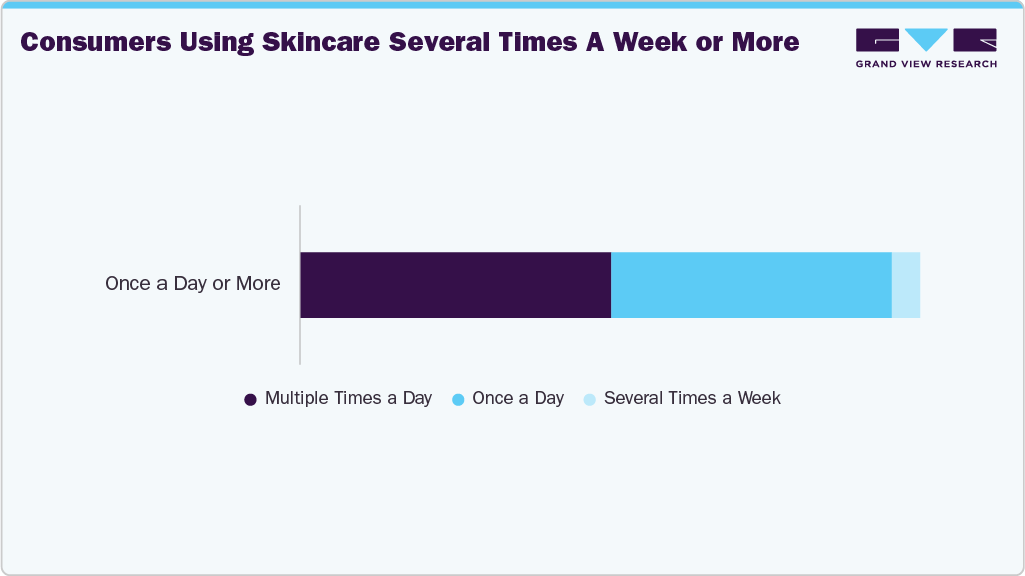
UK skincare consumers demonstrate heightened awareness of skincare routines, with research indicating that 84% incorporate skincare products into their routines several times a week or more, and 44% use dedicated skincare products multiple times a day. This trend reflects a deeper commitment to consistent self-care rituals rather than occasional treatments.
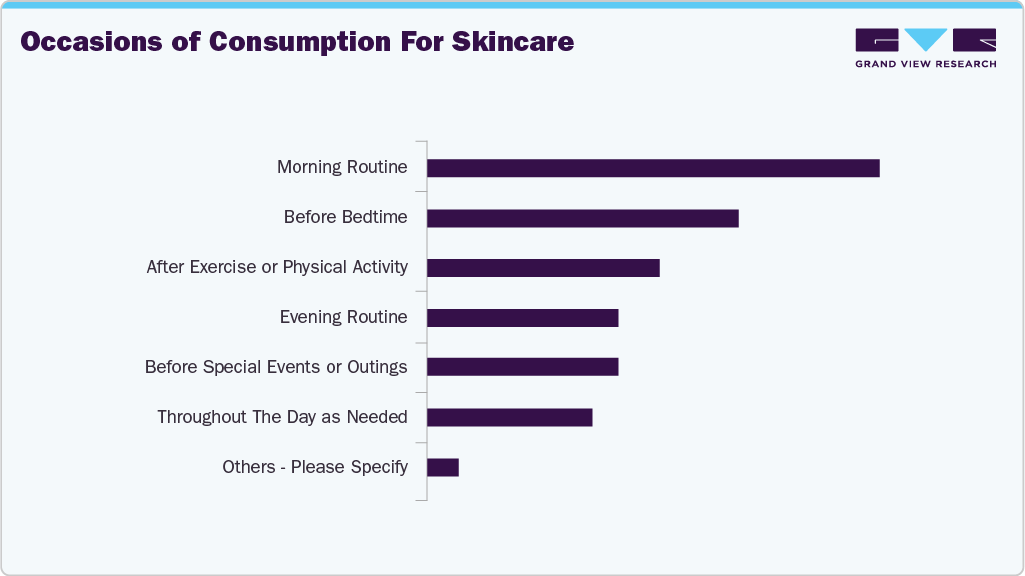
Consumers who use skincare multiple times a day prefer it in the morning and before bedtime as part of their nighttime routine. While consumers generally have morning and night skincare products, there is an opportunity to encourage usage on other occasions such as before exercising, (current usage 25%), by introducing products that not only offer quick cleanse but also moisturization, post a workout session combating after effects of sweat, e.g. hypochlorous acid that acts as a gentle cleanser but also hydrates the skin.
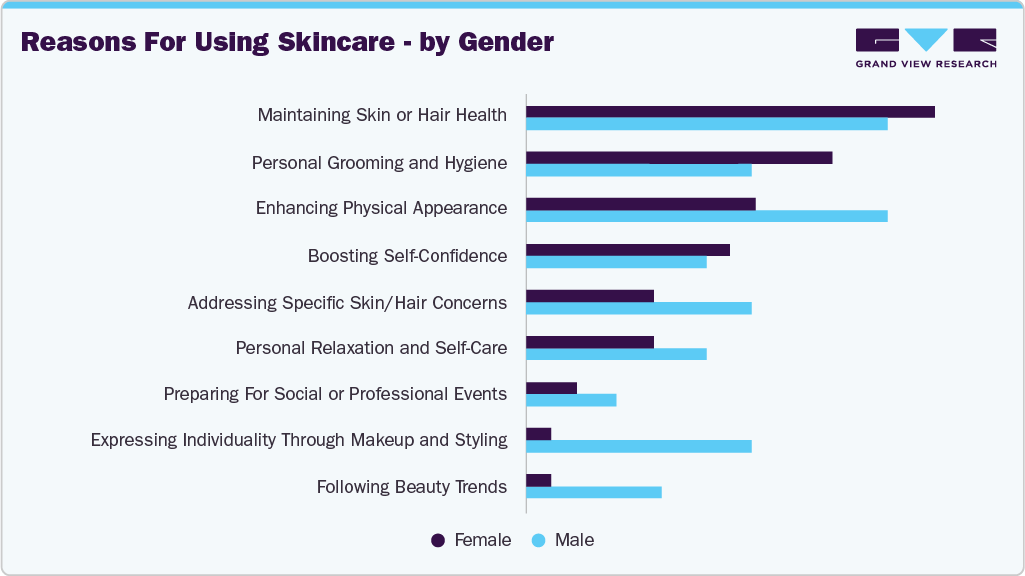
Females and males think somewhat alike about the reasons for using skincare products. Maintaining skin health stands as the primary reason for both genders. Another primary reason for males is to enhance physical appearance, while personal grooming and maintaining hygiene are the secondary reasons for females to purchase a skincare product. While consumers feel that using skincare products helps them stick to a routine and helps them relax or is even considered a form of self-care, the rising prices with the increase in demand raise concerns among them. Consumers also feel that unrealistic beauty standards are promoted by the industry, such as acne-free, wrinkle-free, and poreless skin, which raises a concern about their impact on mental health.
Buying Behavior
Consumers prefer to be aware of certain information points about any product before making a purchase. The most important points for purchasing any skincare product are product quality and effectiveness, given the presence of quality-conscious consumers in light of increasing mindful minimalism, followed by the effectiveness of the brand reputation and product affordability. Since skincare products offer a wide range of volumes, from small travel sizes to larger, full-sized options, catering to different needs and preferences, and are durable, consumers prefer to buy them once in 3 months.
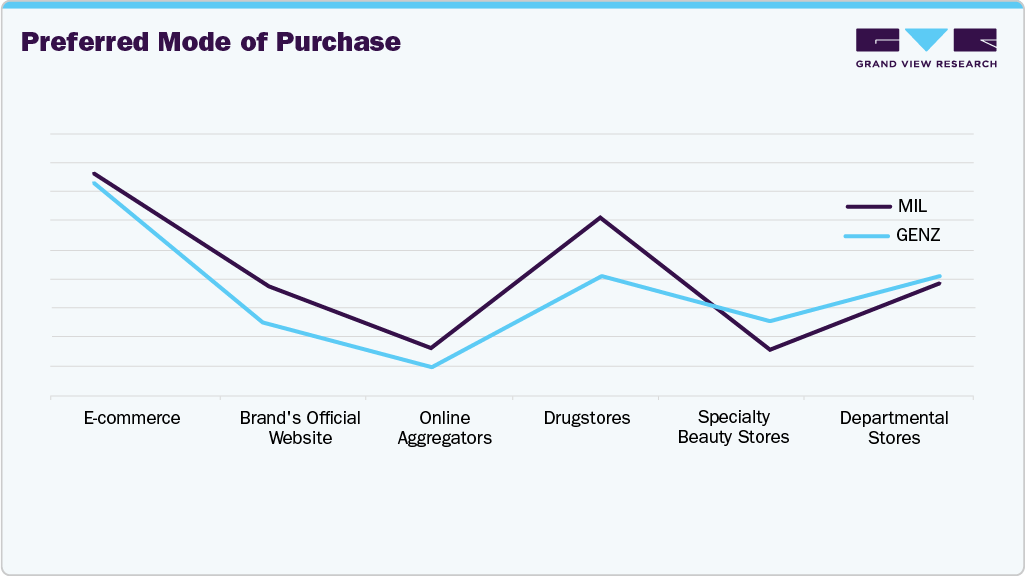
When it comes to preferred modes of purchase, e-commerce platforms are the preferred option for Millennials and Gen Z, followed by Drugstores. Gen Zs also prefer department stores as a channel for purchasing skincare products.
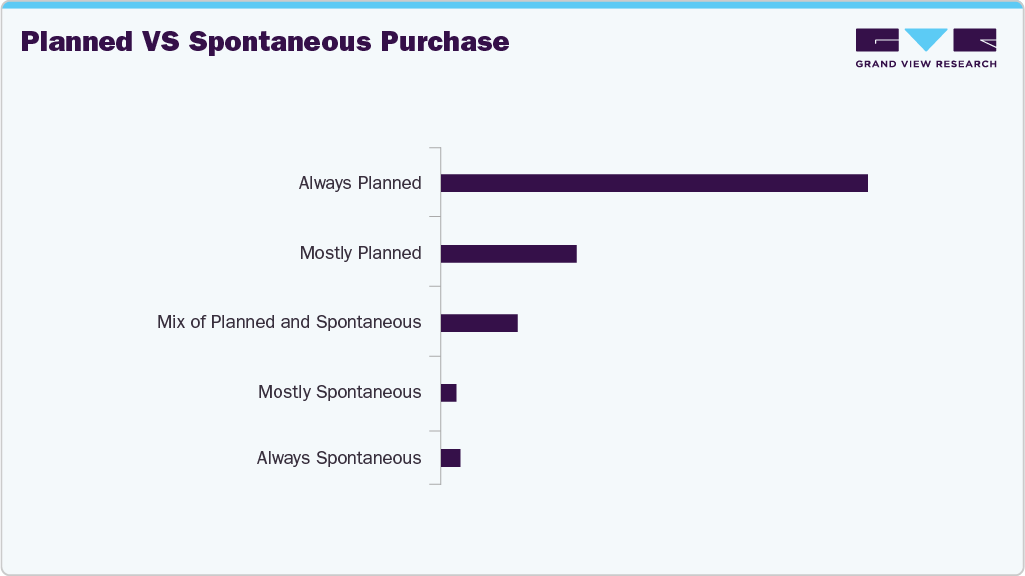
Purchasing of skincare products belongs to a pre-planned category, as 8 out of 10 people say their purchase is planned, of which 61% say it is always planned. Only 11% of consumers make either a planned or spontaneous purchase, depending on the situation and offers provided by different brands. A negligible percentage of people make spontaneous purchases, mainly driven by price and discounts, indicating that consumers prefer value-for-money products that offer quality and affordability.
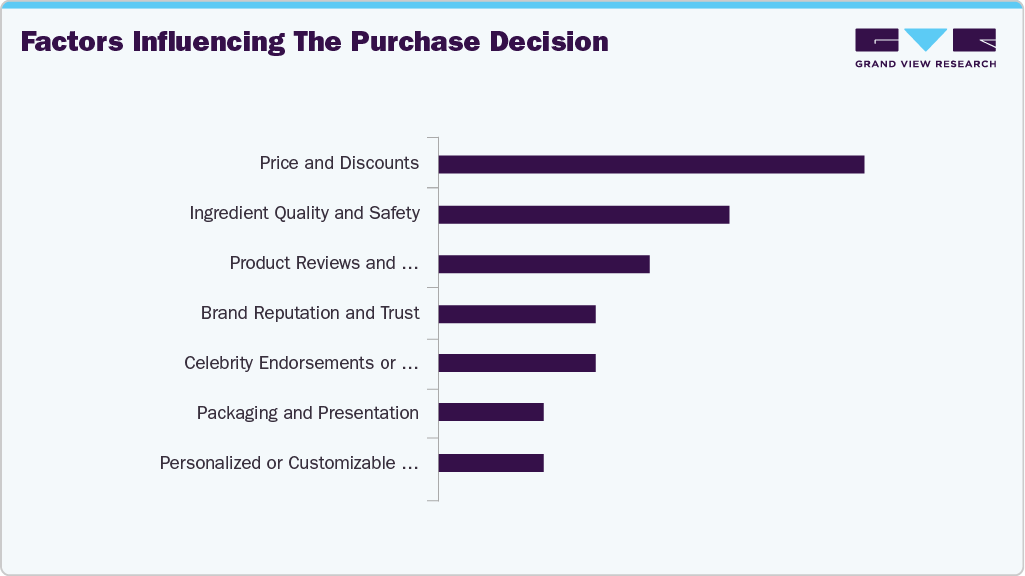
Price and discounts, ingredient quality, and safety are the most important factors driving skincare product purchases, as more than 8 out of 10 people have selected them as the main drivers. Online ratings and recommendations from family, friends, and social media influencers also significantly influence purchase decisions. Having said that, with the growing demand, some barriers arise in purchasing a product, such as products that cause skin irritation or trigger allergies, finding products suitable for a specific skin/hair type, and identifying products without harmful chemicals. Also, 8 in 10 consumers are moderately to highly conscious of the brand of the skincare product they use, as awareness of quality increases, which can help consumers avoid products with poor quality, a lack of transparency in ingredients, or poor formulation.
Brand Power Play (Brand Health and Performance)
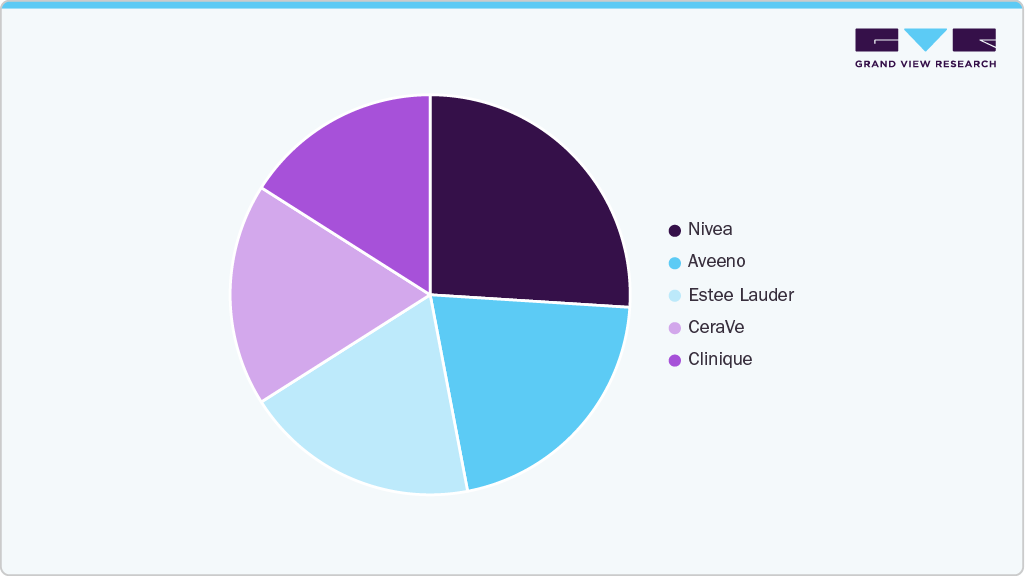
Some of the popular skincare product brands in the UK include Nivea, Aveeno, Estée Lauder, CeraVe, and Clinique. Although the skincare industry is highly competitive, Nivea dominates the market with a 56% share (by awareness). Some of the other emerging brands are The Ordinary, which is slowly making its way into the skincare market thanks to its effective marketing strategy.
Purchase Funnel
Although some of the prominent brands like Nivea, Aveeno, and Estee Lauder enjoy high awareness due to their existence as long-standing presence garnering a reputation as a trustworthy brand, they are surpassed by brands like CeraVe and Ordinary, due to their quick and effective marketing strategies. Estee Lauder also has a reputation as a premium skincare brand, pricing its products on the higher end and targeting less price-sensitive consumers, leaving out a chunk of the market. Thus, brands like CeraVe and The Ordinary, though comparatively less well-known, garner greater consideration for their affordability, transparency, and quality, coupled with innovation in their skincare products.
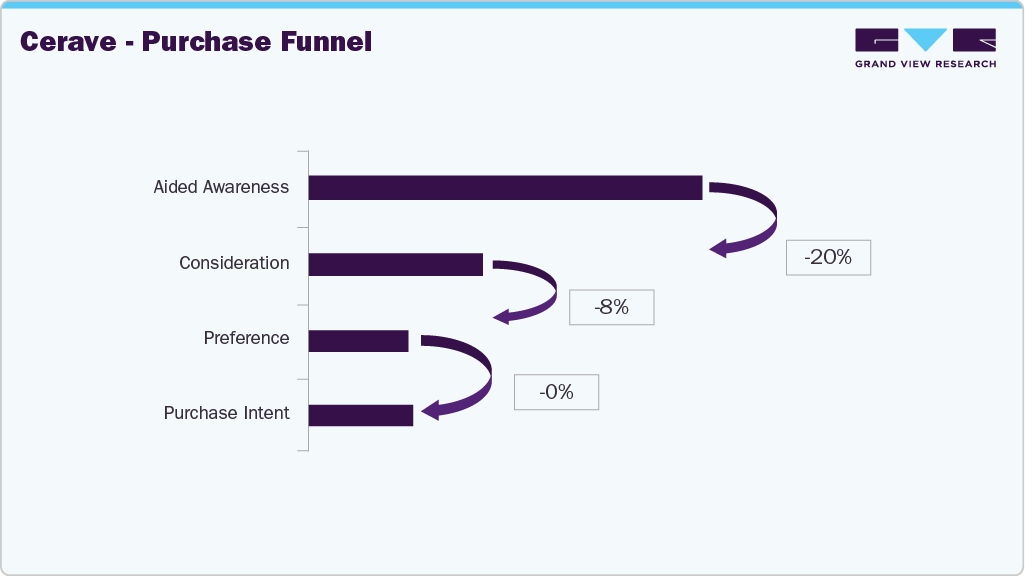
CeraVe demonstrates a commendable purchase funnel, despite having a drop from awareness to consideration. This can be attributed to the brand's affordable price point, dermatologist-developed formulations, and strong focus on protecting the skin barrier. They achieve this by their emphasis on ceramides, a key component of healthy skin, and their unique MVE (MultiVesicular Emulsion) technology. However, what makes The Ordinary a tough competitor is its highly effective, affordable, and clinically-focused approach to skincare. CeraVe, while popular and dermatologically recommended, is seen as a more traditional brand with a wider product range. In contrast, The Ordinary focuses on delivering specific ingredients and formulas at a fraction of the price. Thus, both brands cater to a wider market with their scientifically backed products, making it a neck-to-neck competition. CeraVe has potential for greater reach, as it garners commendable satisfaction levels. It is worth noting that brands like Nivea, Clinique, and Estée Lauder have higher satisfaction levels, thanks to their history and brand reputation.
The overall NPS score of the leading brands varies from -33 to 100, with Clinique and Estee Lauder having the highest NPS score (100) compared to other prominent brands in the market.

Talk to an analyst
Tell us what you need. We reply within one working day.
Service Guarantee
-
Insured Buying
This report has a service guarantee. We stand by our report quality.
-
Confidentiality
Your transaction & personal information is safe and secure.
-
Custom research service
Design an exclusive study to serve your research needs.
-
24/5 Research support
Get your queries resolved from an industry expert.