UK Smartphone Consumer Insights - Usage, Attitudes, And Brand Performance Report
Introduction:
The UK smartphone market is rapidly evolving, with most consumers owning devices with advanced processing power, sophisticated camera systems, and integrated AI capabilities. These devices are essential for web browsing, professional tasks, navigation, and social connectivity. AI integration has become a key battleground, with features like Apple's on-device processing AI, such as Siri, and Google's advanced photo enhancement system, such as Google Eraser, transforming user experiences to the next level. Apple and Samsung dominate premium segments, while Xiaomi and Nothing gain traction in mid-range offerings. Manufacturers prioritize sustainability and reparability over traditional upgrades, reflecting a maturing market where value, longevity, and practical innovation outweigh annual upgrade cycles. Let’s dive into some of the trends shaping the industry:
-
Extended Device Lifecycles: The UK's smartphone replacement cycle has been extended due to economic pressures, environmental awareness, and reduced innovation. Manufacturers have extended software support periods, offering up to seven years of updates. Hardware durability has improved, with water resistance ratings and stronger glass formulations. Battery health management features have become sophisticated, with smart charging algorithms and user-accessible monitoring. Marketing strategies now focus on long-term value, serviceability, and sustainable product lifecycles.
-
Mid-Range Growth: The mid-range smartphone market in the UK is expanding rapidly. Devices in this category are now commonly equipped with features like high-quality cameras, smooth high-refresh displays, and long-lasting batteries. Brands such as Google, Samsung, Nothing, and Xiaomi are helping to set these new standards. Chinese manufacturers, in particular, have been instrumental in reshaping the market by offering impressive performance at competitive prices, prompting more established players to adjust their strategies. For budget-savvy buyers, mid-tier smartphones now offer an ideal blend of performance and affordability.
-
Green Evolution: The UK smartphone ecosystem is undergoing a significant shift towards sustainability, with brands competing on environmental credentials and circular economy participation. Major manufacturers like Apple, Samsung, and Nothing have transformed their packaging, eliminating plastic components and increasing recycled material content. Reparability has become a marketing highlight, with Samsung and Apple expanding repair options. Trade-in programs now integrate seamlessly with retail experiences, and manufacturers are publishing comprehensive environmental impact reports with specific carbon footprint metrics and material recovery rates.
-
Market Evolution: The UK smartphone retail landscape has undergone a significant transformation due to competitive consolidation and distribution transformation. This has led to a clearer market segmentation and revolutionized consumer purchase journeys. As resource-constrained players like Sony and LG exited, Apple and Samsung strengthened their premium duopoly through vertical integration and ecosystem lock-in strategies. Chinese manufacturers like Xiaomi, Oppo, and Nothing have consolidated their mid-market presence by combining aggressive pricing with premium features. Consumers now purchase devices directly from manufacturers or through specialized retailers.
Methodology:
The insights covered in this report are drawn from GVR’s ‘Voice of Consumer Survey’ and its periodic updates. The latest survey represents 75,000+ consumer interviews conducted across 20 countries for 100+ product categories. These insights are specifically catered to the brands operating in the Smartphone industry to guide them in their strategic decision-making process. This report provides insights covering category usage & attitude, buying behavior, brand performance metrics, and brand health indicators of leading players in the UK Smartphone market.
Chapter 1: Usage and Attitude
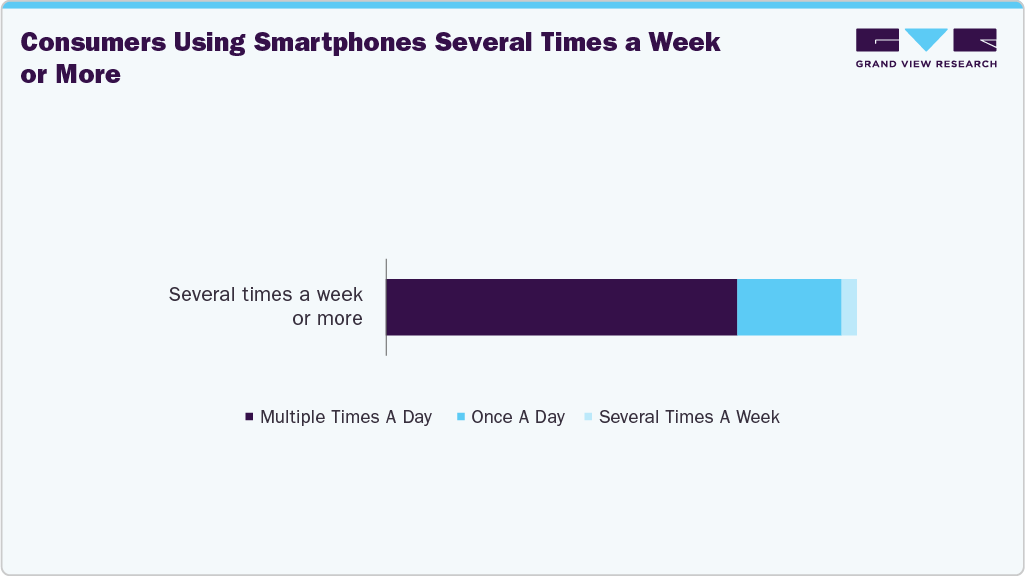
Smartphone usage in the UK is overwhelmingly frequent, with daily interaction being the clear norm. According to the data, 72% of users engage with their smartphones multiple times a day, while an additional 22% use them once daily. This means a striking 97% of people in the UK rely on their smartphones every single day, highlighting the device's central role in communication, entertainment, work, and everyday tasks.
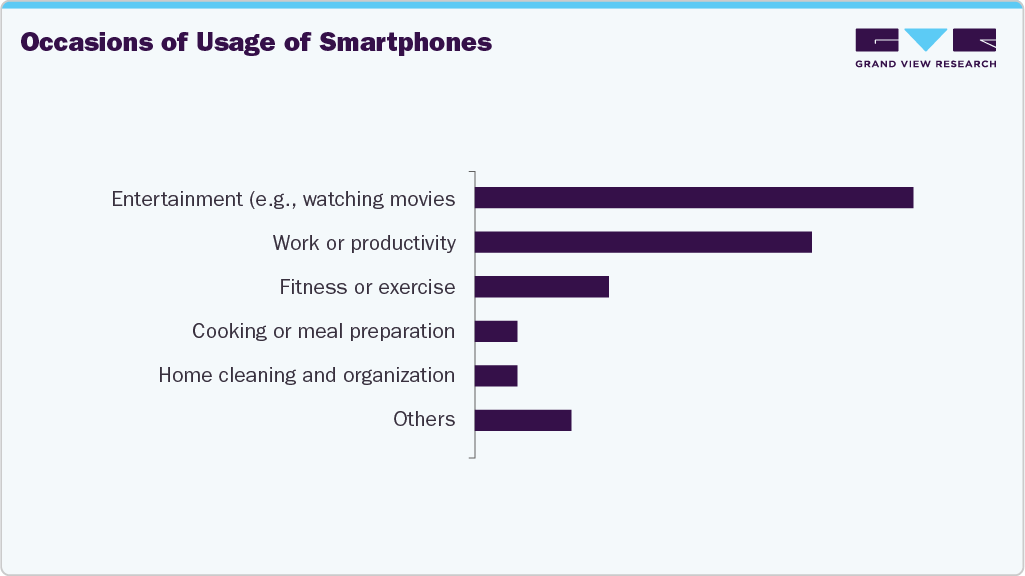
In the UK, smartphones are most commonly used for entertainment and productivity, whether it's streaming Netflix on the train or checking emails between meetings. 83% turn to them for fun, and 64% for work. Beyond that, they play a powerful role in keeping people connected, helping users stay in touch with loved ones through calls, messages, and social media, as people positively associate using smartphones with this. The appeal doesn’t stop at function; cutting-edge performance and stylish designs make owning a smartphone a satisfying experience. From catching up on shows to catching up with friends, these devices enrich daily life in more ways than one.
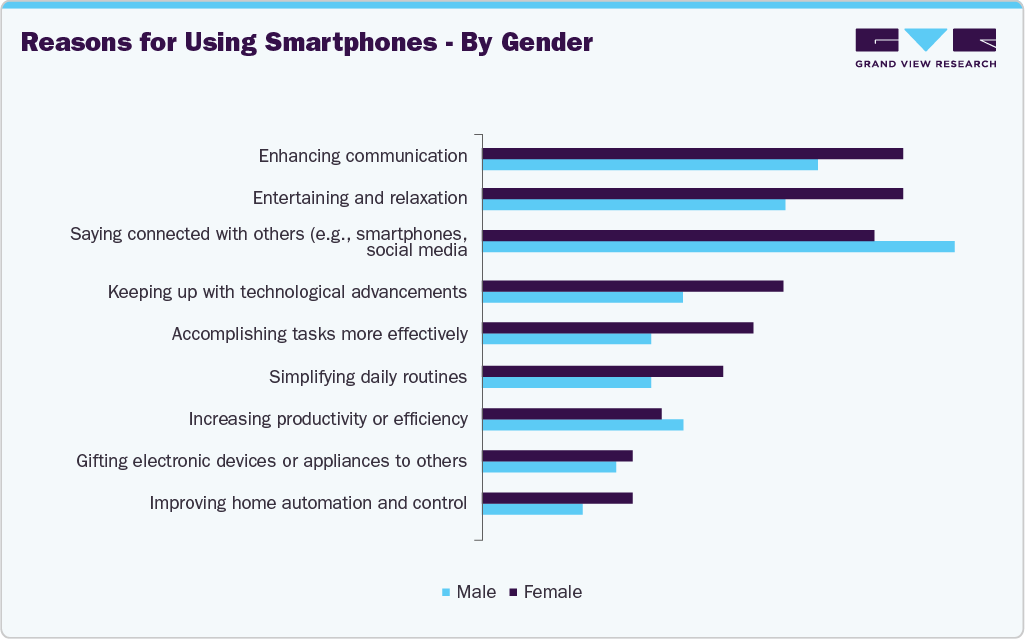
In the UK, smartphones are used differently by men and women, reflecting their lifestyles and priorities. Men tend to use smartphones for communication, entertainment, and staying updated with the latest tech, while women often prioritize social connections through messaging apps and social media platforms. Both groups value relaxation, though women more often seek emotional connections, like sharing personal moments on Instagram or participating in virtual group chats. However, this widespread use also brings challenges; many users experience a growing dependence on screens, which can impact mental well-being and real-world interactions. Additionally, limited compatibility with other devices, such as smart home systems or wearables, can lead to frustration and disappointment, especially when expectations for seamless integration aren’t met.
Buying Behavior
When buying a smartphone in the UK, factors like product performance, reliability, pricing, and brand reputation are crucial. Brands like Apple and Samsung are known for their reliability and consistent performance. OnePlus and Xiaomi offer high-end features at affordable prices. Brand reputation and trustworthiness are also important. Technological features like foldable screens and advanced cameras are attractive, but energy efficiency and compatibility are secondary. In the UK, consumers tend to upgrade their smartphones within 2-5 years due to the ongoing cost of living crisis, the desire for newer features and technologies, and the rise of refurbished and second-hand devices.
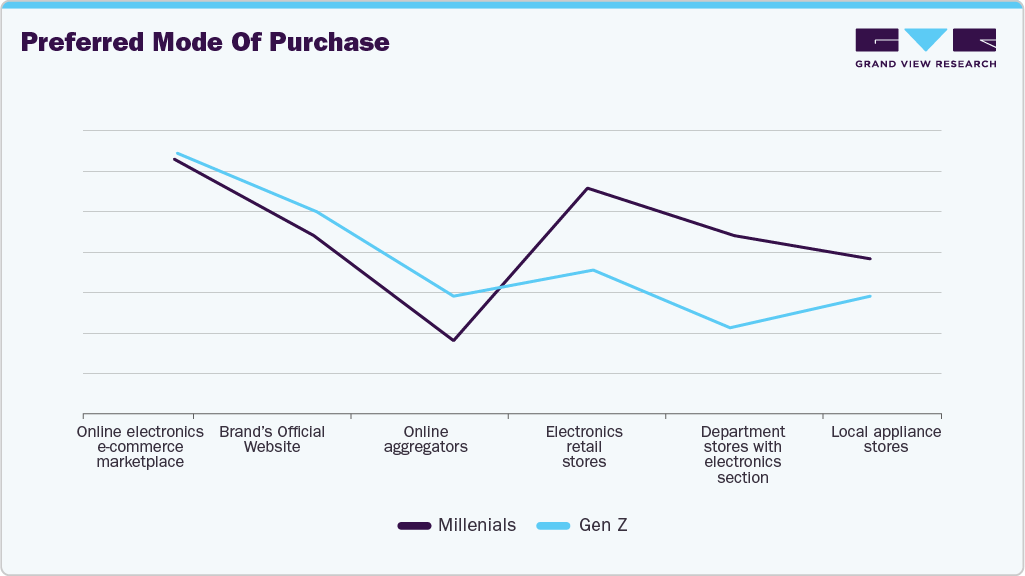
When it comes to mode of purchase, online electronics e-commerce marketplace, brand's official website, and electronic retail stores are the most common methods; however, when deep diving into Gen X and Millennials, the online electronics e-commerce marketplace again comes first for both generations. Brand’s official website is also a go-to place for Gen X, whereas Millennials prefer to shop from electronics retail stores.
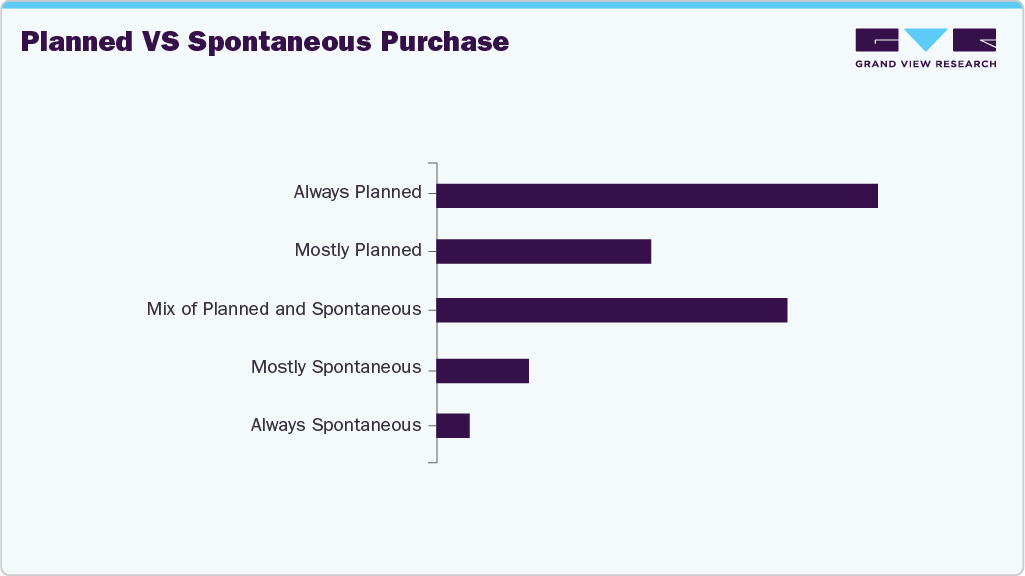
In the UK, 39% of smartphone purchases are planned, with 31% waiting for seasonal sales or new model releases. 31% balance planned decisions with spontaneous purchases, such as upgrade events or unexpected phone breaks. 19% research models and read reviews before committing, while 11% make spontaneous decisions, often seizing deals offered by retailers. This highlights the importance of thoughtful planning in purchasing a smartphone, as it is usually a significant decision, with only 11% making impulsive purchases. The majority of smartphone purchases are planned, with a mix of planned and spontaneous purchases.
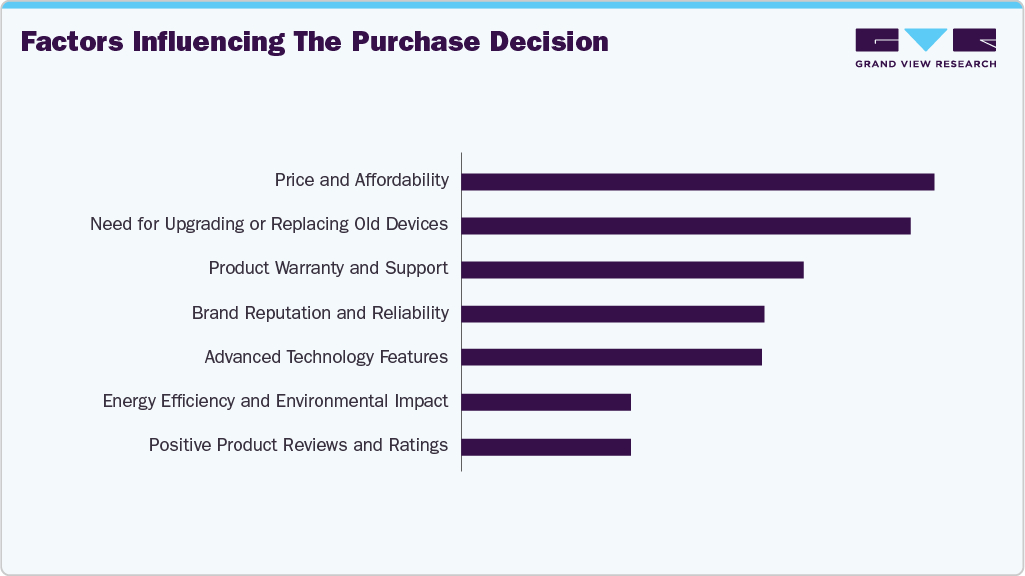
In the UK, a common reason for buying a new smartphone is the need to upgrade or replace an old or faulty device. Issues like poor battery life, cracked screens, or outdated software often prompt this decision. Price and affordability are key factors, with many waiting for deals or trade-in options. Trusted brands like Apple and Samsung offer reassurance through reliability and support. Cutting-edge features and positive reviews from influencers or friends can strongly influence buying choices. Additionally, eco-conscious users may consider energy efficiency and warranty benefits for added value. Also, online reviews & ratings and recommendations from family, friends, & social media influencers act as the major factors that influence a purchase decision. Having said that, with the growing demand, some barriers exist in purchasing a smartphone, such as a lack of affordable options with essential features and short product lifespans or frequent replacements. Also, 9 in 10 consumers are moderately to highly conscious about the brand of smartphone they use, as the awareness levels around technology and functionality increase, which can hinder consumers from choosing a brand without essential features.
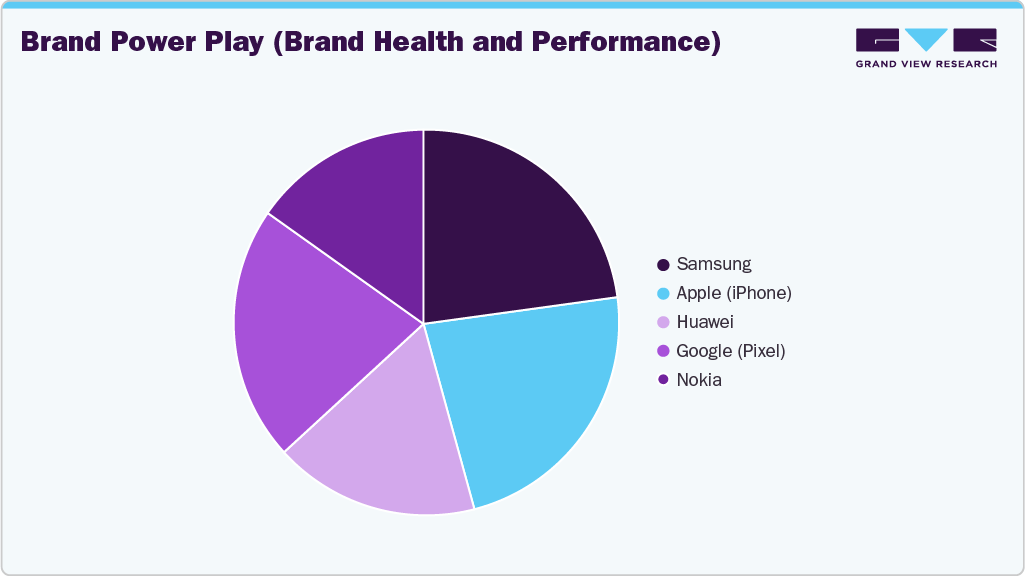
Brand Power Play (Brand Health and Performance)
Some of the popular Smartphone brands in the UK include Apple, Samsung, Google, Nokia, and Huawei. Although the Smartphone industry is competitive, Samsung and Apple dominate the market with 75% market share each (by awareness).
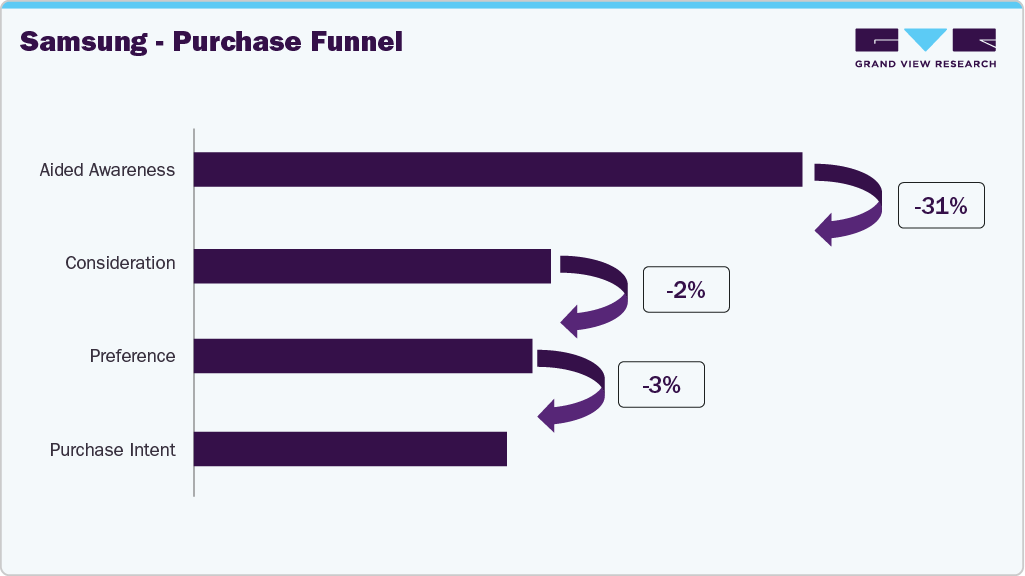
Purchase Funnel
Although a lot of smartphone brands are well-known in the UK, only a few make it past the stage of being considered and preferred. Samsung and Apple prove it by giving tough competition in almost all stages of the purchase funnel.
Samsung demonstrates a commendable purchase funnel vs Apple, despite having a significant drop from awareness to consideration. Samsung is favored in the UK for offering more affordable options, advanced features, and greater customization compared to Apple. Its innovation in areas like foldables and fast charging also appeals to tech-focused users. Samsung is considered, preferred, and liked in the UK for its wide range of smartphones that cater to all budgets, unlike Apple’s mostly premium offerings. Its innovative features, like foldable designs and advanced cameras, attract tech enthusiasts. Practical benefits such as fast charging, USB-C, and software flexibility add to its appeal. Overall, Samsung is seen as offering better value and versatility, boosting its purchase intent among UK consumers. Nokia, though widely recognized in the UK, is less preferred due to its lack of innovation and premium features compared to rivals. Its focus on basic, budget-friendly models and limited ecosystem appeal make it less attractive to modern smartphone buyers. Consumers also like to re-purchase any Samsung model for smartphones due to its higher satisfaction level post usage.
While the overall NPS score of the leading brands varies from -100 to 100, Samsung, being the market leader, has the highest NPS score (34) compared to other prominent Smartphone brands in the market. Samsung smartphones are recommended in the UK for their reliable performance, wide range of models, and strong value for money. They offer standout features such as high-quality displays, advanced cameras, and fast charging. Integrated with a sleek design and a trusted brand reputation, they appeal to a broad range of users.

Talk to an analyst
Tell us what you need. We reply within one working day.
Service Guarantee
-
Insured Buying
This report has a service guarantee. We stand by our report quality.
-
Confidentiality
Your transaction & personal information is safe and secure.
-
Custom research service
Design an exclusive study to serve your research needs.
-
24/5 Research support
Get your queries resolved from an industry expert.