UK Sportswear And Swimwear Consumer Insights - Usage, Attitudes, And Brand Performance Report
Introduction:
The UK sportswear market in 2025 is experiencing robust growth, propelled by a surge in health consciousness, the continuing popularity of fitness activities, and the integration of sportswear into everyday wardrobes. Although consumers are increasingly prioritizing active lifestyles-reflected in more running, home workouts, yoga, and other fitness pursuits-rising living costs are causing shoppers to make more considered purchases and seek long-lasting value. In response, brands are doubling down on comfort, durability, and sustainability as more consumers place greater importance on these factors. Athleisure fashion, online retail expansion, and celebrity endorsements further fuel demand, while market leaders like Nike and Adidas remain highly competitive. Despite strong fundamentals, the UK market also faces challenges, including supply chain pressures and heightened competition among both global giants and niche brands. Nonetheless, the sector’s dynamism-and its ability to adapt to evolving consumer needs-positions it for steady growth in the years ahead.
The UK swimwear market in 2025 is shaped by a surge in demand for sustainable, eco-friendly products, as consumers increasingly seek recycled fabrics and ethical production practices from brands. Size inclusivity, body-positive designs, and gender-neutral options have become major focal points, driving the popularity of collections offering broad size ranges and adaptive features. Swimwear now merges high-performance technical qualities-like UV protection, quick-drying and chlorine-resistant fabrics, adjustable support, and compression-with on-trend aesthetics, including sporty cuts, retro prints, and vibrant colors. Online channels and influencer-led campaigns dominate sales, helping brands reach style-conscious shoppers who value functional pieces that transition seamlessly from water to leisure. While consistent holiday travel and the boom in swimming culture keep demand robust despite the UK's climate, brands compete fiercely to stand out amid seasonal sales fluctuations, pricing pressures, and fast-changing consumer tastes.
The UK sportswear and swimwear sectors are rapidly evolving, led by a strong shift toward sustainability and body-positive, inclusive designs. Digital retail and social media marketing drive purchasing decisions, while technical innovations deliver versatile pieces-activewear and swimwear that work for fitness, leisure, and beyond. Despite seasonal weather, these markets thrive year-round due to an active lifestyle culture, indoor facilities, and international travel. British consumers increasingly seek garments that balance high performance (such as moisture management and UV protection) with bold, contemporary aesthetics, with vibrant, retro-inspired styles standing out in recent collections.
Here are the key trends in this industry:
-
Performance-Driven Designs: Sportswear brands continue to focus on enhancing comfort, durability, and performance through features such as compression support, breathable materials, and moisture-wicking fabrics that keep athletes dry and comfortable during intense workouts. The integration of stretchy, flexible materials also enables a greater range of motion and support, thereby improving overall athletic performance. Additionally, innovations such as temperature-regulating fabrics and ergonomic fits help maximize comfort, reduce fatigue, and improve recovery. These performance-focused designs are not only practical for athletes but also cater to everyday consumers who prioritize active lifestyles.
-
Bold Prints and Colors: There is an increasing trend of bold prints, vibrant colors, and distinctive designs in both sportswear and swimwear, highlighting a movement towards self-expression and individuality. Consumers are opting for attention-grabbing patterns, such as neon shades in workout wear or vibrant prints in swimwear, to stand out and showcase their personal style. These striking designs not only energize fitness routines and beach outings but also align with the rise of athleisure, where style and performance merge effortlessly. Bright colors and unique patterns help boost confidence and motivation, empowering wearers whether they are working out or relaxing by the water.
-
Market Pressures and Consumer Trends: Economic conditions and global trade challenges are impacting both sectors, leading consumers to focus on replacing worn-out items rather than purchasing new ones. Despite these pressures, the growing interest in health and fitness, along with celebrity and influencer collaborations, continues to drive innovation and demand for sportswear and swimwear. Additionally, the rise of athleisure and the shift towards multifunctional products that combine style and comfort are boosting sales. As consumers increasingly prioritize sustainability and personalization, brands are adapting to these trends to maintain competitiveness in the market.
Methodology:
The insights covered in this report are drawn from GVR’s ‘Voice of Consumer Survey’ and its periodic updates. The latest survey represents 75,000+ consumer interviews conducted across 20 countries for 100+ product categories. These insights are specifically catered to the brands operating in the sportswear and swimwear industry to guide them in their strategic decision-making process. This report provides insights covering category usage & attitude, buying behavior, brand performance metrics, and brand health indicators of leading players in the UK sportswear and swimwear market.
Chapter 1: Usage and Attitude
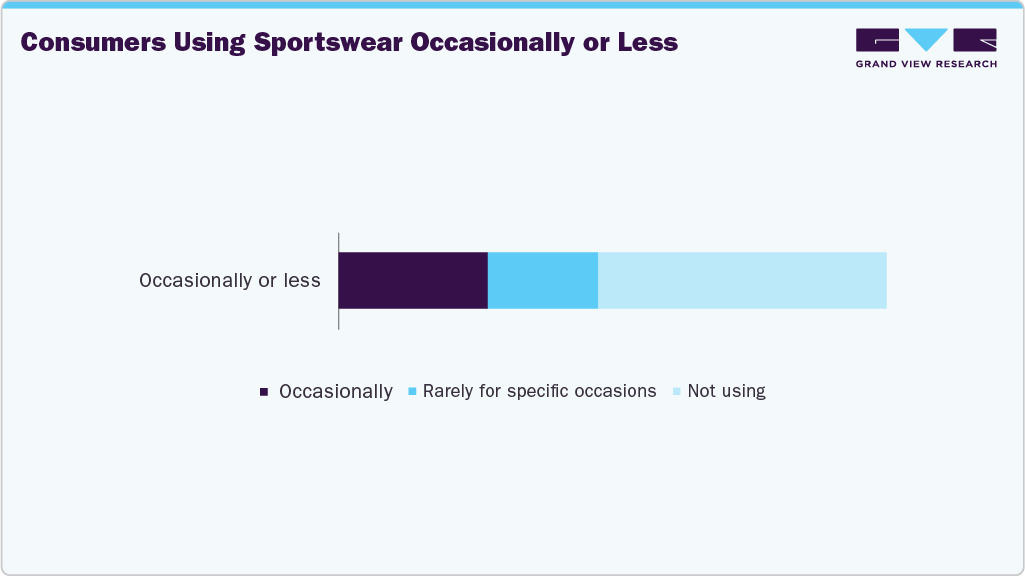
In the UK, 19% of consumers wear sportswear on occasion, while 14% use it rarely or only for specific activities. A notable 36% report not using sportswear at all. This indicates a diverse range of engagement, with many people reserving sportswear for certain situations or choosing not to wear it often. For example, some may only wear sportswear during exercise or outdoor activities. In contrast, others may prefer more casual or formal clothing for daily wear, leading to less frequent use of sportswear.
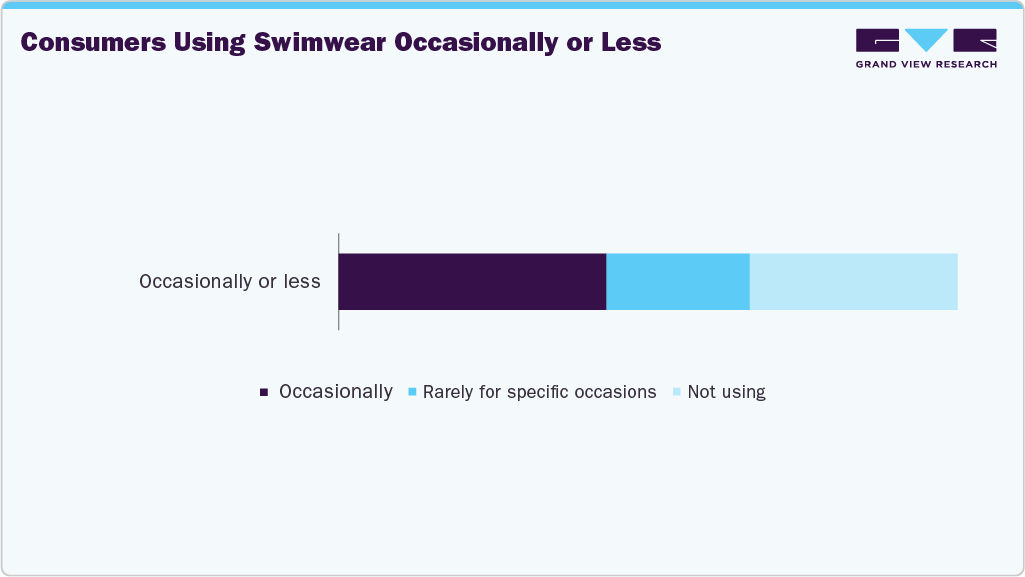
In the UK, 36% of consumers use swimwear occasionally, while 19% wear it rarely or only for specific occasions. Interestingly, 28% report not using swimwear at all. This highlights that many consumers engage with swimwear infrequently, primarily for specific events or activities. For example, some people may only wear swimwear during vacations, beach trips, or swimming sessions, while others may not have the need for it at all if they do not engage in water-based activities regularly.
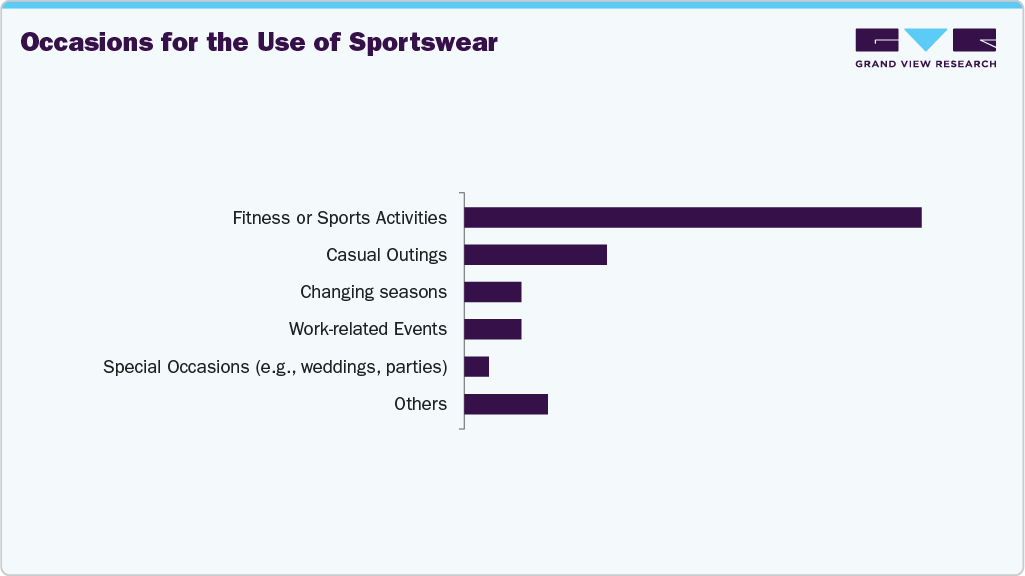
In the UK, sportswear is most commonly used for fitness or sports activities, with 70% of consumers choosing it for exercise, workouts, or athletic pursuits. A smaller segment, 22%, wears sportswear for casual outings, showing its growing appeal as comfortable and versatile everyday wear. The changing seasons also play a role, with 9% of people selecting sportswear based on weather conditions, such as cooler temperatures calling for layers or warmer months leading to more outdoor activities. This data suggests that sportswear is seen as functional, not just for fitness, but also as a practical and stylish option for various aspects of daily life.
Negative associations with sportswear in the UK often stem from the high cost of quality clothing and designer brands, making it difficult for some consumers to justify the expense. Dissatisfaction also stems from uncomfortable fits or materials that do not provide the desired comfort or performance. This leads to disappointment, as customers expect more from their investments in sportswear. These issues ultimately create a gap between what consumers expect and what they experience.
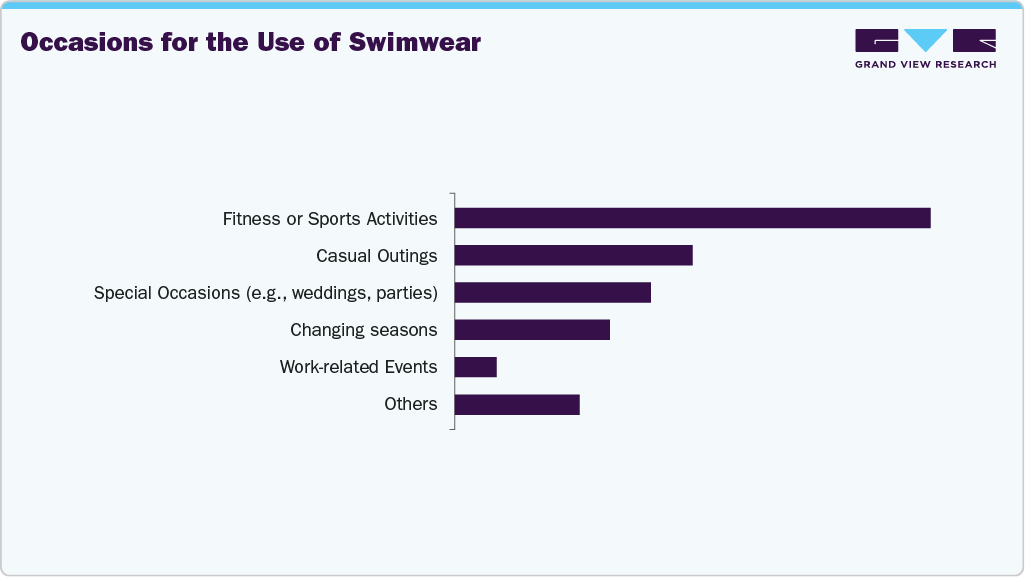
Swimwear is primarily used for fitness or sports activities, with 46% of consumers wearing it for swimming, water sports, or workouts. Additionally, 23% wear swimwear for casual outings, such as beach vacations or relaxing by the pool, highlighting its popularity for leisure activities. Interestingly, 19% of people choose swimwear for special events, such as weddings or parties, where swimwear is often needed for beach or poolside-themed occasions. This suggests that swimwear is not only associated with fitness and relaxation but also plays an important role in social and celebratory events, giving it a seasonal trend.
Negative associations with swimwear in the UK often stem from uncomfortable or ill-fitting swimwear, leading to dissatisfaction and disappointment. Many consumers are frustrated by materials that feel uncomfortably tight or do not provide the desired support. Additionally, trends that do not align with personal style or body type can make people hesitant to invest in new swimwear. This creates a disconnect between consumer expectations and the experience of wearing the product.
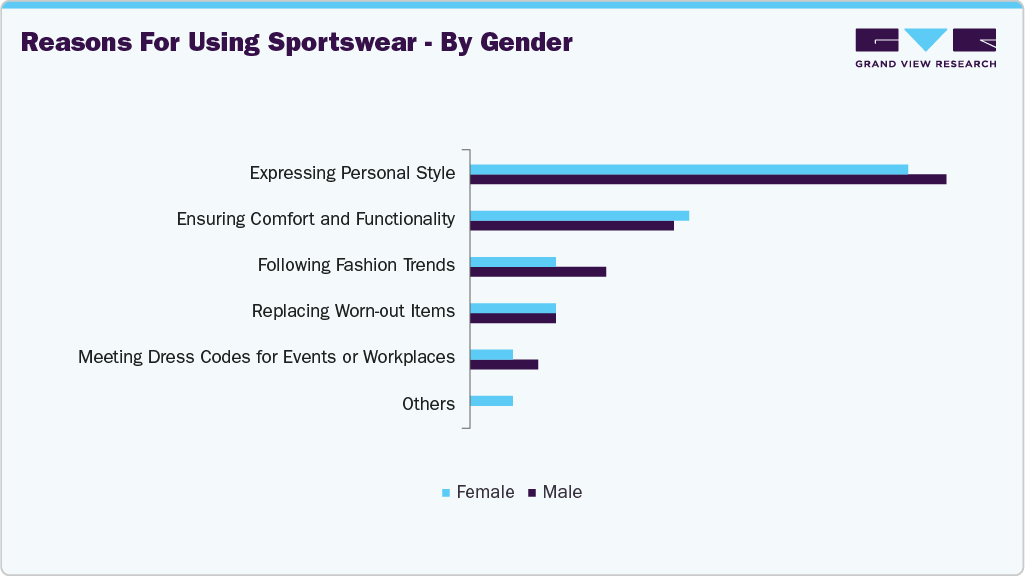
When selecting sportswear, both women and men place strong emphasis on comfort and functionality, with 71% of women and 78% of men choosing active wear based on how well it supports their performance and comfort. This suggests that the primary appeal of sportswear is its ability to enhance physical activity, whether it is running, training, or yoga. For example, women may prefer leggings with moisture-wicking fabrics, while men might choose shorts with built-in compression for better muscle support. Alongside functionality, expressing personal style remains important for both genders, with 36% of women and 33% of men wanting their sportswear to reflect their fashion choices. Many women prefer vibrant-colored sports bras or patterned leggings, while men might select athletic wear with bold designs or brand logos. This shows that while performance is key, style also plays a role in making sportswear feel more personal and empowering.
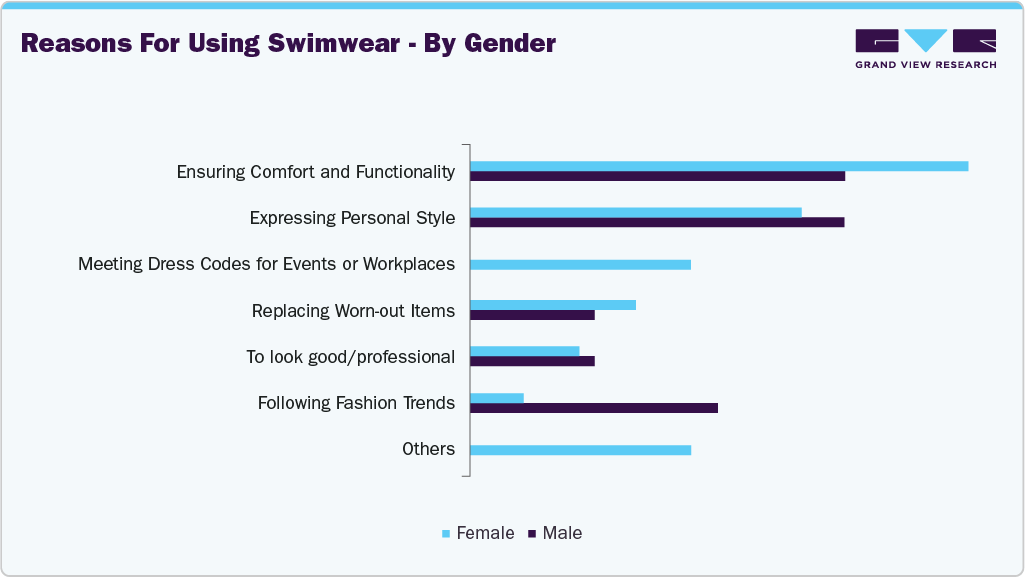
When choosing swimwear, both women and men prioritize comfort and functionality, with 50% of women and 38% of men citing these factors as their main reasons. This indicates that for many, the primary consideration is how well the swimwear performs during water activities. For example, women may prefer swimsuits with supportive tops or adjustable straps for a comfortable fit, while men might choose swim trunks with a secure waistband for ease of movement. On the other hand, expressing personal style is also important, with 33% of women and 38% of men seeking swimwear that reflects their individual fashion preferences. Women might select swimsuits with trendy patterns or flattering cuts, while men may opt for bold colors or stylish board shorts. This shows that while comfort is essential, swimwear is also seen as a way to showcase personal style, whether lounging by the pool or participating in water sports.
Buying Behavior
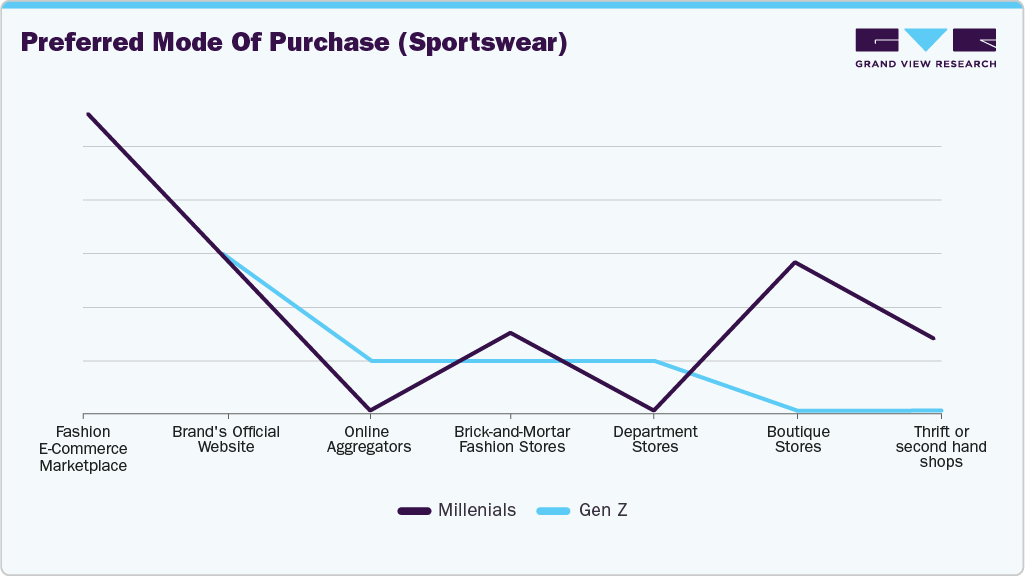
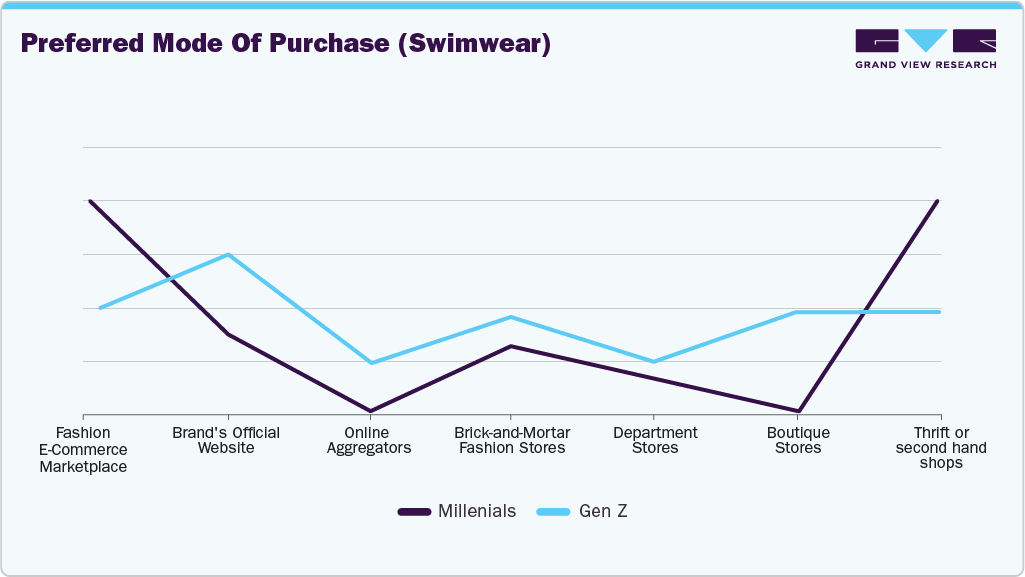
When purchasing sportswear, consumers in the UK prioritize comfort and fit, as well as price and value for money, which are key factors influencing their buying decisions. These consumers typically make a purchase once a quarter, reflecting a more considered and less frequent buying pattern. The preferred mode of purchase for Gen Z and Millennials is often through a brand's official website, where they can explore new collections, check product details, and take advantage of exclusive deals or promotions. For instance, a shopper might visit Nike's official site to ensure the fit and comfort of their chosen product or to access limited-time discounts. However, a deeper look into their buying behavior reveals that both generations also frequently shop on online fashion e-commerce marketplaces such as ASOS and Zalando. These platforms offer the added benefit of comparing prices, reading reviews, and evaluating the overall value for money across multiple brands. For example, a Millennial might first check Adidas' official website for new releases but then visit an e-commerce marketplace to find better deals or broader delivery options. This indicates that while brand loyalty and the authenticity of official websites are important, the convenience, variety, and comparison options offered by online marketplaces play a significant role in shaping their purchasing habits.
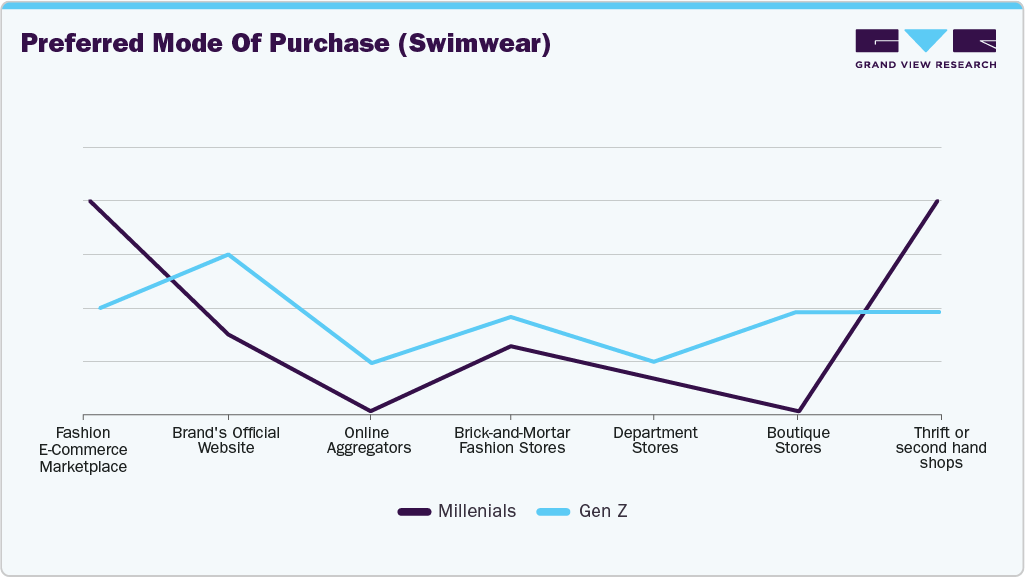
Gen Z and Millennials in the UK prioritize price and value for money when purchasing swimwear, often making a single purchase each year. This reflects a more deliberate and infrequent buying pattern, likely due to the seasonal nature of swimwear and the desire to make thoughtful purchases. Their preferred mode of purchase is online fashion e-commerce marketplaces, where they can easily compare prices, find deals, and browse a variety of options from multiple brands. For example, a Gen Z shopper might visit platforms like ASOS or Zalando to explore swimwear collections, compare prices, and read customer reviews to ensure they get the best value for their money. The convenience of shopping on these platforms, combined with the ability to check for discounts or seasonal sales, makes them the go-to option. This suggests that while price-consciousness drives their purchasing behaviour, the ease of comparison and wide selection available on e-commerce marketplaces significantly influence their buying decisions.
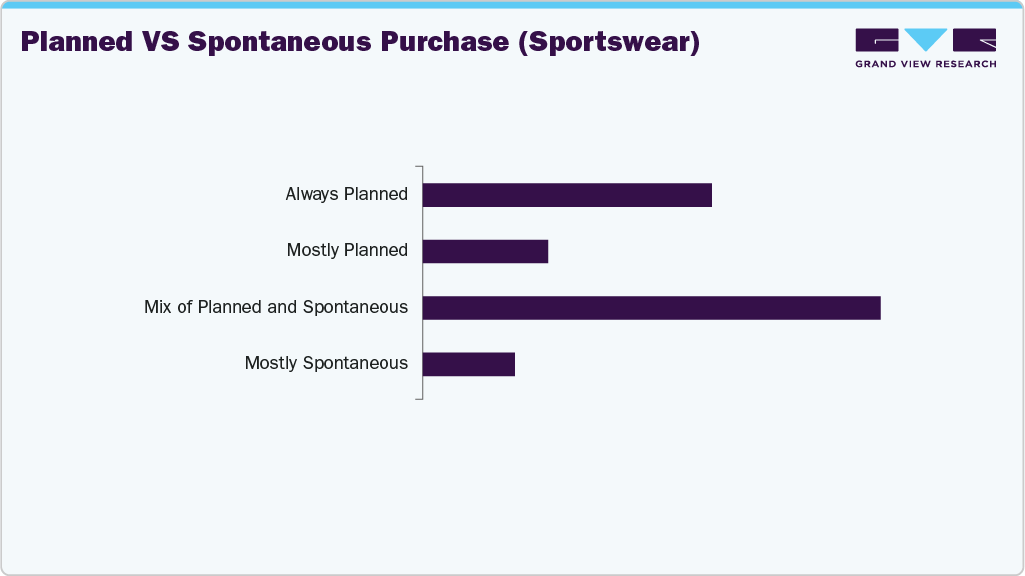
When it comes to purchasing sportswear in the UK, consumer behavior reveals a mix of planning and spontaneity. A significant 48% of consumers have a mix of planned and spontaneous purchases, indicating that while they may have an idea of what they need, they are also open to buying on impulse, especially when they come across a good deal or a new release. Around 30% of consumers always plan their sportswear purchases, carefully considering what they need for workouts or athletic activities. In contrast, 13% mostly plan their purchases, while 9% tend to buy sportswear spontaneously, perhaps when they see something they like or when they need an immediate replacement. This data highlights that while many consumers approach their sportswear buying with some level of intention, there is still room for impulse buys driven by trends, discounts, or changing needs.
When buying swimwear in the UK, most consumers combine both planned and impulse buying behaviors. Approximately 38% of people strike a balance between planning their purchases and buying spontaneously, often prompted by finding a desirable style or taking advantage of seasonal sales. Around 31% of shoppers tend to plan their swimwear purchases, usually in preparation for upcoming holidays or beach vacations. On the other hand, 23% primarily plan their buys but occasionally make impulsive purchases, while 8% tend to buy swimwear spontaneously, often driven by trends or a last-minute trip. This data shows that while swimwear purchases are typically linked to certain events or seasons, consumers still allow for flexibility and impulse in their buying decisions.
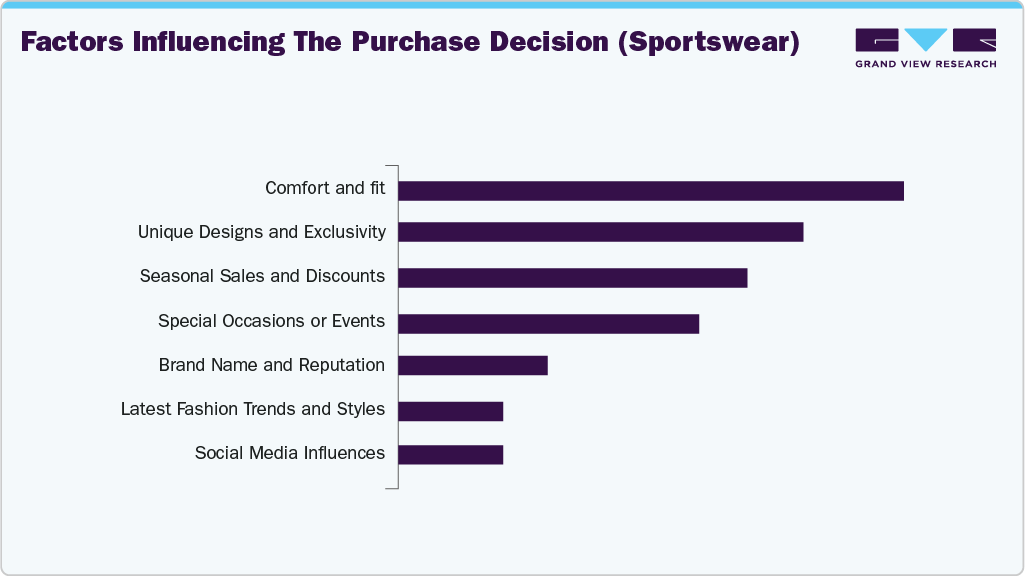
When purchasing sportswear in the UK, consumers often prioritize comfort and fit, with 43% choosing products based on how well they fit and how comfortable they are during workouts or physical activities. Alongside this, 35% value unique designs and exclusivity, seeking sportswear that stands out in style or offers something different from mainstream options. Seasonal sales and discounts also play a significant role for 30% of consumers, who seek opportunities to purchase their favorite items at reduced prices. However, a common challenge for many is the relatively high prices of quality sportswear, which can deter some shoppers from buying the premium products they want. This highlights a balance between seeking comfort, exclusivity, and affordability while navigating the sometimes steep costs of top-tier sportswear.
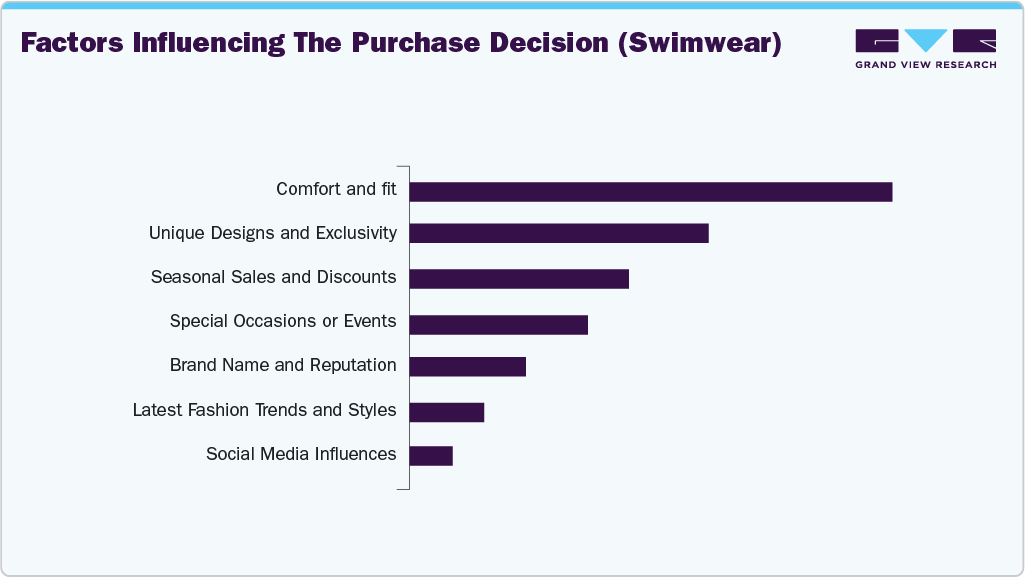
For almost half of UK consumers, comfort and fit are the most important factors when buying swimwear. They want swimwear that is pleasant for prolonged use, whether they are swimming or just relaxing. 31% of consumers enjoy seasonal sales and discounts, taking advantage of price breaks to purchase swimwear at the best possible price. Furthermore, 23% of people buy swimwear for special events or occasions, such as pool parties or beach holidays, when they want something fashionable and appropriate for the setting. Finding the right size and fit remains a persistent issue for many customers, making the swimwear shopping process tedious.
Brand Power Play (Brand Health and Performance)
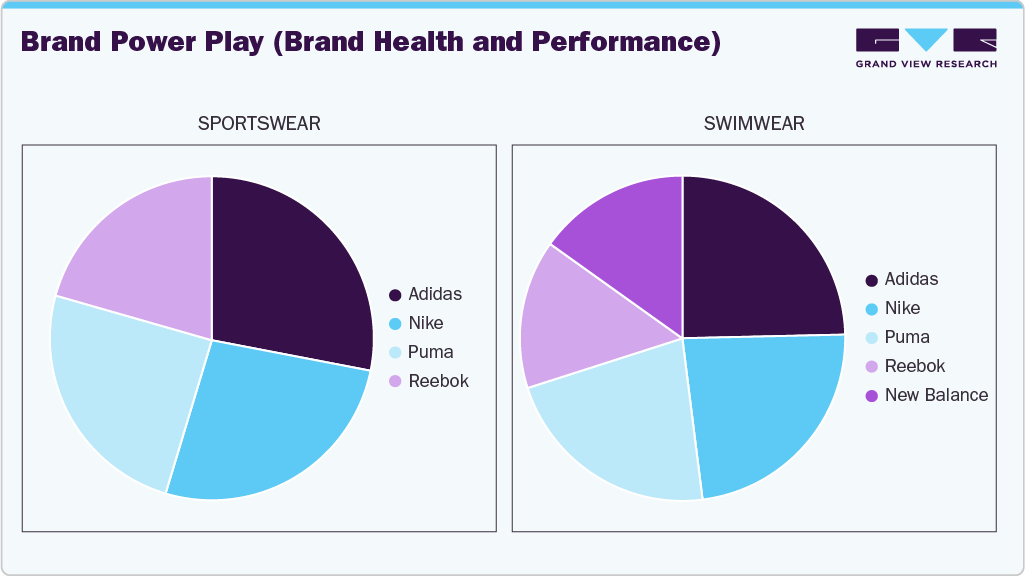
Adidas leads UK brand awareness at 83%, driven by its strong presence in sports and lifestyle markets, high-profile collaborations, and reputation for innovation. Nike follows at 78%, benefiting from athlete endorsements and its iconic "Just Do It" campaign. Puma, with 74% awareness, continues to grow through its high recall value and pop culture partnerships. Reebok, at 61%, remains strong in the traditional fitness community, focusing on high-performance gear and its ties to fitness trends like CrossFit.
Nike leads swimwear brand awareness in the UK at 69%, due to its global presence, innovative designs, and iconic athlete partnerships. Adidas follows at 65%, capitalizing on its quality reputation and broad appeal. Puma, with 62%, stands out for its bold, fashion-forward swimwear. Both Reebok and New Balance share 42% awareness, with Reebok focusing on functional swimwear for fitness enthusiasts and New Balance emphasizing comfort and performance.
Purchase Funnel
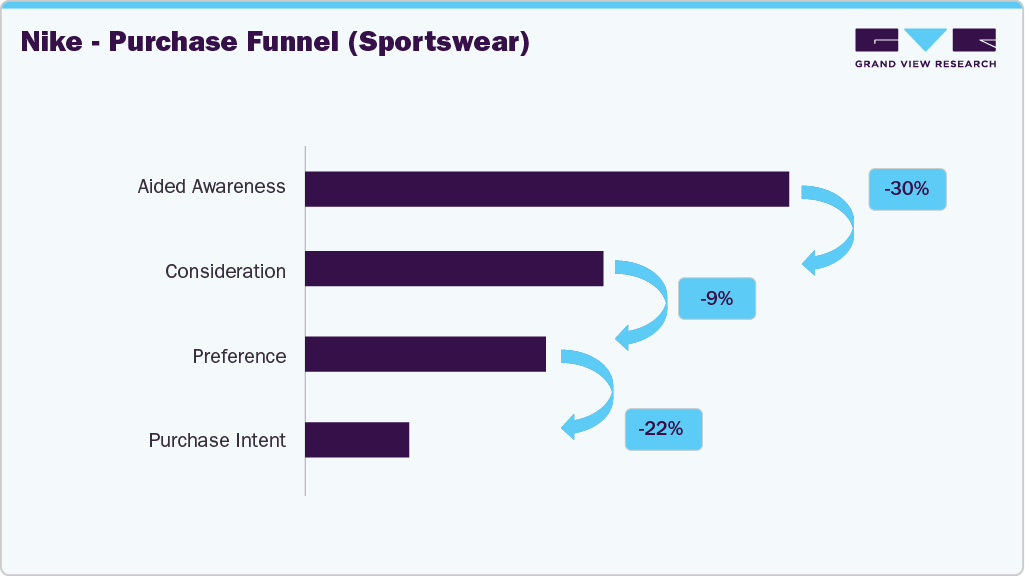
Nike's purchase funnel for sportswear in the UK demonstrates a strong progression from aided awareness to purchase intent, which reflects the brand's effective marketing and customer engagement strategies. With 78% aided awareness, Nike captures significant attention at the top of the funnel, and this translates into relatively healthy consideration (48%) and preference (39%) levels. While the final purchase intent stands at 17%, this is still a solid conversion given the competitive market. In comparison, Adidas, despite having higher awareness (83%), does not exhibit the same depth of engagement through the funnel, suggesting that while Adidas may be more widely recognized, Nike's strategy effectively converts that awareness into a higher likelihood of purchase. Nike's better purchase funnel highlights its ability not only to attract attention but also to influence and drive consumer decisions more effectively.
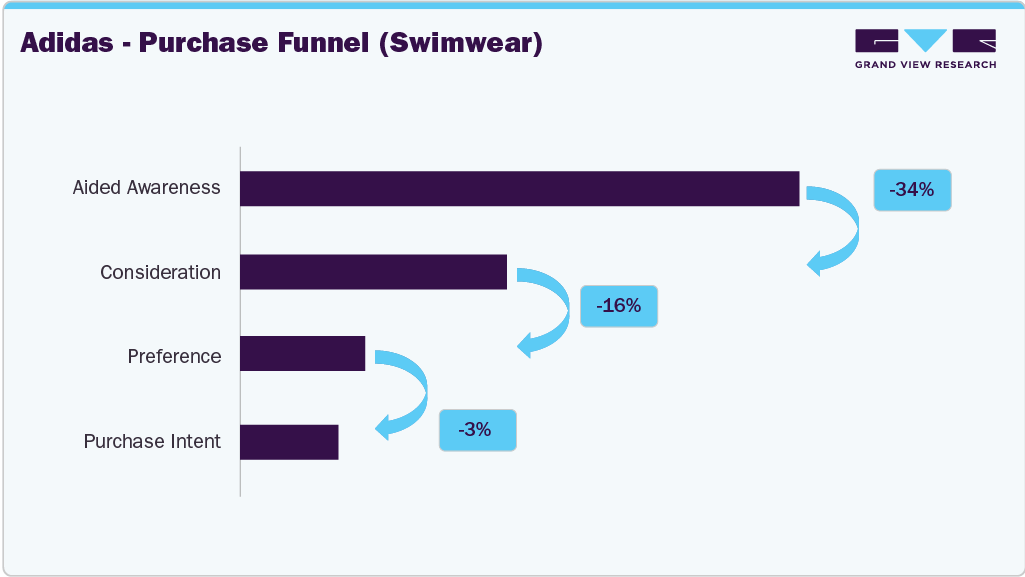
Adidas’ swimwear purchase funnel in the UK shows a solid progression from awareness to purchase intent, though it lags behind Nike in raw figures. With 65% aided awareness, Adidas attracts substantial attention at the top of the funnel, and the 31% consideration rate indicates that a significant portion of people aware of the brand are seriously considering purchase. Although preference stands at 15% and purchase intent at 12%, these figures still reflect Adidas’ ability to move potential customers further along in the buying process. While Nike enjoys greater awareness, Adidas excels at converting that awareness into actual purchase intent, positioning it as a more efficient driver of sales. Nike remains a formidable competitor, but Adidas’s ability to effectively push customers toward purchasing gives it an edge in the swimwear market.
The overall NPS score of the leading brands in the sportswear category varies from -100 to 67, with Puma having the highest NPS score (67) compared to other sportswear brands in the UK market. Puma's NPS for sportswear in the UK reflects its strong customer loyalty and satisfaction, likely driven by quality products, effective marketing, and a distinctive brand identity that resonates with consumers. The brand's ability to foster positive experiences and emotional connections with customers leads to higher advocacy. In contrast, despite Adidas having high awareness, it struggles to generate the same level of customer enthusiasm. This discrepancy may be due to varied perceptions across consumer segments, resulting in a less consistent experience. Consequently, Adidas' NPS is lower as it does not consistently convert awareness into strong, loyal advocacy.
The overall NPS score of the leading brands in the swimwear category varies from 0 to 75, with Adidas having the highest NPS score (75) compared to other swimwear brands in the UK market. Adidas has the highest NPS for swimwear in the UK, likely due to its focus on delivering quality, comfort, and innovative designs that resonate with customers, leading to strong satisfaction and loyalty. This has cultivated a highly engaged customer base that is more likely to recommend the brand. Despite Nike having higher awareness, its NPS is lower because it struggles to create the same level of emotional connection and brand advocacy as Adidas. Nike’s broader recognition doesn’t always translate into customer loyalty, as some consumers may not feel as strongly about the brand’s swimwear offering. This gap highlights Adidas’ ability to convert customer satisfaction into stronger advocacy than Nike.
While sportswear and swimwear both fall under the broader fitness category, Nike and Adidas display contrasting strengths-Nike leads in sportswear with a higher NPS, whereas Adidas edges ahead in swimwear. This contrast highlights how overlapping product categories can still demand distinct positioning. Nike’s dominance in performance-driven, lifestyle-oriented marketing resonates with everyday fitness consumers. In contrast, Adidas’s leadership in swimwear likely draws on its strong heritage in competitive swimming, strategic partnerships with professional athletes, and advanced fabric innovations that emphasize durability, hydrodynamics, and sustainability.
