UK Suitcases And Travel Bags Consumer Insights - Usage, Attitudes, And Brand Performance Report
Introduction:
The UK travel bag industry experienced a strong recovery in 2025, with premium sustainable luggage gaining market share. Smart luggage, featuring GPS tracking, USB charging ports, and digital locks, experienced double-digit growth, especially among business and millennial travelers. Direct-to-consumer brands disrupted traditional retail channels, leveraging social media for targeted marketing. Manufacturers also prioritized supply chain diversification, with increased near-shoring. Rising raw material costs led to price increases, but value-conscious consumers remained price-sensitive. Compact, multipurpose designs gained popularity as travelers embraced shorter trips.
Here are some of the market trends dominating the UK suitcase market:
-
Sustainable Revolution: The luggage industry has undergone a significant transformation through sustainability initiatives, with recycled plastics, vegan leather, and organic textiles becoming the norm. Near-shoring reduces carbon footprints and improves supply chain resilience. The circular economy gained mainstream acceptance through repair services and refurbishment programs. The resurgence of heritage craftsmanship and major brands highlighting environmental credentials as primary selling propositions have contributed to this transformation.
-
Tech Integration: Smart luggage has evolved from basic USB charging to sophisticated ecosystems with biometric security, GPS tracking, weight sensors, and AI-powered travel assistants. These features integrate with travellers' digital lifestyles, offering real-time location data, automated itineraries, and predictive packing suggestions. Antimicrobial treatments and hygiene-focused innovations remain key selling points, reflecting changes in consumer behavior driven by the pandemic. Advanced materials in manufacturing enable ultralight designs optimized for strict airline allowances.
-
Personalization Priority: Customization options have expanded beyond monogramming, incorporating consumer-selected colourways, hardware finishes, interior configurations, and technology integrations. This trend extends to customer experiences through algorithmic product recommendations, interactive design tools, and made-to-order manufacturing processes. Premium segments emphasize bespoke craftsmanship and exclusivity through limited editions, artist collaborations, and luxury materials. Brands use customer data to create targeted marketing campaigns that highlight product attributes, align with consumer priorities, and reflect travel behaviors.
-
Design Versatility: Modular and convertible designs increased market share by offering a range of configuration options. To increase packing capacity and assist travellers in managing airline regulations, ultra-lightweight materials were developed. Diverse travel habits were represented in crossover aesthetics, which combined outdoor durability with urban improvement. Budget airlines needed compact underseat designs to support frequent, brief flights and flexible work schedules.
Methodology:
The insights covered in this report are drawn from GVR’s ‘Voice of Consumer Survey’ and its periodic updates. The latest survey represents 75,000+ consumer interviews conducted across 20 countries for 100+ product categories. These insights are specifically catered to the brands operating in the suitcase and travel bags industry to guide them in their strategic decision-making process. This report provides insights covering category usage & attitude, buying behavior, brand performance metrics, and brand health indicators of leading players in the UK suitcase and travel bags market.
Chapter 1: Usage and Attitude
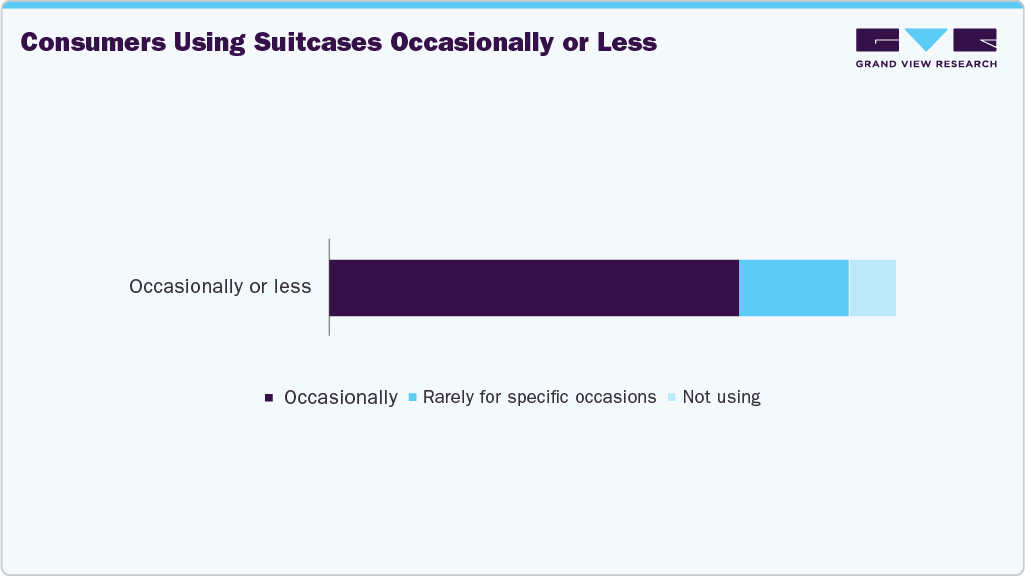
In the UK, suitcase usage is relatively infrequent, with the majority of people using them occasionally or only for specific occasions, such as holidays or business trips. This low frequency is likely since most daily or weekly travel does not require large luggage, as commuters prefer backpacks or handbags. Only 3% use suitcases daily, possibly for work involving frequent travel, while 25% do not use them at all. For example, families might bring out suitcases just for summer vacations or weekend getaways.
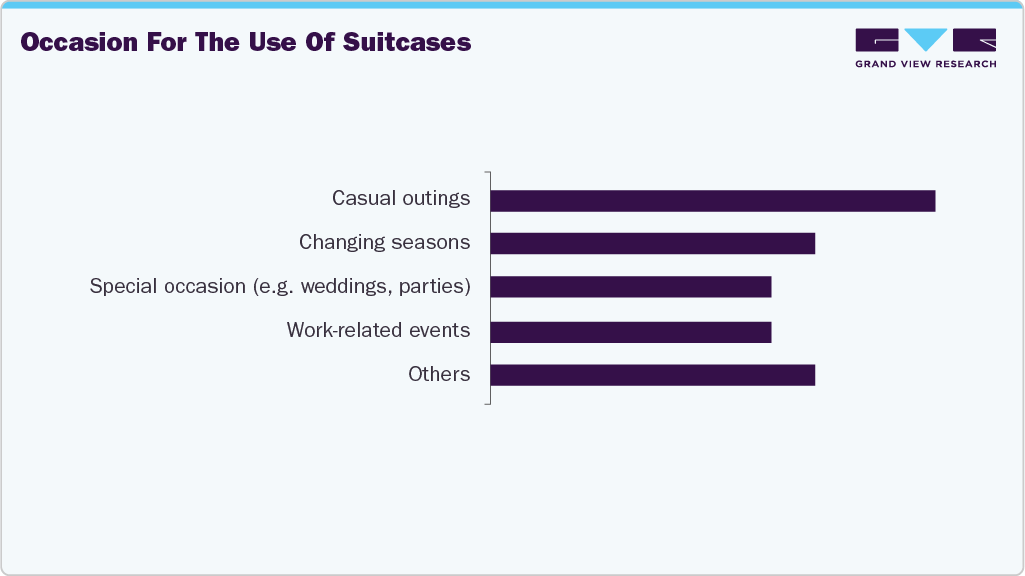
Suitcases are most commonly used at the time of casual outings, such as weekend trips or short holidays, where convenient packing is essential. They are also frequently used during changing seasons to rotate wardrobes, helping people manage limited storage space. Special occasions like weddings and parties, as well as work-related events, also prompt suitcase use, often for transporting formal or professional attire. Most individuals use suitcases exclusively for seasonal wardrobe changes, yet are happy to share them for occasional special events. The product is positively associated with feeling comfortable, confident, and stylish, enhancing personal expression and completing an outfit with the right accessories. However, high costs of quality clothing and designer brands, along with fashion trends that may not suit everyone’s body type or style, can be limiting factors.
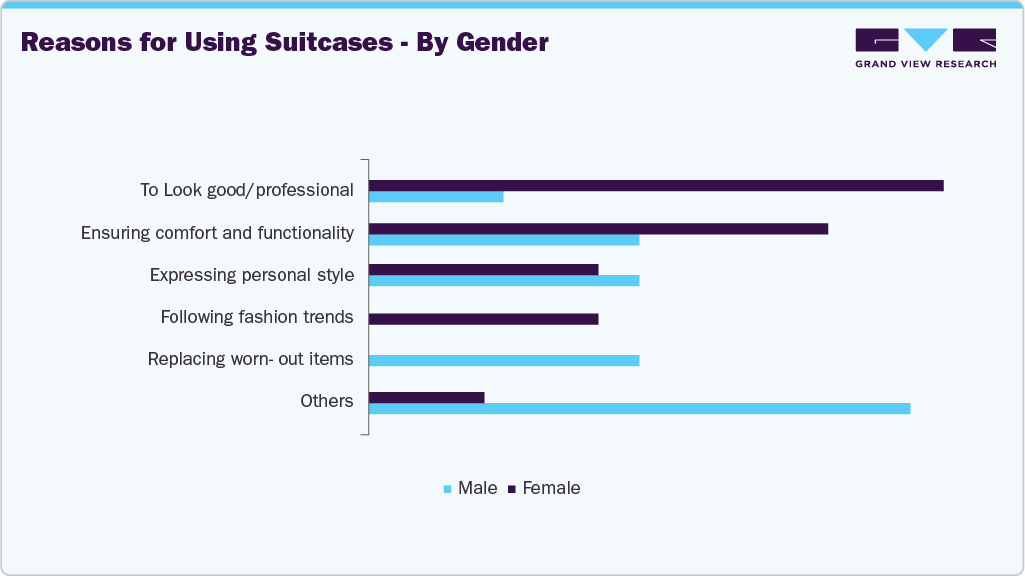
Suitcase usage varies by gender, with men prioritizing the need to look good or professional and seeking comfort and functionality, often using suitcases for business travel or formal events. Women, on the other hand, are more likely to use suitcases for practical reasons, such as replacing worn-out items or expressing personal style, especially during holidays or seasonal wardrobe transitions. While men may also follow fashion trends, women show a broader range of uses, with 47% selecting "others," reflecting diverse personal and lifestyle needs. A suitcase offering good value for money and durable, long-lasting construction makes for a satisfying purchase. However, a high price that doesn’t match quality or poor workmanship can lead to disappointment and a lack of trust in the brand.
Buying Behavior
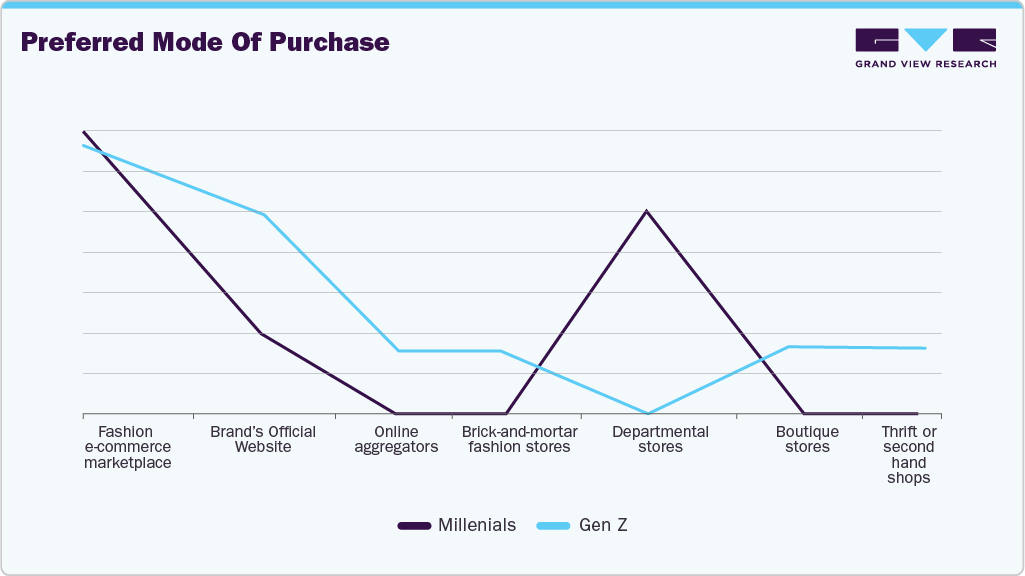
When purchasing a suitcase, the most important considerations are price and value for money, comfort and fit, and material quality and durability, such as whether the suitcase is lightweight, has smooth wheels, and is made of long-lasting materials. While aspects like unique designs, brand reputation, and personal style do play a role, they are secondary to practical needs. Consumers typically buy a suitcase once every two years, viewing it as a long-term investment that supports evolving travel habits. Among Gen Z and Millennials, fashion e-commerce marketplaces are the leading mode of purchase, offering ease and variety. At the same time, Gen Z also shows a strong preference for brand websites, indicating a desire for authenticity and direct engagement. Millennials continue to shop at department stores, likely because of the combination of in-store inspection and trusted brands.
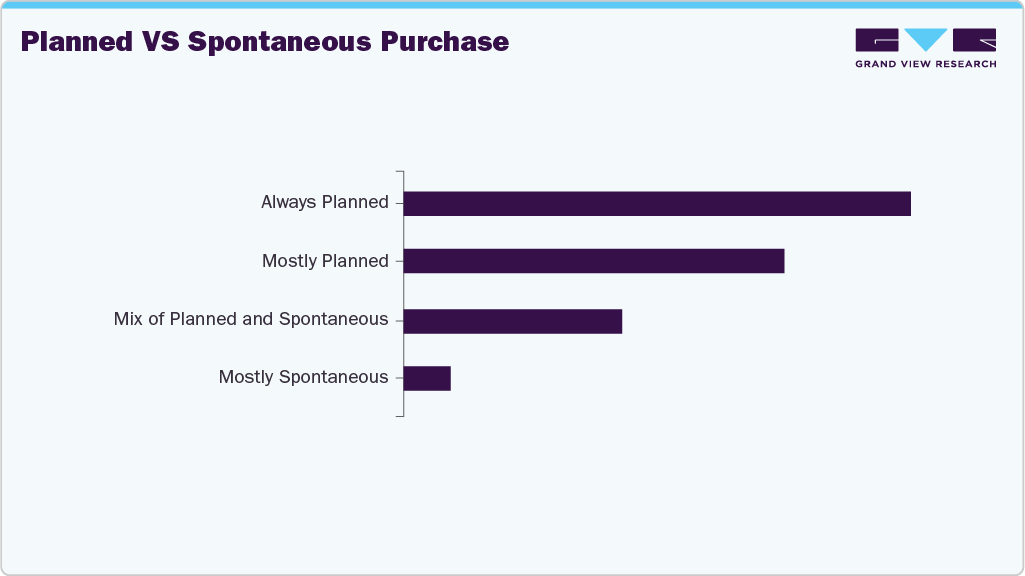
Suitcase purchases are largely intentional, with 44% always planned and 33% mostly planned, as consumers often align them with upcoming travel or seasonal sales. Only 4% are mostly spontaneous, suggesting that high cost and practicality limit impulse buying—e.g., buying a durable suitcase ahead of a long vacation. The 19% mix of planned and spontaneous may reflect travelers spotting a good deal online or needing a last-minute replacement.
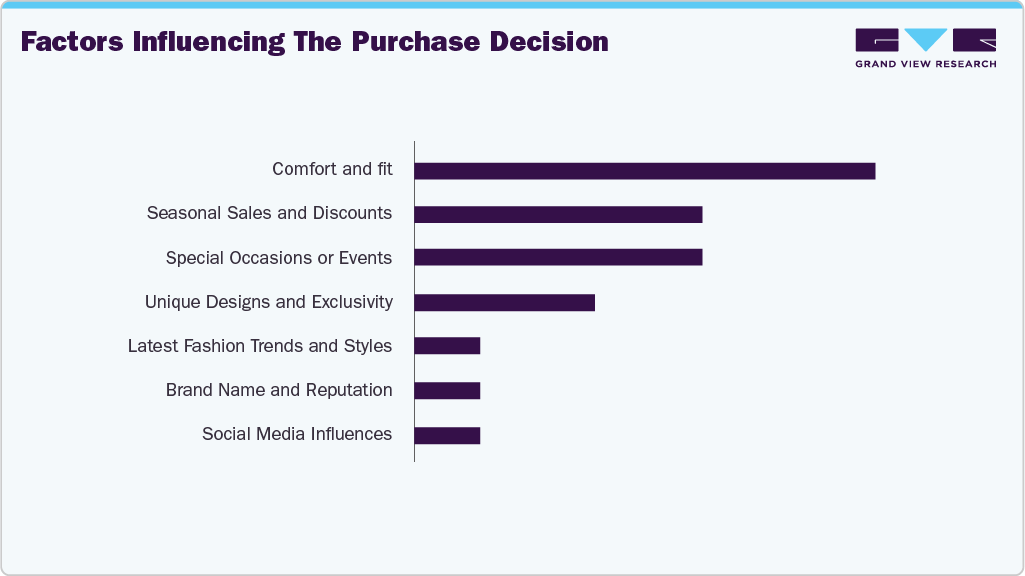
Comfort and fit, and seasonal sales or special occasions are the top immediate triggers for suitcase purchases, as consumers place a higher value on timing and practicality, for example, purchasing a lightweight, ergonomic suitcase during summer sales before a vacation. Function exceeds style, even though unique designs and fashion trends have some influence. The lack of sustainable or ethically produced options and the high cost of high-quality luggage continue to be major complaints from customers, leading them to put off or rethink purchases. Despite this, judgments are greatly influenced by online reviews and ratings, as well as promotions or discounts, particularly for the 78% of consumers who are brand-conscious and value reputable brands with a solid track record of dependability. It is interesting to note that, although Gen Z shops at thrift or second-hand stores and Millennials frequently shop at department stores, both groups look for a balance between quality, affordability, and moral decisions—for example, choosing a vintage suitcase from a nearby thrift store with good internet reviews or a discounted Samsonite at John Lewis.
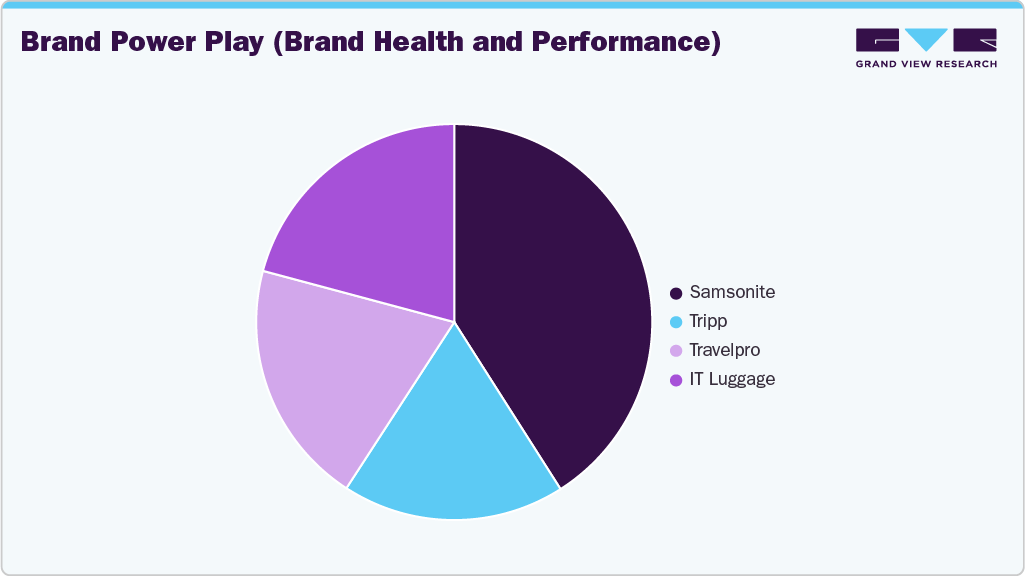
Brand Power Play (Brand Health and Performance)
Though the UK suitcases and travel bags market is competitive, with many key players, Samsonite leads with a 44% market share (by awareness). IT Luggage and Travelpro are also entering the market, following Samsonite. Tripp is also considered an emerging brand, as it is slowly gaining recognition and purchase.
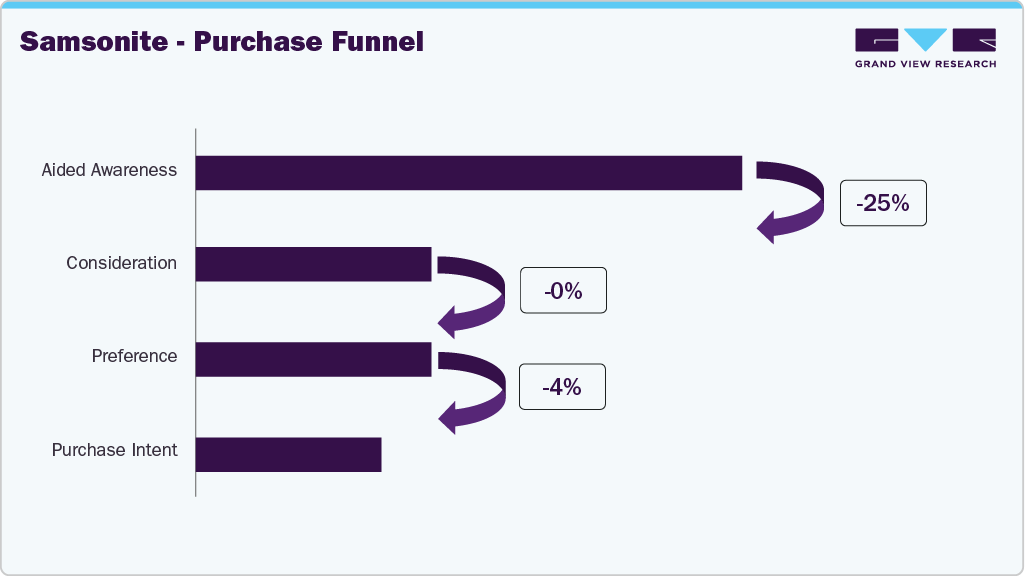
Purchase Funnel
While many brands manufacturing suitcases enjoy high awareness in the UK, very few reach the consideration and preference stage. Samsonite, anyhow, makes a great purchase funnel, though it has a significant drop from awareness to consideration. Samsonite is highly considered, preferred, and intended to be purchased in the UK due to its reputation for durability, quality, and ease of use, coupled with a wide range of styles and price points. It is hard- and soft-sided suitcases that consistently perform well in tests, featuring smooth wheels, easy-to-use zippers, and spacious interiors. IT luggage offers a similar level of consideration, but closely follows Samsonite in the later stages due to features like smooth wheels, lightweight construction, and the ability for suitcases to nest for easy storage. Tripp is relatively considered and preferred for its value-for-money and stylish designs. Still, it follows Samsonite and IT Luggage due to their stronger brand reputation and higher perceived durability. Travelpro is also considered premium in terms of quality and functionality, but has lower preference and purchase intent than leading brands like Samsonite, IT Luggage, and Tripp due to its higher price and more niche appeal. Consumers are highly satisfied with these leading brands and like to repurchase from them.
The overall NPS score of the leading brands varies from 49 to 100, with IT Luggage and Travelpro having the highest NPS score (100) compared to other suitcase brands in the UK market. Samsonite and Tripp are somewhat recommended in the UK for their reliable quality and value, but are ranked lower than IT Luggage and Travelpro due to IT Luggage’s affordability and Travelpro’s reputation among frequent travelers, which offers features that cater to specific travel needs, like durability and comfort, at a slightly higher price.

Talk to an analyst
Tell us what you need. We reply within one working day.
Service Guarantee
-
Insured Buying
This report has a service guarantee. We stand by our report quality.
-
Confidentiality
Your transaction & personal information is safe and secure.
-
Custom research service
Design an exclusive study to serve your research needs.
-
24/5 Research support
Get your queries resolved from an industry expert.