UK Watch Consumer Insights - Usage, Attitudes, And Brand Performance Report
Introduction:
As of 2025, the UK watch industry demonstrates resilience despite economic challenges, with a notable shift toward sustainable practices and locally made timepieces. There has been a marked pivot toward eco-conscious manufacturing, with recycled materials and transparent supply chains becoming selling points for premium brands. The market shows dual trends: continued demand for luxury mechanical watches as investment pieces, alongside growing interest in smart/hybrid watches with wellness-tracking capabilities. Independent watchmakers focusing on limited production runs and artisanal craftsmanship have carved out stronger niches, particularly appealing to younger collectors seeking unique pieces with authentic stories rather than mass-produced status symbols. Here are some of the market trends dominating the UK watch market:
-
Sustainable Luxury: British watchmakers are redefining luxury by integrating sustainability into their core practices. Premium materials like recycled metals and ethically sourced components are becoming standard in high-end collections. Carbon-neutral manufacturing and eco-conscious packaging are also gaining prominence. This shift caters to affluent consumers who expect environmental responsibility alongside exclusivity. Sustainability is no longer a compromise but a new mark of refined craftsmanship.
-
Heritage Tech: Traditional British watchmaking heritage is being reimagined with modern technology. Classic designs and mechanical craftsmanship now integrate subtle smart features and advanced materials. This combination preserves horological tradition while adding contemporary relevance through innovations such as solar charging, connected modules, and aerospace-grade titanium components. The trend appeals particularly to professionals seeking sophisticated timepieces with discreet functionality.
-
Artisanal Investment: Limited-edition, handcrafted watches from independent UK makers are positioning themselves as alternative investments. These small-batch timepieces emphasize unique British design languages, master craftsmanship, and storytelling provenance. Market data shows these watches appreciating faster than mass-produced luxury counterparts. Young professionals are particularly drawn to these pieces as both wearable art and portfolio diversification strategies with personal meaning.
-
Local Customization: On-demand personalization combined with local manufacturing is reshaping the market. UK watchmakers now offer bespoke design consultations and customization services with rapid turnaround times. This trend leverages digital design tools with traditional British craftsmanship to create unique timepieces. Consumers increasingly value the emotional connection of participating in the creation process while supporting local artisans and reducing international shipping impact.
Methodology:
The insights covered in this report are drawn from GVR’s ‘Voice of Consumer Survey’ and its periodic updates. The latest survey represents 75,000+ consumer interviews conducted across 20 countries for 100+ product categories. These insights are specifically catered to the brands operating in the watch industry to guide them in their strategic decision-making process. This report provides insights covering Category usage & Attitude, Buying behavior, Brand performance metrics, and brand health indicators of leading players in the UK Watch market.
Chapter 1: Usage and Attitude
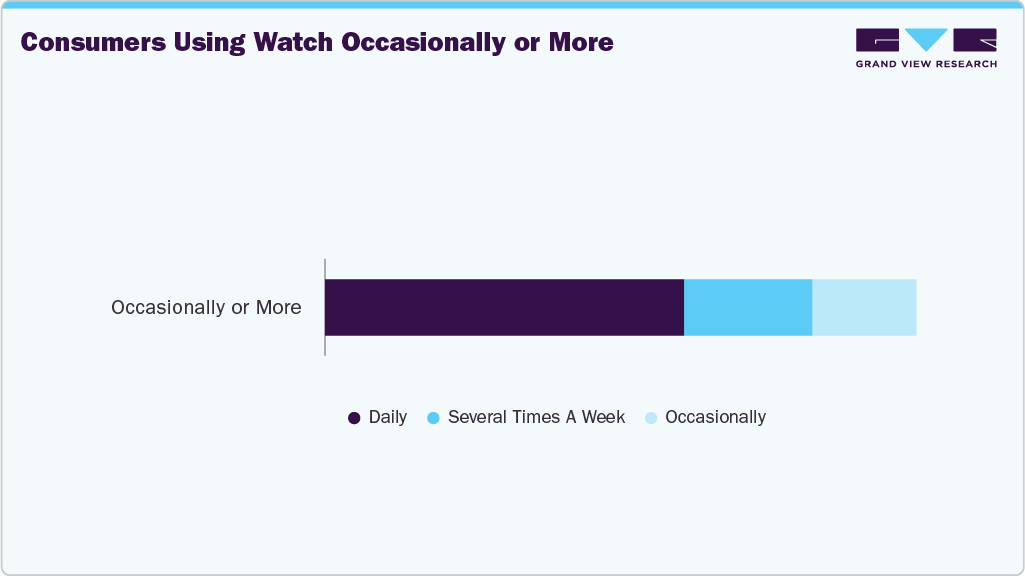
In the UK, 76% of watch users wear their timepieces daily or several times a week, reflecting their continued relevance as both functional tools and fashion statements. This frequent use is driven by smartwatches for health tracking and traditional watches for professional or style purposes. Occasional wearers often reserve timepieces for formal events or special occasions, highlighting their role as status symbols or heirloom accessories.
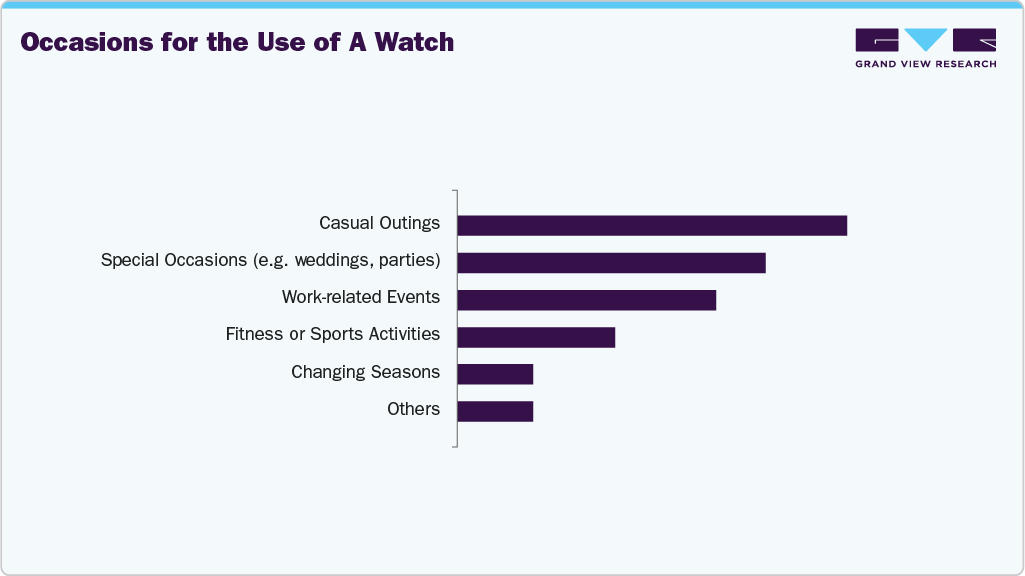
In the UK, watches are most commonly worn during casual outings, serving as practical accessories that enhance everyday looks. Special occasions and work-related events also drive usage, where watches add a touch of sophistication and formality. They are increasingly chosen for fitness activities, thanks to smart features like heart rate tracking. Watches evoke positive associations by allowing individuals to express personal style, feel confident, and complete outfits with elegant, purposeful accessories. However, a common drawback is the high cost of quality or designer watches, which can deter some buyers despite their appeal.
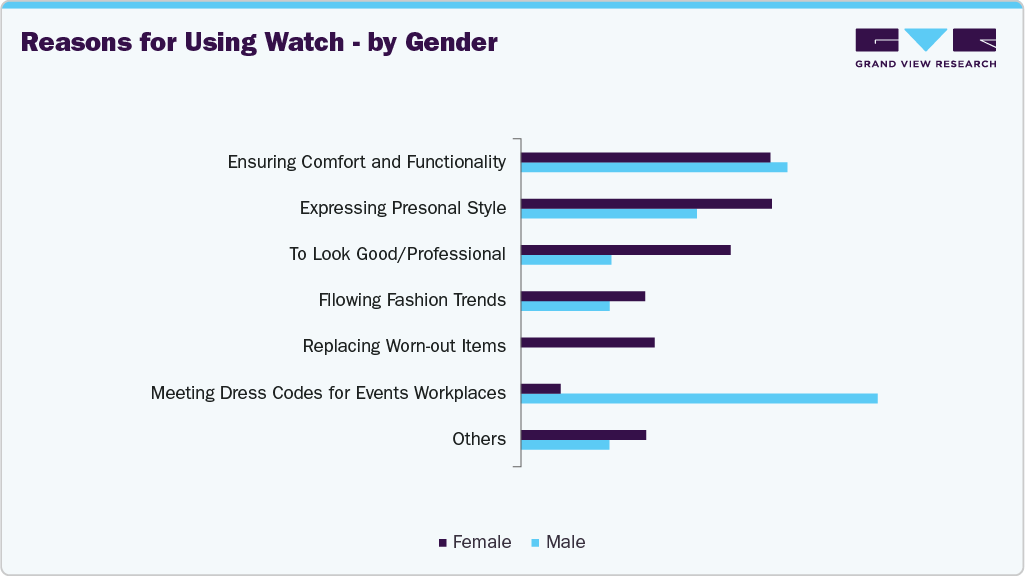
For both genders in the UK, comfort and functionality are key reasons for wearing watches, such as easy time-checking or health tracking. Women often value watches for style and professionalism, pairing them with outfits for elegance or confidence in work settings. Men prioritize meeting dress codes and use watches to complement formal or business attire. While fashion trends and replacing old items also influence some, practical and aesthetic needs dominate overall preferences. Durable construction and good value for money make a watch purchase feel rewarding and dependable. Conversely, high prices for mediocre quality or visible flaws in workmanship can lead to buyer regret and dissatisfaction.
Buying behavior
Before buying a watch, UK consumers prioritize price and value for money and comfort, and fit, ensuring their investment feels worthwhile and wearable daily. Material quality and durability are also key, as buyers seek long-lasting pieces made with care. Unique design and brand reputation further influence decisions, particularly for those seeking exclusivity or status. Consumers typically buy watches once every two years, though some fashion-forward individuals purchase as often as once a month.
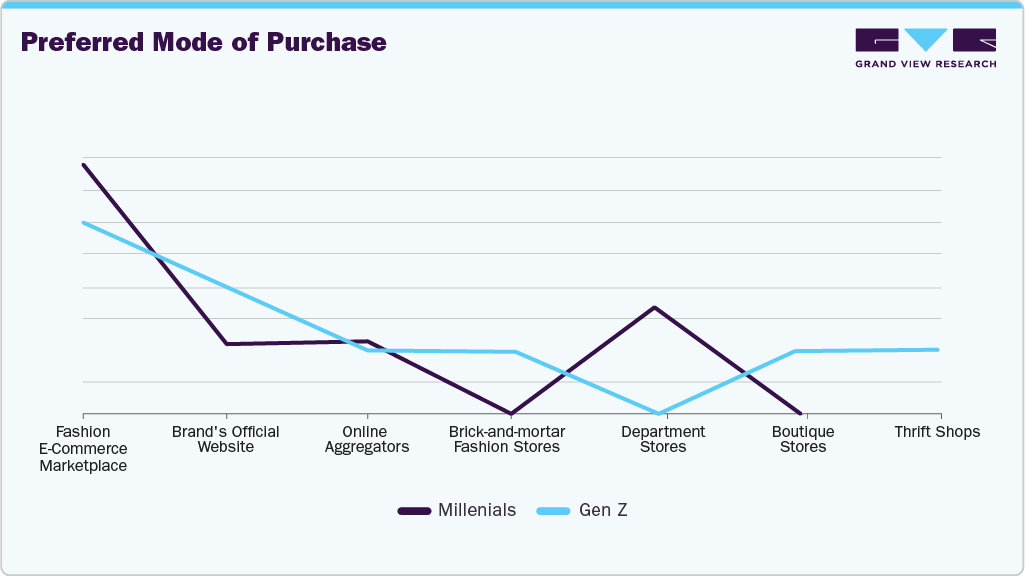
Millennials overwhelmingly prefer fashion e-commerce marketplaces, valuing variety, convenience, and competitive pricing. Gen Z, while still active online, shows more diversity-40% use brand websites, and 20% explore physical stores or thrift shops, seeking personalized experiences or sustainable, unique finds. This highlights Gen Z’s interest in ethical shopping and brand authenticity.
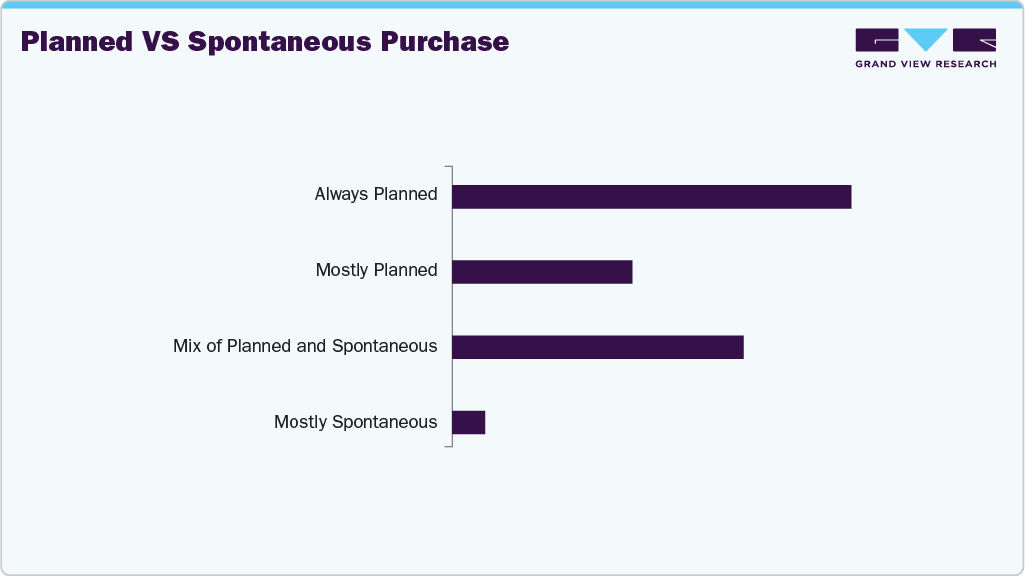
In the UK, watch purchases are largely planned, with 64% of consumers reporting they always or mostly plan their purchases. This reflects the high cost, personal significance, and the time taken to research features, fit, and brand reputation. Approximately 32% make a mix of planned and spontaneous purchases, often influenced by seasonal sales, limited editions, or style inspiration. Spontaneous buying is rare (only 4%), indicating that watches are still seen as thoughtful, long-term investments rather than impulse items.
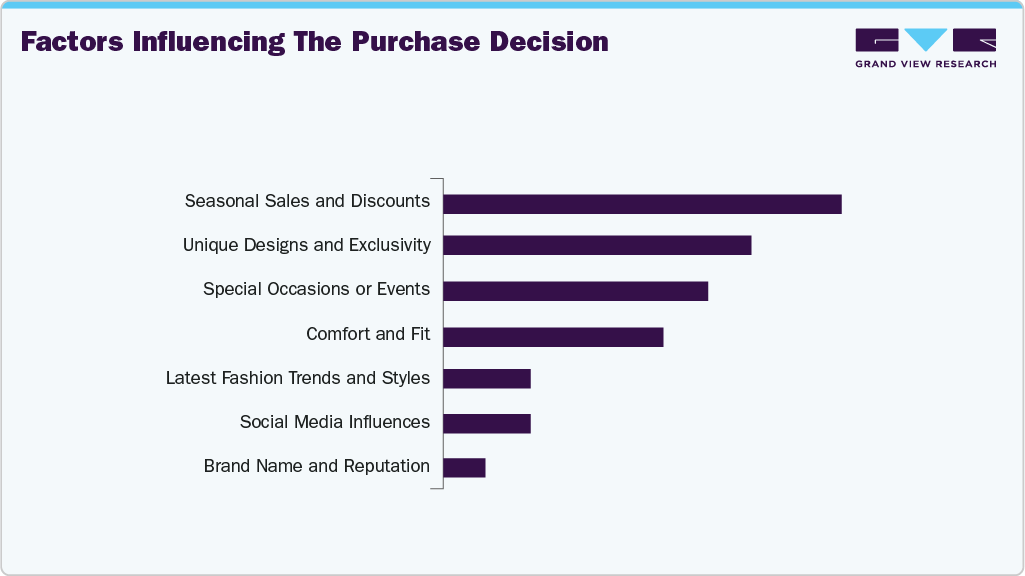
When it comes to buying watches in the UK, seasonal sales and discounts are the biggest immediate triggers, offering consumers the perfect chance to invest in high-quality timepieces at a better value. Unique designs and exclusivity also play a strong role, especially for those seeking statement pieces that reflect their individuality. Comfort and fit influence buyers who prioritize daily wearability, while special occasions often push people to upgrade or add to their collection. Social media and fashion trends have a smaller impact, but can tip the scales when paired with a timely offer or event.
However, high prices for quality watches and difficulty in finding the right size and fit remain major frustrations, often delaying purchase decisions. In such cases, online reviews and ratings provide essential reassurance, helping buyers feel confident about their choices. With 80% of consumers being brand-conscious, trusted names with strong reputations often have the edge, especially when their offerings balance prestige, comfort, and style.
Brand Power Play (Brand Health and Performance)
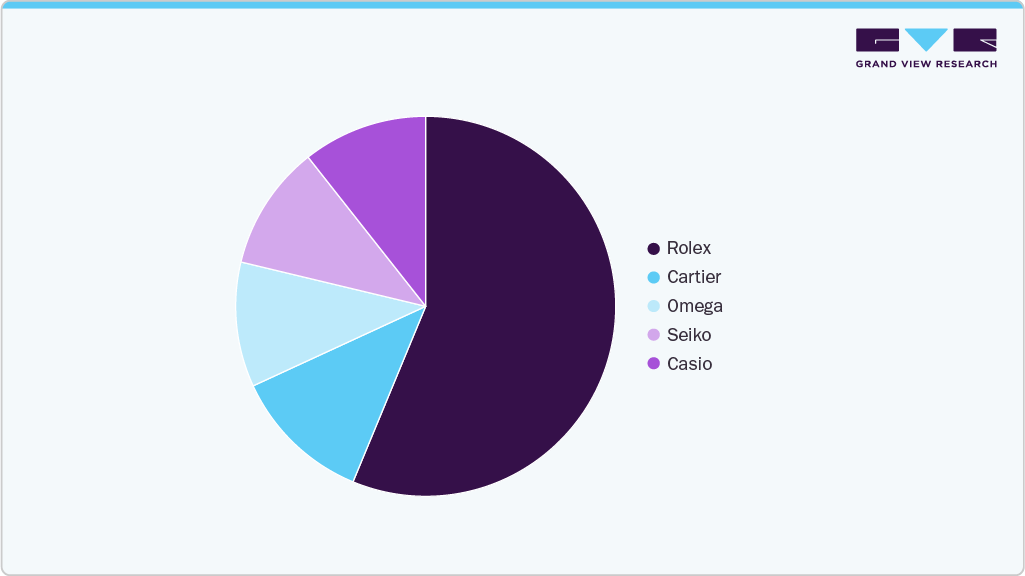
Though the watch market is very competitive across price segments, Rolex, Omega, Seiko, Cartier, and Casio have a strong presence and high brand awareness. Rolex leads in aided brand awareness with a 68% share, driven by its historic British origins, long-standing reputation for luxury, and consistent association with success, precision, and status. Its strong marketing, celebrity endorsements, and iconic designs keep it at the top of mind among consumers.
Purchase Funnel
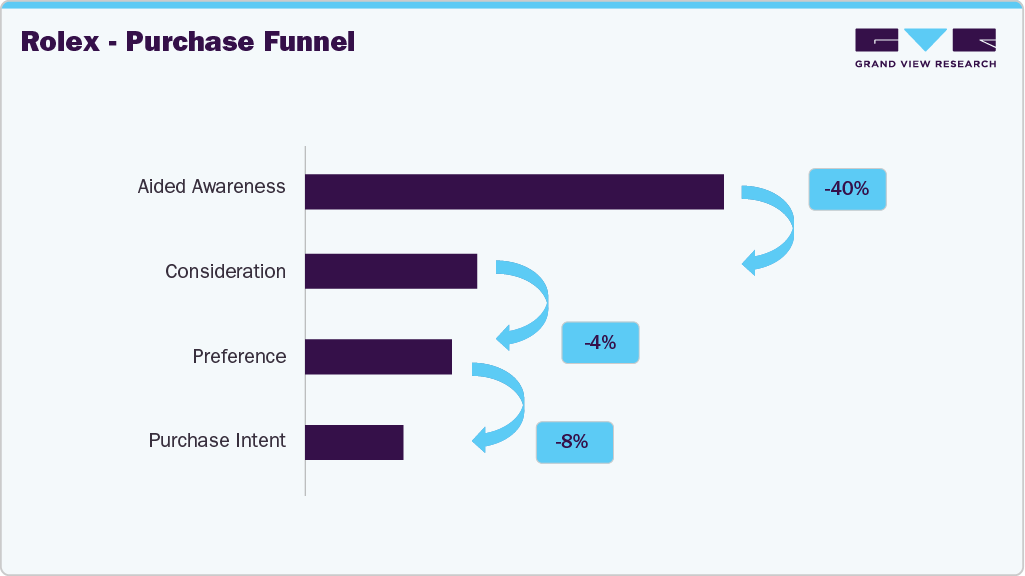
In the UK watch market, the purchase funnel highlights a clear divide between brand awareness and actual consumer commitment, with only a few brands successfully progressing through all stages. Rolex dominates this funnel, leading in awareness, consideration, preference, and usage, supported by its British heritage, global prestige, and image as a symbol of sustainable luxury and artisanal investment. Its limited availability and high brand trust enhance desirability, resulting in strong loyalty and high post-purchase satisfaction. Cartier follows closely, maintaining a solid presence across the funnel but slightly trailing in repeat purchases and user satisfaction. Rolex and Cartier are equally considered for the next purchase due to their strong heritage, prestige, and alignment with luxury values like craftsmanship and long-term value. While Rolex emphasizes durability and status, Cartier appeals to iconic design and fashion-led elegance, attracting a diverse luxury buyer base. However, Cartier is less preferred than Rolex in the UK because it is often seen more as a luxury fashion brand than a dedicated watchmaker, leading some consumers to question its horological depth. In contrast, Rolex’s identity is deeply rooted in watchmaking excellence and long-term investment value, giving it an edge in trust, resale appeal, and post-purchase satisfaction. Most UK consumers use Rolex for its unmatched prestige, durability, and long-term value, making it both a luxury symbol and a practical investment. Cartier and Omega attract niche segments: Cartier for design-conscious users, and Omega for those who value performance and heritage.
The overall Net Promoter Score (NPS) among leading watch brands in the UK ranges from 0 to 80. Timex stands out with the highest NPS of 80 because it consistently delivers on quality, brand prestige, and customer satisfaction, creating strong emotional loyalty and advocacy. Its reputation for reliability, luxury status, and long-term value makes owners more likely to recommend it compared to other brands with less consistent post-purchase experiences.
