UK Wipes Products Consumer Insights - Usage, Attitudes And Brand Performance Report
Introduction:
The UK wipes industry is undergoing a notable evolution, driven by shifting consumer preferences and increasing regulatory scrutiny. Sustainability has become a key priority, as more consumers seek environmentally responsible alternatives. This momentum is further reinforced by the UK government’s proposed ban on plastic-containing wet wipes, prompting swift action across the industry. Retailers are increasing their eco-friendly private-label selections, while major companies have responded by reformulating their products and adopting eco-friendly packaging. Additionally, the pandemic has been a major factor in increasing awareness of hygiene, prompting companies to develop and sell skin-friendly hygiene products. In the meantime, high-end wet wipes with specific skincare chemicals have become a rising market, especially in the personal grooming and baby care sectors. This aligns with the general trend toward multipurpose products that offer both cleansing and therapeutic benefits. Here are some of the market trends prevailing in the UK:
-
Sustainability and Regulation: The UK government's strict regulations on plastic content in wet wipes have prompted manufacturers to invest in product reformulation and material science innovation. This pressure has accelerated the industry's shift towards biodegradable materials and plastic-free formulations, democratizing sustainability. This convergence has led to unprecedented innovation in alternative fibres, plant-based binding agents, and plastic-free packaging solutions, fundamentally reshaping product development pipelines and manufacturing processes across the wipes sector.
-
Consumer Convenience Revolution: Consumers are increasingly seeking products that combine efficiency and value through innovative functionality and convenient delivery models. Multi-purpose wipes, particularly in facial care and baby categories, have gained popularity due to their ability to blend cleaning and treatment benefits. Subscription-based delivery models have become mainstream shopping habits for millions of UK households. Major retailers and brands offer customized subscription packages with flexible delivery schedules, volume discounts, and exclusive product variants to create revenue streams and strengthen consumer loyalty.
-
Technological Evolution: The UK wipes industry is undergoing a significant technological transformation due to environmental and infrastructure concerns. Manufacturers are working with water utilities and regulatory bodies to develop dispersible wipe technologies that meet industry standards. These advanced formulations undergo rigorous testing to simulate real-world sewer conditions, and third-party certification is increasingly prominent on packaging. Water-activated dry wipes have gained market share among environmentally conscious consumers, with major retailers reporting strong growth.
-
Retail Disruption: The UK wipes market is transforming as retailers introduce sustainable products, challenging national brands. These include biodegradable materials, plastic-free packaging, and plant-based formulations. Younger parents are making purchasing decisions through visual social media, necessitating mobile-first marketing strategies like influencer partnerships and augmented reality product demonstrations. Brands that integrate these strategies with sustainability narratives demonstrate greater resilience against private-label encroachment.
Methodology:
The insights covered in this report are drawn from GVR’s ‘Voice of Consumer Survey’ and its periodic updates. The latest survey represents 75,000+ consumer interviews conducted across 20 countries for 100+ product categories. These insights are specifically catered to the brands operating in the wipes industry to guide them in their strategic decision-making process. This report provides insights covering category usage & attitude, buying behavior, brand performance metrics, and brand health indicators of leading players in the UK wipes market.
Chapter 1: Usage and Attitude
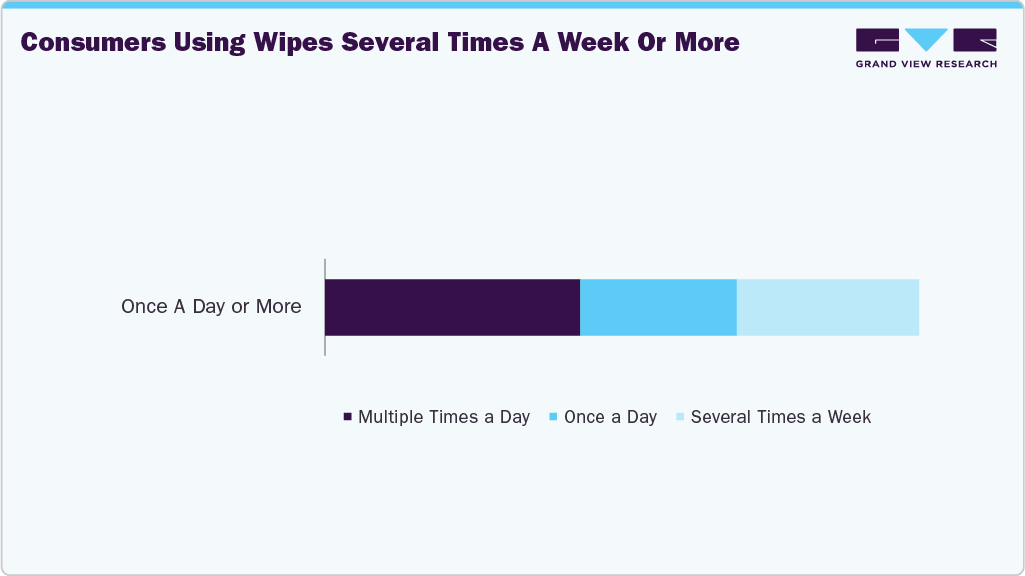
UK consumers are demonstrating heightened awareness around both personal hygiene and environmental sustainability. This growing consciousness is reflected in their usage habits: 72% of wet wipe users report using them several times a week or more, with 50% indicating daily use. Notably, wipes are considered personal-use items, and many consumers choose not to share them due to hygiene concerns. This behavior underscores the increasing role of wet wipes in everyday self-care routines and highlights the demand for products that align with individual health and cleanliness standards.
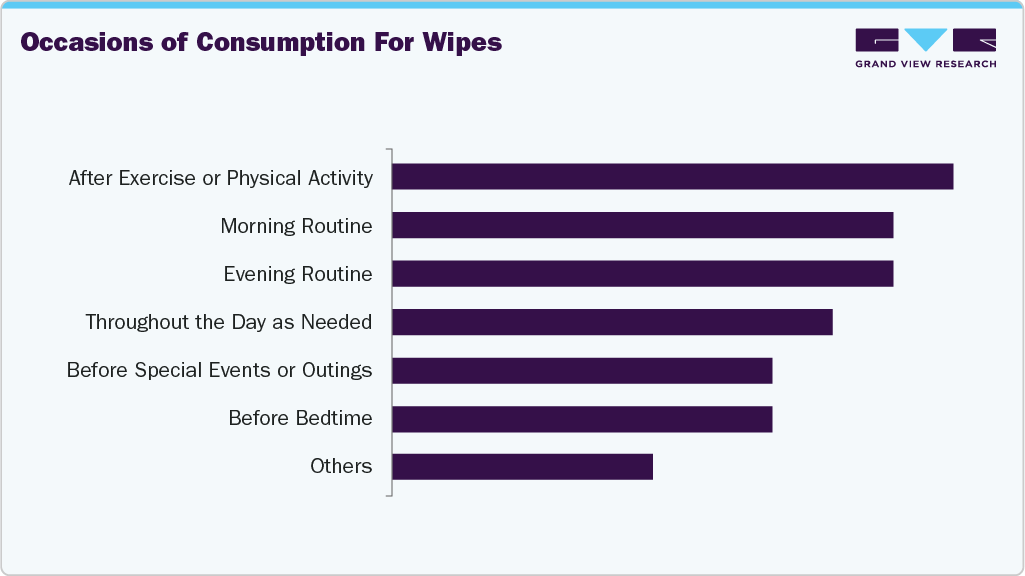
Wet wipes are commonly used after exercise or physical activity, with approximately 3 in 10 consumers citing this as a primary occasion. However, usage is equally prevalent during morning and evening routines, where wipes are integrated into daily self-care rituals. Consumers associate their use with relaxation, rejuvenation, and personal well-being. This behavior is largely driven by the convenience, ease of application, and long-lasting effects that wipes offer, making them a simple yet effective tool for maintaining hygiene and enhancing daily routines.
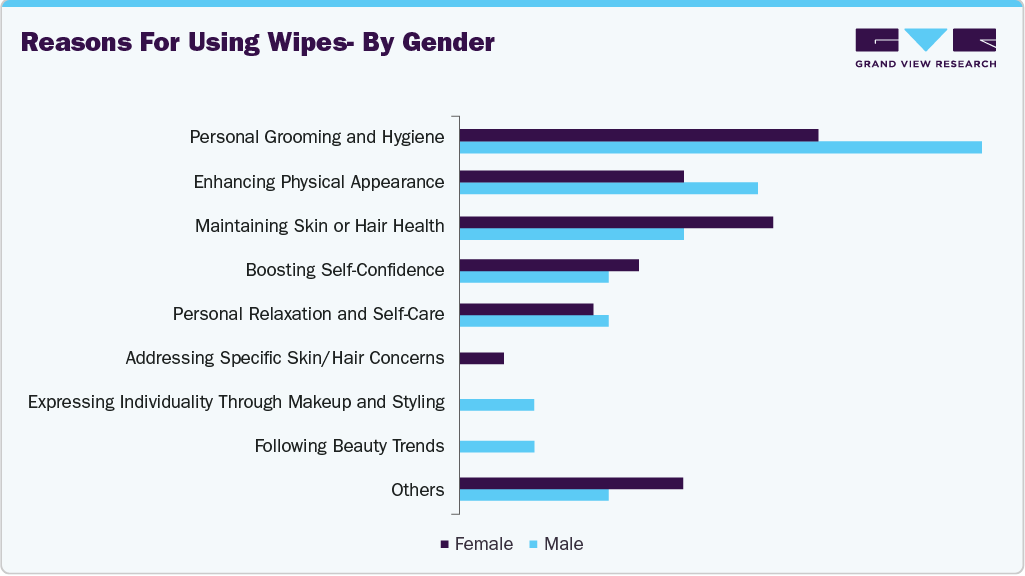
Male and female consumers show broadly similar motivations for using wet wipes, with personal grooming and hygiene as the top reasons for both groups. However, secondary drivers differ slightly, as men are more likely to use wipes to enhance their physical appearance, while women often prioritize skin health and maintenance. Despite their utility, wet wipes are associated with negative perceptions among consumers, particularly regarding affordability and product safety. Many express concerns about harsh chemical ingredients and unpleasant odors, which can lead to dissatisfaction and reinforce perceptions that some products may be harmful or poorly formulated. These concerns underscore the need for brands to invest in gentler, skin-friendly alternatives and to communicate transparently about ingredients.
Buying Behavior
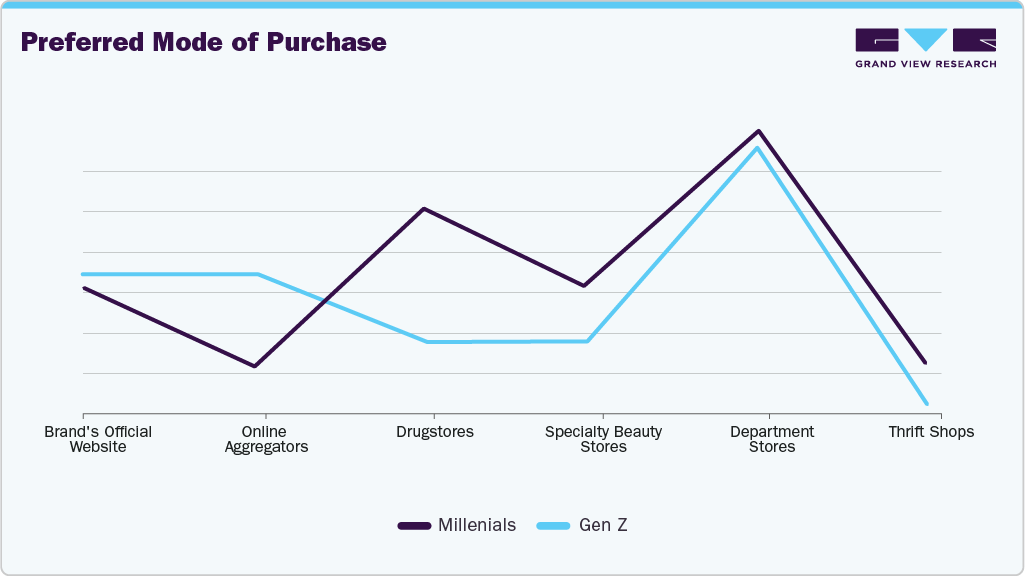
Before purchasing wet wipes, consumers seek specific information about product quality and features. Brand reputation and trustworthiness rank highest in importance, especially among brand-conscious consumers amid rising brand awareness. These factors are closely followed by product effectiveness and affordability, which are critical in a competitive, fast-moving category. Given that wipes are used frequently and often come in flexible pack sizes, many consumers tend to repurchase them every two weeks. In terms of purchase channels, departmental stores remain the most preferred option for both Millennials and Gen Z. However, e-commerce platforms are also gaining significant traction, particularly among Gen Z, reflecting their comfort with digital shopping and preference for convenience.
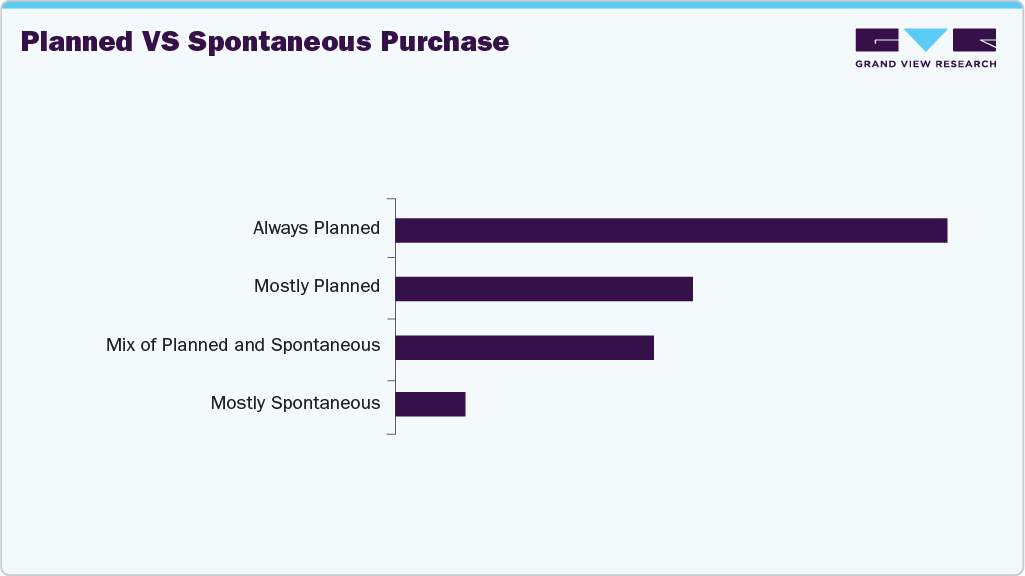
Consumer behavior around wet wipe purchases is largely planned: 7 out of 10 buyers report planning their purchases in advance, with 47% stating they always plan ahead. An additional 22% indicate that their decision can be either planned or spontaneous, often influenced by situational needs or promotional offers from different brands. Truly spontaneous purchases remain limited, likely due to the fact that wipes are typically bought in larger SKUs, encouraging less frequent, more intentional buying patterns.
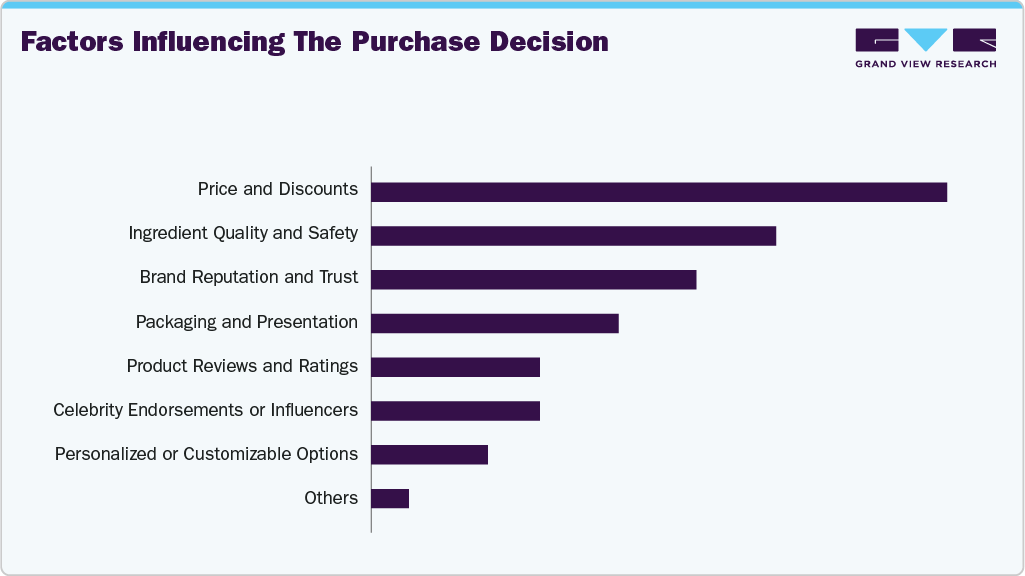
Price and discounts and ingredient quality, and safety are the most important factors that immediately trigger a wipes purchase, as more than 7 out of 10 people have selected them as the main drivers. Celebrity endorsement and social media do influence people, but have a lesser impact on actual purchases. Despite rising demand, several barriers continue to affect purchase decisions. Key concerns include the lack of product variety tailored to specific needs, formulations that may cause skin irritation or allergic reactions, and the limited availability of eco-friendly or sustainable options. Additionally, brand consciousness is notably high, as 8 out of 10 consumers report being moderately to highly brand-aware when selecting wipes. As sustainability awareness grows, this heightened scrutiny can discourage purchases of products that do not contain sustainable ingredients or fail to align with environmental values.
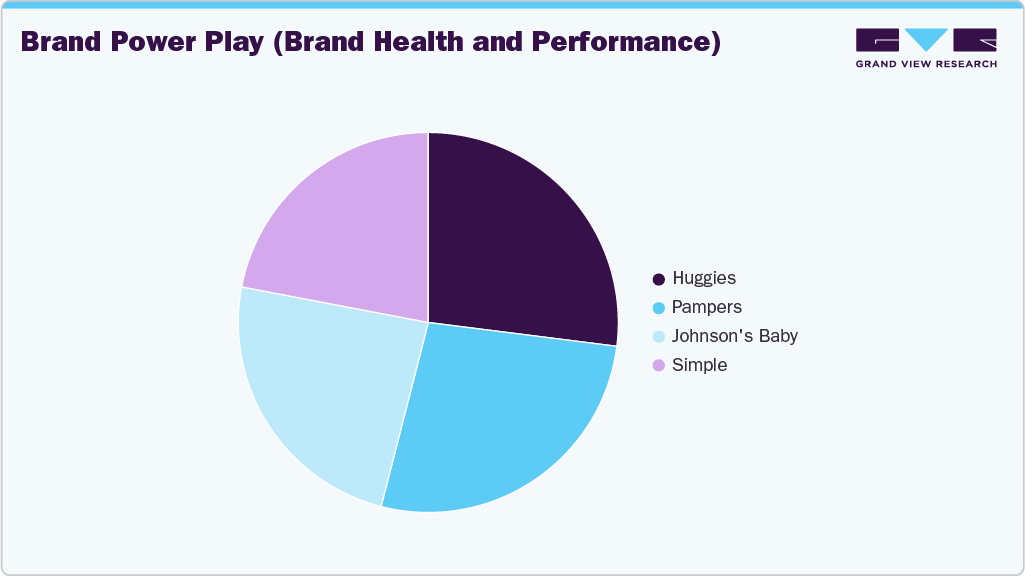
Brand Power Play (Brand Health and Performance)
The UK wipes market is highly competitive, with several well-established and emerging players. Leading the category in brand awareness are Huggies and Pampers, each with an impressive 80% awareness among consumers. These brands are synonymous with trust, quality, and reliability, particularly in the baby care segment. Other notable brands include Johnson’s Baby and Simple, both of which enjoy strong recognition, especially among consumers seeking gentle and skin-friendly options. Meanwhile, Boots is steadily gaining traction as an emerging player, leveraging its retail footprint and growing focus on private-label hygiene products to carve out a space in the market. As the landscape continues to evolve, brand performance will increasingly hinge on the ability to combine consumer trust with innovation, sustainability, and effective positioning in both traditional retail and digital channels.
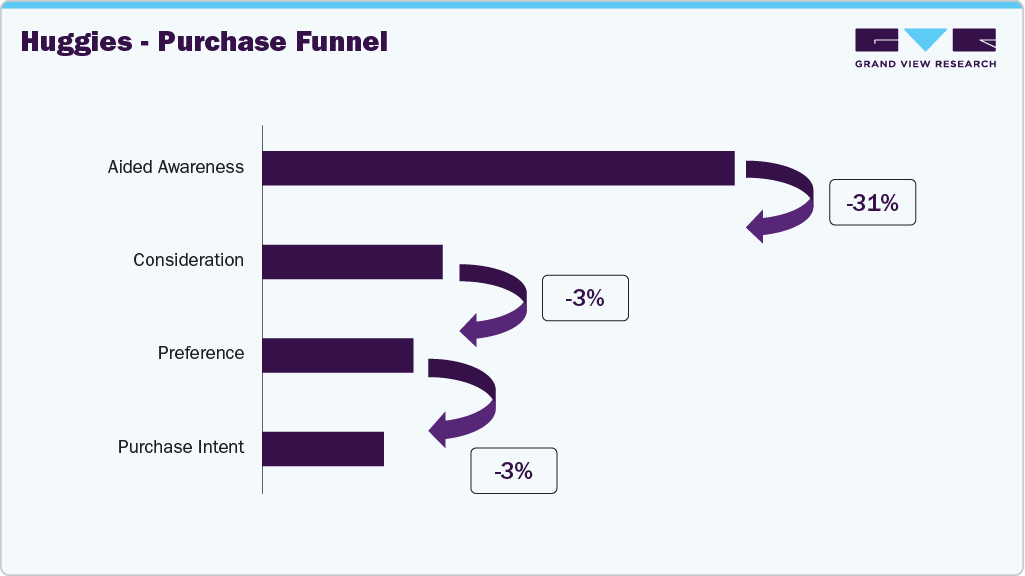
Purchase Funnel
While many wipes brands enjoy high awareness in the US, very few reach the consideration and preference stage. Huggies is one of the prominent brands that exhibits a strong purchase funnel despite having a significant drop from the awareness to consideration stage of the funnel. Johnson’s Baby walks hand in hand with Huggies in all the stages of the purchase funnel, namely consideration, preference, and purchase intent. Additionally, Simple and Boots follow Huggies in all these stages. It is worth noting that, though Johnson’s Baby and Boots have a higher repeat purchase rate than any other brand, indicating brand loyalty, Huggies has a higher satisfaction level among consumers post-use.
The overall NPS score of the leading brands varies from 0 to 100, with Johnson’s Baby having the highest NPS score (75) compared to other wipes brands in the market, reflecting high levels of consumer satisfaction and brand advocacy. Huggies has an NPS score of 33, which suggests that it is highly recommended by UK consumers, mainly due to the suspension of its sale in Europe except Italy.
Interestingly, Pampers, despite attracting lower consumer traffic, achieves a perfect NPS score of 100. This indicates that while its user base may be smaller, those who do use the brand are highly satisfied and likely to recommend it to others. This contrast between reach and recommendation highlights the strength of Pampers' product experience and potential for growth through deeper market penetration.
