U.S. Cosmetic Products Consumer Insights - Usage, Attitudes And Brand Performance Report
Introduction:
The future for the cosmetic industry looks promising, as the industry has shown tremendous growth over the past couple of years. Thanks to advancements in technology and a shift towards sustainability, when we talk about consumers’ consumption patterns. Further, consumers have shown inclination towards products that not only enhance their appearance but also support healthy skin, by adding ingredients such as hyaluronic acid, peptides, etc. This can also be achieved by introducing functional products such as SPF with a tint, foundation with SPF, lip color with peptides, and much more. Brands are going global and adapting to consumer needs by taking actions such as introducing a foundation with a wider range of shades for different skin tones, a foundation with a mattifying effect for oily skin, and a dewy effect for dry skin, etc. Having said that, let’s dive deep into these trends -
-
Clean Beauty & Sustainability: In the growing cosmetic industry, consumers are very concerned about the harmful ingredients and demand more natural products; therefore, the clean beauty movement is gaining momentum. Consumers are turning their heads away from products that test on animals; thus, the demand for cruelty-free and vegan products is on the rise. Additionally, brands are also taking measurable steps towards the betterment of the environment by investing more in recyclable or biodegradable packaging.
-
Personalization & Customization: With brands going global, diversity is a top priority for the cosmetic industry. Having said that, brands are introducing products that cater to unique needs, offering products that match a wide variety of skin tones, making it easier for consumers to find something that works for them. Furthermore, luxury brands are also offering products in small sizes introduced as minis to target budget savvy consumers. Thus, making products affordable for each section of consumers. Lastly, to encourage inclusivity, the packaging is designed keeping in mind all types of consumers, especially those with disability, to offer ease of use.
-
Integration of technology and Beauty: This is the era of AI, where everything is digital, and convenience is the top priority. Thus, the integration of technology with beauty has transformed the consumer’s experience while shopping. Various e-commerce platforms offer facial recognition technology to capture the consumers’ faces, allowing them to try the products in real time from the convenience of their home.
Methodology:
-
The insights covered in this report are drawn from GVR’s ‘Voice of Consumer Survey’ and its periodic updates. The latest survey represents 75,000+ consumer interviews conducted across 20 countries for 100+ product categories. These insights are specifically catered to the brands operating in the Cosmetic industry in order to guide them in their strategic decision-making process. This report provides insights covering category usage & attitude, buying behavior, brand performance metrics, and brand health indicators of leading players in the U.S. cosmetics market.
Chapter 1: Usage and Attitude
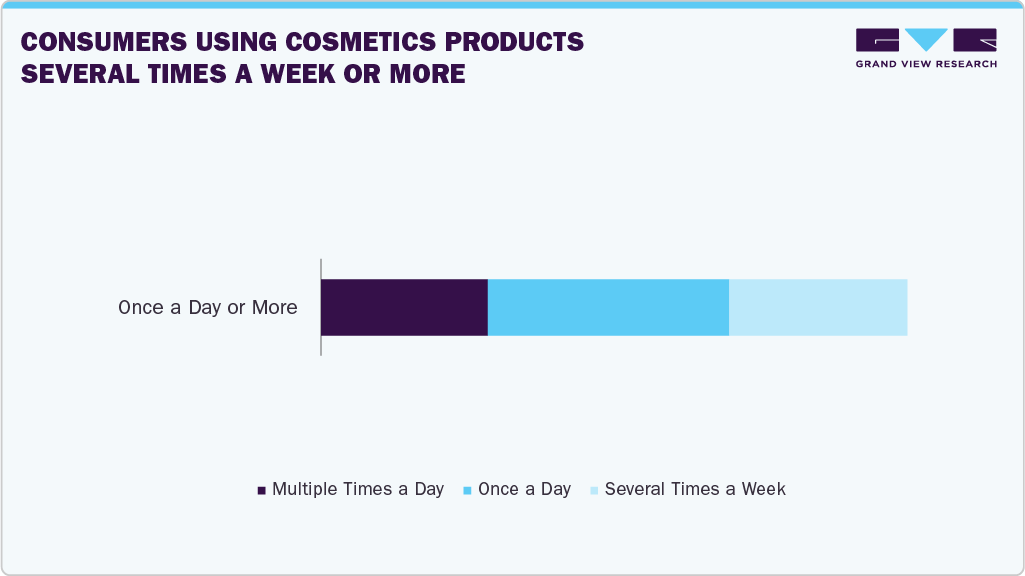
While the cosmetics industry has been consistently booming, there remains a stigma that makeup is used to hide flaws, acting as a barrier to using makeup products. Thus, the majority of consumers say they use cosmetic products once a day. And given that sharing your makeup products can come in contact with bacteria, people prefer to use makeup exclusively for themselves.
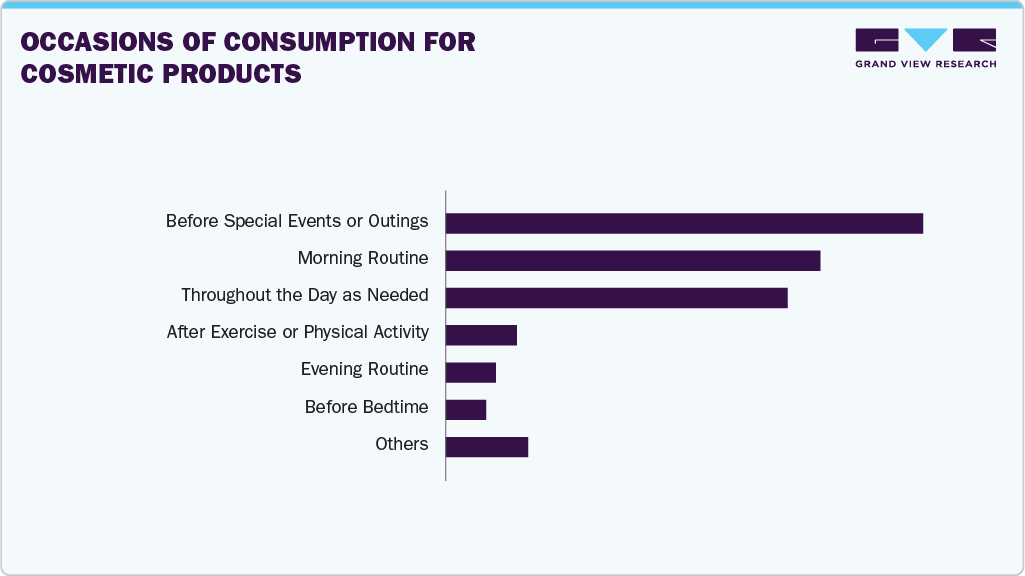
Cosmetic products are mostly used before special events and outings, as mentioned by about 5 out of 10 U.S. consumers. However, by promoting makeup as a form of self-expression and a way to display creativity, brands can increase the usage frequency to enhance the consumption of cosmetic products by linking makeup with a morning routine. Consumers associate using makeup with increased self-confidence and enhanced appearance; it is also considered a way to promote self-care and relaxation, all of which can be leveraged to encourage consumption. It is important to address concerns around the high pricing of makeup products as well as unrealistic beauty standards promoted by the beauty industry, discouraging consumers and creating negative associations around cosmetics.
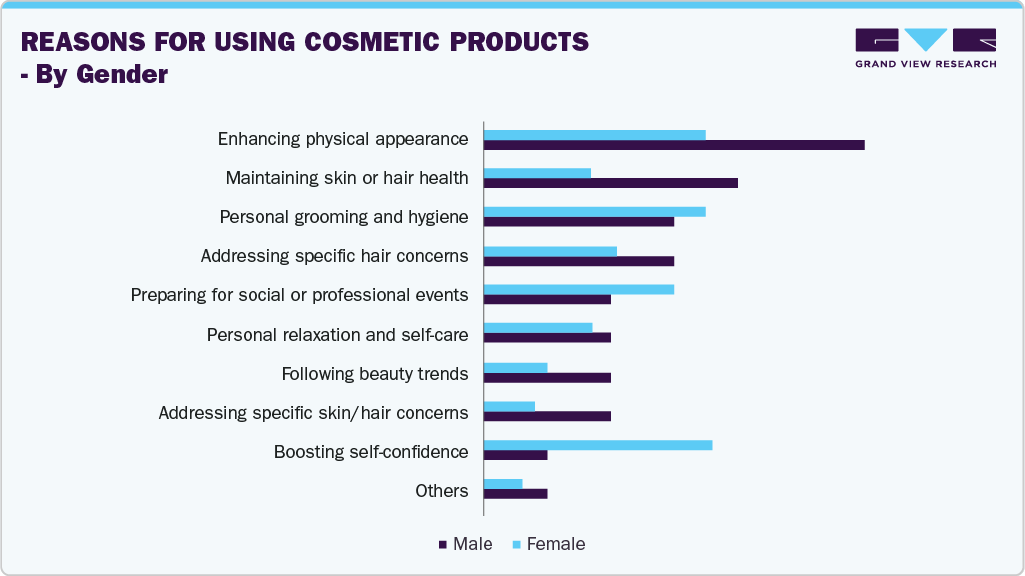
When it comes to reasons for using cosmetic products, overall enhancing physical appearance emerged as one of the significant aspects, which is consistent for both males and females. However, for males, enhancing physical appearance is the main motivation, while for females, increasing self-confidence is the primary reason for using makeup. Expressing individuality through makeup is also becoming a popular trend among both genders.
Buying Behavior
U.S. consumers prefer to have information about certain aspects before purchasing any cosmetic product, such as product quality and effectiveness, indicating that the companies that focus on product performance are likely to have an edge in the market. The second is pricing of the product, as consumers are both budget savvy and luxury-seeking audience, thus it is important for brands to caterbrands need to cater to these sectors. The last important information point that is sought after is the brand’s reputation in the market. As cosmetic products last longer and are used in lesser quantities, consumers largely prefer to purchase them once a year; the longevity of the product also plays a major role in the frequency of purchase.
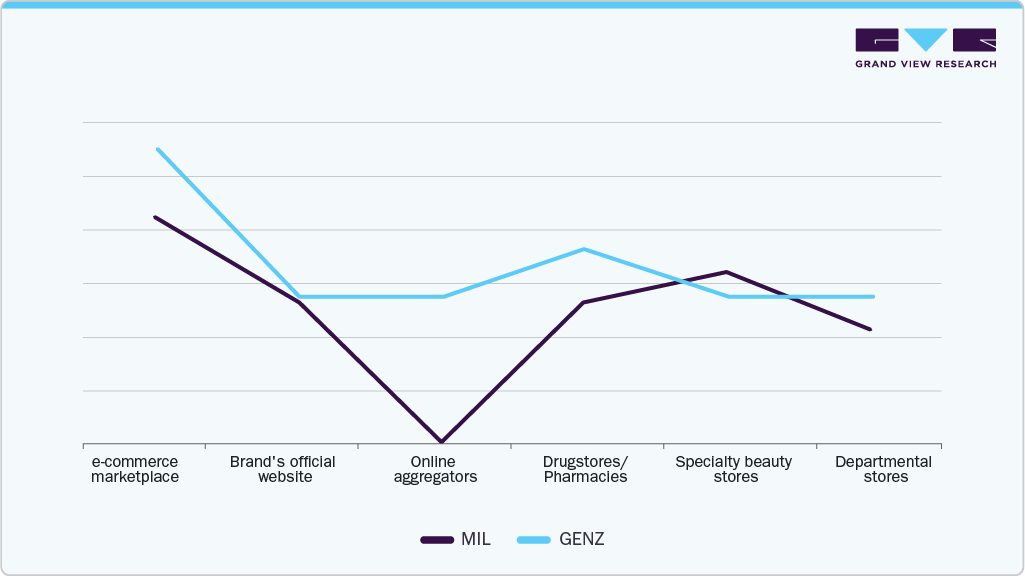
When it comes to the mode of purchase overall, department stores and specialty beauty stores are the most common modes. However, deep diving into Gen Z and Millennials shows that the e-commerce marketplace is a go-to method, given that they are more technologically savvy.
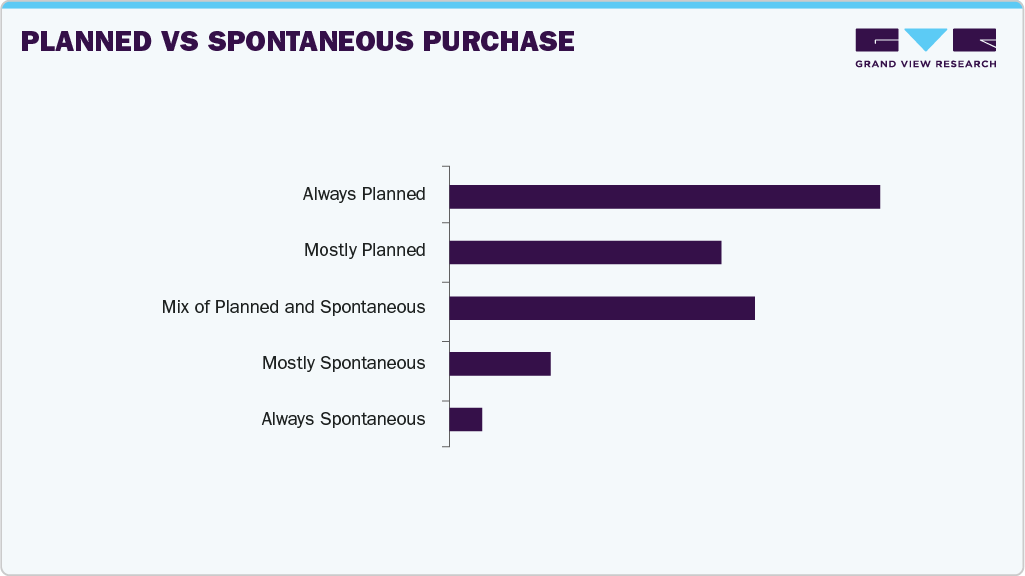
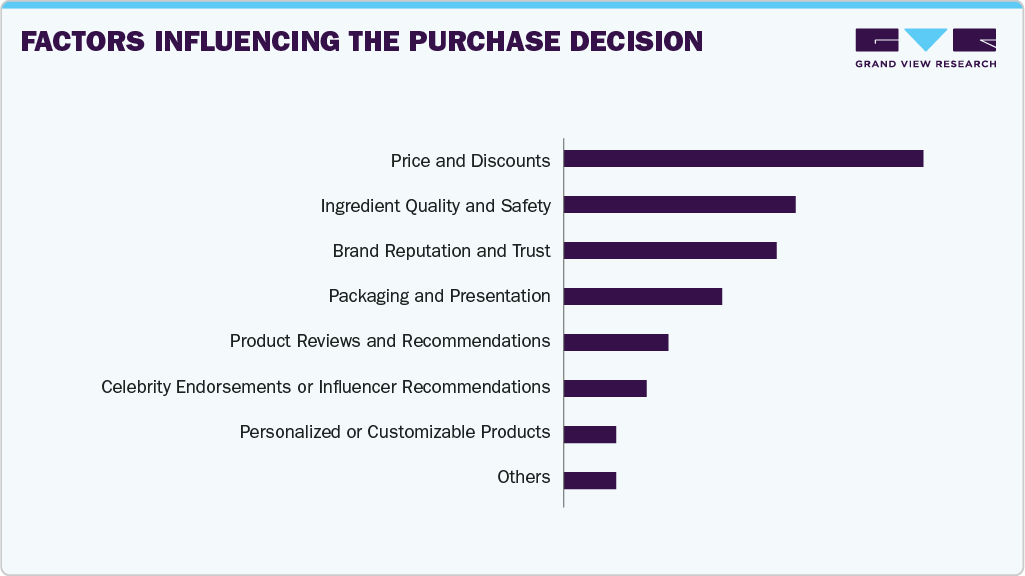
Evidently, more than 6 out of 10 consumers plan their purchase, where only a fraction of consumers displayed spontaneity in their purchase of cosmetics, indicating a well-thought-out purchase behavior, rather than acting on impulse. Although only a small population is spontaneous, it is important to see what triggers this, as brands can leverage these factors to drive higher purchase intent. Some of these factors can be pricing or discounts, as a larger population prefers budget-friendly products, and thus, pricing seems to be the key factor in their decision-making. The second is ingredient quality and safety.
Similar to the driving factor for a spontaneous purchase, price and discounts lead the way as a trigger for purchase in regard to trigger for a purchase, i.e., a well thought-out one. This is a strong sign that U.S. consumers are very sensitive to pricing strategies, such as sales, promotions, and discounts. Offering attractive deals could be a powerful tool in driving any purchase. Further, ingredients and brand reputation also hold a significant importance, which can be attributed to growing awareness around harmful chemicals, and brands that engage in ethical and sustainable practices are gaining traction in the market.
Brand Power Play (Brand Health and Performance)
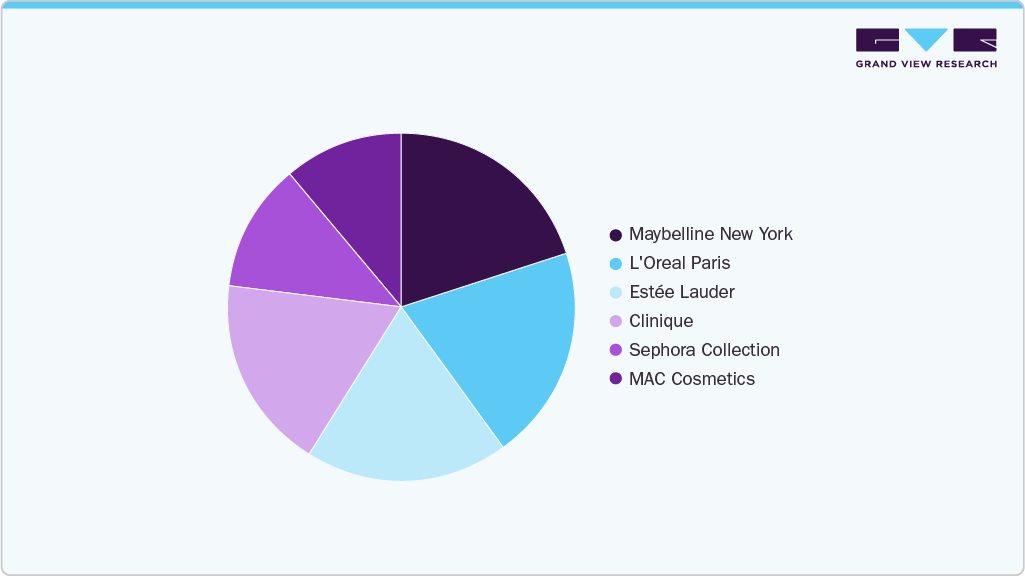
For cosmetics, although consumers are greeted with a multitude of options, the majority of them stick to the basic and trusted brands, which also dominate the industry. Some of these popular cosmetic brands in the U.S. include Maybelline, L’Oreal Paris, Estee Lauder, Clinique, and Sephora Collection. Among these, Maybelline and L’Oréal hold a significant position, which can be attributed to their affordable yet quality products. Some of the other brands include Anastasia Beverly Hills and Too Faced, which are slowly gaining traction in the market.
Purchase Funnel
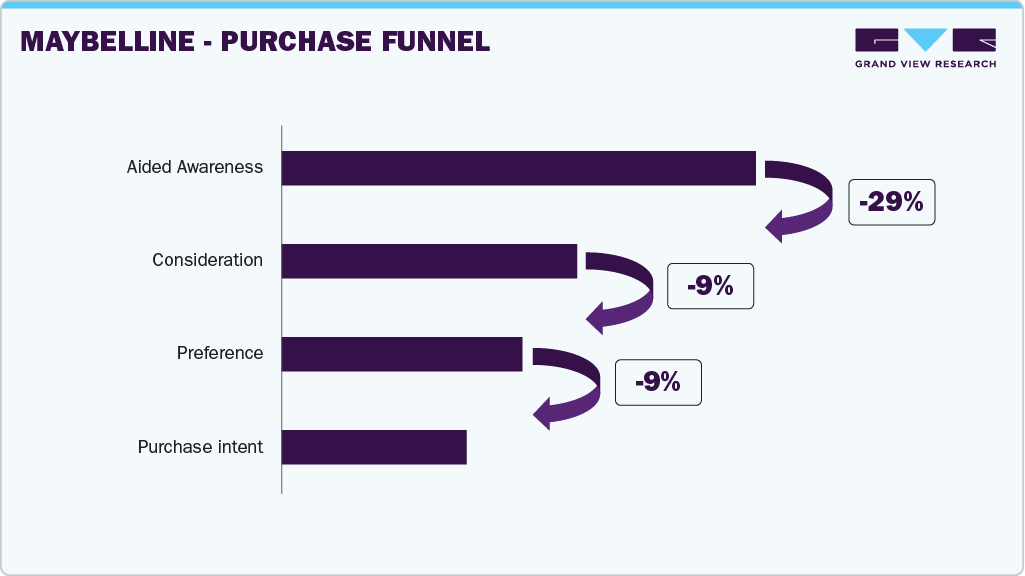
It is important to note that whilst a majority of brands enjoy high awareness, the journey from consideration to usage looks different for each of them, and only a few come out as winners in the race. Maybelline is one of the prominent brands that exhibits a noteworthy purchase funnel despite having significant drops at each step. For brands like MAC and Estée Lauder, improving the conversion rate from consideration to purchase could involve offering promotions or expanding product lines to attract a broader audience. Top brands such as Maybelline and L'Oreal should focus on maintaining their market dominance with consistent quality, affordability, and strong marketing. Maybelline New York and L'Oreal Paris are not only highly recognized but also convert well into actual purchases, making them strong contenders in the market, which is due to higher satisfaction levels. Also, brands like Too Faced, Urban Decay, and Sephora Collection display higher satisfaction levels, triggering a repeat purchase among consumers.
The overall NPS score of the leading brands varies from 14 to 51. Some brands like Clinique and L’Oreal have higher NPS scores (51% & 33% respectively) compared to other cosmetic brands in the U.S. market.

Talk to an analyst
Tell us what you need. We reply within one working day.
Service Guarantee
-
Insured Buying
This report has a service guarantee. We stand by our report quality.
-
Confidentiality
Your transaction & personal information is safe and secure.
-
Custom research service
Design an exclusive study to serve your research needs.
-
24/5 Research support
Get your queries resolved from an industry expert.