U.S. Eyewear Consumer Insights - Usage, Attitudes, And Brand Performance Report
Introduction:
In recent years, the U.S. eyewear market has transformed from a medical necessity to a vibrant sector combining technology, design, and fashion. The demand for specialist vision solutions has surged due to ever-changing consumer behavior, digital devices, a rise in virtual eye exams, and direct-to-consumer brands. Demographic factors such as aging baby boomers and fashion-sensitive younger generations have driven growth, while material innovation and sustainability concerns have inspired innovative design methods. Modern manufacturing techniques enable bulk customization at reasonable costs. Here are some of the market trends dominating the U.S. eyewear market:
-
Digital Integration & Technology: Augmented reality and smart eyewear technologies have revolutionized the retail eyeglasses market, providing customers with unprecedented clarity before purchase. These technologies support lower return rates and boost confidence in online shopping. Second and third-generation products incorporate audio functions, augmented reality displays, and health metrics tracking.
-
Retail Evolution: The introduction of e-commerce in the eyeglass market has led to optical shops redefining their business strategies. They have created hybrid shopping experiences, combining digital conveniences with physical infrastructure for professional consultations. Subscription models offer affordable options for keeping up with styles and prescriptions, while independent optical stores focus on premium service models with personalized fits and in-depth knowledge. This shift has created new competitive crossover zones as the lines between fashion retail and optical services become less distinct.
-
Design & Materials: Design trends are evolving with the use of sustainable materials like bio-acetates and recycled plastics. Modular design techniques offer customization and sustainable solutions. Brands showcase collections with striking frames and minimalist aesthetics. Gradient shades, delicate transitions, and fashion trends influence color trends. Technical coatings enhance functionality without compromising appearance. Manufacturing methods such as advanced moulding, precision cutting, and 3D printing extend design possibilities beyond conventional limitations, allowing for unattainable geometries and material combinations.
-
Functional Specialization: Eyewear designed for specific activities such as computer use, driving, and sports performance has replaced one-size-fits-all designs. Specialized lens treatments and frame designs address environmental factors and visual difficulties. Blue light filtering technology has become a common feature in prescription lenses, providing wider fields of clear vision, quicker adaptation times, and better transitions between viewing zones. E-sports, healthcare professionals, manufacturing workers, and digital producers are now wearing sport-specific eyewear, with photochromic capabilities transitioning from niche to popular products.
Methodology:
The insights covered in this report are drawn from GVR’s ‘Voice of Consumer Survey’ and its periodic updates. The latest survey represents 75,000+ consumer interviews conducted across 20 countries for 100+ product categories. These insights are specifically catered to the brands operating in the eyewear industry to guide them in their strategic decision-making process. This report provides insights covering category usage & attitude, buying behavior, brand performance metrics, and brand health indicators of leading players in the U.S. Eyewear market.
Chapter 1: Usage and Attitude
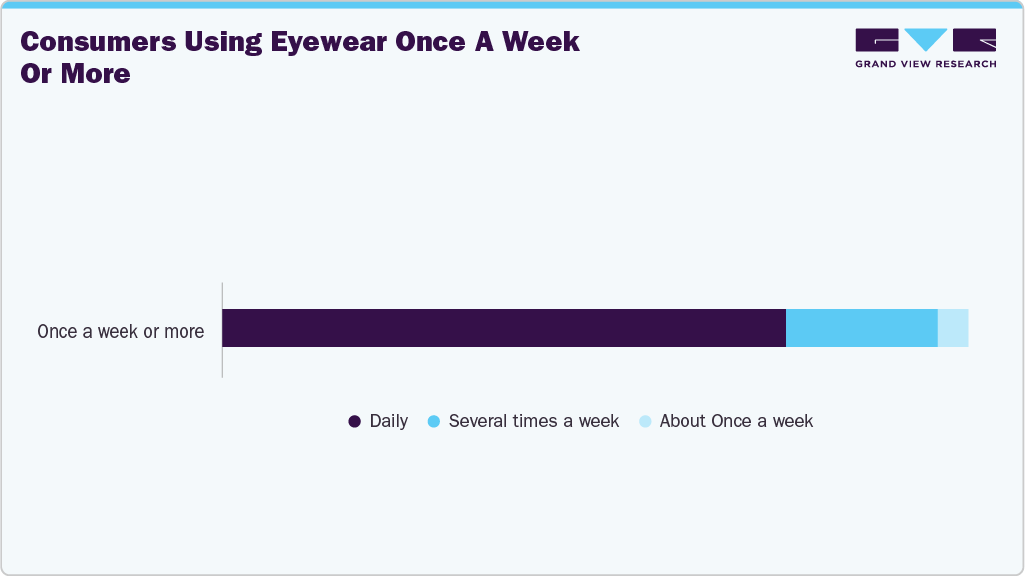
Considering the consumer’s requirement for day-to-day high-quality, longevity, and versatility, eyewear is widely used every day. This is supported by the fact that 90% of consumers use eyewear once a week or more, of which 68% report using them daily.
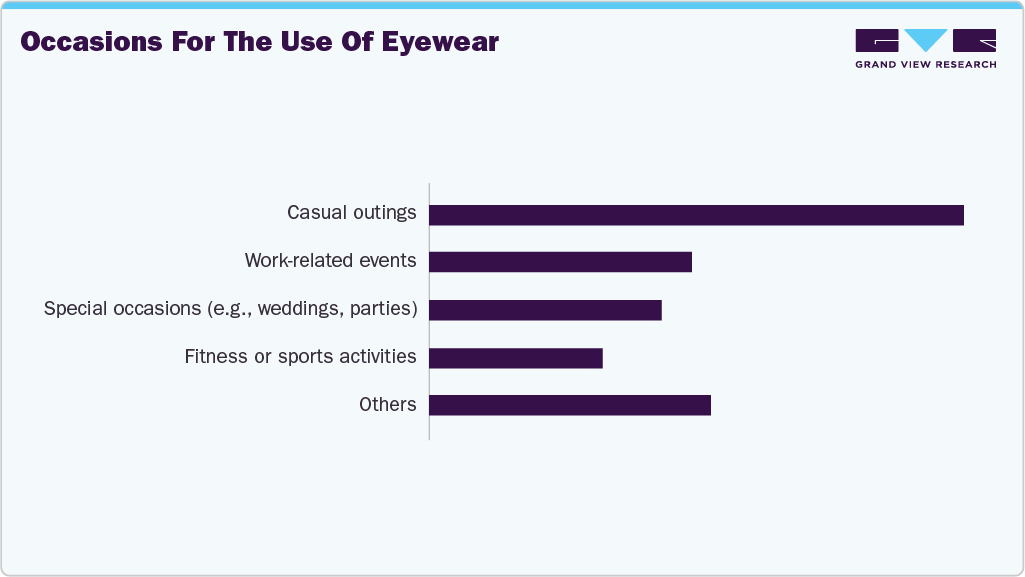
Eyewear is mostly used at the time of casual outings, as mentioned by about 5 out of 10 consumers, followed by work-related events. While optical glasses can be highly preferred for work-related events, sunglasses are preferred for casual outings and special events. However, there is an opportunity to increase the usage of prescription glasses at special events like weddings and parties, where consumers are most likely to ditch their glasses; thus, by offering stylish and sparkly designs, brands can encourage consumers to opt for prescription glasses while attending an event (current usage 23%). Consumers also like to wear it for travelling and educational purposes. Consumers associate using these with feeling confident and comfortable. However, what might hold them back is the high cost of quality glasses, as well as trends that may not suit their style.
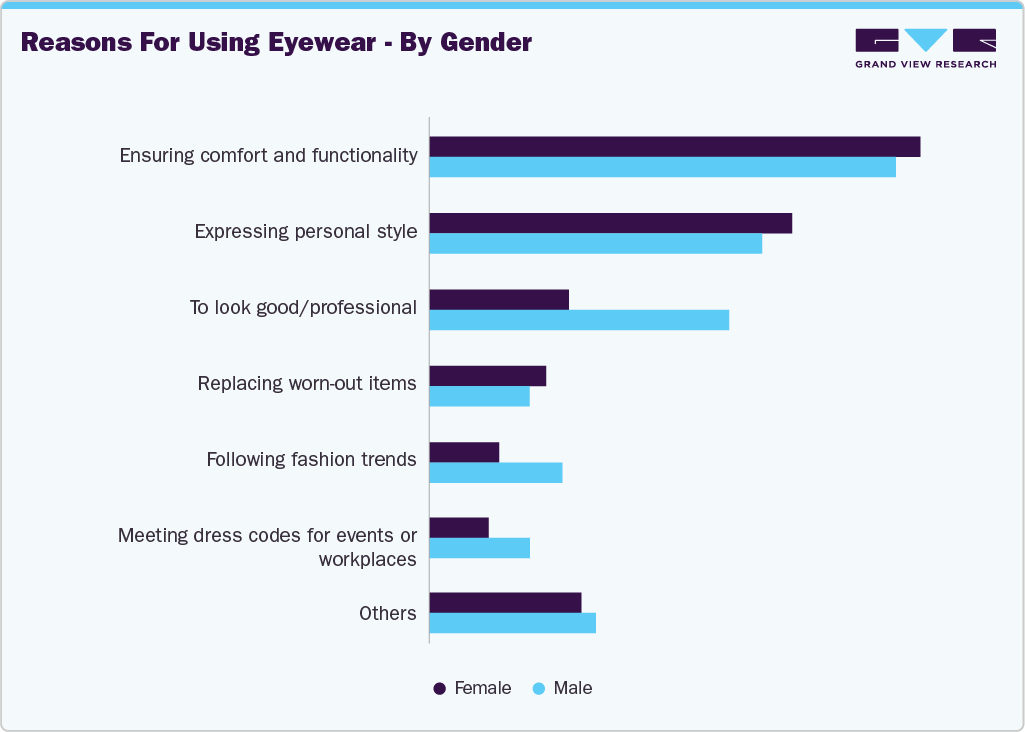
When consumers use any eyewear, the first thing they look for is comfort and how well it works in their daily lives. Both men and women want glasses that feel good to wear and help them see clearly. After that, they care about how the eyewear fits their style and makes them feel confident. If the glasses are well-made and worth the price, it makes the purchase even more satisfying. But not everyone is willing to spend a lot, especially if the quality doesn’t match the cost. Some also get disappointed when the product doesn’t last or feels cheaply made. This shows that eyewear brands have a chance to do better by offering both quality and style at a fair price.
Buying Behavior
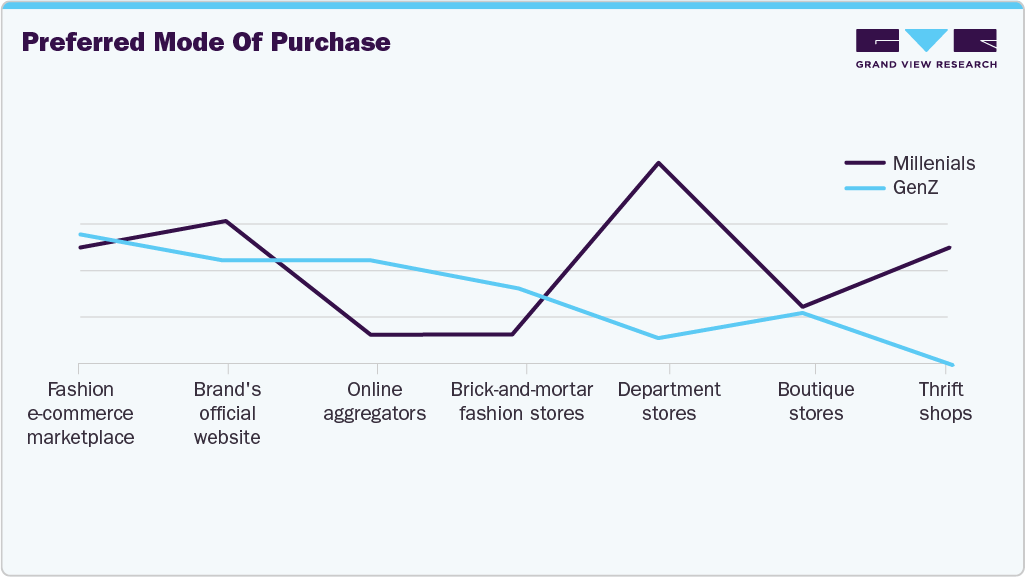
Before buying eyewear, consumers like to learn a bit about the product and what it offers. Having said that, many are looking for affordable, versatile eyewear that’s comfortable and fits well for any occasion. For most, price and value for money are the second most important factors. Rapid shifts in fashion trends and styles drive eyewear replacement cycles of approximately two years. When it comes to where they shop, Millennials usually prefer department stores, while Gen Z leans towards fashion e-commerce platforms. Both groups also visit the brand’s official website when making a purchase.
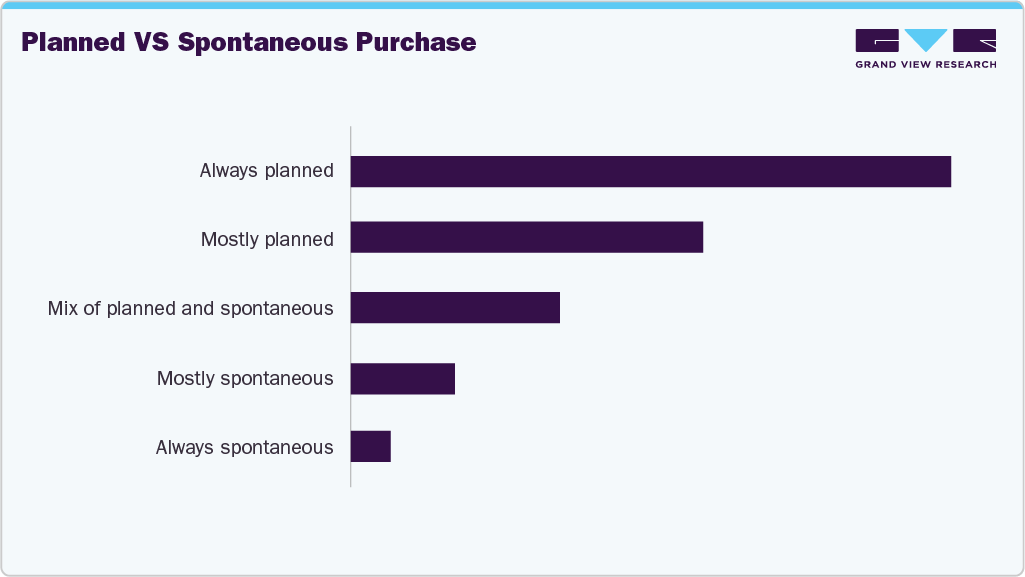
Eyewear is generally a planned purchase, as 7 out of 10 people say they plan their eyewear purchases. Among them, 46% always plan. Another 16% may make either planned or spontaneous purchases, depending on the situation or offers available. Only about 11% of people make spontaneous eyewear purchases.
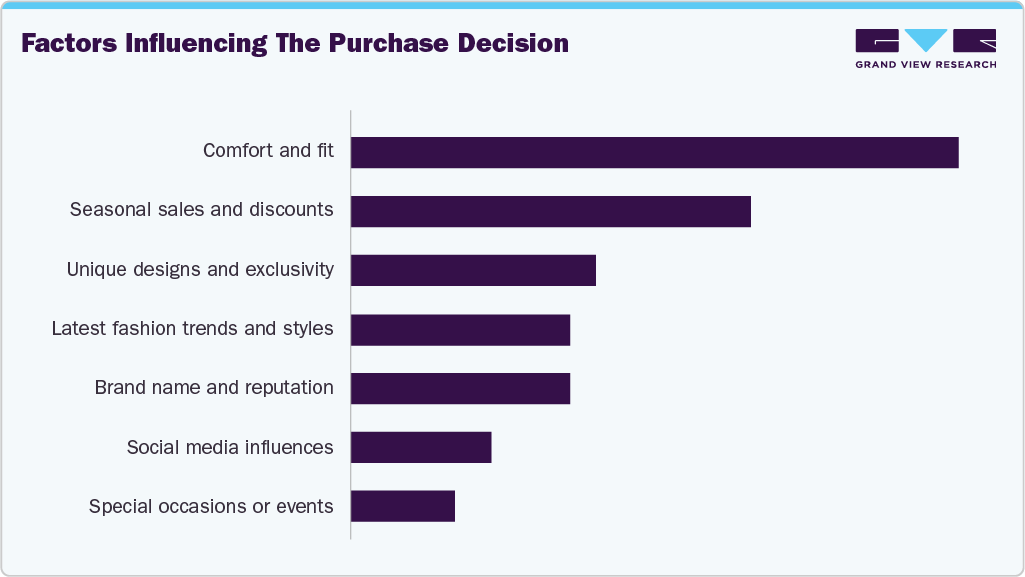
A large number of consumers say the main factors that strongly influence their decisions around an eyewear purchase are comfort, fit, seasonal sales and discounts, as well as unique styles and exclusivity. Social media helps people discover brands, but due to the highly competitive nature of social media marketing, it has less impact on driving these decisions. High prices for quality products and the lack of diverse or inclusive designs remain barriers to buying eyewear, even with growing demand. Additionally, 8 out of 10 consumers become more focused on a brand when they’re more aware of a product’s durability. This concern can prevent them from choosing eyewear that doesn’t fit the occasion or purpose.
Brand Power Play (Brand Health and Performance)
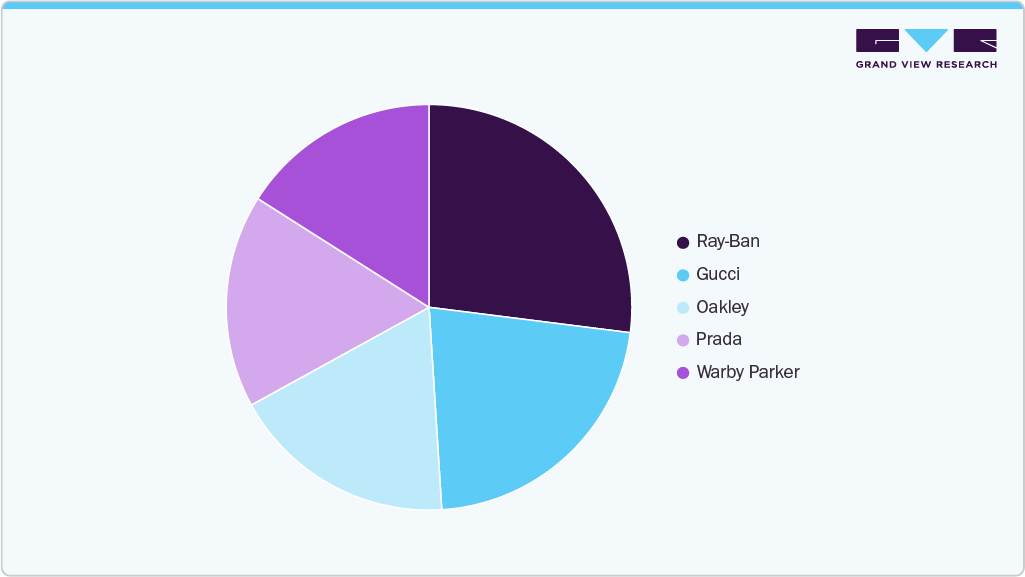
The eyewear market is highly competitive, with brands like Ray-Ban, Gucci, Oakley, and Prada maintaining strong brand presence and awareness. Ray-Ban leads the market, holding 61% in aided brand awareness. However, smaller, niche brands can still gain market share. Consumers are seeking unique styles and sustainable options, creating opportunities for smaller brands to differentiate themselves through innovation, quality, and customer experience.
Purchase Funnel
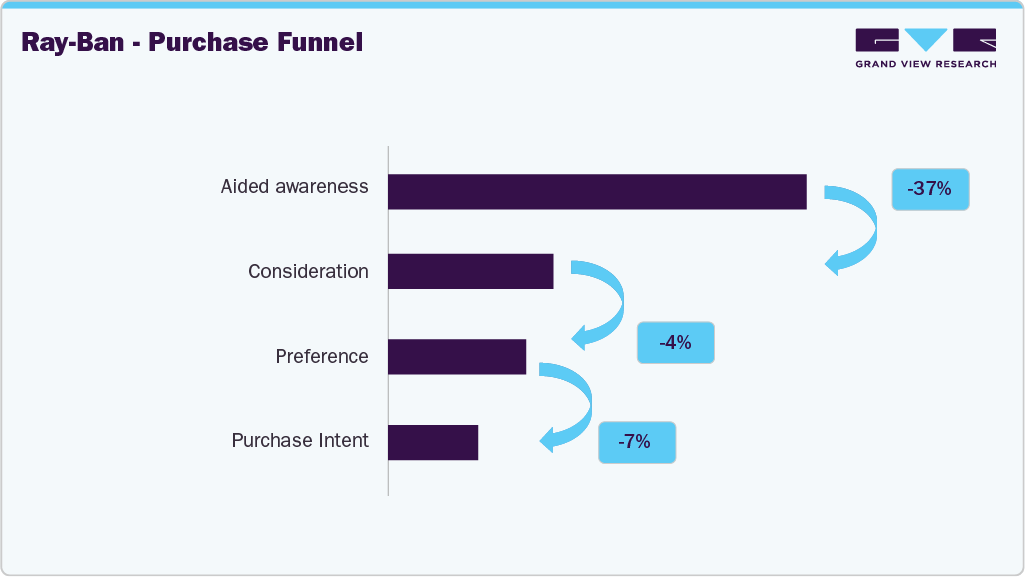
Even though there are a lot of well-known eyewear brands in the U.S., very few reach the stage of consideration and preference. Despite a significant drop from awareness to the consideration stage of the funnel, market leader Ray-Ban displays a robust purchase funnel. Ray-Ban has the largest share at every point of the purchasing funnel because of its long-standing presence in the U.S. eyeglasses industry, its iconic designs, premium materials, and significant cultural association. Further, Warby Parker provides commendable competition, standing in the second position. It's important to note that in addition to displaying commendable usage, Ray-Ban has a high trend of repeat purchases when compared to other brands, indicating brand loyalty supported by better customer satisfaction levels after use. It is important to note that Gucci, being marketed and priced in a luxury segment, falls behind in usage driven by affordability. However, it is one of the most recognized brands and is highly sought after. And its usage, if any, is driven by consumers who are not price conscious and remain loyal to the brand, thanks to its excellent customer relations, driving higher satisfaction among consumers.
The overall NPS score of the leading brands varies from -5 to 67, with Gucci having the highest NPS score (67) compared to other eyewear brands in the U.S. market.
