U.S. Handbags Consumer Insights - Usage, Attitudes, And Brand Performance Report
Introduction:
The expansion of the U.S. handbag market is driven by investment piece mentality, "quiet luxury" tastes, hybrid work practices, and the secondhand or rental markets, which have expanded premium categories and raised demand for high-quality, multipurpose bags. Luxury handbags are now considered investment pieces due to their demand. The rise of luxury companies' direct-to-consumer channels and e-commerce websites has made high-end products more accessible to a wider range of U.S. consumers. Here are some of the market trends dominating the U.S. handbags market:
-
Rise of "Hybrid" Work-Friendly Designs: As work environments evolve, hybrid work-friendly handbag designs are becoming increasingly popular. Lightweight yet sturdy materials are used to create these adaptable designs, which include padded laptop compartments, cable organizers, safe document pockets, and designated areas for water bottles and personal belongings. With big luxury brands launching "work-to-weekend" collections and exclusive DTC businesses catering to the professional-meets-fashion market, the trend has broadened the premium segment. Style and functionality are converging to represent the changing lifestyles of working parents and millennial professionals.
-
Resale Market Integration: Luxury handbag companies are integrating the resale market to access customer data at every stage of the product lifecycle, maintain pricing power, and generate new revenue streams. By using this strategy, premium companies can reach the secondary market and appeal to younger consumers who are concerned about sustainability, shifting their perspective on product lifecycles from one-time sales to ongoing interactions with clients and products. The way luxury brands approach the secondary market has undergone a major shift.
-
Cross-Category Brand Extensions: To build on their established brand reputation, handbag designers are expanding their product lines to include home goods, digital accessories, and small leather goods. By using this tactic, they can satisfy a greater variety of customer demands while preserving their consistent luxury brand. These brands develop new sources of income and increase consumer loyalty by diversifying. Increasing touchpoints with customers through the expansion into complementary categories also promotes a more regular brand connection. This strategy facilitates entry to growing markets like tech accessories. In the end, it improves brand recognition in a variety of lifestyle industries.
Methodology:
The insights covered in this report are drawn from GVR’s ‘Voice of Consumer Survey’ and its periodic updates. The latest survey represents 75,000+ consumer interviews conducted across 20 countries for 100+ product categories. These insights are specifically catered to the brands operating in the U.S. handbags industry to guide them in their strategic decision-making process. This report provides insights covering category usage & attitude, buying behavior, brand performance metrics, and brand health indicators of leading players in the U.S. handbags market.
Chapter 1: Usage and Attitude
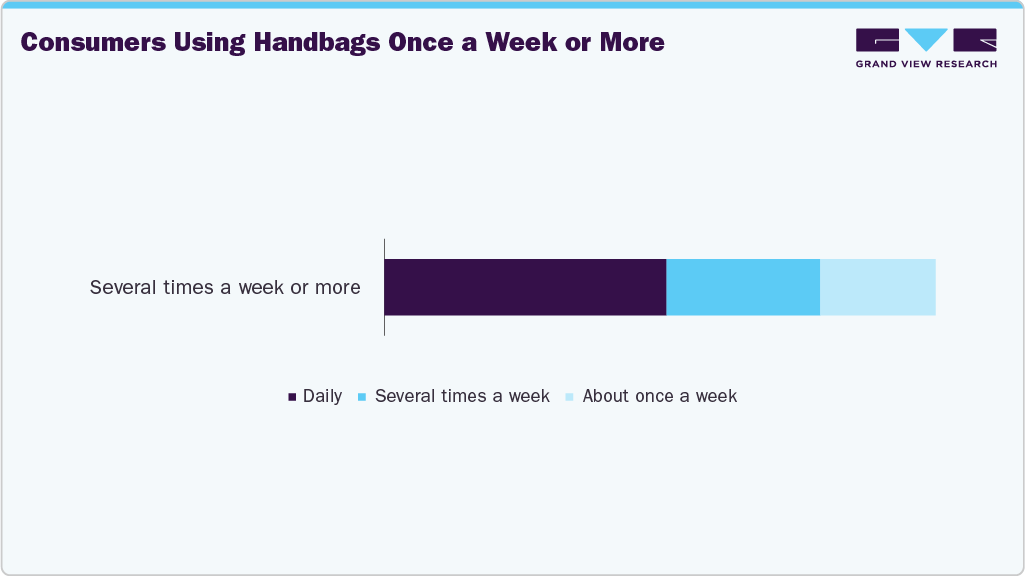
Handbags are slowly becoming an everyday essential as well as a statement piece. And 77% of consumers use handbags once a week or more, of which 42% say they use them daily. Most consumers incorporate handbags into their wardrobe rotation, underlining their growing relevance as day-to-day accessories.
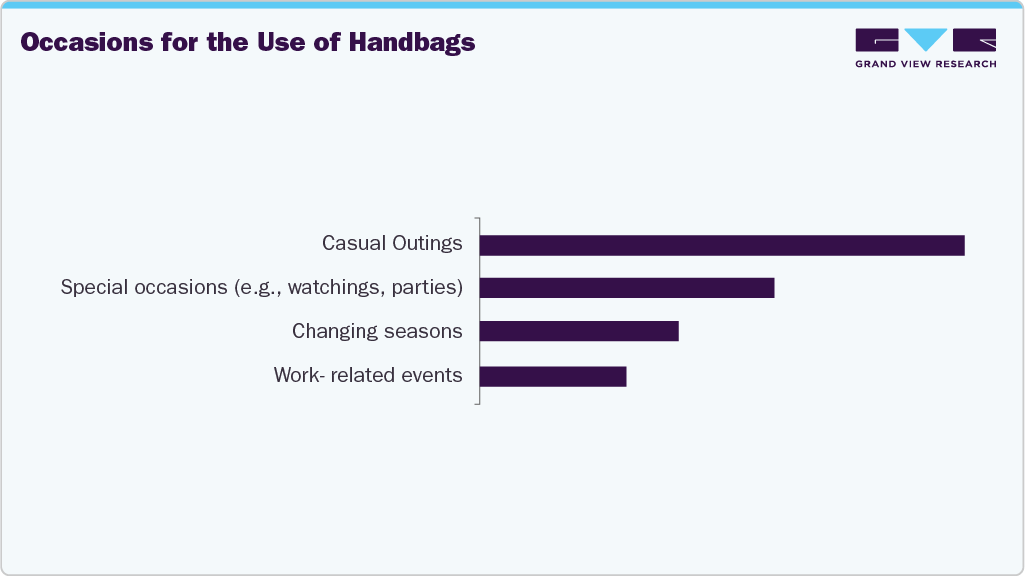
Handbags are mostly used at the time of casual outings, as mentioned by about 6 out of 10 consumers; however, there is an opportunity to increase the usage of handbags by encouraging their usage on other frequencies, like special occasions (current usage 34%) and changing seasons (current usage 23%). Having said that, consumers associate using these bags with completing an outfit with the right accessories. However, what might hold them back is the high costs of quality bags or designer brands, and the impact of fast fashion on the environment.
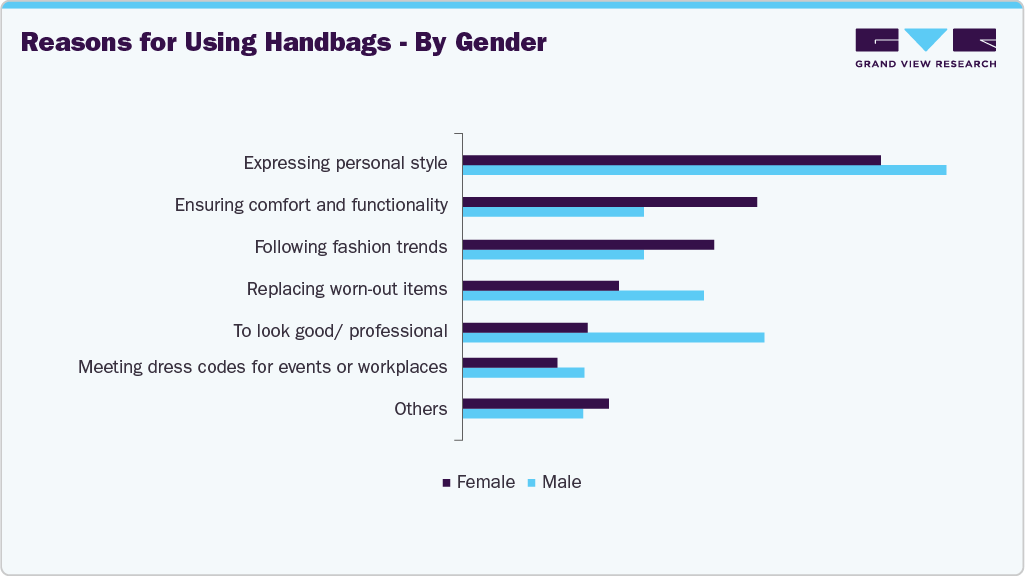
Expressing personal style is the primary factor that both males and females consider when it comes to the reason for the use of handbags. The second most important reason males use handbags is to look professional, but females do so to ensure comfort and functionality. The good value for the money, a durable and long-lasting construct, and the trendy and stylish designs are what make this purchase delightful. When it comes to the high cost of the product's quality, which is the primary factor influencing consumers, and the poor craftsmanship, which results in customer dissatisfaction, these pose a significant challenge.
Buying Behavior
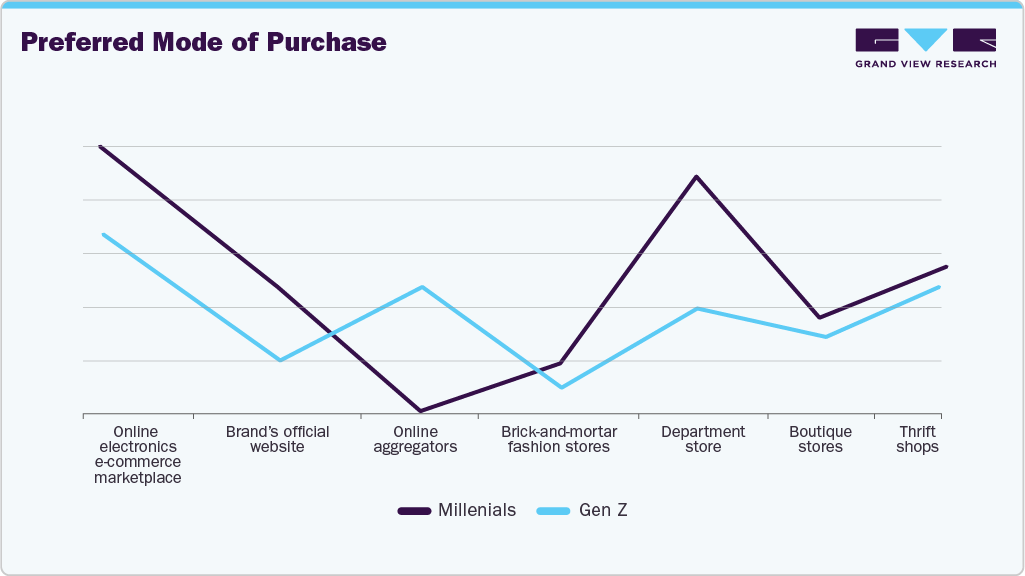
Before making a purchase, consumers need to know a little bit about the product and its qualities. Given the post-pandemic effects and consumers' growing demand for convenient multi-compartment bags that work for any event, pricing and value for money are the most crucial factors. Customers like to purchase handbags once every two years because they prefer durable bags. When it comes to buying a handbag, Gen Z and millennials prefer purchasing them mostly from online e-commerce websites. However, while millennials prefer department stores as a secondary go-to place, Gen Z favors online aggregators instead.
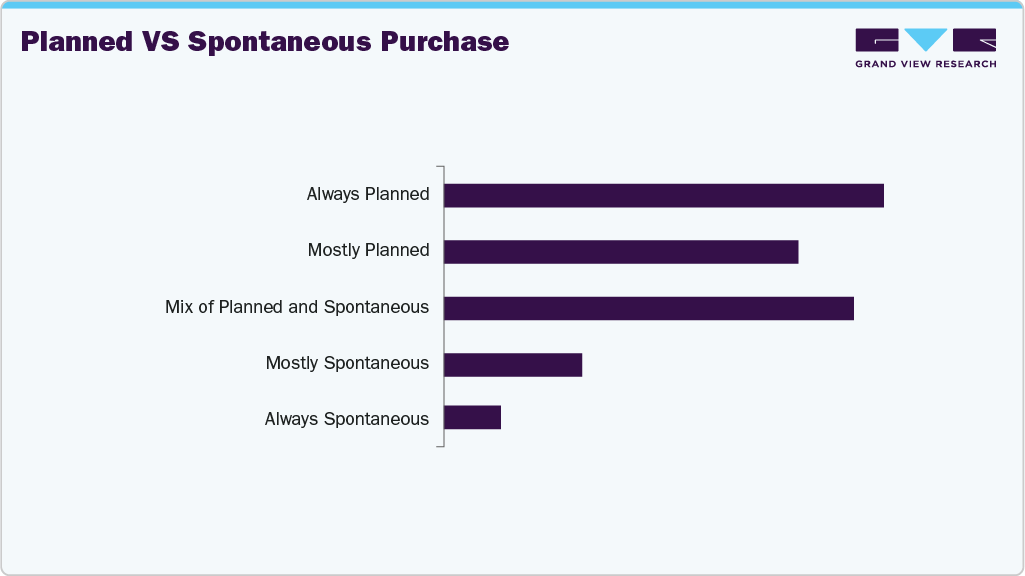
We can confidently state that handbags belong to a more planned purchase category, as almost 6 out of 10 people say their purchase is planned, out of which 31% of consumers say it is always planned, and 29% of consumers’ purchases are either planned or spontaneous, depending on the different situations and offers. Only about 14% of the population has displayed spontaneity in their purchase behavior. Very few people make spontaneous purchases and are mostly driven by seasonal sales and discounts provided by brands.
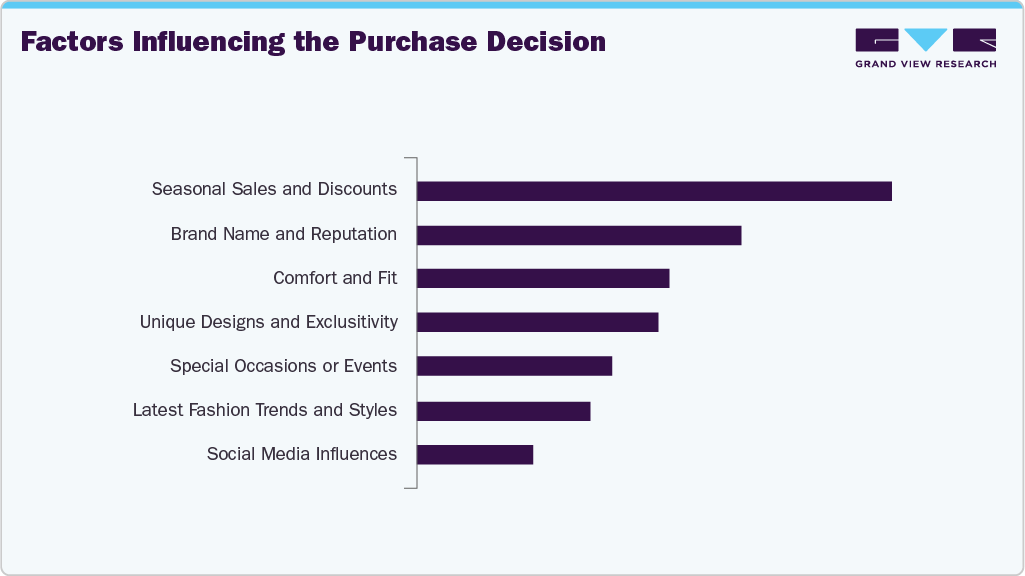
Seasonal sales and discounts, as well as brand name and reputation, are the main influencing factors significantly driving purchase decisions for a handbag, according to a major proportion of consumers. This is followed by the brand name and comfort provided in a handbag. Additionally, social media contributes to brand recognition but has a comparatively lower impact on decision-making. Nevertheless, despite the increasing demand, there are certain barriers to buying a product, like the high price of high-quality goods and the scarcity of inclusive or diverse designs.
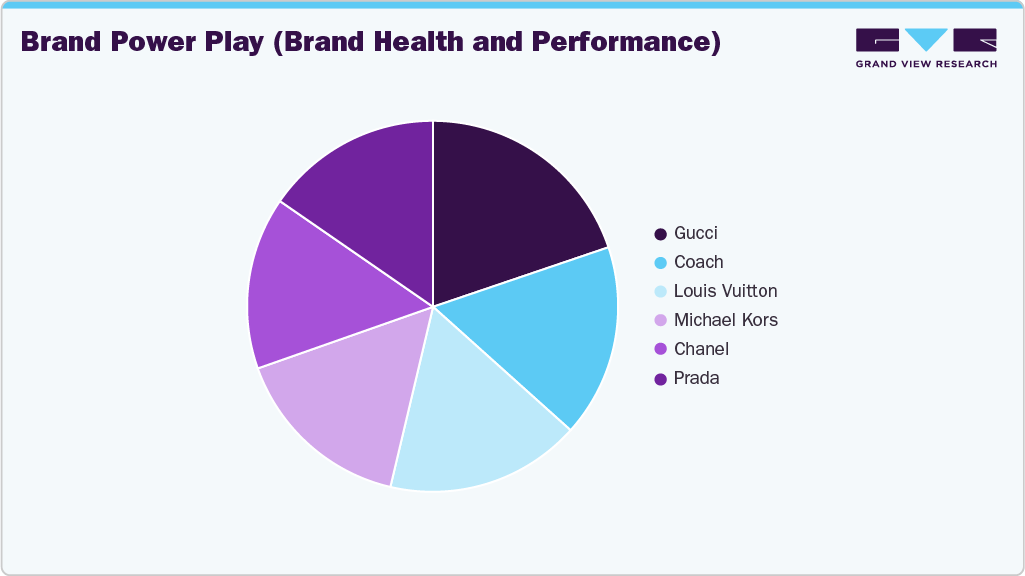
Brand Power Play (Brand Health and Performance)
Though the handbag market is super competitive, Gucci, Coach, Louis Vuitton, Michael Kors, Chanel, and Prada have a strong presence and high brand awareness, among which Gucci and Coach lead with 73% & 63% market share, respectively (by awareness).
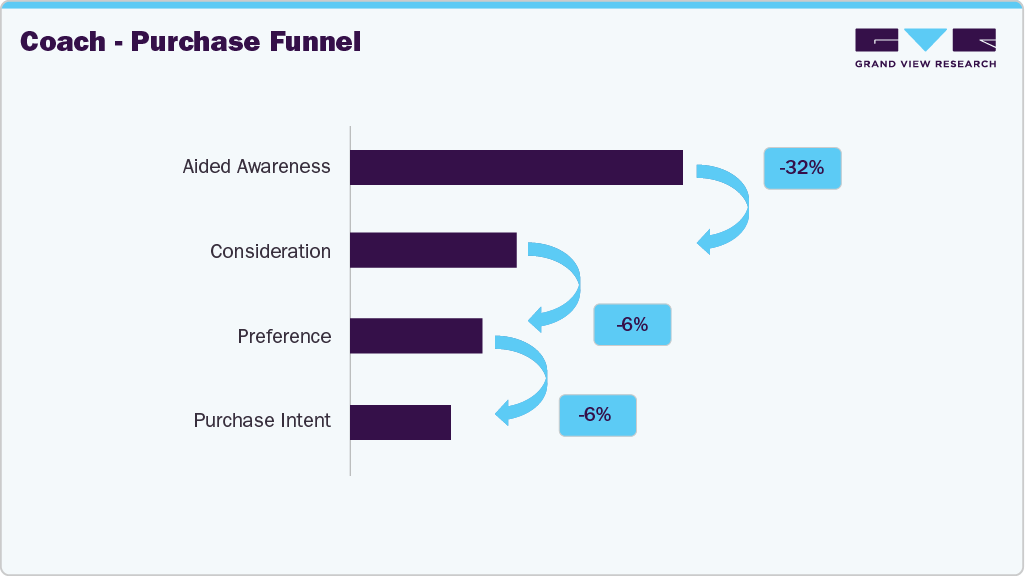
Purchase Funnel
While many handbag brands enjoy high awareness, the journey to purchase intent and usage is quite competitive. Coach, being one of the prominent brands, exhibits a strong purchase funnel despite having a significant drop from the awareness to the consideration stage of the funnel. It leads the market with the highest share in all the stages of the purchase funnel due to its perfect positioning as accessible luxury with American heritage appeal, attainable price points, extensive nationwide distribution, and a successful brand renovation, making it a popular choice for consumers seeking both style and luxury. It is worth noting that Michael Kors also showcases high usage by the consumers and has a high repeat purchase trend vs any other brand, depicting brand loyalty, which is driven by prominent satisfaction levels among consumers, thanks to the brand being positioned as somewhat affordable luxury. Thus, affordable luxury has gained considerable significance, indicating the consumers are increasingly leaning towards statement pieces without breaking the bank. Lastly, brands like Gucci, Chanel, and others, although they enjoy high awareness, due to their pricing and marketing aimed at ultra-luxury, do not enjoy the same usage levels as Coach and MK.
The overall NPS score of the leading brands varies from -43 to 45, with Michael Kors having the highest NPS score (45) compared to other handbag brands in the U.S. market.

Talk to an analyst
Tell us what you need. We reply within one working day.
Service Guarantee
-
Insured Buying
This report has a service guarantee. We stand by our report quality.
-
Confidentiality
Your transaction & personal information is safe and secure.
-
Custom research service
Design an exclusive study to serve your research needs.
-
24/5 Research support
Get your queries resolved from an industry expert.