U.S. Innerwear And Shapewear Consumer Insights - Usage, Attitudes, And Brand Performance Report
Introduction:
The innerwear industry in the U.S. has experienced a positive shift driven by increased acceptance of body positivity and societal shifts toward self-acceptance. Furthermore, in terms of material and quality, clothing brands are creating smart fabrics that absorb moisture, reduce seams, and regulate temperature. As e-commerce platforms have grown, innerwear has become widely available, and consumers who care about the environment are also drawn to the focus on sustainability and eco-friendly materials, with e-commerce platforms providing ample options.
The shapewear industry has also evolved significantly through 2025, driven by ever-changing consumer preferences that are currently leaning towards more confidence-enhancing, multipurpose products. Companies are developing smart fabrics with temperature-regulating technologies, breathable properties, and greater inclusivity to accommodate a variety of body shapes and sizes. The growth of retail partnerships has transformed the way consumers purchase shapewear, offering in-store experiences like private fitting rooms and online platforms that utilize AI for digital try-ons.
Shapewear is a type of innerwear that blends performance technology with fashion. It offers comfort, seamless design, and the ability to move across various physical environments. Utilizing moisture-wicking and chafing-prevention technology, these garments are designed to maximize user comfort. They cater to performers, professionals, and casual shoppers who prioritize durability, comfort, and style. Thus, innerwear and shapewear have evolved from simple protective attire to advanced performance systems that enhance and support the human body.
Here are some of the market trends prevailing in the innerwear and shapewear industry in the U.S.
-
Inclusivity and Size Diversity: One of the strongest trends is the continued expansion of size-inclusive offerings. Brands are expanding their size ranges to accommodate a wider range of body types, with many now offering sizes XXS to 6XL as standard. This inclusivity push has opened new market segments and increased consumer loyalty among previously untapped demographics.
-
Seamless Construction: The seamless technology trend has expanded beyond basics to include more structured shapewear pieces. Consumer preference for invisible lines under clothing has pushed manufacturers to develop new knitting techniques that provide support without visible seams or edges.
-
Athleisure Integration: The line between active wear and innerwear/shapewear continues to blur. "Shaping active wear" that combines compression with performance features has gained significant traction, with many consumers seeking pieces that transition from simple workout wear to trendy clothing that can be paired with other items for a casual outing.
-
Wireless Innovation: Post-pandemic consumer preferences for comfort have maintained momentum, with wireless bras and bralettes continuing to outperform underwire styles. Brands are investing in innovative support technologies that provide structure without rigid components and provide all-day comfort.
Methodology:
The insights covered in this report are drawn from GVR’s ‘Voice of Consumer Survey’ and its periodic updates. The latest survey represents 75,000+ consumer interviews conducted across 20 countries for 100+ product categories. These insights are specifically catered to the brands operating in the innerwear and shapewear industry to guide them in their strategic decision-making process. This report provides insights covering category usage & attitude, buying behavior, brand performance metrics, and brand health indicators of leading players in the U.S. innerwear and shapewear market.
Chapter 1: Usage and Attitude
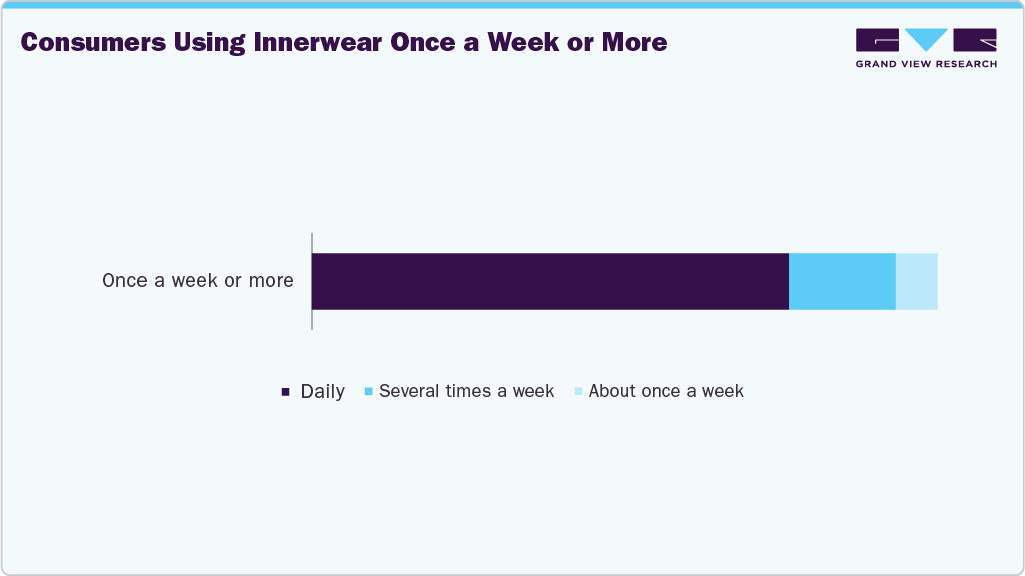
Consumers prioritize hygiene and daily comfort, as 85% use innerwear once a week or more, of which 64% use them daily. And they prefer to use it exclusively for personal wardrobe rotation, as expected to eliminate any hygiene concerns.
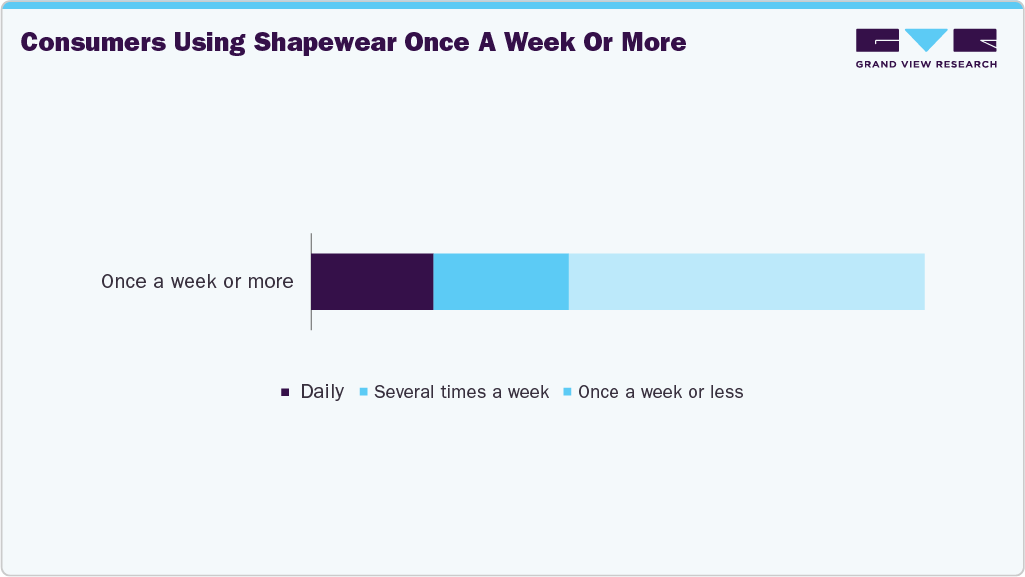
While 58% of consumers use shapewear once a week or less, 42% say they use it several times a week or more. This can probably be attributed to the association of discomfort with shapewear and its prolonged use, causing health concerns. Thus, it is important for brands to communicate the diverse uses of shapewear, paired with breathable, comfortable fabrics, to encourage better use.
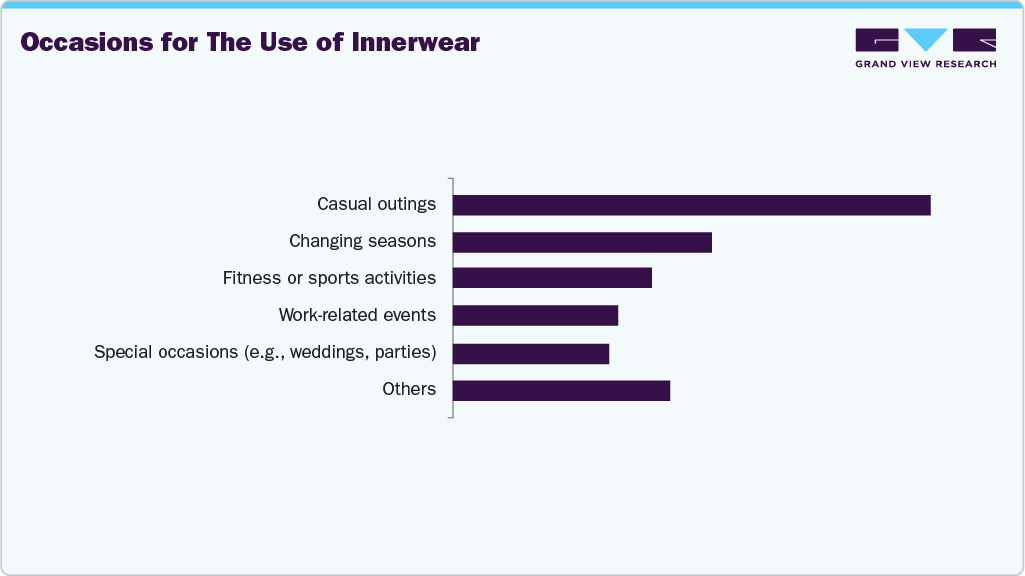
Innerwear, being versatile, is used at the time of casual outings, changing seasons, during sports activities, and much more. Some of these examples are people using innerwear, such as tank tops and gym vests, for fitness and sports activities, as it helps them perform better. Additionally, thermals are used in winter because they provide insulation and body heat retention. Having said that, consumers primarily associate wearing these clothes with feeling comfortable and confident. They also help them express their style. However, what might dissatisfy them is uncomfortable or ill-fitting clothes and brands that lack versatile sizing options.
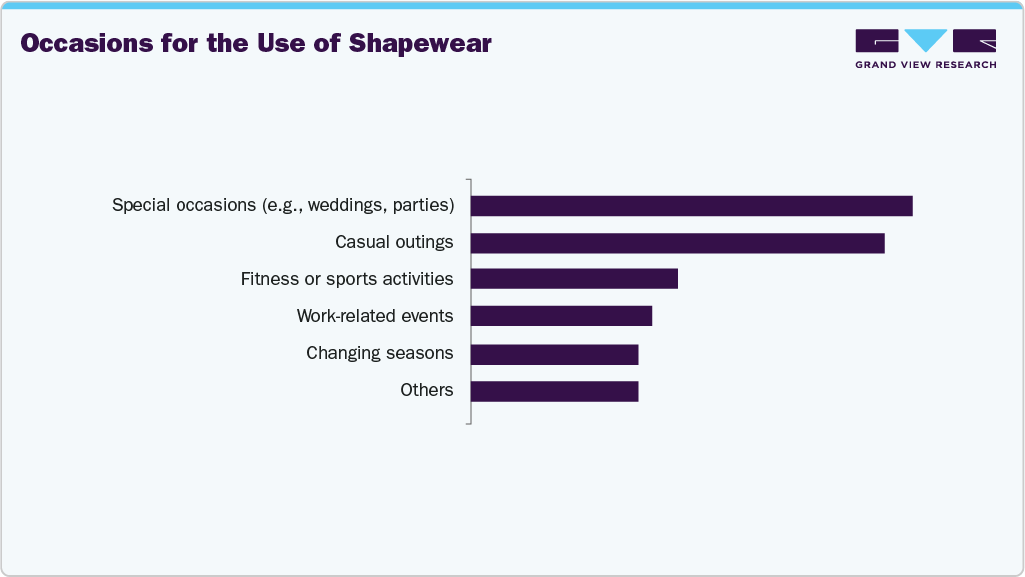
Whereas shapewear is mostly used at the time of special occasions, as mentioned by more than 3 out of 10 consumers; however, people also use it during casual outings and sports or fitness activities. Similar to innerwear, a good shapewear product is associated with feeling comfortable and confident, followed by a visual for a special event/occasion. However, what might dissatisfy them is uncomfortable or ill-fitting clothing, as well as the limited size options.
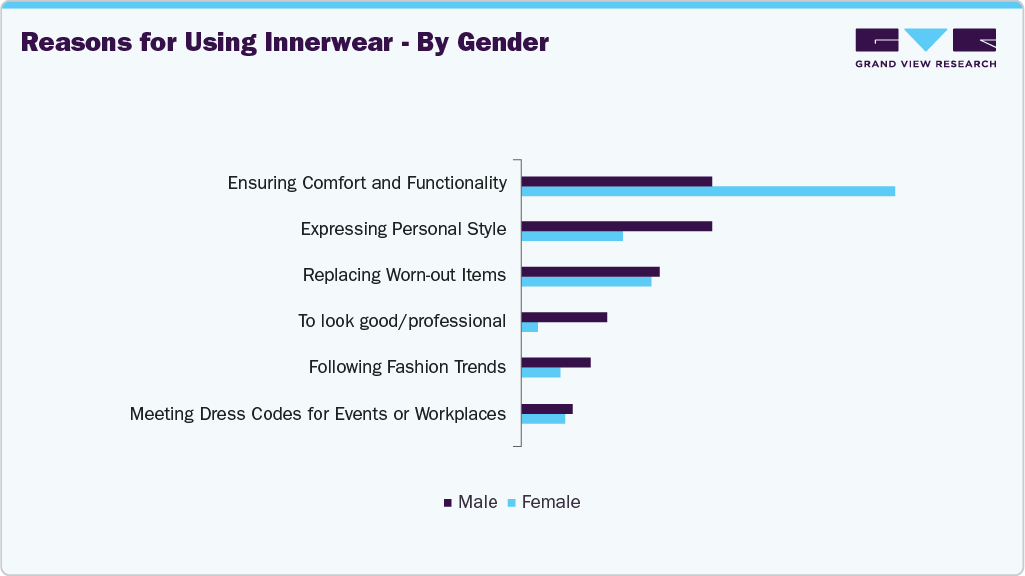
Regarding reasons for wearing innerwear, comfort and functionality are the most important for both females and males. Females also consider it for replacing worn-out items, whereas males do so for expressing their style. What makes this a delightful purchase is the comfortable fit and materials, the good value for money, and its durable or long-lasting construction. Thus, experiencing discomfort or ill-fitting clothing triggers negative associations in consumers’ minds. Followed by having to pay a higher price for a quality product, which leads to dissatisfaction among price-conscious consumers.
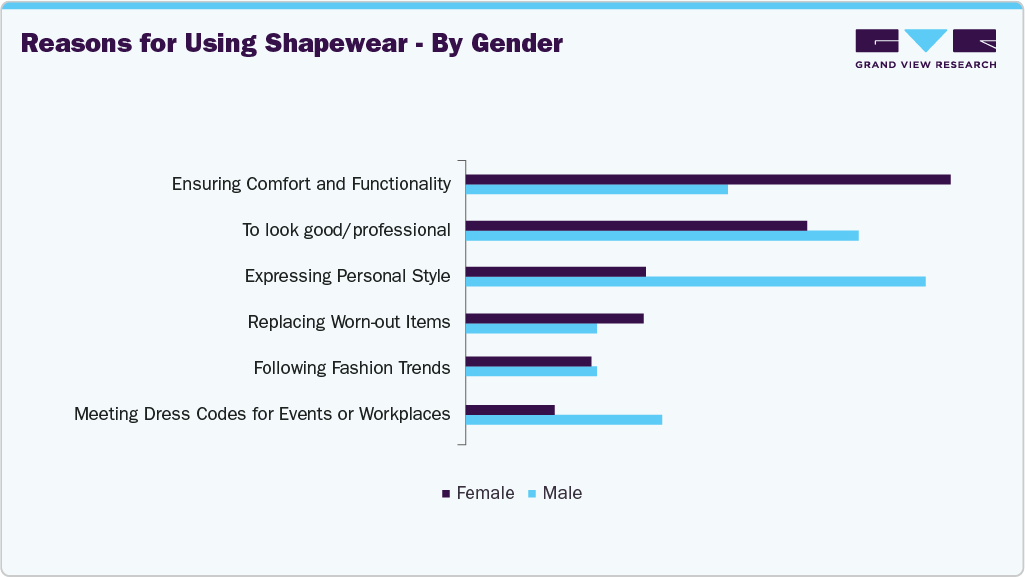
Now, looking at reasons for using shapewear, ensuring comfort and functionality again is the most important reason for females, whereas for males, expressing personal style is the most important reason. Another reason is to look professional because shapewear gives a proper shape to the body, eliminating the irregularities, and it is an equally important reason for both females and males. What makes this a delightful purchase is the good value for money, as you get a quality and durable piece of clothing. Similar to innerwear, consumers experience dissatisfaction when they feel discomfort or pay more for a quality piece of clothing, suggesting that they widely prioritize budget and comfort.
Buying Behavior
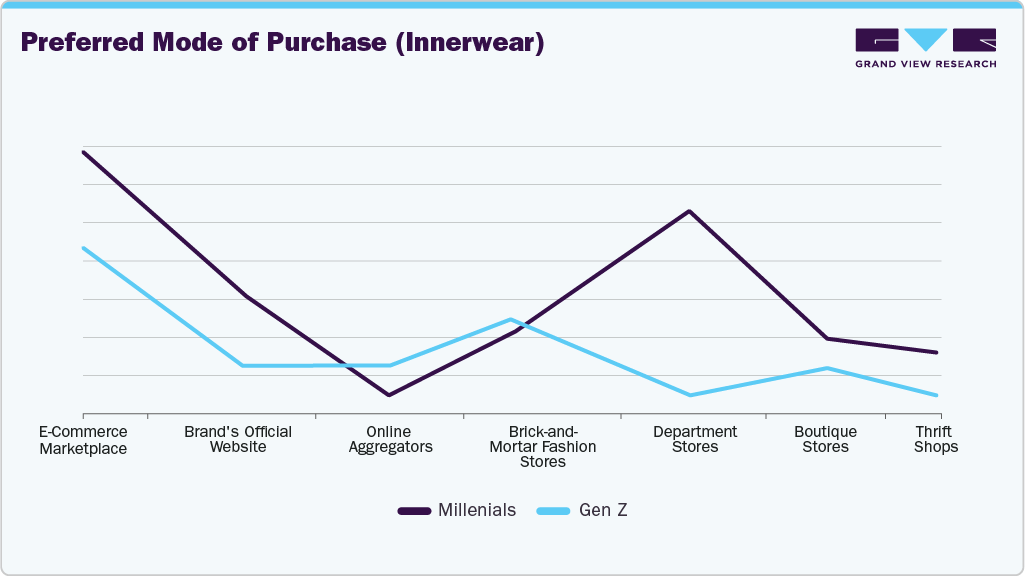
Before making a purchase, consumers need to know a little bit about the product and its material qualities. Given that customers are looking for more comfortable clothing, comfort or fit is the most crucial factor. Followed by a rise in budget-savvy consumers, the next is price and value for money. Since innerwear is worn very frequently, consumers mostly buy it once every quarter. Online e-commerce marketplaces like Amazon are the preferred mode of purchase for innerwear among both Millennials and Gen Z. Department stores are the second-most preferred mode of purchase for Millennials. In contrast, Brick-and-mortar fashion stores are the second-most preferred mode of purchase for Gen Z.
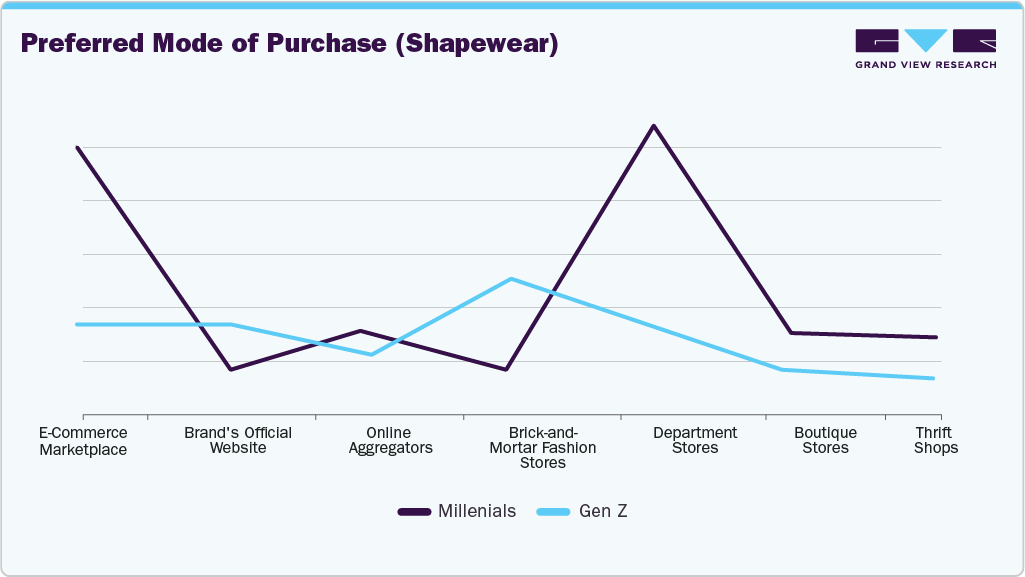
Consumers are increasingly demanding affordable clothes, whether for everyday wear or special events, followed by a growing emphasis on comfort. Since shapewear is worn less often, it is restocked once in six months. Now, regarding preferred purchase mode, Millennials prefer department stores for shapewear, while Gen Z prefers brick-and-mortar fashion stores.
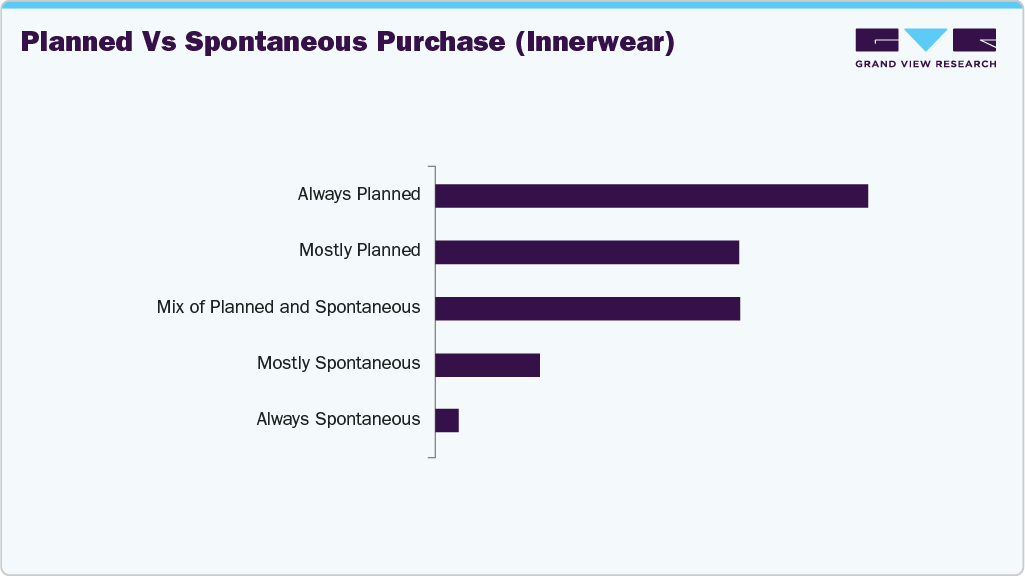
Innerwear is predominantly a planned purchase category, as more than 6 out of 10 people say their purchases are planned, of which 37% say it is always planned. Only about 11% of the population has displayed spontaneity in their purchase behavior, mainly driven by seasonal sales and discounts provided by the brands.
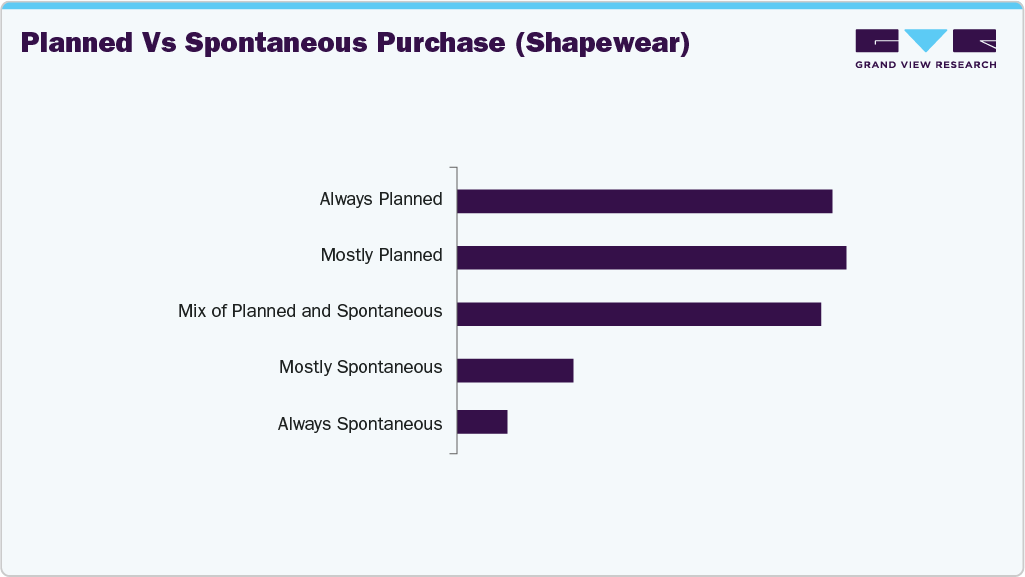
Shapewear also falls into a more planned purchase category, as almost 6 out of 10 people say their purchase is planned, with 29% saying it is always planned and 28% preferring a mix of both.
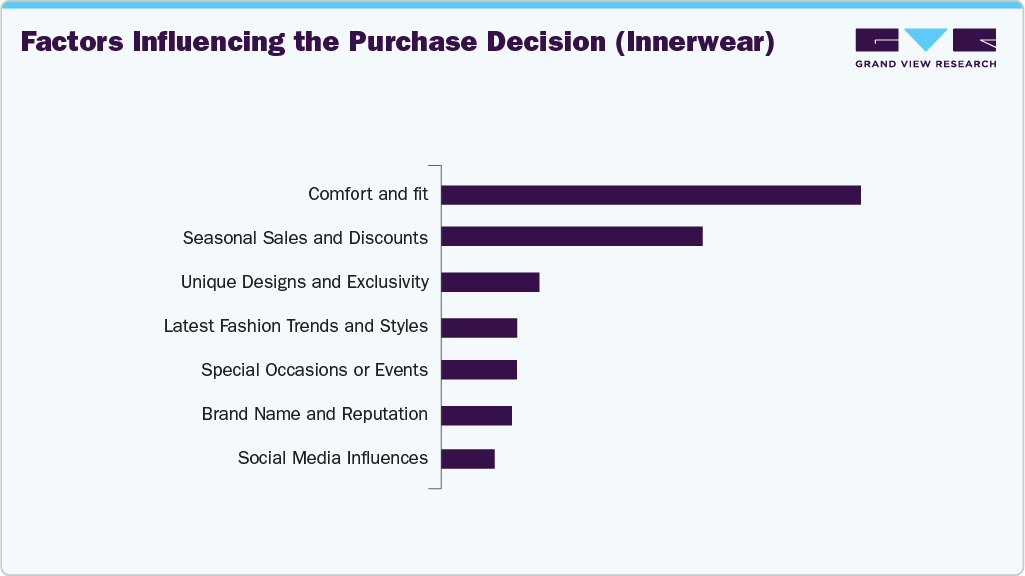
The key factors driving purchase decisions for innerwear are, as expected, the comfort of a piece of clothing and seasonal sales or discounts offered, as a significant percentage of people have selected these as the main drivers. Also, brand name and social media do help to increase awareness, but they play a lesser role in actual product purchases. Having said that, some barriers to purchasing a product include high prices for quality items and difficulty finding the right size and fit.
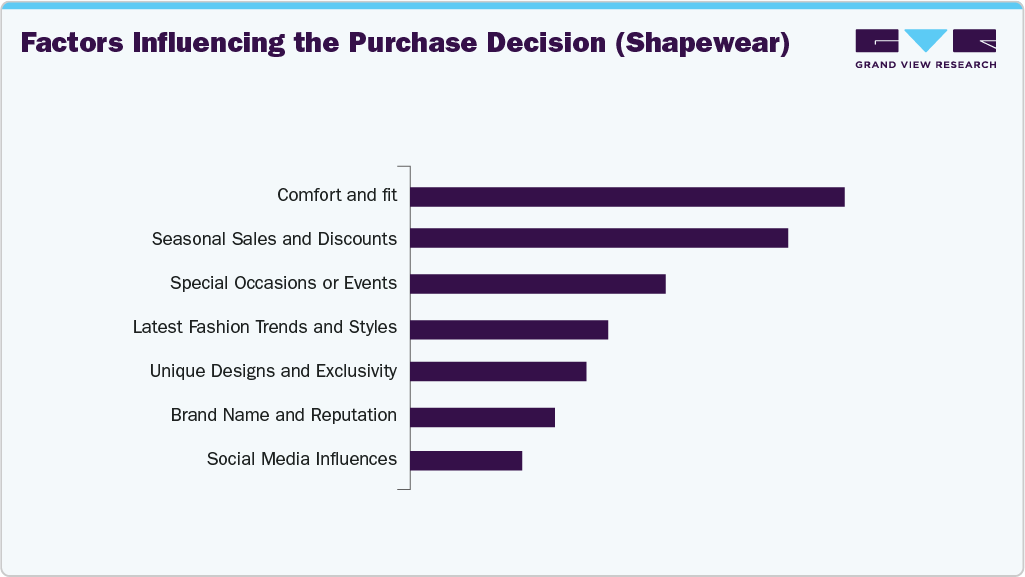
Similar to innerwear, comfort and discounts are the main drivers of shapewear purchases, as a significant proportion of consumers are influenced by them. As consumer behavior is similar for innerwear and shapewear, the barriers to their purchase also focus on affordability. With this in mind, brands can focus on improving their products by using breathable, stretchy fabrics that deliver a seamless fit and ensure all-day comfort.
Brand Power Play (Brand Health and Performance)
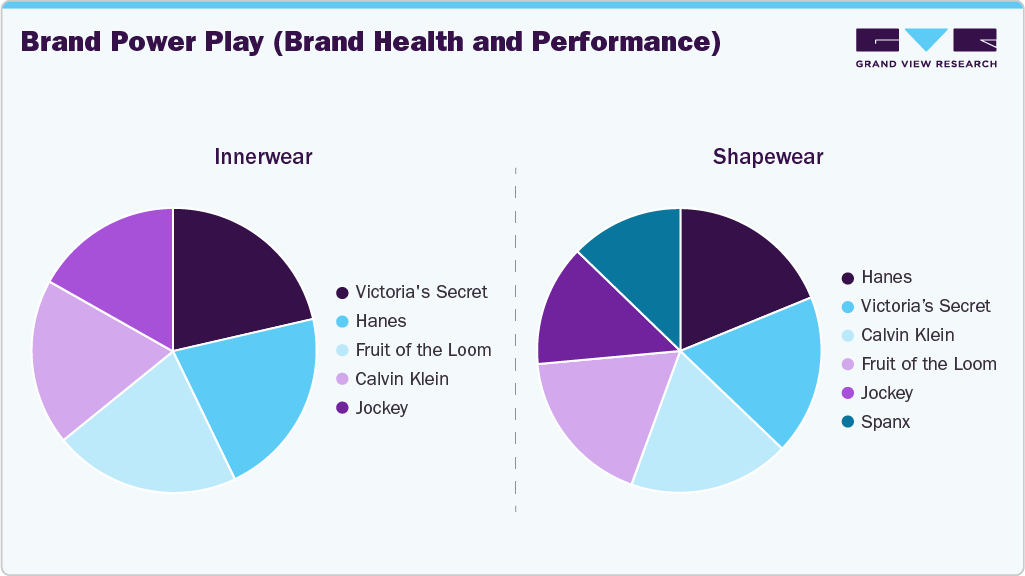
Some of the prominent brands of innerwear in the U.S. include Victoria’s Secret, Calvin Klein, Hanes, Fruit of the Loom, and Jockey. Although the innerwear market is established with big players, Hanes dominates the market along with Victoria’s Secret and Fruit of the Loom, with a 65% share (by awareness).
Even for shapewear, the prominent brands are almost the same as for innerwear. Although the shapewear market is quite competitive, leaving consumers with tons of options, Hanes yet dominates the market with a 51% share (by awareness).
Purchase Funnel
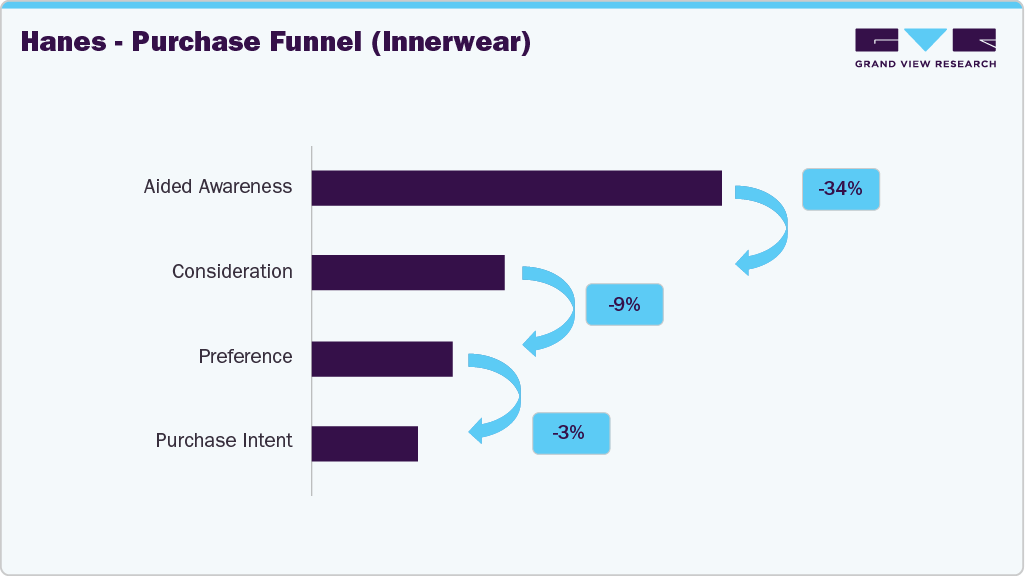
With a broader range of options available, while many brands enjoy high awareness, not every brand successfully translates that awareness into high purchase intent and usage levels. Amidst the competition, a few brands that manage to maintain their stance are Hanes, Victoria’s Secret, Fruit of the Loom, and Jockey. Among these, Hanes emerges as a winner throughout the funnel, whether we look at consideration, preference, or usage, despite experiencing drops along the way. Interestingly, despite the lower awareness, Jockey showcases higher satisfaction levels among consumers, thanks to its long-standing presence, ethical production practices, and comfortable materials at reasonable prices, all of which are compelling attributes for a consumer.
The overall NPS score for Innerwear of the leading brands varies from 11 to 63, with Jockey leading the market with the highest score among prominent brands (63).
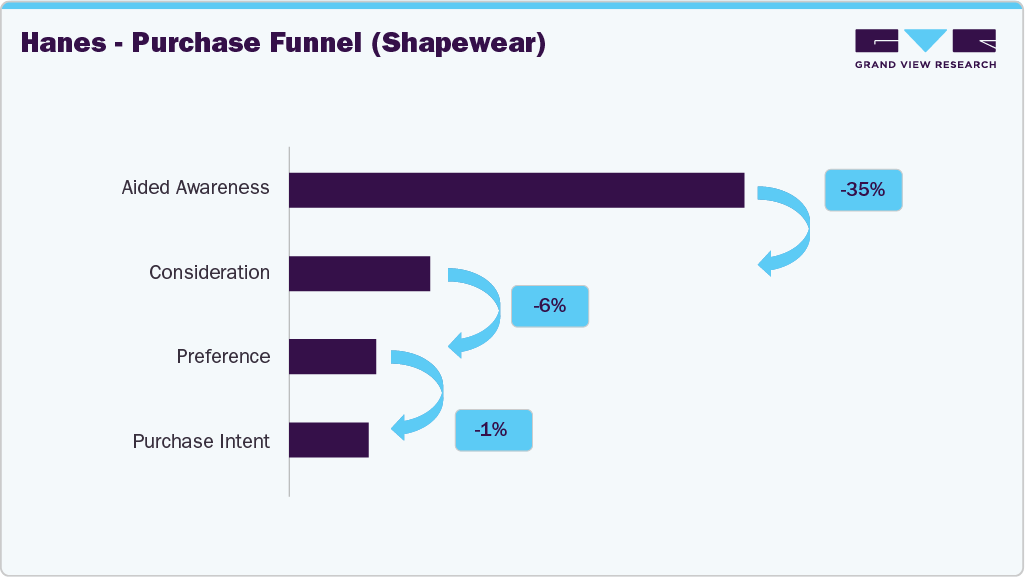
Since Hanes also enjoys high awareness in the shapewear market, it emerges as one of the prominent brands. However, when we consider brands preferred, Spanx beats Hanes and comes out as a winner, surpassing even Victoria’s Secret and posing a tough competition for prominent brands. But what makes Hanes a dominant brand is that, when we look at purchase intent, Spanx drops a few steps, making Hanes a leader again. It is also imperative to consider that, in the end, looking at usage, Fruit of the Loom emerges from the shadows with the highest usage levels, which the brands should watch out for.
Now, the NPS score for shapewear of the leading brands varies from 10 to 50. Here again, we see consistency in Jockey’s performance as it has an NPS score of 50.
