U.S. Jewelry Consumer Insights - Usage, Attitudes, And Brand Performance Report
Introduction:
The U.S. Jewelry market is growing rapidly, fueled by creative designs and rising demand for natural diamonds and lab-grown jewelry. More consumers are purchasing fine jewelry online as a result of e-commerce growth. The popularity of bling jewelry among celebrities has opened doors for both new and established businesses to diversify their product lines. To satisfy consumer demand, businesses are also introducing innovative items that are not only attractive but also ethical. With millennials favoring elegant three-stone and stackable rings, the trend of adding gemstones to ring designs is also becoming more and more popular.
Here are some of the market trends dominating the U.S. Jewelry market:
-
The Rise of Unisex Jewelry: As customers move away from conventional gendered collections, jewelry designs that are gender-neutral and unisex are becoming more and more popular. Clean lines and subtle beauty characterize minimalist designs, which provide pieces that are versatile enough to be stacked and combined for a variety of settings. By empowering people to express their individuality through bold combinations or subtle layering, these designs surpass the boundaries between traditional gender expectations. By combining various components, jewelry can be customized to fit a variety of desires and lifestyles and make a personal statement.
-
Ethical Sourcing Revolution: Consumers are giving ethical considerations greater importance when making purchases, which has resulted in a major sustainability shift in the jewelry industry. This change is especially noticeable in the diamond industry, where lab-grown substitutes have significantly increased their market share by providing advantages over traditionally mined stones in terms of both cost and environmental impact. In response, jewelry companies are making their supply chains more transparent and emphasizing their ethical sourcing qualifications as selling advantages rather than afterthoughts.
-
Personalization Boom: The demand for custom jewelry is rising, thanks to technological advancements like 3D printing and digital design software. These tools allow for intricate, personalized creations, such as pieces featuring birthstones, custom engravings, or distinctive designs, making it easier for individuals to craft jewelry that holds personal meaning. As a result, jewelry has shifted from being just an accessory to a powerful form of self-expression. With these technologies becoming more accessible and affordable, more people are embracing the trend, choosing to wear pieces that reflect their stories and identities.
-
Affordable Luxury Segment Growth: Brands that provide high-end designs at more reasonable costs have contributed to the significant expansion of the "affordable luxury" jewelry market. This category offers premium items at a reasonable price, bridging the gap between quick fashion and premium luxury. Affordable luxury offers a refined substitute for mass-produced jewelry with extreme care to detail, premium materials, and fine craftsmanship, enabling consumers to appreciate luxury designs without the exclusivity that comes with luxury names.
Methodology:
The insights covered in this report are drawn from GVR’s ‘Voice of Consumer Survey’ and its periodic updates. The latest survey represents 75,000+ consumer interviews conducted across 20 countries for 100+ product categories. These insights are specifically catered to the brands operating in the jewelry industry to guide them in their strategic decision-making process. This report provides insights covering Category usage & Attitude, Buying behavior, Brand performance metrics, and brand health indicators of leading players in the U.S. Jewelry market.
Chapter 1: Usage and Attitude
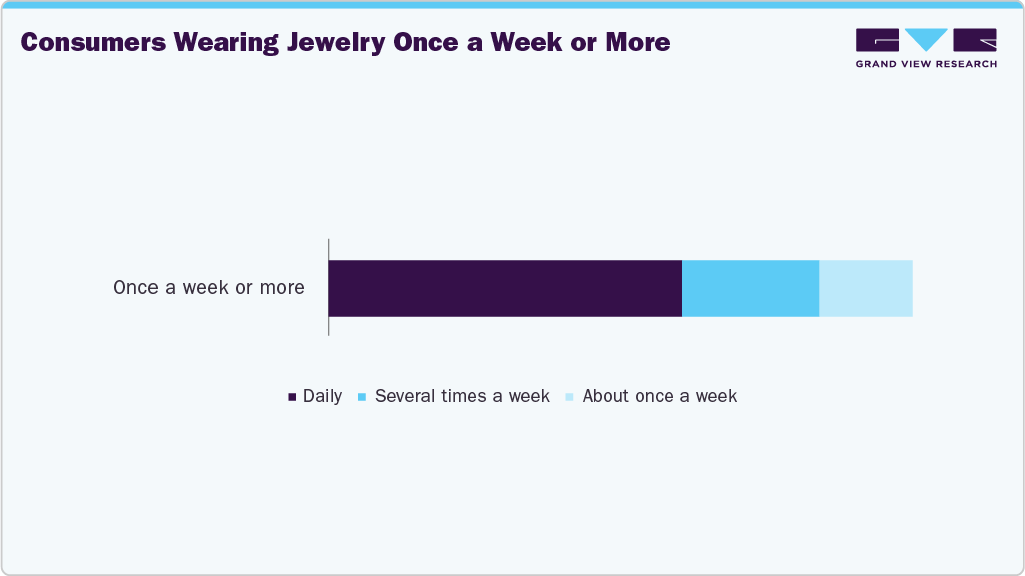
Considering the consumer requirement for unique and high-quality pieces, jewelry is widely used. This is supported by the fact that 65% of consumers wear jewelry once a week or more, of which 39% report using it daily.
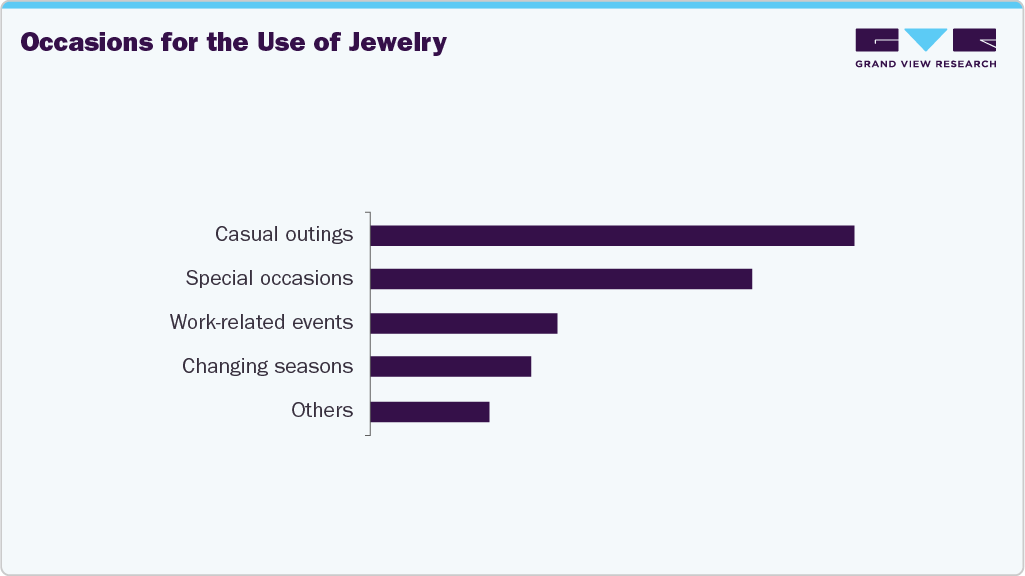
Jewelry is most commonly worn during casual outings and special occasions, with a majority of consumers using it for everyday outings and while attending any events or festivals. However, there is strong potential to expand its usage to work-related events, where current usage stands at 22%. A jewelry brand could tap into this opportunity by launching a marketing campaign that highlights the versatility of its pieces, along with special promotions or limited-edition collections tailored for celebrations and milestones. Still, the high cost of premium and designer jewelry, along with styles that may not align with personal preferences, can be barriers for wider adoption.
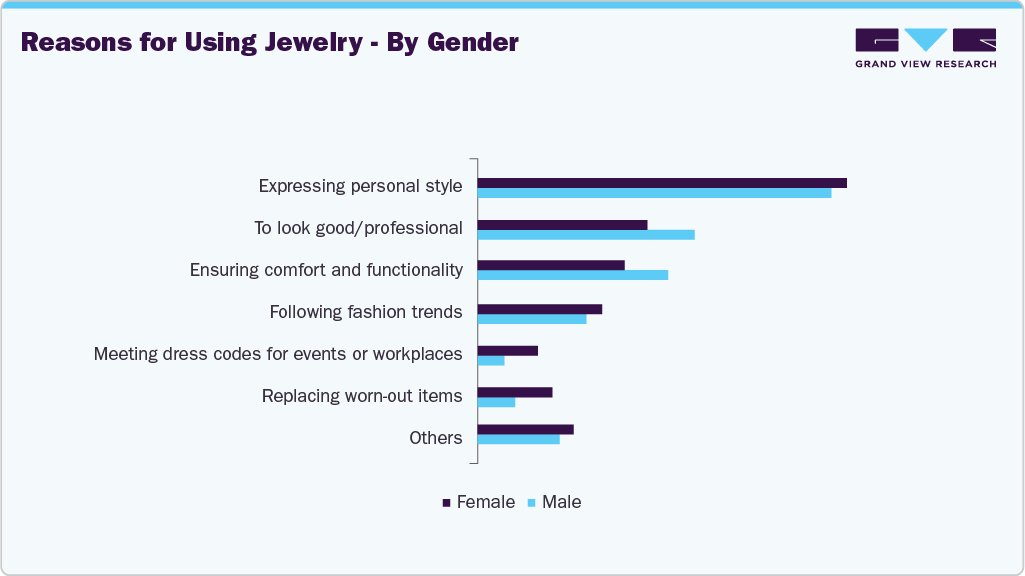
Both males and females share similar perspectives on the reasons for using jewelry. Expressing personal style is the most important reason, followed by the desire to appear attractive or professional. While jewelry helps boost confidence through various means, what makes consumers appreciate their purchase is receiving a good value for money, getting their hands on unique or exclusive pieces, and a durable construction. And whilst these factors play a significant role in making a purchase delightful, the opposite of which causes dissatisfaction, as expected. Thus, a pricey piece of jewelry paired with poor quality workmanship makes a product unreliable and unappealing.
Buying behavior
Before making a purchase, customers should familiarize themselves with some elements of the product to make an informed decision. The most crucial elements are the fit, such as how well the jewelry pairs with an occasion, an attire, or with other pieces, followed by how comfortable it is to put on vs take off, and how well it fits the designated part. The second is price and value, in line with consumers demanding a product that offers value for money, i.e., a quality piece that is reasonably priced.
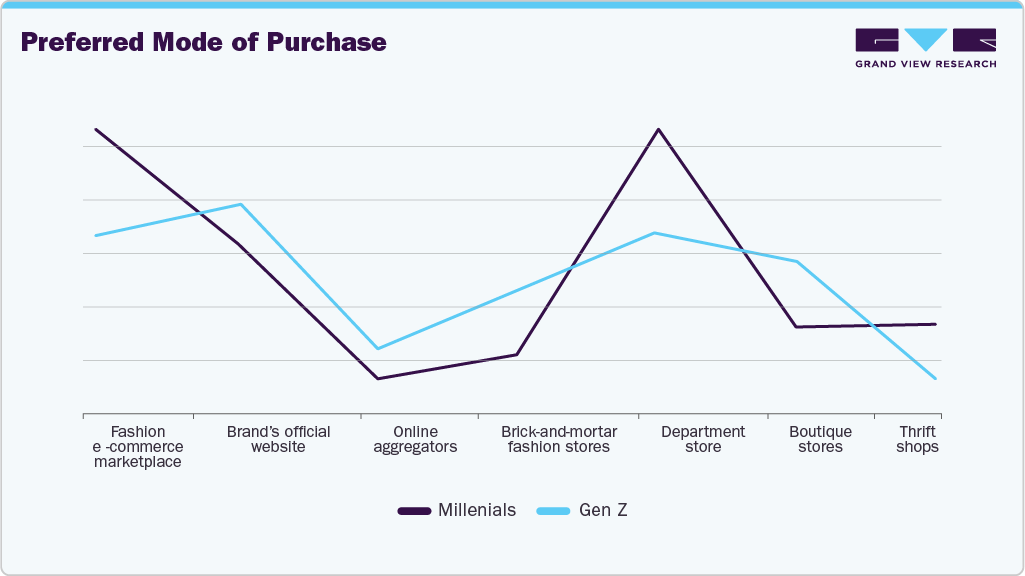
Consumers typically purchase jewelry once every two years due to its cultural significance, investment potential, and personal preferences. Now talking about preferred mode of purchases, when it comes to the younger generations, Gen Z prefers to purchase jewelry via a brand’s official website, followed by assigning equal importance to fashion e-commerce platforms, and department stores, while Millennials like to purchase jewelry primarily from either department stores or e-commerce websites.
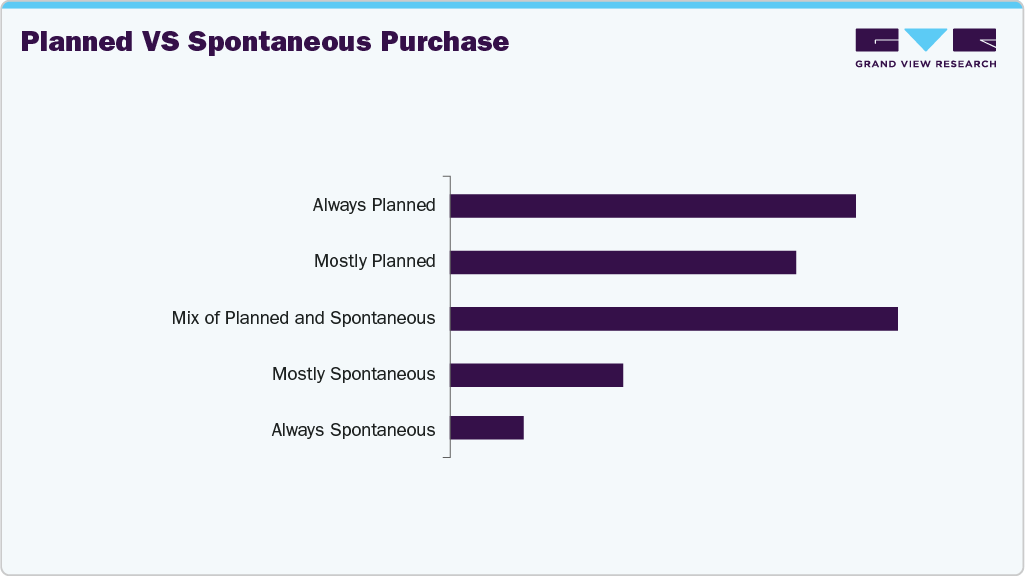
Jewelry is largely considered a planned purchase, with 5 out of 10 consumers saying they plan their purchase, and 28% stating their purchases are always planned. Another 31% say their buying decisions can be either planned or spontaneous, depending on the situation or available offers. Only 17% of consumers show truly spontaneous buying behavior. Even among them, impulse purchases are often driven by seasonal sales or special discounts offered by affordable luxury brands or even smaller ones, especially during special occasions or events.
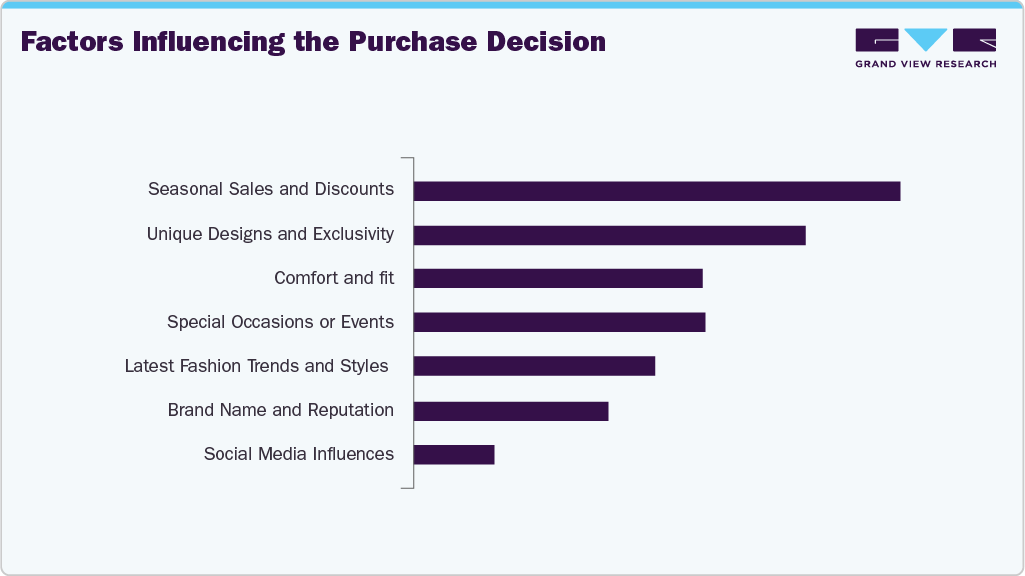
Almost eight out of ten respondents stated that the most influential factors that serve as a significant trigger for jewelry purchases are seasonal sales and discounts, as well as distinctive designs and exclusivity. Social media also aids brand recognition, but because it is more competitive, it has less of an effect in comparison to influencing the decisions. The high cost of premium goods and a dearth of inclusive or diverse designs continue to be barriers to purchasing a product despite the growing demand.
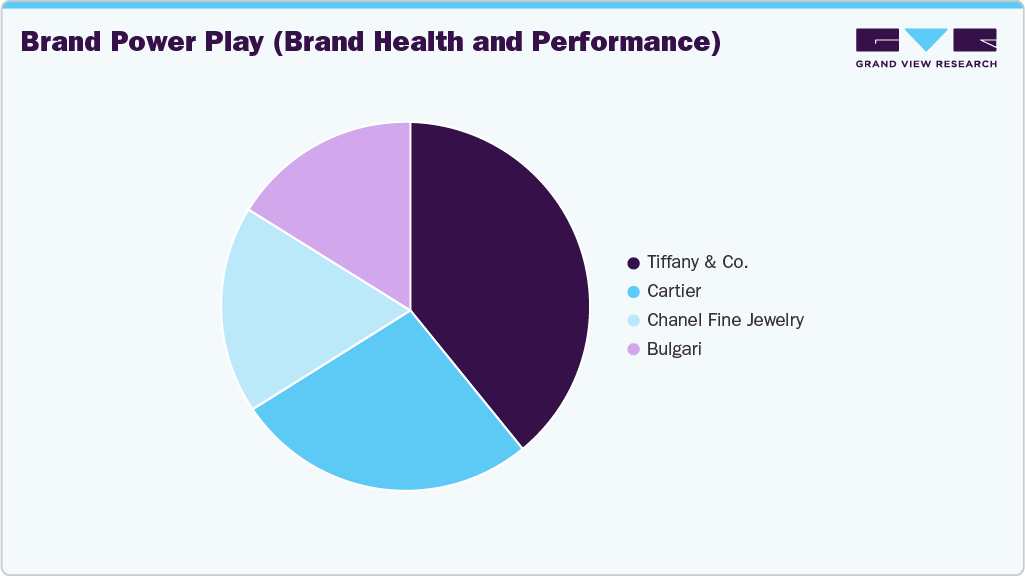
Brand Power Play (Brand Health and Performance)
Though the US jewelry market is very competitive, Tiffany & Co., Cartier, Chanel Fine Jewelry, and Bulgari have a strong presence and high brand awareness, with Tiffany & Co. leading in aided brand awareness with 74% share.
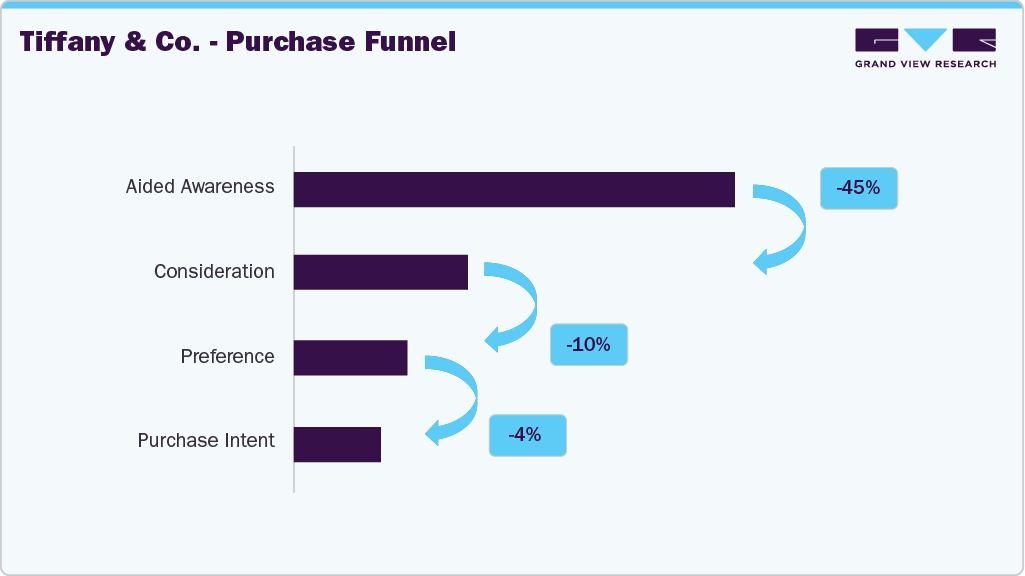
Purchase Funnel
While there are numerous well-known jewelry brands in the U.S., very few reach the level of consideration and preference. Despite a notable drop from awareness to the consideration stage of the funnel, market leader Tiffany & Co. has an impressive purchasing funnel. Tiffany & Co. has the largest market share at every step of the buying and use process because of its upscale jewelry, especially its engagement rings and sterling silver, as well as its recognizable "Tiffany Blue" box and reputation for fine craftsmanship and design. At certain stages of the purchasing process, Cartier is comparable to Tiffany & Co., with the exception that Chanel and Cartier compete very closely in the purchase intent stage. In addition to being worn by customers, Tiffany & Co. enjoys a higher rate of returning consumers, which implies higher customer satisfaction levels after using, and increases brand loyalty. However, Chanel, due to its long-standing reputation as a brand, regardless of the product, poses as a tough competitor and also displays high repeat purchase levels and brand loyalty among consumers, making it one of the biggest competitors.
The overall NPS score of the leading brands varies from -28 to 50, with Chanel Fine Jewelry having the highest NPS score (50) compared to other jewelry brands in the U.S. market.

Talk to an analyst
Tell us what you need. We reply within one working day.
Service Guarantee
-
Insured Buying
This report has a service guarantee. We stand by our report quality.
-
Confidentiality
Your transaction & personal information is safe and secure.
-
Custom research service
Design an exclusive study to serve your research needs.
-
24/5 Research support
Get your queries resolved from an industry expert.