U.S. Occasions Wear Consumer Insights - Usage, Attitudes, And Brand Performance Report
Introduction:
As lifestyles change, consumers blend festive attire with everyday trendy fashion, also leading to smaller home celebrations. This shift highlights the demand for clothing that offers both style and comfort, allowing easy transitions between comfortable fashion and festive occasions. Additionally, shoppers focus more on sustainability and diversity, choosing brands that prioritize responsible production and gender-neutral designs. The rise of online shopping and social media has further fueled the growth of the festive clothing market, making it simpler for people to discover and purchase new styles. Here are some of the market trends dominating the U.S. festive wear market:
-
Comfort and Versatility: The festive wear industry is evolving to embrace versatility, cultural heritage, and digital innovation. Consumers prefer designs that can be worn for various occasions, leading to the popularity of versatile pieces and festive wardrobes that can be mixed and matched to create a unique outfit for multiple seasons. There is also a renewed interest in traditional craftsmanship, facilitated by collaborations between heritage artisans and modern designers. Moreover, digital influence is evident in clothing tailored for virtual events, focusing on visual appeal and comfort.
-
Design Innovations: The festive wear industry is experiencing innovative design trends that combine luxury, comfort, and sensory experiences. New performance fabrics offer style and functional comfort, catering to various celebration environments. Features like temperature regulation, stain resistance, and machine-wash ability make special occasion attire easy to maintain. Additionally, sensory elements such as unique textures, acoustic fabrics, and light-responsive materials enhance the overall experience, making festive wear more dynamic and engaging.
-
Shift in Consumer Behavior: Consumer behavior in festive wear has been shifting toward sustainability, personalization, and emotional significance. Shoppers now prefer sustainable materials and ethical practices, often looking into brands' values and transparency. The festive wear market is evolving from traditional occasions to unique experiences, supported by technology like NFC tags for sharing stories. Additionally, post-pandemic consumers are investing in high-quality, bespoke attire that fosters personal traditions, moving away from fast fashion's disposability. This trend highlights a more conscious approach to celebration and individual style.
Methodology:
The insights covered in this report are drawn from GVR’s ‘Voice of Consumer Survey’ and its periodic updates. The latest survey represents 75,000+ consumer interviews conducted across 20 countries for 100+ product categories. These insights are specifically catered to brands operating in the Festive Wear industry to guide them in their strategic decision-making process. This report provides insights covering category usage & attitude, buying behavior, brand performance metrics, and brand health indicators of leading players in the U.S. festive wear market.
Chapter 1: Usage and Attitude
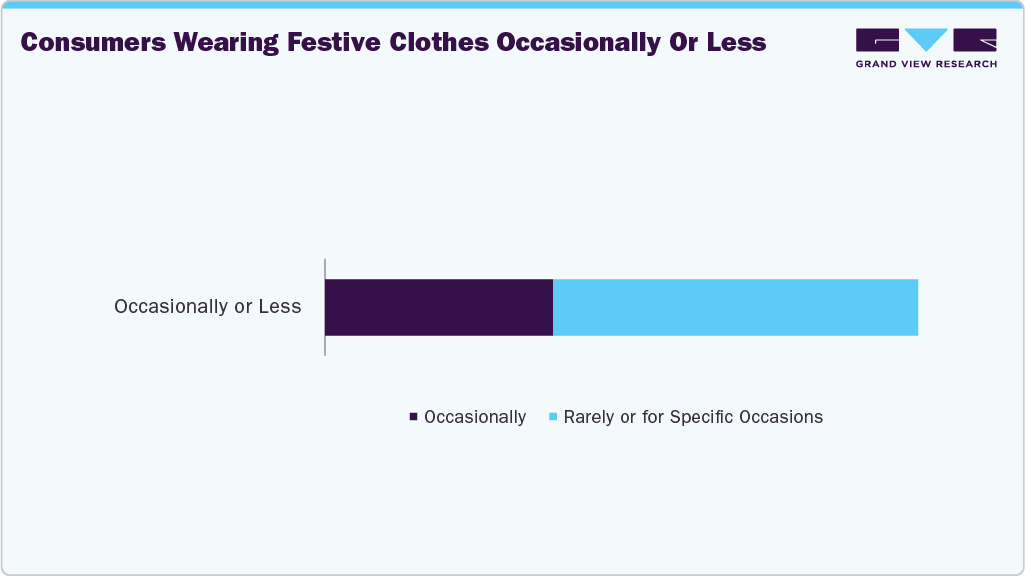
The usage frequency of occasion wear is limited as expected. Consumers largely prefer festive items for specific occasions, as quoted by more than 4 out of 10 of them.
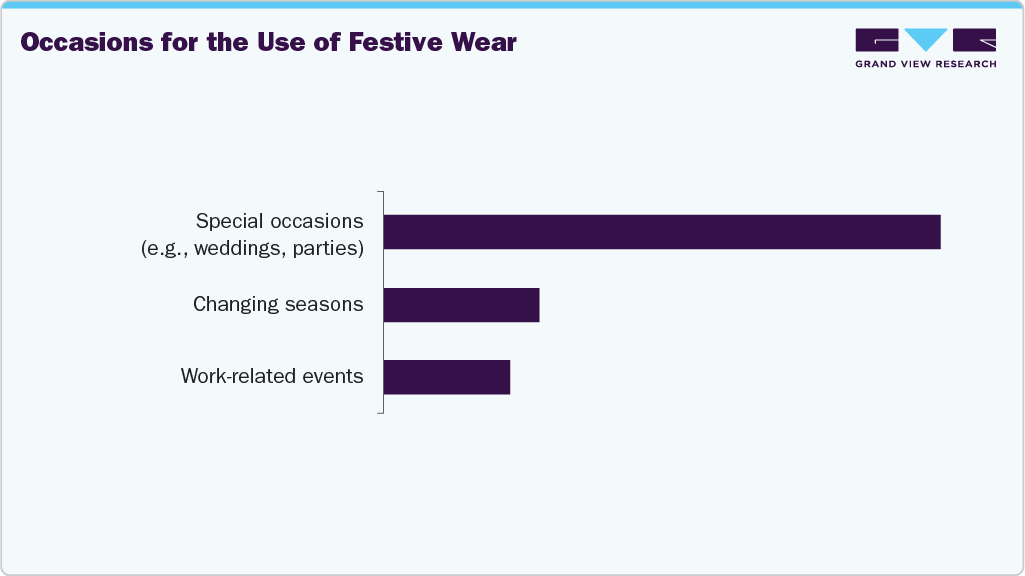
Festive wear is mostly used at the time of special occasions, as mentioned by about 6 out of 10 consumers. Having said that, consumers associate using these clothes with having some comfort and confidence after wearing them. They also visualize these clothes for special events due to the eye-catching nature and design of the clothes. Lastly, consumers associate festive wear with being able to express their personal style and fashion preferences. However, some aspects, such as high costs for quality clothing or designer brands, the uncomfortable and ill-fitting clothing, and emerging trends that may not suit personal style or especially body type, might drive consumers to view festive clothing in a not-so-positive light. Thus, addressing some of these gaps, especially providing good-quality material without breaking the bank, is likely to encourage consumers to shop for these more often.
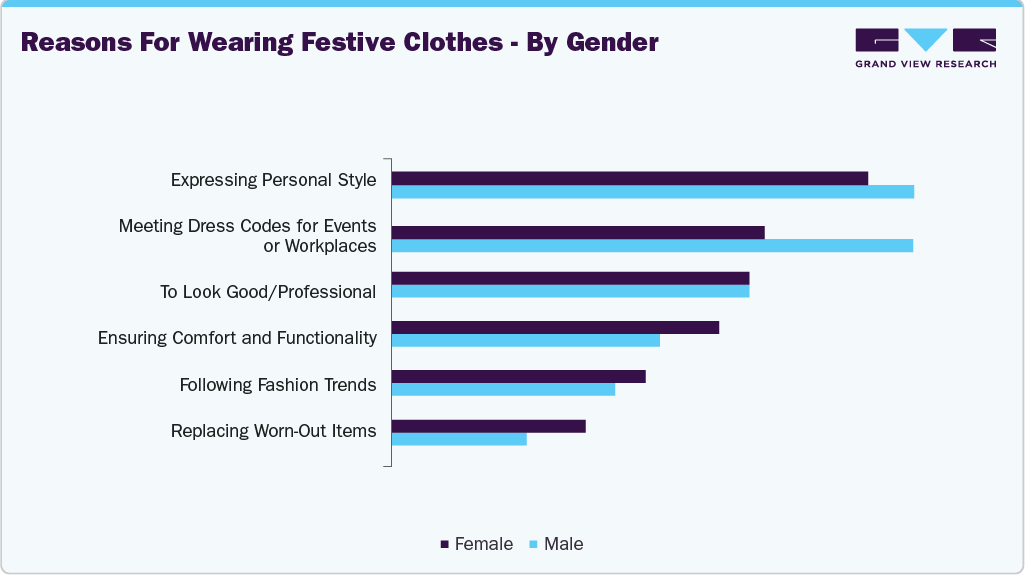
When it comes to reasons for wearing festive clothes, expressing personal style is the most important reason for both females and males. Meeting dress codes for events is the 2nd most important reason for wearing festive clothes again for both females and males. They also assign similar importance to looking good, suggesting that festive wear draws similar usage or attitude patterns among genders. And what makes an occasion wear purchase a delight is the good value for money, comfortable fit, and material of the product, as well as the versatility for different occasions, i.e., being able to repurpose a clothing piece for one function and use it on different occasions. Brands have a gap to fill when it comes to the high price for a good quality product, as festive wear usually sells on the higher end, making it a hurdle for price-conscious consumers, and the poor quality or workmanship, which leads to dissatisfaction among them.
Buying Behavior
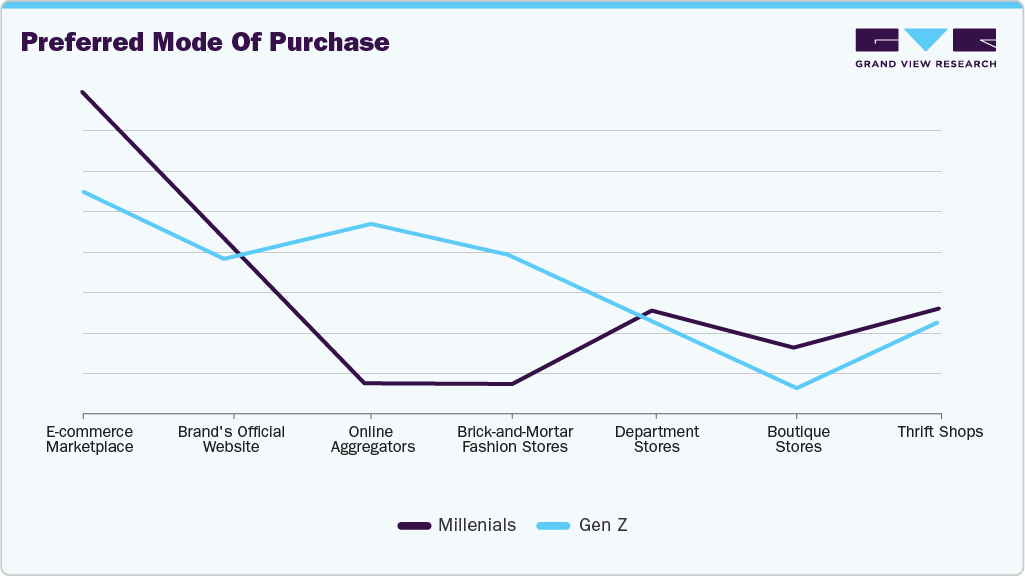
Consumers must have some information about the product before making a purchase. The most sought-after points are comfort or fit, given that consumers are increasingly demanding comfortable clothes in light of post-pandemic effects. Next, price and value for money, given the rise in price-conscious consumers. Since festive clothes are worn only during special occasions, consumers prefer to buy them once every two years or once a year, mostly during holiday discounts or offers. With that in mind, online e-commerce marketplaces are a highly preferred mode to purchase occasion or festive wear for both Millennials and Gen Z. Online aggregators are the second most preferred mode of purchase for Gen Z, and a brand’s official website is the second most preferred mode of purchase for Millennials.
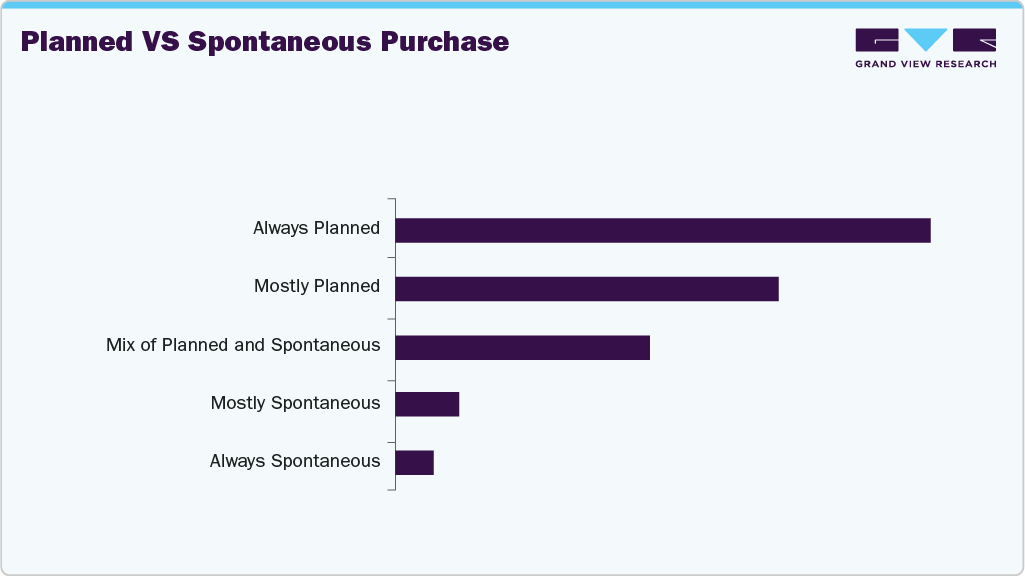
Since festive or occasion wear is for planned events, the purchase of the same also falls into a planned purchase category. Similarly, more than 7 out of 10 people say their purchase is planned, out of which 42% of consumers say it is always planned, and 20% of consumers purchase either planned or spontaneous, depending on the situation. Only about 8% of the population has shown spontaneity in their purchasing behavior.
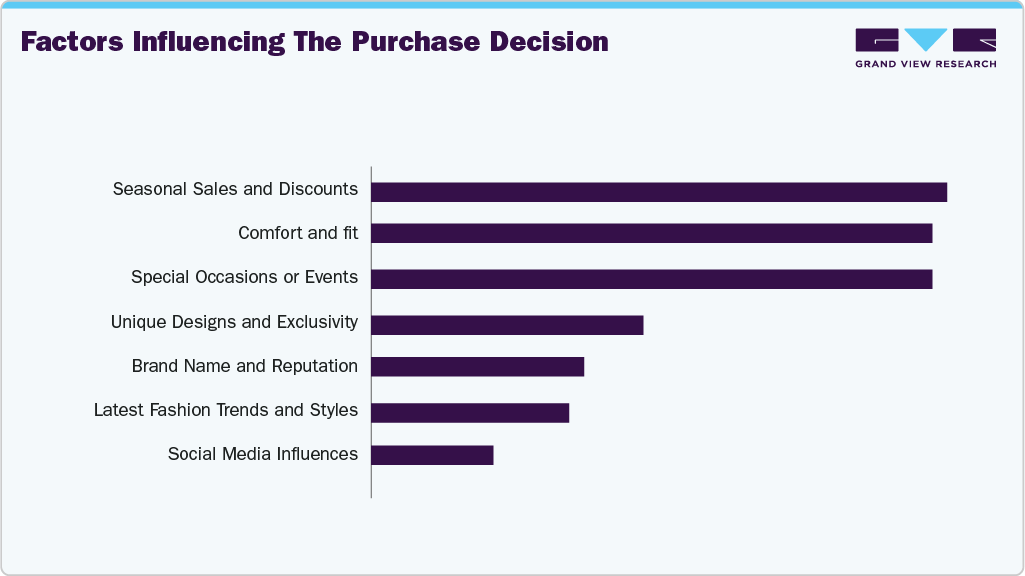
The key influencing factors acting as triggers for purchasing festive wear are seasonal sales and discounts, followed by comfort and fit, and upcoming special occasions, as expected, with more than 7 out of 10 people selecting these as the main drivers. Also, the latest fashion trends or styles and social media influencers do help to increase the awareness around festive wear, but they play a lesser role in significantly driving purchase decisions. Having said that, with the growing demand, some barriers exist in purchasing a product, such as high prices for quality items and difficulty in finding the right size and fit. Also, almost 8 in 10 consumers are moderate to highly conscious about the brand of festive wear they use, as the awareness levels around sustainability increase, which can hinder consumers from choosing a product of fast fashion that contributes to more waste.
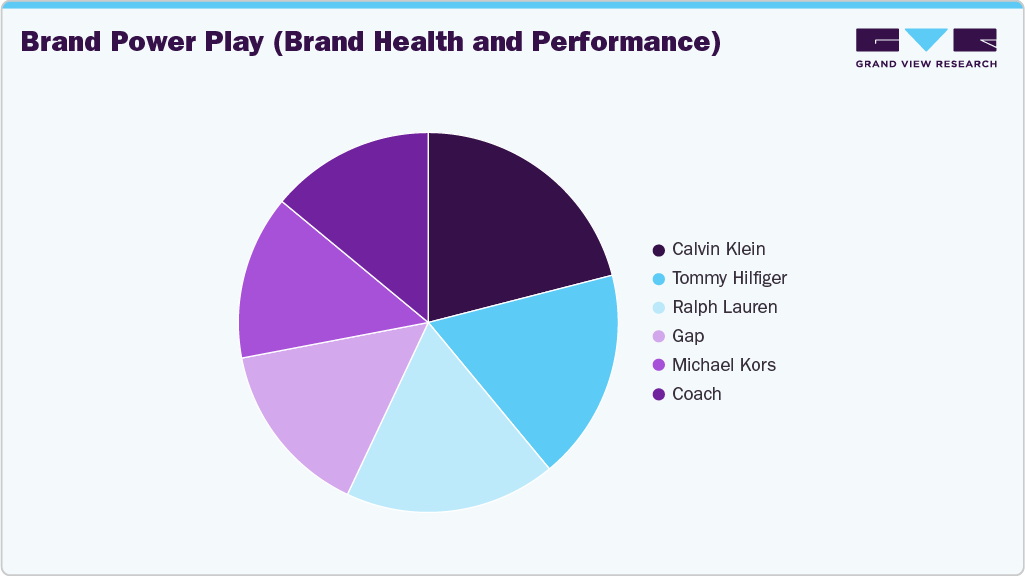
Brand Power Play (Brand Health and Performance)
Some of the popular brands of festive wear in the U.S. include Tommy Hilfiger, Calvin Klein, Ralph Lauren, Gap, and Coach. Although the festive wear market is undeniably competitive and large, Calvin Klein dominates the market with a 65% market share (by awareness). One of the other emerging brands is Michael Kors, which is slowly making its way into the occasion/festive wear market.
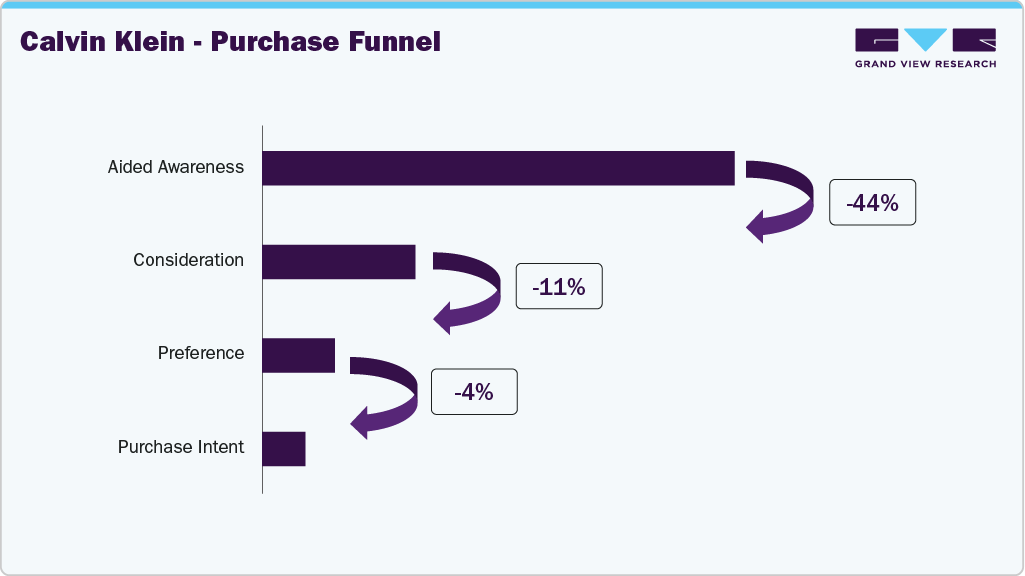
Purchase Funnel
While many brands manufacturing occasion wear enjoy high awareness in the U.S., very few emerge as winners when we move towards the consideration and preference stage. Calvin Klein is one of the prominent brands that exhibits a strong purchase funnel despite having significant drops at each step of the funnel. Michael Kors has the second-highest level of consideration after Calvin Klein and a similar level of preference, giving tough competition to the prominent brands despite lower awareness. However, it falls in terms of usage, where Calvin Klein stands strong, making it one of the dominant players. It is worth noting that Tommy Hilfiger has a high repeat purchase trend vs any other top brands, depicting brand loyalty. Interestingly, although Ralph Lauren enjoys high awareness, in overall performance, it isn’t able to stand strong due to lower NPS, suggesting a lack of brand loyalty or dissatisfaction among consumers.
The overall NPS score of the leading brands varies from -10 to 71, where brands like Michael Kors have the highest NPS score (71) compared to other festive wear brands in the market.
