U.S. Party Wear Consumer Insights - Usage, Attitudes, And Brand Performance Report
Introduction:
The U.S. party wear market has shifted towards more functional, comfortable, and versatile styles as smaller gatherings and hybrid events become common. Consumers now want outfits that conform to societal norms, are acceptable across all generations, work environments, and body types. The rise of e-commerce and social media has made it easier to discover and purchase the latest party-wear trends.
Here are some of the market trends dominating the U.S. party wear market:
-
Evolution of Size Inclusivity: The party wear industry is shifting from traditional sizing models to a more holistic, body-positive approach. Brands are now selling sizes ranging from XXS to 6XL, surpassing the previous restrictive standards thanks to technology, such as 3D body scanning and AI-driven patternmaking. Long-standing beauty standards are being challenged by marketing initiatives that showcase a variety of body shapes, ages, and skills. This change represents a fundamental rethinking of fashion as a means of self-expression that upholds one's dignity and self-worth, not merely a passing trend.
-
AR and VR Shopping Technologies: Party wear is being transformed by advanced AR and VR shopping technologies, allowing consumers to virtually try on garments using advanced body mapping and 3D rendering techniques. Virtual fitting rooms, which enable consumers to enter body measurements or use live camera technology to view several outfits based on their body type, were pioneered by websites like Zara, ASOS, and Warby Parker. AR capabilities have been incorporated into social networking sites like Instagram and Pinterest, allowing users to see dresses, suits, and accessories in real time, turning passive browsing into engaging shopping experiences.
-
Bold Design Trends: Party wear is transforming as designers introduce new styles. Cocktail dresses and evening gowns are combining unexpected colors to create show-stopping looks. Sequin patterns and delicate beadwork are an added touch that transform party wear into wearable art. Nowadays, people view social gatherings and celebrations as chances for self-expression, using their wardrobe choices to convey confidence and originality.
-
Blend of Nostalgia and Style: Nostalgic party wear is a trend that combines vintage inspirations with modern design, creating cocktail dresses and evening outfits that pay respect to iconic decades. Designers are triggering nostalgia in both younger and older generations by fusing 70s elegance with minimalist 90s style. To make vintage clothes feel new, wearable, and Instagram-worthy for social gatherings, this style blends period-specific elements with modern tailoring and styling. This trend turns party wear into a storytelling medium that connects generations of fashion enthusiasts, reflecting a larger cultural desire for comfort, familiarity, and emotional connection through the design.
Methodology:
The insights covered in this report are drawn from GVR’s ‘Voice of Consumer Survey’ and its periodic updates. The latest survey represents 75,000+ consumer interviews conducted across 20 countries for 100+ product categories. These insights are specifically catered to the brands operating in the party wear industry to guide them in their strategic decision-making process. This report provides insights covering category usage & attitude, buying behavior, brand performance metrics, and brand health indicators of leading players in the U.S. party wear market.
Chapter 1: Usage and Attitude
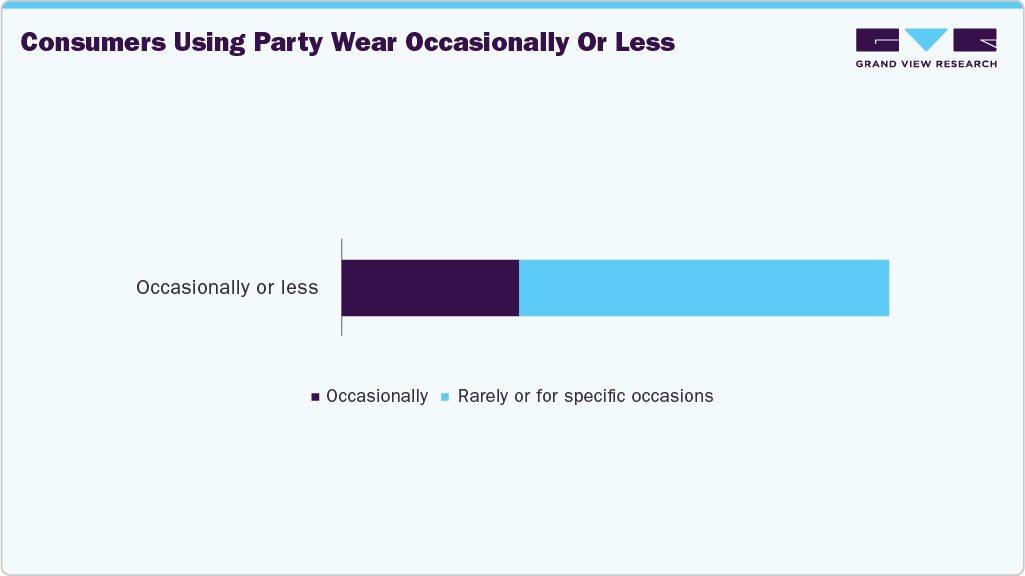
Since party wear is fancier than casual wear or other clothing, its use is limited to certain occasions, and 51% of consumers say they wear it only for specific occasions.
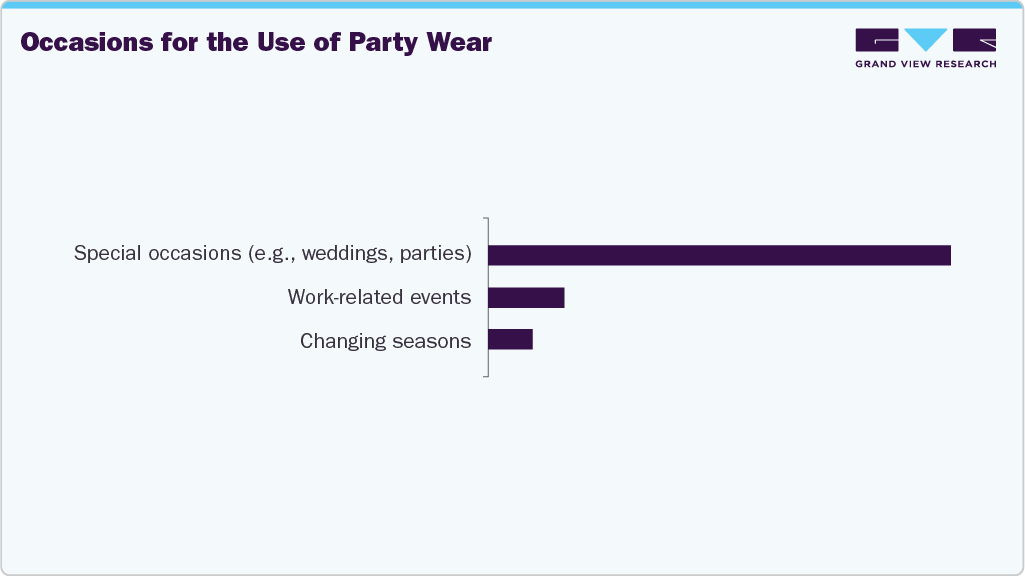
Party wear is mostly used at the time of special occasions, as mentioned by about 7 out of 10 consumers, as expected. Having said that, consumers associate using these clothes with expressing personal style and fashion preferences. They also visualize these clothes for special events due to the eye-catching nature and design of the fabric. However, what might hold them back is the high cost of quality clothing and designer brands, followed by limited style options, especially from fast-fashion brands.
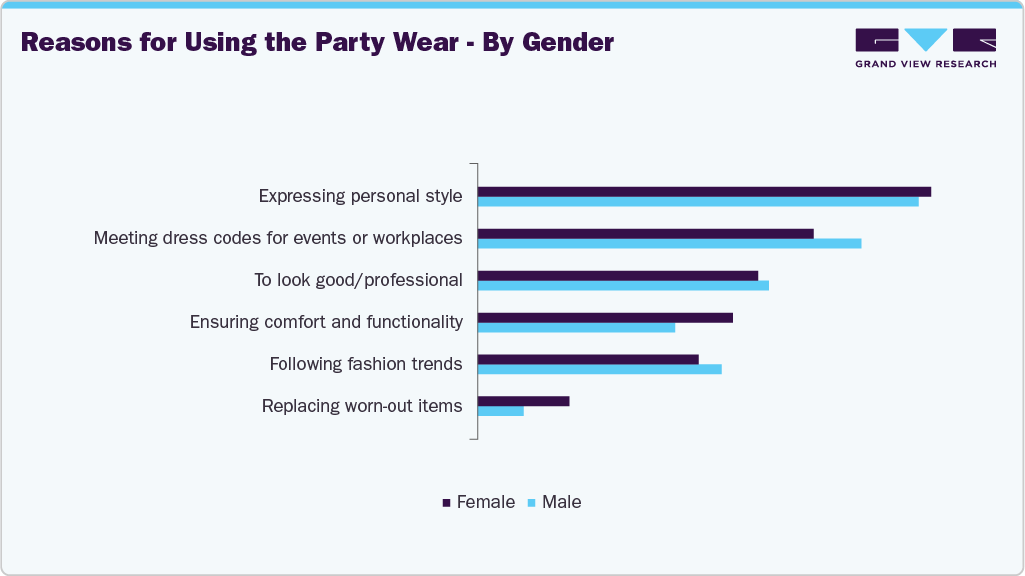
Self-expression is the top reason for wearing party clothes, followed by dress code requirements and the desire to look good. What makes this purchase satisfying for consumers is the product’s value for money, comfort, and material quality, if acquired, as well as its versatility for different occasions. Brands have a gap to fill when it comes to the high price for the product’s quality, which makes it hard for consumers to check the box for good value for money, thus being the main driver for price-conscious consumers, and the limited size or style options, which lead to dissatisfaction among consumers as they seek inclusivity.
Buying Behavior
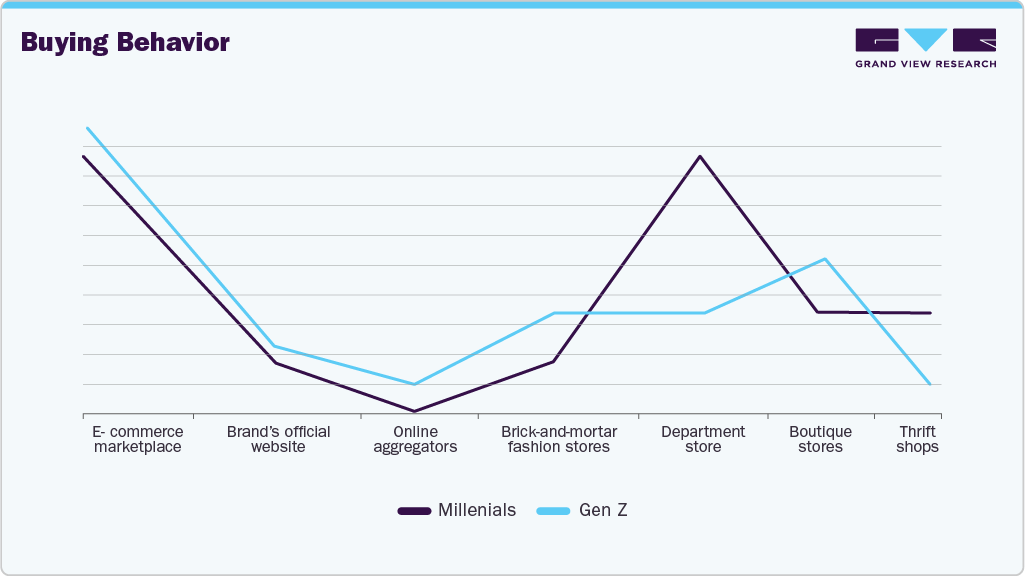
Consumers must have some information about the product and its features before making a purchase. The most important information is about the comfort offered. Next would be price and value for money, given the rise in price-conscious consumers. Since party clothes are worn only during special occasions, consumers prefer to buy them once every two years during discounts or offers. Online e-commerce marketplaces like Amazon and Shein are the preferred mode of purchase for party wear clothes for both Millennials and Gen Z. Boutique stores are the second-most preferred mode of purchase for Gen Z, and department stores are an equally preferred mode of purchase for Millennials.
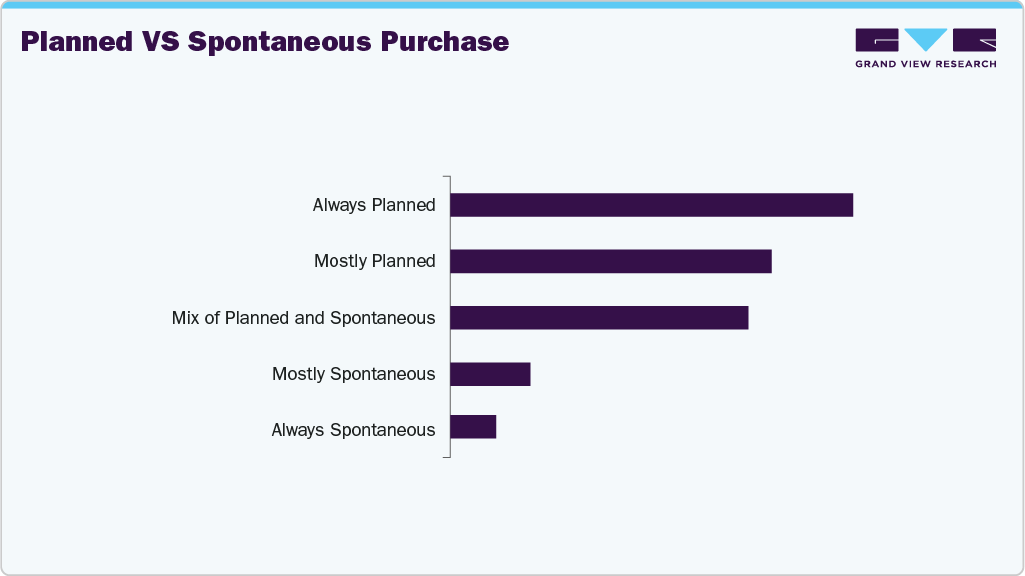
We can confidently state that party wear falls into a more planned purchase category, as 7 out of 10 people say their purchase is planned, with 35% saying it is always planned and 26% purchasing either planned or spontaneous, depending on the situation and offers. Only about 11% of the population has displayed spontaneity in their purchase behavior. Very few people make spontaneous purchases because of ever-changing dress codes for different events.
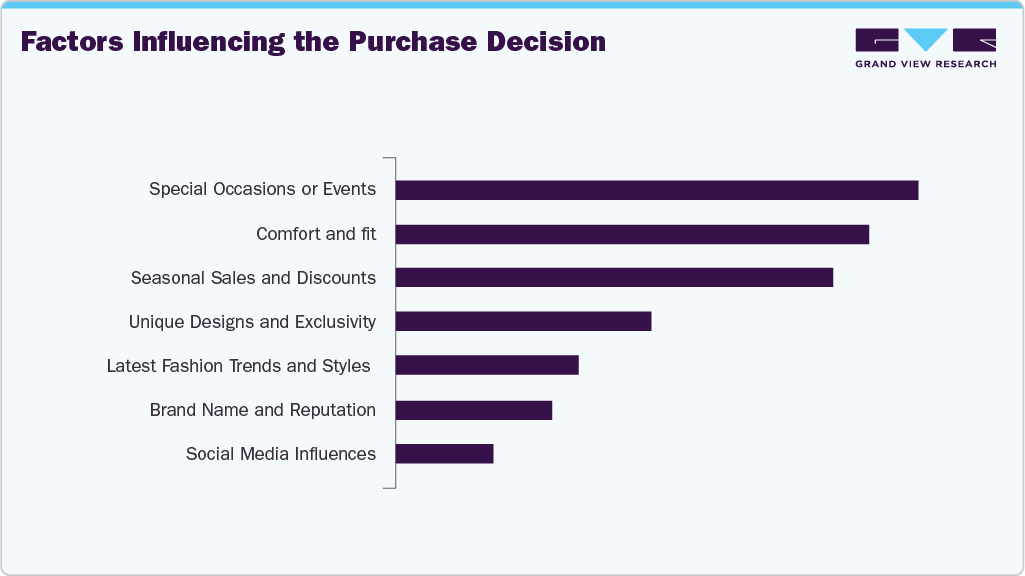
The key influencing factors triggering the purchase of party wear are comfort and fit, and seasonal sales and discounts, as more than 7 out of 10 people selected these as the main drivers. Also, social media does help increase awareness, but it plays a lesser role in driving purchases. Having said that, with the growing demand, some barriers to purchasing a product include high prices for quality items and difficulty finding the right size and fit. Also, 8 in 10 consumers are moderately to highly conscious about the brand of party wear they use, as the awareness levels around comfort and inclusivity increase, which can hinder consumers from choosing a product brand that lacks either of these.
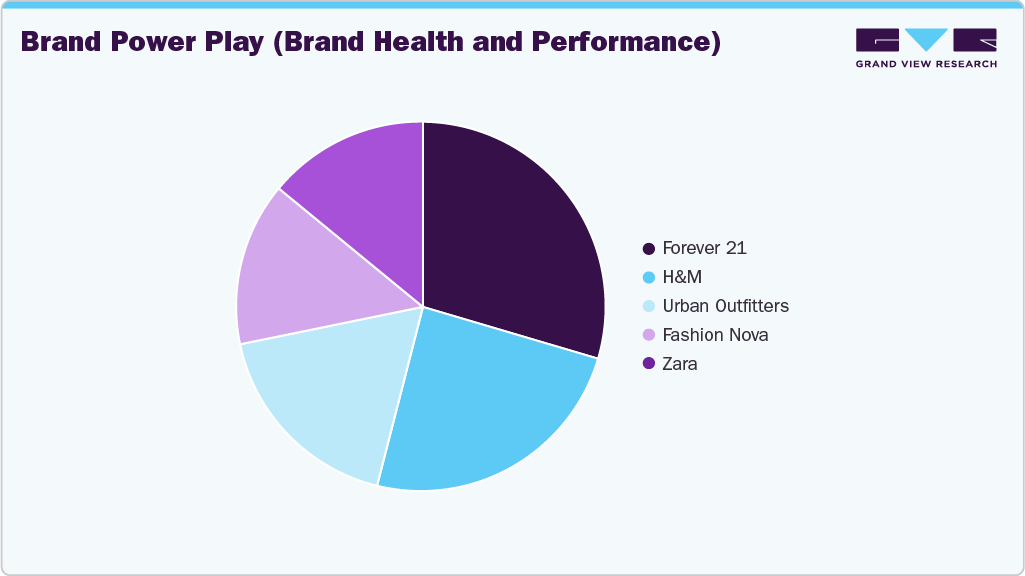
Brand Power Play (Brand Health and Performance)
Some of the popular brands with party wear in the U.S. include Forever 21, H&M, Urban Outfitters, Fashion Nova, and Zara. Although the party wear market is undeniably competitive and large, Forever 21 dominates the market with a 43% share (by awareness). One of the other emerging brands is Fashion Nova, which is slowly making its way into the U.S. party wear market due to its carefully crafted social media presence.
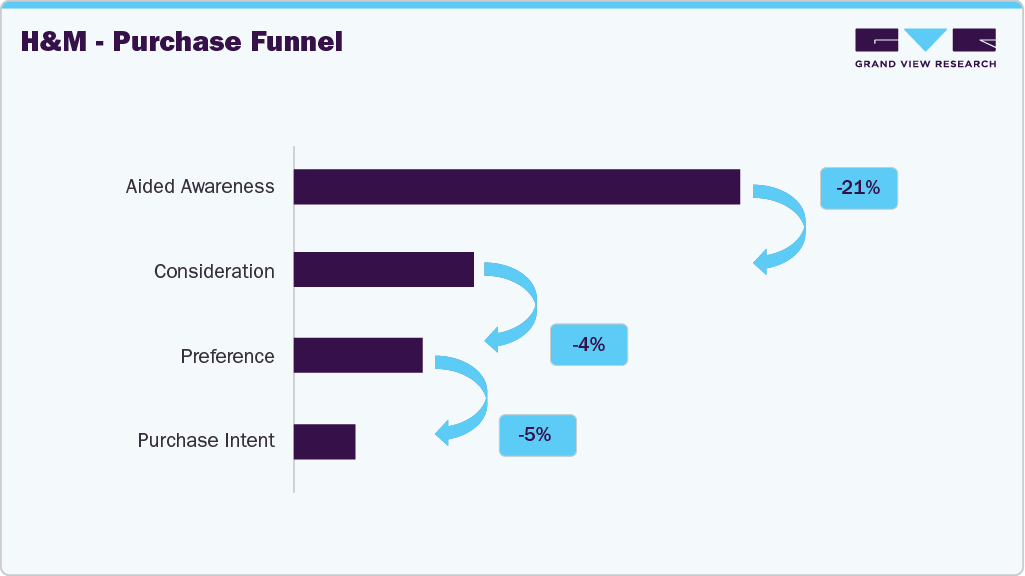
Purchase Funnel
While many brands manufacturing party wear enjoy high awareness in the U.S., very few reach the consideration and preference stage. Even though Forever 21 enjoys a higher level of awareness, it is not as much considered by consumers. This is because Forever 21 is perceived as a brand for Gen Z and younger consumers, which has led to major traffic from teenagers and young adults. On the other hand, it faces fierce competition from H&M, as it is one of the prominent brands that exhibit a strong purchase funnel despite having significant drops at each step of the funnel, thanks to the availability of men's, women 's, and kids' sections targeting multiple age groups. Even with slightly lower consideration, consumers intend to purchase from brands like Forever 21 and H&M. They are currently using Forever 21, given that it caters to the younger generation and is preferred for its affordability, trendy designs, and ability to quickly adapt to fast-fashion trends. It is worth noting that, despite lower awareness, the emerging brand named Fashion Nova garners commendable brand loyalty, indicating that current users are satisfied and prefer to make repeat purchases.
The overall NPS score of the leading brands varies from 10 to 66. Fashion Nova leads with the highest NPS score (66) compared to other brands.
