U.S. Perfumes, Fragrances & Deodorants Products Consumer Insights - Usage, Attitudes And Brand Performance Report
Introduction:
The fragrance (perfumes, fragrances, and deodorants) market is a growing industry that spans both luxury and affordable segments, where perfumes are mainly marketed as luxury products and have seen increased usage among younger consumers, particularly Gen Z, making them a significant audience. With the rise in inflation and prices for basic living, consumers are divided into those who either prefer a luxury brand to make a statement, or consumers who prefer affordable products with longevity and pleasant fragrance. Thus, there is a demand for both luxury and affordable fragrance options, influenced somewhat by social media and fragrance influencers who decode and rate each fragrance. This poses an opportunity for brands to bridge the gap by offering products that cater to a range of preferences and various price points. The future of the fragrance industry reflects growth and innovation, catering to clean, sustainable beauty and ever-changing consumer perceptions.
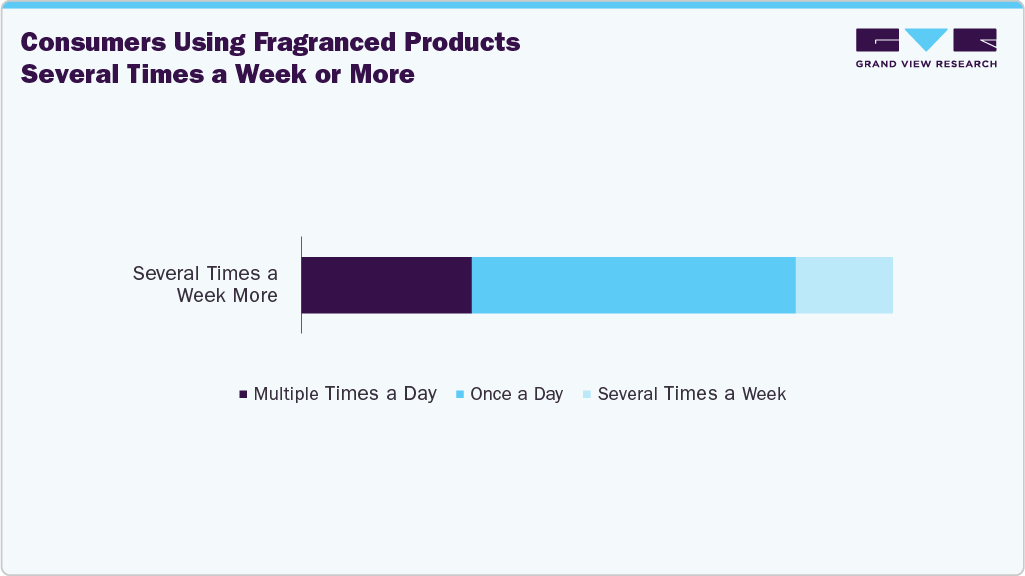
With this in mind, we examine consumers’ usage behavior, purchase patterns, and attitudes towards fragrances. It is one of the most frequently used products in the U.S. market, with almost 5 out of 10 consumers using fragrance- or scent-scented products at least once a day. Further, here are some trends that took place in the fragrance industry in 2025:
-
Personalization and Customization: With the rise in individuality and inclusivity, consumers’ preference towards products that cater to their style and uniqueness has increased, and this applies to the fragrance industry as well. With the increased use of social media and ease of access to content worldwide, brands have leveraged these platforms and technologies, such as interactive tools and visual consultations, making it easier for consumers to have a unique scent of their own.
-
Sustainability: As consumers become more and more aware as well as concerned about the environment, the demand for natural, clean, and sustainable ingredients is on the rise, aligning with the clean beauty movement. Thus, scents sourced from essential oils, flowers, botanicals, etc., are trendy and have shown greater preference due to their environmental friendliness and cleanliness.
-
Functional Fragrances: Consumers are also seeking multiple benefits from fragranced products, such as relaxation and soothing effects, as aromatherapy is on the rise.
Methodology:
The insights covered in this report are drawn from GVR’s ‘Voice of Consumer Survey’ and its periodic updates. The latest survey represents 75,000+ consumer interviews conducted across 20 countries for 100+ product categories. These insights are specifically catered to the brands operating in the perfumes, fragrances & deodorants industry to guide them in their strategic decision-making process. This report provides insights covering category usage & attitude, buying behavior, brand performance metrics, and brand health indicators of leading players in the U.S. perfumes, fragrances & deodorants market.
Chapter 1: Usage and attitude
U.S. consumers display a growing demand for fragranced products due to the growing trend of prioritizing self-care routines that include taking care of your body while smelling good, as 24% of consumers say they use some type of scented products, such as perfumes and deodorants, multiple times a day. Additionally, 7 out of 10 consumers prefer to use their perfumes, deodorants, and other scented products exclusively for themselves.
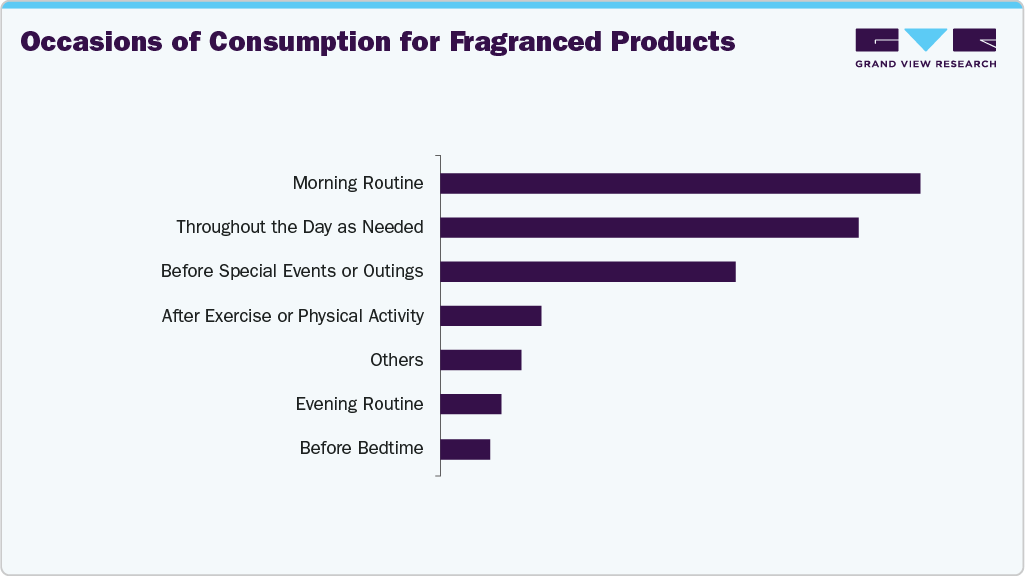
Fragranced products are mostly used as a part of morning routine, as mentioned by about 5 out of 10 consumers and throughout the day as needed quoted by 4 out of 10 consumers; there is an opportunity to increase usage of scented products by encouraging product usage on other occasions like post physical activity (current usage 10%) and before special events or outings (current usage 29%). This can be done by leveraging the positive associations consumers associate with these products, such as pleasant fragrances and sensory experiences, feeling refreshed and rejuvenated, developing self-confidence, and finally, self-care or relaxation via activities such as aroma therapy, which has been gaining traction lately for its calming benefits. Having said that, since perfumes are mostly marketed in the luxury segment, higher prices and affordability raise concerns among consumers, and the inclusion of harmful chemicals that could lead to allergies also raises concerns about their products. As more consumers opt for clean and sustainable products, companies must address these gaps.
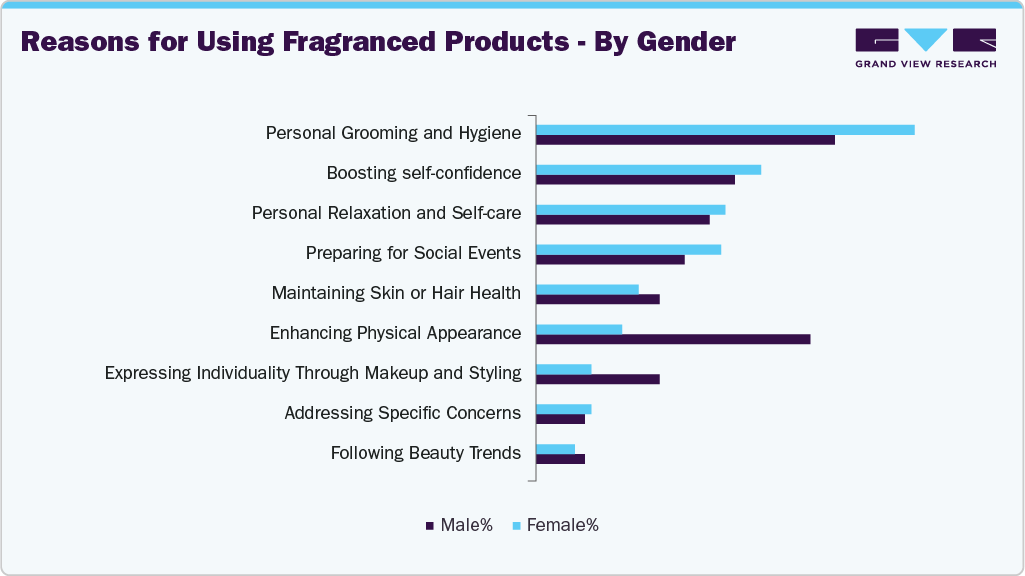
When it comes to reasons for using perfumes or other scented products, personal grooming and hygiene are the most important for both males and females. However, it is interesting to note that among males, enhancing physical appearance is the 2nd most important aspect, whilst among female consumers, boosting self-confidence holds the second position among reasons for using fragrances.
The reason consumers continue using or even consider repurchasing products in this category is largely a pleasant fragrance or scent, paired with long-lasting effectiveness, which makes the product compelling and encourages brand loyalty. Additionally, it is worth noting that many brands are experimenting with creative and nuanced packaging to attract consumers for a trial, which can be leveraged to attract consumers. It is also important to keep the product simple and easy to use. There is a significant opportunity for brands to offer products marketed as both budget-friendly and luxury, separately, to cater to both price-sensitive and brand-loyal audiences.
REASONS FOR USING FRAGRANCED PRODUCTS- By Gender
Buying Behavior
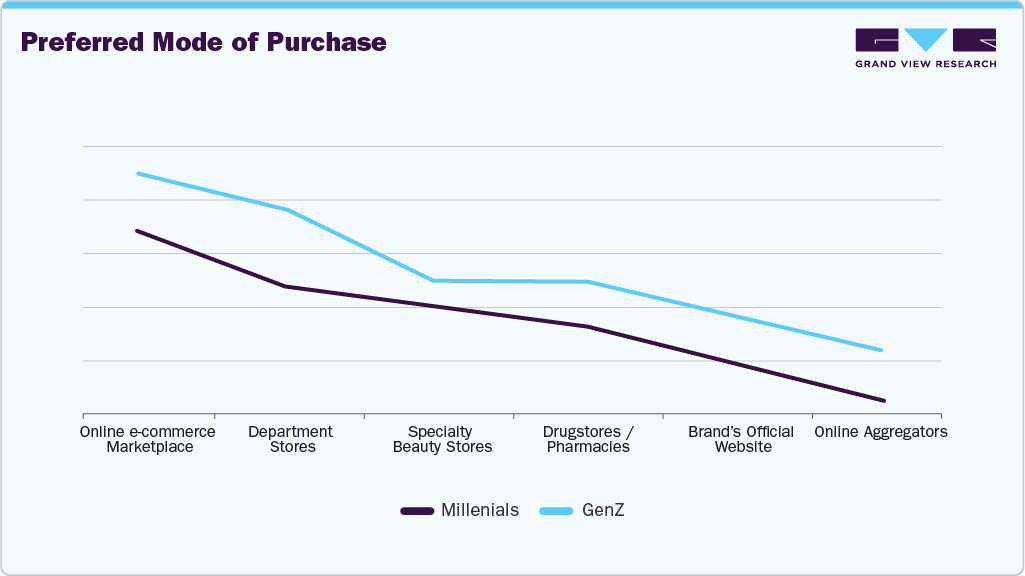
Consumers usually seek information on certain aspects before going to purchase, such as the pricing details, quality of the product, and its effectiveness, followed by the brand’s reputation. And they restock these products once a month or even less, i.e., once in 1-3 months, depending on the size of the SKU purchased last as well as the degree of usage. Having said that, online retailers are the most common way to purchase perfumes, deodorants, and other scented products among Millennials and Gen Z. Also, Millennials and Gen Z exhibit similar trends in their preferences for the mode of purchase for fragranced products.
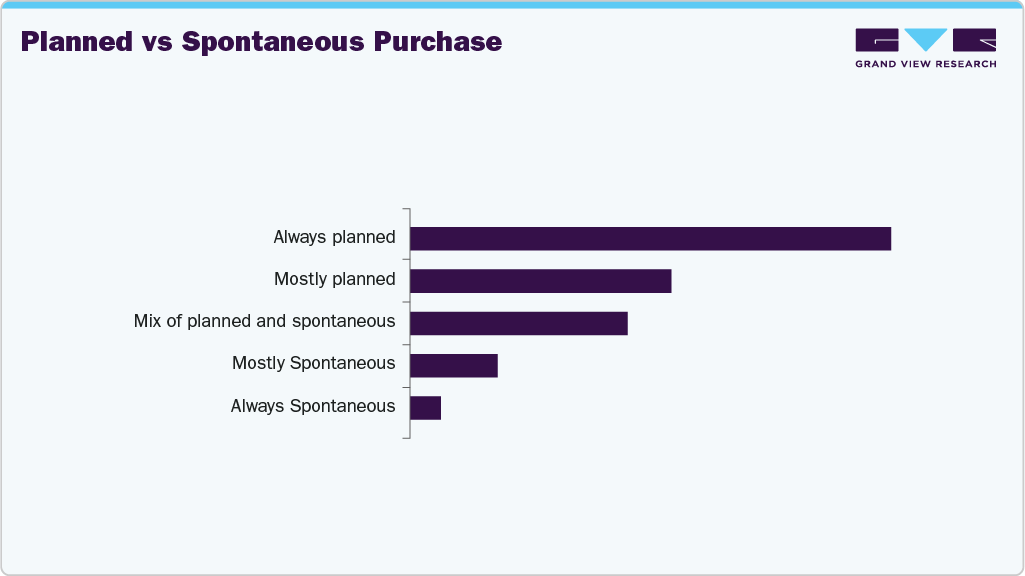
Almost half of the U.S. consumers, i.e., 5 out of 10 people, say their purchase is always planned, whereas close to 25% of consumers quote it is mostly planned. Only about 11% of the population has displayed spontaneity in their purchase behavior. What drives this small section of people to make an unplanned purchase is the availability of discounts, given that price is one of the key factors in the purchase of a product. Since various e-commerce platforms offer huge discounts via seasonal sales such as Black Friday sales, Labor Day sales, and holiday sales, where products are offered at very low prices, it encourages consumers to make a purchase regardless of their needs at that time, which brands can leverage to drive more spontaneous purchases for fragranced products.
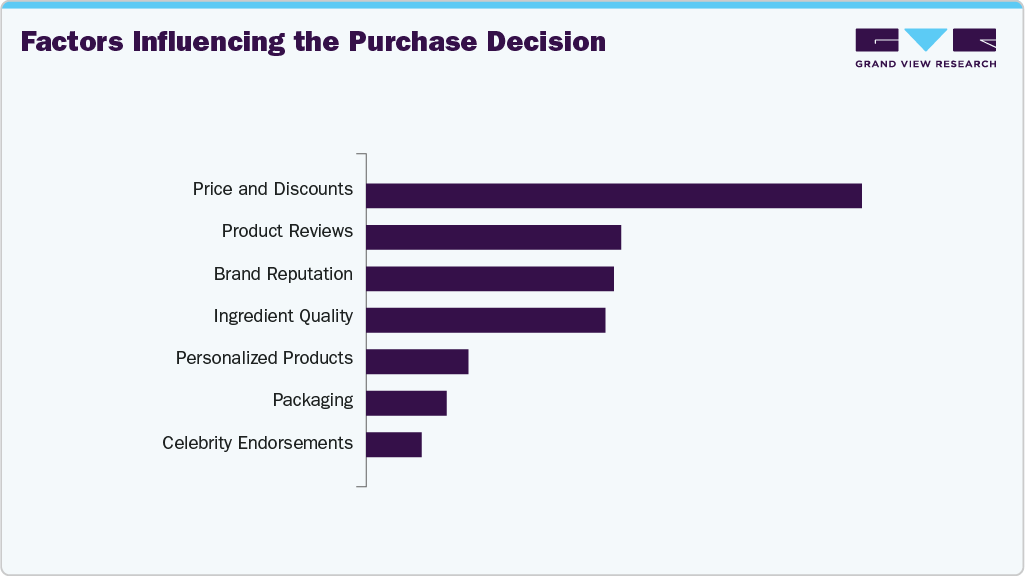
Similarly, the key factors influencing the purchase decisions are price/discounts, product reviews, and brand reputation/trust, as a significant proportion of the population has selected these as main drivers. On the other hand, in line with growing awareness of allergens and skin conditions, consumers are becoming more cautious, and the need for chemical-free products is gaining traction. Thus, one of the major challenges faced by consumers is identifying products without harmful chemicals since a lot of fragranced products contain phthalates and parabens, which have been identified to be harmful to the skin. The second similar challenge is finding the right product that will not irritate the skin, especially deodorants with higher alcohol content, which can cause severe skin dryness and lead to irritation and itchiness in the affected area.
Brand Power Play (Brand Health and Performance)
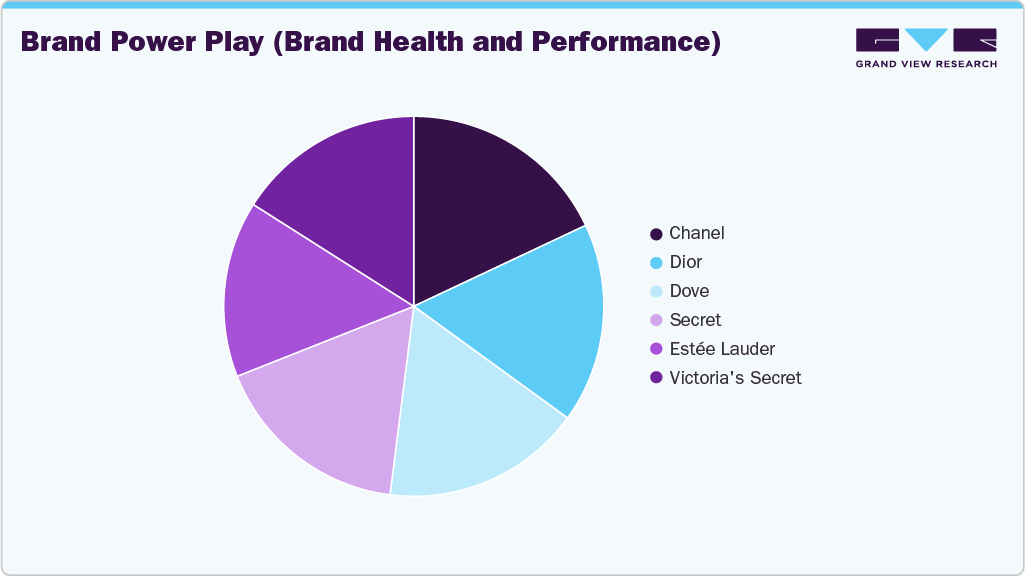
Some of the popular fragrance product brands in the U.S. include Chanel, Dior, Dove, Secret, Estée Lauder, and Victoria's Secret. Although there are countless brands and even celebrities with their range of perfumes and fragrances, the top 4 brands, Chanel, Dior, Dove, and Secret, dominate the fragrance industry in perfumes/deodorants. Some of the other notable brands competing are Old Spice, Gucci, and Versace.
Purchase Funnel
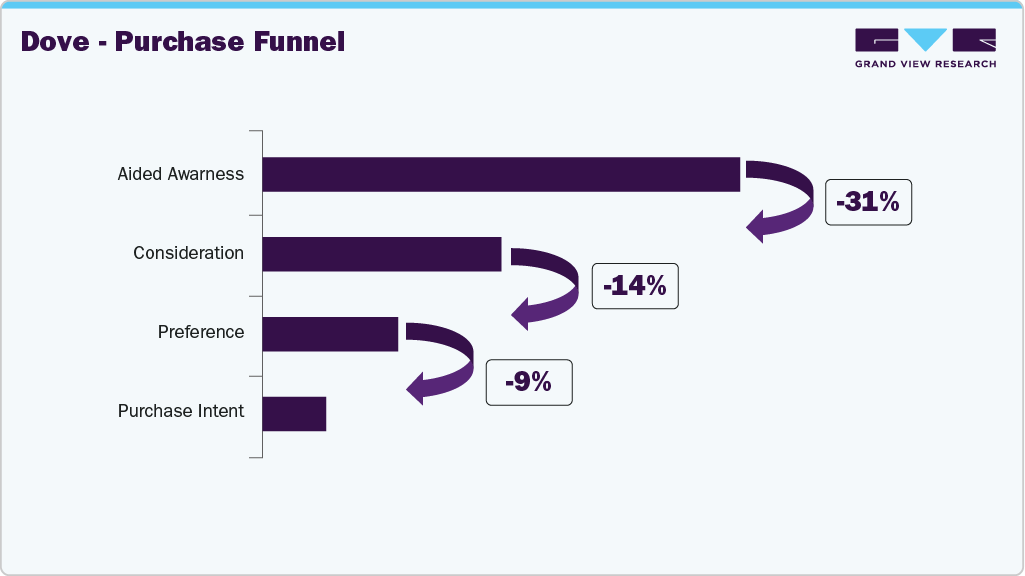
While many brands enjoy high awareness, especially in the luxury category, the preference and consideration levels take a dip. Dove and Secret are one of the prominent brands that exhibit a good purchase funnel despite having significant drops at each step of the funnel. It is worth noting that Chanel and Dior also closely follow the prominent brands as they have similar consideration levels. One brand that climbs the ladder is Victoria’s Secret, with significant consumer preference and strong purchase intent. Lastly, Chanel and Dior operate largely under the luxury perfume segment, whereas Dove and Secret dominate the affordable deodorant segment.
These brands have a stronger purchase funnel because they leverage brand loyalty, i.e., higher repeat-purchase likelihood among consumers due to higher satisfaction levels, especially Victoria’s Secret, which has 72% of consumers extremely satisfied with its product.
While the overall NPS score of the leading brands varies from 29 - 50, some brands like Victoria’s Secret have a higher NPS score (50) compared to other prominent brands in the market.

Talk to an analyst
Tell us what you need. We reply within one working day.
Service Guarantee
-
Insured Buying
This report has a service guarantee. We stand by our report quality.
-
Confidentiality
Your transaction & personal information is safe and secure.
-
Custom research service
Design an exclusive study to serve your research needs.
-
24/5 Research support
Get your queries resolved from an industry expert.