U.S. Smartphone Consumer Insights - Usage, Attitudes, And Brand Performance Report
Introduction:
The smartphone market in the USA is thriving, and smartphones have continuously evolved to become more than just communication tools. Most Americans own a smartphone, and new models are constantly being released with improved features such as faster performance, better cameras, and AI-powered tools. With their lightweight design, long battery life, and seamless touch screens, smartphones have become essential for tasks like browsing the internet, managing work, navigating, and staying connected with others. In addition to new designs, smartphones are building a strong AI base, for example, ChatGPT and Gemini. Smartphones are designed for people who want compact devices that combine communication, entertainment, and productivity, transforming the way the world interacts. Overall, the U.S. smartphone market is expected to keep growing, with brands continuing to innovate to meet the increasing demand for better, more advanced mobile devices. Let’s dive into some of the trends shaping the industry:
-
Increased Focus on AI and Smart Features: More smartphones are incorporating AI-powered features such as voice assistants, smart editing tools, and personalized recommendations, such as Google Assistant, Alexa, Bixby, and Siri. These smart features are making it more user-friendly and responsive to the user.
-
Smartphone as a Payment Tool: This shift toward cashless transactions is accelerating, and the vision for the digital economy is gaining success. With just a tap, people can quickly pay for goods and services at retailers through the checkout process, reducing the need for physical cash, credit, or debit cards. Mobile payment systems like Apple Pay and PayPal continue to grow, making smartphones essential for cashless transactions in stores and online.
-
Dominance of Apple and Samsung: Apple and Samsung are the two marketplace leaders, where Apple holding the largest percentage of sales in the U.S., and Samsung the closest competitor. Apple's iPhone is the most popular smartphone in the U.S. because of its top-rate layout, durability, and seamless integration with other Apple devices. Samsung, on the other hand, has an extensive variety of products ranging from high-end premium devices to less expensive gadgets.
-
Longer Battery Life: Manufacturers are prioritizing improvements in battery life to keep up with rising demand for mobile apps, streaming, and gaming. Smartphones have become extremely important for a wide range of activities, from social media and navigation to video streaming and online gaming, so consumers expect their devices to last all day without having to charge them multiple times. As a result, brands are now introducing models with larger batteries and software optimizations to help extend battery life.
Methodology:
The insights covered in this report are drawn from GVR’s ‘Voice of Consumer Survey’ and its periodic updates. The latest survey represents 75,000+ consumer interviews conducted across 20 countries for 100+ product categories. These insights are specifically catered to the brands operating in the smartphone industry in order to guide them in their strategic decision-making process. This report provides insights covering category usage & attitude, buying behavior, brand performance metrics, and brand health indicators of leading players in the U.S. smartphone market.
Chapter 1: Usage and Attitude
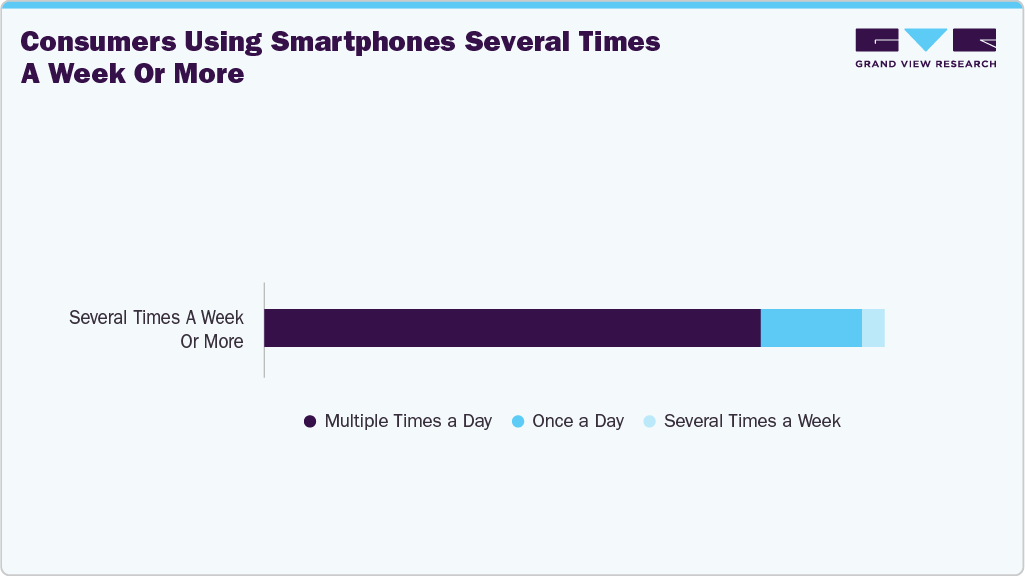
In the US, the majority of the population uses smartphones and relies on them for multitasking, thus increasing their usage. Having said that, 80% of consumers use Smartphones multiple times a day, as expected for activities such as calling, texting, and consuming content. Only about 15% of them use smartphones once a day.
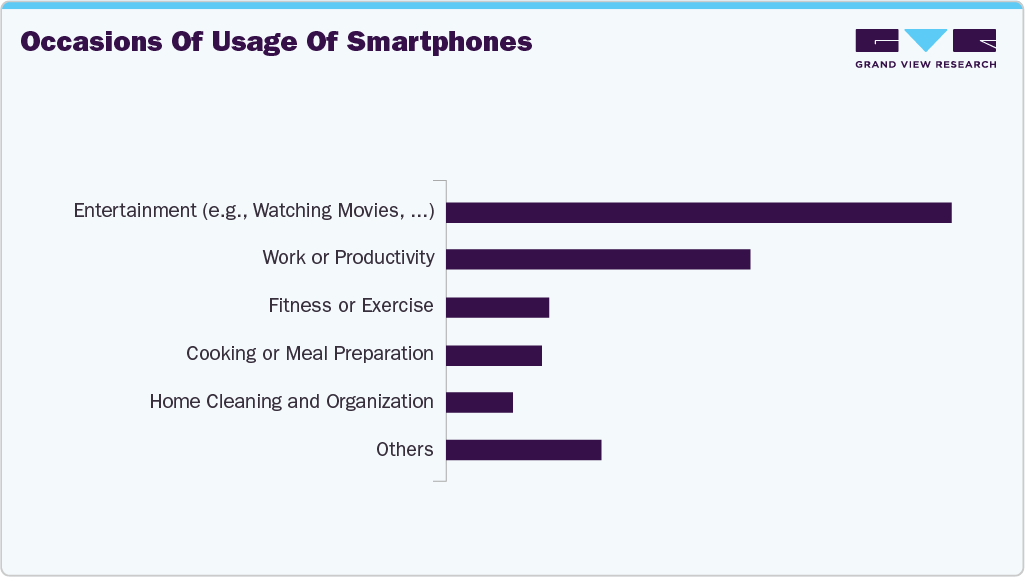
The most common use of smartphones is entertainment, with almost 7 out of 10 consumers using them to stream videos, play games, and browse social media. They also serve as platforms for music, reading e-books, and online shopping. And 41% of consumers also use smartphones at work for productivity, such as checking emails, scheduling appointments, accessing work documents on the go, and more. With the increasing capabilities of smartphones, professionals can complete tasks from anywhere at any time, making them an indispensable tool for modern living. The wide variety of entertainment options available on smartphones has made them an essential part of daily life.
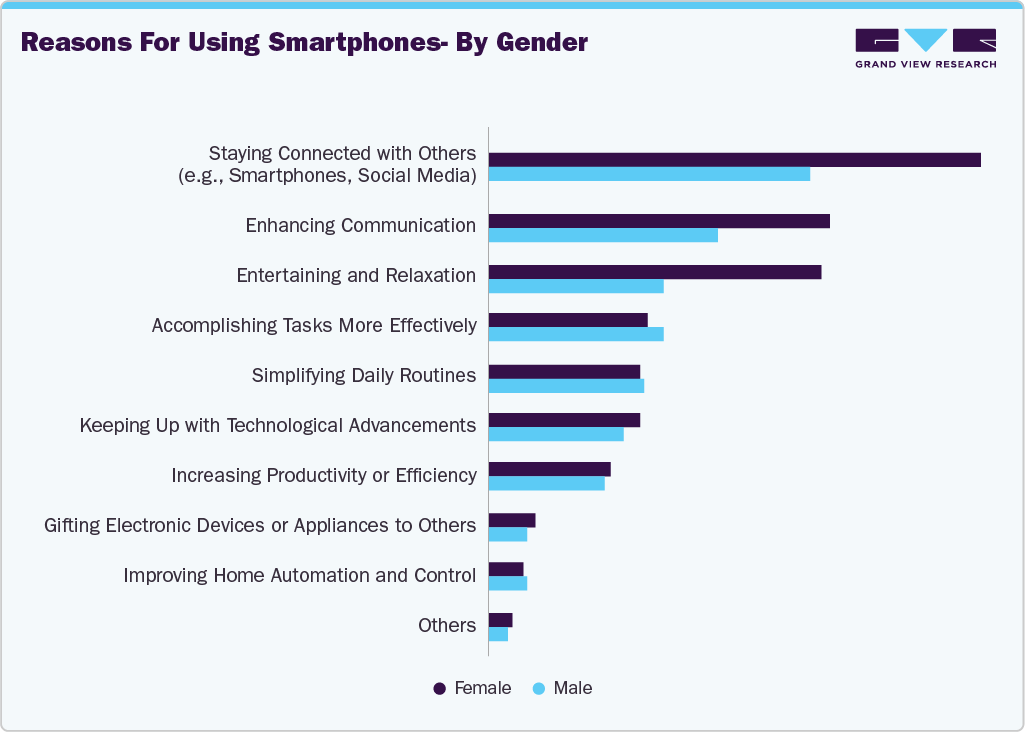
One of the most significant reasons to use a smartphone is to stay in touch with others for both men and women. This, in turn, also provides them with the benefit of enhanced communication. As technology keeps changing, smartphones have become tools we can't live without for staying in touch and getting information. The ease of communication has changed how we talk to each other, making smartphones useful in all aspects of life.
While earlier smartphones were used solely for making wireless calls, most consumers associate smartphones with the ability to stay connected. However, with the advancement in technology, smartphones are more than just a tool to communicate; consumers also associate the devices with benefits like on-the-go entertainment through social media and OTT platforms, followed by internet browsing to access information anywhere, anytime.
Buying behavior
Before purchasing a smartphone, consumers like to do thorough research about the smartphone’s performance, its reliability, the price range, payment options available, and whether the purchase will be value for money. Lastly, they also look for advanced features and innovations offered by the brand. This suggests that while consumers look for a device with multiple features, they are also price sensitive and demand a reasonably priced, advanced product. Further to this, since smartphones have a higher shelf life, consumers largely prefer to purchase them once every 5 years.
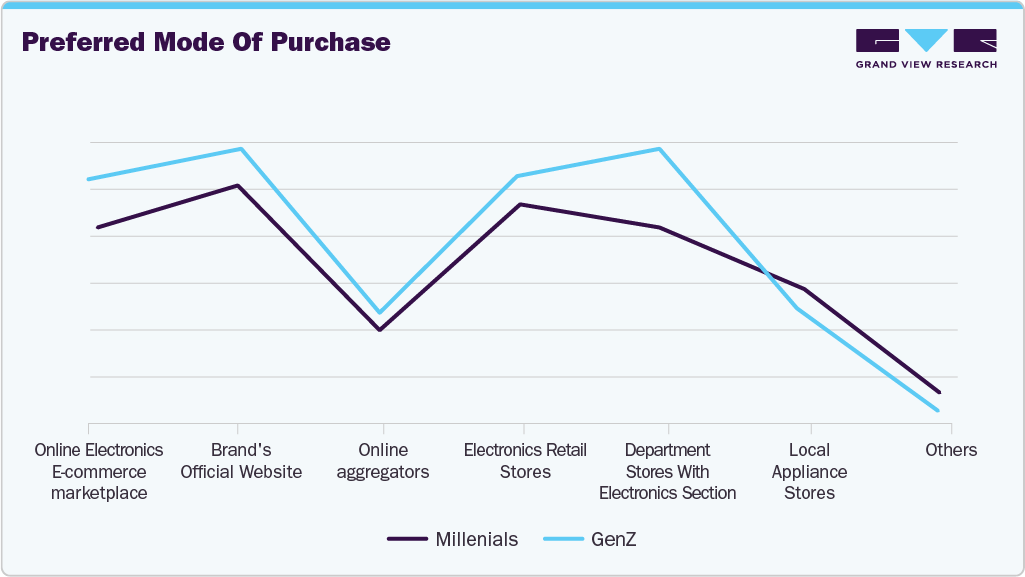
When it comes to mode of purchase, electronic retail stores and Department stores with electronics sections are the most common methods. However, when deep diving into Gen Z and Millennials, Department stores with electronics sections are a go-to place for Gen Z, whereas Millennials prefer to shop from a Brand's official website.
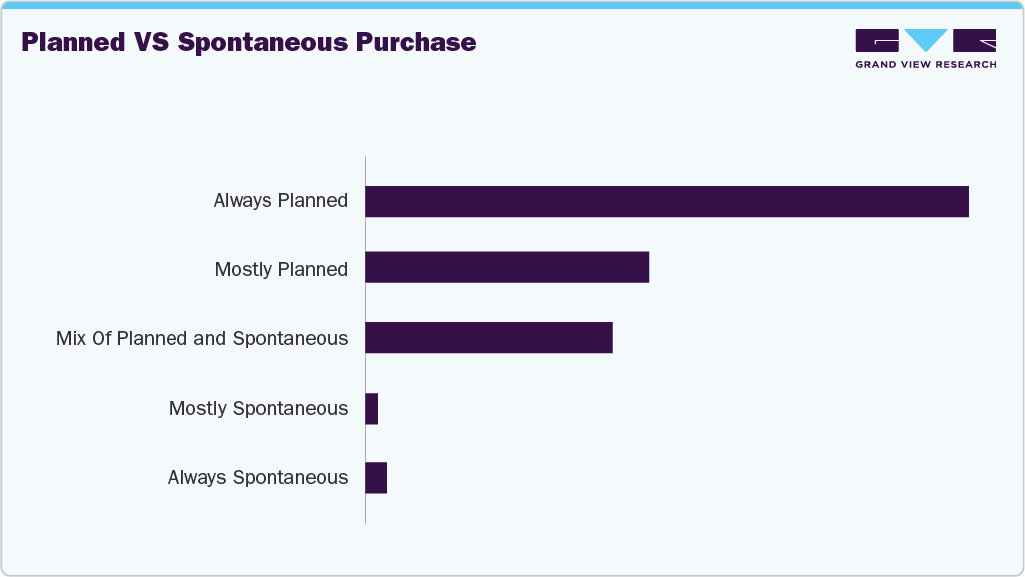
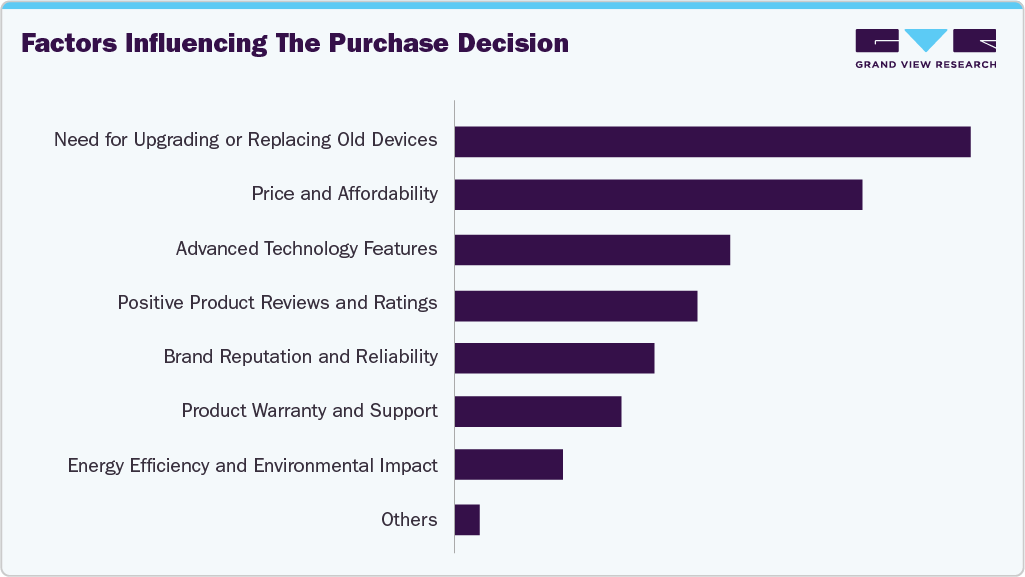
The majority of consumers tend to make planned purchases, with 51% always planning out their purchases. This shows that most people prefer to think carefully before making a purchase rather than acting on impulse. Most purchases are driven by customers who need to upgrade or replace their old devices. Affordable pricing also plays a key role, making it easier for consumers to justify the purchase. In addition, the constant advancements in technology and new features being introduced in smartphones also drive the need for upgrades. Overall, the decision-making process for purchasing a smartphone is a well-thought-out one, with consumers weighing their options and considering their needs before making a final decision to go ahead with the purchase. Ultimately, the main reason for buying a new smartphone is the need to upgrade or replace an outdated one.
Furthermore, smooth performance, cutting-edge technology, and a user-friendly interface are key to driving consumer satisfaction. Since smartphones are classified as big purchases, a durable and reliable construction of these devices is also sought after.
For brands to drive higher purchase volume, it is important to address the gaps or challenges they face. These are privacy and security concerns, especially among Android devices, and overdependence on screens, as everything is now at your fingertips. The reliance on smartphones has increased, which ultimately leads to high costs for a premium phone with the latest technology. Thus, by providing a reasonably priced product packed with features that not only offer the latest technology but also a longer lifespan, eliminating the need for frequent replacements, a brand can better influence the market.
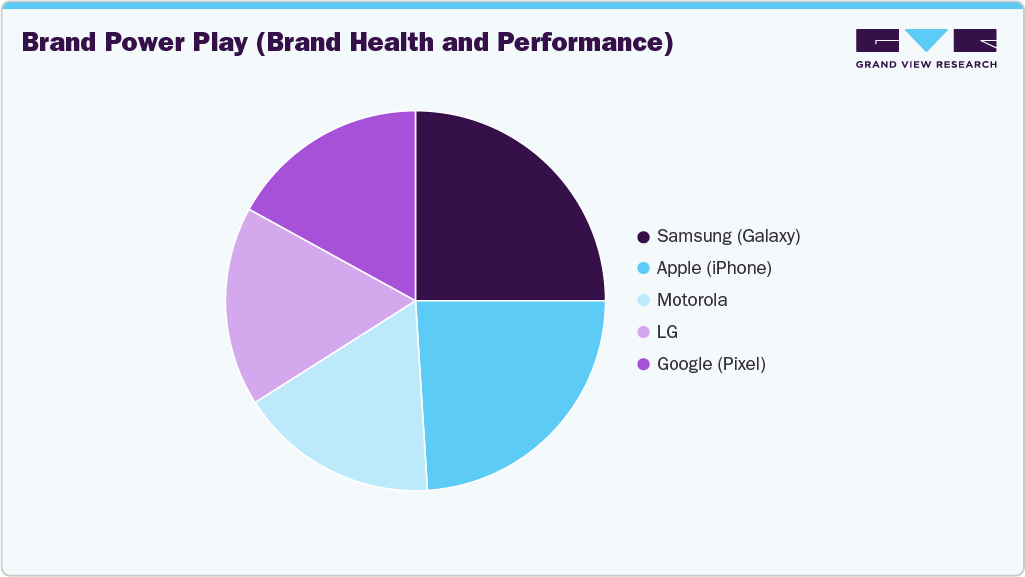
Brand Power Play (Brand Health and Performance)
Some of the popular Smartphone brands in the U.S. include Apple, Samsung, Google, LG, and Motorola. Although the Smartphone industry is competitive, Samsung dominates the market with 90% market share (by Aided Awareness).
Purchase Funnel
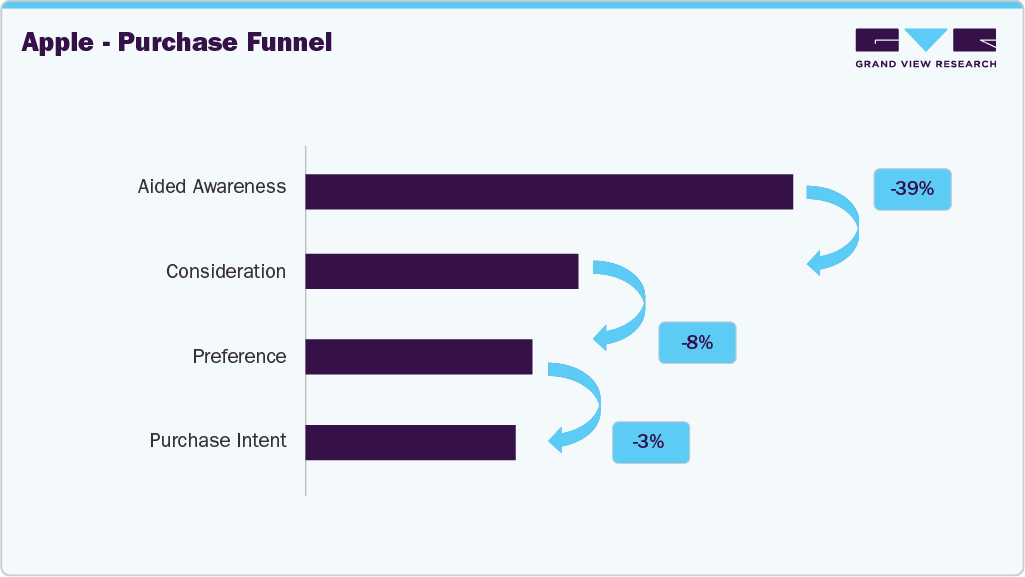
Although many smartphone brands are well-known in the United States, only a few make it past the stage of being considered and preferred. And one of the biggest examples is Samsung and Apple, which compete neck and neck despite having similar awareness levels.
Apple demonstrates a commendable purchase funnel compared to Samsung, despite a big drop from awareness to consideration, as it recovers later. This can be attributed to the brand’s premium designs, a well-built ecosystem, and a huge focus on the brand’s association with an elevated lifestyle. They achieve this by offering yearly updates and innovations to the software, a premium camera, services like Apple Care and Apple Pay that enhance the meaning of convenience. However, what makes Samsung a tough competitor is the affordability and availability of a wide range of options. Samsung, by producing smartphones that cater to all income segments by way of offering medium-range smartphones, budget phones, and premium phones, all packed with features, stands tall in the competition. At last, what makes Apple a leader is the consistency in performance and a constant drive to improve their devices, which leads to better usage, mainly driven by higher satisfaction levels and brand loyalty among consumers.
While the overall NPS score of the leading brands varies from -25 to 60, Apple leads the Smartphone industry with the highest NPS score (60) compared to other prominent Smartphone brands in the market.
