U.S. Sportswear And Swimwear Consumer Insights - Usage, Attitudes, And Brand Performance Report
Introduction:
The Sportswear Industry in the U.S. has evolved significantly through 2025, driven by rising health consciousness, resulting in increased engagement in sports and fitness activities. Brands are creating smart fabrics that absorb moisture, control odor, and regulate temperature. Furthermore, social media and celebrity endorsements have increased brand awareness by targeting Gen Z and Millennials through the hiring of famous sportspersons as brand ambassadors, thereby generating customer interest. Likewise, the sportswear industry is changing due to the growing prevalence of e-commerce. Because online platforms provide convenience and choice, consumers are much more likely to purchase sports apparel online.
The swimwear sector, a major part of the broader U.S. sportswear industry, has seen notable transformation through 2025. This growth is fueled by rising interest in form-fitting apparel, greater participation in both leisure and competitive swimming, and the enduring appeal of beach vacations and cruise travel. To meet evolving consumer expectations, brands are expanding their offerings to include more inclusive sizing that accommodates a variety of body types. Innovation in materials is also reshaping the market, with the use of advanced fabrics that offer UV protection, quick-drying capabilities, and moisture management. Furthermore, companies are tapping into emerging markets where rising disposable incomes are driving demand. To maximize reach and engagement, businesses are turning to digital platforms, leveraging influencer partnerships, social media campaigns, and targeted online marketing strategies to enhance visibility and drive growth.
Sportswear and swimwear are stylish categories that combine performance technology with fashion. They offer efficiency, relaxation, and the ability to move in a variety of physical environments. With the use of cutting-edge material science, breathable fabric, and adaptable technology, these clothes are designed to maximize the potential of consumers. They cater to fitness enthusiasts, professional athletes, and casual shoppers who prioritize performance, comfort, and style. Sportswear and swimwear have therefore evolved from basic sports apparel to advanced performance systems that repel water, support muscle function, and enhance recovery times.
-
Performance and Technology Integration: Performance optimization and textile engineering are combined to create sportswear and swimsuit technologies. Advanced moisture-absorbing textiles control perspiration through coatings, while UV protection uses specific fibers and small particles. Compression technologies have advanced, with graduated compression designs supporting specific muscle zones. Phase-change materials and thermoregulatory systems are used to create microclimates that keep athletes warm in colder weather and cool in hotter weather.
-
The Sustainability Resolution: Innovative material sourcing, environmentally friendly production methods, and circular design are part of the sportswear and swimwear sustainability revolution. High-performance textiles are made from recycled ocean plastic, and sustainable fabric creation uses regenerated nylon. Businesses use closed-loop water treatment systems, renewable energy, and water-conservation technology.
-
Inclusive Direct-to-Consumer Revolution: The market for swimwear and sportswear has evolved due to digital distribution and inclusion, leading to expanded ranges and adaptive designs. This shift is influenced by the direct-to-consumer boom, in which online shopping has disrupted traditional retail channels. Digital platforms enable niche brands to reach specific demographics without traditional gatekeeping, eliminating obstacles for creative businesses. This convergence has democratized production and access, creating a more representative marketplace where a range of bodies and cultural tastes are recognized and celebrated.
-
Emerging Fashion Trends: Swimwear trends, including bold, uneven cuts, well-placed cut-outs, and creative designs, are fusing high-fashion aesthetics with athletic functionality. Vibrant color schemes, neon shades, gradient ombré effects, and unexpected color blocking are all being used by designers. Retro prints and high-cut items with an '80s vibe are examples of nostalgic revivals with contemporary touches, becoming increasingly popular.
Methodology:
The insights covered in this report are drawn from GVR’s ‘Voice of Consumer Survey’ and its periodic updates. The latest survey represents 75,000+ consumer interviews conducted across 20 countries for 100+ product categories. These insights are specifically catered to the brands operating in the sportswear and swimwear industry to guide them in their strategic decision-making process. This report provides insights covering category usage & attitude, buying behavior, brand performance metrics, and brand health indicators of leading players in the U.S. sportswear and swimwear market.
Chapter 1: Usage and Attitude
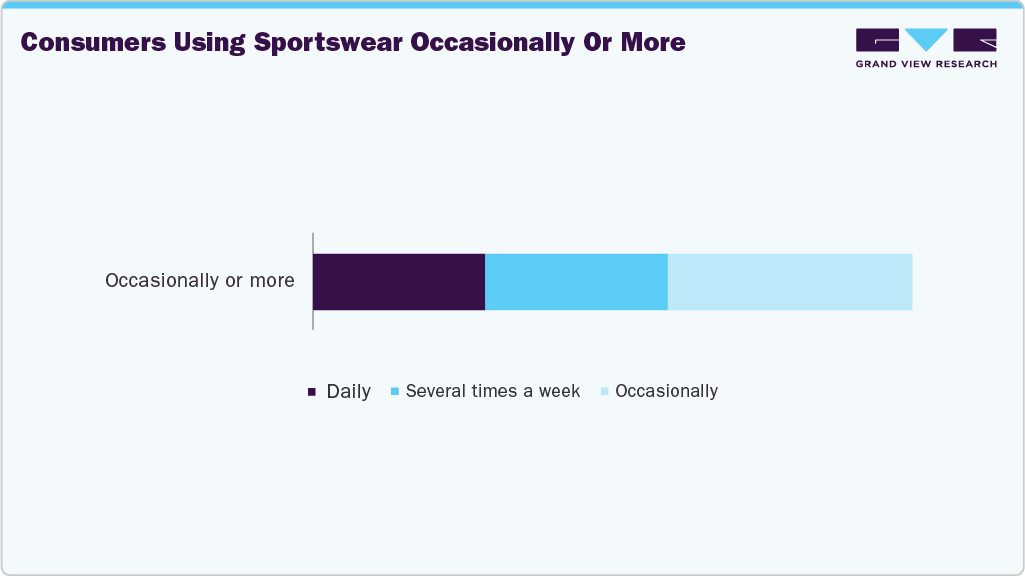
Consumers seek apparel that is versatile yet appropriate for the occasion; thus, sportswear is highly sought for physical activities. Having said that, 29% of consumers use sportswear occasionally, whereas 21% also say they use it several times a week.
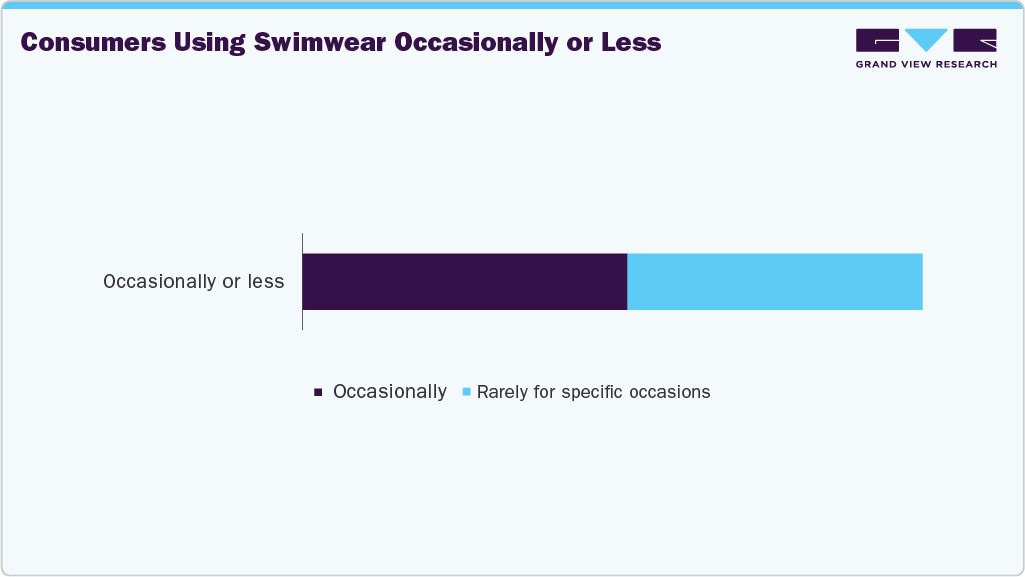
While the majority of consumers use swimwear infrequently, 35% say they use it occasionally.
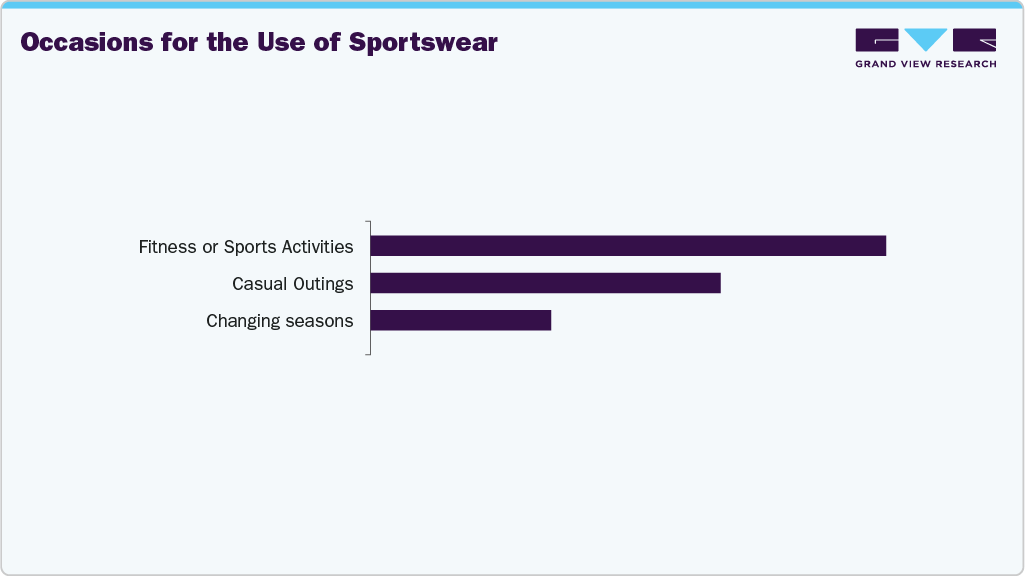
Sportswear is mostly used during sports activities, according to about 6 out of 10 consumers; however, it can also be worn at casual outings with items like tank tops, boxers, and trousers. Nevertheless, customers identify wearing these items with being at ease and self-assured. Because of the latest trends and social media usage, they also help consumers in expressing their individual fashion preferences and sense of style. However, what might dissatisfy them is the limited size options from certain brands, uncomfortable or ill-fitting clothes, and the high costs of quality clothing or designer brands.
Swimwear is also mostly used during sports activities, as expected; however, consumers also use it during casual outings to a beachside location and at the time of changing seasons, with jackets being worn during winter or a sudden breeze. Similar to sportswear, swimwear is associated with feeling comfortable and confident, followed by the expression of personal style and fashion preferences. However, what might frustrate them are the trends that may not suit personal style or body type, and again, the high costs for quality clothing.
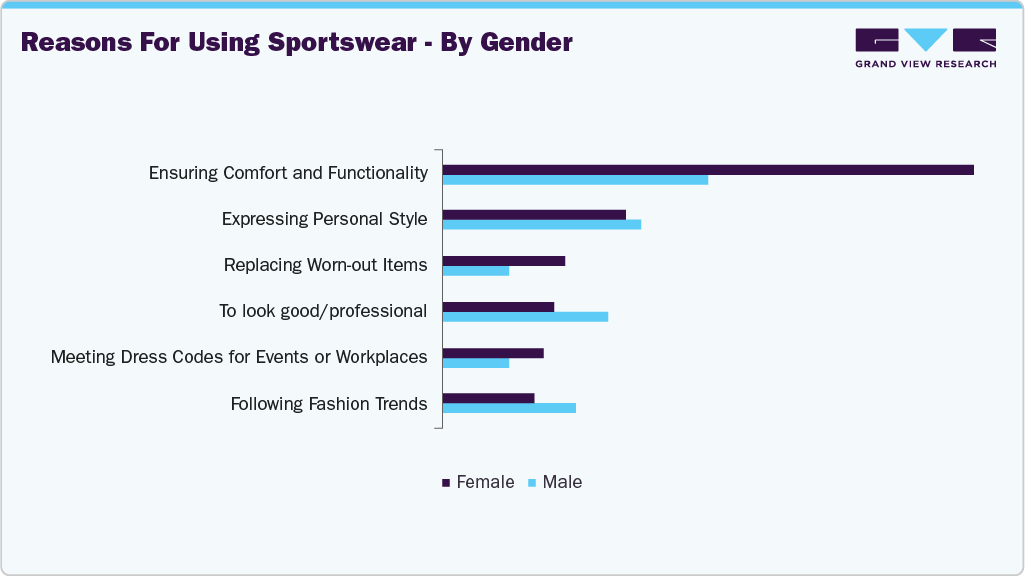
When it comes to reasons for wearing sportswear, comfort and functionality are the most important for both females and males, followed by expressing personal style. What makes this a delightful purchase is its comfortable fit, high-quality materials, good value for money, and durable, long-lasting construction.
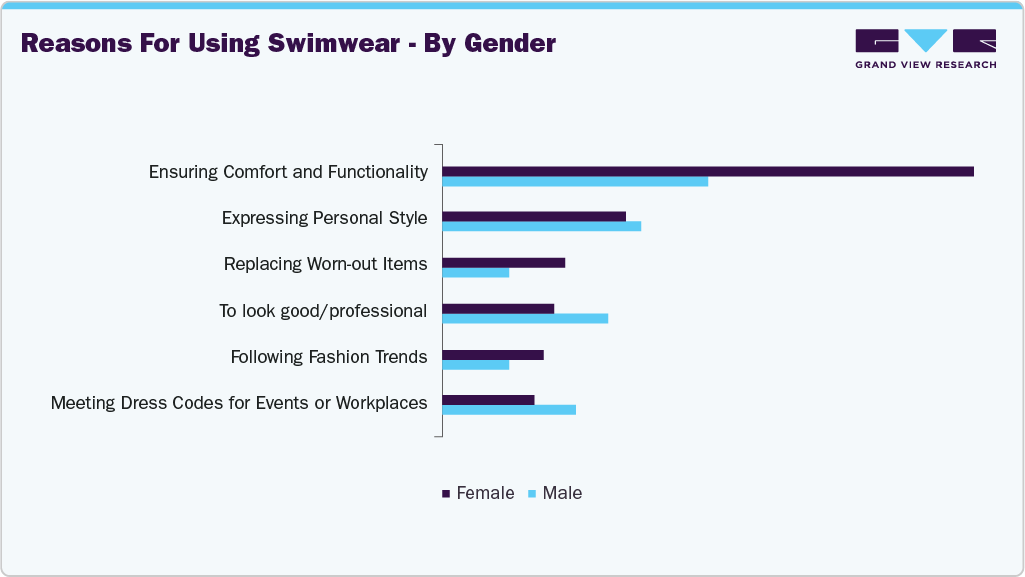
As expected, we see similarity in consumers’ behavior when we talk about swimwear and sportswear, as swimwear belongs to a small yet important segment in sports apparel. Thus, when we look at reasons for using swimwear, consumers again rank comfort and expression of personal style as their key factors. Following the pattern, a purchase becomes delightful for consumers when their comfort isn’t compromised, and the purchase can be considered good value for money.
Buying Behavior
Before making a purchase, consumers need to know a little bit about the product and its quality. Given that customers are looking for more comfortable clothing, comfort or fit is the most crucial factor. Followed by price and value for money, which is a great concern for budget-savvy consumers.
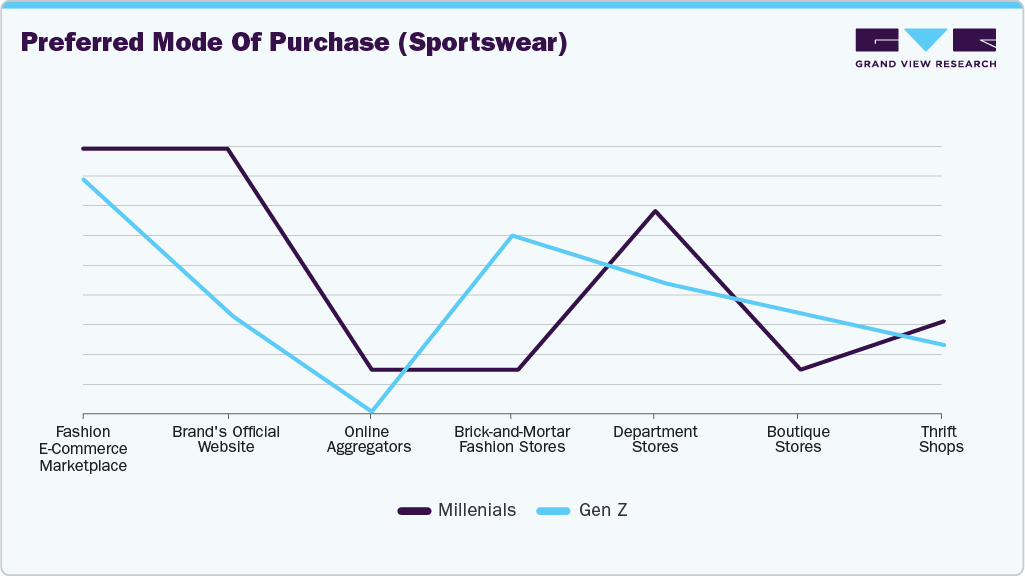
Online e-commerce marketplaces like Amazon are the preferred mode of purchasing sportswear for both Millennials and Gen Z. Brands’ official websites are the second-most-preferred mode of purchase for Millennials. At the same time, brick-and-mortar fashion stores are Gen Z’s preferred mode.
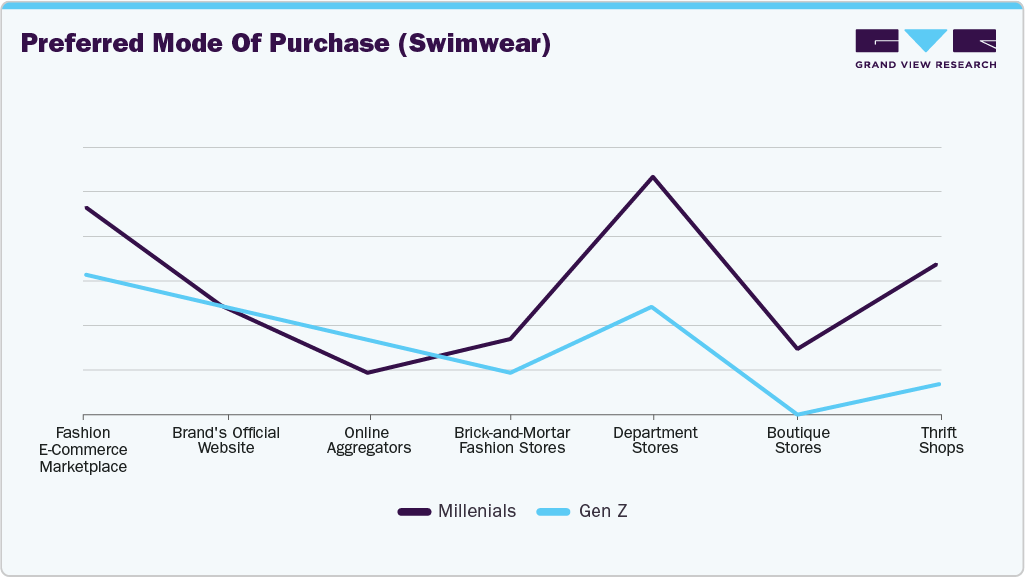
Consumers are increasingly demanding comfortable clothes, be it for sports or swimming, followed by price-consciousness. Now, when it comes to preferred modes of purchase for swimwear, Gen Z leans towards e-commerce marketplaces. In contrast, Millennials prefer department stores, underscoring the importance of the in-person shopping experience for Millennials.
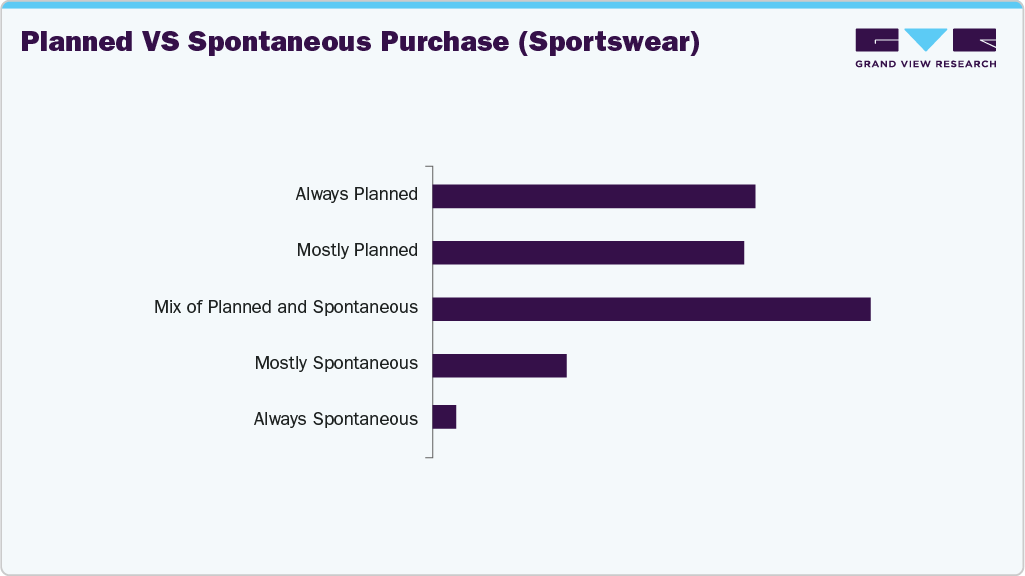
It can be noted that sportswear falls into a more planned purchase category, as 5 out of 10 people say their purchase is planned, of which 26% say it is always planned. Only about 13% of the population has displayed spontaneity in their purchase behavior, mainly due to easy access through online and in-store shopping and the seasonal sales and discounts provided by the brands.
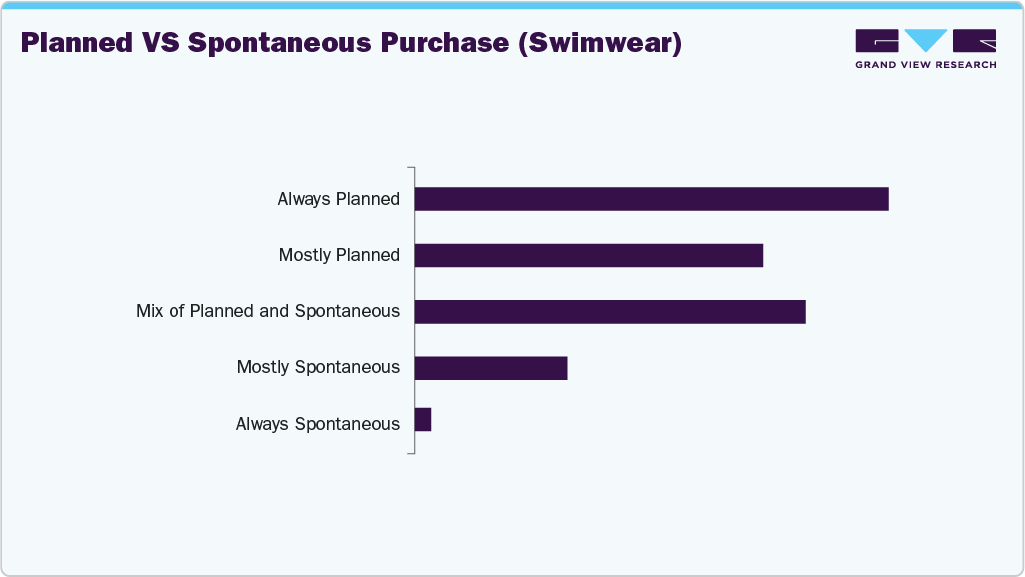
Swimwear also belongs to a more planned purchase category, as 6 out of 10 people say their purchase is planned, out of which 34% of consumers say it is always planned, and 28% of consumers prefer a mix of both.
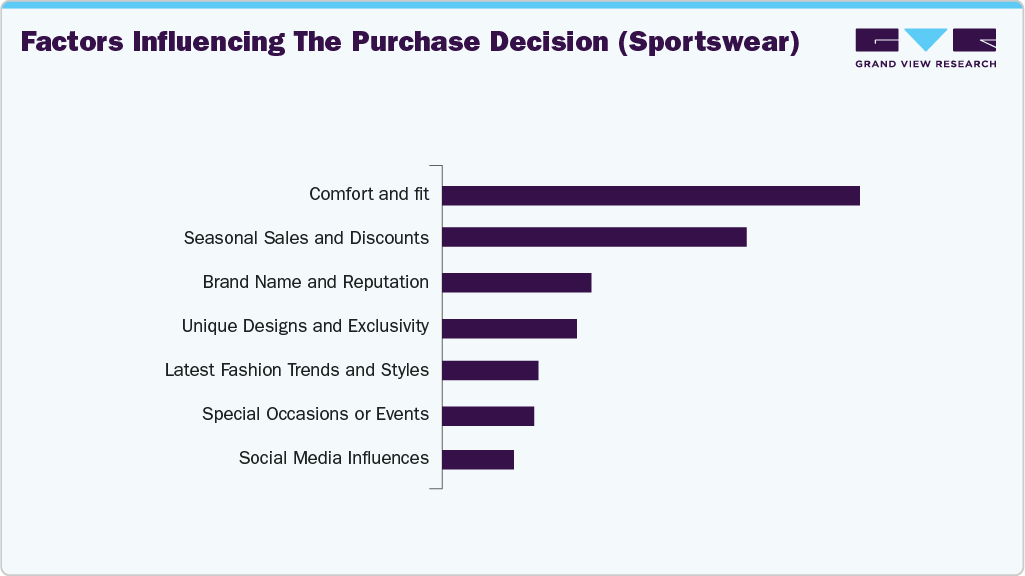
The factors that influence a consumer's purchase of sportswear are comfort and fit, and seasonal sales and discounts, as a significant percentage of people cite these as the main drivers. Though social media plays a somewhat influential role, it still does not take precedence over the key drivers and thus has less impact on consumers. Having said that, some barriers to purchasing a product include high prices for quality items and difficulty finding the right size and fit.
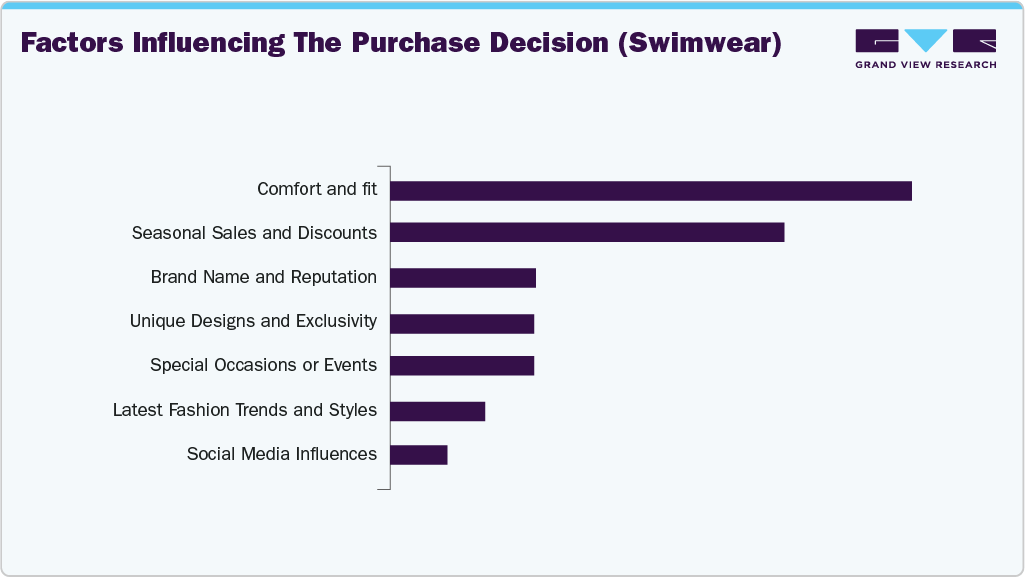
Similar to sportswear, comfort and discounts are the main drivers of swimwear purchases. As there is a similarity in consumer behavior when it comes to sportswear and swimwear, the barrier to the purchase of swimwear is again the high price for quality items.
Brand Power Play (Brand Health and Performance)
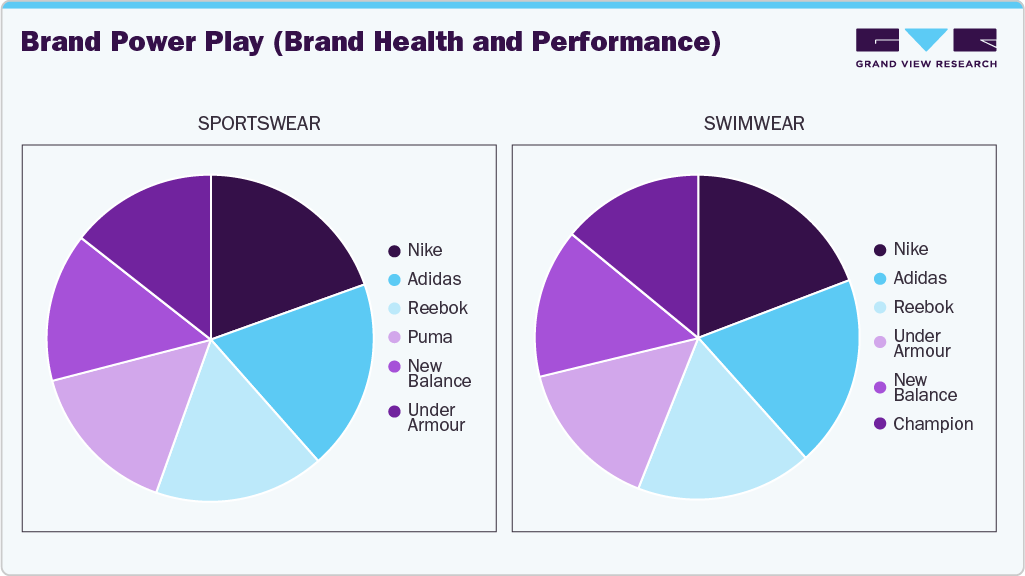
Some of the prominent brands of sportswear in the U.S. include Nike, Adidas, Reebok, Puma, New Balance, and Under Armour. Although the sportswear market is very competitive, especially with so many local or small brands emerging, Nike dominates the market with a 72% share (by awareness).
For swimwear, the prominent brands are almost the same as for sportswear, but Puma drops down in terms of awareness and thus does not make the prominent brands’ list. This is where Champion gains a little and surpasses Puma by a very small percentage. Even though the swimwear industry is fragmented and competitive, Nike again dominates the market along with Adidas, with a 50% market share (by awareness).
Purchase Funnel
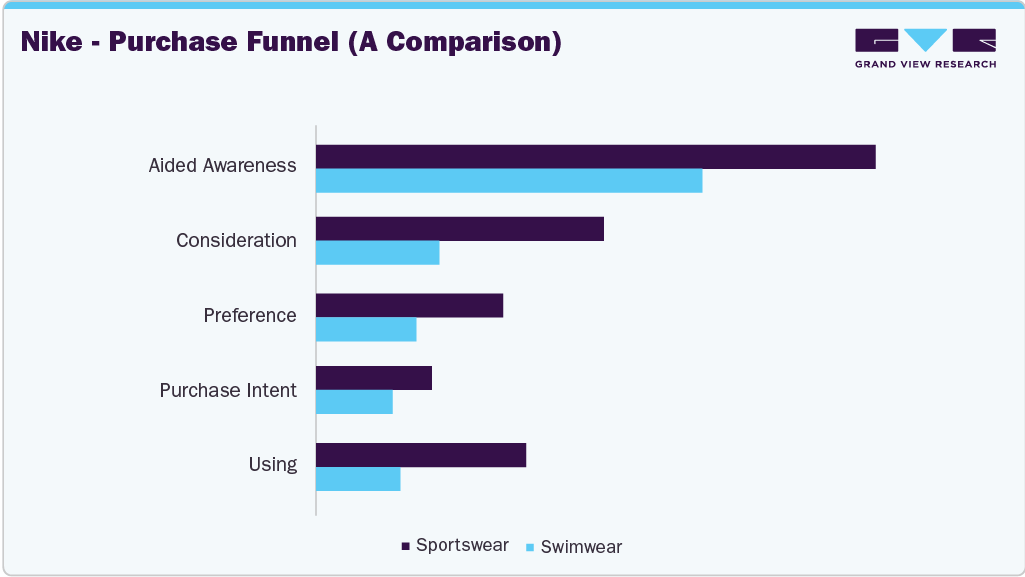
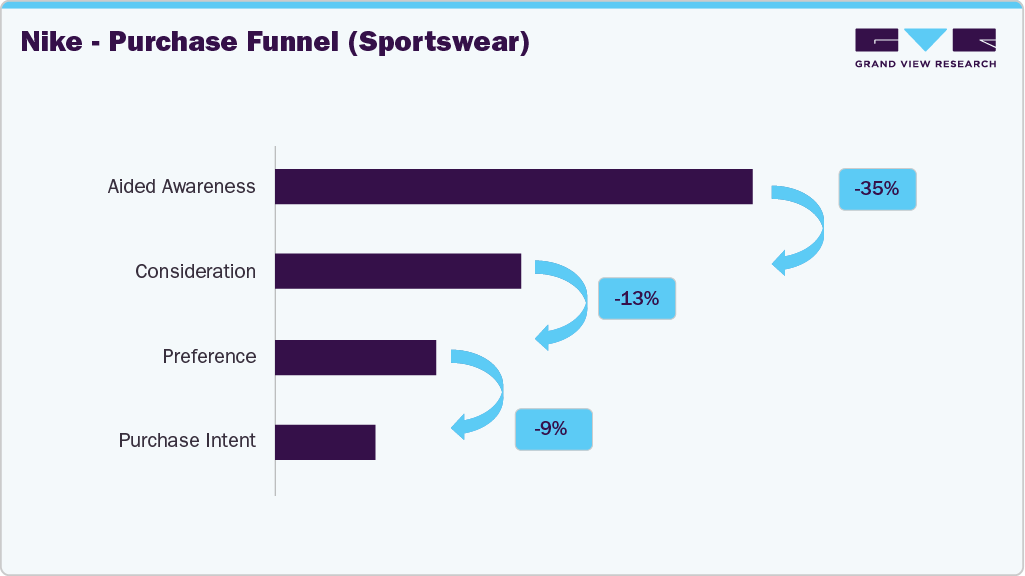
In this highly competitive sportswear market, Nike is one of the prominent brands that exhibits a strong purchase funnel despite having a significant drop from the awareness to consideration stage of the funnel. Adidas and Sketchers have a similar level of consideration and purchase intent, which follows Nike. Additionally, Sketchers and Reebok follow Nike in the preference stage. Notably, Nike, as the market leader, has a higher repeat purchase rate and satisfaction level than any other brand, due to its versatile and fashionable designs and higher satisfaction among users post-use. Interestingly, PUMA can garner commendable brand loyalty among its users, thereby providing tough competition despite lower awareness than Nike and Adidas.
The overall NPS score of the leading brands varies from -10 to 100, with Puma having the highest NPS score (100) compared to other sportswear brands in the U.S. market.
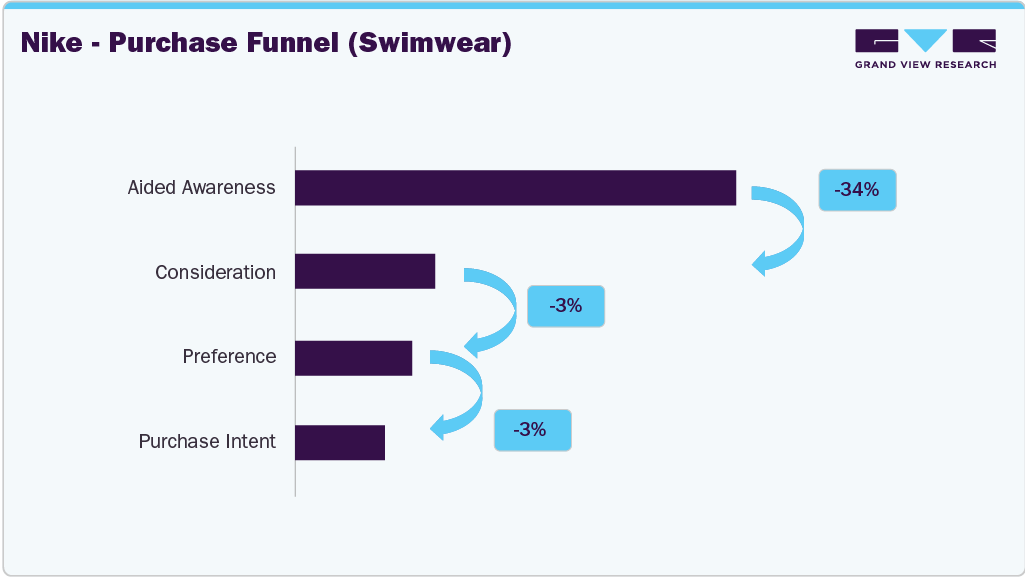
Now talking about swimwear, though the market is very competitive and there are many well-known brands, it is important to know who takes it into consideration. Nike is again one of the prominent brands that exhibit a strong purchase funnel despite a significant drop from awareness to consideration. Adidas follows Nike in terms of consideration and preference. It is worth noting that Nike, again, is purchased repeatedly by consumers mainly because of its quality, versatility, and durability.
The overall NPS score of the leading brands varies from 42 to 80, with Adidas having the highest NPS score (80) compared to other swimwear brands in the U.S. market.
We note a similarity in the sportswear and swimwear market, with Nike leading the purchase across categories. Additionally, Nike has a higher awareness of sportswear, which follows in all the stages of the purchase funnel.