U.S. Tablet Consumer Insights - Usage, Attitudes, And Brand Performance Report
Introduction:
With the growing emphasis on convenience and mobility, tablets have become increasingly popular. They are a good blend of features taken from smartphones and PCs. Earlier, they were seen only as entertainment devices. Still, they have transformed into multifunctional devices used for education in colleges and universities, in small- and large-scale businesses, in healthcare settings, and for personal use. Tablets have a lightweight design, good battery life, and a seamless touchscreen, making them a preferred choice for many tasks. Tablets were designed for people who want a bigger screen for reading, creating art, and browsing or streaming, but the lighter and smaller than a laptop. Though a tablet is a good blend of smartphones and laptops, it cannot eliminate smartphones as they are a necessity for every consumer these days, and they cannot completely replace PCs either, considering that tasks such as coding, running databases, and heavy editing require a high-performance device, which tablets are not compatible with. Now, let’s dive into some trends shaping the tablet industry:
-
Increased focus on education: Education remains a significant market, with schools increasingly adopting tablets for digital learning, particularly models that include keyboards and stylus support. A good example is the Amazon Kindle, which serves as a secondary device for both children and adults for reading and learning.
-
Growth in professional and creative use: In recent years, the rise of tablets, especially with styluses like the iPad Pro and Galaxy Tab, has driven significant growth in creative and professional use. Many creative professionals now use tablets as one of their working devices, particularly in the fields of graphic design, architecture, and digital art. The ability to draw directly on the screen, enabled by professional software, makes work much easier.
-
Focus on entertainment and media consumption: Tablets remain popular for streaming, reading, and other entertainment, thanks to their large screens and portability. Tablets are also popular for casual gaming, offering a wide range of options that benefit from the larger screen compared to smartphones. Whether it's puzzle, action, or board games, the tablet’s larger display enhances the gaming experience. Popular game titles on platforms like Apple Arcade and Google Play Store make tablets a go-to device for gamers of all ages.
-
Rising popularity of hybrid devices: Some tablets now offer keyboard attachments and desktop-like features, positioning themselves as alternatives to lightweight laptops for general use. This 2-in-1 approach has created a new category of computing devices that blend the portability of tablets with the functionality of laptops. Models like the iPad Pro with Magic Keyboard, Microsoft Surface tablets, and Samsung Galaxy Tab S series with keyboard cases have expanded the tablet's role in productivity workflows.
Methodology:
The insights covered in this report are drawn from GVR’s ‘Voice of Consumer Survey’ and its periodic updates. The latest survey represents 75,000+ consumer interviews conducted across 20 countries for 100+ product categories. These insights are specifically catered to the brands operating in the tablet industry in order to guide them in their strategic decision-making process. This report provides insights covering category usage & attitude, buying behavior, brand performance metrics, and brand health indicators of leading players in the U.S. tablet market.
Chapter 1: Usage and Attitude
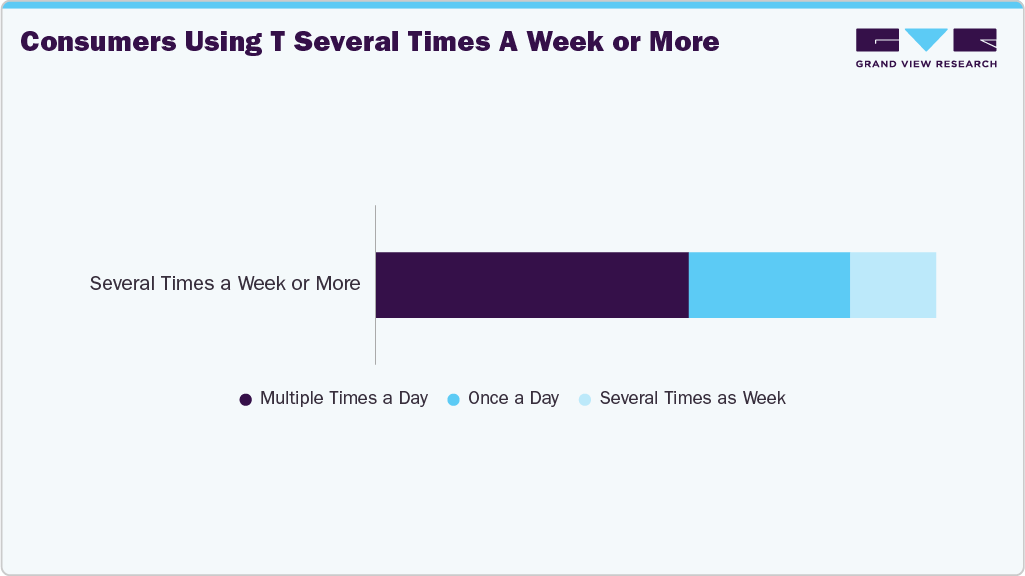
In the U.S., tablet use is widespread, with people relying on them for entertainment, learning, and gaming. Having said that, 40% of consumers use a tablet multiple times in a day. In contrast, about 26% of them use tablets once a day. This suggests that while tablets are gaining popularity, they have not yet replaced essential electronic devices.
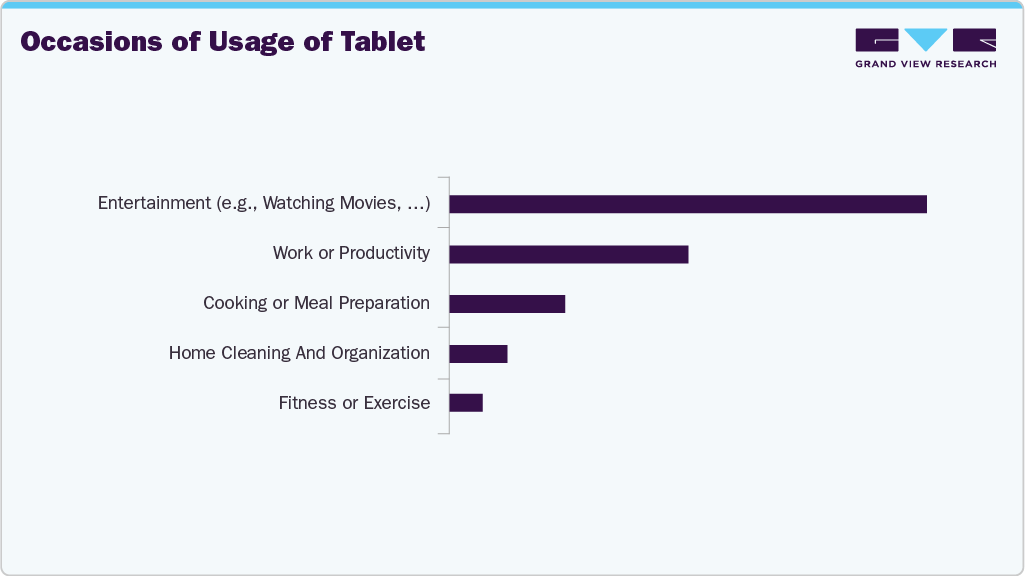
Tablets are mostly used for entertainment and to increase productivity, according to a significant chunk of consumers. However, some consumers also like to use it for cooking by way of finding recipes on the device. Having said that, tablets, like any other smart device, are associated with entertainment or content consumption, staying connected with people from afar, and accessing information easily.
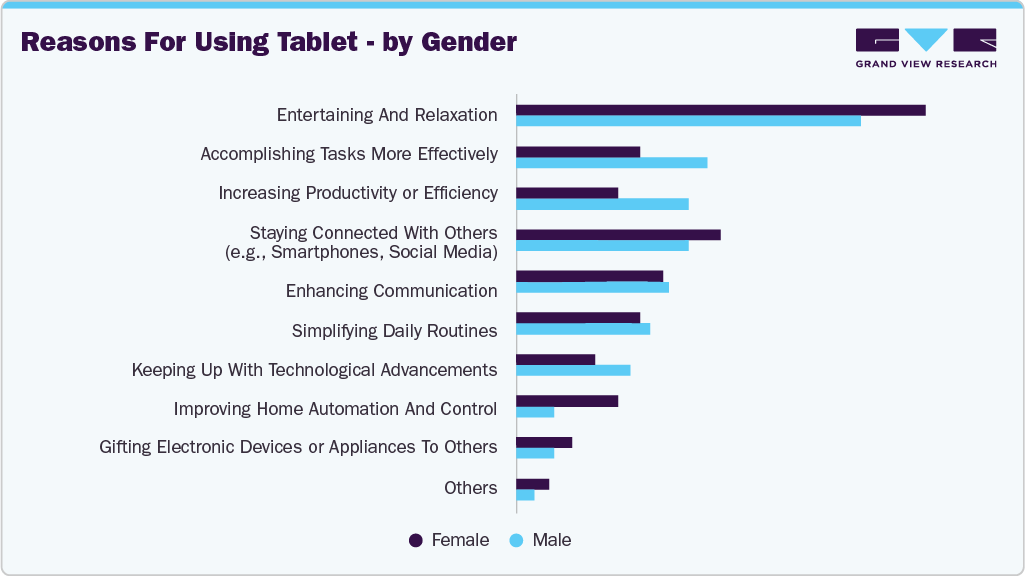
Now, looking at why consumers use tablets, entertainment and relaxation act as key drivers for both genders. However, for males, accomplishing tasks more effectively is the second most important reason, whereas for females, staying connected with others via social media is the secondary driver.
A tablet that has cutting-edge technology and a user-friendly interface that delivers good performance is more likely to induce post-purchase satisfaction, as these are some of the factors that consumers find praiseworthy in the device. One of the other ways to encourage purchase or usage of the product is by addressing some of the challenges faced by consumers, such as high costs, especially for devices like the iPad, or recurring malfunctions, and addressing the concerns around overdependence on screens or digital devices.
Buying Behavior
Consumers prefer to have information about certain aspects before purchasing a smart device, such as a tablet. Some of these are a product’s performance and reliability, its pricing, and whether it offers value for money. This indicates that consumers demand Tablets with advanced technological features and efficient performance at a reasonable price. The last important information point sought after is the brand’s reputation. Tablets are usually repurchased or replaced, typically every 3-5 years, as is true of most electronic devices.
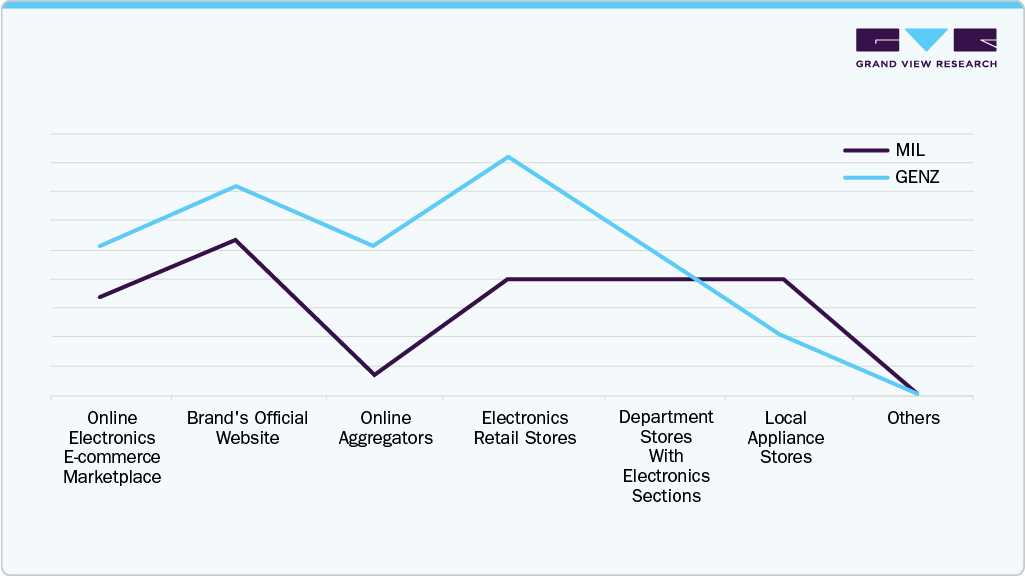
Now, talking about modes of purchase, electronic retail stores and online electronics e-commerce marketplaces are the most common; however, when deep-diving into generations, electronics retail stores are a go-to for Gen Z, whereas Millennials prefer to make purchases on a brand's official website.
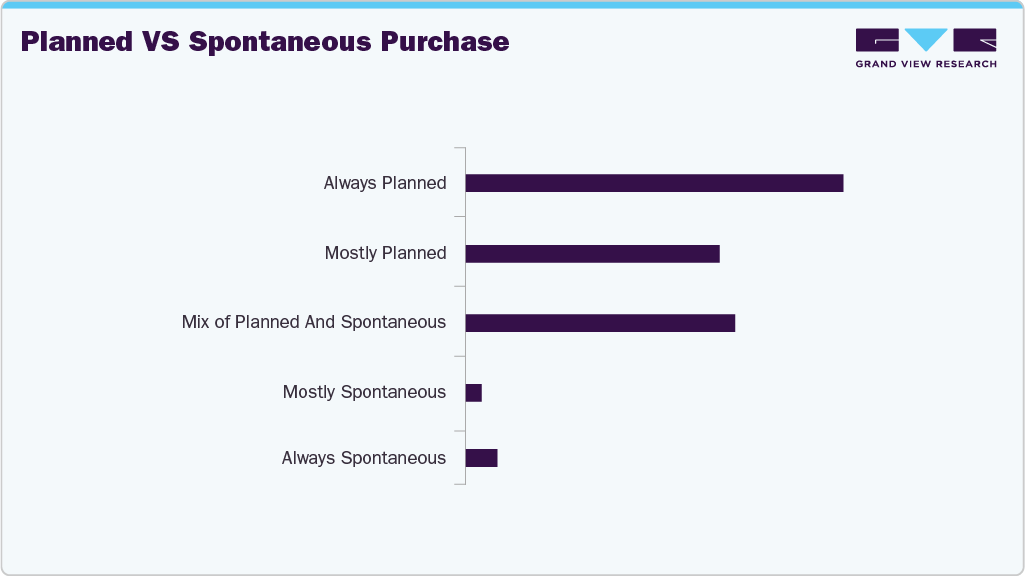
Having said that, these purchases are planned as around 40% of consumers say they always plan before purchasing a tablet. This indicates that a significant portion of your consumers prefer to make well-thought-out purchasing decisions rather than act on impulse. Even though only a very small percentage of people buy a tablet out of the blue, most of them do so when an urgent need arises to upgrade or replace older devices, such as when devices start to slow down or malfunction due to wear and tear or outdated specifications.
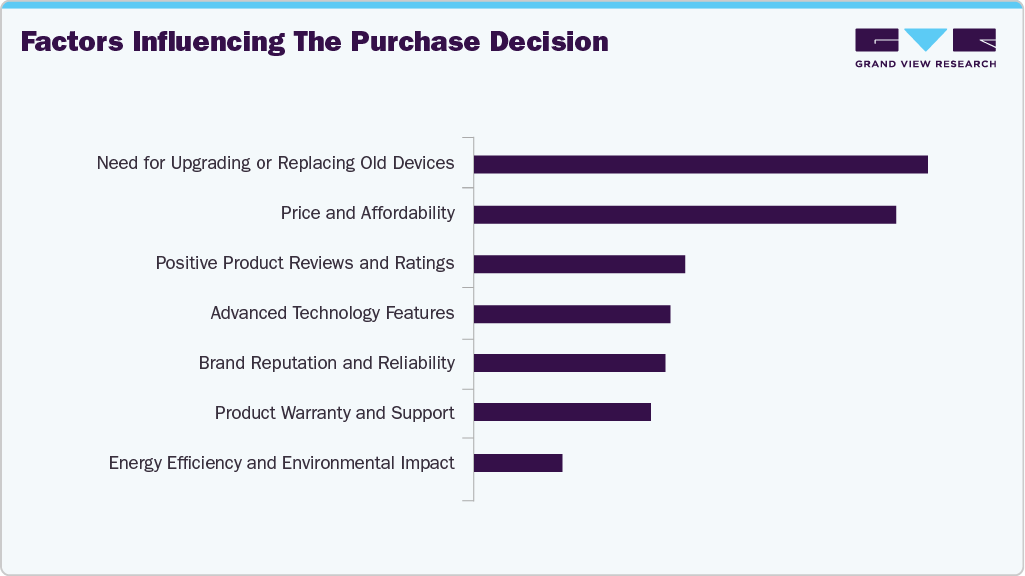
Now, when we talk about factors that play a significant role in a consumer's purchase decision, an upgrade need emerges as the key factor. With constant innovations, software is regularly updated; however, with time, the hardware loses its compatibility with newer software, thus prompting consumers to make a purchase. Next is the product's pricing and affordability, as consumers are largely budget-conscious and prefer to wait for sales and promotions when making a big purchase. Positive reviews and ratings of a product also influence consumers' purchase decisions.
A brand must maintain consistency in performance to be greeted by positive online reviews, as consumers use others’ experiences with the product to choose among the options before making a purchase. Thus, providing tablets packed with essential features at a reasonable price will encourage consumers to leave positive reviews.
Brand Power Play (Brand Health and Performance)
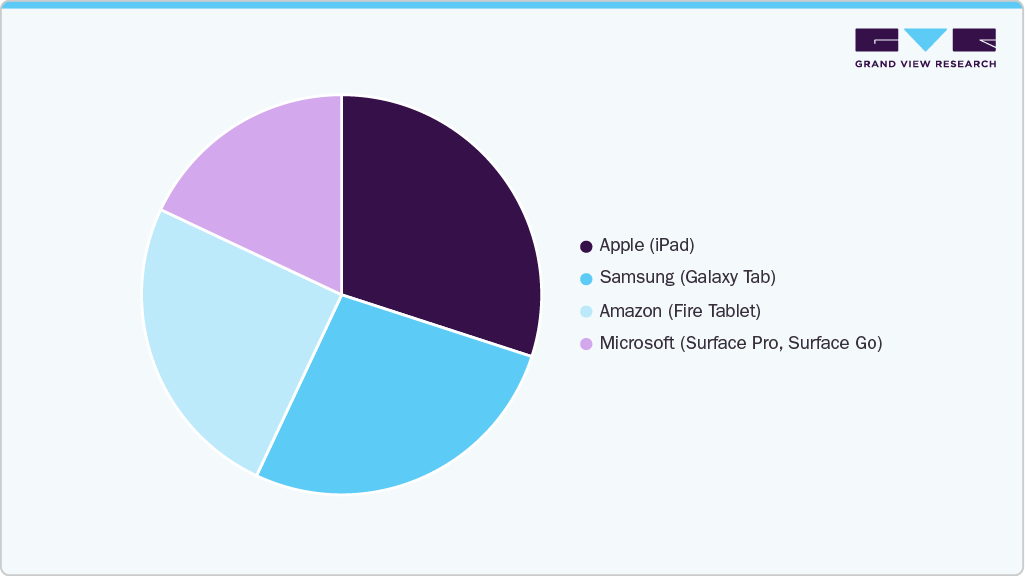
Some of the popular tablet brands in the U.S. include Apple, Samsung, Amazon, Lenovo, Microsoft, and Google. Since the tablet industry is not as saturated, the key players are at an advantage. That said, Apple dominates the market with an 85% share by awareness.
Purchase Funnel
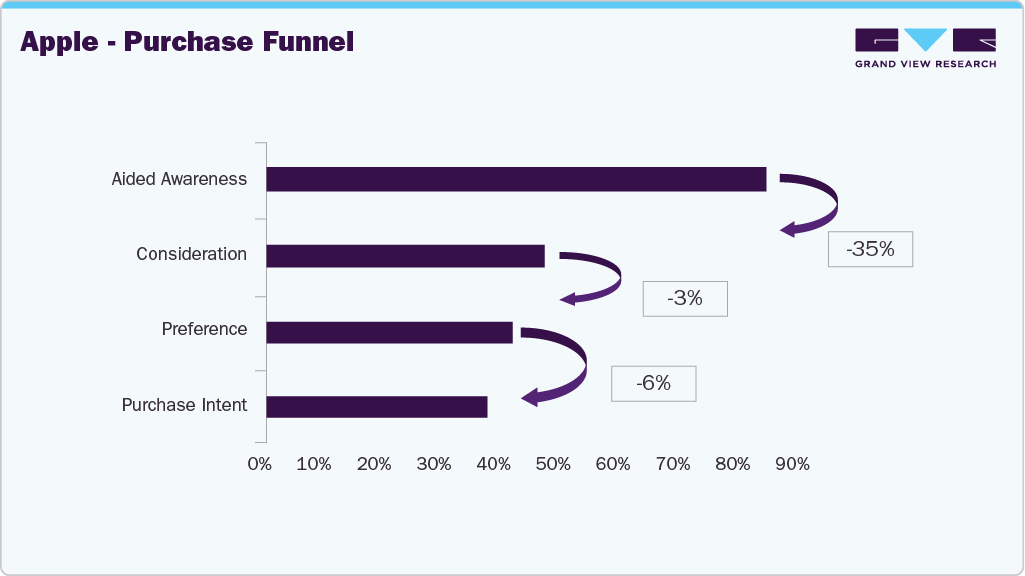
Evidently, Apple dominates the market with strong overall performance. Even after experiencing a significant drop from awareness to consideration, it still beats Samsung and emerges as the winner throughout the funnel.
Apple’s branding caters to consumers emotionally, focusing on selling a lifestyle or an ecosystem that consumers can relate to and that has shown consistent performance. Apple has a commendable repurchase rate, which can be attributed to its software that provides consistent updates for 5 to 7 years. Also, Apple is a leader in the industry for other smart devices, such as smartphones and laptops, which has prompted consumers to trust the brand.
While the overall NPS score of the leading brands varies from -26 to 62, Apple is leading the tablet industry with the highest NPS score (62) compared to other tablet brands in the market.

Talk to an analyst
Tell us what you need. We reply within one working day.
Service Guarantee
-
Insured Buying
This report has a service guarantee. We stand by our report quality.
-
Confidentiality
Your transaction & personal information is safe and secure.
-
Custom research service
Design an exclusive study to serve your research needs.
-
24/5 Research support
Get your queries resolved from an industry expert.