U.S. Wearables Consumer Insights - Usage, Attitudes, And Brand Performance Report
Introduction:
Smartwatches, AI-powered rings, and fitness bands are becoming increasingly popular in the United States, with more people using them for a range of purposes and activities. A good population of people use these devices for fitness and health tracking, such as heart rate monitoring, step counting, and workout tracking, which are standard features across most models. Additionally, there are more features like sleep monitoring, which shows the body's recovery, which is very helpful for athletes; water resistance, and much more, allowing swimmers and water sports enthusiasts to track their activities. Integration with smartphones and GPS enables consumers to receive notifications, answer calls, respond to messages, map tracking, and control music without pulling out their phones. Style is also a major factor with these devices, where users want trendy designs with multiple color options, which gives them flexible styling options. These devices, especially smartwatches, continue to gain functionality and consumer acceptance across all age groups. Also, Meta collaborated with Ray-Ban to introduce smart sunglasses that combine some of the features of a smartphone, such as taking photos, live streaming, and making calls, which is gaining popularity in the market. Now let’s look at some of the market trends:
-
Health & Fitness Tracking: Health and fitness tracking capabilities have become the primary purchasing driver for customers, with advanced features such as ECG monitoring, blood oxygen measurement, and sleep monitoring that provide the physical details essential to fitness. After COVID, the rising health consciousness among people is one of the major reasons for its demand.
-
Integration with Smartphones: Smartphones are an essential part of everyone’s life, and technology has advanced significantly, enabling smartwatches and fitness bands to seamlessly integrate with these devices, allowing users to receive notifications, control music, and manage calls from the watch. This integration level allows users to maintain connectivity, manage tasks, easily control various smartphone functions on their wrist, and make their smartwatch or bands an increasingly valuable tool for everyday life. Integrating not only with smartphones but with IoT devices (the Internet of Things) will provide users with a whole new experience of tasks like home control.
-
Customization and Fashion in Smartwatches: More brands are offering customizable designs, interchangeable bands, and various styles to appeal to consumers who want their smartwatch to match their style, and are collaborating with luxury brands to position smartwatches as fashion accessories. Moreover, a user can change the watch interface whenever they want, as per the requirement.
Methodology:
The insights covered in this report are drawn from GVR’s ‘Voice of Consumer Survey’ and its periodic updates. The latest survey represents 75,000+ consumer interviews conducted across 20 countries for 100+ product categories. These insights are specifically catered to the brands operating in the wearables industry to guide them in their strategic decision-making process. This report provides insights covering category usage & attitude, buying behavior, brand performance metrics, and brand health indicators of leading players in the U.S. wearables market.
Chapter 1: Usage and Attitude
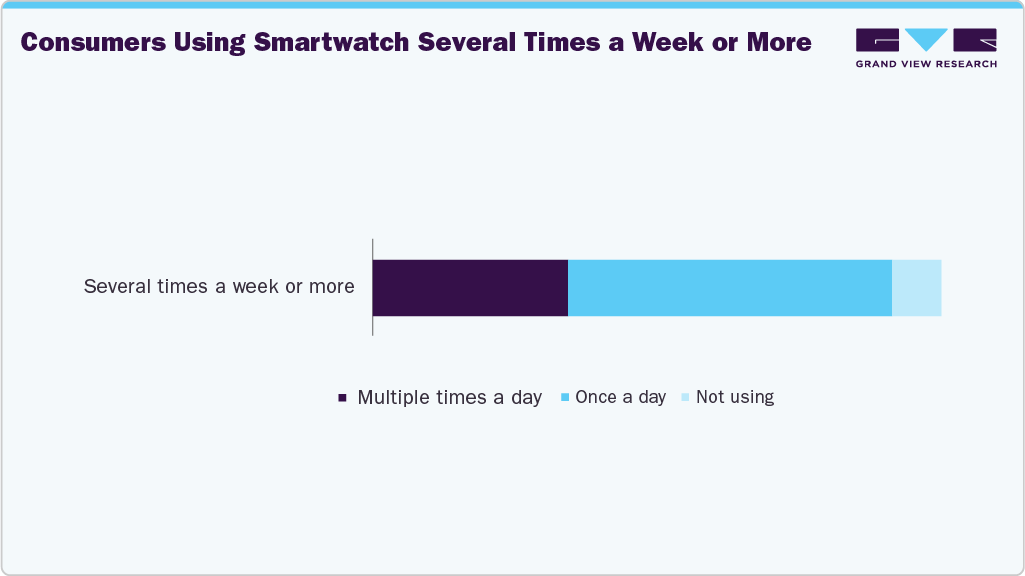
The functionality of wearables, especially smartwatches, has advanced significantly. Consumers are increasingly considering smartwatches as their everyday essentials. However, the adoption rate remains at a stage of improvement, but is expected to grow. Having said that, 35% of consumers use smartwatches multiple times a day. About 31% of them use smartwatches daily.
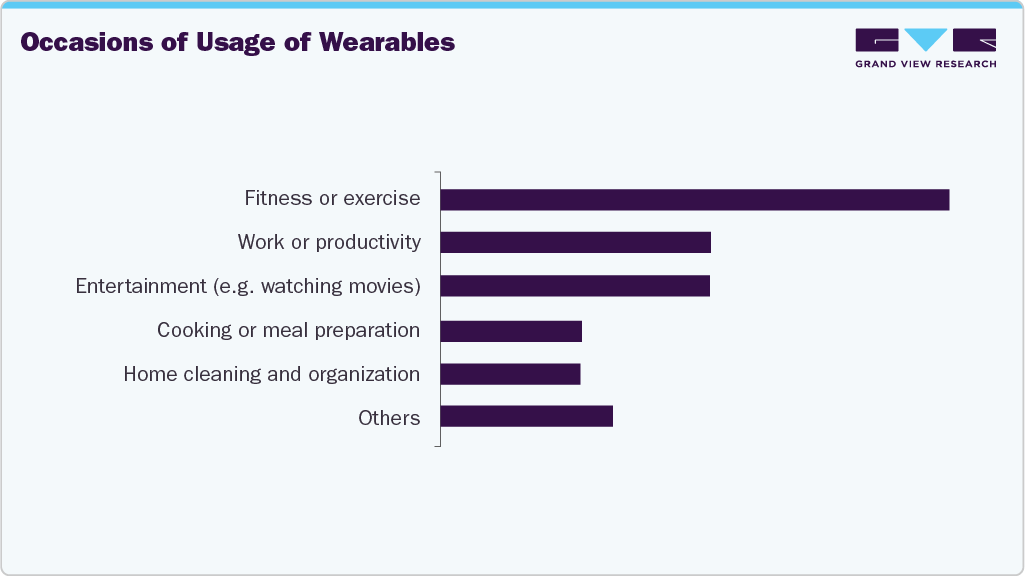
Wearables are primarily used for fitness and exercise, with about 5 out of 10 consumers relying on them to track activity, monitor health, and stay motivated. However, 25% also use their smartwatch for work and productivity, highlighting its growing role beyond wellness. From managing notifications to organizing schedules, smartwatches offer convenience on the go. As daily routines get busier, the ability to stay connected and efficient from your wrist is becoming increasingly valuable.
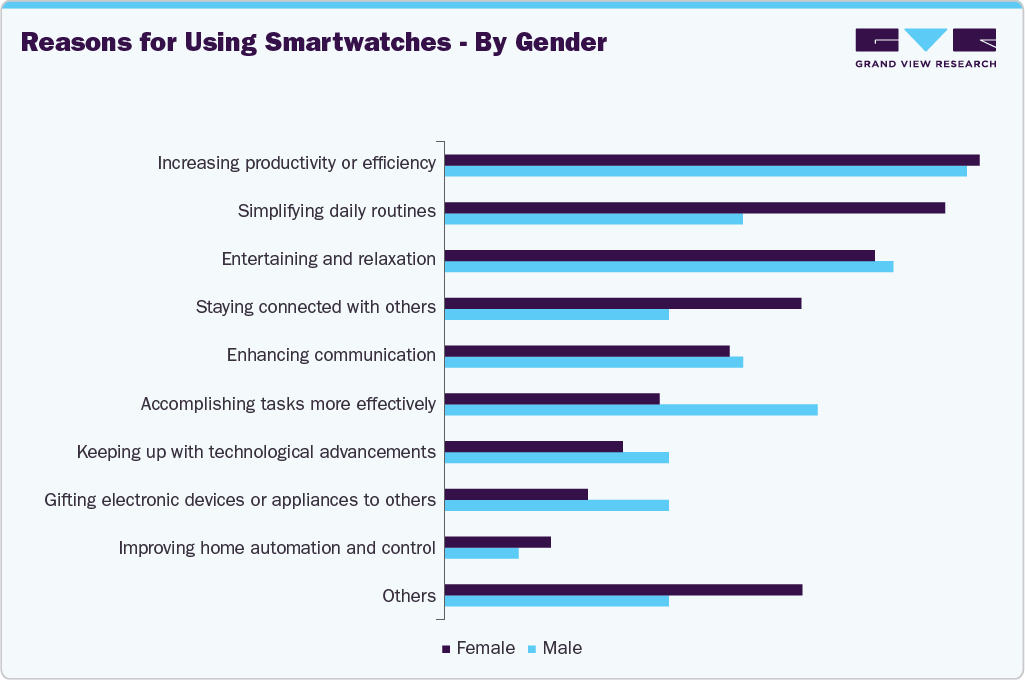
When it comes to using any wearable, especially a smartwatch, increasing productivity and efficiency is a top priority for both females and males, by helping them stay organized and on track throughout the day. For females, simplifying daily routines through reminders, messages, or health tracking adds practical value to their everyday lives. On the other hand, males often turn to smartwatches for entertainment and relaxation, using features such as music controls and quick media access. These preferences show how smartwatches are slowly becoming a versatile tool that adapts to different lifestyles and needs.
One common concern about wearables is the high cost of premium models or the latest technology. While consumers are drawn to advanced features such as health monitoring, GPS, and app integration, the high prices often make these devices feel out of reach for many. Another point of dissatisfaction is the perceived mismatch between the price and the actual usefulness of certain features, especially when everyday users do not fully utilize the high-end capabilities. In an increasingly value-conscious market, consumers are seeking wearables that strike the right balance between functionality, affordability, and longevity. To build lasting trust and appeal, brands must focus on offering meaningful innovation at a reasonable price.
Buying Behavior
Consumers consider the performance and reliability of the product, followed by its pricing, which in turn determines whether it is value for money or not, before purchasing a smartwatch or any other wearable. Product performance and reliability indicate that the companies that focus on product performance are likely to have an edge in the market, and consumers consider this as one of the major deciding factors to buy a smartwatch. Also, a brand’s reputation plays a significant role in helping consumers make informed decisions.
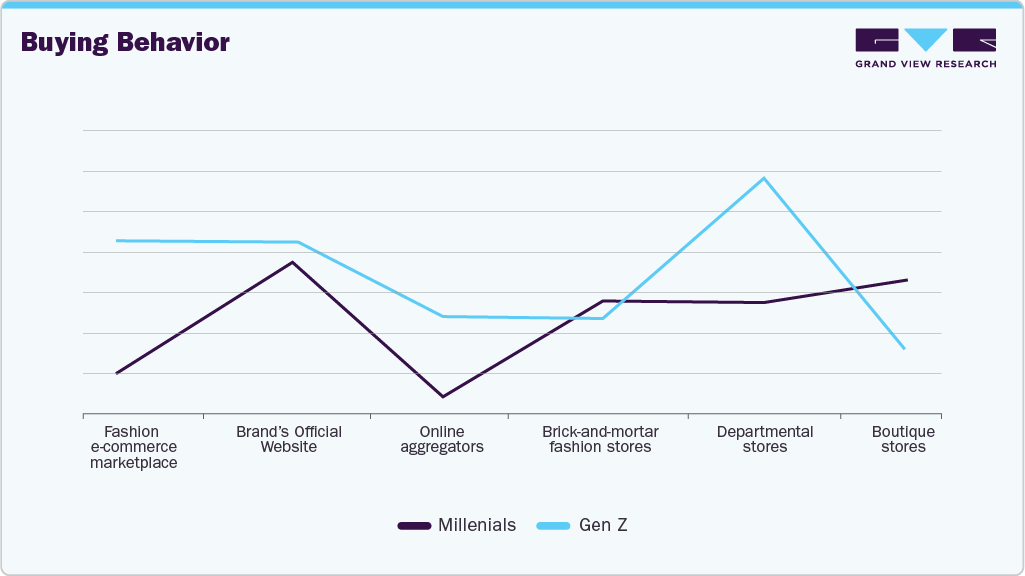
Now, when we talk about favored modes of purchase, a brand's official website and department stores with electronics sections are the most common choices. A deeper look reveals that, despite being tech-savvy as a generation, Gen Z prefers shopping at department stores with electronics sections, likely because of the hands-on experience and immediate access. Millennials, on the other hand, lean towards brand websites, valuing convenience, detailed product information, and trusted online transactions. This generational divide highlights the importance of offering a seamless shopping experience across both physical and digital touchpoints.
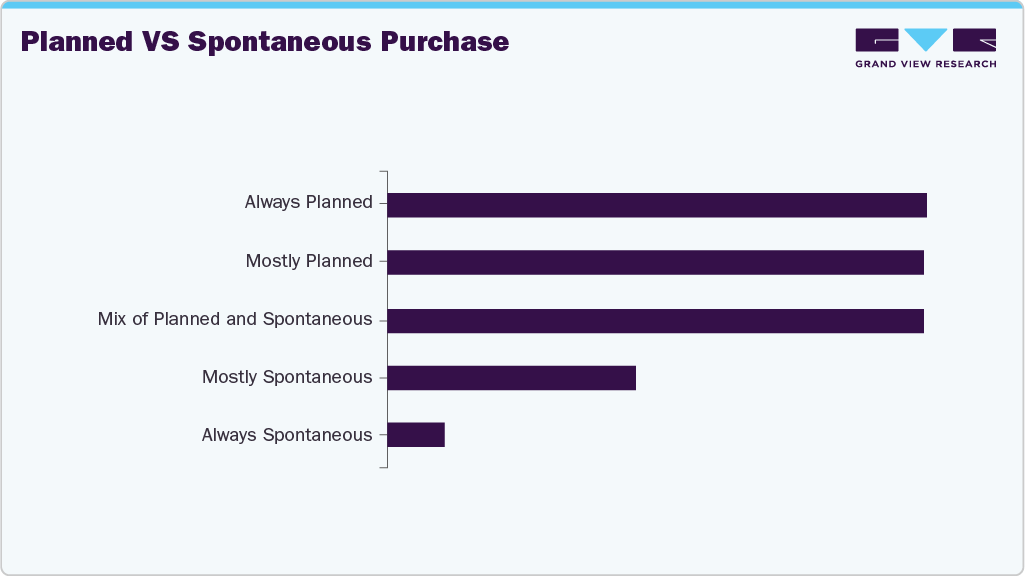
More than half of the consumers prefer to plan their purchase of any wearable. This indicates that a significant portion of your consumers prefer to make well-thought-out purchasing decisions. Even though only a very small percentage of people make a spontaneous purchase, most do so when prompted by lower prices or significant discounts, especially during seasonal sales such as Black Friday and New Year's.
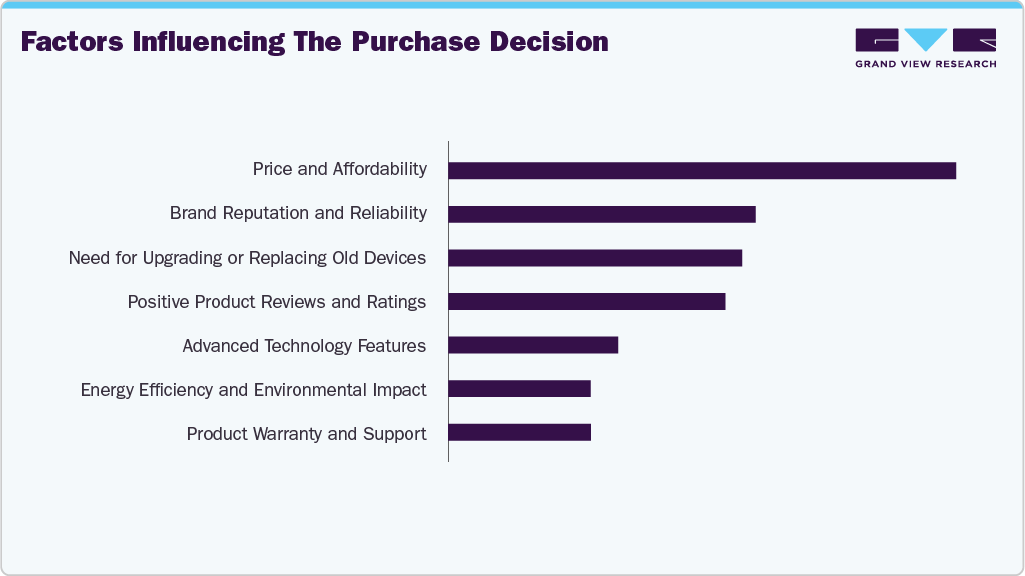
Adding to that, when we talk about what drives a purchase decision, mainly a planned one, the pricing of the product leads the way, with consumers demanding affordability. This trend is especially prominent in price-conscious segments, where shoppers are actively seeking value without compromising on quality, particularly in the growing smartwatch segment. At the same time, 32% of purchase decisions are also driven by a brand’s reputation and reliability, highlighting that a trusted brand name can be just as persuasive. Consumers are more likely to make a quick decision when they recognize a brand’s goodwill, consistent performance, and strong presence in the market, reinforcing the importance of both value and trust in purchase behavior.
Brand Power Play (Brand Health and Performance)
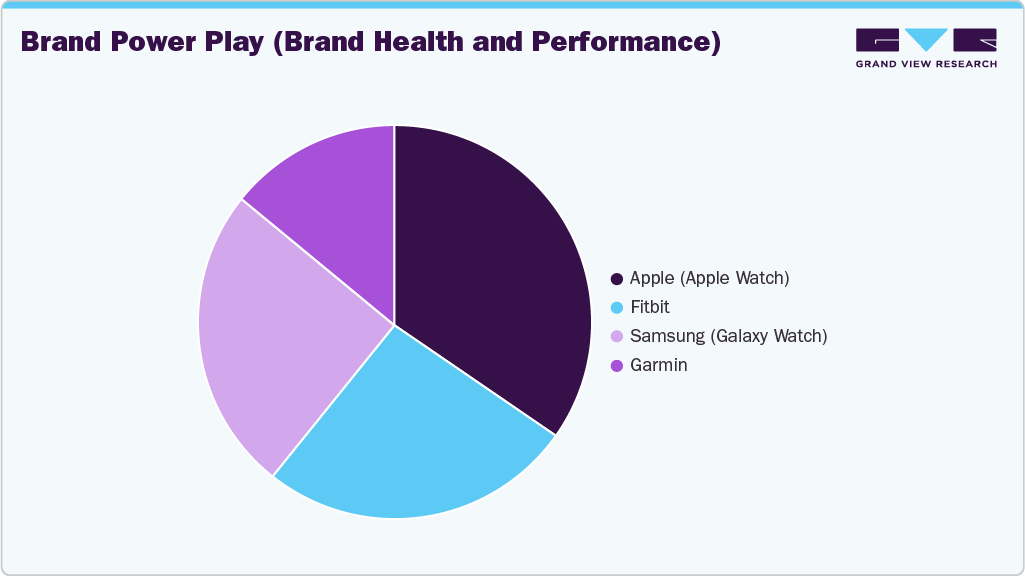
Some of the popular wearable brands in the U.S. include Apple, Samsung, Fitbit, and Garmin. Although the industry, especially for smartwatches, is quite competitive, Apple dominates the market with an 81% share (by awareness). It is due to its brand recognition, the seamless ecosystem, and innovative features like cellular connectivity.
Purchase Funnel
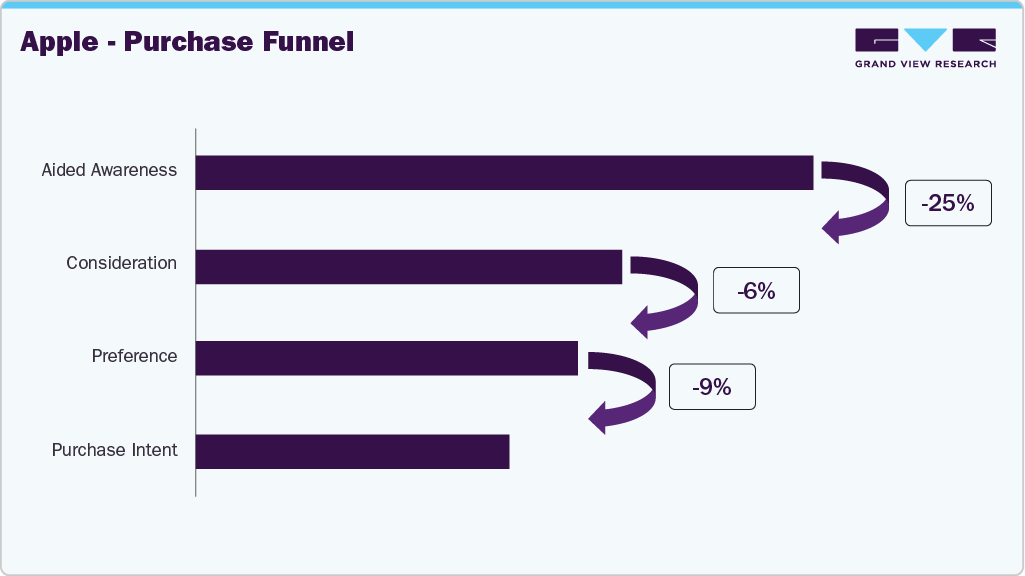
Although many smartwatch brands are well-known in the United States, only a few make it past the stage of mere consideration and become preferred. Apple is one of the prominent brands that exhibit a strong purchase funnel despite having significant drops at each step of the funnel. When it comes to awareness, although Fossil does not make the list of prominent brands, it shows potential by slowly climbing the ladder during consideration, improving its likelihood of becoming an emerging competitor. While brands like Samsung and Fitbit enjoy strong awareness, they fall short in performance throughout the funnel, particularly at the consideration stage, where drop-offs are very high. This is primarily due to low satisfaction levels, which, in turn, result in negative NPS scores, highlighting a lack of post-purchase delight among consumers. This is where Apple shines and takes a significant share of the pie, thanks to brand loyalty, a key driver of a brand’s performance.
While the overall NPS score of the leading brands varies from -54 to 50, with Apple leading the smartwatch industry with the highest NPS scores (50) compared to other Smartwatch brands in the market because of their focus on customer experience, innovation, and a well-defined brand identity.
