
- Home
- »
- Beauty & Personal Care
- »
-
CBD Skin Care Market Size And Share Report, 2026-2033GVR Report cover

CBD Skin Care Market (2026 - 2033)
Size, Share & Trends Analysis Report By Product (Facial Oils, Creams, Moisturizers, Lotions, Serums, Masks), By Source (Hemp), By Distribution Channel (Specialty Stores, Pharmacies, Online), By Region, And Segment Forecasts
Market Size, 2025
$2.9BMarket Estimate, 2026
$3.5BMarket Forecast, 2033
$14.8BCAGR, 2026–2033
22.1%CBD Skin Care Market Summary
The global CBD skin care market size was estimated at USD 2.9 billion in 2025 and is projected to grow from USD 3.5 billion in 2026 to USD 14.8 billion by 2033, growing at a CAGR of 22.6% from 2026 to 2033. The North America market held the largest share of 41.0% of the global market in 2025. This rapid growth is driven by increasing consumer awareness of the therapeutic benefits of cannabidiol (CBD) in treating skin conditions such as acne, inflammation, and aging.
 Source: Grand View Research, IR Documents, Primary Interviews, Paid DatabasesTo learn more about this report,
 Download Free Sample Report
 Key Market Trends & Insights
- By product: The creams, moisturizer, and lotions segment led the market with the largest revenue share of 38.4% in 2025 and is expected to grow at the fastest CAGR over the forecast period.
- By source: The hemp-derived cbd segment led the market with the largest revenue share of 84.5% in 2025.
Regional Highlights
- Largest regional market: North America (41.0% revenue share, 2025)
- By country: The U.S. held the largest market share in 2025.
Market Size & Forecast
- Market size in 2025: USD 2.9 Million
- Estimated market size in 2026: USD 3.5 Million
- Projected market size by 2033: USD 14.8 Million
- CAGR (2026–2033): 22.1%
Three ways to get this report
Buy it, customize it, or ask a question.Ask an Analyst
Analyst response in 1 business day
- AccessReport author, directly
- Reply timeWithin 1 working day
- No sales callDirect answer only
- FormatEmail reply
- CostFree, no cost
Get the Full Report
What the study covers
- FormatsPDF · Excel · Dashboard
- Timeline2026–2033 annual, 2025 base
- Coverage20+ countries, 5 regions
- Companies10+ key players profiled
Customize the Report
20% free customization
- IncludeCountries, segments, points
- TailorTo your product definition
- ExtendDeeper competitor detail
- OrA fully bespoke study
- Turnaround5–10 working days
In addition, the rising demand for natural and organic products, along with the ongoing legalization of CBD across various regions, is further fueling market expansion. Innovations in product formulations and growing acceptance in the wellness and beauty sectors also contribute to the market's upward trajectory.The FDA’s position on cannabis and cannabis-derived ingredients in cosmetics plays a key role in this market's regulation. While cosmetic products and ingredients, including cannabis-derived ones, are not subject to FDA premarket approval, they must comply with safety standards under the FD&C Act. Ingredients such as CBD are permitted, provided they do not adulterate or misbrand the product, making consumer safety paramount. This regulatory framework allows for the continued growth of hemp-derived CBD products, but manufacturers must ensure compliance with FDA guidelines to avoid legal issues or unsafe formulations.
 To learn more about this report, Download Free Sample Report
 Consumer preferences are significantly driving the market growth as more individuals seek natural and organic solutions for their skin care needs. As consumers become increasingly aware of the benefits of CBD, including its anti-inflammatory and antioxidant properties, they are opting for products that promote holistic wellness and overall skin health. For instance, brands like Lord Jones and Herbivore Botanicals are tapping into this trend by offering premium CBD-infused formulations that cater to health-conscious consumers. The growing preference for clean beauty products that are free from synthetic ingredients and harmful chemicals has also led to a surge in demand for CBD skincare, with consumers actively seeking vegan, cruelty-free, and sustainable options.
The market for CBD skin care is poised for substantial growth and presents numerous opportunities for brands looking to innovate and expand their offerings. With a projected CAGR of 21.2% in the forecast period in the U.S. alone, the market is at a high growth stage for new entrants and product development. For example, the launch of specialized CBD products targeting specific skin concerns, such as acne or aging, is gaining traction, with companies like Kimirica introducing tailored formulations that appeal to diverse consumer needs. In addition, the integration of CBD into luxury skincare lines, such as Estée Lauder’s recent introduction of CBD-infused products, reflects the increasing acceptance of CBD in mainstream beauty. As e-commerce continues to thrive, brands have the opportunity to reach a broader audience through online platforms, utilizing social media marketing and influencer partnerships to drive awareness and engagement.
Market Dynamics
The CBD skin care market is witnessing strong growth, driven by increasing consumer preference for natural, plant-based, and wellness-oriented cosmetic products. CBD infused skincare products are increasingly being adopted for their perceived anti-inflammatory, antioxidant, and skin-soothing properties. These products are widely used in formulations targeting acne, eczema, psoriasis, skin aging, dryness, and sensitivity. Rising awareness of clean beauty trends, combined with growing acceptance of hemp-derived ingredients in cosmetic formulations, is expected to continue driving market expansion. In addition, the shift toward holistic wellness and self-care routines is further supporting demand for CBD-based skincare solutions.
The increasing consumer inclination toward natural, chemical-free, and multifunctional skincare products is a major factor driving the CBD skin care market. CBD is being widely incorporated into creams, serums, oils, masks, and lotions due to its potential to reduce inflammation, regulate sebum production, and improve overall skin health. The rising prevalence of skin-related conditions such as acne, eczema, psoriasis, and dermatitis, driven by pollution, stress, and changing lifestyles, is further accelerating demand for therapeutic skincare alternatives. Additionally, growing consumer awareness regarding the adverse effects of synthetic chemicals such as parabens, sulfates, and artificial fragrances is pushing the shift toward plant-based formulations. According to industry studies, a significant proportion of millennial and Gen Z consumers prefer clean-label beauty products, with CBD emerging as a key ingredient in the “natural active” segment. The expanding legalization of hemp-derived CBD in cosmetic applications across several regions is also supporting product innovation and market penetration.
Despite strong demand potential, the CBD skin care market faces significant restraints related to regulatory uncertainty and lack of standardized product regulations across regions. The legal status of CBD varies widely, with differing interpretations of hemp-derived ingredients in cosmetics across countries and even within states. This creates challenges for global brands in product formulation, labeling, marketing, and distribution. In addition, concerns regarding product quality, dosage consistency, and potential contamination (such as THC traces, pesticides, and heavy metals) have raised skepticism among consumers and regulators. The absence of universally accepted testing standards and certification frameworks further complicates market transparency. According to regulatory assessments, inconsistent compliance requirements and evolving cannabis-related laws continue to create barriers for large-scale commercialization, limiting market expansion in certain regions.
The growing convergence of skincare, wellness, and therapeutic beauty is creating substantial opportunities in the CBD skin care market. Consumers are increasingly seeking premium, science-backed formulations that combine CBD with active ingredients such as hyaluronic acid, niacinamide, peptides, and botanical extracts for enhanced efficacy. This trend is driving product innovation in anti-aging, stress-relief, and restorative skincare categories. The rapid expansion of e-commerce and direct-to-consumer (DTC) beauty brands is further accelerating CBD skincare adoption, enabling brands to reach niche wellness-focused audiences globally. Additionally, increasing investment in clinical research on CBD’s dermatological benefits is improving product credibility and consumer trust. The rising popularity of spa and wellness-based skincare treatments incorporating CBD is also creating new commercialization channels. As clean beauty and holistic wellness trends continue to evolve, CBD-infused skincare is expected to gain stronger positioning within the premium personal care segment.
Analyst Perspective
The CBD skin care market sits at the intersection of accelerating clean beauty adoption, rising consumer demand for plant-based therapeutic ingredients, and the broader expansion of the global wellness economy - positioning it as one of the fastest-evolving niches within the premium personal care segment. A structurally supportive backdrop is emerging from increasing prevalence of skin conditions such as acne, eczema, psoriasis, and inflammation-driven sensitivities, alongside growing consumer skepticism toward synthetic cosmetic formulations. The central competitive advantage, however, will belong to brands that successfully transition CBD skincare from a trend-driven ingredient play into a clinically validated, dermatology-backed wellness category - integrating CBD with evidence-based actives, standardized dosing, and transparent regulatory compliance to build trust, enable premium pricing, and secure long-term consumer loyalty in an increasingly crowded and credibility-sensitive beauty landscape.
Product Insights
Based on product, the creams, moisturizer, and lotions segment led the market with the largest revenue share of 38.4% in 2025 and is expected to grow at the fastest CAGR over the forecast period. This significant market share is attributed to the growing popularity of topical applications for targeted relief and skin benefits such as hydration, anti-inflammatory properties, and anti-aging effects. Consumers are increasingly seeking CBD-infused products for everyday skin care routines, particularly for their ability to soothe and nourish sensitive or irritated skin. In addition, the wide availability of these products across retail and online platforms has boosted their accessibility and demand.
The serum segment is projected to grow at the fastest CAGR of 22.7% from 2025 to 2030, driven byrising consumer demand for potent, concentrated skin care solutions that target specific concerns such as wrinkles, fine lines, and hyperpigmentation. The increasing adoption of CBD serums is also linked to their enhanced absorption properties, allowing for deeper skin penetration and more effective delivery of CBD's anti-inflammatory and antioxidant benefits. In addition, the growing trend towards personalized and high-performance skin care, along with expanding product innovation in CBD formulations, is further boosting the demand for CBD-infused serums.
Source Insights
Based on source, the hemp-derived cbd segment led the market with the largest revenue share of 84.5% in 2025, reflecting strong consumer demand for natural, plant-based ingredients. The growing preference for hemp-derived CBD products is closely tied to their association with wellness, anti-inflammatory properties, and overall skin health.
The marijuana-derived CBD segment is projected to grow at the fastest CAGR of 22.2% from 2025 to 2030, driven by the expanding legalization of marijuana in various regions and growing awareness of its potential therapeutic benefits. Marijuana-derived CBD is often viewed as more potent, which appeals to consumers looking for stronger effects in skin care treatments, such as for chronic inflammation or other skin conditions. As regulations continue to evolve, more brands are entering this segment, offering innovative formulations that combine the benefits of both CBD and other cannabinoids, further fueling market growth.
Distribution Channel Insights
Based on distribution channel, the specialty beauty store segment led the market with the largest revenue share of 35.90% in 2024, driven by the stores' ability to offer curated, premium products alongside personalized customer experiences. Consumers are increasingly seeking high-quality, niche CBD-infused skin care products that are not widely available in mass-market retail outlets. Specialty beauty stores, such as Sephora and Ulta, have capitalized on this demand by partnering with luxury and indie CBD brands, offering exclusive product lines and in-store education to enhance consumer trust and knowledge. These stores also cater to a clientele that values wellness, clean beauty, and ingredient transparency, which has bolstered CBD product adoption through targeted marketing and expert consultations.
The online segment is projected to grow at the fastest CAGR of 22.6% from 2025 to 2030, driven by the increasing consumer shift toward digital shopping platforms. This growth is fueled by the convenience of e-commerce, the ability to access a wider range of products, and the rise of direct-to-consumer (DTC) CBD brands. Many CBD skin care companies are leveraging social media, influencer marketing, and targeted online ads to reach tech-savvy consumer while providing detailed product information and customer reviews that build trust. In addition, the growing acceptance of CBD has encouraged major online retailers like Amazon and specialty beauty e-tailers to expand their CBD product offerings, further accelerating the market shift toward online channels.
Regional Insights
North America dominated the CBD skin care market with the largest revenue share of 41.0% in 2025, driven by evolving regulatory frameworks across the U.S. and Canada. In the U.S., while the 2018 Farm Bill legalized hemp-derived CBD with less than 0.3% THC at the federal level, the FDA has not yet established clear regulations for its use in cosmetics, leading to a patchwork of state-specific rules. Some states allow CBD in skin care without restrictions, while others impose stricter guidelines. In Canada, CBD is regulated under the Cannabis Act, and cosmetic products containing CBD require licensing and adherence to specific THC content limits. The region's regulatory complexity requires manufacturers to navigate varying legal landscapes, ensuring compliance while capitalizing on growing consumer demand for CBD skin care products.
 To learn more about this report, Download Free Sample Report
 U.S. CBD Skin Care Market Trends
The CBD skin care market in the U.S. held the largest share in the North America region in 2025, driven by expanding consumer awareness of CBD's therapeutic benefits for skin conditions like acne, eczema, and aging. U.S. growth is further supported by the increasing availability of premium CBD skin care brands through both specialty retailers and e-commerce platforms. Regulatory challenges persist due to the FDA’s slow development of comprehensive guidelines, but consumer demand remains robust, with brands leveraging influencer marketing and wellness trends to accelerate market penetration. The popularity of clean beauty and natural ingredients continues to drive the U.S. market forward.
Europe CBD Skin Care Market Trends
The CBD skin care market in Europe accounted for the revenue share of 30.11% of the global market in 2024. European consumers are particularly drawn to the anti-inflammatory and antioxidant properties of CBD for skin care, which aligns with their preference for natural wellness products. The regulatory environment in Europe, guided by the European Commission’s classification of CBD as a novel food and cosmetic ingredient, varies by country but is generally more structured compared to the U.S., offering clearer pathways for product launches. Key markets such as the UK, Germany, and France are leading in both demand and innovation within the CBD skin care segment.
Asia Pacific CBD Skin Care Market Trends
The CBD skin care market in Asia Pacific is expected to grow at the fastest CAGR of 22.8% from 2025 to 2030, fueled by growing awareness of CBD’s skin benefits and the increasing acceptance of cannabis-derived products in countries like Japan, South Korea, and Australia. Although regulatory restrictions on cannabis remain strict in some parts of the region, markets such as Hong Kong have relaxed rules on CBD, creating opportunities for brands to introduce high-end, CBD-infused skin care lines. The region’s demand for premium beauty products, combined with the rise of e-commerce and cross-border shopping, is contributing to the rapid expansion of CBD skin care in Asia Pacific.
Key CBD Skin Care Company Insights
The market is highly fragmented, with a mix of established cosmetic brands, indie companies, and emerging CBD-focused startups competing for market share. Key players include major beauty brands like Estée Lauder and Sephora, which have introduced CBD-infused products through their premium lines, alongside dedicated CBD companies such as Cannuka, Lord Jones, and Vertly. These brands are differentiating themselves through unique formulations, organic certifications, and targeted marketing efforts that emphasize the wellness and therapeutic benefits of CBD.
Key CBD Skin Care Companies:
The following are the leading companies in the cbd skin care market. These companies collectively hold the largest market share and dictate industry trends.
- L’Oréal (Kiehl’s)
- 707 Flora, LLC
- CBD For Life
- Charlotte's Web, Inc.
- Elixinol
- Sweet Earth LLC
- The CBD Skincare Co
- Cannabliss Organic LLC
- Herbivore Botanicals
- Lab To Beauty
Competitive Benchmarking
Category
Operating Strategies
Competitive Edge
Weakness
Established Players (e.g., Charlotte’s Web, Cannuka, Kiehl’s CBD range, Lord Jones, Estée Lauder CBD initiatives)
- Expand premium CBD-infused skincare portfolios across facial care, body care, and therapeutic wellness segments
- Focus on dermatology-backed formulations and clinically tested CBD concentrations
- Strengthening omnichannel presence through luxury retail, e-commerce, and specialty wellness stores
- Strong brand equity and high consumer trust in skincare and wellness
- Advanced R&D capabilities enabling scientifically validated formulations
- Wider distribution networks (global retail + online presence)
- High production and compliance costs due to strict CBD regulations
- Limited product innovation speed compared to niche agile brands
- Regulatory uncertainty across countries restricting expansion
Emerging Players (e.g., CBD For Life, Vertly, Apothecanna, Herbivore CBD lines, new indie clean beauty CBD startups)
- Target niche segments such as acne care, anti-inflammatory skincare, and sensitive skin solutions
- Heavy reliance on D2C (direct-to-consumer) and social media marketing
- Use influencer collaborations and wellness/community branding
- High agility in launching innovative and trend-responsive products
- Strong engagement with younger, wellness-focused consumers
- Lower pricing enabling broader trial adoption
- Limited regulatory expertise and compliance infrastructure
- Weak global distribution compared to established beauty giants
- Lower consumer trust and brand recognition
Recent Developments
-
In June 2024, Samson Extracts, an Alabama-based manufacturer of bulk CBD products and one of the top ten hemp processors in the U.S., has launched its premier CBD skincare brand, Wiregrass Wellness. The brand offers a range of six high-quality, vegan-friendly products designed for all skin types, emphasizing sustainability and natural ingredients, including formulations that are gluten-free, sulfate-free, and paraben-free.Wiregrass Wellness products are available for nationwide shipping and will soon be introduced in stores across Alabama and other Southern states in the U.S.
-
In June 2024, NOW Health Group has launched a new line of THC-free CBD topical products under its NOW Solutions brand, including a CBD Joint & Muscle Cream, CBD Balm, and CBD Massage Oil, formulated with broad-spectrum hemp and various botanical ingredients to support muscles, joints, and skin. NOW's decision to enter the CBD market reflects a commitment to delivering safe, effective products backed by growing research on the benefits of CBD in topical applications, with the assurance that these products comply with legal requirements across all 50 states in the U.S.
-
In February 2023, Kenneth Cole launched CBD skincare collection aligned with The 95th Academy Awards 2023.
CBD Skin Care Market Report Scope
Report Attribute
Details
Market size in 2025
USD 2.9 billion
Estimated market size in 2026
USD 3.5 billion
Projected market size by 2033
USD 14.8 billion
Growth rate
CAGR of 22.1% from 2026 to 2033
Base year for estimation
2025
Historical data
2021 - 2024
Forecast period
2026 - 2033
Quantitative units
Revenue in USD million/billion and CAGR from 2026 to 2033
Report coverage
Revenue forecast, company ranking, competitive landscape, growth factors, and trends
Segments covered
Product, source, distribution channel, region
Regional scope
North America; Europe; Asia Pacific; Latin America; MEA
Country scope
U.S.; Canada; Mexico; Germany; UK; France; Italy; Spain; Rest of Europe; China; Japan; India; South Korea; Australia; Rest of Asia Pacific; Brazil; Rest of Latin America; South Africa; UAE; Rest of Middle East & Africa
Key companies profiled
L’Oréal (Kiehl’s);707 Flora, LLC; CBD For Life; Charlotte's Web, Inc. ; Elixinol; Sweet Earth LLC; The CBD Skincare Co; Cannabliss Organic LLC; Herbivore Botanicals; Lab To Beauty
Customization scope
Free report customization (equivalent up to 8 analysts' working days) with purchase. Addition or alteration to country, regional & segment scope.
Pricing and purchase options
Avail customized purchase options to meet your exact research needs. Explore purchase options
Global CBD Skin Care Market Report Segmentation
This report forecasts revenue growth at the global, regional, and country levels and provides an analysis of the latest industry trends and opportunities in each of the sub-segments from 2021 to 2033. For this study, Grand View Research has segmented the global CBD skin care market report based on product, source, distribution channel, and region.
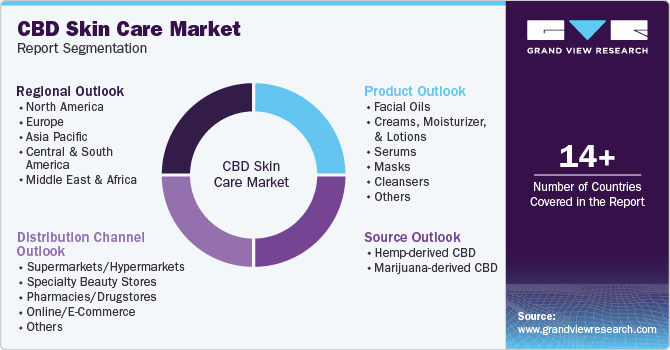 To learn more about this report, Download Free Sample Report
 -
Product Outlook (Revenue, USD Million, 2021 - 2033)
-
Facial Oils
-
Creams, Moisturizer, and Lotions
-
Serums
-
Masks
-
Cleansers
-
Others
-
-
Source Outlook (Revenue, USD Million, 2021 - 2033)
-
Hemp-derived CBD
-
Marijuana-derived CBD
-
-
Distribution Channel Outlook (Revenue, USD Million, 2021 - 2033)
-
Supermarkets/Hypermarkets
-
Specialty Beauty Stores
-
Pharmacies/Drugstores
-
Online/E-Commerce
-
Others
-
-
Regional Outlook (Revenue, USD Million, 2021 - 2033)
-
North America
-
U.S.
-
Canada
-
Mexico
-
-
Europe
-
Germany
-
UK
-
France
-
Italy
-
Spain
-
-
Asia Pacific
-
China
-
India
-
Japan
-
Australia
-
-
Central & South America
-
Brazil
-
-
Middle East & Africa
-
South Africa
-
UAE
-
-
Research Methodology
The CBD skin care market figures in this report are based on a proven research process that combines executive interviews with secondary research from proprietary databases, company filings, and recognized regulatory and institutional sources. Market size is built through value-chain sizing - reconciling supply-side and demand-side estimates - and triangulated with bottom-up and top-down approaches. Every estimate passes multiple levels of expert validation before publication, with each CBD skin care segment quantified using the revenue-capture definitions in the table below.
Segment Definition
Segment - Type
Revenue capture definition
Facial Oils
This segment covers the revenues generated through the sales of CBD Skin Care Market and similar products derived from cannabidiol-infused facial oils that are used for deep nourishment, hydration, and skin barrier support. These oils are typically formulated with CBD blended with carrier oils such as jojoba, argan, or rosehip oil to enhance skin absorption and deliver antioxidant benefits. Real-life examples include CBD-infused facial oils used in nighttime skincare routines to reduce dryness and improve skin glow.
Creams, Moisturizer, and Lotions
This segment covers the revenues generated through the sales of CBD Skin Care Market and related moisturizing formulations designed to hydrate, protect, and soothe the skin using cannabidiol as a key active ingredient. These products often target issues such as inflammation, acne, and skin sensitivity while maintaining skin moisture balance. Real-life examples include CBD daily moisturizers and body lotions used for calming irritated or dry skin after sun exposure.
Serums
This segment covers the revenues generated through the sales of CBD Skin Care Market and similar concentrated skincare formulations infused with cannabidiol that deliver high-potency active ingredients directly into the skin. CBD serums are typically lightweight and designed to address concerns such as aging, redness, and uneven skin tone. Real-life examples include CBD anti-aging serums applied before moisturizers in skincare routines for enhanced skin repair and rejuvenation.
Masks
This segment covers the revenues generated through the sales of CBD Skin Care Market and related treatment-based skincare products that incorporate cannabidiol for intensive skin therapy. CBD face masks are designed to detoxify, hydrate, or calm the skin over short application periods. Real-life examples include CBD sheet masks or clay masks used in spa treatments or at-home skincare routines for deep cleansing and relaxation.
Cleansers
This segment covers the revenues generated through the sales of CBD Skin Care Market and similar cleansing products infused with cannabidiol that help remove dirt, oil, and impurities while soothing the skin. These formulations are often used as part of daily skincare routines to maintain clean and balanced skin without over-drying. Real-life examples include CBD facial cleansers and cleansing balms used to gently remove makeup and pollutants.
Others
This segment covers the revenues generated through the sales of CBD Skin Care Market and other ancillary CBD-infused skincare products that do not fall under standard categories but still contribute to overall skin health and wellness. This includes products like CBD lip balms, eye creams, roll-ons, and spot treatments. Real-life examples include CBD-infused under-eye creams used for reducing puffiness and CBD balms applied for targeted skin relief.
Estimation Model
Title
Key Question
Description
Epidemiology Layer
Who has a relevant condition?
Identify prevalence of skin concerns such as acne, eczema, psoriasis, dermatitis, and inflammation-driven conditions across key populations. These condition pools define the clinically relevant CBD skincare demand base.
Digital Access Layer
Who can be reached digitally?
Assess smartphone penetration, e-commerce access, and beauty/skincare online engagement across regions. This filters the reachable consumer base for CBD-infused skincare brands via D2C and online retail channels.
Behavioural Layer
Who actively uses CBD skincare?
Apply skincare adoption rates and wellness-driven consumption trends (clean beauty, natural/organic preference). Estimate CBD trial and repeat usage driven by anti-inflammatory and calming benefits perception.
Monetisation Layer
How much revenue is generated?
Estimate revenue via average CBD skincare spend per user (premium pricing vs standard skincare), plus retail + D2C + spa/dermatology channel sales. Include higher ARPU from premium therapeutic and wellness positioning.
Delivered Customizations
This report has been delivered with the following In-depth customizations
CLIENT REQUEST
CUSTOMIZATION DELIVERED
VALUE ADDS
CBD Skin Care Product Segmentation & Usage Trends
Conducted a focused analysis of CBD-infused skincare products covering facial oils, creams & moisturizers, serums, masks, cleansers, and other topical formulations, along with usage patterns across acne treatment, anti-inflammatory care, and sensitive skin management.
Helps stakeholders identify high-growth product categories, assess consumer adoption across skincare routines, and evaluate commercialization opportunities in CBD-based beauty and dermatology-aligned wellness products.
CBD Beauty, Wellness & Preventive Skincare Adoption Trends
Evaluated adoption trends for CBD skincare in stress-relief beauty, anti-aging solutions, hydration-focused routines, spa-at-home products, and chronic skin condition management, including clean beauty positioning, subscription skincare models, and dermatologist-recommended CBD formulations.
Provides insights into emerging wellness-driven skincare demand, unmet consumer needs in natural/plant-based cosmetics, and commercially attractive CBD skincare segments for brand positioning and innovation strategies.
CBD Skincare Infrastructure, Formulation & Regulatory Opportunity Assessment
Assessed demand for advanced CBD skincare solutions including nanoemulsion delivery systems, personalized skincare formulations, AI-driven skin diagnostics, hemp sourcing ecosystems, and regulatory compliance frameworks governing THC limits and cosmetic approvals.
Supports investment and expansion strategies by identifying scalable formulation technologies, evaluating regulatory readiness, and strengthening long-term growth opportunities in science-backed CBD skincare innovation.
Frequently Asked Questions About This Report
The global CBD skin care market size was estimated at USD 2.9 billion in 2025 and is expected to reach USD 3.5 billion in 2026.
The global CBD skin care market is expected to grow at a compound annual growth rate of 22.6% from 2026 to 2033 to reach USD 14.8 billion by 2033.
The CBD skin care market in North America accounted for a share of 41.3% of the global market revenue in 2025, driven by evolving regulatory frameworks across the U.S. and Canada.
Some key players operating in the CBD skin care market include L’Oréal (Kiehl’s), 707 Flora, LLC, CBD For Life, Charlotte's Web, Inc., Elixinol, Sweet Earth LLC, The CBD Skincare Co, Cannabliss Organic LLC, Herbivore Botanicals, and Lab To Beauty.
Key factors that are driving the market growth include growing awareness with respect to the benefits of CBD infused personal care products.
Creams, Moisturizer, and Lotions segment has the largest market share of 38.4% in 2025.
Hemp-Derived CBD segment leads the CBD skin care market by 84.5% in 2025.
The CBD skin care market is seeing strong growth in clean-label, natural formulations, with brands focusing on organic CBD, vegan ingredients, and sustainability-driven packaging.
Through Specialty beauty stores distribution channel leads the CBD skin care market by 35.8% in 2025.
About the Author(s)
Beauty & Personal Care Research Team
Consumer Goods · Beauty & Personal CareThis report was authored by the beauty & personal care research team at Grand View Research - comprising two research analysts, one senior research analyst, and one industry expert - with specialized expertise in the beauty & personal care segment of the consumer goods industry. All findings are based on proprietary consumer goods databases, executive interviews, and regulatory analysis, subject to internal peer review prior to publication.
Last Updated:
Speak to Analyst

Customize this report to your needs - add regions, segments, or data points, with 20% free customization.
Or view our licence options:


ISO 9001:2015 & 27001:2022 Certified
We are GDPR and CCPA compliant! Your transaction & personal information is safe and secure. For more details, please read our privacy policy.


