
- Home
- »
- Electronic & Electrical
- »
-
Greeting Cards Market Size And Share Report, 2026-2033GVR Report cover

Greeting Cards Market (2025 - 2033)
Size, Share & Trends Analysis Report By Type (E-Card, Traditional Card), By Distribution Channel (Online, Offline), By Region (North America, Europe, Asia Pacific, Central & South America, Middle East & Africa), And Segment Forecasts
Market Size, 2025
$19.8BMarket Estimate, 2026
$20.1BMarket Forecast, 2033
$23.0BCAGR, 2026–2033
1.9%Greeting Cards Market Summary
The global greeting cards market size was valued at USD 19.8 billion in 2025 and is projected to grow from USD 20.1 billion in 2026 to USD 23.0 billion by 2033, at a CAGR of 1.9% from 2026 to 2033. North America dominated the greeting cards market with the largest revenue share of 42.7% in 2025. The industry is experiencing renewed momentum, largely due to the rising cultural emphasis on celebrating milestones and special occasions.
 Source: Grand View Research, IR Documents, Primary Interviews, Paid DatabasesTo learn more about this report,
 Download Free Sample Report
 Key Market Trends & Insights
- By type: Traditional greeting cards segment held the largest market share of 73.3% in 2025.
- By distribution channel: Offline channel segment held the largest market share of 63.3% in 2025.
Regional Highlights
- Largest regional market: North America (42.7% revenue share, 2025)
- Fastest-growing regional market: Europe (highest CAGR, 2026-2033)
- By country: The U.S. held the largest market share in 2025.
Market Size & Forecast
- Market size in 2025: USD 19.8 Billion
- Estimated market size in 2026: USD 20.1 Billion
- Projected market size by 2033: USD 23.0 Billion
- CAGR (2026-2033): 1.9%
Three ways to get this report
Buy it, customize it, or ask a question.Ask an Analyst
Analyst response in 1 business day
- AccessReport author, directly
- Reply timeWithin 1 working day
- No sales callDirect answer only
- FormatEmail reply
- CostFree, no cost
Get the Full Report
What the study covers
- FormatsPDF · Excel · Dashboard
- Timeline2026–2033 annual, 2025 base
- Coverage20+ countries, 5 regions
- Companies10+ key players profiled
Customize the Report
20% free customization
- IncludeCountries, segments, points
- TailorTo your product definition
- ExtendDeeper competitor detail
- OrA fully bespoke study
- Turnaround5–10 working days
As people continue to seek meaningful ways to share affection, the ritual of exchanging cards remains deeply relevant. Notably, there has been growing interest in handmade cards, which are valued for their personal and thoughtful appeal. Industry figures from the UK indicate that sales of individual greeting cards reached approximately USD 1.7 billion in 2024, underscoring their continued relevance for events ranging from birthdays to festive holidays. In the United States, early 2025 insights reinforce the same behavior, as billions of cards are still exchanged every year, particularly birthday cards, which consistently lead sales worldwide. This continued preference for physical cards, despite the availability of digital alternatives, highlights their enduring emotional and keepsake value. At the same time, the emergence of interactive cards and e-card innovations is expanding the category by offering new avenues for personalized messaging and expression.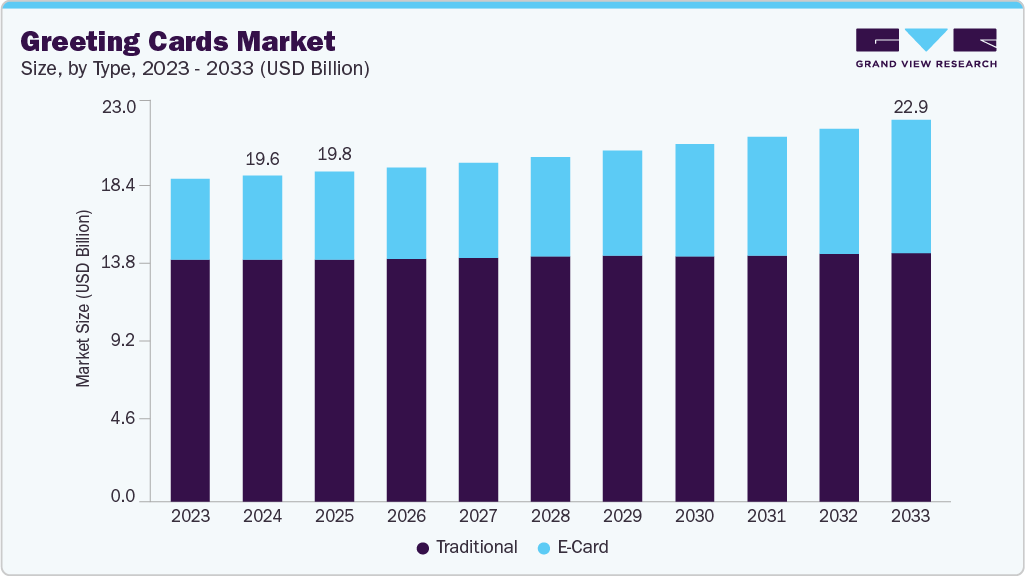 To learn more about this report, Download Free Sample Report
 The growing relevance of greeting cards is also mirrored in specific seasonal occasions. For example, nearly 40% of Mother’s Day shoppers in 2024 included a greeting card in their gift-buying, with a surge of purchases occurring in the week leading up to the holiday. This uptick reflects broader trends among younger consumers, particularly Gen Z, who are increasingly participating in seasonal holidays and often prefer gestures that feel genuine and heartfelt. As gifting trends evolve, greeting cards are proving especially resilient by offering an accessible and meaningful way to personalize celebrations, bridging the gap between quick convenience and emotional sincerity.
The COVID-19 pandemic caused widespread disruption across the greeting card industry, primarily due to the temporary closure of non-essential retail outlets and interruptions in global supply chains. These constraints not only limited the production and distribution of physical cards but also altered consumer behavior. With fewer opportunities to shop in-store, many customers shifted to digital greetings or online card platforms, marking a temporary but notable change in how expressions of care and celebration were shared. Through strategies such as relocating cards to prominent locations outside the usual seasonal aisles and positioning them near gifting and high-traffic areas, brands have successfully reintroduced the category to everyday visibility. These efforts, combined with the expansion of personalization options through online platforms, have helped maintain relevance in a hybrid retail environment where both digital convenience and physical keepsakes coexist.
Market Dynamics
The global greeting cards market is primarily driven by high-frequency, occasion-based purchase behavior, where demand is generated through recurring life events and seasonal peaks rather than continuous consumption. Market size is structurally supported by three core variables: occasion frequency per consumer, penetration of card usage per occasion, and average selling price across mass and premium segments. Growth is increasingly shaped by a shift from low-value mass cards to premium and personalized formats, while overall volume growth is partially offset by digital substitution.
Market demand is primarily driven by high-frequency personal and cultural occasions that prompt repeat purchases across consumer segments. Seasonal peaks during major festivals and life events, such as birthdays and weddings, significantly contribute to annual sales volumes, while an increased preference for personalized, emotionally expressive cards supports higher-value purchases.
Growth is constrained by the increasing substitution of physical greeting cards with digital alternatives such as messaging applications, social media greetings, and e-cards. This shift is most pronounced among younger demographics, leading to reduced impulse purchases and declining volumes in mass-market, low-priced card segments.
Growth opportunity is concentrated in premium and customized greeting cards, where value per transaction is increasing faster than volume. Print-on-demand platforms, e-commerce-enabled customization, and hybrid physical-digital formats are expanding addressable value per occasion. This shift is effectively increasing revenue per occasion rather than number of occasions, making personalization, design differentiation, and digital integration the primary monetization levers for market participants.
Analyst Perspective
The greeting cards market is driven by seasonal festivals, personal occasions (birthdays, weddings, anniversaries), and corporate gifting needs, with steady demand across mass retail, premium/lifestyle, and online/customized channels. While traditional paper cards remain relevant, especially in offline retail, their usage is declining in basic, non-personalized formats due to competition from digital greetings and messaging platforms. Growth is increasingly concentrated in personalized, premium, and eco-friendly cards, supported by print-on-demand and online customization, where design uniqueness, emotional value, material quality, and sustainability have become key competitive factors.
Consumer Insights
In France, the demand for greeting cards was most prominent among individuals in the 41 to 60 age group, which accounted for approximately 44.5% of all purchases in 2023, as per the GVR analysis. The population in this age group, often at the peak of their careers and family life, primarily prefers purchasing traditional greeting cards. They buy cards for various occasions, such as birthdays, anniversaries, holidays, and life milestones. Moreover, they like high-quality, meaningful cards that reflect the significance of these events, contributing to the higher share of market demand in this age range.
 To learn more about this report, Download Free Sample Report
 The 30 to 40 years age group, including individuals highly engaged in family and social life, accounted for the second-largest demand share of 26.9% in 2023. Meanwhile, the under-30 years group held 15.6% of the greeting card market, often purchasing cards for more casual or social occasions, with a growing interest in digital or personalized cards. The above-60-year-old group represented 13.1% of the overall market demand in 2023. This age group typically purchases greeting cards for significant family milestones, holidays, and special occasions, often favoring traditional paper cards that align with their long-standing gift-giving practices.
According to the GVR Analysis, the demand for greeting cards is significantly higher among women, who accounted for approximately 72% of all greeting card purchases in 2023. This can be attributed to the cultural role often played by women in social and familial events, where they are seen as the primary drivers of gift-giving and emotional expression. Women are more likely to purchase cards for various occasions, such as birthdays, anniversaries, holidays such as Christmas and New Year, and special milestones like weddings and births. Their preference for personalized and unique designs further influences the market, with most of them often choosing boutique or customizable greeting cards to convey thoughtful and meaningful messages.
In the same year, men accounted for 28% of the greeting cards market, in terms of demand, in France. While this share is smaller, men still contribute significantly to the market, particularly during key occasions like Valentine’s Day, Father’s Day, and Christmas. They prefer convenience, often purchasing ready-made cards with pre-written messages for specific events. However, there is also a growing trend among men toward personalized or humorous cards, reflecting a shift in consumer behavior where they are becoming more engaged in the tradition of sending cards to express emotions.
Seasonality Trends
The industry continues to be strongly shaped by seasonal peaks tied to major occasions, such as Christmas/New Year, Valentine’s Day, Mother’s Day, and birthdays. For instance, data show that Christmas remains the highest-volume occasion: globally, about 1.3 billion Christmas cards are exchanged annually. Valentine’s Day and Mother’s Day follow as the next most-active occasions, with approximately 145 million Valentine’s cards and 113 million Mother’s Day cards in the U.S. alone in recent years. Consequently, industry players time product launches, marketing campaigns, and logistics around these periods to capture surge demand.
As these peak periods approach, certain consumer and channel behaviours become apparent. For instance, the spring period is seeing an increase in personalization, eco-friendly materials, and niche design styles in greeting cards. During the major holiday season, the physical card tradition remains strong in many markets, although rising postage costs and competition from e-cards pose a challenge. According to an article by The Guardian, there are declines in boxed Christmas card sales, while younger consumers still indicate a willingness to send more cards, resisting purely digital alternatives. From a channel perspective, online and direct-to-consumer e-card and personalization platforms are gaining traction, complementing traditional retail channels.
 To learn more about this report, Download Free Sample Report
 Greeting-card businesses have responded to seasonal rhythms by forging partnerships and innovating formats to meet consumer expectations of speed, convenience, and novelty. Some brands have introduced hybrid products that combine the tactile allure of a physical card with digital elements such as QR codes and interactive features timed for seasonal gifting windows. For instance, in October 2024, Hallmark introduced a new greeting-card line called Gift Card Greetings, which embeds a QR code within a physical card that links to a digital gift card. The card’s interior features a peel-away sticker that reveals the QR code, accompanied by a scratch-off code underneath for the recipient to redeem via their smartphone. The digital gift card, powered by The Gift Card Shop, enables the recipient to choose from over 100 retailers. This format seeks to merge the tactile appeal of a traditional greeting card with the convenience and flexibility of digital gifting. Marketing initiatives are organised around the lead-up to major gift-giving occasions, emphasising limited-edition designs, sustainability credentials, or personalization to stand out in a crowded seasonal window. These collaborations and innovations support brands in capturing upticks in consumer demand when the calendar aligns.
Type Insights
Based on type, traditional greeting cards led the market with the largest revenue share of 73.3% in 2025, whereas e-cards are anticipated to grow at the fastest CAGR over the forecast period.. These cards remain the preferred format for a wide range of occasions, whether birthdays, anniversaries, religious festivals, or social events, particularly in regions where the cultural significance of handwritten or printed messages is deeply rooted. Their straightforward design, low unit cost, and universal availability make traditional cards a practical and sentimental choice for consumers of all ages. Moreover, growing interest in expressive, tactile forms of communication and the continued association of cards with thoughtful gifting have helped sustain demand, even as digital alternatives expand.
 To learn more about this report, Download Free Sample Report
 E-cards are projected to grow at a CAGR of 4.7% over the forecast period of 2025-2033. As digital communication becomes increasingly embedded in daily life, e-cards offer a convenient, cost-effective, and instant alternative to physical greeting cards. Their appeal is further heightened by personalization features, multimedia integration, and the ability to schedule or automate deliveries, making them suitable for last-minute or long-distance sharing. The growing emphasis on eco-friendly practices, especially among younger demographics, also supports the shift toward paperless greetings. Moreover, the rise of mobile-friendly platforms, social media sharing options, and AI-powered design tools has expanded the creative possibilities within e-cards. Together, these factors position e-cards as a modern, sustainable, and scalable format for emotional connection and gift-giving in the digital age.
Distribution Channel Insights
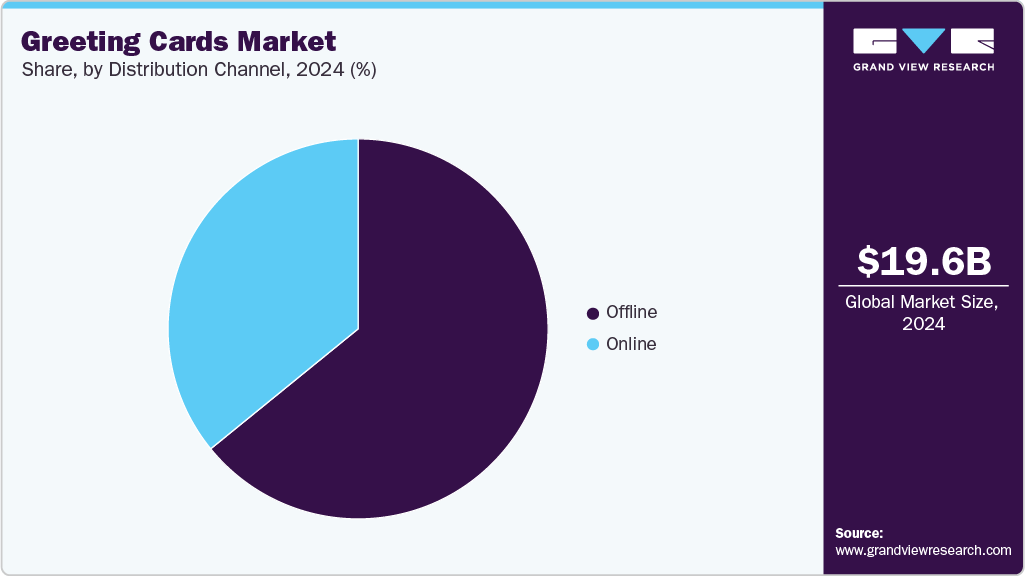
Based on distribution channel, sale of greeting cards through offline channel led the market with the largest revenue share of 63.3% in 2025. Brick-and-mortar stores, including supermarkets, convenience chains, bookstores, and specialist card shops, offer consumers the tactile experience of selecting a card, often tied to impulse buying and last-minute gifting. The offline segment caters to a wide spectrum of price points: budget-friendly mass-market cards are typically available for under USD 2, while mid-range cards from brands like Papyrus or Hallmark Signature range between USD 4 and USD 8, and premium handcrafted or artist-designed cards can exceed USD 10 per piece. This broad pricing range enables offline retailers to serve a diverse range of consumer segments, from everyday purchasers seeking affordable options to those looking for high-end, keepsake-quality cards.
 To learn more about this report, Download Free Sample Report
 Online sales of greeting cards are projected to grow at a CAGR of 2.1% over the forecast period of 2025-2033, supported by the continued expansion of e-commerce and the rising demand for convenient, on-demand gifting solutions. Digital platforms such as Moonpig, Paperless Post, Etsy, and Amazon offer access to a vast array of designs across various styles, formats, and occasions, while also allowing users to personalize cards with names, messages, images, or multimedia elements. Many platforms further enhance accessibility by offering options for instant digital delivery or print-and-ship services, removing geographic barriers and catering to last-minute needs. Driven by increasing digital adoption, sustainability concerns, and consumer openness to hybrid gifting formats, online channels are steadily capturing a larger share of the greeting card market, particularly among tech-savvy and younger demographics.
Regional Insights
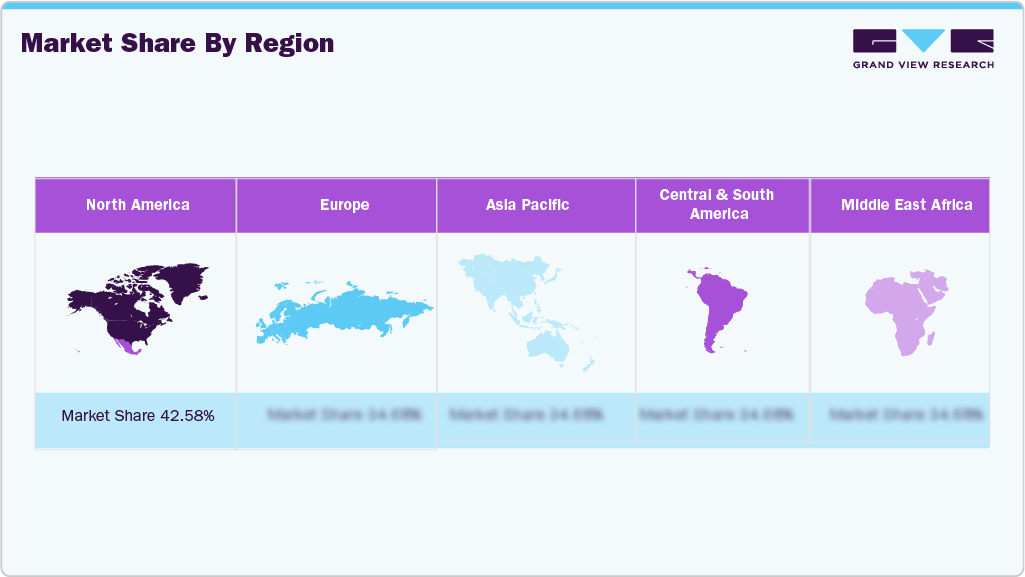
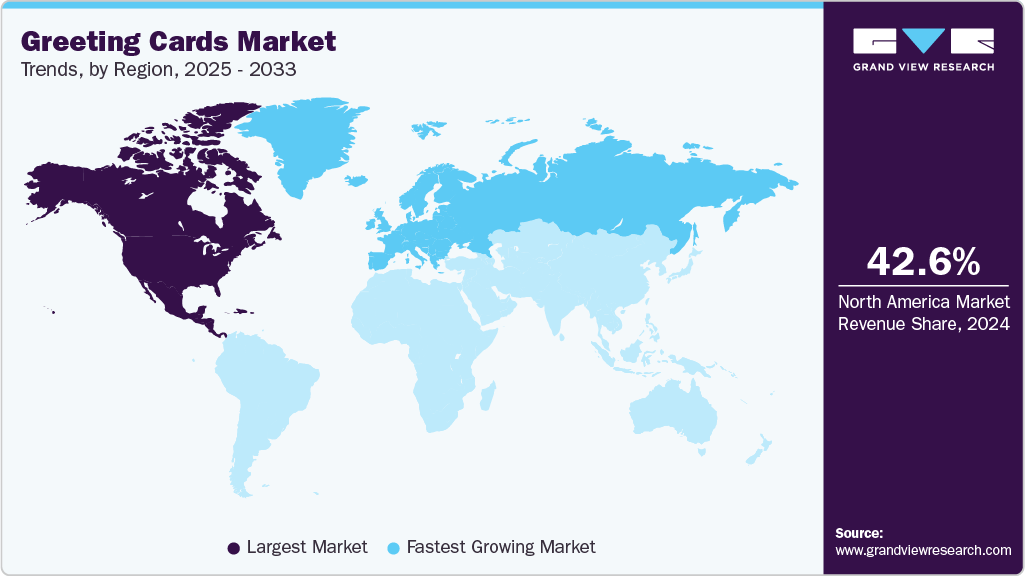
North America dominated the greeting cards market with the largest revenue share of 42.7% in 2025, supported by deeply ingrained card-giving traditions and an extensive retail framework that spans supermarkets, pharmacies, bookstores, and specialty gift outlets. Iconic players such as Hallmark and American Greetings continue to shape the industry landscape through their broad distribution networks and evolving product portfolios, while the region's consumers consistently purchase cards for a wide variety of occasions, including birthdays, holidays, graduations, and personal milestones. Alongside strong offline availability, North America has also witnessed growth in digital and hybrid card formats, as more consumers embrace personalized, print-on-demand designs or multimedia-enabled e-cards.
 To learn more about this report, Download Free Sample Report
  To learn more about this report, Download Free Sample Report
 U.S. Greeting Cards Market Trends
The greeting cards market in U.S. held the largest share in the North America region in 2025. Greeting cards play a central role in American gift-giving behavior, with strong retail presence across mass merchandisers, pharmacies, specialty card shops, and lifestyle retailers. Market leaders such as Hallmark and American Greetings have further strengthened their dominance through extensive product diversification, including hand-finished cards, collectible designs, and licensed collaborations tailored to specific demographics. Additionally, new formats such as personalized, print-on-demand cards and interactive e-cards have expanded category appeal among younger consumers while maintaining the emotional value associated with physical cards.
Europe Greeting Cards Market Trends
The greeting cards industry in Europe accounted for a revenue share of around 31.28% in the year 2024, supported by a deeply rooted card-giving tradition and strong cultural emphasis on seasonal and sentiment-based expressions. Many European countries maintain a robust greeting card culture, particularly for holidays such as Christmas, Mother’s Day, and Easter, as well as personal occasions like birthdays and anniversaries. The region benefits from well-established retail networks, including specialist card shops, bookstores, gift boutiques, and major supermarket chains, which ensure a wide range of product availability. Additionally, several European markets have seen a rise in demand for premium, artisanal, and eco-friendly cards, reflecting growing consumer preference for sustainably produced paper goods and handcrafted designs.
Asia Pacific Greeting Cards Market Trends
The greeting cards industry in Asia Pacific is projected to grow at a CAGR of 1.2% from 2025 to 2033. Countries such as India, China, Japan, and Australia are experiencing a surge in demand for greeting cards, particularly for birthdays, weddings, religious festivals, and Western celebrations like Christmas and Valentine’s Day. The expansion of organized retail, including supermarkets, stationery chains, and lifestyle stores, has improved access to greeting cards across urban and semi-urban markets. At the same time, online platforms and mobile-based greeting apps are gaining popularity, especially among younger, tech-savvy consumers who value convenience and personalization.
Key Greeting Cards Companies Insights
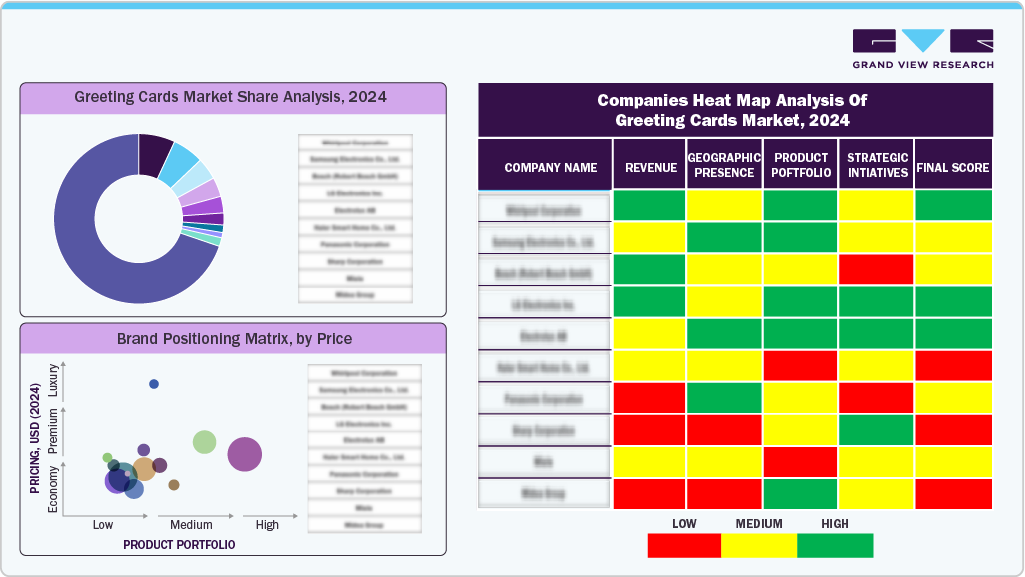
Key players operating in the greeting cards market are undertaking various initiatives to strengthen their presence and increase the reach of their products and services. Strategies such as expansion activities and partnerships are key in propelling the market growth.
 To learn more about this report, Download Free Sample Report
 Key Greeting Cards Companies:
The following key companies have been profiled for this study on the greeting cards market.
-
American Greeting Corporation
-
Archies Limited
-
Avanti Press Inc.
-
Budget Greeting Cards Ltd.
-
Card Factory plc
-
Carlton Cards Ltd.
-
Crane & Co.
-
Galison Publishing LLC
-
Hallmark Cards, Inc.
-
IG Design Group Plc
-
John Sands (Australia) Ltd.
Recent Developments
-
In January 2025, Hallmark expanded its greeting card offerings with a new concept called Gift Card Greetings, which combines the charm of a traditional card with the convenience of a digital gift card. Shoppers can pick a physical card for various occasions and use a QR code inside to choose from more than 100 digital gift card options through The Gift Card Shop, powered by InComm Payments. Recipients can easily redeem their selected gift card by scanning the same code and entering a PIN. This strategy aims to deliver a personalized, hybrid gifting experience that suits both sentimental and convenience-driven consumers.
-
In February 2024, Minted entered a partnership with DoorDash to make greeting cards available for fast, on-demand delivery, catering especially to Millennial and Gen Z shoppers who prioritize both convenience and thoughtful gifting. The collaboration kicks off with a range of artist-designed Valentine’s Day cards offered through DashMart and The Flower & Gift Boutique on the DoorDash platform, with plans to introduce cards for more everyday occasions. This initiative reflects growing demand among younger consumers for quick-access, high-quality, and creatively designed products.
Greeting Cards Market Report Scope
Report Attribute
Details
Market size in 2025
USD 19.8 billion
Estimated Market size in 2026
USD 20.1 billion
Projected Market size by 2033
USD 23.0 billion
Growth rate
CAGR of 1.9% from 2026 to 2033
Base year for estimation
2025
Historical data
2021 - 2024
Forecast period
2026 - 2033
Quantitative units
Revenue in USD million/billion and CAGR from 2026 to 2033
Report coverage
Revenue forecast, company ranking, competitive landscape, growth factors, and trends
Segments covered
Technology and application
Regional scope
North America; Europe; Asia Pacific; Central & South America; Middle East & Africa
Country scope
U.S.; Canada; Mexico; Germany; UK; France; Italy; Spain; China; Japan; India; South Korea; Australia & New Zealand; Brazil; South Africa
Key companies profiled
American Greeting Corporation; Archies Limited; Avanti Press Inc.; Budget Greeting Cards Ltd.; Card Factory plc; Carlton Cards Ltd.;Crane & Co.; Galison Publishing LLC; Hallmark Cards, Inc.; IG Design Group Plc; John Sands (Australia) Ltd.
Customization scope
Free report customization (equivalent up to 8 analysts' working days) with purchase. Addition or alteration to country, regional & segment scope.
Pricing and purchase options
Avail customized purchase options to meet your exact research needs. Explore purchase options
Global Greeting Cards Market Report Segmentation
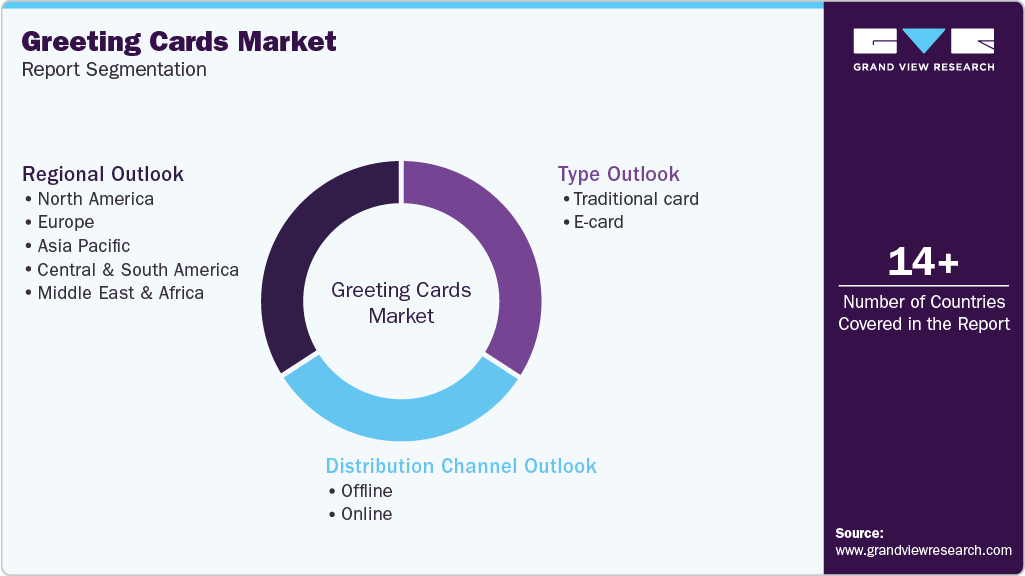
This report forecasts revenue growth at global, regional & country levels and provides an analysis on the latest trends and opportunities in each of the sub-segments from 2021 to 2033. For this study, Grand View Research has segmented the global greeting cards market report on the basis of type, distribution channel, and region.
 To learn more about this report, Download Free Sample Report
 -
Type Outlook (Revenue, USD Billion, 2021 - 2033)
-
Traditional card
-
E-card
-
-
Distribution Channel Outlook (Revenue, USD Billion, 2021 - 2033)
-
Offline
-
Online
-
-
Regional Outlook (Revenue, USD Billion, 2021 - 2033)
-
North America
-
U.S.
-
Canada
-
Mexico
-
-
Europe
-
UK
-
Germany
-
France
-
Italy
-
Spain
-
-
Asia Pacific
-
China
-
India
-
Japan
-
Australia
-
South Korea
-
-
Central & South America
-
Brazil
-
-
Middle East & Africa (MEA)
-
South Africa
-
-
Research Methodology
The greeting cards market figures in this report are based on a proven research process that combines executive interviews with secondary research from proprietary databases, company filings, and recognized regulatory and institutional sources. Market size is built through value-chain sizing - reconciling supply-side and demand-side estimates - and triangulated with bottom-up and top-down approaches. Every estimate passes multiple levels of expert validation before publication, with each greeting cards segment quantified using the revenue-capture definitions in the table below.
Segment Definition
Segment - Type
Revenue capture definition
E-Card
Revenue is generated from the sale of digital greeting cards delivered through online platforms, mobile applications, and email-based services. Revenue includes subscription fees, per-card purchases, customization charges (personalized messages, animations, video integration), and enterprise licensing for corporate and bulk greeting solutions.
Traditional
Revenue is generated from the sale of physical printed greeting cards distributed through offline and online retail channels. Revenue includes mass-market cards, premium and handmade cards, seasonal collections, and value-added packaging or personalization services sold through supermarkets, stationery stores, gift shops, bookstores, and e-commerce platforms.
Estimation Model
Population Layer
Access Layer
Behavioral Layer
Monetisation Layer
Who forms the base consumer pool?
Who has access to greeting card channels
Who actively purchases greeting cards?
How much revenue is generated?
Total population participating in occasions where greeting cards are relevant, including birthdays, weddings, anniversaries, festivals, Valentine's Day, and other personal or cultural events across all age groups.
Consumers with access to greeting card purchasing channels such as retail stores, supermarkets, gift shops, bookstores, e-commerce platforms, and digital greeting card applications.
Consumers who actively buy or send greeting cards for occasions, based on gifting frequency, cultural norms, and preference for physical or digital formats.
Revenue derived from active buyers based on annual spending on physical cards, premium cards, personalized cards, digital cards, and related add-on or customization services across retail and online channels.
Delivered Customizations
This report has been delivered with the following In-depth customizations
Client Request
Customization Delivered
Value Adds
Occasion-Based Performance and End-Use Consumption Analysis
(Occasion × Usage Context)Assessed greeting card consumption across key occasions including birthdays, festivals (Christmas, New Year, Mothers day), Valentine’s Day, anniversaries, weddings, and sympathy events, based on emotional intensity, gifting frequency, and cultural relevance across regions and demographics.
Identifies which occasions generate the highest repeat purchase and emotional spending intensity, enabling publishers and retailers to prioritize high-frequency and high-margin occasions for product design, seasonal launches, and inventory planning.
Channel-Based Demand and Purchase Behavior Analysis
(Channel × Buying Pattern)Evaluated greeting card sales across offline retail (supermarkets, gift shops, bookstores, convenience stores), online e-commerce platforms, and digital greeting card services based on purchase timing, impulse behavior, and personalization demand.
Reveals how purchase behavior shifts across channels, highlighting the dominance of impulse-driven offline purchases for last-minute gifting versus growing online demand for customized and scheduled greeting cards, supporting channel strategy and distribution optimization.
Product Format and Personalization Adoption Analysis
(Format × Consumer Preference)Analyzed adoption of traditional printed cards, premium handmade cards, musical/light-up cards, and digital/e-cards based on consumer preference for personalization, price sensitivity, and gifting intent across age groups and occasions.
Highlights where premiumization and personalization drive higher margins, identifying opportunities in customized print-on-demand and digital formats while also tracking decline or stability in traditional mass-produced card segments for portfolio optimization.
Frequently Asked Questions About This Report
North America is the fastest-growing region over the forecast period.
Traditional greeting cards led with a 73.3% revenue share in 2025, while e-card is the fastest-growing segment.
The sale of greeting cards through offline channel held the largest revenue share in 2025, and the sale of sale of greeting cards through online channel is the fastest-growing segment.
Key players include American Greetings Corporation, Hallmark Cards, Inc., Card Factory plc, John Sands (Australia) Ltd., and IG Design Group Plc
The global greeting cards market size was valued at USD 19.8 billion in 2025 and is estimated at USD 20.1 billion for 2026.
The global greeting cards market is expected to grow at a CAGR of 1.9% from 2026 to 2033, reaching USD 23.0 billion in 2033.
Key factors that are driving the greeting cards market growth include changing consumer preferences towards personalized and unique cards, increasing demand for cards for non-traditional occasions, and the rise in popularity of e-cards.
U.S. greeting cards market is the fastest growing country in North America
North America dominated with a 42.7% revenue share in 2025.
About the Author(s)
Electronic & Electrical Research Team
Consumer Goods · Electronic & ElectricalThis report was authored by the electronic & electrical research team at Grand View Research - comprising two research analysts, one senior research analyst, and one industry expert - with specialized expertise in the electronic & electrical segment of the consumer goods industry. All findings are based on proprietary consumer goods databases, executive interviews, and regulatory analysis, subject to internal peer review prior to publication.
Last Updated:
Speak to Analyst

Customize this report to your needs - add regions, segments, or data points, with 20% free customization.
Or view our licence options:


ISO 9001:2015 & 27001:2022 Certified
We are GDPR and CCPA compliant! Your transaction & personal information is safe and secure. For more details, please read our privacy policy.


