- Home
- »
- Market Trend Reports
- »
-
Epidemiology Of Chronic Skin Ulcers: Trends, Insights, And Intractable Cases
![Epidemiology Of Chronic Skin Ulcers: Trends, Insights, And Intractable CasesReport]()
Epidemiology Of Chronic Skin Ulcers: Trends, Insights, And Intractable Cases
- Published: Sep, 2025
- Report ID: GVR-MT-100412
- Format: PDF/Excel databook
- No. of Pages/Datapoints: 50
- Report Coverage: 2024 - 2030
Epidemiology Of Chronic Skin Ulcers: Trends, Insights, And Intractable Cases
The wound care market is witnessing sustained growth due to the rising global prevalence of chronic diseases and health conditions that impair the body’s natural wound-healing capabilities. Noncommunicable diseases (NCDs) such as diabetes, cardiovascular disorders, cancer, and obesity have been steadily increasing due to factors like sedentary lifestyles, poor dietary habits, and aging populations. According to the Centers for Disease Control and Prevention (CDC) reports in October 2024, chronic diseases such as heart disease, cancer, and diabetes remain the leading causes of death and disability in the U.S. and are major contributors to the nation’s USD 4.9 trillion annual healthcare expenditure. According to the CDC, six in ten Americans live with at least one chronic disease, while four in ten have two or more. Many of these conditions are preventable and stem from a limited set of modifiable risk factors, including smoking, poor nutrition, physical inactivity, and excessive alcohol consumption.
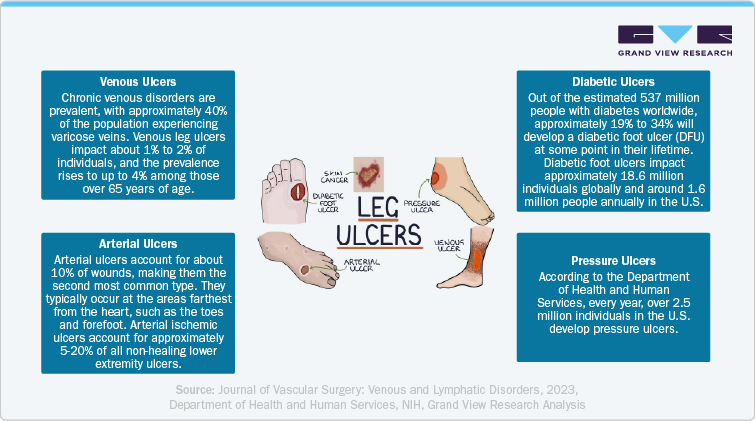
Venous ulcers are the most prevalent type of lower extremity wound, representing approximately 80% to 90% of all leg ulcers.
Chronic diseases significantly slow or complicate wound healing. For instance:
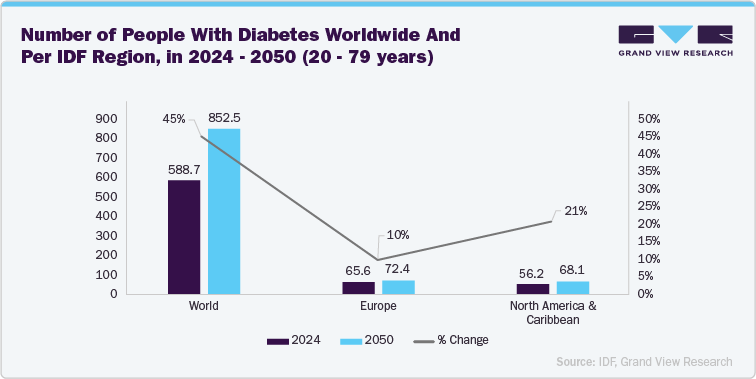
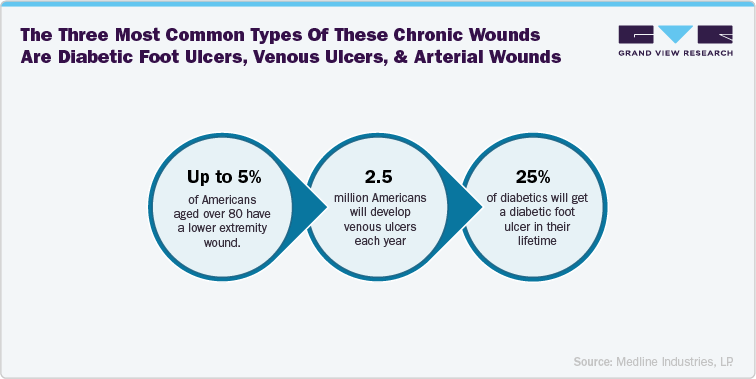
Diabetes: Associated with neuropathy, poor circulation, and immune dysfunction, leading to complications such as diabetic foot ulcers, infections, and non-healing surgical wounds. As per a report by NIH, in March 2023, Diabetes mellitus affects around 422 million people globally and accounts for an estimated 2 million deaths annually. In the United States, the condition impacts approximately 11.3% of the population. One of its most serious complications is diabetic foot ulcer (DFU), a debilitating condition typically occurring on the plantar surface of the foot as a result of prolonged, uncontrolled diabetes. About 15% of individuals with diabetes will develop a DFU during their lifetime, and among these patients, 14%–24% will require amputation of the affected foot due to bone infections or other ulcer-related complications, strengthening demand for specialized wound care products.
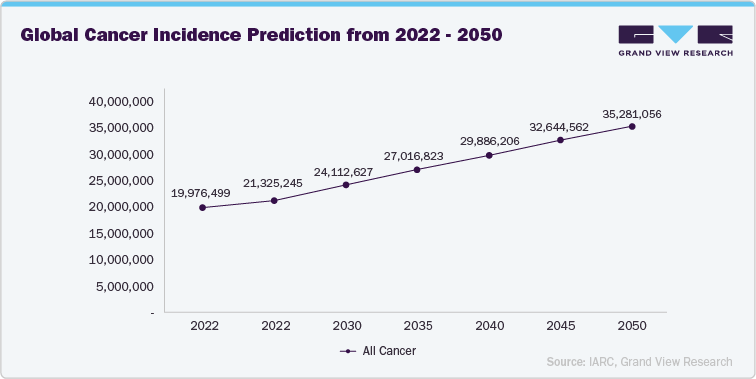
Cancer and Immunocompromised Conditions: The rising prevalence of cancer is driving the wound care market as many cancer treatments, such as surgery, chemotherapy, and radiotherapy, compromise skin integrity, impair immunity, and delay healing. Cancer patients are at higher risk of surgical wounds, radiation burns, pressure ulcers, and infection-prone lesions, creating increased demand for advanced dressings, infection control products, and specialized wound management solutions.
Increasing Incidence of Burn Injuries: A Key Factor Fueling the Growth of the Wound Care Market
The growing prevalence of burn injuries is emerging as a significant driver of the wound care market, owing to the complex treatment requirements and high risk of infection associated with such wounds. According to data published by the World Health Organization in October 2023, burns are a major global public health concern, causing approximately 180,000 deaths annually, with the majority of fatalities occurring in low- and middle-income countries. Nearly two-thirds of these deaths are concentrated in the WHO African and Southeast Asia Regions, where limited access to advanced wound care solutions exacerbates mortality and morbidity rates.
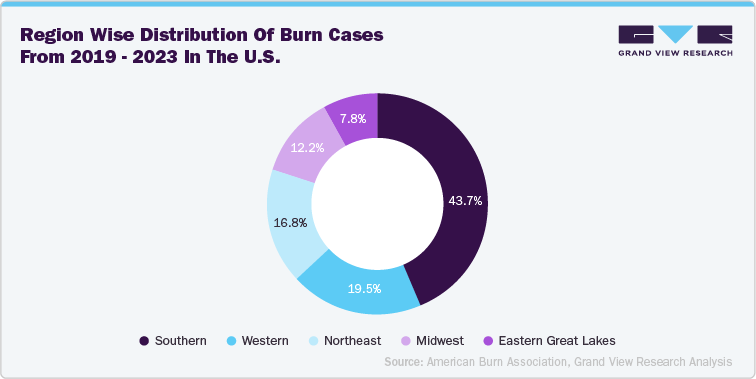
In the U.S., the American Burn Association (ABA) reported approximately 32,540 burn cases in 2023 across its specialized burn care centers. Cumulatively, from 2019 to 2023, over 156,000 burn cases were documented across more than 38 states. Such injuries often require long-term treatment with specialized wound dressings, infection-control solutions, and advanced therapies to promote tissue regeneration and minimize scarring.
ETIOLOGY AND WOUND HEALING CHALLENGES
The etiology of chronic skin ulcers is multifaceted, often involving a combination of factors that disrupt the normal wound healing process.
The Primary Care Dermatology Society:
Leg ulcers are of huge socio-economic importance. Approximately over 500,000 people live with a form of venous ulceration in the UK, this has doubled in the last 10 years. A leg ulcer is not a diagnosis; it is a manifestation of an underlying disease process and so the concept should be of the patient with the leg ulcer.
Etiology: The primary causes of chronic ulcers are related to compromised blood supply, nerve function, and tissue integrity.
-
Vascular insufficiency: Both venous hypertension and arterial occlusion prevent adequate oxygen and nutrient delivery to the tissue, hindering repair.
-
Neuropathy: Nerve damage, particularly in diabetic patients, reduces sensation, leading to unnoticed injuries and ulcers.
-
Infection: Persistent bacterial contamination can create a biofilm that delays healing and can lead to tissue damage.
-
Chronic inflammation: An unresolved inflammatory state can damage healthy tissue and prevent the wound from entering the proliferative phase of healing.
-
Systemic diseases: Conditions like diabetes mellitus, peripheral artery disease, and autoimmune disorders can impair the body's ability to heal.
Wound Healing Challenges
-
Wound healing is a complex process with four main stages: hemostasis, inflammation, proliferation, and remodeling. Chronic ulcers get "stuck" in the inflammatory phase, leading to several challenges:
-
Biofilm formation: Bacteria form a protective matrix (biofilm) that makes them resistant to antibiotics and the body's immune system, leading to chronic infection.
-
Cellular senescence: Cells in the wound bed may become old and lose their ability to divide and function properly, slowing down tissue repair.
-
Poor tissue perfusion: Inadequate blood flow prevents the delivery of essential growth factors, oxygen, and nutrients needed for healing.
-
Increased protease activity: Chronic inflammation leads to an overproduction of enzymes that break down the extracellular matrix, destroying new tissue before it can form.
-
Malnutrition: A lack of protein, vitamins, and minerals can impair collagen synthesis and other crucial aspects of the healing process
INTRACTABLE VS. SELF-HEALING ULCERS
-
An intractable ulcer, also known as a non-healing or refractory ulcer, is a wound that has failed to show significant signs of healing after a prolonged period of appropriate treatment, typically 4-12 weeks. These ulcers often become chronic due to underlying health issues that disrupt the normal healing process.
-
A self-healing ulcer is a wound that can close and heal on its own without or with minimal medical intervention. These are often superficial wounds caused by minor trauma that do not have underlying conditions that impede healing.
Most lower limb ulcers (approximately 80%) have a venous origin, while other common causes include arterial insufficiency and diabetic neuropathy. Less frequently, ulcers may result from factors such as infection, trauma, vasculitis, or malignancy, most often squamous cell carcinoma.
Table 1: Incidence and recurrence parameters by country (Venous Leg Ulcers, VLUs), 2019
Australia
France
Germany
Italy
Spain
UK
U.S.
Incidence (no prior history of deep venous disease-related VLU (DRV)
78,634
203,406
260,944
51,520
65,431
211,198
240,000
Incidence per 1000 person-years
3.12
3.12
3.12
0.85
1.4
3.12
0.73
Recurrences
43,200
59,144
84,305
201,600
19,643
19,237
402,775
Recurrences per 1000 person-years
1.71
0.91
1.01
3.33
0.42
0.28
1.22
Total Incidence and recurrence
121,834
262,550
345,250
253,120
85,075
230,435
642,775
Incident and recurring cases per 1000 person-years
4.83
4.03
4.13
4.18
1.82
3.40
1.95
Source: Society for Vascular Medicine
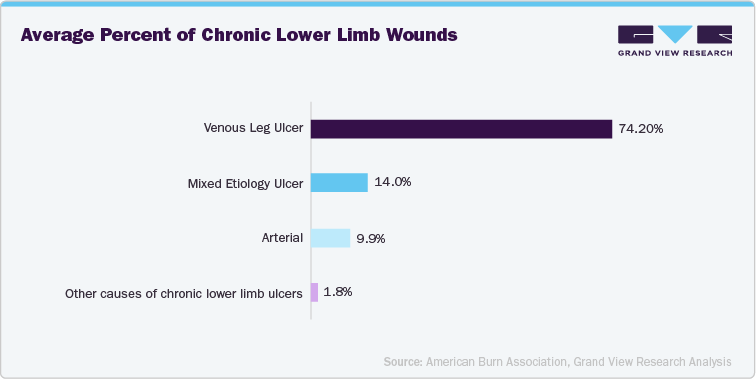
Table 2: Relative Frequencies of Chronic Lower Limb Wounds
Chronic wound
Relative frequency
Venous leg ulcer
40-85%
Arterial leg ulcer
5-30%
Mixed etiology ulcer
10-20%
Other causes of chronic lower limb
ulcers5-25%
Relative frequencies can vary due to differences in study methods and definitions. For instance, when traumatic wounds are classified separately, the reported prevalence of venous leg ulcers (VLUs) may decrease, since some patients with VLUs have a history of trauma.
Source: Wounds International
Note: The term "mixed etiology leg ulcers" is primarily used in relation to VLUs that occur alongside arterial occlusive disease. However, it can also refer to VLUs influenced by other contributing factors, such as lymphedema, diabetes, arthritis, or malignancy.
Intractable cases of arterial (LEAD) ulcers tend to be higher than venous ulcers because arterial ulcers are caused by poor blood flow due to peripheral artery disease, which severely limits oxygen and nutrient delivery to the tissues, making healing difficult. In contrast, venous ulcers result from venous insufficiency, which, although problematic, generally allows better arterial blood flow and oxygenation. Additionally, arterial ulcers are often deeper, with more tissue necrosis and a higher risk of infection, further complicating their treatment. The compromised circulation in arterial ulcers makes them more resistant to healing, leading to a higher prevalence of intractable cases compared to venous ulcers.
![gvr icn]()
GET A FREE SAMPLE
![gvr icn]()
This FREE sample includes market data points, ranging from trend analyses to market estimates & forecasts. See for yourself.
![gvr icn]()
NEED A CUSTOM REPORT?
We can customize every report - free of charge - including purchasing stand-alone sections or country-level reports, as well as offer affordable discounts for start-ups & universities.
Contact us now to get our best pricing.
![esomar icon]()
ESOMAR certified & member
![ISO]()
ISO Certified
We are GDPR and CCPA compliant! Your transaction & personal information is safe and secure. For more details, please read our privacy policy.






We are committed towards customer satisfaction, and quality service.
Client Testimonials

"The quality of research they have done for us has been excellent..."
ISO Certified