Automotive Adhesives Market To Reach $13.6 Billion By 2030
Automotive Adhesives Market Growth & Trends
The global automotive adhesives market size is anticipated to reach USD 13.6 billion in 2030 and is projected to grow at a CAGR of 9.3% from 2025 to 2030. Increasing demand for lightweight vehicles and shifting preference of consumers toward sustainable adhesives are projected to favor the market growth.
The usage of adhesives helps in reduction of weight of vehicles, which further boosts the fuel efficiency and overall performance of vehicles. This has resulted in rapid adoption of adhesives over mechanical fasteners in automotive industry. Also, they are increasingly being used in electric vehicles, which is anticipated to fuel the market growth further.
Adhesives including acrylic, polyurethane, epoxy, and rubber are widely used in body in white, exterior, and interior applications. Body in white is the raw framework of the vehicle, which utilizes a major quantity of adhesives. The product enhances the strength of the body frame while reducing the use of spot welding.
Polyurethane is the most widely used adhesive in the automotive industry, followed by acrylic and rubber. As compared to epoxy and acrylic, polyurethane adheres to a wider range of substrates. In terms of revenue, acrylic segment is anticipated to register a growth rate of 4.8% over the forecast period.
The product consumption is increasing extensively in developing economies with the growth in the production of heavy commercial vehicles. HCV & MCV segment is expected to register the fastest growth rate of 5.6%, in terms of revenue, over the forecast period owing to their increasing production in the Americas and Asia Pacific. Initiation toward adoption of electric vehicles, technological innovation, and developments in the manufacturing industry are further projected to boost the product demand. For instance, in February 2019, the Government of India approved the Faster Adoption and Manufacturing of Hybrid & Electric Vehicles (FAME)-II scheme for funds worth USD 1.39 billion from 2020 to 2022.
The automotive adhesives market is competitive owing to the presence of significant players such as 3M, Bostik, H.B. Fuller, Henkel, Sika AG, and Wacker Chemie AG, among other regional players. Mergers & acquisitions, development of new technologies, and capacity expansions are the various strategic initiatives adopted by industry players to maximize their growth.
For instance, in April 2019, PARKER HANNIFIN CORP entered into an agreement to acquire LORD Corporation for USD 3.68 billion. The acquisition was aimed at fulfilling the company’s objective to invest in profitable and growing businesses such as engineered materials.
 Request a free sample copy or view report summary: Automotive Adhesives Market Report
Automotive Adhesives Market Report Highlights
-
The reactive & others technology segment captured the largest share of 69.9% in 2024
-
The water-based segment is expected to emerge as the fastest-growing segment, with a CAGR of 10.5% over the forecast period
-
The passenger cars segment held the largest share of 60.9% in 2024, owing to the burgeoning demand for lightweight, fuel-efficient, and durable vehicles
-
Light commercial vehicle (LCV) is anticipated to be the fastest-growing segment, recording a CAGR of 10.4% from 2025 to 2030
-
North America automotive adhesives market is expected to record the highest CAGR of 9.1% from 2025 to 2030
Automotive Adhesives Market Segmentation
Grand View Research has segmented the global automotive adhesives market report on the basis of technology, application, and region:
Automotive Adhesives Technology Outlook (Volume, Kilo Tons; Revenue, USD Million, 2018 - 2030)
-
Water Based
-
Solvent Based
-
Hot Melt
-
Reactive & Others
Automotive Adhesives Application Outlook (Volume, Kilo Tons; Revenue, USD Million, 2018 - 2030)
-
Passenger Cars
-
LCV
-
MCV & HCV
Automotive Adhesives Regional Outlook (Volume, Kilo Tons; Revenue, USD Million, 2018 - 2030)
-
North America
-
U.S.
-
Canada
-
Mexico
-
-
Europe
-
Germany
-
UK
-
France
-
Italy
-
Spain
-
-
Asia Pacific
-
China
-
India
-
Japan
-
South Korea
-
-
Latin America
-
Brazil
-
Argentina
-
-
Middle East & Africa
-
South Africa
-
Saudi Arabia
-
List of Key Players in Automotive Adhesives Market
-
Henkel AG & Co. KGaA
-
H.B. Fuller Company
-
Sika AG
-
Dow
-
Arkema
-
3M
-
BASF
-
Illinois Tool Works Inc.
-
PPG Industries, Inc.
-
Solvay
-
Akzo Nobel N.V.
GET A FREE SAMPLE

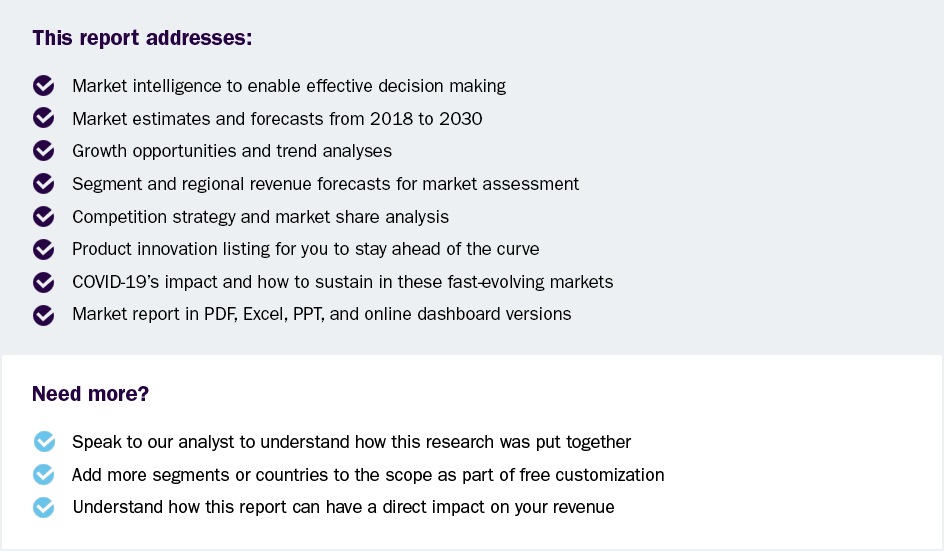
This FREE sample includes market data points, ranging from trend analyses to market estimates & forecasts. See for yourself.

NEED A CUSTOM REPORT?
We offer custom report options, including stand-alone sections and country-level data. Special pricing is available for start-ups and universities.
Request Customization