Barrier Packaging Market Size To Reach $27.28 Billion By 2033
Barrier Packaging Market Growth & Trends
The global barrier packaging market size is anticipated to reach USD 27.28 billion by 2033, expanding at a CAGR of 4.2% from 2025 to 2033, according to a new report by Grand View Research, Inc. A key driver behind the rising global demand for barrier packaging is the increasing need to extend product shelf life and preserve quality across complex supply chains. Barrier packaging acts as a protective shield against external factors such as oxygen, moisture, light, and contaminants, which can compromise the freshness, flavor, and safety of consumables, particularly in food, beverage, and pharmaceutical products. As international trade expands and supply chains lengthen, products must withstand diverse climatic conditions while maintaining integrity. This has created strong demand for packaging solutions that ensure safety, hygiene, and usability, prompting manufacturers and retailers to adopt barrier packaging to reduce spoilage, enhance shelf appeal, and minimize returns or wastage.
The rapid growth of the food and beverage sector, particularly in emerging markets such as India, China, Brazil, and Indonesia, is fueling demand for barrier packaging. Consumers increasingly seek convenient, ready-to-eat, and on-the-go products that maintain quality over longer storage periods without refrigeration. Barrier materials, including multi-layer films, coated paper, and aluminum foils, prevent oxygen ingress and moisture loss, preserving flavor, aroma, and texture. In beverages like juices, dairy, energy drinks, and alcoholic products, these materials help maintain carbonation and prevent oxidation. The rising consumption of processed and packaged foods across urban and semi-urban regions continues to drive the adoption of advanced barrier solutions that balance performance, safety, and sustainability.
Modern consumers increasingly prefer on-the-go, portion-controlled, and resealable packaging formats. Barrier packaging facilitates such convenience by offering lightweight, flexible, and durable protection for food, pharmaceuticals, cosmetics, and personal care items. Urbanization and the growth of dual-income households have intensified demand for packaging that not only preserves products but also enables ease of handling, longer storage, and minimal mess. This shift in consumer behavior has prompted innovation in flexible films, pouches, and sachets, which are increasingly replacing rigid packaging in many categories. Consequently, demand for barrier packaging continues to grow across both developed and developing economies.
Heightened concern for food safety, contamination prevention, and traceability has accelerated the adoption of barrier packaging globally. Regulatory bodies such as the U.S. FDA, EFSA, and FSSAI enforce strict standards to ensure that packaging materials do not negatively interact with products or cause contamination. Multi-layer laminates and coated polymers are designed to meet these requirements, providing high resistance to microbial ingress and chemical migration. In pharmaceuticals and nutraceuticals, barrier packaging also offers moisture-proof, tamper-evident, and contamination-resistant protection, making it indispensable. Coupled with rising consumer expectations for hygiene and product authenticity, these regulatory factors are significantly boosting market demand.
 Request a free sample copy or view report summary: Barrier Packaging Market Report
Barrier Packaging Market Report Highlights
-
North America dominated the barrier packaging industry in 2024 with the largest revenue share of over 32.4%. This dominance is driven by the mature food, beverage, and pharmaceutical industries in the region, which demand high-performance packaging solutions to ensure shelf life, safety, and product quality.
-
The Asia Pacific market for barrier packaging is projected to grow at a substantial CAGR of 4.7% from 2025 to 2033. This growth is largely fueled by rapid urbanization, rising disposable incomes, and changing consumer lifestyles, which increase demand for packaged, ready-to-eat, and convenience foods.
-
By material, the paper & paperboard segment is expected to grow at a considerable CAGR of 4.7% from 2025 to 2033 in terms of revenue. This growth is being driven by sustainability trends and environmental regulations across Europe, North America, and Asia-Pacific, which are pushing manufacturers to adopt eco-friendly alternatives to conventional plastics.
-
By end use, the pharmaceutical segment is expected to grow at a considerable CAGR of 4.6% from 2025 to 2033 in terms of revenue. The expansion is fueled by the rising demand for pharmaceuticals, medical devices, and nutraceuticals that require moisture-proof, tamper-evident, and contamination-resistant packaging. Increasing awareness about drug safety, regulatory compliance, and traceability has accelerated the adoption of barrier packaging solutions such as blister packs, sachets, and sterile pouches.
-
In competitive markets, packaging has become a key branding tool. Barrier packaging allows high-quality printing, embossing, and transparency effects, enhancing shelf appeal while preserving product integrity. Food and beverage manufacturers leverage barrier films to create visually distinctive designs without compromising protection.
Barrier Packaging Market Segmentation
Grand View Research has segmented the global barrier packaging market based on material, end use, and region:
Barrier Packaging Material Outlook (Revenue, USD Million, 2021 - 2033)
-
Plastic Films
-
Aluminum Foil
-
Paper & Paperboard
-
Metallized Films
-
Coated Materials
Barrier Packaging End Use Outlook (Revenue, USD Million, 2021 - 2033)
-
Food & Beverage
-
Pharmaceuticals
-
Personal Care
-
Industrial
-
Others
Barrier Packaging Regional Outlook (Revenue, USD Million, 2021 - 2033)
-
North America
-
U.S.
-
Canada
-
Mexico
-
-
Europe
-
Germany
-
France
-
UK
-
Italy
-
Spain
-
-
Asia Pacific
-
China
-
India
-
Japan
-
Australia
-
South Korea
-
-
Latin America
-
Brazil
-
Argentina
-
-
Middle East & Africa
-
South Africa
-
Saudi Arabia
-
UAE
-
List of Key Players in the Barrier Packaging Market
-
Amcor plc
-
Huhtamaki
-
Sealed Air
-
Graphic Packaging International, LLC
-
ProAmpac
-
Mondi
-
DS Smith
-
Coveris
-
TOPPAN Inc.
-
CarePac
-
ISOFlex Packaging
-
C-P Flexible Packaging
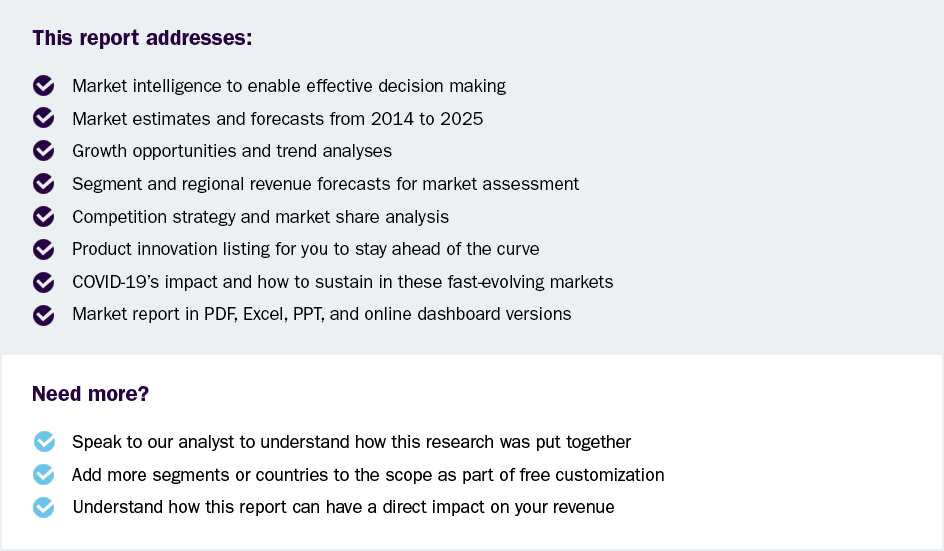
GET A FREE SAMPLE

This FREE sample includes market data points, ranging from trend analyses to market estimates & forecasts. See for yourself.

NEED A CUSTOM REPORT?
We offer custom report options, including stand-alone sections and country-level data. Special pricing is available for start-ups and universities.
Request Customization