LNG Procurement Strategy: Managing Geopolitical and Supply Risks
Executive Summary & Market Snapshot
Energy procurement has lost its predictability. Historically managed through regional, fixed-line contracts, today’s gas market functions as a single, hyper-reactive global web. Data from the International Energy Agency (IEA) confirms that the correlation between European benchmark prices (TTF) and Asian spot indicators (JKM) rose to a new all-time high of 0.955 in 2025. As a result, structural shifts across the broader energy market now dictate that a single operational bottleneck or security threat in one hemisphere instantly triggers price contagion across the globe.
Global supply capacity is expanding fast. According to the U.S. Energy Information Administration (EIA), U.S. LNG exports surged 23% year-over-year in the first half of 2026 to average 17.4 billion cubic feet per day (Bcf/d), powered by major capacity additions at Plaquemines LNG and Cheniere’s Corpus Christi Stage 3.
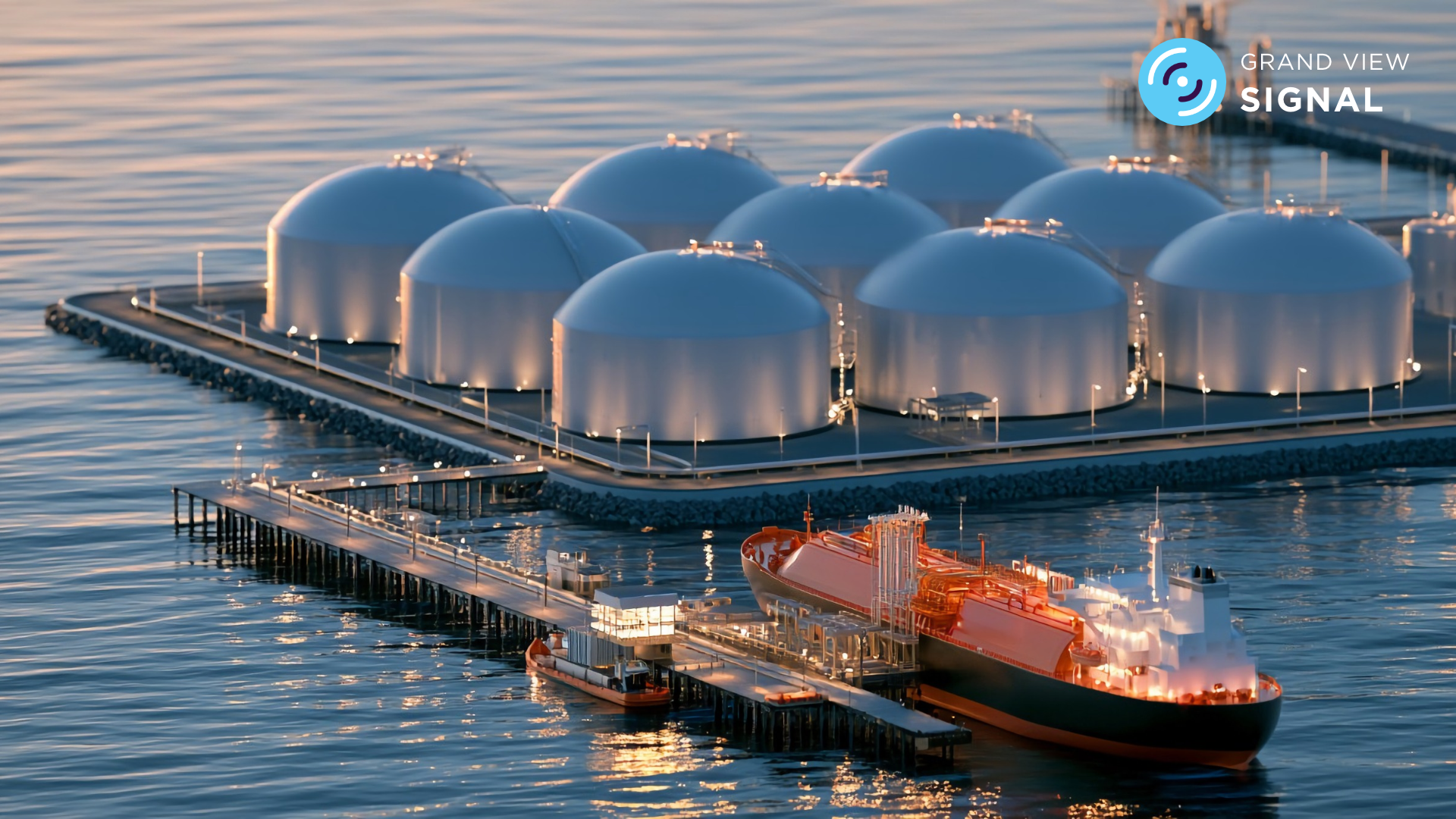
Yet higher output has not stabilized budgets. Geopolitical friction and maritime bottlenecks continue to cause sudden, unbudgeted cost spikes. For utility risk officers and procurement leaders, relying on legacy long-term oil indexation or unhedged spot buying is a liability. Navigating today's market requires shifting from reactive purchasing to proactive, intelligence-driven strategic sourcing.
Geopolitical Chokepoints: Evaluating Hormuz and Regional Supply Risks
Maritime chokepoints present a constant vulnerability for global supply chains. Chief among them is the Strait of Hormuz, which handles roughly 20% of global LNG trade, predominantly Qatari exports.
Real-World Supply Shocks
Recent market disruptions illustrate how fast chokepoint friction translates into direct financial exposure:
-
Red Sea Shipping Reroutings: When security threats forced QatarEnergy and major ocean carriers to suspend Red Sea transits near the Bab al-Mandab Strait, Europe-bound LNG was rerouted around the Cape of Good Hope. The detour added 10 to 14 sailing days per voyage, locking up global floating vessel capacity and driving up spot freight premiums.
-
Middle East Security Premiums: Any elevated tension surrounding the Strait of Hormuz immediately injects risk premiums into spot markets. Trade analysts report that simple threat warnings cause European spot hubs to spike, regardless of physical flow status.
-
Inter-Basin Competition: As Middle Eastern transit delays intensify, benchmark Dutch TTF natural gas prices spike above €70/MWh amid renewed regional conflict, forcing Asian JKM buyers to raise bids to secure alternative Atlantic Basin supply.
Access real-time impact analysis on commodity prices
Explore Grand View Signal
Regional Dynamics: European Storage Mandates vs. Asian Spot Demand
Global trade is defined by structural competition between European and Asian buyers for flexible, uncommitted cargoes.
-
European Union Storage Mandates
With piped Russian gas severely constrained, European gas security hinges on underground storage levels. European Union regulations requiring 90% storage fill levels by November 1 force utilities to buy during summer injection windows, regardless of spot prices.
-
Asian Spot Competition
Asian demand combines industrial baseload requirements with seasonal power spikes. Because most U.S. Gulf Coast LNG is sold on destination-flexible terms, cargoes naturally flow toward the highest netback margin. When the JKM-TTF spread exceeds transatlantic shipping costs, Atlantic cargoes swing toward Asia. When European storage drops below seasonal norms, European hubs raise premiums to pull volumes west.
Strategic Procurement Playbook
Modern procurement teams must move beyond simple spot transactions and structure their portfolios around three core operational pillars:
-
Destination Flexibility and Virtual Cargo Swaps
Contractual rigidity heightens supply risk during crises. Prioritize Free-on-Board (FOB) terms over Delivered Ex-Ship (DES) arrangements. FOB terms provide full destination flexibility, allowing buyers to redirect cargoes or execute virtual swaps when inter-basin spreads shift or transit routes close.
-
Financial Risk Management
Align physical supply with active financial hedging. Use TTF and JKM futures, options spreads, and Henry Hub basis swaps to protect profit margins against price shocks, adjusting hedge positions using real-time cargo tracking and storage data.
Leveraging Signal Pricing Intelligence for Strategic Sourcing
Relying on delayed price reports or post-event market analysis exposes buyers to severe cost overruns. In fast-moving commodity markets, real-time data is essential.
Grand View Signal provides procurement leaders with actionable visibility to move from reactive buying to proactive contract negotiation, frequently driving procurement cost savings:
-
Granular ASP Metrics: Deconstruct complex LNG price structures into average selling price (ASP) metrics, uncovering true market value across regional hubs.
-
Real-Time Vessel & Chokepoint Analytics: Track global LNG carriers, vessel speeds, and rerouting activities around Hormuz, Suez, and Panama via real-time satellite data.
-
Predictive Arbitrage Tracking: Calculate live netback margins and price spread differentials between Henry Hub, TTF, and JKM to evaluate cargo swaps instantly.
-
Macro Risk Radars: Combine historical datasets with proprietary volatility models to quantify supply risks before spot market adjustments occur.
Integrating high-fidelity market intelligence turns risk management into a strategic advantage, ensuring supply security while optimizing overall energy spend.
Take Control of Your Energy Procurement Strategy
Navigating today's volatile energy market requires flexible contracting, disciplined financial hedging, and real-time commodity pricing intelligence. Energy buyers who leverage predictive data and track inter-basin spreads will successfully protect their organizations against unexpected price shocks.
Explore Grand View Signal
A SaaS based commodity pricing intelligence platform
Talk to an analyst
Tell us what you need. We reply within one working day.
Service Guarantee
-
Insured Buying
This report has a service guarantee. We stand by our report quality.
-
Confidentiality
Your transaction & personal information is safe and secure.
-
Custom research service
Design an exclusive study to serve your research needs.
-
24/5 Research support
Get your queries resolved from an industry expert.