Steel Price Forecast 2026-2027: Regional Outlook for HRC, Rebar & Plate
Structural shifts in trade policy, decarbonization mandates, and raw material supply chains have fractured the global ferrous metal market into distinct regional pricing regimes. While global steel demand demonstrates signs of cyclical stabilization following multi-year macroeconomic adjustments, benchmark pricing is no longer dictated by a unified global trajectory. Instead, regional protectionist measures and raw material cost floors are establishing localized pricing environments across key industrial markets.
Data from the World Steel Association’s Short Range Outlook projects global steel demand to expand by a modest 0.3% in 2026 to reach 1.724 billion metric tons, before accelerating to a 2.2% growth rate in 2027 to reach 1.762 billion metric tons. However, aggregate figures understate the extent of regional price dispersion. For commercial procurement executives, supply chain strategists, and industrial buyers, evaluating risk across the 2026-2027 horizon requires precise analysis of product-specific fundamentals, trade barriers, and forward-looking operational indicators.
Macroeconomic Fundamentals: Raw Material Cost Floors & Global Demand Drivers
The global steel manufacturing sector is subject to an asymmetrical input cost structure. Seaborne iron ore prices have gradually moderated toward $90–$100 per dry metric ton as low-cost mining expansion in Western Australia and Brazil enters the market, while premium hard coking coal benchmarks have stabilized following prior supply chain dislocations. Consequently, baseline production costs for integrated Blast Furnace-Basic Oxygen Furnace (BF-BOF) operations have decreased globally.
Regional Steel Demand Projections (2026–2027)
-
Global Market Total: Projected expansion of 0.3% in 2026, accelerating to 2.2% in 2027.
-
China: Contraction of 1.5% in 2026, transitioning to structural stabilization by 2027.
-
India: Sustained expansion of 7.4% in 2026, rising to 9.2% in 2027.
-
United States: Consumption growth of 1.7% in 2026, advancing to 2.0% in 2027.
-
European Union & United Kingdom: Recovery of 1.3% in 2026, strengthening to 3.0% in 2027.
This moderation in primary raw material input costs has not led to uniform declines in finished steel prices. Industrial purchasing environment dynamics remain divided across two distinct economic environments:
-
Chinese Domestic Contraction: Chinese domestic consumption continues to decline, contracting by an estimated 1.5% in 2026 as real estate market corrections reach a floor. While state-directed infrastructure and manufacturing sectors remain stable, surplus domestic crude steel output, exceeding 1 billion metric tons annually, is being redirected into export channels, exerting continuous downward pressure on non-tariffed spot markets in Southeast Asia and Latin America.
-
Western Protectionism: Conversely, advanced Western economies continue to enforce rigorous trade defense mechanisms to counter low-cost import inflows, decoupling domestic price baselines in North America and Western Europe from Asian export benchmarks.
Access real-time impact analysis on commodity prices
Explore Grand View Signal
Product Line Analysis: Flat vs. Long Steel Dynamics
Pricing trajectories across flat-rolled products (Hot-Rolled Coil, Cold-Rolled Coil, Heavy Plate) and long steel products (Rebar, Structural Sections) are diverging based on sector-specific end-use demand and raw ferrous metal input availability.
-
Hot-Rolled Coil (HRC) & Cold-Rolled Coil (CRC)
Hot-Rolled Coil serves as the primary benchmark for the flat-rolled steel segment. US HRC flat steel valuations have remained elevated near 25.9% year-over-year, sustained by scheduled mill maintenance outages, disciplined capacity management, and ongoing Section 232 import protections.
Cold-Rolled Coil (CRC) flat steel products maintain historic value-add spreads of 27.6% year-on-year. Demand from automotive OEMs transitioning to advanced high-strength steel (AHSS) formulations, alongside steady HVAC manufacturing volume, enables processors to preserve margin spreads despite broader industrial headwinds.
-
Heavy Plate
In contrast to standard sheet products, Heavy Plate exhibits sustained pricing power. Capital expenditure in military equipment modernization across NATO member states, expansion of offshore wind generation infrastructure, and civil bridge rehabilitation continue to drive heavy plate consumption. Specialized plate mill capacity constraints in North America and Western Europe indicate that plate pricing will maintain a structural premium over HRC throughout the 2026-2027 forecast period.
-
Rebar & Long Products
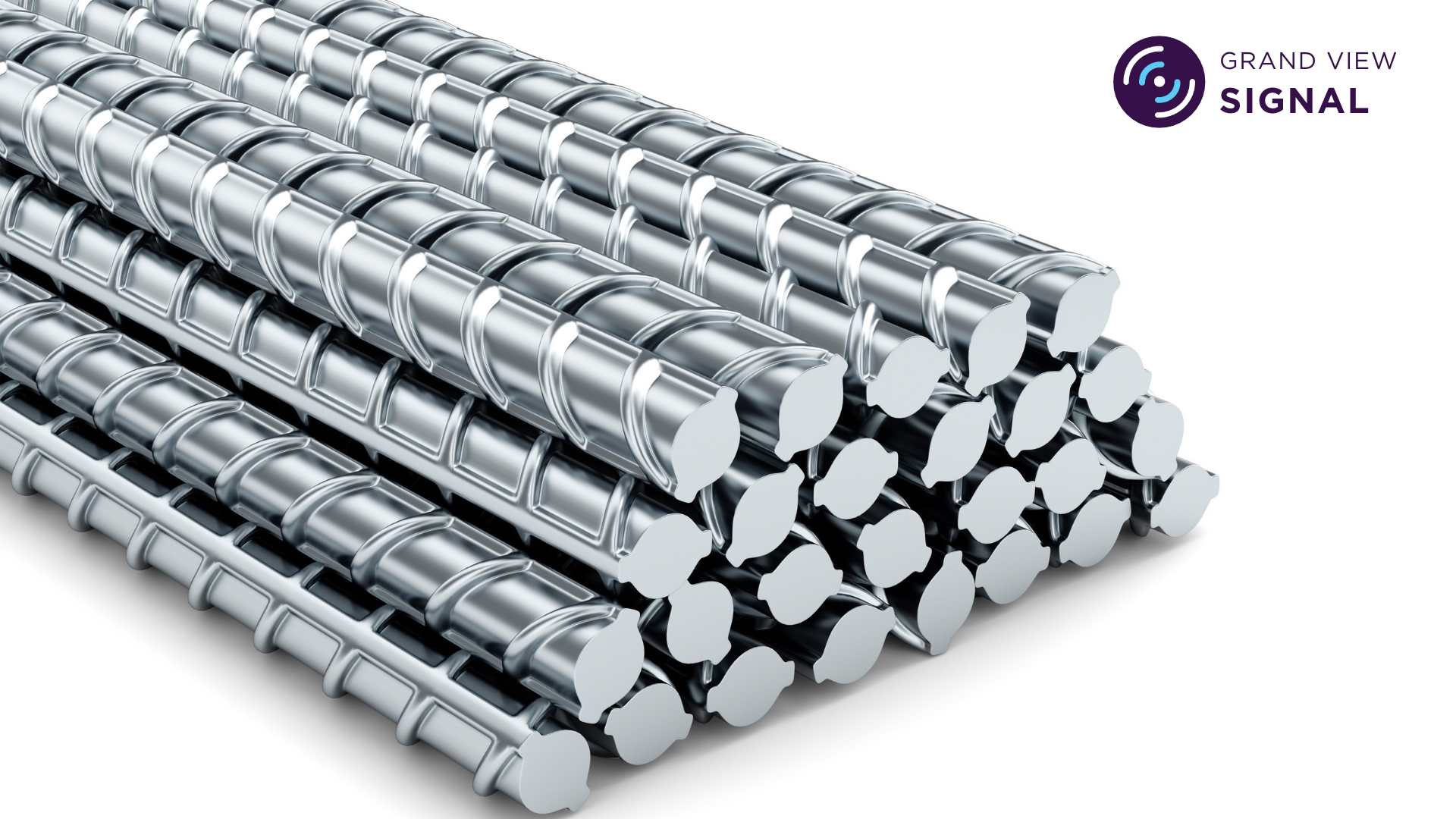
Rebar markets remain intrinsically tied to fixed-asset construction and civil engineering expenditure. In markets facing structural downturns in commercial real estate, such as China, rebar valuations remain depressed, lowering Asian export prices. Conversely, in North America and India, public infrastructure capital commitments, including the US Infrastructure Investment and Jobs Act (IIJA) and Indian government capital allocation programs, are maintaining high domestic capacity utilization and price stability.
Regional Market Analysis: United States, Europe & India
Regional market divergence represents the paramount variable for enterprise procurement teams structuring international supply chains. Pricing differentials between protected domestic markets and open export hubs remain significant.
-
United States: Regulated High-Margin Environment
The domestic US market remains among the highest-priced regional steel markets globally. With domestic steel consumption projected to grow by 1.7% in 2026 and 2.0% in 2027, commercial buyers face sustained pricing baselines. Federal trade enforcement, including melt-and-pour origin verification protocols under 50% Section 232 tariffs, restricts low-cost import access. While domestic Electric Arc Furnace (EAF) flat-rolled capacity continues to expand in the US South and Midwest, domestic producers actively adjust utilization rates to manage spot inventory, maintaining lead times of 4 to 8 weeks for HRC. Long-term contract negotiations for 2027 reflect elevated floor prices relative to historical mid-cycle averages.
-
Europe: Carbon Compliance & Regulatory Impacts
European steel producers operate under elevated operational cost conditions driven by industrial energy tariffs and carbon compliance mandates. Apparent steel demand within the EU and UK is projected to undergo a modest recovery of 1.3% in 2026 and 3.0% in 2027.
The central structural driver governing European pricing through 2026-2027 is the formal implementation of the Carbon Border Adjustment Mechanism (CBAM) alongside revised regional safeguard quotas. By imposing financial adjustments on carbon-intensive import routes (primarily BF-BOF production from Asian exporters), CBAM increases the landed cost of imported steel, shifting procurement toward regional producers.
-
India: Primary Growth Vector
India remains the fastest-growing major steel market globally. Industry data indicate that India's steel industry is projected to expand at a 3.8% CAGR between 2026 and 2033, driving annual national consumption toward 175 million metric tons.
This growth trajectory is underpinned by the government's ₹12.2 trillion infrastructure budget, expanding automotive manufacturing, and state-backed urban housing initiatives. Although domestic steelmakers are executing substantial capacity expansion programs, strong domestic demand absorption insulates local pricing from broader global spot weakness, positioning India as a key global anchor for structural steel and long products.
Primary Market Catalysts: Trade Regulation & Decarbonization
Two structural developments are altering steel valuation models for 2026–2027:
-
Trade Defense Mechanisms: Over 400 active anti-dumping and countervailing duty orders worldwide are altering established supply channels. As Western markets enforce stricter entry barriers, untariffed import destinations across Southeast Asia (including Vietnam, Indonesia, and Thailand) are experiencing increased spot availability and heightened price volatility for semi-finished billets and hot-rolled coils.
-
Scrap Availability & Low-Carbon Premiums: The accelerating industry transition toward low-emission steelmaking is increasing the strategic value of high-grade Ferrous Scrap (HMS 1 & 2) and Direct Reduced Iron (DRI). As European and North American producers shift from traditional integrated blast furnaces toward scrap-reliant EAF configurations, prime scrap pricing is decoupling from iron ore trends, establishing a permanent structural premium for verified low-carbon steel grades.
Strategic Risk Management: Grand View Signal’s Predictive Model
Relying on lagging historical pricing indices to manage enterprise procurement in a volatile, policy-driven market exposes organizations to margin compression and unhedged price exposure. Traditional spot reporting reflects historical transaction data; it does not model mill lead-time shifts, trade policy adjustments, or raw-material margin compression in advance.
Whereas legacy pricing models rely on past invoice data, Grand View Signal’s commodity pricing intelligence provides a forward-looking analytical approach built on real-time commodity pricing, scrap futures, energy spreads, and global trade telemetry. This predictive framework enables procurement executives to shift from reactive spot tracking to structured, forward-looking contract hedging for specific HRC, CRC, Rebar, and Plate specifications.
Capabilities of the Signal Analytical Framework
-
Forward Price Visibility: Access reliable forward price forecasts for HRC, CRC, Rebar, and Heavy Plate across North American, European, and Asian market centers.
-
Margin & Lead-Time Optimization: Detect emerging mill lead-time extensions and price-adjustment cycles, enabling procurement teams to secure optimal contract terms.
-
Regulatory Cost Modeling: Quantify the financial impact of CBAM carbon tariffs, Section 232 duties, and regional import quotas on net landed component costs.
Transition from reactive price tracking to data-driven commodity price intelligence. Secure a competitive advantage in your 2026-2027 procurement strategy with Grand View Signal’s predictive intelligence.
Explore Grand View Signal
A SaaS based commodity pricing intelligence platform
Talk to an analyst
Tell us what you need. We reply within one working day.
Service Guarantee
-
Insured Buying
This report has a service guarantee. We stand by our report quality.
-
Confidentiality
Your transaction & personal information is safe and secure.
-
Custom research service
Design an exclusive study to serve your research needs.
-
24/5 Research support
Get your queries resolved from an industry expert.