Thermal Coal Prices 2026: Asia's Fuel Security vs. the Energy Transition
The global energy market in 2026 presents a sharp policy paradox across key Asian economies. While long-term net-zero roadmaps mandate a rapid scaling of clean capacity, near-term operational realities continue to re-anchor power sector stability to thermal coal generation. According to updated market assessments published by the International Energy Agency (IEA), global coal demand is projected to reach an all-time record of approximately 8.94 billion tonnes in 2026, marking an upward growth rate of 1.2 percent.
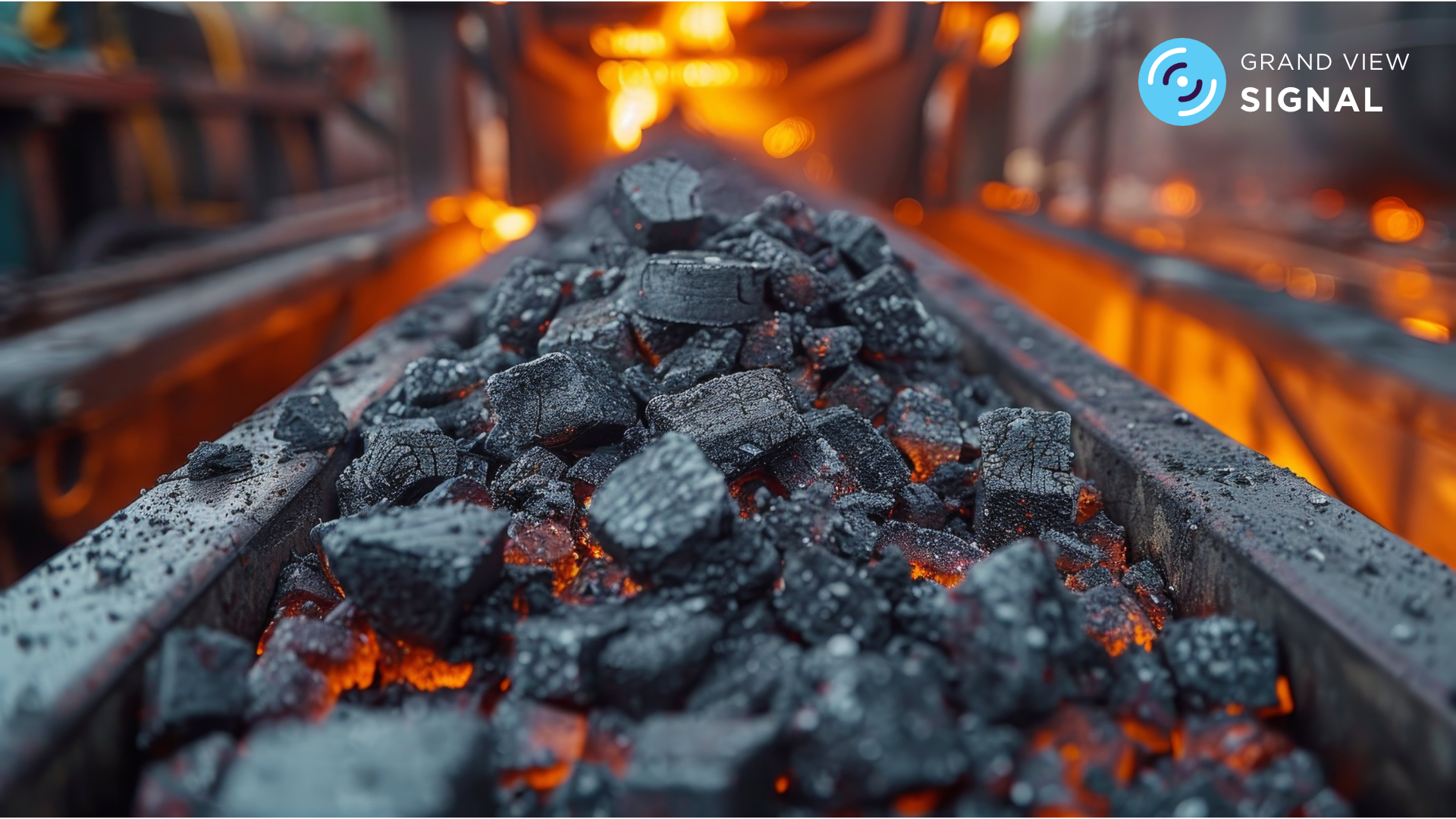
This momentum is predominantly concentrated across East and South Asia, where high grid integration requirements and rising industrial loads persist. Heightened volatility in international natural gas markets, persistent weather anomalies, and structural electricity demand growth have combined to elevate thermal coal from a declining legacy fuel to an indispensable backstop for regional grid reliability. Consequently, thermal coal pricing in 2026 reflects a market defined less by terminal demand destruction and more by tactical, security-driven fuel switching among power generators.
Macro Outlook: Key Drivers of 2026 Thermal Coal Prices
Seaborne thermal coal benchmarks in Asia, most notably Newcastle pricing, are governed by complex macroeconomic and geopolitical interdependencies. Disruptions across international supply chains, including maritime transportation bottlenecks through critical choke points, have inflated global price baselines for imported fuels. As documented in energy market outlooks from the U.S. Energy Information Administration (EIA), broader fossil fuel price volatility directly influences fuel selection and dispatch priority within major utility and industrial networks.
The supply landscape is further disciplined by upstream production adjustments and policy shifts. Global coal production is projected by the IEA to experience a modest contraction of 0.4 percent in 2026 due to inventory drawdowns, capital discipline, and operational safety constraints in major exporting nations. Indonesia, the world’s leading exporter of thermal coal, is forecasted to reduce annual export output by over 12 million tonnes due to logistical bottlenecks, weather interruptions, and shifting domestic market obligations. This structural tightening of seaborne supply maintains a firm price floor under international thermal coal indexes.
The Coal vs. LNG Substitution Dynamic in Asia
The structural interplay between liquefied natural gas (LNG) and thermal coal remains the primary economic lever governing power generation costs across Asian utilities. In historical periods of natural gas price moderation, dual-fuel and flexible power plants routinely shift base-load capacity toward combined-cycle gas turbines to reduce overall operational emissions. However, recurring geopolitical tensions and trade route diversions have kept spot LNG import prices elevated across major ocean corridors.
When spot LNG prices surge relative to Newcastle coal benchmarks, power producers execute rapid fuel substitution toward thermal coal to limit wholesale electricity tariff escalation and manage operational expenditures. The IEA notes that high imported gas costs stemming from international trade friction have cushioned potential demand declines in industrial coal consumption, effectively incentivizing utilities to maintain higher thermal coal stockpiles to insulate energy infrastructure from sudden global gas shocks.
Access real-time impact analysis on commodity prices
Explore Grand View Signal
Country-Level Utility Demand Breakdown
-
China
China continues to exert a dominant influence over global coal production and consumption trends. Although the nation leads the world in annual solar and wind capacity additions, expanding industrial power demands require substantial thermal baseload generation to guarantee system stability. Domestic production is projected to exceed 4.62 billion tonnes in 2026. While mandatory safety inspections and mine suspensions, such as temporary operational halts across Shanxi Province following industrial accidents, restrict local output, imported seaborne coal serves as a crucial balancing mechanism for coastal power stations.
-
Japan and South Korea
In Japan, total coal consumption is projected to decline marginally by 1 percent to 161 million tonnes in 2026. However, this contraction is significantly smaller than earlier policy targets implied. Sustained spot LNG price volatility has prompted regulatory authorities to temporarily extend operating lifespans for high-efficiency coal units to ensure reserve margin adequacy. Conversely, South Korea's coal demand trajectory has reversed upward, with the IEA forecasting a 6 percent demand increase to 119 million tonnes in 2026, driven directly by cost-conscious gas-to-coal dispatch switching within the central electric system.
-
South and Southeast Asia
In India, thermal coal demand is forecast to expand by 4.2 percent in 2026, reaching 1,353 million tonnes, supported by economic growth and national output targets approaching 1,095 million tonnes. Across ASEAN economies, expanding manufacturing activity and urban energy demand continue to make thermal coal the most reliable low-cost power option.
Structural Infrastructure Constraints and Grid Dynamics
A critical factor shaping the 2026 thermal coal market is the structural lag in transmission grid expansion across developing Asian nations. While rapid capital investment has expanded renewable generation capacity, grid interconnections often lack the high-voltage transmission bandwidth required to transport variable renewable power from rural generation hubs to urban industrial centers. This infrastructure bottleneck forces local grid operators to maintain active coal-fired power stations near industrial demand nodes to maintain frequency stability and prevent voltage collapses.
Furthermore, energy security mandates established by regional regulatory authorities have codified minimum stockpile rules for domestic utility operators. To guard against potential shipping blockades or global commodity disruptions, utilities in South and East Asia are legally mandated to maintain between 20 and 30 days of coal inventory on-site. This institutional procurement requirement creates a persistent demand floor for seaborne shipments, irrespective of short-term fluctuations in clean energy output or broader macroeconomic conditions.
Strategic Conclusion and 2026 Price Forecast Outlook
The trajectory of thermal coal prices in 2026 underscores a persistent structural reality: the energy transition in Asia is operating alongside, rather than entirely replacing, traditional fossil fuel security management. While long-term capital deployment continues to prioritize low-carbon technology, short-term grid stability requires dispatchable thermal assets to absorb severe weather shocks and natural gas supply disruptions.
Looking forward to 2027, the IEA anticipates a minor global demand correction of 0.4 percent to 8.91 billion tonnes, assuming global gas shipping routes normalize and hydroelectric conditions recover. However, as long as seaborne gas channels remain vulnerable to market disruptions and seasonal climate extremes persist, thermal coal will remain a foundational pillar of fuel security across Asian power systems.
Tracking Energy Volatility with Grand View Signal
Navigating the shifting price dynamics between thermal coal, spot LNG, and carbon offsets requires real-time intelligence and granular market data. Grand View Signal provides energy analysts, commodity traders, and utility procurement teams with predictive analytics, vessel tracking data, and regional demand forecasting. By synthesizing trade flows, seasonal load factors, and cross-commodity price spreads, Grand View Signal empowers professionals to manage procurement risk and anticipate seaborne market shifts before they impact the bottom line.
Stay Ahead of Commodity Market Shifts
Gain real-time visibility into cross-commodity price spreads, utility demand trends, and global supply chain indicators. Get in touch with our team of experts.
Explore Grand View Signal
A SaaS based commodity pricing intelligence platform
Talk to an analyst
Tell us what you need. We reply within one working day.
Service Guarantee
-
Insured Buying
This report has a service guarantee. We stand by our report quality.
-
Confidentiality
Your transaction & personal information is safe and secure.
-
Custom research service
Design an exclusive study to serve your research needs.
-
24/5 Research support
Get your queries resolved from an industry expert.